
- LOGIN
- MemberShip
- 2026-06-30 12:24:23
- Policy
- Implementation of projects linked to permission evaluation
- by Kim, Jung-Ju Dec 05, 2022 05:53am
- The government will conduct a pilot project of the "Permission Evaluation Negotiation Linkage System" in the first half of next year, which will simultaneously carry out three tracks of the drug market-wage hurdles, including the Ministry of Food and Drug Safety's item license safety and efficacy evaluation and the NHIS drug price negotiation. Although detailed standards or appropriate drug candidates have not yet been set, the pharmaceutical industry is showing interest, and the process will be created as soon as possible and applied as soon as appropriate drugs appear in the first half of the year. The Ministry of Health and Welfare recently announced the business plan when asked about pending insurance drug issues by the Korea Special Press Association. The government is currently operating the drug approval-patent linkage system to strengthen accessibility to patients. The drug approval-patent linkage system is a system that allows insurance benefits to be applied quickly by drastically reducing the time required by the Ministry of Food and Drug Safety's product approval and the HIRA benefit adequacy evaluation stage. Usually, the Ministry of Food and Drug Safety's review of the safety and effectiveness of drugs must be passed and item permission must be obtained to apply for insurance registration by the Korea Appraisal Board. If the salary adequacy is determined here, it will be reported to the Health Insurance Policy Review Committee immediately after the drug price negotiation of the industrial complex or if the salary is confirmed by formula, the final registration will be decided. Negotiations have been added to the permit evaluation linkage system, one of the "fast tracks" listed in the drug, which reduces the time further as a total of three tracks are conducted in parallel at the same time. The target is a drug that has a short life expectancy of ▲ from 6 months to less than 1 year, meets ▲the number of patients with cancer, and rare diseases, and has ▲ sufficient improvement effects instead of alternative drugs. Judging from what pharmaceutical companies are inquiring about, Oh seems to have drugs included in the target category. He added, "We will start a pilot project next year, we will organize the process as soon as possible and start it as soon as possible." He said, "I think it's the first half of the year, but I haven't decided on the candidate group or the details yet." He said, "We can set up a candidate group for pharmaceutical companies. "We will start in the first half of the year," he said. The government plans to effectively operate the Drug Approval-Patent Linkage System, which is currently in operation. This is because the existing system has also proven effective in improving drug accessibility. Manager Oh added, "Even if the Drug Approval-Patent Linkage System is introduced, the existing Drug Approval-Patent Linkage System will be taken as it is."
- Policy
- MOHW “reasonably decide on using A9 countries as reference"
- by Kim, Jung-Ju Dec 05, 2022 05:53am
- # i1 Regarding criticism from the industry on how the systemic reform of adding Australia and Canada to the existing A7 countries as drug price reference countries that are used for new drug insurance reimbursement evaluations, the government said it would make a reasonable decision after collecting industry and expert opinion. The Ministry of Health and Welfare released an explanation on the afternoon of the 2nd and emphasized that the revised plan was made as a result of lengthy discussions with the pharmaceutical industry and working-level consultative bodies. On November 21st, the Health Insurance Review and Assessment Service made a preannouncement of its revision plan to officially expand the number of reference countries used to evaluate new drugs from 7 to 9 (US, UK, Germany, France, Italy, Switzerland, Japan, Canada, Australia·A9) through the ‘Proposal for the Amendment to the Regulations on the Evaluation Standards and Procedures to Determine Eligibility for Reimbursement Benefits.’ Until now, the government had referred to the insured drug price of A7 countries when negotiating, agreeing, or designating insurance drug prices in Korea to not exceed the level set in A7 countries. Following the announcement, concerns and criticisms from interested parties arose on how adding Australia and Canada, which are not strong new drug developers, to the reference countries will decrease the price of insured drug prices in Korea and adversely affect the domestic pharmaceutical and bio-industry. On this, the MOHW explained that “The currently used drug price decision-making method has an unclear reference basis, so the MOHW organized a working-level consultative body with the pharmaceutical industry for 4 months from May this year based on the results of the policy research conducted in 2019 and expert consultation.” The MOHW added, “We will reasonably review various opinions that are submitted during the opinion inquiry period according to relevant procedures until the 11th, and then collect expert opinions to make a final decision." Meanwhile, the MOHW said that no specific plan has yet been set for the reevaluation of listed generics based on the revisited A9 plan and that it will provide information on the issue after collecting relevant opinions from the pharmaceutical industry.
- Policy
- The safety & efficacy evaluation of Jemperili was terminated
- by Lee, Hye-Kyung Dec 05, 2022 05:53am
- Authorization of domestic items for GlaxoSmithKline's immuno-cancer drug Jemperili is imminent. According to the pharmaceutical industry on the 1st, the Ministry of Food and Drug Safety recently ended Jemperili's safety and efficiency evaluation. As the safety and efficacy evaluation has been completed, permission will be obtained soon if there are no other variables. If Jemperili is approved, it will be listed as the third PD-1 inhibitor after Opdivo of Ono and BMS and Keytruda of MSD. Jemperili is the pipeline GSK acquired in 2019 when it acquired Tesaro for $5.1 billion. Unlike Opdivo and Keytruda, which had their first indication as melanoma treatments, Jemperili approved conditional sales of Jemperili in the EU in April last year, following the first approval in the U.S. as a treatment for recurrent or progressive endometrial cancer indicating "platinum-based therapy or subsequent inconsistency recovery defects." FDA approval was based on the results of the dMMR endometrial cancer cohort of the ongoing Phase 1 clinical trial GARNET study. The overall response rate of 71 patients with dMMR recurrent/progressive endometrial cancer in the study was 42.3%, with 12.7% and 29.6% for complete remission (tumor extinction) and partial remission (tumor contraction), respectively. In August of the same year, Jemperili obtained additional approval for dMMR recurrence or advanced various solid cancers that did not reach satisfactory results with existing treatment. GSK plans to add indications after endometrial cancer in Korea. Meanwhile, Keytruda and Opdivo, approved as domestic immuno-cancer drugs 1 and 2, are actively working on adding indications and expanding benefits.
- Policy
- Domestic new drug No. 36 Envlo has been approved
- by Lee, Hye-Kyung Dec 05, 2022 05:53am
- Envlo 0.3mg, the 36th domestic development new drug, has been approved in Korea. The Ministry of Food and Drug Safety (Director Oh Yoo-kyung) announced on the 30th that it has approved Daewoong Pharmaceutical's Envlo to improve blood sugar control in patients with type 2 diabetes. Envlo is an adjunct to diet and exercise therapy administered to improve blood sugar control in type 2 diabetes patients. It lowers blood sugar by suppressing the reabsorption of glucose in the kidneys and allowing glucose to be released into the urine. It selectively inhibits sodium-glucose co-transporters (SGLT2 transporters) involved in the re-absorption of glucose in the kidney (neoprene tube) to block the re-absorption of glucose into the bloodstream. Currently licensed SGLT2 transporter inhibitors include Dapagliflozin, Ertugliflozin, Empagliflozin, and Ifragliflozin. The Ministry of Food and Drug Safety said, "We expect this approval of the new drug to help expand the scope of treatment options and treatment opportunities for type 2 diabetes patients. The Ministry of Food and Drug Safety will continue to do its best to expand treatment opportunities to patients by quickly supplying treatments that have been sufficiently confirmed in safety and effectiveness based on regulatory science expertise."
- InterView
- The issue of SE of JAK inhibitors should be given authority
- by Kim, Jin-Gu Dec 02, 2022 06:08am
- Shim Seung-cheol, professor of rheumatology at Chungnam National University HospitalThe treatment results of rheumatoid arthritis have improved dramatically. This is because doctors can use it a lot. Following the advent of MTX in the late 1980s, TNF-alpha inhibitors changed the treatment paradigm of this disease. Recently, JAK inhibitors that improved the shortcomings of TNF-alpha inhibitors have emerged. JAK inhibitors, which have been attracting attention as next-generation treatments, have recently been at the center of controversy due to safety issues. This is because concerns have been raised that the drug may cause cardiovascular side effects. How do the prescription sites view the safety issue of JAK inhibitors? Shim Seung-chul, a professor of rheumatology at Chungnam National University Hospital, said, " We should give some authority to experts who treat patients in the field rather than restricting the use of drugs entirely at the government level." He said, "If clinical data are added to confirm which patients are more likely to have drug side effects, detailed treatment guidelines for JAK inhibitors will be prepared." ◆ One in 10 patients is difficult to treat with MTX or TNF-alpha inhibitors Rheumatoid arthritis is an autoimmune disease. Treatment is also carried out in a way that suppresses autoimmune phenomena. The most traditional treatment is MTX. It is a drug that suppresses lymphocytes and was initially more commonly used as a treatment for leukemia. Since it was approved for the purpose of treating rheumatoid arthritis in 1988, it has been used for more than 30 years. Since it was originally developed as an anticancer drug, there were many patients whose drug did not work. In time, a better treatment was developed. It is a TNF-alpha inhibitor. It not only inhibits one target that causes autoimmune diseases but also inhibits several parts at the same time. Since the advent of this drug, the treatment results of rheumatoid arthritis have improved dramatically. The limitations of TNF-alpha inhibitors were also pointed out. The number of patients who do not respond to this drug has gradually increased. The disadvantage of injection was also pointed out. Patients with mobility difficulties due to arthritis wanted to treat the disease more comfortably by reducing hospital visits. JAK inhibitors have emerged. The method of suppressing inflammation has also improved. If existing drugs were a method of blocking inflammatory substances outside the cell, JAK inhibitors are a method of accurately targeting and suppressing substances within the cell. Professor Shim said, "The use of MTX is effective in 70% of patients. If there is no reaction here, using TNF-alpha inhibitors improves 70% of them. He said, "10% of all patients were difficult to treat. Unlike TNF-alpha inhibitors, the development of JAK inhibitors that block inflammatory signals in cells has made it possible to treat such patients. ◆MTX also experienced side effects of TNF inhibitors…JAK inhibitors can also be overcome Safety issues have recently emerged in JAK inhibitors, which have emerged with high expectations. In 2021, the U.S. Food and Drug Administration (FDA) warned of risks such as heart disease and cancer against JAK inhibitors, and the MFDS in Korea also distributed safety letters. Eventually, the FDA decided to include risk information such as major cardiovascular events, thrombosis, and death in the box warning in the JAK inhibitor. Professor Shim Seung-chul said, "The existing drugs have undergone a similar process," adding, "What is important is how well you manage side effects and treat diseases." "I think we can overcome the problems that are currently being raised," he said. According to him, MTX has had side effects such as an increase in liver levels since its appearance. Accordingly, drugs were used at the prescription site while simultaneously performing a liver biopsy. As the experience of use accumulated, the drug has been set up to be prescribed in low doses when used for rheumatoid arthritis rather than anticancer drugs. The same is true of TNF-alpha inhibitors. Concerns have been raised that it causes tuberculosis in the early stages of its appearance. These concerns were addressed by the use of anti-tuberculosis drugs. In the case of JAK inhibitors, concerns about herpes zoster were raised at the beginning. Professor Shim explains that the newly emerged cardiovascular risk can also be seen as an extension of this. Professor Shim said, "We need to pay attention to the extent to which side effects occur frequently in certain patients, not in the side effects themselves," adding, "We expect that detailed treatment guidelines for JAK inhibitors will be prepared when more domestic clinical data are accumulated and drug side effects occur. JAK inhibitors are limitedly used only when other drugs do not work. If drugs are used sequentially, there will be no big problem. I think we should give some authority to experts who treat patients in the field rather than restricting the use of drugs entirely at the government level." There are three representative JAK inhibitors released in Korea. In the case of Xeljanz, it is a general-purpose JAK inhibitor that inhibits all three inflammatory substances. Olumiant inhibits two substances and Rinvoq SR inhibits one substance. Professor Shim said, "There are currently various JAK inhibitors released, and further research is needed to find out the difference between general-purpose JAK inhibitors that suppress all inflammatory substances in cells and selective JAK inhibitors that suppress only certain substances."
- Company
- Leclaza P3T results unveiled... mPFS 20 months
- by Dec 02, 2022 06:07am
- The abstract data from a global Phase III trial on ‘Leclaza (lazertinib),’ the 31st homegrown novel drug developed by Yuhan Corp, has been released. In the trial, Leclaza improved progression-free survival (PFS) by 11 months compared to the existing treatment Iressa and met the primary endpoint. The study results of LASER301 above that assessed the safety and efficacy of Leclaza as first-line treatment in EGFR (epidermal growth factor receptor) mutant-positive NSCLC were released with other major study results on the 1st at the ESMO ASIA Congress 2022. LASER301 is a global Phase III trial that evaluated the efficacy and safety of Leclaza as first-line treatment in locally advanced or metastatic NSCLC patients with EGFR mutations. The trial enrolled 393 patients in 13 countries and compared Leclaza with the existing treatment, ‘gefitinib (brand name: Iressa).’ The primary efficacy endpoint was progression-free survival (PFS). The secondary endpoints were objective response rate (ORR), duration of response (DoR), disease control rate (DCR), and overall survival (OS). In terms of median PFS (mPFS), the primary efficacy endpoint, Leclaza’s mPFS was 20.6 months, a significant improvement over the 9.7 months in the control group. The drug also reduced the risk of disease progression and death by 55%. The PFS improvement was consistently observed in all predefined subgroups (Asians and non-Asians, Exon19del or L858R mutation, etc.). Leclaza’s DoR was 19.4 months, significantly longer than the 8.3 months in the control group. ORR was 76% in both treatment groups. The OS data has not matured yet (maturity 29%). At 18 months after administration, the lazertinib arm’s survival rate was 80%, higher than the 72% in the control group but did not reach statistical significance (p=0.116). Regarding its safety, lazertinib and Iressa showed a consistent safety profile with those that had been previously reported. The results of the LASER301 study will be presented at the ESMO ASIA Congress 2022 which will be held on the 3rd in Singapore. Leclaza is an NSCLC treatment that was approved as the 31st homegrown novel drug in January last year. It is a 3rd generation EGFR TKI that inhibits the proliferation and growth of lung cancer cells. It is currently approved as a second-line treatment for patients with locally advanced or metastatic NSCLC who developed resistance after being previously treated with 1st generation or 2nd generation EGFR-TKIs. Yuhan Corp conducted the global Phase III trial to expand the drug’s indication to first-line treatment in EGFR mutated lung cancer. The results greatly increased the possibility of the drug extending its indication to first-line in Korea. In Korea, Leclaza’s cumulative sales exceeded KRW 10 billion in only 1 year since its release with insurance reimbursement. If approved in the first line, its increase in sales is expected to accelerate further. Trials on its combined use with other drugs are also actively underway. Yuhan Corp had made a licensing deal with the global pharmaceutical company Janssen. Janssen has been developing the drug in combination with its own EGFR-MET bispecific antibody ‘Rybrevant (amivantamab).’
- Company
- Competition for chronic kidney disease following SGLT-2 I
- by Eo, Yun-Ho Dec 02, 2022 06:07am
- Competition for SGLT-2 inhibitors is expected to expand to the area of chronic kidney disease following heart failure. According to related industries, following AstraZeneca's Forxiga, Lilly and Beringer Ingelheim's Jardiance also succeeded in proving their effectiveness to secure chronic kidney disease indications. Forxiga is ahead in speed. After approval by the U.S. FDA in April, Forxiga immediately began the licensing process in major countries such as Korea and added chronic new disease indications in Korea and Europe in August. However, insurance benefits have not been applied so far. Forxiga's approval of chronic renal disease indication was based on phase 3 clinical DAPA-CKD study. Earlier this year, Forxiga was designated as a subject of the FDA-assigned Priority Review. According to the DAPA-CKD study, Forxiga reduced the relative risk of kidney failure compared to placebo, terminal kidney disease (ESKD), and death from cardiovascular or kidney by 39% in patients with stage 2-4 chronic kidney disease with increased UAE levels. ARR was 5.3% for 2.4 years, the median value of the study period. Jardiance recently announced the results of the EMPA-KIDNEY phase 3 at ASN's Kidney Week 2022. EMPA-KIDNEY was a study exclusively for a wide range of, large-scale SGLT-2 inhibitors, involving 6609 patients with various causes. Among them, many patients had cardiovascular, kidney, or metabolic-related comorbidities, and all kidney and cardiovascular results were evaluated according to the severity of various chronic kidney diseases. The previous SGLT-2 inhibitor study included the widest range of patients ever compared to a specific group with diabetes or high proteinuria among patients with chronic kidney disease. Looking at the study, Jardiance significantly reduced the risk of kidney disease progression or cardiovascular death by 28% compared to placebo. In addition, hospitalization due to all causes, one of the major complex secondary evaluation variables defined in advance, was significantly reduced by 14% compared to placebo. It was found that the results of hospitalization or cardiovascular death due to heart failure, a major secondary evaluation variable, or death reduction due to all causes were not statistically significant. Chronic kidney disease is a progressive disease, and it is investigated that up to 700 million patients around the world are distributed. Treatments that can be used in the patient group are limited, but it is necessary to enter new treatment options in that chronic kidney disease increases the incidence of cardiovascular events such as heart failure and affects early death.
- Company
- Balversa, the first targeted anticancer drug for bladder can
- by Dec 02, 2022 06:07am
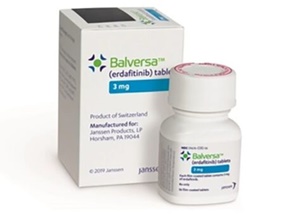
- BalversaTargeted options targeting specific genetic mutations in bladder cancer have emerged for the first time. The Ministry of Food and Drug Safety announced on the 24th that it had approved Janssen's Balversa. It is an indication of metastatic urinary epithelial cancer (cystic cancer) with at least one type of chemotherapy treatment, or FGFR2 or 3 mutations within 12 months of adjuvant treatment before and after surgery, including platinum-based chemotherapy. Bladder cancer is representative cancer that had no targeted anticancer drugs. Balversa has become the first targeted anticancer drug for bladder cancer with a new mechanism called FGFR inhibition. FGFR is one of the bio-signals involved in cancer cell growth and is associated with several carcinomas. In particular, FGFR mutations are commonly observed in bladder cancer, and about 20 to 30% of patients are known to have mutations. The phase 2 BLC2001 study, which served as the basis for Balversa approval, targeted 99 patients with local progressive and metastatic urinary tract epithelial cancer with FGFR mutations. The ORR of 87 people who can be evaluated was 32.2% based on the IRRC evaluation. The disease control rate was 78% and the median response duration was 5.4 months. The progression-free survival (PFS) median and OS median were 5.5 months and 13.8 months, respectively. The most commonly reported adverse reactions of Grade 3 or higher include canker soreness, hand toenail dystrophy, hand toenail disorder, corneal inflammation, and hyperphosphatemia. Significant adverse reactions occurred in 41% of patients, of which eye disorders were reported by 10%. The adverse reactions that resulted in fatal results occurred in 1% of patients due to acute myocardial infarction. Based on the second phase, the Balversa permit was approved in April 2019, three years earlier than Korea in the U.S. To diagnose FGFR3 mutations, QuantiFERON's Therascreen FGFR Kit was also approved as a companion diagnostic device. ◆ A treatment for bladder cancer that has not existed for decades Bladder cancer is cancer that has been stagnant for decades. Unlike other cancers where several targeted anticancer drugs appeared, bladder cancer has been the main treatment until recently. The development of new drugs was not easy because of the high effectiveness of early chemotherapy. However, in metastatic bladder cancer, chemotherapy reacts in the early stages, and most of them die within two years due to resistance. The birth of the first targeted anticancer drug for bladder cancer Recently, immuno-cancer drugs have emerged, causing changes in the treatment of bladder cancer. There are four immuno-cancer drugs, including Keytruda, Opdivo, Tecentriq, and Bavencio, and there is a slight difference in specific indications. Keytruda and Tecentriq can be used as primary treatments. However, it can be used only when PD-L1 expression is positive and Cisplatin-based chemotherapy is impossible. Bavencio can be used as a maintenance therapy without the disease progressing after using chemotherapy in the first round. Opdivo is used as a secondary treatment when the disease progresses after chemotherapy. Keytruda and Tecentriq can also be used in the second round. Immuno-cancer drugs have a high response rate of around 20%, but they have fewer side effects than chemotherapy and have the advantage of maintaining treatment responses for a long time. With Balversa's permission, patients with FGFR mutations can consider targeted anticancer drugs in secondary or higher treatment, which is expected to help improve their prognosis.
- Company
- Ajovy will it be possible to register this year?
- by Eo, Yun-Ho Dec 01, 2022 05:46am
- Attention is focusing on whether the second CGRP target migraine drug Ajovy will be able to apply for insurance benefits within this year. According to related industries, Teva Handok is conducting last-minute coordination in drug price negotiations between the NHIS and the Calcitonin gene-related peptide (CGRP) target migraine treatment Ajovy. Considering that the benefit of Emgality in September, a competitive drug and the first entry item, has been applied, the negotiations have been delayed more than expected. Currently, there is no big disagreement with the calculation of drug prices itself, but factors such as the expected amount of claims are known to be an obstacle. Considering the negotiation date, if it goes according to the procedure, it is possible to register within this year, so we have to watch Ajovy's progress. If Ajovy succeeds in registering, competition between the two drugs is expected to begin in earnest. Emgality and Ajovy are the same drugs, and they are selected according to the characteristics of severe migraine patients. Emgality is a method of administering 240 mg (two consecutive subcutaneous injections each of 120 mg) once at a loading dose, and then subcutaneous injections of 120 mg once a month. Ajovy is used by subcutaneous injection of 225 mg once a month or 675 mg (three consecutive times of 225 mg) once every three months. Ajovy proved its effectiveness through a 12-week HALO EM/CM clinical trial in 2,000 patients with EM and CM. In a HALOEM study conducted to verify the efficacy and safety of Ajovy compared to the placebo group, Ajovy was evaluated to meet the primary evaluation variable by significantly reducing the number of monthly migraine occurrences in both monthly and quarterly administration groups. The proportion of patients whose average monthly migraine days decreased by more than 50% was also higher at 47.7% in the Ajovy monthly administration group and 44.4% in the quarterly administration group compared to 27.9% in the placebo group. In the HALOCM study, the average number of monthly headache reduction days in the Ajovy administration group was 4.6±0.3 days, and the quarterly administration group was 4.3±03 days, showing a significant decrease compared to 2.5±0.3 days in the placebo group.
- Company
- Expansion of Roche Polivy's indication of primary therapy
- by Eo, Yun-Ho Dec 01, 2022 05:46am
- From the Ministry of Food and Drug Safety, Roche Korea announced on the 28th that Polivy and Rituximab+Cyclophosphamide, Doxorubicin, and Prednisone combination therapy has been approved to expand the indication as the primary treatment for adult patients with diffuse large B-Cell Lymphoma whose have no previous treatment experience. Diffuse large B-Cell Lymphoma is a blood cancer with aggressive tendencies and is the most common form of non-Hodgkin lymphoma. In Korea, it is estimated that the number of new patients diagnosed with diffuse giant B cell lymphoma reaches 5,000 every year. Although the majority of patients responded to initial treatment, 4 out of 10 patients were not treated with the current standard treatment, and there was a demand for more effective primary treatments due to poor prognosis when the number of treatments increased. The permission to expand the indication was based on the results of the POLARIX study in phase 3 clinical trials. The study was followed for more than 24 months for all patients, and in the first-line treatment of diffuse giant B cell lymphoma during a 28.2 month follow-up period, Polivy, and R-CHHP combination therapy reduced the likelihood of disease exacerbation or death by 27% compared to R-CHOP. The most frequently reported adverse reactions during Polivy treatment (30% or more) were peripheral neuropathy (52.9%), nausea (41.6%), neutrophil reduction (38.4%), and diarrhea (30.8%). Nic Horridge, CEO of Roche Korea, said, "We have continued to innovate to meet the unmet demand of patients, and finally we can provide improved treatments to Korean patients. Through Polivy, the expansion of this indication can provide better results for more patients with diffuse giant B-cell lymphoma."
