
- LOGIN
- MemberShip
- 2026-07-02 13:07:11
- Policy
- Samsung reigns over Avastin biosimilar market in Korea
- by Lee, Tak-Sun Jul 14, 2022 05:54am
- No new biosimilars of ‘Avastin (Roche, bevacizumab)' are being introduced to the market after Samsung Bioepis’s biosimilar. The Avastin biosimilar market is estimated to have a ₩120 billion market in Korea. In terms of approvals, Pfizer Korea and Alvogen Korea had also received approval for their biosimilars after Samsung Bioepis, but only Samsung Bioepis received reimbursement approval for its biosimilar in September last year. The industry analysis is that the supply amount and results of patent challenges have risen as a variable, delaying reimbursement and release of the other biosimilars. According to industry sources on the 13th, Alvogen Korea withdrew its reimbursement application for ‘Alymsis inj’ that was approved in January this year. With the withdrawal, Alymsis’s reimbursed release in Korea is expected to be further delayed. The industry had previously expected Alymsis to be released with reimbursement in September this year. Alymsys is an Avastin biosimilar developed by the Spanish pharmaceutical company mAbxience that received US FDA approval in April through Amneal Pharmaceuticals. In Korea, the drug will be supplied by Alvogen Korea and marketed by Daewoong Pharmaceutical. The two companies signed an agreement in October last year under which Daewoong Pharmaceutical owns the rights to exclusively distribute and sell Alymsis in Korea. However, a variable - the patent challenge - arose with only reimbursement approval left for its release. Two of Alvogen’s three patent invalidation trials filed by the company were accepted by the court, but one was rejected. The rejected patent is known to be a combined therapy use patent set to expire in 2033. The industry believes that patent challenge results may have affected Alvogen’s reimbursement application withdrawal. However, no news on the reimbursement of Pfizer’s ‘Zirabev inj,’ which was approved before Alymsis, is arising either. Zirabev was approved in May last year. Therefore, speculations are rising that the release date of Zirabev is not being set due to insufficient domestic supply. With the release dates of Alvogen and Pfizer’s Avastin biosimilar unclear, the market preoccupation effect of Samsung Bioepis’s ‘Onbevzi inj,’ the first biosimilar that was released in September last year, has doubled. Onbevzi, which is sold in Korea through Boryung Pharmaceutical, has already passed the review of drug committees at 58 hospitals in Korea. This includes the ‘Big 4’ hospitals in Korea - Samsung Medical Center, Seoul Asan Medical Center, Seoul National University Hospital, and Sinchon Severance Hospital. Based on IQVIA, Onbevzi accounted for 9% of the market in the first quarter of this year. Onbevzi 0.1g/4mL is listed at ₩208,144 in Korea. This is slightly cheaper than Avastin 0.1g/4mL, which costs ₩218.782. Samsung Bioepis has also been emphasizing the economical price of its drug. A company official said, “We will continue to make efforts to provide more treatment options for patients with Onbevzi while contributing to the NHI fiscal-saving effort made by the health authorities in Korea.” Meanwhile, Celltrion had also applied for the approval of its Avastin biosimilar 'CT-P16' in September last year but had not received marketing authorization yet.
- Company
- Tabrecta can be prescribed at hospitals
- by Eo, Yun-Ho Jul 14, 2022 05:54am
- According to related industries, Tabrecta of Novartis Korea passed the D.C. of medical institutions such as the National Cancer Center, Pusan National University Hospital, Samsung Seoul Hospital, and Sinchon Severance Hospital. Tabrecta, which is currently undergoing the insurance benefit registration process, was approved in Korea in November last year. MET mutations are rare types that account for about 3% to 4% of metastatic non-small cell lung cancer, and as there have been no treatments, interest in these new drugs is increasing. Tabrecta targets c-Met and was first approved in the United States as a non-small cell Lung Cancer treatment in May 2020. The drug was validated by a phase 2 GEOMETRY mono-1 study of 97 patients with METex14. As a result of the study, the overall response rate was 68% in patients who had never been treated and 41% in patients who had previously been treated. Among patients who took Tabrecta, patients who had not previously been treated (DoR was 12.6 months and those who had been treated were 9.7 months. Tabrecta is also stepping up research for future combination therapy. In particular, it is expected to solve the resistance problem of EGFR TKI in lung cancer. Tabrecta is conducting clinical trials in combination with AstraZeneca's third-generation EGFR TKI Tagrisso. Specifically, combination therapy of Tabrecta and Tagrisso is compared with platinum-based chemotherapy for EGFR mutated non-small cell lung cancer patients with T790M negative and amplified MET genes during treatment with first and second generations EGFR TKI or Tagrisso. Han Ji-yeon, a professor of hematology and oncology at the National Cancer Center, said, "The prognosis of patients with MET amplification is also very poor. At a time when it is very important for MET inhibitors to enter the market quickly, it is significant that drugs such as Tabrecta, which proved a clear effect only on MET Exxon 14 deficit mutations, were approved."

- Policy
- No social distancing obligations are introduced
- by Lee, Jeong-Hwan Jul 14, 2022 05:54am
- People in their 50s and 18s and older are also vaccinated with underlying diseases. In order to respond to the COVID-19 pandemic, the government has decided to expand the scope of the fourth vaccination to those in their 50s and 18 years of age or older. The mandatory quarantine period shall be maintained for seven days, but distancing shall not be implemented for the time being. Prime Minister Han Duck-soo presided over a meeting of the COVID-19 Central Disaster and Safety Headquarters on the 13th and announced measures to respond to the COVID-19 re-pandemic. It has decided to expand the target of 4th vaccination. The 4th vaccination target currently being conducted for people aged 60 or older and immunocompromised includes those in their 50s and 18s or older. It will also secure beds for the treatment of severely hospitalized patients. The government believes that it can afford as the operation rate of intensive care units is currently maintained at 10%. It is pointed out that thorough countermeasures are needed as the number of COVID-19 confirmed patients has doubled on a weekly basis recently. As a result, the government plans to prepare for hospitalization treatment with the possibility of up to 200,000 patients in mind. 10,000 "one-stop medical institutions" will be secured earlier by the end of this month so that confirmed patients who are not hospitalized and receive home treatment can receive tests, treatment and prescriptions at nearby hospitals and clinics at once. It will not implement measures to make it mandatory to keep distance immediately. It plans to consider introducing selective and phased distancing at a time when the COVID-19 re-pandemic situation is expected to become serious. Prime Minister Han asked, "Please thoroughly follow the basic quarantine rules such as wearing a mask, washing hands, vaccination, and periodic ventilation, which are the most reliable means of quarantine."
- Company
- SK Bioscience, "SKY Covione booster prevents Omicron”
- by Chon, Seung-Hyun Jul 14, 2022 05:54am
- SK Bioscience announced on the 13th that its ‘SKYCovione’ has shown to have an effect in preventing the Omicron variant as a booster shot. SK BioscienceThe company identified such results from an extension study on Phase I/II trial on SKYCovione that was conducted on 81 healthy adults who received a booster dose of SKYCovione around 7 months after primary vaccination. Study results showed that the neutralizing antibody titres against the Omicron variant BA.1 were 25 times the titres right after the second dose, and 72 times the titres 7 months after the second dose (immediately before receiving a booster shot) SKYCovione is a locally developed COVID-19 prevention vaccine that was approved in Korea last month. SKYCovione induces antibody response by administering antigenic proteins made by genetic recombination technology The vaccine had previously demonstrated its immunogenicity and safety through a global clinical trial. In a global Phase III trial conducted on 4,037 adults over 18 years of age, 98% of the participants seroconverted (with neutralizing titres after immunization greater than fourfold the titres at baseline). Neutralizing antibody responses also increased by 33 times the titres before SKYCovione injection and were 3 times the titres elicited by the control vaccine. In addition to the Phase I/II extension trial, the company is conducting an extension trial on the recent Phase III trial it had conducted, as well as a booster shot trial for those who have been vaccinated with other approved vaccines in Korea to further explore SKYCovione’s response to the Omicron variant. Jaeyong Ahn, CEO of SK Bioscience, said, “In addition to the various trials in progress for SKYCovione, we will make our most effort to accelerate the development of polyvalent vaccines and universal vaccines based on our platform in preparation of the endemic.”
- Company
- Indications of Jardiance have expanded
- by Jul 13, 2022 06:05am
- View of Jardiance press conferenceAs the SGLT-2 inhibitor Jardiance expanded its scope to a treatment for chronic heart failure unrelated to heart rate, expectations were also expressed in the clinical field. The medical staff said, "We changed the paradigm of heart failure treatment. There are also non-payment areas, but the burden of drug prices is low, so we are actively using Jardiance as a "non-reimbursement." Beringer Ingelheim Korea and Lilly Korea held a press conference on the 12th to commemorate the expansion of the adaptation of the SGLT-2 inhibitor Jardiance. Kang Seok-min, a professor of cardiology at Yonsei Severance Hospital, and Cho Hyun-jae, a professor of cardiology at Seoul National University Hospital and Yoon Jong-chan, a professor of cardiology at Catholic University, participated as speakers to share the value and significance of Jardiance, a new heart failure treatment option. Jardiance expanded its indication to HFpEF in May, becoming the first drug that can be used for all heart failure. Usually, the ejection rate is reduced by less than 40%, the boundary is 40 to 50%, and more than 50% is considered conservation. There have been no drugs that encompass both reduction and preservation of the ejection rate. This is because many new drugs have not proven their effectiveness in heart failure clinical trials. Jardiance succeeded in achieving a primary efficacy evaluation in EMPEROR-Preserved clinical trials in patients with ejection rate-preserving heart failure. According to clinical trials, the Jardiance group reduced the relative risk of hospitalization due to cardiovascular death or heart failure by 21%. Even in the secondary variable, the relative risk of first and repeated hospitalizations due to heart failure was reduced by 27%, and the reduction of eGFR, an indicator of renal dysfunction, was delayed. Medical staff believed that Jardiance's appearance was very meaningful in a situation where the number of patients with heart failure preserving the ejection rate increased, but there were no suitable drugs. Professor Cho said, "Although patients with heart failure, which accounts for about half of all heart failure patients, have relatively many comorbidities and the number is increasing, there are no treatments, so only symptomatic or comorbid diseases were available." "Jardiance proved its good effect in patients with heart failure exceeding 40% of ejection rate, making it the first treatment to cover the entire spectrum of chronic heart failure left ventricular ejection rate," he said. In an EMPULSE study of patients with acute or non-compensatory CHF, Jardiance also confirmed treatment effects such as death from all causes, reduction of heart failure events, and improvement of heart failure symptoms compared to placebo group. In the sub-analysis, more than 65% of the patient groups showed poor efficacy, but this patient group is an object that needs more research even within heart failure. Professor Yoon said, "More than 65% of the ejection rate can be considered normal, but it is classified as a heart failure patient because it shows signs of heart failure. However, there is also a controversy over whether the group can be viewed as the same as existing heart failure patients, he said. "In-depth research on this group is needed." They agreed that SGLT-2 inhibitors, including Jardiance, changed the paradigm of heart failure treatment. Professor Kang said, "Just as SGLT-2 inhibitors are compared to '21st century Statins', SGLT-2 inhibitors in heart failure treatment are drugs that have changed the paradigm." In the future, there will be a perception that SGLT-2 inhibitors will be installed as basic as statins in the clinical field," he said. "We hope that a medical system will be established to diagnose and manage chronic heart failure early as drugs that can be used in patients preserving the ejection rate are created and the number of patients with chronic heart failure is increasing," he said.
- Company
- J&J will spin off its consumer health division next year
- by Eo, Yun-Ho Jul 13, 2022 06:05am
- Johnson & Johnson will officially spin off its Consumer Health division in the first half of next year. According to industry sources, Johnson & Johnson Korea’s Consumer Health division, which is in charge of cosmetics and the OTC drug business, will be spun off into a separate corporation in the first half of 2023. In line with the measures made by Johnson & Johnson’s global headquarters, the Korean subsidiary has also started the spin-off process. For Johnson & Johnson in Korea, the spin-off would mean that the company will be operated as two separate corporations – Janssen Korea, which is in charge of J&J’s pharmaceutical business, and Johnson & Johnson Medical Korea. The spin-off of the consumer health division is settling as a trend in multinational pharmaceutical companies. Many companies, such as Pfizer, MSD (Merch US), and GSK have already completed the spin-off of their consumer health divisions. While announcing the separation of its consumer health business in November, Johnson & Johnson explained that the new consumer health company will be in charge of iconic brands such as Neutrogena, Aveeno, Tylenol, Listerine, and Band-Aid, and would become a global consumer health company that would impact the lives of over 1 billion consumers globally. The name, board of directors, and executives of the new corporation will be decided upon in the spin-off process. The consumer health division had raised approximately $15 billion (₩17.7 trillion) in sales last year in more than 100 countries worldwide. J&J's consumer health portfolio consists of 4 megabrands that gross annual sales of over $1 billion and 20 brands with annual sales of over $150 million. Meanwhile, the medical device division of the global healthcare company Johnson & Johnson, headquartered in the US, changed its corporate name from Johnson & Johnson Medical Devices to Johnson & Johnson MedTech in March this year. However, the name of the Korean branch will be maintained as Johnson & Johnson Medical Korea.
- Company
- Pharmbio's Orafang was published in the JCC
- by Nho, Byung Chul Jul 13, 2022 06:05am
- Pharmbio (Chairman Nam Bong-gil) announced on the 12th that the comparative clinical results on the use of Orafang PO and 2L PEG drugs for IBD patients in Ccaid were introduced in the famous journal Journal of Cron's and Colitis. JCC is an SCIE-class medical journal in the field of inflammatory bowel disease published by Oxford University Press (OUP), and is a prestigious paper with an impact index of 9.485 over the past five years. In the paper, the comparative clinical results of the intestinal crystallinity (HCS) of the two preparations revealed that the intestinal tract of Orafang was significantly excellent in all compartments such as ascending colon (3.06

- Company
- Will Godex overcome its reimb crisis at half price?
- by Nho, Byung Chul Jul 13, 2022 06:05am
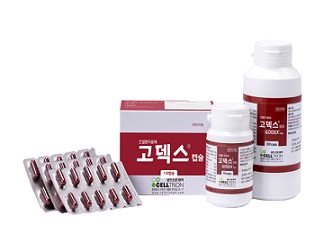
- Celltrion Pharm’s Godex cap, which was not recognized for its reimbursement adequacy and rejected reimbursement by the Health Insurance Review and Assessment Service’s Drug Reimbursement Evaluation Committee on the 7th, is drawing attention due to the possibility of receiving a reimbursement cut rather than a reimbursement deletion decision. The reason why this speculation is gaining strength is that other drugs that contain the same main active ingredient as Godex - biphenyl dimethyl dicarboxylate (BDD)- such as Pharma King’s Nissel Tab and its 2-drug combo Pennel Cap (BDD+garlic oil) are still listed and recognized for reimbursement in Korea. Also, the current drug pricing regulations are based around a phased price reduction system that cuts the price of original drugs with the entry of generics, forcing reimbursement deletions or cuts after reevaluations with no other follow-ons in the market may be considered somewhat irrational. Therefore, the industry speculation is that Celltrion Pharm will overcome the current situation using a voluntary drug price cut, which would reduce the price of Godex to the level set for single and two-drug combo agents as its negotiation card during the objection period after demonstrating Godex’s efficacy and effect through literature and clinical data. Godex, a combination drug that contains BBD and 6 other ingredients, is currently listed at ₩371. The two-drug combo Pennel is listed at ₩312, and the single-agent drug Nissel at ₩144. Under the indication approved by the Ministry of Food and Drug Safety, Godex is used to treat liver disease with increased serum glutamic-pyruvic transaminase (SGPT), and Nissel and Pennel are used to treat chronic persisting hepatitis. Based on the indication, Godex may be considered to be different from Nissel or Pennel. However, the API used in all three drugs, BDD, is a standardized and synthesized derivative of schisandra chinensis (Omija) that rapidly lowers the liver inflammation GPT level with its antioxidant action and normalizes ALT with little rebound effect. In this broader sense, the three drugs can be considered to be in the same drug group. The sales performance of each drug last year amounted to ₩53.8 billion for Godex, ₩0.3 billion for Nissel, and ₩5.9 billion for Pennel. No latecomer of the combination drugs Godex and Pennel has been released yet due to difficulty securing subjects for bioequivalence tests, etc. Among single agent drugs, 23 products including Nissel are currently competing in the ₩4 billion market. HIRA aims to consolidate NHI finances using its reimbursement adequacy reevaluation standard to adjust items that cost ₩20 billion or more in claims (0.1% of the NHI claims amount). Using Nissel and Pennel as comparators for Godex also reflects HIRA's determination. Then, by how much would Celltrion Pharm need to lower Godex’s drug price to persuade HIRA? Celltrion Pharm would have two options. First, it could reduce the price of Godex to align with the price of the two-drug combination Pennel at ₩312. In this case, Godex’s price will fall 15.9% from its current price. The other option is to accept Nissel’s price, which is listed at ₩144, and attempt a blowout reduction in its price, lowering the price by 61%. When only considering the situation where Godex’s reimbursement adequacy was already rejected without regarding the current drug price regulation or rationality, using Nissel’s price for the voluntary price cut would be safer than using Pennel’s price to persuade the members of DREC. If Godex, which makes external sales of ₩60 billion, continues to sell the same after a 15.9% price cut, the drug can maintain its position as a blockbuster drug, bringing in ₩40 billion. However, with a 61% price cut, the drug’s sales will drop under the "claims of ₩20 billion or more" guideline that was set for reevalurationalehis time, and nullify any rational HIRA has to reject the proposition. Also, the fact that a new administrative notice has been issued for the "Rule for Standard of Medical Insurance Benefits of National Health Insurance" that stipulates the patent continuity as a factor for reimbursement reevaluations in addition to the existing standards such as clinical efficacy and drug pin overseas countries, may also act as a factor. If the continuity of a patent is applied as a new standard in the reevaluation, Celltrion Pharm would need to take into account the patent expired status of Godex even after demonstrating Godex’s efficacy and effect through literature and clinical data. In this case, it would be more advantageous to reduce the price of Godex to the price level of the single-agent drug rather than the two-drug combination. Regarding the overall situation, an industry official said, “If Celltrion Pharm and HIRA do not come to an agreement during the arbitration period, it can result in a lawsuit. And the court may accept the injunction to suspend the deletion of reimbursement, considering the current drug regulation and reevaluation conditions. However, rather than turning for the worst, the company may pursue a lesser evil method and work to increase sales after undergoing a reimbursement cut.”
- Opinion
- [Reporter's view] The 2nd Danaher, SD BioSensor
- by Jul 13, 2022 06:05am
- Danaher is considered one of the leading companies in the global diagnostic market along with Roche and Abbott. Danaher's growth engine, born in 1984, lies in aggressive M&A. So far, it has grown in size with more than 50 M&As. Rather than developing its own technology when entering a new market, it mainly used the method of acquiring promising companies and settling in the market with active management participation. It has grown into a comprehensive medical device company by acquiring companies in various fields such as molecular diagnostic company Cepheid, tooth implant manufacturing company Nobel Biocare, and diagnostic reagent company Beckman Coulter. Danaher didn't just focus on increasing the size of the company. All of Danaher's M&A activities are based on the company's business philosophy, DBS (Danaher Business System). Danaher established its own business system DBS in accordance with Japan's Kaizen principle, which means 'continuous improvement'. DBS measures companies or businesses to be acquired according to four principles: people, planning, process, and performance, and prepares and applies strategic plans after the acquisition. By successfully implementing this DBS system, Danaher was able to achieve overwhelming growth compared to its competitors. Companies that want to become the second Danaher have also appeared in Korea. It is the SD BioSensor in the domestic M&A market recently. After steadily focusing on diagnostic research, sales rose vertically due to COVID-19, recording 3 trillion won last year. Operating profit also reached 1.364 trillion won. As of the end of the first quarter, SD BioSensor's cash and cashable assets were 1.1636 trillion won. Since then, SD biosensors have launched aggressive M&As. Following the purchase of Brazilian diagnostic device distributor Eco Diagnostica for 47 billion won, it acquired Italian Relab and German Bestbion for 61.9 billion won and 16.1 billion won, respectively. And on the 8th, it also decided to acquire Meridian Bioscience, a U.S. diagnostic device company. It is the largest deal in the domestic pharmaceutical industry, with a total acquisition volume of 2 trillion won. Meridian Bioscience is considered a diagnostic device company that is strong in diagnosing digestive systems. SD BioSensor announced additional mergers and acquisitions this year. It showed its ambition to secure distribution networks in major global countries. Chairman Cho Young-sik of SD BioSensor announced such a plan and said, "We will increase various diagnostic device products such as STANDARD M10 and grow it into a global company that can compete with Danaher." This is not just a meaning of growing size by acquiring companies, but a willingness to establish a business philosophy to pave the way for growth as a global company. We hope that the domestic pharmaceutical bio industry will also establish its own philosophy and show that it is willing to invest. It is hoped that a domestic pharmaceutical bio environment will be established to strengthen internal stability, increase appearance, and compete globally.
- Policy
- Companies are worried about the result of Godex revaluation
- by Lee, Tak-Sun Jul 13, 2022 06:04am
- CelltrionThe result of the revaluation of Celltrion Pharmaceutical's Godex raised concerns for some pharmaceutical companies. This is because the re-evaluation results came out around the time the development of generics began in earnest. According to an industry on the 8th, some pharmaceutical companies are developing generic drugs for Godex. Godex contains seven ingredients, including ▲Biphenyl dimethyl dicarboxylate, ▲antitoxic silver ext., ▲Adenine HCl, ▲Pyridoxin HCl, ▲Riboflavin, and ▲Cyanocobalamin. Since it is a product that generates 70 billion won in annual performance, it was a product that had a strong desire to develop generic drugs. In particular, small and medium-sized companies have steadily challenged. It is known that some companies solved all raw material problems and completed development right before commercialization test. Other pharmaceutical companies also paid attention to the results of Godex's revaluation. The HIRA Pharmaceutical Benefit Evaluation Committee decided on the 7th that Godex was not eligible for benefits. It is a big deal for companies preparing generic drugs. Some companies have also been interested in developing tablets for Godex, a capsule formulation. This is because Celltrion Pharmaceutical was expected to defend generic drugs through tablet development. However, there is no news of permission for Godex, which has been approved in phase 3 clinical trials. Except for Godex's benefit, the HIRA's development of tablets is also likely to be disrupted. This is because, regardless of the formulation, products with the same ingredient have been determined to be non-reimbursement. Therefore, generic drugs also make it difficult to be reimbursed. An official from a company said, "I understand that some pharmaceutical companies have been seeking to develop generica for Godex for a long time." He expressed regret, saying, "I would have identified and planned the original defense strategy, but if the HIRA takes measures to delete the final benefit, all of this will be ruined." The crisis of Godex's deletion of benefit was not only a problem for Celltrion Pharmaceutical.
