
- LOGIN
- MemberShip
- 2026-07-02 13:06:09
- Policy
- Hanall Biopharma's Glucofree OR is back
- by Lee, Tak-Sun Jul 12, 2022 05:53am
- Metformin OR products, which had been suspended due to the detection of excess NDMA of carcinogenic substances, are returning. Hanall Biopharma products have also returned to the reimbursed market with their names changed. With the emergence of them, competition is expected to intensify as the imbalance in supply and demand of Metformin OR is resolved. According to an industry on the 11th, Metformin OR products of Hanall Biopharma and Daewoong Bio have recently been lifted. The items are Hanall Biopharmas Glucofree OR 500mg, Glucofree OR 750mg, and Daewoong Bio's Diaformin XR 500mg and Diaformin XR 750mg. Hanall Biopharma's Glucofree OR is the name changed from Glucodown OR. Glucodown OR was the second highest-selling product in the Metformin single-product market after the original Diabex (Daewoong Pharmaceutical). In May 2020, manufacturing and sales of NDMA, a substance that is feared to cause cancer, were suspended because it exceeded the provisional management standards. Hanall Biopharma has been able to lift its manufacturing and sales suspension by changing it to an impurity-free product for about two years. Daewoong Bio's product, which was manufactured at the same factory and stopped manufacturing and selling together, has also returned. With the re-launch of the two products, worries about supply and demand can be eased, especially in the Metformin OR 750mg market. As the two products disappeared, Metformin OR 750mg was the only Metformin OR 750mg of Yuhan. Since the suspension of sales in 2020, the demand for Metformin OR 750mg has increased rapidly, making it difficult to supply it. 45 items in the Metformin OR 500mg market receive benefits. Hanall Biopharma and Daewoong Bio are also working to lift the suspension for 1000mg OR products. Before the suspension in 2020, Hanall Biopharma was the only competitive drug for imported Glucophage XR 1000mg and Diabex XR 100mg for domestic brands. Now, the number of competitive domestic drugs has increased as Dalim Biotech and Yuhan Corporation have newly entered. Hanall Biopharma and Daewoong Bio are members of Daewoong Pharmaceutical Group. Although Daewoong Pharmaceutical continues to rank No. 1 in the Metformin single-product market with its marketing import Diabex, its own production items of Hanall Biopharma and Daewoong Bio are also strategically important. This is because it is necessary to maintain the overwhelming market share of Daewoong Pharmaceutical Group while being a domestically produced product that can check imported items. Metformin preparation is the primary essential drug for patients with secondary diabetes. As a result, it is expected that Yuhan and Dalim will compete fiercely with Hanall Biopharma and Daewoong Bio for the first place as they are growing high in the single market of Metformin after the suspension of sales.
- Company
- Vyzulta reimbursed and prescribed at general hospitals
- by Eo, Yun-Ho Jul 12, 2022 05:53am
- The glaucoma treatment ‘Vyzulta’ has received approval for insurance benefits and is landing at general hospitals in Korea. According to industry sources, Baush + Lomb Korea’s ophthalmic solution Vyzulta (latanoprostene bunod) has passed the drug committees of various medical institutions including the Seoul National University Hospital and Gangnam Severance Hospital. Vyzulta, which was approved in Korea in February last year, passed the Health Insurance Review and Assessment Service’s Drug Reimbursement Evaluation Committee (DREC) deliberations in the August of the same year and was listed for reimbursement starting February this year. Vyzulta is an ophthalmic solution that reduces intraocular pressure (IOP), which is a risk factor of glaucoma, and is indicated for the reduction of intraocular pressure in patients with open-angle glaucoma or ocular hypertension. Drug treatment to reduce IOP is currently considered the most effective treatment for glaucoma. Vyzulta has two separate MOAs for drainage and is metabolized into two moieties1 – its API Latanoprost acid and nitric oxide –to reduce IOP through by increasing the outflow of aqueous humor through both uveoscleral and trabecular meshwork channels Also, Vyzulta demonstrated a superior mean IOP reduction effect over latanoprost 0.005%, a common glaucoma treatment, and demonstrated statistically significantly greater mean IOP reduction over Timolol 0.5% in clinical trials. Meanwhile, Vyzulta’s had costed around ₩110,000 per year without reimbursement, but the patient’s out-of-pocket cost was reduced to around ₩30,000 per year with reimbursement, being applied a 30% coinsurance rate.
- Company
- Johnson & Johnson Medical Devices changed its name
- by Eo, Yun-Ho Jul 12, 2022 05:53am
- Director Oh Jin-yong Johnson & Johnson Medical of Korea announced a new start with a change of name. The company held a press conference explaining the "J&J MedTech" rebranding at The Plaza Hotel in Jung-gu, Seoul on the 11th and announced its vision to lead innovation in the future medical market combined with digital as a global leading company. Johnson & Johnson's medical device division, a U.S.-based global healthcare company, changed its name from Johnson & Johnson Medical Devices to Johnson & Johnson MedTech in March. The name of the Korean branch will be maintained by the existing Johnson & Johnson Medical Center. The event was announced by Oh Jin-yong, president of North Asia, and introduced a new corporate vision and business direction focusing on digital transformation. President Oh pointed out the recent rapid development of digital transformation throughout the industry, and in line with this, Johnson & Johnson Medical Korea will make a new leap forward as a medtech company that encompasses not only medical devices but also digital solutions such as robotic surgery and medical software. As a specific strategy, it plans to develop new models of future healthcare in the digital era, contribute to improving human health through state-of-the-art technology and innovation, and present integrated solutions for optimal treatment away from existing products to focus on overall health. "The transition to &J MedTech is part of efforts to provide innovative treatment solutions to meet the rapidly digitizing medical environment and patient demand. "Our vision is to provide smarter, less invasive, and more customized treatment for patients by utilizing advanced technologies such as AI, machine learning, data science, and virtual reality," he said. To this end, three future directions were presented, leading the healthcare innovation, developing digital healthcare solutions that encompass the entire process of patient treatment, and optimal treatment using data science. It will also continue to cooperate closely with medical personnel to reflect the demand of clinical sites and to create a better medical environment. President Oh Jin-yong said, "The Korean medical device market is emerging as a center of Meditec innovation in the Asia-Pacific region thanks to continuous growth and the emergence of ventures with innovative technologies and global competitiveness." Johnson & Johnson Medical Korea is a global company that has provided medical devices and digital solutions for 34 years since its establishment in 1988, and consists of major business units such as ETHICON, which provides surgical medical devices and digital solutions, DePuy Syntes, and CSS (Cardiovascular & Specialty Solutions).

- Company
- NPS buys Samsung Biologics and SD Biosensor shares
- by Kim, Jin-Gu Jul 12, 2022 05:52am
- In the midst of the prolonged contraction observed in the Korean stock market, Korea’s largest institutional investor, the National Pension Service (NPS), was found to have expanded its investment in biotech/pharma companies by nearly ₩500 billion. NPS net purchased ₩140 billion worth of Samsung Biologics shares and increased investment in SD Biosensor, Celltrion, Hanmi Pharmaceutical, Celltrion Healthcare, and Daewoong Pharmacuetical by over ₩50 billion. Also, NPS net sold over ₩50 billion worth of Yuhan Corp’s shares and over ₩40 billion worth of SK Bioscience shares during the same period. ◆NPS increases investment in Samsung Biologics and SD Biosensor again this year… turns to net purchases from net selling According to the Korea Exchange on the 11th, NPS net sold ₩417.3 billion worth of shares in the domestic securities market and the KOSDAQ market in the first half of this year. However, no large-scale net sales like the ones made last year were observed. Last year, NPS had net sold shares worth ₩2.4 trillion after deciding to curtail local equity exposure to 16.8%. In the Pharma/Bio industry, NPS was found to have made more purchases than sales. It sold a total of ₩2.43 trillion and bought ₩2.89 trillion, resulting in net sales of ₩459.2 billion. In particular, NPS increased investment in Samsung Biologics, SD Biosensor, Celltrion, Hanmi Pharmaceutical, Celltrion Healthcare, and Daewoong Pharmacuetical by over ₩50 billion. NPS net purchased Samsung Biologics shares worth around ₩140.1 billion in only the first half of this year. This is analyzed to be NPS’s decision to continuously expand investment in Samsung Biologics this year. NPS had net bought ₩917.9 billion shares of Samsung Biologics’ stocks last year. NPS is also continuously increasing investment in SD Biosensor and had net purchased shares worth ₩95.3 billion in the first half of this year. NPS had net purchased ₩124.3 billion worth of SD Biosensor’s shares last year. In addition, NPS had net purchased over ₩70 billion worth of shares in Celltrion, Hanmi Pharmaceutical, and Celltrion Healthcare each in the first half of this year. The institution’s decision to purchase Celltrion’s shares again is a focus of interest as it had net sold ₩648.6 billion of Celltrion’s shares last year. NPS had net sold over ₩600 billion last year and then turned to net purchase over ₩70 billion in the first half of this year. NPS had also net purchased shares over ₩10 billion in 18 companies including Daewoong Pharmacuetical, ST Pharm, SK Biopharmaceuticals, Hanmi Science, Lutronic, Osten Implant, Daewoong, GC Pharma, Jeisys Medical, Dentium, Ray Pharma, PharmaResearch, and Pharmicell. ◆NPS net buys ₩280 billion of SK Bioscience shares last year but net sells ₩43 billion in 2022 1H On the other hand, NPS sold a large number of shares it owned in Yuhan Corp, SK Bioscience, Bukwang Pharmaceutical, Mezzion, Hugel, and GC Cell. In particular, SK Bioscience and GC Cell moved from the top net bought shares last year to the top net sold shares in the first half of this year. In the case of Yuhan Corp, NPS bought ₩86.2 billion and sold ₩140.3 billion in 1H this year, resulting in net sales worth ₩54.1 billion. Also, NPS net sold ₩43 billion worth of SK Bioscience’s shares in the first half of this year. This is in stark contrast to how the company net bought ₩280.3 billion last year. Also, NPS net purchased ₩112.2 billion last year, but net sold ₩11.9 billion of SK Bioscience’s shares in the first half of this year. NPS also net sold over ₩10 billion worth of shares from Bukwang Pharmaceutical (₩26.5 billion), Mezzion (₩19.8 billion), and Hugel (₩19.3 billion).

- Company
- Will Celltrion Pharmaceutical voluntarily cut down on Godex?
- by Nho, Byung Chul Jul 12, 2022 05:52am
- Celltrion Pharmaceutical's Godex is on the verge of being expelled from insurance registration, and it is expected to cut voluntary drug prices at the level of comparative drugs as the last defense measure to maintain benefits. The reason why Celltrion Pharmaceutical's strategy is drawing attention is that if Godex, which looks like 60 billion won, is deleted, it is inevitable to lose about 20% of its total sales, which is expected to make every effort to maintain insurance drugs through clinical utility proof. Godex was not recognized for the appropriateness of the benefit at the 7th review of the Pharmaceutical Benefit Evaluation Committee held on the 7th, but the final results may change depending on the evaluation of the objection. This re-evaluation project is planned for five years from 2021 to 2025, and it is difficult to overcome obstacles in this way because it contains more than 20 billion won, or less than one country among A8 countries, or drugs pointed out by the committee due to insufficient policy, social needs and usefulness. It is insufficient to judge the HIRA's expression of its willingness to derive reasonable drug prices by comparing clinical usefulness and drug prices in excluded countries with domestic released drugs as simply proof of usefulness. The most effective means is the voluntary reduction of drug prices to the level of a single drug (or Pennel Cap ( 312 won ) with the same main ingredient). Godex capsules contain 25mg of Biphenyl Dimethyl Dicarboxylate, 500μg of Riboflavin, 125μg of Cyanoborate, 2.5mg of Adenine HCl, 25mg of Pyridoxynate, and 150mg of Carnitine Orotate. A comparative drug with the same main ingredient is Pharmaking's Nissel (144 won). Despite the expiration of Godex patents, many pharmaceutical bio companies failed to release generics because they could not successfully derive biological equivalence test data for other auxiliary substances except biphenyl dimethyl Dicharboxylate, the main ingredient. It is true that even though Godex is a composite agent, if the drug price is the same as the single drug Nissel by giving up the drug price value for the rest of the ingredient combination except for the main ingredient, the HIRA lacks the reasonable logic to prevent it. Sales of Godex could be halved due to a benefit cut of 371 won → 144 won, but it can actually prevent it from leaving the market and restore it to its original state according to its sales strategy, which is likely to reduce its weakness. It is logical that Celltrion Pharmaceutical's the HIRA limit is unfair to reduce the benefit of Godex capsules, a composite drug, at a time when insurance registration and benefits continue due to the clear effect of a single product. In addition, under the current regulations, drug prices fall only when generics enter, but there is a logic that it is unreasonable to target them for re-evaluation even though generics has not been released.
- Policy
- Reimbursement of new migraine drugs gain momentum
- by Lee, Tak-Sun Jul 11, 2022 06:04am
- New migraine drug Reyvow receives conditional approval from the DREC on the 7th New migraine drug Reyvow receives conditional approval from the DREC on the 7th New migraine drugs are competitively pushing to receive reimbursement listing in Korea. Following Lilly’s ‘Emgality (galcanezumab)’ in May, Ildong Pharmamceutical’s ‘'Reyvow (lasmiditan)’ has also passed deliberations by the Health Insurance Review and Assessment Service’s Drug Reimbursement Evaluation Committee (DREC) on the 7th. With Emgality already in pricing negotiations with the National Health Insurance Service, Il Dong is also working to speed up the listing process for Reyvow. Also, Teva-Handok’s new migraine drug ‘Ajovy’ is being reviewed for reimbursement adequacy. The industry analysis is that all 3 new migraine drugs may be reimbursed within the year. Reyvow passed DREC review in only 2 months after it received approval in May through the approval-assessment linkage system. This is evidence that its importer and seller, Ildong Pharmaceuticals, is making efforts to speed up Reyvow’s reimbursement process. Therefore, if the price level presented by DREC close to the company’s estimate, the two parties may immediately begin pricing negotiations. Reyvow selectively inhibits serotonin 5-HT 1F receptor. Triptan-class drugs, which are most commonly used for migraines also work on serotonin but may constrict the blood vessels and cause cardiovascular diseases such as myocardial infarction, strokes, etc. On the other hand, Reyvow, a selective inhibitor, has the advantage of causing fewer cardiovascular side effects. If a patient has difficulty receiving triptans due to side effects, Reyvow would rise as a viable option. Also, both the triptans and Reyvow come in tablet formulations. The other two, Emgality and Ajovy, are injection-type formulations. Both are humanized monoclonal antibody drugs that bind to the CGRP ligand that plays a key role in inducing migraine symptoms to inhibit its binding to its receptor. Therefore, the drugs are known to cost millions of won per year, much more expensive than the existing drugs. This is why the listing price of Emgality and Ajovy is also the focus of attention. Existing triptan class drugs are listed at 3,000 to 4,000 won per tablet, but the price of Emgality and Ajovy will have to be much higher than triptans as they use a different mechanism of action to improve treatment effect. Their formulation, as injection-type drugs, also differs from triptans. However, like triptans, Reyvow is a tablet formulation that acts on serotonin, therefore the price of the listed triptan class drugs may be used as a reference in Reyvow’s pricing. With Emgality at the forefront of the listing process, Teva and Ildong will first be keenly eyeing what price will be set for Emgality. As Teva has applied to hold a briefing session on Ajovy for HIRA reviewers, its reimbursement is also expected to be deliberated by DREC soon. The Korean migraine treatment market has remained small compared to its patient size. Accoring to UBIST in 2020, annual prescriptions of triptan-class drugs were at a 15.5 billion won range. However, the prevalence rate of migraines in Korea is 6%. According to HIRA's statistics, 550,000 patients received medical treatment for migraines, but around 2 million patients are estimated to have not visited hospitals or clinics for their condition in 2020. Therefore, the release of new drugs in the field is expected to further increase the market size.
- Policy
- ↑Rosuvastatin when combined with Brilinta/Rosuvastatin
- by Lee, Hye-Kyung Jul 11, 2022 06:04am
- According to a recent review of EMA safety information, the MFDS decided to establish a new clause on the interaction that combination of Ticagrelor and Rosuvastatin can affect kidney excretion and increase the risk of Rosuvastatin accumulation. According to the new clause, the exact mechanism of action for side effects was not known, but combination of Ticagrelor and Rosuvastatin resulted in decreased kidney function, increased CPK levels, and rhabdomyolysis. Ticagrelor, including Brilinta, is an ingredient that has been approved as a Ticagrelor in Korea. There are 76 items including 60 mg inno.N, Ahngook Ticagrelor, Brigrelor, Boryung Ticagrelor, Ticavix, Tirelor, Ticagrin, Hurorinta, Ticagen, and Brelor. The full-fledged launch is November, when Brilinta's material patent expires, and 25 items, including Boryung Ticagreler, have acquired generic for exclusivity from November 21 this year to August 20 next year. Brilinta, a representative item of Ticagrelor, was licensed for a new drug in 2011 to reduce the incidence of thrombotic cardiovascular events. The MFDS plans to change the permission after conducting an opinion inquiry by the 22nd.

- Company
- 4th JAKi Cibinqo to be prescribed in general hospitals
- by Eo, Yun-Ho Jul 11, 2022 06:03am
- The fourth JAK inhibitor ‘Cibinqo ‘ has landed at general hospitals in Korea. According to industry sources, Pfizer Korea’s new Janus kinases (JAK) inhibitor ‘Cibinqo (abrocitinib)’ passed the drug committees (DCs) of various medical institutions in Korea, including the Seoul National University Hospital. The drug, which is approved for atopic dermatitis, is Pfizer’s follow-up of ‘Xeljanz (tofacitinib)’ that is set to compete with ‘’ Lilly Korea’s ‘Olumiant (baricitinib),’ ‘Abbvie’s ‘Rinvoq (upadacitinib)' for the same indication. Olumiant and Rinvoq were approved for reimbursement in May this year, and the reimbursement listing process for Cibinqo is also in progress. Cibinqo received marketing authorization in November last year when the reimbursement listing for Olumiant and Rinvoq was under review. As a JAK1 inhibitor, the drug modulates multiple cytokines involved in the pathophysiology of atopic dermatitis, including interleukin IL-4, IL-13, IL-31, IL-22, and thymic stromal lymphopoietin (TSLP). It is indicated for the treatment of adults and adolescents over the age of 12 with moderate-to-severe atopic dermatitis. Cibinqo demonstrated its efficacy through the Phase III trials JADE MONO-1, MONO-2, COMPARE, etc. The drug reduced the Eczema Area and Severity Index (EASI) by over 70% at Week 12 and demonstrated an improvement in itch relief 2 weeks after initiating treatment. Its pivotal study, JADE Mono-1, was designed to evaluate the efficacy and safety of two doses (100 mg and 200 mg once daily) of Cibinqo monotherapy in patients 12 years of age and older with moderate-to-severe AD for 12 weeks. Results showed that 63% of the Cibinqo 200 mg administered group had achieved an EASI-75 (improvement of at least 75% in lesion extent and severity) at Week 12, which was a significant improvement compared to the 12% in the placebo group. Also, the rate of patients that achieved EASI-90 at week 12 had been 39% in the Cibinqo group and was higher than the 5% in the placebo group.
- Policy
- New Donepezil & a dilemma over low drug prices
- by Lee, Tak-Sun Jul 11, 2022 06:03am
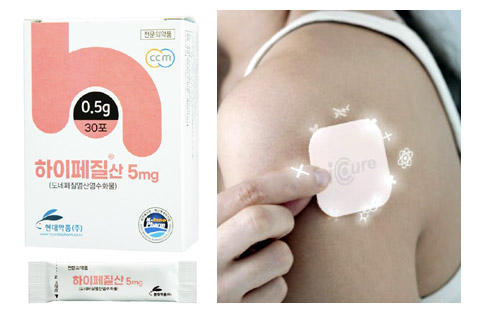
- Hypezil Powder 5mg (left) and IcureDomestic pharmaceutical companies are releasing a new form of Donepezil, a component of dementia treatment, but existing low-cost drugs are acting as a dilemma. Donepezil accounts for about 80% of dementia treatments, so competition among the same products is fierce. As there are 150 pharmaceutical companies with the same ingredient products, the drug price is breaking the lowest price every time. According to the industry on the 7th, Hyundai's Donepezil, Hypezil Powder 5mg, has been applied to the market since this month. This product is expected to be useful for patients who have difficulty swallowing existing tablets because it can be taken in water. The upper limit is 1,700 won. The MFDS recognized this product as a new formulation and approved it as a drug that submitted data. Therefore, if the drug price is calculated based on the standard for calculating the drug price, there is a possibility that the upper limit amount will be determined at 90% of the highest price of the existing product with the same ingredient. As the highest price of Donepezil 5mg is 2,060 won, 90% of this price is 1,854 won. However, Hyundai voluntarily lowered the price from the calculation standard and registered it as 1,700 won. In fact, 1700 won is also a high price based on the Donpezil 5mg. Because the current lowest price is 500 won. As 127 pharmaceutical companies compete for Donepezil 5mg alone, the lowest price is breaking every time a generic comes out. Therefore, it is analyzed that Hyundai, which is releasing new products, had no choice but to take into account the price competitiveness of the Donepezil market. Among the new Donpezil formulations, the patch system is expected to be released as early as the next day. This is because Donerion Patch (Celltrion) was conditionally passed by the Committee of the HIRA in May, are at the end of drug price negotiations. Since Daewoong Pharmaceutical's Fexuclu, which passed the committee's review on the same day, released this month, Celltrion and Icure's Donpezil defeat are also expected to be listed soon. The Committee judged that the benefit was appropriate when accepting less than the evaluation amount, but the industry believes that the committee calculated the drug price lower than the pharmaceutical company's expectations. Developer Icure was also initially in a position to release the drug at a lower price than the original drug Aricept, but it is said that a lower drug price was suggested. The industry analyzes that if alternative drugs were included, they would fall short of the company's expectations. For example, the average price of the original and generic 10mg is 2,040 won, which is cheaper than the original Aricept 10mg (2,265 won) as well as the developer Icure's Penedo 10mg (2,460 won). Considering the compliance of dementia patients, it is analyzed that the use of patch drugs is better, so even if the drug price is low, it can record high performance due to its high usage. The market seems to be at a disadvantage for product developers because Donepezil prices are too low.
- Company
- ER contraceptive market battles over original & generics
- by Nho, Byung Chul Jul 11, 2022 06:03am
- Norevo (Levonorostrel 0.75mg) and Elaone (Ulipristal Acetate 30mg), which Hyundai Pharmaceutical received import licenses from HRA Pharma in 2001 and 2011, by a 10-year gap, are emerging as icons of changes in the emergency contraceptive market. Emergency contraceptives have been submitted to the Central Pharmaceutical Review Committee of the MFDS and classified and maintained as Rx drugs during the reclassification process of Rx drugs vs OTC. In 2014, seven years after Norevo, the first product of this series, was approved, the emergency contraceptive market showed box-office performance after forming about 8.7 billion won in appearance. In the past five years, the CAGR has been showing a gradual decline, with -2.6% based on market value and -4.9% based on prescription quantity. It is observed that the market of Levonorgestrel, where each brand's products were licensed and generic appeared less than a year after patents were not protected, has been bisected by the launch of Ulipristal in 2011. The share of Ulipristal products, which was 21% in 2013, the third year of its launch, has remained at 45% until last year since entering the 40% range in 2016. Ulipristal preparations have the advantage of extending the emergency contraceptive effect from 72 hours (3 days) to 120 hours (5 days) after the relationship. As mentioned above, the size of the oral emergency contraceptive market itself is stagnant, but new changes are also expected under the surface. Pharmaceutical companies that have oral hormone preparation facilities include Myungmoon Pharm, Dalim Biotech, and GL Pharma. GL Pharma, which entered the market last, is expanding its market share to 28% by manufacturing a total of six items, including its own product, Sexcon One. Hyundai Pharmaceutical's 5-year CAGR of Norevo one was -6.5%, and GI Medics' Phostino-1 sold by Bayer Korea had a CAGR of -20.4% during the same period, and its market share also decreased by more than half from 22% to 10%. Given this situation, the challenge of emergency contraception by Ulipristal's first generic, Ellaoil (authorized on June 13, 2022/GL Pharma), is drawing attention from the industry. Attention is being paid to THEU's move, which quickly rose to second place (23%) in market share from Levonorgestrel. The price change due to the shift in market flow from monopoly to oligopoly is also another point to watch. Four first generics companies, including GL Pharma, are competing with HRA Pharma, a French emergency contraceptive developer, to determine the scope of rights and to sue for patent infringement.
