
- LOGIN
- MemberShip
- 2026-07-02 13:07:11
- InterView
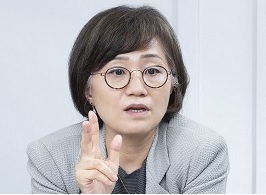
- "Leclaza’s mOS data of 38.9 months is remarkable"
- by Kim, Jin-Gu Jul 04, 2022 05:55am
- “The fact that Leclaza (lasertinib) achieved an OS (overall survival) of over 3 years is remarkable.” New OS data on the homegrown novel lung cancer drug Leclaza that was presented at the AOS 2022 & KCA Annual Meeting 2022 that was held recently in Seoul drew the pharmaceutical industry's attention. The results were from a trial that evaluated the efficacy and safety of continuous daily oral administration of Leclaza 240mg on 78 adult patients with EGFR mutation-positive NSCLC whose disease had progressed after EGFR TKI that was conducted in 17 centers in Korea. Analysis results on the 76 EGFR T790M mutation-positive patients showed that the median overall survival (mOS) was 38.9 months This updated data is being received with significance in the field. The OS data is comparable to the results of the 3rd-generation EGFR mutation-positive NSCLC treatment ‘osimertinib (product name: Tagrisso),’ while owning the potential for its use as monotherapy. Ji-Youn Han, Professor of Hemato -Oncology at the National Cancer Center who presented Leclaza’s OS results at the AOS 2022 & KCA Annual Meeting 2022, said, “The most important index used to assess the efficacy of anticancer drugs in clinical trials ultimately comes down to the patients' OS improvement. Long-term follow-up results of LASER201 trial showed that mOS of patients that received Leclaza reached 38.9 months. This is remarkable performance.” ◆"Cannot make direct comparisons…but results are as good as Tagrisso’s” Han highly rated the fact that Leclaza showed comparable performance to existing targeted therapies, although a direct comparison cannot be made to its competitor, osimertinib. Although various clinical trials are in progress for the first 3rd-generation EGFR targeted therapy. osimertinib, due to varying clinical trial designs and characteristics of registered patients, it is difficult to individually compare each trial's results with Leclaza’s. Also, Leclaza's trials are in their Phase I/II stage, but osimertinib's trials have progressed to Phase III. However, according to the Phase III AURA trial, osimertinib’s representative trial, the mOS was around 26 to 28 months in general, with some differences between countries. “Compared to osimertinib, which is used as the global standard of care, Leclaza is only available for use in Korea. However, data shows that Leclaza’s results are as good as the standard of care. Leclaza’s clinical data as demonstrated through LASER201 is being received without disagreement globally.” ◆" Leclaza has a low incidence of interstitial pneumonia·thrombocytopenia" Han also emphasized Leclaza’s safety. Leclaza has a lower incidence of adverse events than even its competitor osimertinib as well as 1st- and 2nd-generation EGFR targeted therapies. 1st and 2nd generation EGFR targeted therapies had higher skin toxicity. The drugs, although effective against lung cancer cells, also targeted normal skin cells, resulting in patients suffering from skin troubles such as rashes or itching. On the other hand, 3rd generation-targeted therapies selectively target mutations and therefore is less toxic and more efficient. This comes as a significant difference to the patients in terms of quality of life. In particular, Han explained that the two 3rd generation targeted therapies – osimertinib and Leclaza -differ in the adverse events aspect. With her experience prescribing Leclaza over the past year, Han explained that “long-term use of osimertinib may cause interstitial pneumonia or thrombocytopenia in the patients. One aspect I found interesting while monitoring the long-term safety profile of Leclaza demonstrated through the Phase I/II trial was that it had a very low incidence of interstitial pneumonia or thrombocytopenia. “ Han added, “From the patient’s perspective, Leclaza’s lower incidence of adverse events during the 3 years of intake may come as a great advantage. Grade I or II level numbness has been found with the use of Leclaza, but was infrequent.”
- Opinion
- [Reporter's view] Looking forward to another K-COVID vaccine
- by Lee, Hye-Kyung Jul 04, 2022 05:55am
- A pure domestic COVID-19 Vaccine No. 1, which was conducted by a domestic pharmaceutical company in charge of the entire process from development to production of raw materials and finished products, was released. The MFDS approved SK Bioscience's SKY Covione on the 29th. It took 549 days (1 year and 6 months) from approval of the initial clinical trial to approval of the item. SKY Covione was developed as GBP510 in May 2020 conduct non-clinical tests with the support of the Gates Foundation On December 31 of that year, phase 1 was obtained from the MFDS. Phase 3 approval, the final stage of the clinical trial, took place on August 10 last year, and it was the first time that a COVID-19 vaccine developed by a domestic company entered phase 3, and a comparative clinical method that proved its effectiveness compared to an already approved vaccine became the second in the world. Analysts say that the reason why the launch of K- COVID-19 vaccine No. 1 was moved forward has also had a significant impact on comparative clinical trials. The background of the comparative clinical design was the support of the MFDS. The MFDS operated a clinical support consultative body and supported companies to design and perform clinical trials without trial and error. It is rumored that SKY Covione chose a comparative clinical method that compares immunogenicity with AstraZeneca's Vaxzevria thanks to the design support of the MFDS. This is because it was difficult to perform clinical trials to see how much placebo and test drugs prevent the outbreak of COVID-19 at a time when most people were vaccinated during phase 3 of SKY Covione. The MFDS is operating our vaccine project to actively support the entire vaccine process from research and development of domestic vaccines to permission, and on April 25, a productization strategy support group was launched to systematically support all stages from development of public health crisis, new and new drugs, innovative medical devices, and rare drugs. Currently, EuBiologics' EuCorVac has entered phase 3 clinical trials after SKY Covione. ST Pharm, Cellid, and Quratis are in phase 1, and EyeGene and Geneone are in phase 1/2a. We hope that these companies will also be able to be approved as the second and third COVID-19 K vaccines through cooperation with the MFDS.
- Company
- CKD voluntarily discontinues P3T on its COVID-19 therapy
- by Kim, Jin-Gu Jul 04, 2022 05:55am
- Chong Kun Dang issued a public notice on the 1st that it will discontinue the Phase III trial on its CKD-314 (Nafabeltan Inj.) it had been developing as a COVID-19 treatment. Chong Kun Dang explained, “We found it difficult to conduct a clinical trial to identify the patients’ rate of progression to severe disease due to the reduced incidence of COVID-19 and the majority receiving inoculation in Korea. Therefore, in consideration of expert opinion and the comprehensive situation, we decided to discontinue the trial.” Chong Kun Dang started the development of the COVID-19 treatment in earnest after receiving approval for its Phase 2 trial protocol on Nafabeltan in July 2020. The trial was designed as a drug repositioning trial to assess the possibility of using Nafabeltan, a drug that was already approved as a treatment for acute pancreatitis, to treat COVID-19. Afterward, the company started to conduct a large-scale Phase III trial on 600 patients globally in April last year. However, this April, the company filed an application to switch the global trial to a domestic trial. As such, news of discontinuation or early termination of clinical trials has been continuing from COVID-19 treatment developers in Korea. After Celltrion announced its discontinuation of developing its inhaled COVID-19 antibody therapy on the 28th of last month, Crystal Genomics also announced the early termination of its trial on the morning of the 1st of this month. With 3 companies announcing discontinuations just this week, the pharmaceutical industry believes more announcements are waiting to come in the near future. With Chong Kun Dang’s discontinuation, 17 companies are currently officially conducting clinical trials to treat COVID-19 in Korea.
- Company
- Lotte Biologics cooperates with Sigma
- by Jul 04, 2022 05:54am
- Lotte Biologics announced on the 1st that it has signed a business agreement with Millipore Sigma, Merck's North American life science division to strengthen its bio business capabilities. With this agreement, the two companies will cooperate in promoting new biopharmaceutical businesses such as next-generation treatments and expanding Syracuse factories in the U.S. Millipore Sigma is a life science division in North America operated by Merck, a global science and technology company based in Germany. Lotte Biologics will receive overall technical support related to its bio business, including manufacturing solutions and human resource training, from Millipore Sigma. Lotte Biologics expects to speed up its bio business through the development of biopharmaceutical processes owned by Merck Group's life science division and exchange of experience in GMP manufacturing for more than 30 years. Merck Life Sciences Division has supported more than 280 biopharmaceutical companies to enter the market and has experience in launching more than 100 GMP drugs since 2012. Lotte Biologics is expanding its external activities to upgrade its bio business by attending events hosted by foreign government agencies and striving to raise global awareness. CEO Lee Won-jik attended "JOIN SWEDEN SUMMIT 2022" held in Stockholm, Sweden from the 20th to the 21st of last month and had opportunities to promote Lotte Biologics' business and exchange globally. JOIN SWEDEN SUMMIT 2022 is an international political and business conference in which more than 100 global business leaders, Swedish governments and corporate representatives from major Swedish trading partners, including Korea, gather together to explore new collaboration and investment possibilities. Global Big Pharma and promising bio-ventures such as Gilead, Roche, Biogen, Johnson & Johnson, Sanofi, AstraZeneca, Pfizer, and BioArtic participated in the event. Lotte Biologics conducted exchanges with the companies to find ways to cooperate with each other and establish a network of potential customers. CEO Lee said, "We will strengthen cooperation with global bio companies to improve the quality reliability of products produced after the acquisition of Syracuse plants is completed. We plan to increase global awareness and focus on production volume orders by attending major biopharmaceutical events."
- Policy
- Korea joined the COVID-19 vaccine development country
- by Lee, Hye-Kyung Jul 04, 2022 05:54am
- As SK Bioscience's COVID-19 vaccine SKY Covione received an item permit today (29th), Korea has become a country with both COVID-19 treatments and vaccines along with Celltrion's COVID-19 treatment Regkirona. Oh Yu-kyung, Minister of Food and Drug Safety announced on June 29 that it decided to grant item permission on condition that SKY Covione, a COVID-19 vaccine developed by SK Bioscience and applied for permission to manufacture, sell, and item, submit a final clinical trial result report. SKY Covione is a COVID-19 vaccine that induces an immune response by administering antigen proteins made using gene recombination technology. This product was licensed for the purpose of preventing COVID-19 in adults over the age of 18. For usage/dose, 0.5mL of an antigen vial mixed with the immune enhancer (AS03) is inoculated twice every four weeks. SKY Covione is a COVID-19 vaccine developed and manufactured by a domestic company, and is a hot topic as it is approved by the MFDS for the first time in the world. The MFDS operated vaccine projects to support the development of the domestic COVID-19 vaccine quickly amid the COVID-19 situation, intensively and systematically. Since September 2020, a permission review team consisting of reviewers with extensive experience in screening has been set up to support the development and commercialization of COVID-19 vaccines and treatments, and customized consultations and preliminary reviews by non-clinical, clinical, and quality stages. It supported the design of clinical trials by preemptively introducing an immunogenic comparative clinical trial method so that phase 3 clinical trials, which are a key stage of product development, can be carried out scientifically and quickly. It led discussions in meetings and workshops between regulatory agencies so that the immunogenic comparative clinical method could be recognized internationally, and reflected in the WHO guidelines published in March. Unlike the previously approved COVID-19 vaccine, the COVID-19 vaccine permit is also significant in that the MFDS evaluated safety, effectiveness and quality of the COVID-19 vaccine developed by Korean companies throughout the development stage. The MFDS held a final inspection committee at 10 a.m. on the 29th, which is the final screening stage for SKY Covione The MFDS received an application for SKY Covione on April 29, and the COVID-19 treatment and vaccine permission review team focused on data necessary for permission such as non-clinical, clinical, and quality. The clinical trial review evaluated safety and effectiveness through a total of two data, including one clinical trial (phase 1) conducted in Korea, one clinical trial (phase 3) conducted in six countries, Korea, the Philippines, Ukraine, Thailand, Vietnam, and New Zealand. In addition to reviewing data such as manufacturing methods, standards, and test methods, GMP implementation of domestic manufacturing plants were evaluated whether they had facilities and management systems that could consistently produce quality through on-site inspections. With the approval of SKY Covione, we can expect Korean companies to enter the global vaccine market in earnest in the future. SK Bioscience is pushing for the registration of the WHO Emergency Use List (EUL) and plans to prepare for the supply of vaccines through COVAX FACILITY. This licensed vaccine can be stored in a refrigerated storage (2 to 8℃), so even countries that do not have ultra-low temperature distribution equipment can expect effective use in quarantine. The MFDS said, "We launched a commercialization strategy support group to support rapid entry into the market of public health crisis drugs, new concepts, and new technology drugs, linking development, non-clinical, clinical trial, and licensing reviews, and strengthening the function of providing professional services for clinical trial design." It added that a total of 22.6 billion won (2022) was invested in building infrastructure through vaccine safety technology support centers, and that it is expected to have synergy effects in supporting drug development companies by promoting basic counseling on vaccine development, quality and clinical training. Oh Yu-kyung, Minister of Food and Drug Safety said, "The MFDS has thoroughly verified safety and effectiveness through a triple advisory process and approved SKY Covione of SK Bioscience." "In the future, we will work with various institutions to preemptively respond to future infectious diseases," she said.
- Policy
- Evusheld granted emergency use for preventing COVID-19
- by Lee, Hye-Kyung Jul 01, 2022 05:50am
- With the emergency use authorization has been granted for ‘Evusheld Inj,’ the first-ever preventive antibody therapy for COVID-19 in Korea, the drug is expected to be used in immunocompromised patients who are unlikely to mount an adequate response to COVID-19 vaccinations. The Ministry of Food and Drug Safety (Minister: Yu-Kyoung Oh) announced on the 30th that the ministry decided to grant emergency use authorization for 20,000 courses of the antibody therapy ‘Evusheld Inj (tixagevimab, cilgavimab) that was developed by AstraZeneca to prevent COVID-19 infections. The authorization was made after deliberation by the Medical Product Safety Management and Supply Committee for Public Health Emergency Response in comprehensive consideration of its need in immunocompromised patients that are unlikely to mount an adequate response to COVID-19 vaccinations, the MFDS’s safety, efficacy, and quality review results, and results from the expert advisory meeting. The Evusheld that received EUA today will become the first-ever antibody therapy authorized in Korea for COVID-19 prevention and is expected to contribute to the prevention of COVID-19 infections in blood cancer patients who may not mount an adequate immune response to COVID-19 vaccinations, as well as patients receiving immunosuppressant therapy after organ transplantation, etc. Evusheld has been granted emergency use authorization (EUA) in the US in December last year, then granted marketing authorization in Europe in March this year. Evusheld is a neutralizing antibody combination that binds to the spike protein of SARS-CoV-2 to inhibit virus penetration into bodies. Evusheld is approved for use in adults and adolescents (aged 12 and older who weigh 40kg or more) with moderate to severe immune compromise due to blood cancer, or immunosuppressive therapy after organ transplant that may not mount an adequate immune response to COVID-19 vaccination that are not currently infected with or had recent known exposure to a person infected with SARS-CoV-2. Evusheld is administered as an IM dose of tixagevimab (150㎎) and cilgavimab (150㎎) in two separate, consecutive injections. The emergency use authorization is a system that allows manufacturers and importers to supply unauthorized medical products in Korea to respond to a public health crisis. The Korea Disease Control and Prevention Agency requested for the EU A of Evusheld Inj. To the Ministry of Food and Drug Safety on June 10th this year. After the EUA, the MFDS will additionally make safety measures and collect information on adverse events arising from Evusheld’s use. The ministry also ordered its domestic importer to actively collect and report on its safety information in Korea and abroad, and established a system so that healthcare professionals and patients (and patient families) can report adverse events by phone or online. The ministry will continuously analyze and assess the safety information in Korea and abroad to promptly take safety measures when necessary.
- Policy
- Follow-up of impurity inspection
- by Lee, Hye-Kyung Jul 01, 2022 05:49am
- The MFDS received the results of testing and testing of Nitrosamine impurities from domestic pharmaceutical companies, and prepared safety management guidelines as a follow-up measure. This guideline is for safety management of N-Nitrosamines, a mutagenic and carcinogenic impurity among drugs, and it should be implemented by raw and finished drug manufacturers and importers to reduce or prevent impurities within the daily intake allowance. Starting with high blood pressure medicine (Valsartan) in 2018, tuberculosis medicine (Rifampicin) in 2021 as Nitrosamines were detected in drugs every year until Rifampicin), and new mutagenic impurities were recently detected, the MFDS received a test report of the company's own test on the evaluation items that may occur until the 31st of last month. The MFDS will continue to review impurities that may be included in medicines through close cooperation with overseas regulators and recommend appropriate measures to related pharmaceutical companies. According to the guidelines, apart from the MFDS' review of impurities, pharmaceutical companies should closely examine the raw material drug synthesis process and the manufacturing process of finished drugs using currently available science and technology to evaluate the potential cause and possibility of impurity generation. Pharmaceutical companies should check all impurities that may occur in the process of synthesizing and storing raw materials, manufacturing and storing finished drugs, evaluate the mutagenicity of the impurities, and if mutagenicity or carcinogenicity is confirmed, the risk of carcinogenesis is less than 1/100,000. (Q)SAR methods can be used to predict bacterial mutagenicity test results using a computer, appropriate management methods can be applied based on structural warnings, or bacterial mutagenicity tests can be conducted directly for specific impurities Nitrosamines impurities are compounds with potential carcinogenicity or mutagenicity that can occur mainly when they are combined under conditions where Amine and Nitrosating agent can react. The causes of Nitrosamines impurities in drugs identified so far can be classified as risk factors related to the manufacture and storage of raw and finished drugs, and there are also risk factors related to GMP. When detecting impurities, pharmaceutical companies should report data on the possibility of occurrence to the MFDS, the cause of occurrence (including the estimated cause), the detection amount, and the daily intake allowance. According to the step-by-step measures prepared and distributed by the MFDS, pharmaceutical companies should compare the amount of impurity detection and acceptance criteria, take necessary measures such as voluntary recovery and reduction of impurities in the market, and submit related matters to the MFDS. It will review necessary measures based on information collected from pharmaceutical companies' reporting of impurity detection and overseas regulatory agencies. If it is deemed necessary for the safety management of drugs in circulation in Korea, it is planned to instruct to evaluate the possibility of impurities and conduct test tests on specific drugs.
- Policy
- Opdivo succeeded in setting the standard as the first treatm
- by Lee, Tak-Sun Jul 01, 2022 05:49am
- Ono's Opdivo succeeded in setting the benefit standard as the first treatment for gastric cancer for the first time as an immuno-cancer drug. The HIRA held its sixth meeting in 2022 on the 29th and set the standard for the efficacy of Opdivo's primary treatment for gastric cancer. This is the first time that immuno-cancer drugs have passed the deliberation committee as the first treatment for gastric cancer patients. The deliberation committee established a combination of Opdivo's Fluorouracil system and platinum-based chemotherapy as the primary treatment for progressive or metastatic gastric cancer, gastroesophageal junction adenocarcinoma, or esophageal adenocarcinoma. However, the standard was not established for combination therapy with Ipilimumab as the primary treatment in adult patients with dermatoma among malignant pleural patients who cannot be operated, which is another indication of Opdivo. On this day, Celgene's Revlimid also succeeded in setting the benefit standard for maintenance therapy for patients who received newly diagnosed autologous hematopoietic stem cell transplants among multiple myeloma. Imbruvica and Glivec Film Coated Tab, which started to expand the benefit standard, failed to set the standard. Janssen's Rybrevant and BMS Korea's Inrebic, which newly applied for benefits, failed to set the standards, making it necessary to try again.
- Policy
- SKY Covione is promoted the registration of the WHO EUL
- by Lee, Hye-Kyung Jul 01, 2022 05:49am
- SKY Covione, a COVID-19 vaccine developed in Korea and approved, is conducting a rolling review to promote the registration of the WHO Emergency Use List (EUL) and to go through the European EMA approval process. The MFDS (Director Oh Yoo-kyung) held a briefing at 2 p.m. today (29th) and announced that it decided to approve the product on June 29th on the condition that SK Bioscience submitted a final clinical trial report for COVID-19 vaccine SKY Covione. At the briefing, Park In-sook, head of the bio-drug review department at the National Institute of Food and Drug Safety Evaluation, explained the future commercialization schedule of SKY Covione, where item permission was granted. Director Park said, "Even if the vaccine is already approved, the quality will be tested once more in the country before each developer ships it. If SK Bioscience applies for approval for shipment in Korea at the time of shipment of SKY Covione, the MFDS will conduct a quality test and use it according to the health authorities' vaccination plan." Regarding overseas use, Director Park said, "It will be used a lot in other countries only when the WHO's approval is made," adding, "SK Bioscience has submitted an application to the WHO and the EMA is also preparing a pre-rolling review to get permission." Although the first COVID-19 vaccine in Korea has been released, pharmaceutical companies that are currently conducting clinical trials to develop the COVID-19 vaccine are also appearing one after another. Director Park said, "Since most of the basic vaccinations are in place in Korea, pharmaceutical companies are changing their strategies rather than stopping the development of vaccines themselves." He said, "We are preparing for development before additional vaccinations, not basic vaccinations, and the MFDS also held two meetings with developers to prepare guides for the development of additional vaccinations. Guidelines will come out soon," he said. At the briefing, Oh Yoo-kyung, head of the MFDS, said, "SKY Covione is the first domestic COVID-19 vaccine approved by the MFDS." In other words, the clinical trial plan was quickly approved by forming a permission review team to apply a customized pre-consultation system for each non-clinical, clinical, and quality stage, and introduced an immunogenic comparative clinical trial method to expedite a large-scale clinical trial. The MFDS said it has approved SKY Covione for the first time in the world with the same licensing requirements and screening criteria as advanced countries such as the United States and Europe, and has established a test method necessary for vaccine testing at the same time. Director Oh said, "With this permission, Korean companies' ability to develop COVID-19 vaccines has been proven internationally." She emphasized, "We can expect to enter the global vaccine market in the future."
- Product
- “Need to raise awareness and seek early diagnosis of Sjogre
- by Eo, Yun-Ho Jul 01, 2022 05:49am
- Dr. Ji Sun Lee “We can fully provide the standard of care at local rheumatoid clinics. Have trust and visit a local clinic near you.” If you are experiencing symptoms such as dry mouth, eyes, nose and mucous membrane, skin, or indigestion without underlying diseases or other medication histories for over 3 months but haven’t found its cause, it can be Sjogren's syndrome. Sjogren's syndrome is an autoimmune disorder whose cause has not been identified yet. Scientists believe it is a multifactorial disease that involves various factors such as genetics, hormone, virus or bacteria infection, nervous system, cytokines, and autoimmune antibodies. It is known to occur relatively more often in middle-aged women over the age of 40. According to National Health Insurance Service statistics, the number of patients who received treatment for Sjogren's syndrome in Korea had increased from 17,634 in 2015 to 21,282 in 2019. 2019 statistics show that its incidence was 7.7 times higher in women than men, and 83% of the patients were women over 40 years of age. Despite the inconveniences felt by the patients and its rarity, Sjogren's syndrome is not as dangerous as it seems. This is why doctors emphasize the need for accurate, prompt diagnosis and treatment. Ji Sun Lee (43), Director of the RheumaEZ Clinic in Busan, Korea, said, “It is not a disease of serious concern from the doctor’s point of view. Although it is an autoimmune disorder, using an immunomodulator may be excessive. There is no fundamental cure, but its symptoms can be alleviated through continuous medication and lifestyle management.” Lifestyle modification is very important to control dryness. Patients with Sjogren's syndrome need to drink water often to keep the mouth moist. Chewing sugarless gum can help boost saliva production. Patients should avoid highly caffeinated drinks such as coffee, black tea, and green tea, as they promote the diuretic effect and aggravate dry mouth. However, as Sjogren's syndrome is an unfamiliar condition, it takes some time for patients to be confirmed after symptom onset. Lee said, “Such delays in diagnosis result in unfortunate cases where patients are unable to see any effect from treatment due to their worsened condition. These days, there are genetic tests available to preemptively check the risk of typical eye diseases including Sjogren's syndrome before onset" Lee added “If you have severe dryness in mouth and eyes for more than 3 months and experience frequent swelling and pain in your salivary gland area under the ears, please visit a rheumatologist near you for diagnosis. Sjogren's syndrome is nowadays better recognized at general internal medicine clinics, and therefore is well it is recommended to visit the rheumatologist for diagnosis." Fortunately, Sjogren's syndrome is better recognized in general internal medicine recently and is being better referred these days.” Sjogren's syndrome is also well covered insurance-wise. With the application of the special calculation system, the co-insurance rate borne by the patient is around 10%. Lee said, “Although not a severe disease, Sjogren's syndrome does have a considerable impact on the quality of life of affected patients. Many experience insomnia and even depression. Therefore, the condition needs to be better managed by improving disease awareness and establishing an environment for its rapid diagnosis.”
