
- LOGIN
- MemberShip
- 2026-07-06 14:20:59

- Company
- Prevenar13 by Pfizer sales increased 50%
- by An, Kyung-Jin May 26, 2020 06:05am
- Prevenar13 Pfizer's pneumococcal vaccine 'Prevenar 13' had a high sales. It is evaluated that reflex profits appeared as anticipation for the effect of preventing pneumonia increased due to prolongation of COVID-19 outbreak. According to the drug research agency IQVIA on the 21st, 'Prevenar 13' sales in the first quarter increased 52.2% to ₩17.6 billion, compared to ₩11.6 billiona year earlier. After the fourth quarter of last year, the quarterly sales exceeded ₩17 billion for the second consecutive quarter. Privenar 13 peaked in sales in the fourth quarter, when demand for vaccination increased, and repeated the pattern of decreasing in the first quarter. However, in the first quarter of this year, sales increased rather than the fourth quarter of last year. This is the first time that Privenar 13's sales in the first quarter increased from the fourth quarter of the previous year. In contrast, sales of pneumococcal vaccine Synflorix pfs, which is prescribed to children, fell 37.6% YoY, and sales of pneumococcal vaccine Prodiax 23 for adults increased 4.3% YoY. Trend of quarterly sales of major pneumococcal vaccines (Unit: ₩1 million, Source: IQVIA) 'Prevenar 13' is a 13-valent protein conjugate vaccine (PCV13) that prevents infection against 13 pneumococcal serotypes (1, 3, 4, 5, 6A, 6B, 7F, 9V, 14, 18C, 19A, 19F, 23F). Pfizer was granted 'Prevenar' (PCV7) in 2010 to prevent pneumococcal disease caused by 7 pneumococcal serotypes (4, 6B, 9V, 14, 18C, 19F, 23F) in 2010. Six years of serotypes (1, 3, 5, 6A, 7F, and 19A) have been added to 'Prevenar 13'. It is a product that can be inoculated at any age over 6 weeks of age. Chong Kun Dang is in charge of distribution nationwide for adults, and for infants and toddlers, Korea vaccine is in distribution. It seems that the situation in COVID-19 had some influence on 'Prevenar' setting a new record in the first quarter. Although prevenar does not prevent COVID-19 caused pneumonia, Some experts argue that it can help weaken the symptoms of pneumonia. It is an analysis that the demand for inoculation in adults has increased. At the time of the first quarter of April, Pfizer's head office announced, "As the COVID-19 pandemic has reduced the number of patients visiting hospitals, most vaccination rates have decreased. On the other hand, sales of some medicines used for the purpose of preventing infection or treating symptoms of COVID-19 have increased, including 'Prevenar 13', sterilized injection products, and anti-infective agents. Currently, no vaccine is available to prevent COVID-19. As a result, overseas academia is actively recommending that high-risk groups vulnerable to COVID-19 follow the national immunization guidelines such as pneumococcal vaccine. The American Heart Association (ACC) recommended that patients with cardiovascular disease be considered for the simultaneous inoculation of pneumococcal vaccines and influenza vaccines to prevent secondary bacterial infections. The World Health Organization (WHO) has issued guidelines to provide flu vaccines and pneumococcal conjugate vaccines to workers in long-term care institutions such as rehabilitation centers. The reason for long-term care is that the elderly and high-risk patients are relatively vulnerable to infection.

- Company
- Improving access to Lenvima and its later-line treatment
- by Eo, Yun-Ho May 25, 2020 06:27am
- #1 The Korean pharmaceutical industry is keeping a close eye on the Cancer Deliberation Committee’s June meeting to discuss the coverage on later-line treatment following Lenvima treating liver cancer. The pharmaceutical industry sources reported the Cancer Deliberation Committee could talk about extending the access of patient with hepatocelluar carcinoma on Eisai’s Lenvima (lenvatinib) to second-line treatment. The medical experts have been in a heated dispute over the access of second-line treatment against liver cancer. When a patient is to choose Lenvima over Bayer’s Nexavar (sorafenib) for the NHI-covered first-line treatment, there is no later-line treatment with the NHI coverage. Before the launch of Lenvima, Nexavar was the only option for treating patients with liver cancer. Over a decade, Nexavar has been the only hope as many pharmaceutical companies have failed developing another treatment option. And then along came Lenvima that conducted head-to-head clinical study against Nexavar and demonstrated improved overall response rate (ORR) and progression-free survival (PFS). But its overall survival (OS) was not a significant improvement against sorafenib. Regardless of the OS result, Lenvima’s clinical evidences were meaningful. A novel treatment option for liver cancer is rare. For many years, sunitinib, brivanib, linifanib and erlotinib have challenged against sorafenib’s position to treat patients with liver cancer who cannot easily expect five-year survival. And eventually, they all have failed. , But Lenvima still lacks a second-line treatment option. On the contrary, Bayer has released liver cancer treatment Stivarga (regorafenib) and even received NHI reimbursement in Korea. Stivarga’s indication and reimbursement standard focus on ‘patients who have failed treatment through Nexavar.’ Basically, Lenvima threatened Nexavar’s position with superior ORR and PFS outcomes, but Nexavar has provided a later-line option in case it fails. Accordingly, the recently updated 2018 Korean Liver Cancer Association-National Cancer Center Korea Practice Guidelines for the Management of Hepatocelluar Carcinoa lowered the recommendation class of Lenvima than Nexavar. It caused a fierce conflict within the academic society, but the conclusion has been made. Although the U.S. and European medical experts recommend two drugs at a same class, the Korean healthcare professions have decided otherwise. Surely, there were many Korean specialists who argued the two treatments should be at a same level, and other academic society with reliable prescription experience has submitted a formal statement. Professor Lim Ho Yeong of Hematology and Oncology Department at Samsung Medical Center commented, “As the liver cancer does not have so optimistic prognosis, access on covered later-line treatments are integral and urgent. A treatment option with promising effect having a limitation, only because it lacks later-line treatment option, is regrettable.” Moreover, the professor added, “A retrospective analysis has recently confirmed Lenvima effectively prolonging OR in patients who have continued with later-line treatment after frontline Lenvima treatment. As a result, academic societies are also raising their voice again to enhance patients’ access to the treatment.”
- Company
- Erectile dysfunction treatment market suffered from COVID-19
- by An, Kyung-Jin May 25, 2020 06:26am
- (Clockwise from top left) Product of Palpal, Viagra, Gugu, and Cendom The well-established domestic erectile dysfunction treatment market was stagnant. As the sales of large products sold by Hanmi Pharm, Chong Kun Dang, and Pfizer decreased, the overall market size was lowered. According to the analysis, the market for erectile dysfunction treatment, which has a relatively low disease severity, has been suffered from the spread of COVID-19. According to the drug research agency IQVIA on the 25th, the size of the domestic erectile dysfunction drug market in the first quarter was ₩26.9 billion, a 4.8% decrease from the previous year's ₩28.2 billion. It was 9.5% lower than ₩29.7 billion in the previous quarter, showing the lowest level in a year and a half. COVID-19 outbreak seems to have had some impact on the contraction of the erectile dysfunction market, which has maintained quarterly sales of around ₩29 billion since the fourth quarter of 2018. It is said that the prolonged COVID-19 situation led to a decrease in patients' visits to the hospital and restrictions on sales and marketing activities, which prompted the market to stagnate. Quarterly sales of major erectile dysfunction treatments (Unit: ₩1 million, Source: IQVIA) Looking at the sales of major erectile dysfunction treatments, sales of large items such as Hanmi Pharm's 'Palpal', Chong Kundang's 'Cendom', and Pfizer's 'Viagra' decreased significantly. In the first quarter of the year, sales amount of Palpal was ₩5 billion, down 7.8% from the same period of the previous year. Sales fell by ₩1 billion (15.5%) from the previous quarter. 'Palpal' is a generic for Sildenafil released by Hanmi Pharm immediately after the expiration of Viagra in 2012. After defeating Viagra in 2013 and Cialis in 2015, it is selling well. The market share of all erectile dysfunction drugs in the first quarter was 18.6%. The decline in sales was bigger for 'Cendom'. 'Cendom' maintained the second place in sales in the first quarter of last year, selling ₩2.4 billion, down 11.2% year-on-year. Cendom (Tadalafil) is a generic for of Cialis that was released after the patent expired in September 2015. Since its launch, the market share has gradually increased, surpassing the original Cialis in the fourth quarter of 2017. In the 4th quarter of last year, it is surpassing the sales of 'Viagra' and is following the leading 'Palpal'. Despite the overall market shrinking, domestically developed generic products were relatively stronger than those of multinational pharmaceutical companies. 'Viagra' by Pfizer had a 15.8% year-on-year decrease in sales in the first quarter, with ₩2.1 billion, which widened the gap with the second place 'Cendom'. The sales of Cialis' of Lilly in the first quarter was ₩1.5 billion, down 10.6% from the same period last year. This is about a quarter of sales in the first quarter of 2015. Since February 2018, after dealing with Cialis' domestic distribution, marketing, and sales activities in February 2018, Handok’s sales has not been rebounded. This is in contrast to the sales of another generic product, Hanmi’s Gugu and Donga ST's 'Zydena' (Udenafil), which increased slightly compared to the same period last year. In the first quarter, 'Gugu' took the fourth place, selling ₩1.8 billion, a 6.8% increase over the same period last year. In the same period, 'Zydena' sales rose 3.1% YoY to ₩1.6 billion, surpassing 'Cialis' and took the 5th place. The industry says that the erectile dysfunction treatment market is less vulnerable to external factors such as infectious disease epidemics because it has a lower severity and less essential nature than chronic diseases such as hypertension and diabetes. According to a recent analysis by Korea IQVIA, cardiovascular products such as angiotensin receptor blockers (ARB) hypertension drugs and lipid lowering agents have maintained unchanged growth before and before the COVID-19 epidemic, whereas systemic anti-infective agents, musculoskeletal systems, and urinary system drugs are all pharmaceuticals. It was found that it did not reach the market growth rate. An official from IQVIA in Korea said, “In the first quarter, the entire pharmaceutical market recorded sales and growth that were more than expected, but the urinary genital market had a slower growth rate than usual. "The main reason is that quarterly sales growth was not as good as before, and sales of hormone-related products decreased in the outpatient market."
- Company
- Pfizer stopped Duavive due to quality problems
- by Kim, Jin-Gu May 25, 2020 06:26am
- DuavivePfizer Pharmaceuticals voluntarily recovers its own menopausal treatment drug Duavive. This is based on the identification of potential quality problems in the results of self-investigation. On the 21st, Pfizer Pharmaceuticals requested each drug distributor to discontinue certain lot numbers of Duavive 0.45mg / 20mg folowing as ▲DC5278 ▲CW7990 ▲CG3243 ▲AG5438 ▲AG6437 ▲X34636 ▲W78860 ▲W78858 ▲T42330 ▲T34122 etc. Duavive is a medicine used to prevent osteoporosis and treat menopause symptoms. According to the drug research institute IQVIA, the sales amount last year was about ₩ 6.9 billion. Pfizer confirmed the potential impact on product quality and said the reason for asking to stop shipping. Next, the company said, “The product with the corresponding manufacturing lot number will be voluntarily recovered as soon as possible and the shipment would be stopped to minimize the distribution of the manufacturing number before proceeding with the recovery”. In this regard, an official from Pfizer Korea said, “It is not related to the safety and effectiveness of the drug, and I think there were some problems in manufacturing the product with the corresponding manufacturing number in a factory located in Ireland.”
- Company
- Alvogen Korea secures domestic rights for Seroquel
- by An, Kyung-Jin May 25, 2020 06:26am
- Alvogen Korea took over the domestic rights of the drug 'Seroquel' (Quetiapine), a treatment for schizophrenia. Alvogen Korea announced on the 21st that it has signed an exclusive distribution and marketing contract for 'Seroquel' and 'Seroquel XR' with Luye Pharma in China, and approval of the domestic license has been completed. Seroquel and Seroquel XR are atypical antipsychotic drugs with antidepressant properties. It is used alone or in combination therapy to treat schizophrenia and bipolar disorder. During the drug investigation period, the total sales of Seroquel last year were ₩12.9 billion, based on the IQVIA. Alvogen Korea has been supplying Seroquel and Seroquel XR to the domestic market since 2015 through exclusive domestic sales contracts with Astrazeneca Korea. Astrazeneca sold two products to Luye Pharma in 2018, and this agreement will allow Alvogen Korea to secure all rights to the license, exclusive distribution and marketing in Korea. Alvogen Korea plans to strengthen its position in the central nervous system (CNS) treatment market. Lee Jun-su, CEO of Alvogen Korea, expects stable and continuous growth in the market while securing expertise in the area of central nervous system treatment with this agreement. He said the company will try to contribute to improving the treatment of patients suffering from the spread of COVID-19.

- Policy
- Virtual academic conferences consider e-booth as alternative
- by Kim, Jung-Ju May 25, 2020 06:26am
- Corporate booth participating in an offline academic conference (Source: Daily Pharm DB) Academic conferences in Korea are going through changes as many of academic events around the world are either canceled or postponed amid COVID-19 outbreak. While the medical experts predict the outbreak would not end anytime soon, a number of medical academia have either convened virtual conference or are planning on one to replace their offline conference. But as the regulations related to virtual conferences are not yet specified, the government, pharmaceutical industry and the affected academic societies have decided to revise the relevant regulations. On May 20, officials from the government, industry and academic societies held a press conference and announced the regulations would be amended within this month for the fall conferences to refer to. According to Ministry of Health and Welfare (MOHW), the current Fair Competition Agreement only stipulates offline sponsorship of academic conference by pharmaceutical companies, which does not reflect the recent circumstances. In fact, Korean Diabetes Association has already conducted an online conference, but the pharmaceutical company sponsorship was not properly managed by the relevant regulation. Medical academic conferences are essential events to share the latest medical findings and to educate healthcare professionals. Pharmaceutical and medical device companies make significant financial contribution to the conferences as they use the events to showcase their products in development or latest clinical outcomes through presentations by medical professionals. The academic societies spend the most on labor, venue rental, food and beverage and other out-of-pocket costs, which were usually covered by the companies’ donation, advertisement fee and incidental expenses. Regardless, from now on virtually formatted events would be more sought after as recently the conventional offline conferences have been restricted amid COVID-19 outbreak. The shift in the format of local and international conferences would inevitably result in change in method of sponsorship. The most mentioned method of sponsorship is virtually provided ‘e-booth.’ Already the pharmaceutical companies are inquiring their associated organization about the feasibility of sponsorship through e-booth and relevant method and level of contribution. The Korean government and industry officials elaborated, under the code of Fair Competition Agreement set by the Fair Trade Commission, the healthcare product suppliers are supposed to receive approval on the academic conference sponsorship, but the details on online sponsorship is still ambiguous. Meanwhile, MOHW, medical industry and pharmaceutical and medical device industry organization have recently established ‘Revised Academic Conference Sponsorship Standard’ to ban redundant sponsorship of providing donation and other advertisement fee and incidental expense. In other words, the advertisement fee and incidental expense can be provided if the company does not give donation. Medical academia “Confusion may get worse for the fall conferences without regulatory preparation” Academic societies struggling with offline conferences now fear the sluggish preparation of online event sponsorship regulation would eventually delay the fall conferences and cause turmoil. Korean Society for the Study of Obesity (KOSSO), for instance, is organizing an international conference in coming September. But it is now greatly challenged with inviting foreign speakers. The societies urge more attentions are also needed for international conference as well. KOSSO official commented with concerned voice that “The government should acknowledge the online attendance and quickly establish regulation on virtual or video conference, or even consider temporarily alleviating related regulations,” if not, “the academic societies would experience confusion with the conference management until next year.” Korean Academy of Medical Sciences is having similar concerns. The academy noted, “If the COVID-19 would continue to affect fall conferences, the academic societies would experience a massive confusion,” and “the societies are even considering on opening an option of ‘double booth.’ Also, we are expecting the government to allow banner and in-stream ads spots as well as sponsored product introduction time for the virtual conference.” Pharmaceutical industry “Needs to quickly work on long-term plan,” and Government “Newly revised regulation would be available next month” Regarding the situation, the pharmaceutical industry representatives firmly stated relevant regulation should be established as soon as possible, however, they should be constructed in efficient and reasonable fashion. Korea Pharmaceutical and Bio-pharma Manufacturers Association (KPBMA) official said, “We are getting endless inquires from the member companies. As sponsoring the academic conference is integral in sharing the latest developments and findings to healthcare professionals, it should be provided in any form or style,” and “the organization would closely cooperate on figuring out the feasible form of alternative sponsorship and appropriate level of the sponsorship.” Korean Research-based Pharmaceutical Industry Association (KRPIA) officials also stated, “We have task force discussing the matter in-depth. The organization is closely collaborating with the government to stipulate operating virtual booth and to work on other essential details through the Fair Competition Agreement,” and “We expect the discussion to efficiently build the framework for alternative sponsorship that can minimize the impact of COVID-19 on academic activities.” Accordingly, the government, medical industry and supplier organizations have recently convened a meeting and agreed on the necessity of the online conference sponsorship regulation. The meeting also concluded that another meeting should be convened early next month to finalize the amendment to the regulation. MOHW official said, “Based on the prospective that Post-Corona Era would prefer holding local and international conferences virtually, everyone agreed online sponsorship like ‘e-booth’ should be deliberated.” The official added, “The details would be decided in next month’s meeting. The alternative sponsorship would be sorted out promptly for the fall conference to utilize.”

- Company
- Qsymia puts a brake on Saxenda in Q1 obesity drug market
- by An, Kyung-Jin May 22, 2020 06:17am
- Product images of Saxenda (left) and Qsymia The Korean obesity treatment market has fluctuated significantly in the year. The so-called ‘Gangnam Diet Injection,’ Saxenda lost its solid market leadership and now shares the top spot with Qsymia. Saxenda’s sales has halved as soon as Qsymia entered the market and took over a significant part of it. On May 20, pharmaceutical market research firm IQVIA reported the Korean obesity treatment market in the first quarter showed noticeable changes among the top sellers. In the first quarter of 2020, Novo Nordisk’s Saxenda has generated 5.9 billion won, decreased by 44.4 percent against the same time last year. Launched in March 2018, Saxenda has made over 10 billion won in the first quarter last year and has been easily leading the market until the fourth quarter last year. But now its top spot is challenged by a new comer taking away half of its sales in a quarter. Quarterly sales performance of top selling anti-obesity treatments in Korea (Unit: KRW 1 million) Source: IQVIA Saxenda (liraglutide 3.0 mg) is the world’s first glucagon-like peptide-1 (GLP-1) receptor agonist approved as an obesity treatment. GLP-1 hormone, naturally secreted in human body after food intake, binds to receptors in the hypothalamus and reduces hunger while increasing the feeling of satiety. Saxenda shares the same substances as a treatment prescribed to patients with type 2 diabetes, Victoza (liraglutide 1.8 mg), but they differ in dose and administration method. Working in the same mechanism as GLP-1 in human body, liraglutide lessens appetite and induces weight-loss effect. Saxenda’s promising market leadership was crippled when Qsymia stepped into the Korean market in last January. In only three months, Qsymia generated 4.3 billion won in the quarter and ranked itself on the second place. The narrow sales gap between the two is 1.6 billion won. The newly launched drug sold more than double the amount of Daewoong Pharmaceutical’s Dietamin, which used to come in second after Saxenda until the fourth quarter last year. In 2017, Alvogen Korea shook hands with the U.S.-based Vivus and won the sales and marketing right over Qsymia (phentermine hydrochloride plus topiramate) in Korea. At the end of last year, Alvogen Korea also signed a co-marketing deal with Chong Kun Dang and started their first sales and marketing activity from early this year. Alvogen Korea’s rich experience in the anti-obesity medication market gained through Furing and Furimin seems to have been boosted by Chong Kun Dang’s massive sales power. Besides Qsymia, other obesity drugs generally showed stagnating performance. Except for Alvogen Korea’s Furimin, products with average quarterly sales of 1 billion won have slipped in the first quarter compared to the previous quarter. Furimin’s sales have increased by 15.7 percent in the first quarter against the same time last year by making 1.0 billion won. On the contrary, Daewoong Pharmaceutical’s Dietamin generated 2.2 billion won in the first quarter, taking 4.6 percent dip compared to the same time last year. Huons’ Hutermin (1.4 billion won) and Alvogen Korea’s Furing (1.2 billion won) have also made 0.2 percent and 3.8 percent less than the year before. The anti-obesity medication market was expecting a fierce competition as Belviq that used to make 10 billion won a year was removed from the shelf due to cancer risk. Regardless, the COVID-19 outbreak and Qsymia have put a hard brake on other products in the market.
- Company
- MOHW-KRPIA meeting canceled as confirmed COVID-19 reported
- by Eo, Yun-Ho May 22, 2020 06:16am
- A confirmed case of COVID-19 was reported from Twin City Namsan building that houses the office of Korean Research-based Pharmaceutical Industry Association (KRPIA). Accordingly, the meeting originally scheduled on May 21 to convene Ministry of Health and Welfare (MOHW) Division of Pharmaceutical Benefits officials and KRPIA and multinational pharmaceutical companies’ market access and government affair executives have been canceled. KRPIA sent back their employees home and started working from home immediately after they received the news. The recently appointed Director Yang Yoon Seok of Pharmaceutical Benefits Division was supposed to meet with KRPIA officially for the first time. Deputy Director Choi Kyung Ho was to accompany Director Yoon to hear the industry officials’ opinion and discuss prospective approach of the drug pricing policy. The industry organization official commented, “It is regrettable the meeting with MOHW official had to be canceled due to an unfortunate circumstance. KRPIA was planning to talk about recommendations on the revised risk sharing agreement (RSA) and the pricing reduction on original product undergone corporate restructuring. We have agreed to reschedule the meeting soon.” The confirmed case has reportedly came into office until May 19, but went into a self-isolation after finding out on May 20 that the individual came in contact with other confirmed case. Around 8 a.m. on the same day, the self-quarantined individual was confirmed to have contracted the disease.
- Policy
- Concerta OROS'll be moved overseas to complete registration
- by Lee, Tak-Sun May 22, 2020 06:16am
- Janssen Korea, which decided to operate a domestic factory by 2021, is in a hurry to convert imports of licensed items. Following the transition to an overseas manufactory earlier this year, six items have been changed in permission, and in June, the manufacturing plant of the ADHD treatment, Concerta OROS ER will also be moved overseas to complete registration. According to the industry on the 21st, Janssen Korea plans to change the permit in June as the location of the manufacturing plants that manufacture Concerta OROS ER 18 mg and 27 mg has been changed. Concerta OROS ER 36mg and 54mg were imported and approved in 2015. Concerta OROS ER 18mg and 27mg were approved as domestic manufactured items in 2008 and have been produced at the Hyangnam Plant. However, with the decision to withdraw the Hyangnam Plant, the company plans to move the manufacturing of Concerta OROS ER 18mg and 27mg to the Janssen plant in Puerto Rico. Janssen said it is expected to change the permit in June, and has sent an official letter to the distributor saying that it may be difficult to supply items temporarily due to the administrative process following the import conversion. Imported products will be supplied normally in October. Janssen changed permission by converting six items to imports this year. Jurnista 4mg, Topamax Sprinkle cap 25mg & 50mg, Invega ER 3mg, 6mg & 9mg were converted from Hyangnam factory to imported factory. Janssen is expected to push forward the conversion of domestic manufacturing items to the manufacturing plant until the operation of the Hyangnam plant ceases in the future. Currently, products such as Ultracet are known to plan to transfer manufacturers to domestic pharmaceutical companies like Handok. Currently, there are 33 remaining manufacturing license items at Hyangnam Plant.
- InterView
- Improvement is urgent for many generic drugs
- by Lee, Tak-Sun May 22, 2020 06:16am
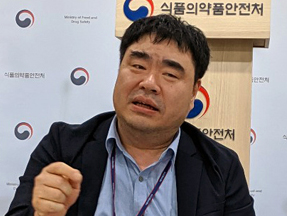
- Chae Gyu-han, the section chief of the MFDSAfter the Regulatory Reform Committee recommended the withdrawal of the joint bioequivalence test restriction policy in April, the Ministry of Food and Drug Safety's first reaction was to respect the recommendation to withdraw, but said that there was still a problem with the issue of generic restructuring. In a briefing with reporters on the 19th, Chae Gyu-han, the section chief of the MFDS, commented on the recommendation to withdraw the joint bioequivalence test restriction policy that everyone will agree that there is a need to somehow solve many of the generic drugs in the market, and one of them was the joint bioequivalence test restriction policy. We respect the recommendation to withdraw from the Regulatory Reform Committee, but that doesn't mean we have given up on the problem itself. There is no change in the policy direction itself to prevent generic insufficiency. In addition, he added that domestic generic drugs should have international competitiveness and contribute to public health. The public-private council for the competitiveness of generic drugs is expected to operate for the first time at the end of April, and plan to improve for two months. Some improvements have already been made. Until the comprehensive review of the consigned generics by the evaluation agency, the consigned generics are so-called 'bundled permission management' without separate examination. Because this system is aimed at efficiency in generic screening, some people were interested in amendments to the contents of submitting three batches of production data when the entrusted generic license was announced in November last year. In terms of efficiency, it is from the perception that this system is not necessary. However, Chae Gyu-han, the section chief said, “We have opinions through legislative notices, and final regulatory review is required. But, there is no change at this time.” In addition, Mr. Chae said, "There are some agreements in the public-private council. For example, discussions to strengthen the labeling system to give more consumer information and to implement a licensing system centered on complete pharmaceuticals with a bundled licensing system. It's being negotiated well," he said. "However, it is difficult to find a way to secure export competitiveness." Reinforcing the labeling of generic drugs is discussed not only on the product packaging by borrowing ICT technology, but also on how to communicate information through a prescription preparation system or a drug safety country. "I think it is the responsibility of the Ministry of Food and Drug Safety to satisfy the information the general public needs to know," said Chae. Regarding the investigation of impurities such as NDMA of Metformin, a diabetes treatment that is currently in progress, he briefly responded that he would pursue policy decisions in the direction of minimizing public inconvenience. Meanwhile, this briefing was meaningful in that it was the first policy communication position with the reporters after the COVID-19 incident.
