
- LOGIN
- MemberShip
- 2026-07-06 16:35:42

- Company
- Twice-delayed amid COVID-19 Cancer Committee rescheduled
- by Eo, Yun-Ho Apr 17, 2020 06:22am
- The Cancer Deliberation Committee’s meeting, postponed twice already, has been rescheduled. The Korean pharmaceutical industry sources reported the Health Insurance Review and Assessment Service (HIRA) has decided to resume the Cancer Deliberation Committee’s talks on expanding anticancer treatment coverage on Apr. 29. Amid COVID-19 outbreak, the committee’s earlier meeting schedule has been postponed on Feb. 26 and on Apr. 8. In February, the committee was supposed to review major items like AstraZeneca’s targeted therapy Tagrisso (osimertinib) and Ono Pharmaceutical and Bristol-Myers Squibb’s (BMS) immunotherapy Opdivo (nivolumab). And in the April agenda, reviews on BMS’ multiple myeloma treatment Revlimid (lenalidomide) and MSD’s immunotherapy Keytruda (pembrolizumab) were initially included. However, the delayed meeting schedule would add more items on the committee’s agenda, and likely to put off some items to May agenda depending on their priority level. Epidermal growth factor receptor (EGFR) tyrosine kinase inhibitor (TKI) Tagrisso has an ongoing deliberation over expanding its reimbursed indication to cover a first-line treatment for patients with EGFR-mutated non-small cell lung cancer (NSCLC). PD-1 inhibitor Opdivo has a number of indications seeking for reimbursement, such as renal cell carcinoma-treating first-line combination therapy with Yervoy, second-line treatment for renal cell carcinoma, second-line treatment for relapsed or metastatic head neck squamous cell carcinoma, and second-line treatment for classical Hodgkin’s disease. But, the controversial indication as a second-line treatment for NSCLC regardless of expression of PD-L1 was omitted from the application. Moreover, Revlimid was targeting reimbursement expansion on its maintenance treatment indication as a monotherapy, and Keytruda’s reimbursement expansion application included an indication as a first-line treatment for NSCLC, bladder cancer and Hodgkin’s lymphoma, which have been denied previously, but also included two new indications—first-line treatment for metastatic non-squamos NSCLC as a combination therapy with pemetrexed and platinum chemotherapy, and first-line treatment for metastatic squamous NSCLC as combination therapy with carboplatin and paclitaxel.
- Company
- Merck's retirement allowance of ₩9.3 billion last year
- by An, Kyung-Jin Apr 17, 2020 06:21am
- Retirement benefits and # of employees in Merck Korea 2009-2019 Merck KGaA spent nearly 10 billion won last year as employee severance pay. With the sale of two types of hypertension and diabetes treatments, retirement payments related to restructuring jumped four times from the previous year. According to Merck KGaA's audit report submitted to the Financial Supervisory Service on the 14th, last year, it paid ₩9.4 billion in retirement benefits. This is an increase of 303.3% compared to the previous year's retirement allowance of ₩2.3 billion. Since 2009, Merck KGaA has introduced the retirement pension system and recognized the contributions to be paid during the annual accounting period as retirement benefits. Starting with ₩1 billion in 2009, the amount of retirement benefit recognition increased, and the retirement benefit in 2018 was about ₩2.3 billion. In the audit report, Merck KGaA said, "In the current period, we set the unpaid expenses related to restructuring. The retirement benefit recognized in relation to the restructuring was ₩6.87 billion." The retirement expenditure increased by ₩7 billion from the previous year as the General Medicine (GM) division, which was in charge of treating hypertension and diabetes last year, was reorganized and restructured. The retirement benefit spent by Merck KGaA last year is equivalent to the cumulative amount of retirement benefit paid for five years from 2014 to 2018. In last November, Merck KGaA officially reorganized the GM business division by announcing that it signed a sales contract with GC Pharma for the treatment of diabetes, 'Glucophage'. Subsequently, Daewoong Pharmaceutical announced the signing of a sales contract for hypertension treatment 'Concor' and the time to organize the divisions was set at the end of November. From January of this year, GC Pharma and Daewoong Pharmaceutical are in charge of sales activities such as promotion of each product and operation of sales personnel. Merck KGaA Biopharmaceuticals decided to keep only the licenses for the items, and the existing sales and marketing personnel went through restructuring procedures. At that time, Merck KGaA was reported to have provided GM employees with the number of working years X2 months + 8 months' salary. In addition, it has attached a clue that it can receive ₩20 million annually or receive a lump sum ₩20 million for two years for the cost of a master's degree such as an MBA. It was confirmed that 24 people out of 35 employees belonging to the GM business division were resigned after receiving the ERP application in a total of two cases, and 11 people are currently discussing conversion arrangements. The number of employees increased regardless of the restructuring. According to the audit report, as of 2019, the number of employees at Merck KGaA was 339, an increase of 22 from 317 last year. In addition to the biopharma division that is in charge of the pharmaceutical industry within the Merck Group, it is the number of employees from other departments such as Merck Life Sciences and Merck Functional Materials. An official from Merck KGaA Biopharmaceutical said, “11 out of 35 employees belonging to the GM division received an order from the Seoul branch because they did not apply for ERP. We are considering various methods including supporting other departments. "By looking at the number of biopharma employees, it has decreased from 125 at the end of 2019 to 102 at present." The company turned to a deficit last year with an operating loss of ₩3.2 billion. During the same period, sales were ₩269.8 billion, an increase of 9.1% from the previous year's ₩247.3 billion.
- Policy
- Domestic vaccine for COVID-19 developed within 2 years
- by Kim, Jung-Ju Apr 17, 2020 06:21am
- Taeho Yoon, the head of the quarantine, the Central Emergency Government Headquarters of the Ministry of Health and Welfare is conducting a regular briefing of COVID-19 at the government building as an online live broadcastThe government will immediately implement measures to support for the development of COVID-19 treatment and vaccines. The goal is to release antibody drugs as early as next year, blood plasma treatment within 2-3 months, and vaccines within 2 years. Tae-ho Yoon, the head of the quarantine, the Central Emergency Government Headquarters of the Ministry of Health and Welfare, today, on the morning of the 14th, said through a press after the video conference of COVID-19 Central Disaster Safety Countermeasures Headquarters. At this meeting, the progress of COVID-19 treatment and vaccine development and future plans were discussed. The government said that it was preparing a government support system to develop anti-corrosive drugs and vaccines to overcome COVID-19. In the case of therapeutic drugs, the government is ▲rapidly supporting drug re-creation clinical trials by expanding the range of use of existing drugs to develop drugs that can be treated within the year, and ▲is pursuing the development of antibody drugs and blood device drugs using confirmed patient’s blood. Antibody drugs are being jointly researched by the Korea National Institute of Health & Celltrion, and are expected to be available as early as next year with the goal of entering clinical trials this year. Blood plasma treatment is also under joint research with a domestic company, and if a large amount of blood is secured, the Central Disaster Safety Countermeasures Headquarters expects to develop a therapeutic agent within 2-3 months. In the field of vaccine development, there is a development gap of about 6 months with the United States, but various platform vaccine researches are under way to develop domestic vaccines in the second half of 2021 or 2022 through public-private cooperation and international cooperation research. Vaccines are synthetic antigen vaccines, nucleic acid (DNA) vaccines, and virus delivery (mRNA) vaccines. The government will continue to ▲streamline the provision of blood for cured people, ▲rationalize the application of regulations such as exemption from institutional IRB ▲expand investment in infectious diseases R&D to discover promising tasks, and study the possibility of virus mutations against resurgence ▲build a platform to discover candidates for AI-based treatment ▲the Public Vaccine Development Center ( Completion of this October), expansion of research infrastructure such as the vaccine commercialization project team ▲support for strengthening international cooperation in infectious disease research. Along with this, the government has a support system for the development of COVID-19 treatment and vaccine development system and is operating immediately. Taeho Yoon, the head of the quarantine said that as mentioned by the President, therapeutic drugs and vaccines are a must to overcome in order to completely overcome COVID-19, and plans to establish the government support system so that treatment and vaccine development can succeed early, and provide policy and institutional intensive support. The Minister of Health and Welfare and the Minister of Science and ICT are co-directors, and the 'Corporate Support Group' for COVID-19 treatment and vaccine development is established. ▲Domestic COVID-19 treatment and vaccine development status is checked and ▲Support measures are identified by identifying difficulties in the field. "The government will quickly establish a working group with related ministries and industry, academia, research institutes and hospitals to support the pan-government support group," said Yoon, the head of the quarantine.

- Company
- Multinational companies show significant gap in performance
- by An, Kyung-Jin Apr 17, 2020 06:21am
- Multinational pharmaceutical companies in Korea showed drastically polarized performance last year. Their revenue fluctuated depending on how well the emerging driving forces took over the position of now-off-patent blockbuster drugs. Most of the companies had a drop in operating profit, but companies like Alcon, AbbVie and Sanofi-Aventis have successfully killed two birds with one stone expanding business and improving profit growth by changing up their top selling product line-ups. Analyzing last year’s performance of 28 multinational pharmaceutical companies in Korea on Apr. 14, the last year’s gross operating profit reached 165.4 billion won, which was 7.0 percent less than the year before at 178.0 billion won. And the last year’s gross revenue at 5.27 trillion won was 6.3 percent more than the year before. Meanwhile, the operating margin was decreased by 0.5 percent from 3.6 percent to 3.1 percent. The summary is based on 26 audit reports submitted to the Financial Supervisory Service (FSS) until Apr. 13 by Korean branches that settled the accounts in December. Although Servier Korea settled the account in September, their data was included. Despite Pfizer Korea and Pfizer Upjohn Korea settled the account in November, their data was dropped from the analysis due their split affecting the data. Apparently, the performances between companies varied significantly. 13 out of 26 companies had over 10 percent jump in revenue. Alcon Korea’s revenue last year skyrocketed by over 60 percent and showed the biggest increase rate among the companies. The company’s record high sales performance was possible due to the revised eye drop pricing system surging the prescription volume in sodium hyaluronate-based Kainix eye drop. Their operation profit finally turned around and generated surplus after three years in the red. Both sales revenue and operating profit in AbbVie Korea showed 43 percent surge. The hepatitis C virus (HCV) treatment Mavyret, released in the fourth quarter of 2018, outdid other competitors and took up 80 percent of the total HCV prescription market. The treatment has expanded the business for AbbVie and improved profitability in the market. The revenue growths in Novo Nordisk (24.5 percent), Sanofi-Aventis Korea (17.7 percent), Janssen Korea (17.5 percent), Lundbeck Korea (15.9 percent), Teva-Handok (15.5 percent), Roche Korea (15.5 percent) and AstraZeneca Korea (14.6 percent) were recorded relatively high. Due to the effect of Pfizer Korea’s split-off, Novartis Korea has topped the multinational pharmaceutical sales revenue rank after seven years since 2012. Marked at 493.4 billion won, Novartis Korea’s revenue last year was 4.1 percent more than the year before. For the first time in Korea, Novartis has generated almost 500 billion won with new line-ups like chronic heart failure treatment Entresto and antipsoriatic Cosentyx firmly taking roots in their respective markets, while the company’s major line-ups line macular degeneration treatment Lucentis, ARB-based hypertension treatment Exforge and leukemia treatment Glivec maintained their growth in revenue. Also maintaining two-digit revenue growth for another consecutive year, AstraZeneca Korea’s annual revenue last year has generated over 400 billion won for the first time in Korea. Top profit-making multinational pharmaceutical companies in Korea based on last year’s revenue (Unit: KRW 100 million) Source: Financial Supervisory Service On the other hand, most of the companies without other means of revenue source besides their off-patent drugs have experienced a steep fall in operating profit. The operating profits of 15 out of 28 companies either fell or maintained the deficit, which means one out of two multinational pharmaceutical companies in Korea is struggling to make profit. Janssen Vaccines that used generate over 300 billion won annually, manufacturing and selling vaccines, has made no profit in Korea last year. Marking operating loss at 31.6 billion won last year, the company has recorded four consecutive years of deficit. The company’s main source of revenue has been cut as the demands on hepatitis B virus vaccine Hepavax-Gene and pentavalent vaccine Quinvaxem took a drastic fall. Although excluded from the analysis, Pfizer Korea’s sales volume has halved as it underwent a split-off with Pfizer Upjohn Korea. Spinning off an off-patent drug business sector, Pfizer Korea has generated 395.7 billion won last year with 7.2 percent increase from the year before, leveling neck and neck with Bayer Korea (374.1 billion won). Pfizer Korea’s performance contrasted with Pfizer Upjohn Korea that recorded operating loss of 1.1 billion won and operating profit of 5.4 billion won in the first year of the split. In last year, Kowa Korea Company has made 18.2 percent less than the year before. Ruling out Janssen Vaccine making no profit at all, Kowa Korea Company has made the least amount of sales volume. Their operating loss was at 1.8 billion won, turning back into the red after a year in the black. GlaxoSmithKline Consumer Healthcare Korea has stagnated as its revenue and operating profit respectively have dropped by 11.6 percent and 9.7 percent drop, compared to the year before. Against the year before, last year’s operating profits were dropped by over 20 percent in Novartis Korea (85.8%), Bayer Korea (40.9%), Boehringer Ingelheim (24.7%), Novo Nordisk (33.7%), Kyowa Kirin Korea (35.%) and Sandoz Korea (84.7%). Both Roche Korea and Merck were turned into the red, whereas Menarini Korea continued to stay in the red.

- Company
- KRPIA and members clash over Sean Kim’s resignation
- by Eo, Yun-Ho Apr 16, 2020 06:36am
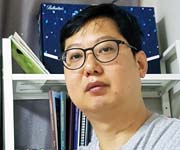
- Apparently, the multinational pharmaceutical companies in Korea have disputed KRPIA’s approval on the resignation of Senior Director Sean Kim. The pharmaceutical industry sources reported Sean Kim, a Senior Director of Market Access and Healthcare Policy at Korean Research-based Pharmaceutical Industry Association (KRPIA), has expressed his intention to resign and CEO Lee Youngshin has made a discretionary approval on his resignation with her delegated authority. Senior Director Kim has been decided to leave the organization on Apr. 17. The decision was called without consulting with KRPIA Board of Directors (BOD), consisting of member companies’ leaders, and the organization has not officially announced the news, yet. Caught up with the news late, KRPIA Market Access and Healthcare Policy (MA and HC Policy) Committee and Regulatory Affairs Committee have requested an explanation from the organization and 20 or so members of the committee and the CEO were convened on Apr. 14 for an online meeting. However, the organization official did not specify Senior Director Kim’s reason for resignation at the meeting and left it as ‘personal matter.’ The sources confirmed CEO Lee has apologized for the lack of communication when processing the resignation and briefed their plan to recruit a successor in June, if feasible. Senior Director Sean Kim◆Question One: Was it a proper processing of resignation? The main complaint of the MA and HC Policy Committee and Regulatory Affairs Committee on the Senior Director’s resignation is the process. As stated above, the senior director’s resignation was approved discretionarily by CEO Lee. According to the KRPIA regulation, the CEO has a rightful authority over personnel, which means it was processed by the book. However, the point of issue lies on how a resignation of a board member-level Senior Director Kim, a major decision-maker of the organization, has been approved without prior discussion with the BOD. And the organization’s lack of official notice to the member companies on the matter has fired up the industry’s backlash. Senior Director Kim has served in the government policy sector for eight years since 2012, and led most of government affairs and communication efforts regarding drug pricing system reform. He also took a crucial role in the Korean government making decisions on expanding eligible subject for risk sharing agreement (RSA) and applying RSA on follow-on drugs. KRPIA and the member companies would take a heavy blow without a MA and HC Policy expert like Senior Director Kim or the former CEO Lee Sang Suk with actual experience in a government agency. The member companies argue, regardless of the CEO’s authority, the resignation approval should have been finalized after a thorough discussion and internal communication. An insider of a multinational company commented, “It is quite disappointing to find out about Senior Director Kim’s resignation not through the organization, but through word of mouth. His experience and expertise are unmatched, and the industry is imminently facing a crucial government announcement regarding the drug pricing system revision. We need the organization’s proper explanation and their prospective plan.” ◆ Question Two: Was his resignation ‘voluntary?’ Another point of the dispute is unclear reason and background of the senior director’s resignation. For the organization members, the Kim’s resignation was completely unexpected, raising a few questions to the story. Senior Director Kim has inked a contract with KRPIA in last December that extended his term for two years until November 2021. After signing the contract, he was at MA and HC Policy Committee meeting in January and vowed that he would “retire honorably in 2021 after putting all efforts to contribute in protecting appropriate pricing for new drugs and in expanding coverage until the end of the term.” In other words, he had no other reason to resign except for his health issue. This is also why no one in the industry saw his resignation coming. And the question still remains and it even brews other suspicion as to what internal discrepancy or pressure could have been the real reason behind it. Another associate of a multinational company said, “His reinstatement should be considered depending on the situation, although his intent should come first in making the decision. If there was an unfair treatment, then it should be corrected. Most of government affairs associates in the industry are hoping for him to return.”
- Opinion
- [Reporter’s eye] Measures about NDMA should be careful
- by Lee, Tak-Sun Apr 16, 2020 06:34am
- Measures are imminent when the MFDS begins testing by collecting finished products of Metformin, which are used as diabetes treatments. In last December, an excess of NDMA (N-nitrosodimethylamine), a carcinogen, was detected in Metformin preparations in Singapore. Since then, the MFDS has been conducting extensive investigations. After collecting and inspecting about 900 raw materials, it is believed that the investigation process is being expanded to the finished product and the process of selecting products with excess impurities is in progress. Although the results of the investigation are still unknown, some people have analyzed that NDMA was detected in the raw material and then expanded the investigation to finished products using the raw material. The MFDS only states that it is currently considering various aspects of the investigation direction and measures. Regardless of the results of the investigation, measures against Metformin preparations should be determined more carefully than existing NDMA-detected products. This is because Metformin is used as a primary treatment for type II diabetes treatments. Diabetes patients who are being treated for the first time are starting with Metformin. And. Metformin with other drugs, a combination of metformin and other ingredients is also on the market. There is also a survey that the size of the outpatient prescription market for drugs containing Metformin alone reaches ₩473.2 billion (Source: UBIST). Therefore, as in the case of Ranitidine, if Metformin is banned and recovered, there is no alternative drug, and the lack of alternative medications will create a great disruption for the market, medical staff and patients. Therefore, measures to minimize the impact should be prepared. The products of concern should be selected rather than a quick investigation. If there are medicines of concern for risk, the first priority is to protect the safety of the people through prompt action. The MFDS will have a lot of worries in many ways. There are conflicting results abroad. The U.S. FDA announced in mid-February that it did not recommend recovery because Metformin's NDMA issue was not serious, while some products are being recovered in Singapore and Canada. In the United States, a private research institute, Valisure, also suggested that FDA recover the product, saying that some Metformin products had excessive NDMA. It is best that NDMA does not exceed daily allowances in Metformin products, but if there are products detected in excess, measures should be taken to minimize the gaps in patient care.
- Company
- KRW 2 trillion worth damage by COVID-19 to hit drug industry
- by Nho, Byung Chul Apr 16, 2020 06:33am
- Impacted by COVID-19 outbreak, Korean pharmaceutical industry requested the government for an emergency initiative like new pharmaceutical regulatory policy to avoid a total dissolution of the Korean pharmaceutical and bio industry. The industry has requested the government to halt the new pharmaceutical regulatory policy but to reinforce the industry support policy. It claims massive sales loss among the industry is inevitable due to COVID-19, and threats like delay in R&D, unstable supply of active ingredient and surge in production cost are storming in simultaneously. Korea Pharmaceutical and Bio-pharma Manufacturers Association (KPBMA, President Won Hee-mok) announced on Apr. 13 the organization has delivered an official request to Ministry of Health and Welfare (MOHW) for favorable regulatory policy amid the state of emergency, as the pharmaceutical and bio industry need to serve its original purpose of ‘social safety net’ that protects the life and health of the people. The organization’s official statement projected the Korean pharmaceutical and bio industry would see loss estimated at 1.8 trillion won (at least 10 percent of the total pharmaceutical expense) due to maximum 46 percent drop in outpatient numbers. Moreover, the statement warned the revenue dip would unavoidably affect business operation in all sectors including R&D and facility investment and employment. The situation could worsen as a number of clinical trials have already been delayed or suspended with lack of participants and medical professionals preoccupied with the virus containment. As some drugs in development would have to start over their clinical trials, the industry extremely concerned of losing over 100 billions of wons in a long term. The pharmaceutical manufacturers are also to face increased cost of raw materials due to unstable supply of pharmaceutical substance in the global market and skyrocketed value of US dollars against Korean won. Moreover, many of Chinese active ingredient manufacturing facilities have been closed, and the Indian government has restricted export of 26 active pharmaceutical ingredients. When the cost of raw materials jump by 25 percent, the industry would see production cost surge by approximately 1.7 trillion won. With the industry challenged by various threats at once, the organization strongly urged the government to put a brake on the implementation of the new pharmaceutical regulatory policy for the industry to withstand the second and third waves of the pandemic impact. KPBMA has stressed the government has already enforced drug pricing reduction worth of 100 billion won in January based on surveyed actual transaction price, and it also plans to reduce drug pricing worth of 200 billion won by next January based on increased volume and limited period of weighted pricing, which would add up to about 320 billion won-worth of damage. Including additional pricing reduction worth of 650 billion won on already-listed drug by the differentiated generic pricing, the pharmaceutical industry would be hit by pricing reduction of approximately 1 trillion won, which is about five percent of total National Health Insurance claim. Also the pharmaceutical organization has expressed deep concern over the legislative notice issued on the revised healthcare reimbursement standard in last month, adding a clause ‘narrowing reimbursement scope or reducing drug pricing of reevaluated listed drugs.’ And if the clause comes in effect from July, the damage on the industry would be permanent. The organization official pleaded, “To overcome the global crisis, the implementation of the new pharmaceutical regulatory policy should be suspended, and post-management drug pricing reduction should be postponed for a year to allow minimum time for the industry to overcome the unpredictable crisis.” The official then particularly asked for regulatory boost like R&D support, tax benefit and expedited review for the development of COVID-19 treatment and vaccine and the establishment of drug substance and essential drug manufacturing facilities in Korea. KPBMA official highlighted, “Amid the COVID-19 pandemic, the pharmaceutical industry would focus all capacity into developing treatment and vaccine and providing essential drug,” and “Regardless of any hardships, the industry is committed to protect the people’s health and lives.” “Backed with emergency response and groundbreaking level of the government support, the Korean pharmaceutical and bio industry would be able to conquer the crisis and become the state’s new economic driving force and reliable social safety net,” and “the industry would leverage the Korean economic advancement and pharmaceutical manufacturing scene as the country’s growth driving force,” the official added.
- Company
- Janssen's Vaccines has no annual sales in 10 years
- by An, Kyung-Jin Apr 16, 2020 06:33am
- Janssen Vaccines Janssen Vaccines, which once generated annual sales of ₩300 billion through vaccine manufacturing and sales, recorded zero in sales last year. As demand for representative products, which were responsible for the company's sales, fell sharply, sales activities were virtually suspended. After the withdrawal of the Hyangnam factory in 2021, the company is willing to transform its products into cutting-edge biomedicines. According to Janssen Vaccines’ audit report submitted to the Financial Supervisory Service on the 11th, the company posted sales of ₩0 and operating loss of ₩31.6 billion last year. Janssen Vaccines plunged to ₩99 billion in 2016, ₩42.7 in 2017, and ₩27.6 billion in 2018, but sales did not occur in last year. The deficit has been continuing for four years in a row since it made an operating loss of ₩20.9 billion in 2016. Last year, the size of the deficit was the largest since its foundation. The background of Janssen vaccines’ no performance was attributed to changes in vaccine demand. The company had relied on most of its sales for two types of hepatitis B vaccines, 'Hepavax-Gene' and the pentavalent vaccine 'Quinvaxem'. Jansen Vaccine conducted the entire process from R&D of 'Hepavax-Gene' and 'Quinvaxem' to production and export of finished drugs through state-of-the-art vaccine manufacturing plants located in Songdo Free Economic Zone in Incheon. 'Hepavax-Gene' and 'Quinvaxem' obtained the Pre-qualification (PQ) from the World Health Organization (WHO) in 1997 and 2006 respectively, and In 2009, sales of vaccines jumped to ₩310 billion and operating profit of ₩113.6 billion, starting with the mass supply of vaccines to the public sector of underdeveloped countries through UN international organizations such as the UNICEF and the Pan American Health Organization (PAHO). Quinvaxem achieved exports exceeding $100 million in 2008 and boasted high demand to record the number one domestic pharmaceutical production record for six consecutive years from 2009 to 2014. However, there is currently little performance. Quinvaxem failed to win the WHO vaccine bid, and Hepavax-Gene also decided to stop supplying domestic products after consuming inventory due to a decrease in the proportion of domestic hepatitis B infections last year. An official from Janssen Vaccines said that it has been supplying only the minimum amount of vaccines from 1 to 2 years ago and has not been engaged in commercial production activities and sales of ₩26.5 billion were applied to the amount recovered from the past supply in 2018. He added that the company had decided not to make sales until the production line was reorganized. However, just because there is no sales does not mean that the company is planning to withdraw. The company plans to establish a new production line, such as anticancer drugs and next-generation vaccines, and to minimize operations until it receives approval from the US Food and Drug Administration (FDA) for pharmaceutical raw material manufacturing facilities. It is known that the withdrawal of Hyangnam Plant in 2021 opened the possibility of taking over employees who wish to transfer. It is planned to start normal production activities from 2023 as soon as possible. In fact, the Janssen vaccines invested $3 million in the Songdo plant in 2017 at the time of 2018 when Janssen Korea officially withdrew the Hyangnam plant. In 2018, the company plans to invest a similar amount of money and confirmed the establishment of a second-generation production line for Darzalex, a treatment for multiple myeloma. An official from Janssen Korea said that the company's production plans and financial decisions are confidential and it is difficult to disclose the information. The Janssen vaccines’ Incheon plant is strategically operated within the global production network and plans to continue investing in facilities.
- Company
- Drug companies and distributors conflicted over margin
- by Jung, Hye-Jin Apr 16, 2020 06:32am
- As more and more pharmaceutical companies are lowering distribution margin to save cost, a conflict between pharmaceutical companies and distributors is left unresolved. Although the two parties are continuing to negotiate on appropriate distribution margin, they end up only confirming their unyielding stances. Recently, a number of Korean and global pharmaceutical companies have reportedly notified their distributors the decision to reduce the distribution margin. Pharmaceutical companies are asking for the distributors’ understanding of the drug pricing reduction and the sales environment getting harder. However, distributors are rejecting the companies’ demand as they are also struggling with distribution cost constantly rising. Pharmaceutical company ‘A’ has notified all distributors that it would lower the distribution margin of two items by 1%p, respectively. The company A has accordingly lowered the margin from past January, but the negotiation is still open as the distribution industry is complaining the two items take up a significant part of their gross profit. A pharmaceutical company ‘B’ has notified its distributors that the discount rate on the financial expense provided for cash transaction would be adjusted. Besides the distribution margin, the company B has been providing some discount on the financial expense depending on the transaction period, but the company is to lower the discount rate. The distributors, which most of them have been paying in cash, are saying the financial expense discount rate reduction is basically a reduction in distribution margin. The distribution industry’s concern of the trend has heightened when sources reported two other pharmaceutical companies are planning to lessen the margin. The industry is also mentioning of a possible collective action against the pharmaceutical companies when the last two of them make an official notice. ◆Pharmaceutical company and distributor in their fight for survival For distributors, pharmaceutical companies lowering distribution margin is detrimental, because the distributor’s overall cost of shipping and operation would be unchanged regardless of the lessened margin. An associate of a distributor pointed out, “The current distribution margin isn’t even that high, considering the shipping, labor and logistic costs are constantly surging. The distributors dealing with pharmacies would have to give up on their businesses, if the margin is lowered.” Nevertheless, pharmaceutical companies argue distribution margin reduction is unavoidable due to the worsening sales scene. The companies are enduring increased production cost and the government's drug pricing reduction as well as the increased distribution cost. A pharmaceutical company insider commented, “The company has to inevitably adjust distribution margin due to the growing loss from the government’s pricing reduction initiatives and rising production cost. By conducting preliminary negotiation and adjustment, the company is in process of fine-tuning the distribution margin, legitimately.” Currently, the two conflicted parties have not settled on an agreement, yet. Taking into account the margin reduction directly affects profits and survival of both pharmaceutical companies and distributor, the conflict would not be resolved so easily. ◆ Individual drug company vs. distributor organization Besides the actual conflict, pharmaceutical companies feel pressured by the whole distribution industry organization opposing against the distribution margin reduction. Centering Korea Pharmaceutical Distribution Association (KDPA), other pharmaceutical distributor related organizations have joined their forces. But drug companies point out it is inadequate for an organization to interfere with a deal between individual companies and distributor. Regarding the issue, KDPA claims an intervention by an organization is inevitable, because a number of pharmaceutical companies are lowering the margin and an individual distributor is a no match against a pharmaceutical company on a negotiation table. President Cho Sun-hye of KDPA criticized, “Distributors have not demanded drug companies to raise distribution margin when distribution cost is increased. It is hard to accept the drug companies’ logic of blaming drug pricing reduction when they do not raise distribution margin with increased operating profit.” “And we want to ask if burdening distributor with reduced margin is reasonable when everyone in the whole society is struggling with the COVID-19 outbreak,” the president added. A pharmaceutical company associate, who requested to remain anonymous, said “Due to the outbreak, many of pharmaceutical companies are experiencing a steep drop in sales and they are hectic trying to overcome it.” The associate emphasized the companies are reviewing various means to save costs besides the distribution margin. “Compared to multinational companies, Korean companies are providing relatively handsome distribution margin. The companies are considering all options to save costs, including distribution, production, labor and others. Hopefully, the distribution industry can understand the situation and would try to settle on a reasonable agreement,” the associate noted.

- Company
- KDA finally agrees on SGLT2 inhibitor benefits
- by Eo, Yun-Ho Apr 14, 2020 06:15am
- SGLT-2 inhibitors approved in Korea The Korean Diabetes Association (KDA) has finally reached an agreement on expanding reimbursement on sodium-glucose transport protein 2 (SGLT2) inhibitor combination therapy. KDA has submitted a statement to the Korean government regarding the needs of expanded coverage on SGLT2 inhibitor plus off-label diabetes treatments, including dipeptidyl peptidase 4 (DPP-4) inhibitor or thiazolidinedione (TZD). The academy has begun fine-tuning their opinions on the reimbursement expansion for the SGLT2 inhibitor combination therapy after the 11th president, Professor Yoon Geon-ho (department of endocrinology at Seoul St. Mary’s Hospital), was appointed in last January. The talks on reimbursed use of the combination therapy actually was started by the medical professionals. Due to the differences in reimbursed indications among same-class drugs, the prescribers have been confused and experienced reduction in expected reimbursement and other inconveniences. Accordingly, the government has started accepting their opinion officially, but the academy itself had internal dispute. Some argued reimbursement expansion should be handled carefully on drugs without clinical evidences, regardless of other reimbursed drugs in the same class. As the closely related academy seemed to be doubtful, the government has halted reimbursement expansion discussion until now. Regarding the issue, Health Insurance Review and Assessment Service (HIRA) official stated, “Based on the statement by KDA, HIRA would further accept and review more opinions submitted by Korean Endocrine Society, other academic societies and Ministry of Food and Drug Safety that grants the approval.” Currently, there are four SGLT2 inhibitors available in Korean market—Forxiga (dapagliflozin), Jardiance (empagliflozin), Suglat (ipragliflozin) and Steglatro (ertugliflozin). Total of 36 clinical studies would have to be conducted for all combinations of therapies, based on nine DDP-4 inhibitors and the four SGLT2 inhibitors commercialized in Korea, to acquire proper data for approval according to the principle. In the same sense, combination therapies with two TZDs and four SGLT2 inhibitors should undergo total eight clinical trials.
