
- LOGIN
- MemberShip
- 2026-07-06 16:35:45
- Company
- HIRA Cancer Committee canceled and postponed again
- by Eo, Yun-Ho Apr 08, 2020 06:24am
- The talks on anticancer treatment coverage enhancement has been postponed yet again. Pharmaceutical industry sources reported the Korean health authority has canceled the Health Insurance Review and Assessment Service (HIRA) Cancer Deliberation Committee’s meeting, initially scheduled today on Apr. 8. The government agency plans to push the meeting back two weeks later. After postponing the Cancer Deliberation Committee meeting from Feb. 26, the schedule has been called off again. Affected pharmaceutical companies are expressing their concerns, now that Deputy Director Choi Kyung-ho of Pharmaceutical Benefit Division at MOHW has been reportedly dispatched to Central Disaster and Safety Countermeasure Headquarters on COVID-19. The delayed meeting schedule has added more items on the committee’s agenda, and some items were inevitably put off to May agenda depending on their priority level. Originally, major items like AstraZeneca’s targeted therapy Tagrisso (osimertinib) and Ono Pharmaceutical and Bristol-Myers Squibb’s (BMS) immunotherapy Opdivo (nivolumab) were supposed to be deliberated in February. And in April, the Cancer Committee was supposed to review BMS’ multiple myeloma treatment Revlimid (lenalidomide) and MSD’s immunotherapy Keytruda (pembrolizumab). A multinational pharmaceutical company official said, “Despite the national emergency, cancer patients are still waiting for their treatment to get listed. Delaying the meeting twice would cause a significant damage. The government should be more considerate of those patients when handling pharmaceutical reimbursement listing and expansion.” Epidermal growth factor receptor (EGFR) tyrosine kinase inhibitor (TKI) Tagrisso has an ongoing deliberation over expanding its reimbursed indication to cover a first-line treatment for patients with EGFR-mutated non-small cell lung cancer (NSCLC). PD-1 inhibitor Opdivo has a number of indications seeking for reimbursement, such as renal cell carcinoma-treating first-line combination therapy with Yervoy, second-line treatment for renal cell carcinoma, second-line treatment for relapsed or metastatic head neck squamous cell carcinoma, and second-line treatment for classical Hodgkin’s disease. But, the controversial indication as a second-line treatment for NSCLC regardless of expression of PD-L1 was omitted from the application. Moreover, Revlimid was targeting reimbursement expansion on its maintenance treatment indication as a monotherapy, and Keytruda’s reimbursement expansion application included an indication as a first-line treatment for NSCLC, bladder cancer and Hodgkin’s lymphoma, which have been denied previously, but also included two new indications—first-line treatment for metastatic non-squamos NSCLC as a combination therapy with pemetrexed and platinum chemotherapy, and first-line treatment for metastatic squamous NSCLC as combination therapy with carboplatin and paclitaxel.
- COVID-19 may cause another outbreak with immunization gap
- by Lee, in-bok Apr 08, 2020 06:21am
- The National Immunization Program (NIP) for both children and adult is stepping into an alarming state as a gap in the program is widening while the COVID-19 curve has not been flattened, yet. The fear of healthcare-associated infection is surging amid the COVID-19 outbreak and many people are avoiding hospital visits as a precaution. But immunization experts are voicing concerns of a secondary impact as COVID-19 bringing down the children’s immunization rate drastically. Fear of COVID-19 outbreak hindering state-run vaccination program According to medical industry on Apr. 3 the COVID-19 outbreak has caused a sharp drop in the vaccination rate in Korea compared to last year. The outbreak-stricken people around the country have started avoiding healthcare institutes as their fear of infection has outweighed the benefits of receiving vaccination. Including university hospitals, most of hospitals and clinics are basically paralyzed with most of people cancelling the vaccination appointment. A pediatrics and adolescents doctor at a clinic in Bundang commented, “To tell the truth, the pediatrics are open but without any actual patients visiting and not even for vaccination. Some parents and their children visit hospitals wearing with all kinds of preventive equipment, but we had no one visiting for vaccination in last month.” “Although the hospital is sending out text messages regarding vaccination schedule to registered contacts, but none of them has showed up on their scheduled dates. Even when outpatients who need follow-up visitation are avoiding university hospitals, who would think of visiting clinics for vaccination?” the director added. University hospitals continue to provide medical service for patients with severe conditions, but generally all vaccination schedules have fallen through. A university hospital director in Seoul explained, “As the virus is still spreading across the country, the hospital is strictly controlling incoming visitors with a fever check at entrance and separate doors to pediatrics. We do not allow walk-ins but require an appointment-basis visits and a visitor’s guardian is restricted to only one.” “All doctors, nurses and even reception staffs are wearing level D PPE at the hospital. Although the hospital is far better prepared than during the past MERS outbreak, fear of infection has taken over the visitors and most of appointments including vaccination are canceled at the moment,” the hospital director said. Vaccination experts worried over adult vaccination gap firing up a secondary outbreak The medical experts carefully express their concern over the gap in essential immunization of hepatitis B, BCG, DTap, varicella and MMR. These diseases could cause cross infection between an adult to a child and vice versa, which could entail another nationwide outbreak. When the seroprevalence rate of hepatitis in adults in 30s and 40s has fallen under 20 percent, continuous delay in vaccination on all adults and children could start a detrimental outbreak. As the adults with low seroprevalence rate are highly likely to have become parents by now, a whole household with children could be vulnerable to the infection. An infectious disease expert at a doctor’s association in South Gyeongsang province pointed out, “The seroprevalence rate in Korean adults over the age of 20 is at around 10 percent, because most of them had not received boosting injection. So delayed vaccination in their children could put their whole family in danger.” Concerns on measles and whooping cough are also high. Many of adults have not had boosting injection for measles vaccines. Whooping cough was close to eradication in Korea, but the immunization rate has been constantly falling due to the lack of public awareness and prevalence rate in Korea climbing up every year. According to Korea Centers for Disease Control and Prevention (KOEDC), nine cases of whooping cough were reported in 2008 but the number has surpassed 800 in 2018 and 1,000 in 2019. Since the outbreak in 2018, measles is a high-risk as the nationwide immunization rate has dropped. An executive director at the Korean Society of Pediatric Infectious Diseases pointed out, “As pertussis is spreading through adults these days, delaying or cancelling vaccination could put many people at a huge risk. Korea is definitely not safe from pertussis.” The executive director stressed, “At least measles and DTaP vaccination included in the NIP should be done. As polyvalent vaccines with DTaP are available now, public awareness of the vaccines should be raised better” Accordingly, medical experts argue the government should recognize the state’s widening gap in vaccinations and plan out response actions. The infectious disease expert from the doctor’s association warned, “The biggest obstacle in the immunization program amid the COVID-19 outbreak is the growing fear of healthcare-associated infection and public health centers unable to provide services. If the current situation is to continue for a long time, the nationwide immunization rate would dip alarmingly, and other infectious disease could start spreading.” The expert added, “The government should raise awareness of the poor immunization state and related risk to prevent other outbreaks. Families with children, who have missed the vaccination schedule, should look into catch-up immunization schedule immediately.”
- Product
- Boots, withdraws from the pharmacy market in 3 years
- by Kim JiEun Apr 08, 2020 06:21am
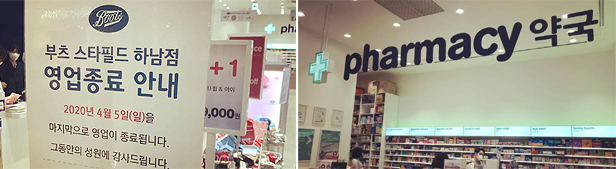
- 'Boots', which opened ambitiously in Korea, claiming to be a premium health & beauty store, eventually withdrew their business after failing to overcome the continuing sluggish profitability. According to the industry on the 6th, the company recently decided to withdraw its entire business and closed the recently opened stores. In 2017, E-Mart received a lot of attention in the H&B market as it landed in Korea by exclusively contracting with Walgreen Boots Alliance, the UK's No.1 H & B store company. In addition to opening and operating 33 stores only in the year of landing in Korea, it was also differentiated from existing H & B stores based on “Premium”. However, it was reported that e-mart decided to withdraw its business after failing to overcome the continued deficit and deteriorating profitability. It is also analyzed that the boots that failed to dominate the competition with other H & B stores in Korea are factors that failed. E-Mart closed 18 boots stores in the first half of last year, and it was confirmed that the six remaining stores were closed in turn following the closing of Starfield COEX and Sinchon stores earlier this year. With the withdrawal of the boots business, the pharmacies operated by each store were forced to close. It is known that there are about 6 pharmacies in Boots, 4 of which are now closed, and the other 2 are in business and are in negotiations with the head office. Boots Star Pharmacy in Starfield Hanam branch also closed on the 5th. At the time of opening the store, it contracted for a 5-year lease, but the business was withdrawn after 3 years of opening, so the branch could not fill the contract period and stopped operating the pharmacy. Yong-han Choi, Rph, said the branch had planned to withdraw from business since February, and that road shops were almost closed. Stores and pharmacies were closed on the 5th, when the discount event to remove inventories ended. Pharmacist Choi said it was unfortunate that the branch was the first pharmacy and could not finish the five-year contract period, and in fact it was closed by a compromise. He added that he plans to rent another store in Starfield Hanam, where he opened the pharmacy independently, and it is just like starting a new one.
- Policy
- GV1001 developed as a demetia drug, approved for COVID-19
- by Lee, Tak-Sun Apr 08, 2020 06:21am
- The Ministry of Food and Drug Safety approved a new drug candidate 'GV1001' by GemVax, which is being developed as a treatment for dementia, for the purpose of treating COVID-19 patients. The request for approval for the use of treatment was made by Kyungpook National University Chilgok Hospital. The MFDS approved the use of GV1001 (Tertomotide HCl), applied by Kyungpook National University Chilgok Hospital on the 3rd, for COVID-19 confirmed patients. Kyungpook National University Chilgok Hospital applied for two cases, and two patients received GV1001. GemVax, which is developing GV1001, said that GV1001 has applied for a patent related to COVID-19. GV1001 is a peptide derived from hTERT (Human Telomerase reverse transcriptase). The enzyme telomerase maintains the length of telomere located at the ends of chromosomes, and the treatment has anti-inflammation, anti-oxidation cellular protective effects, as well as anti-cancer effect. GemVax is currently conducting clinical trials to develop Alzheimer's treatments. GemVax explained that GV1001 proved through preclinical studies to prevent cytokine storms by regulating various inflammatory mediators such as cytokines against severe inflammation caused by COVID-19 infection. The approval for the use of treatment is a system that enables the use of clinical trial drugs for treatment purposes in order to provide treatment opportunities to patients with life-threatening diseases without other means of treatment. In other words, it is different from commercialization clinical trials for product approval for large-scale patients, or sponsor-investigator trials conducted by researchers to prove effectiveness or safety. Approval of use for treatment purposes requested by the hospital is permitted for individual patients, and at the time of application by the company, two or more persons are permitted. Therefore, there is not enough data to demonstrate the effectiveness or safety of the therapeutic use.

- Policy
- Will Rovelito by Handok & Sanofi succeed?
- by Lee, Tak-Sun Apr 07, 2020 06:44am
- Handok & Sanofi-aventis Korea are jointly developing a combination of Irbesartan & Amlodipine, which is antihypertensive drug and are expecting synergy effect between the two companies. Previously, Sanofi-aventis Korea co-developed Rovelito (Irbesartan-Atorvastatin calcium trihydrate), a new combination drug for hypertension/ hyperlipidemia with Hanmi Pharm. Because it was successful in the market through joint promotions, interest is also gathered in this joint development with Handok. In a business report reported to the DART of the Financial Supervisory Service on the 30th of last month, Handok signed a license agreement with Sanofi-aventis Korea for the domestic development, manufacture and licensing of antihypertensive combination drug on October 18 last year. The contract ends on October 17, 2029. The antihypertensive combination drug made by both companies is Aprovasc & CoAprovel. Prior to this, the substance of the combination was revealed through clinical approval from the MFDS on March 4th. It is a combination drug of ARB-based Irbesartan and CCB-based Amlodipine besylate by Sanofi, and a phase II clinical trial will be conducted to confirm efficacy and safety from a total of 440 people this month to March 2021. To date, several ARB-CCB combinations are available, but Irbesartan-Amlodipine combinations are not available. Therefore, it is expected that there will be a prescription merit due to product rarity. In addition, synergies can be doubled if joint marketing is continued between the two companies. Sanofi-aventis Korea has already demonstrated its power through joint marketing of Rovelito with Hanmi Pharm. Rovelito was also a combination drug developed jointly between the two companies. In 2012, the two companies agreed to jointly develop a new drug that combines Irbesartan and Atorvastatin, and acquired an item license in November 2013 under the name 'Rovelito'. Last year's outpatient prescription amount (Source: UBIST) for Rovelito was ₩20.1 billion, and Rovelito pushed out Yuhan's Duo Well (₩18.1 billion/Telmisartan-Rosuvastatin) and Daewoong Pharmaceutical Olostar (₩12 billion /Olmesartan medoxomil/Rosuvastatin) and holds the No. 1 position in the ARB-statin market. In the industry, Rovelito is said to be desirable as a combination of foreign pharmaceutical companies and domestic pharmaceutical companies. Therefore, it is paying attention to whether joint development of Sanofi and Handok will succeed. However, in the case of Rovelito, it was the first product among ARB-statin preparations, so the competition was not severe. The combination of ARB and Amlodipine (including 3 drugs) is not expected to be an easy challenge to the Sanofi-Handok, as there are more than 1,000 licensed products and market competition is fierce.
- Product
- President Moon posted a memorial message on SNS
- by Kang, Shin-Kook Apr 07, 2020 06:40am
- On the 4th, President Moon Jae-in expressed his condolences to Ms. A, a medical doctor working in Gyeongsan, Gyeongbuk, infected with COVID-19. President Moon said through social networking services (SNS), "It was very sad that our infected medical staff was sacrificed for the first time while treating a COVID-19 infected patient." Mr. A, who ran a private clinicl, died while undergoing treatment after being diagnosed with COVID-19, showing symptoms of pneumonia after treating a COVID-19 confirmed patient in February. President Moon said he wishes the tranquil rest of the deceased, who was always strict to himself and kind to the patient, and said that the people will be of the same mind and give deep comfort to his family. In addition, President Moon welcomed the spring of April, saying that he would not be able to tell the sadness of the MD’s family who could not keep his self-isolated state even at the moment of leaving, but he sincerely pay tribute to the medical staff who don't take care of their bodies to overcome the unfinished COVID-19 disease. President Moon emphasized that aside from his clinic work, the enthusiasm to run for medical care is helping the community overcome COVID-19. and The medical staff is enough to win everyone's respect. " On the other hand, the KMA also held a time of silence for 1 minute at noon on the 4th to commemorate the deceased MD A.

- Company
- Tylenol shortage boosts Penzal sales by over 40%
- by Jung, Hye-Jin Apr 07, 2020 06:40am
- Due to the COVID-19 outbreak, acetaminophen’s top brand product Tylenol has been experiencing shortage and seemingly other alternatives are seeing a surge in sales. Chong Kun Dang Pharmaceutical official announced on Apr. 2 the sales volume of Penzal-Q in last February and March has soared over 40 percent than same time last year. And Penzal ER tablet’s volume in the same period has also leapt by 56 percent than the previous year. Besides the popular OTC, Penzal brand has a prescription tablet line and the surge in the prescribed ER tablet volume could mean it was an easy option for pharmacies to replace Tylenol. In last March alone when the acetaminophen shortage issue has surfaced, the combined volumes of Penzal-Q and Penzal ER tablet have spiked 48 percent more than the year before. Accordingly, the industry experts view the Korean-made acetaminophen brand sharing a common substance with Tylenol has profited it. Recently, the World Health Organization (WHO) recommended ‘consuming acetaminophen instead of ibuprofen as a nonsteroidal anti-inflammatory drug to relieve symptoms suspected of COVID-19,’ but the organization withdrew the recommendation after two days. However, the two days were enough to hype the demand on acetaminophen in the market. Regardless of prescription or OTC line, Tylenol has become rare to find in the market. The supplier, Janssen Korea claims the product is distributed in Korean market in the same amount as pre-COVID-19 outbreak, which supports the theory that the exponential increase in demand on Tylenol has caused the shortage. Undergoing a product renewal and price raise in April, Samjin Pharm’s Geworin has doubled in sales from February to March. However, considering the pharmacies were stocking up the product before the price jump, it is too early to conclude the COVID-19 outbreak was the direct cause of the surge. The direct correlation would be apparent in the next second half of the year when the re-order has been made. An insider from the distribution industry commented, “On the day Tylenol comes in stock once in a month, all the stock is exhausted within the same day. It seems like the both consumers demand and pharmacies’ preorder volume have skyrocketed.” The distribution industry also agrees the general acetaminophens sales have increased. The sales volume of acetaminophens recorded by the top distributor has shown a significant rise in OTC acetaminophens. Some items’ volumes have even doubled from February to March. A pharmaceutical company associate noted, “The public’s heightened interest in acetaminophens has boosted demands in specific items, and it eventually affected their sales volume. The industry has recognized the COVID-19 outbreak as one of causes of the sales influx.”
- Policy
- Samjin’s generic for Forxiga was first approved
- by Lee, Tak-Sun Apr 07, 2020 06:39am
- AstraZeneca’s ForxigaSamjin's SGLT-2 diabetes treatment drug 'Forxiga' was first approved. Unlike Forxiga, it is a product without solvates. Through this, it is expected to avoid the solvate patent and weigh the release around April 2023 when the material patent ends. On the 2nd, the Ministry of Food and Drug Safety approved Samjin Pharmaceutical's Dapazin 10mg (Dapagliflozin), a treatment for diabetes. Dapagliflozin is a key component of AstraZeneca's Forxiga used in type II diabetes treatments. Forxiga is the first SGLT-2 inhibitor that has a mechanism to enhance blood sugar by inhibiting reuptake of glucose from the kidneys and promoting the release of glucose through the urine. In particular, this drug is an insulin-independent mechanism of action and can be used in combination with existing oral blood sugar enhancers because it is not significantly affected by dysfunction of beta cells and insulin resistance. Based on these advantages, the sales performance has been increasing significantly in recent years. Last year's outpatient prescription amounted to ₩31.1 billion, an increase of 13.3% over the previous year. Because it was sold explosively, generic companies for Forxiga also started developing products. However, it is not easy to launch the market early because patents is valid. Accordingly, pharmaceutical companies succeeded in challenging the subsequent patents, except for the material patents, which ended on April 7, 2023. When PMS expired on November 25 of last year, pharmaceutical companies applied for approval the next day. The number of applications for permits reached 16 cases. Of these, Samjin Pharmaceutical was the first to obtain an item license. Unlike Forxiga, Samjin Pharm's licensed product is free of solvates. The original Forxiga has a solvate propanediol hydrate attached to dapagliflozin. It is a strategy of late-breaking drugs to avoid subsequent patents by different solvates. Accordingly, it is expected that the Forxiga solvate-modified drug will be available after April 7, 2023, when the patent for the substance ends.

- Company
- Big5 general hospitals codes in 2nd PARP inhibitor Zejula
- by Eo, Yun-Ho Apr 06, 2020 06:28am
- The world’s second poly ADP-ribose polymerase (PARP) inhibitor Zejula’s drug code has been implemented by Big 5 general hospitals in Korea. A pharmaceutical industry source reported an ovarian cancer treatment by Takeda Pharmaceuticals Korea, Zejula (niraparib) has been registered by drug committees (DC) around 24 general hospitals so far since its reimbursed release in last December, The prescription code for the treatment was passed by regular DC in Seoul National University Hospital, Seoul Asan Medical Center and Seoul St. Mary’s Hospital, and by emergency DC in Samsung Seoul Medical Center and Severance Hospital. Currently, the code landing procedure is in process at Jeonbuk National University Hospital, Chonnam National University Hwasun Hospital, Kyungpook National University Chilgok Hospital, and Chunguk National University Hospital. A first PARP inhibitor to be used regardless of BRCA mutation, Zejula was approved in Korea as a monotherapy for the maintenance treatment of patients with platinum-sensitive relapsed high grade serous epithelial ovarian, fallopian tube, or primary peritoneal cancer who are in response (complete or partial) to second or later-line platinum-based chemotherapy. Although it was listed for reimbursement last December, the first reimbursement standard was limited to patients with gBRCA mutation. However, in major clinical studies, Zejula has demonstrated outstanding improvement on median Progression-Free Survival (mPFS) against placebo regardless of gBRCA mutation. Takeda Pharmaceuticals is currently working on expanding Zejula’s reimbursement standard. The anticancer treatment is targeting two additional indications; monotherapy for the maintenance treatment of gBRCA-negative patients with platinum-sensitive relapsed high grade serous epithelial ovarian, fallopian tube, or primary peritoneal cancer who are in response (complete or partial) to platinum-based chemotherapy; and monotherapy to treat relapsed ovarian cancer after receiving fourth or later-line chemotherapy. The fourth or later-line indication has been approved based on multicenter, open-label QUADRA study in adult patients with ovarian cancer, who have been treated with third or later-line therapy. During the clinical study, Zejula reached its primary efficacy endpoint and demonstrated clinical efficacy with an object response rate (ORR). The patient group with platinum-sensitive homologous repair deficiency (HRD) demonstrated ORR of 24 percent, where as BRCA-positive platinum-sensitive group, BRCA-positive platinum-resistant group and BRCA-positive platinum-refractory group recorded ORR of 39 percent, 29 percent and 19 percent, respectively.
- Company
- Otsuka is setting new records for sales & operating profit
- by An, Kyung-Jin Apr 06, 2020 06:27am
- Korea Otsuka Pharmaceutical has achieved the best performance since its launch last year. Although the sales of healthcare products were low due to the boycott of Japanese-made products, sales of professional medicines surged, setting new records for both sales and operating profit According to the audit report of Korea Otsuka Pharmaceutical, which was submitted to the Financial Supervisory Service on the 4th, the company's sales were ₩180.2 billion last year, up 11.4% from the previous year's ₩161.7 billion. During the same period, operating profit was ₩38.5 billion, an increase of 23.0% from the previous year. Both sales and operating profit are the largest since the establishment of the Korean subsidiary. Otsuka Korea Otsuka Pharmaceutical is a foreign-invested company founded on July 9, 1982. Otsuka Pharmaceutical Co., Ltd. of Japan owns 70% of the shares as the largest shareholder, and Jeil Pharma Holdings Holds 22.5%. In the industry, there were many observations that the sales of Otsuka Pharmaceutical were inevitable due to the boycott of Japanese products triggered by export restrictions by the Japanese government last year. Men's skin care brand 'Uros', sold by Korea Otsuka Pharmaceutical, was also mentioned as a representative boycott product on the 'Nono Japan' site. In fact, the company explained that the healthcare business including cosmetics sales have suffered. However, even growth in the range of specialized pharmaceutical products offset the decrease in sales in the healthcare sector such as cosmetics. Sales of existing products such as 'Abilify' and 'Mucosta' continued to grow, and new products such as 'Iclusig' and 'Samsca' successfully entered the market, leading to increased sales. Otsuka According to the drug market research institute IQVIA, the two types of drugs, 'Abilify' and 'Abilify Maintena', were combined with sales of ₩42.6 billion. This is an increase of 24.9% from the previous year's ₩37 billion. Abilify Maintena was released in 2016 as a long-acting injection of Aripiprazole. When administered once, the drug lasts for 4 weeks and can be administered once a month. The oral formulation, Abilify, has experienced a synergistic increase in sales since its exposure to generic competition after the expiration of the patent in March 2014, but increased exposure since the release of Abilify Maintena. Since 2015, the annual sales growth rate of double digits has been recorded, and the company's signature products have recovered. Sales of gastritis and gastric ulcer drugs 'Mucota' are also on the rise. Last year, sales were ₩15.3 billion, up 7.0% from the previous year. Since the second half of last year, 'Samsca' has been recognized as a health insurance benefit for autosomal dominant polycystic kidney disease (ADPKD), its sales have doubled compared to the previous year. In 2018, 'Iclusig', a leukemia treatment drug that had been controversial due to unsuccessful supply, began to be prescribed in earnest, and sales volume has tripled. An official at Korea Otsuka Pharmaceutical said that continued growth of flagship products and successful market entry of new products are considered to be the main causes of sales growth last year and as the drug sales grew and management efficiency efforts to improve per capita productivity achieved, the operating profit margin increased.
