
- LOGIN
- MemberShip
- 2026-07-06 16:35:45

- Policy
- Renewal of Marketing Approval for drugs, will be reinforced
- by Lee, Tak-Sun Mar 31, 2020 06:29am
- Renewal System of Marketing Approval for Drugs ongoing since 2018 will be further reinforced. The system which gives a 5 year validity for each category respectively, renews allowance after reviewing safety and effectiveness. However, it is criticized that the screening does not properly evaluate the safety and effectiveness of pharmaceuticals. Accordingly, the MFDS decided to strengthen the renewal review by comprehensive review of ingredients and formulations, refrain from renewing unsold items, and compulsory submission of post-market safety data. According to the industry on the 30th, the MFDS recently released the first comprehensive plan for drug safety management (from 2020 to 2024). In the comprehensive plan of the MFDS, the drug renewal system is currently reviewing and evaluating safety, efficacy, and quality data for each drug, but the need for comprehensive review and evaluation by ingredient and formulation is increasing. The background of the plan to strengthen the item update was explained. Furthermore, the MFDS explained that worries exist because even though they have eliminated not produced or not imported items during the 5 year validity from the renewal objects, cases where after the minimum quantity is manufactured and imported for the purpose of passing through the renewal, in which the legal compliance (quality management, safety management after marketing) is not observed, are occuring. Accordingly, the MFDS suggested strengthening ▲the submission of safety data for items subject to renewal ▲ evaluating safety and effectiveness of each ingredient and formulation ▲ not being able to update drugs without sales within the expiration date. First, from 2021, it was decided to submit safety information promptly and regularly, including side effects during the expiration date, and to analyze and evaluate the information and data on safety management measures. In addition, from 2023, it is a policy to collect and analyze safety information at home and abroad for some items and to submit a comprehensive report on safety management after marketing. The MFDS also announced that when reviewing the renewed ingredients for the first time this year, the entire domestic review of the same ingredients and formulations will be conducted to prepare a comprehensive review and continuously update. In particular, from 2023, it was obliged to submit action plans, including comparison and analysis of domestic and foreign permits, and changes to permits for some items. Drugs without sales records could not be renewed. Currently, only the results of manufacturing and imports are reported during the renewal examination. The MFDS is planning not to renew even if it has not been manufactured, imported, or sold during the validity period (5 years) of the item permission and notification from 2021. It is expected that the burden of pharmaceutical companies will increase if it is mandatory to submit safety data after marketing and items without sales records are not allowed to be renewed.
- Policy
- Asthma inhaler Alvesco, clinical trial for COVID-19 patients
- by Lee, Tak-Sun Mar 31, 2020 06:28am
- Alvesco inhalers (Ciclesonide, AstraZeneca), which are being used as an asthma treatment, conduct clinical trials on COVID-19 patients. Institut Pasteur Korea (Director Wang-Sik Ryu) announced on the 29th that IIT for 'Alvesco' was approved based on the research results. IIT are led by Professor Woo-Joo Kim, Infectious Medicine of Korea University Guro Hospital, Professor Jung-Yeon Hur, Infectious Medicine of Ajou University Hospital, Professor Hye-Won Chung, Infectious Medicine of Chungbuk National University Hospital, and Professor Yu-Bin Seo, Infectious Medicine of HUMC-Kangnam. From this April to April next year, the clinical effectiveness of Alvesco will be evaluated in 141 mild COVID-19 infected patients over the age of 18 years for one year. Institut Pasteur Korea has been conducting drug repositioning study to verify the efficacy of COVID-19 treatment among existing drugs since February, and has confirmed that Ciclesonide, a major ingredient in Alvesco, has efficacy. Ciclesonide showed equivalent or superior antiviral activity in cell experiments compared to Remdesivir, Kaletra, and Chloroquine, which are currently in clinical trials at home and abroad. In Japan, there have been reports of recovery from administration to actual patients, and the Japanese Association for Infectious Diseases is conducting observational study. Institut Pasteur Korea announced that it will continue to pursue drug repositioning study to further discover other substances with excellent medicinal properties. Accordingly, through close cooperation with related organizations such as the KRICT and the KSID, it will create effective research results and continuously provide them to medical sites.
- Policy
- 5 out of 11 COVID-19 trials approved to speed up development
- by Lee, Tak-Sun Mar 31, 2020 06:28am
- Apparently, total 11 clinical trials in patients with COVID-19 have applied for the Korean health authority’s approval and five of them were cleared. The Korean government says pharmaceutical companies have sufficient stock of Kaletra and hydroxychloroquine used to treat COVID-19. On Mar. 27, Ministry of Food and Drug Safety (MFDS, Minister Lee Eui-kyung) officials reported the ministry is supporting rapid development of COVID-19 treatment and vaccine while managing stable supply of drugs used to treat patients with COVID-19. According to MFDS, it has formed ‘Commercialization Team’ under the COVID-19 Risk Management Support Headquarter on Feb. 3 to provide individual consulting for companies engaged in development of COVID-19 treatment and vaccine, and to expedite and prioritize the clinical trial review procedure. So far, 11 COVID-19-related clinical trial review applications have been submitted, and five of them were approved after consulting with experts from Korea Society of Infectious Disease (KSID) and Korean Society for Antimicrobial Therapy (KSAT). Currently, three clinical protocols using Gilead Sciences’ Ebola treatment remdesivir, one protocol with HIV-1 treatment Kaletra plus malaria treatment hydroxychloroquine and another protocol with hydroxychloroquine only have been approved for COVID-19. The ministry has also reportedly approved six cases of using clinical drugs under investigation as influenza treatment to treat COVID-19, and the ministry is continuing to review ten other cases. The six cases of using ImmuneMed’s HzVSF for treatment purpose have been approved at Seoul National University Hospital, Yeungnam University Medical Center, and Chungnam National University Hospital. Treatment-purpose approval allows MFDS to grant approval on using an unapproved investigational drug for urgent patients either with life-threatening condition or without alternative treatment. MFDS has informed Korea Association of Institutional Review Board (KAIRB) about expedited clinical trial with ‘considerations related to clinical trials on COVID-19.’ The consideration talks about Institutional Review Board (IRB) prioritizing clinical protocol review related to COVID-19, allowing video conference for deliberation, and asking for the trial participant’s consent via phone call. And MFDS official added the ministry would actively cooperate with Ministry of Science and ICT (MSIT) and Korea Centers for Disease Control and Prevention (KCDC) on the COVID-19 treatment development project to shorten the development period as much as possible. The project would mediate sharing information regarding clinical trial protocol from the initial stage and assessing scientific evidences to minimize error in the study. At the moment, MSIT is operating Pharmaceutical Rediscovery Project to explore and inform the medical industry of an effective medicine against COVID-19, out of drugs approved by the U.S. Food and Drug Administration (FDA), and to push on with the candidate medicine’s clinical trial. KCDC is currently running a research on clinical trial regarding expanding indications on approved drugs, antibody and plasma-derived therapies and vaccines to treat patients with COVID-19. Besides various efforts to drive forth clinical trials for the treatment, the ministry stated HIV-1 protease inhibitor drug Kaletra, currently unapproved in Korea, has been exceptionally imported three times to treat patients with COVID-19, upon KCDC’s request. Moreover, the ministry is apparently monitoring supply of Kaletra and hydroxychloroquine used against COVID-19 in Korea to prepare import or production on demand. As of Mar. 26, pharmaceutical companies in Korea have stocked Kaletra tablets for about 15,000 patients and hydroxychloroquine tablets for about 200,000 patients. MFDS official stressed, “The Korean government intends to actively aid companies to promptly develop COVID-19 treatment vaccine, and to maintain stable supply of drugs used for COVID-19 by closely cooperating with KCDC and related government agencies.”
- Policy
- Champix salt-modified drugs ready for launch in July
- by Lee, Tak-Sun Mar 31, 2020 06:28am
- The substance patent expiration on smoking cessation drug Champix is approaching in coming July, and more drugs with modified salt base are applying for market approval. Although the Korean court has ruled against salt-modified drugs launching before Champix’ patent expiration, new drugs are hectic preparing for their release immediately following the patent expiration. According to Ministry of Food and Drug Safety (MFDS), 12 drugs sharing the same active pharmaceutical ingredient varenicle as Champix but with a different salt (Champix has tartrate) have applied for approval. The most recent applications from two products were submitted on Mar. 20. The first salt-modified version of Champix has been released in November 2018. But most of the modified varenicle drugs have taken their products off the shelf after January last year, when the Supreme Court has ruled a salt-modified solifenacin drug had illegally infringed the original’s patent. Moreover, the court has also stated the modified varenicle drugs infringed Champix’ substance patent by launching before its term expiring, quoting the solifenacin precedent. Accordingly, all Korean companies with the modified drugs have completely suspended their marketing. Nevertheless, the modified drugs would be able to resume their sales again from July 20 as the Champix’ patent is to expire on July 19. From July 20, drugs evading or nullifying the original’s salt patent (to be expired on Jan. 31, 2023) would be able to market their products. The Champix market would likely to welcome new competitors. Yuhan, currently co-marketing Champix with Pfizer, is actually developing a modified version as well. As of Mar. 26, total of 74 varenicle drugs with modified salt have been approved. The Champix’ sales revenue has been falling recently with pricing reduction and decreased number of participants in smoking cessation campaign. Regardless, the Korean companies would join the market competition with fierce marketing as the original has still generated 23.8 billion won last year, according to IQVIA.
- Policy
- President Moon, COVID-19 treatment should be cooperated
- by Lee, Jeong-Hwan Mar 31, 2020 06:28am
- President Moon Jae-in speaks at the G20 Special Summit on the 26th to find the mutual assistance for COVID-19 in the main office of Cheong Wa Dae. (Photo = Cheong Wa Dae)President Moon Jae-in raised the need for international solidarity and policy coordination to develop new treatments and vaccines for new coronavirus infections (COVID-19). It was also said to maintain the essential flow of economic exchange between countries to minimize the negative impact COVID-19 has on the world economy. It was held on the 26th at a special summit meeting of 20 major councils (G20) to respond to COVID-19 worldwide pandemic. President Moon shared Korea's preemptive and transparent measures of quarantine with the international community, and emphasized strengthening international solidarity to overcome COVID-19. Specifically, he said that ▲G20 member countries' experience of COVID-19 prevention and sharing of clinical data, ▲co-development of therapeutics and vaccines and▲support for cooperation are needed among vulnerable countries in health and medical care. President Moon said that COVID-19 Pandemic could be compared to the global financial crisis in 2008, and the solidarity of the G20 member countries will help overcome the difficulties. He is unsure about Korea's cases of COVID-19 quarantine, but he said that the Korean government has responded to the three principles of openness, transparency, and democracy from the very beginning to the present, and the government screened tremendously to find confirmed patients, traced the path of infection, and isolated isolates from confirmed patients. President Moon said that Korea has developed a fast and highly accurate diagnostic reagent early, and that the quarantine is thoroughly managed with a drive-through clinic, self-isolation app, and self-diagnosis app. It was emphasized that special immigration procedures were also implemented to maximize the prevention effect. In particular, President Moon proposed cooperation in the prevention of COVID-19 between G20 member countries, clinical data sharing, and the development of therapeutics and vaccines. He also said that it would strengthen the global financial safety net through support for vulnerable countries in health care and expanded macro policies. In addition, President Moon diagnosed that maintaining the essential flow of economic exchanges between countries would minimize the negative impact of COVID-19 on the world economy. President Moon said that Korea actively participates in international vaccine development efforts, health field development cooperation, developing countries' efforts to strengthen infectious diseases, and supports the chairman's proposal to come up with an action plan at the G20 level, looking forward to in-depth discussions on specific cooperation measures. He added that it is important to maintain the essential flow of economic exchanges between countries. To that end, he said that G20 would seek ways to allow the movement of essential personnel, such as scientists, doctors, and entrepreneurs, without compromising the country's defense measures. and they will show strong leadership in responding to this crisis with its capabilities that helped overcome the global financial crisis in 2008.

- Policy
- Strengthen the standards of international conference support
- by Kim, Jung-Ju Mar 30, 2020 09:42am
- A draft of improved standards for supporting academic conferences, which have been partially exploited as a link between medical/medical device companies and medical rebates, has been prepared. In the case of the international conferences, the number of participants participating in the evaluation criteria has been strengthened three times, and new closing report items for labor costs, rental fees, food and beverage expenses, and other expenses are created, and at the same time, there is a ban on additional provision of booths and advertising fees. In the case of domestic conferences, the provisions of the self-pay rate and the conditions for returning surpluses are deleted in consideration of the fairness and fairness of the international competitions, but use is limited. Scholarships for foreign conferences are divided into differential and policy support depending on the item. The Ministry of Health and Welfare has recently released an improvement plan under consideration for current questions regarding the standards for supporting medical and medical equipment companies' medical conferences. This improvement aimed at ▲strengthening the management of international academic conferences ▲ realizing domestic academic conferences ▲ preparing support for participation in foreign academic conferences. ◆International Convention Management Reinforcement Plan and Support Plan= The government plans to revise the 'Academic Convention and Donation Recognition and Review Committee Regulations' in the medical industry and the industry to revise the 'fair competition rules' to strengthen international evaluation and management. First, evaluation standards such as the number of foreign countries and the number of foreign participants are strengthened. The current standard must be held for at least 2 days with more than 150 foreigners 'or' from 5 countries. However, it is necessary to meet all of the requirements for foreign health care professionals from more than 5 countries and more than 50 people and to hold more than 2 days in the future. In other words, the evaluation criteria for foreign participation have been strengthened three times and the 'or' standard is changed to 'and', which is a mandatory requirement. The standards of foreign health professionals were also clarified, including presenters, chairpersons, and panelists. A follow-up management system for subsidies is also established. The government should newly settle the report on labor costs, rental, food and beverage, and other expenses, and disclose the list of academic conferences recognized by the KMA on the website. In addition, a ban on additional provision of booths and advertising expenses in addition to donations will be newly established. The government decided to include this in the revision of the Fair Competition Code. The Ministry of Health and Welfare announced that it plans to send an official letter to the medical community when future rules are revised, and to strengthen the verification of participating academic conferences and prohibit duplicate receipt of participation funds when receiving medical institution travel expenses. ◆Domestic conference realization plan= In the case of a domestic conference, the government decided to remove the provision of 30% self-pay rate in consideration of the fairness of the international conference. The conditions for returning surplus funds are also deleted. However, the government decided to limit the use of unreturned surplus funds for the purpose of hosting the next academic conference. In addition, as in the international convention, a prohibition to additionally provide booths and advertising fees in addition to donations is newly established. It will be included in the new protocol. ◆Support plan for participation in foreign conferences= In the case of the flat-rate portion, which is an issue of foreign conferences, it should be clarified by item. The government decided to stipulate that when companies apply for participation in foreign competitions, the cost of meals is differential by country, and local transportation costs are fixed. Specific grades and amounts will be defined through consultation between groups. Unlike the government's previous efforts to improve the system, the government explained that the improvement plan was led and discussed by the medical and industrial sectors. The Ministry of Health and Welfare said, “The medical industry actively took the lead in preparing the improvement plan by establishing voluntary and rational internal standards while actively sympathizing with the need to improve the standards for holding the event, and the industry actively participated in the improvement of fair competition rules and contributed to the understanding of the needs of member companies.” In the future, the Fair Trade Commission (the Knowledge Industry Monitoring Division) will review the revisions to the Fair Competition Rules and then proceed with the approval review. When the revision is confirmed, the 'Academic Conference and Donation Target Recognition/Review Committee Regulations will be revised to set the standards for academic conference recognition. However, this improvement plan has been agreed after a long discussion with the medical community (the KMA·medical society) and the pharmaceutical and medical device industry (the KPBMA, the KRPIA, the KMDIA). There may be some changes in the process of revising the fair competition rules.

- Opinion
- [Reporter’s View] Layoff isn’t always the key to COVID-19
- by Eo, Yun-Ho Mar 30, 2020 06:19am
- The pharmaceutical industry is suffering from an unprecedented scale of infectious disease outbreak with COVID-19. The executives are feeling restless from continuing to work from home and their stress of sales performance is deepening day by day. Amid worldwide pandemic, pharmaceutical companies are struggling to confirm transaction agreement or prescription statistics, and sales people unable to meet their accounts have substituted their everyday work with detailed simulation, academic education and other tests besides regular reporting. Many companies are recommending employees to take days off, but most of them have no intention to do so. When the government is urging for social distancing, taking a paid-leave is definitely a waste for anyone. Pharmaceutical companies’ influence on physicians’ prescription has been diminished as they are missing out on events to provide “financial profit” to the healthcare providers. Everyone is struggling, but salesperson became the number one candidate for layoffs, and even their financial support has shrunk. The managers are asking the employees to maintain their sales while reducing marketing budget. Korean companies, without early retirement plan (ERP) offered like multinational companies, are laying off employees ruthlessly, when the employees in Korean companies with less competitive products are barely keeping up with their sales. Of course, the ‘best sales person of the year’ are unaffected by the outbreak, but most of the sales people have been burdened with growing work-related stress for last few years. And the problem is the companies picking on them. Whenever they were faced with detrimental issues like dual penalty system, actual transaction price system, lump-sum drug pricing reduction and illegal rebate investigation, the companies pointed their fingers on their sales people. Some companies do not even properly compensate employees with severance pay when they are leaving companies out of stress from the pressure for performance. And other companies reassign underperforming sales people from private clinics to hospitals, or from hospitals to pharmacies. And soon after, they start quitting their jobs. Is it really because they were too weak to withstand the change? Surely, those issues did not occur because of the sales people who have been hectic amid the COVID-19 outbreak or the difficult sales environment. They are fully aware of the tricky situation. And downsizing would be inevitable in the hard times. But for the future, the executives and employees should sufficiently engage and interact with each other to contemplate on solutions together.
- Policy
- How will be negotiated generic drug prices?
- by Lee, Hye-Kyung Mar 30, 2020 06:18am
- The details of the amendments to various systems that change the framework for drug coverage have been unveiled at once. The MOHW and the HIRA announced on the 23rd, 'Partial Amendments to the Rules for Pharmaceutical Reimbursement Listing Standard and Methods (Draft)', 'Criteria for Decision or Adjustment on Drugs', 'Partially revised detailed evaluation criteria for drugs to be negotiated, such as new drugs', and plan to conduct an opinion inquiry for 80 days until June 11th. Some of the amendments to the legislative and administrative notices and advance notices are follow-up measures to supplement the drug price policy this year, which the government reported to the subcommittee on the Health Insurance Policy Deliberative Committee in December last year. In particular, the rules regarding the standard of medical care allowances are that generic drugs that are registered through the drug price calculation method instead of drug price negotiations have also been required to undergo drug price negotiations for 60 days. As of yet, the status of the 'Determination and Adjustment of Pharmaceuticals' and 'Detailed Operation Guidelines' have not yet been issued from the NHIS. The amendments to the rules that have been published so far ▲ complement the principles of the decision on medical care benefits, the detailed principles of the decision on the medical care benefits, and the introduction of a priority system between drugs (draft 1, Article 2) ▲ Introduce regulations to reject the application for a decision in case of attempting to register by avoiding drug price cuts (Article 10-2)▲ Unification procedure of drug registration decision (Article 11-2) ▲ When adjustment is necessary due to changes in permits, it is admitted that adjustment is necessary in consideration of other foreign drug permits, insurance listing status, and clinical evidence (Article 13). In the case of the NHIS, it is underway to put some flesh on the bones of this system, and the establishment of a standard contract for concrete generic drug price negotiations and the establishment of a statistical and computational management system for negotiations. Initially, the NHIS planned to release such information and gather opinions related to the drug price policy through regular meetings of the pharmaceutical industry scheduled for the coming 31st, but decided to replace the face-to-face meetings in writing due to the spread of COVID-19. The NHIS first consulted with pharmaceutical companies such as the KPBMA, the KRPIA, and the KOBIA for opinions on the proposed rule amendment by the Ministry of Health and Welfare and plan to receive opinions on general drug negotiations from domestic pharmaceutical companies such as small and medium-sized pharmaceutical companies.

- Company
- Xeljanz to be used with caution in thrombosis patients
- by Nho, Byung Chul Mar 30, 2020 06:18am
- Among the indications for Pfizer's JAK inhibitor Xeljanz (Tofacitinib citrate), the standard for 10 mg high dose prescription of ulcerative colitis has changed. Pfizer recently changed the permission, and added that patients with risk factors for thrombosis should avoid using this drug and patients with signs·symptoms of thrombosis should be evaluated urgently and discontinued if thrombosis is suspected, regardless of efficacy and dosage. In this regard, Pfizer immediately posts the relevant contents on the product homepage, as well as black box warning processing on the package insert, sending hospitals safety letter, and regularly reporting the results of the PMS risk assessment to the MFDS in order to prevent prescription confusion and side effects. Pfizer's actions are attributable to the impact of the results of a post-marketing interim analysis of Xeljanz and TNF blockers such as Humira and Remicade . According to the analysis data, there were significant differences between 3,884 patients in the Xeljanz group (patient-years), 19 cases of pulmonary embolism, and 45 cases of death, whereas 3 cases of pulmonary embolism, and 25 cases of death per 3,982 patients in the TNF-administered group. In July of last year, the US FDA changed the license for ulcerative colitis, one of the indications for Xeljanz, from primary treatment to secondary treatment (only for patients with ulcerative colitis who have failed the existing TNF blocker). In November of the same year, the EMA also announced that it should not use 10 mg maintenance therapy twice a day with Xeljanz for patients with ulcerative colitis at high risk of thrombosis, unless there is no alternative. If high doses must be used in ulcerative colitis, it is recommended that patients at risk for embolism should not start, and that patients in risk groups should be switched to other drugs. Xeljanz is administered 5mg twice a day for rheumatoid arthritis, whereas 10mg twice a day for 8 weeks for ulcerative colitis, followed by 5mg or 10mg twice a day depending on the treatment response. Xeljanz is the first oral drug to appear in the market for rheumatoid arthritis and ulcerative colitis, which has been dominated by biologic injections for the past several decades.
- InterView
- Law firm's entry into the pharmaceuticals is just beginning
- by Kim, Jin-Gu Mar 30, 2020 06:18am
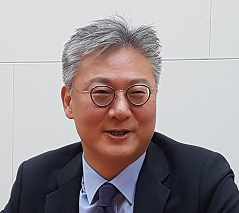
- The role of law firms has recently grown in the pharmaceutical bio industry. Some process was through law firms. Kim & Chang, Lee & Ko, Yulchon, HMP Law, and LK Partners are expanding their business areas in the healthcare field. The most prominent law firm is Lee & Ko. The overall evaluation is that, in terms of the health care team members, they compete for the first and second place in the industry with Kim & Chang, both quantitatively and qualitatively. Legal Counsel of Lee & Ko, Hyeong Gun LEE On the 24th, I met Hyeong Gun LEE, a representative lawyer (51), who leads the healthcare team at the office of the law firm in Jung-gu, Seoul. In the field of law, he is already considered one of the M & A experts. He was in charge of M&A, division, and sale of large corporations. Limited to the healthcare sector, Samsung Bioepis, joint venture of Samsung Biologics and Biogen's was established by him. When asked why the law firm is expanding so aggressively in the healthcare sector and how much more it will expand, he said that it's only now that the team is perfect and full-fledged activities are from now on. In fact, in 1994 (at that time, the US-Korea Law Firm) when he joined Lee & Ko, the law firm had a healthcare team. However, at that time, it dealt with traditional fields such as M & A, litigation, and patent issues. As the size of Lee & Ko grew, there were many healthcare tasks. In particular, the demand for customers was expected to surge in terms of insurance listing and application. Eventually, from 2017, the business in the field of reimbursement, drug price, and regulations began to expand. Lee & Ko has been recruiting talent very aggressively in recent years. Former executive director of AstraZeneca, Young-Sik Byun and former Novartis Director Sung-ju Kim, who were considered to be a master of the M&A field, newly settled in Lee & Ko. Kyung-soo Kang, former head of the HIRA, Wook Lee, former deputy head of the HIRA, and Young-sup Han, former head of the MFDS, joined Lee & Ko. Prior to that, Chae-min Lim and Gun-ik Son, former Deputy Minister of Health and Welfare were appointed as advisors. As a result, Lee & Ko’s health care team of about 50 people including lawyers and professional committees was established. Accordingly, other law firms are also competitively recruiting talent. In Kim & Chang, Kyung-Ho Lee, former Vice Minister of Welfare, Man-Bok Jeon, and Yong-Hyun Park, former Welfare Department Head, In-Beom Kim, and Jun-Ho Yang, former head of the Food and Drug Administration, and Byung-il Lee, former head of the HIRA, were recruited early. In Yulchon, Hee-jung Choi, former head of the Welfare Department, Yang-ji Ryu, former head of the Welfare Department, and Seong-jin Kim, former head of the Food and Drug Administration were recruited. “For a long time, it was planned to recruit experts with long practical experience. It may be the first in the industry. The effect of recruiting experts was more than expected. Customer satisfaction and awareness have increased considerably. We can get a good idea of what customers want. Now, it is the best in this field because the team has been built to some extent.” It is said that it is now complete as a team. As a result, Lee & Ko is able to cover virtually all healthcare sectors, from traditional tasks such as M&A, litigation, patent issues, and compliance to drug price and regulatory affairs. “Among the various tasks, the areas that I want to focus more on in the future are drug prices and regulations. It is also a matter of the individual companies we consult, but we want to put more focus on the institutional aspects. reimbursement and drug prices are directly related to national health. In fact, there are many parts of the drug price regulation that I can't understand even if I look at it as an attorney. It is said that regulation leads the industry, but the standards are too difficult and complicated. I want to be a little clearer and kinder.” It also suggested the goal of expanding its business area towards domestic pharmaceutical companies and bioventures. In fact, the main clients of Lee & Ko (especially in the pharmaceutical sector) were mainly foreign pharmaceutical companies. However, recently, a domestic company has a new drug lineup and is seeking global advancement. He also predicted that their demand would increase. “Recently, the size of domestic companies has grown. Previously, it was mainly focused on generics and sales, but recently it is developing new drugs and seeking global expansion. However, it is true that the experience of developing new drugs is insufficient. We expect it to help.In fact, inquiries from domestic companies have recently increased. I want to help with bioventure work. Many of these major contracts (M&A, investment, and funding) are thought to be unreasonable. I want to help you to solve this reasonably.” Unlike large-scale law firms, the long-term vision is different from what was expected to prioritize performance and ranking competition. In the field of healthcare, I want to be uniquely happy with the first place. We want our health care team to be happier than any other place, and we want our customers working with us to be happier. I think that unparalleled happiness is truly the number one value that cannot be counted by numbers. ”
