
- LOGIN
- MemberShip
- 2026-06-20 03:50:11
- Opinion
- [Reporter's View] Transparent info, the key to vaccine trust
- by Son, Hyung Min Oct 17, 2025 06:11am
- Starting on the 15th of this month, simultaneous administration of COVID-19 and influenza perioperative vaccines has begun for older adults aged 65 and older and high-risk groups. The Korea Disease Control and Prevention Agency (KDCA) has informed that the rate of adverse events from simultaneous vaccination does not exceed that seen with each vaccine administered individually. Since this measure targets highly vulnerable groups, including the elderly and those with chronic diseases, minimizing vaccination anxiety and ensuring safety are crucial. Nevertheless, some recent research findings and statistics are being misinterpreted, leading to instances in which vaccines are interpreted as directly or indirectly linked to the occurrence of specific diseases. Trust in vaccines remains a challenge overseas as well. In the United States, controversy has arisen due to recent actions by the public health authorities of the Donald Trump administration, who attempted to link the COVID-19 vaccine to the deaths of 25 children. Some sources argue that the U.S. government is systematically spreading false information about vaccines. Although anxiety is spreading due to some shared reports that the incidence of specific diseases has increased after vaccination, medical data must always be analyzed by considering key variables. Even if a numerical difference appears, it does not necessarily imply causation. Various factors, including sample composition, observation period, lifestyle, and underlying conditions, can influence the results. The COVID-19 vaccine, developed using new technology and available for less than 6 years, also contributes to concerns about its long-term safety. In this situation, the government and medical professionals have a responsibility to inform the public using objective information thoroughly and to uphold the credibility of the National Immunization Program (NIP). Concerns about simultaneous vaccination must also be addressed transparently, based on scientific evidence. Concealing or minimizing adverse event reports may temporarily quell anxiety, but it ultimately damages overall public health confidence. Medical professionals and researchers must accumulate objective data through rigorous research processes and explain the results to the public as they are. Transparent communication, founded on ethics and responsibility, is the starting point for building sustainable public health trust. The NIP can only function properly when the public receiving the vaccine, the researchers conducting the studies, and the government guiding the policy all understand this process and fulfill their roles. It is crucial to remember that the very inclusion and implementation of the COVID-19 vaccine in the NIP already guarantees objectivity and trustworthiness. The vaccination program's design, review process, clinical trial data analysis, and adverse event monitoring are the outcomes of scientific verification. Even if there are concerns, the overall confidence cannot be shaken by a single piece of data or political claim. The anxiety and fatigue remaining after the pandemic still cause people to react sensitively to biased information. It must be recognized that an approach centered on scientific evidence and transparent communication is the only way to maintain vaccine confidence and protect the sustainable safety net of public healthcare.
- Company
- DLBCL drug Monjuvi may be prescribed at Big 5 Hospitals
- by Eo, Yun-Ho Oct 17, 2025 06:11am
- Handok's newly introduced drug ‘Monjuvi’ may now be prescribed at tertiary hospitals in Korea. According to industry sources, Monjuvi (tafasitamab), a treatment for diffuse large B-cell lymphoma (DLBCL) introduced by Handok from Incyte, has passed the Drug Committee (DC) reviews at the Big 5 medical institutions in Korea - Samsung Medical Center, Seoul National University Hospital, Seoul St. Mary's Hospital, Asan Medical Center, and Severance Hospital. Approved in Korea in June 2023, Monjuvi is indicated for adult patients with relapsed or refractory DLBCL who are not eligible for autologous stem cell transplantation and have failed at least one prior therapy, first in combination with Revlimid (lenalidomide), and then on its own as monotherapy. Monjuvi is a humanized IgG monoclonal antibody that targets CD19, a cell surface antigen protein expressed on B lymphocytes. However, Monjuvi is currently a non-reimbursed drug. It was submitted to the Health Insurance Review and Assessment Service's Cancer Disease Review Committee last April, but failed to establish reimbursement criteria. Therefore, it remains to be seen whether Monjuvi will succeed in securing reimbursement and be prescribed in practice.. The efficacy of Monjuvi was demonstrated in the L-MIND study, which reported an objective response rate (ORR) of 58%, including a 40% complete response rate and an 18% partial response rate. The treatment also demonstrated a favorable safety profile, enabling patients to receive therapy in an outpatient setting without requiring hospitalization. Meanwhile, diffuse large B-cell lymphoma (DLBCL) is one of the most common subtypes of lymphoma. It is a rapidly progressive cancer with a poor prognosis, known to recur in 20-25% of patients following standard combination chemotherapy.
- Company
- "Switzerland and Korea partner up for bio-ecosystem"
- by Son, Hyung Min Oct 17, 2025 06:11am
- Conradin Cramer, Mayor of Basel, Switzerland As the global pharmaceutical industry is restructuring around collaboration, Switzerland and South Korea are strengthening their partnership to build an innovation ecosystem. The vision is to establish a model of joint innovation, based on efficient resource and mutual trust, rather than a simple technology exchange. On October 16, Roche Korea hosted a media day at its headquarters in Gangnam-gu, Seoul, with Switzerland's City of Basel and the Embassy of Switzerland in Korea, to share global partnering strategies and success stories for building a bio-ecosystem. Switzerland, despite its small territory —about 40% the size of South Korea — and a population of around 9 million, has produced numerous leading global pharmaceutical companies. In particular, the City of Basel is home to over 800 life science companies, including Roche, Novartis, and Ferring Pharmaceuticals. Basel is also home to 'BaseLaunch,' a venture builder that supports bio-ventures and represents Europe. So far, 11 companies in the BaseLaunch portfolio have attracted over $800 million (approximately KRW 1 trillion) in investment from European and U.S. venture funds. Switzerland has also been recognized as the world's most innovative country for 15 consecutive years in the World Intellectual Property Organization (WIPO)'s Global Innovation Index. Conradin Cramer, Mayor of Basel, stated, "City of Basel's strength is not just its world-class research, but also its accessibility. Universities, hospitals, and public institutions are all within walking distance. This proximity facilitates rapid decision-making and network formation." He emphasized, "Innovation does not remain confined to one country's economy. Competence and mutual respect are essential factors for achieving goals. We look forward to collaboration between Switzerland and Korea, and partnership collaboration between Roche and Korean partner companies." "Korean Companies Show Global Competitiveness in ADC and Alzheimer’s New Drugs" (from left) Ezat Azem, General Manager of Roche Korea; Harm-Jan Borgeld, Head of Asia Partnering Group; Andrea Clementi, Head Swiss Business Hub Korea; Christof Kloepper, Basel Area Business & Innovation Roche, founded in 1892, is one of the major global pharmaceutical companies, with innovative achievements across chronic diseases, oncology, rare diseases, immunological diseases, and ophthalmology. Last year, the company's revenue recorded 60.495 billion Swiss Francs (approximately KRW 96 trillion). Roche is also focusing on bolstering its next-generation pipeline across various markets. Harm-Jan Borgeld, Head of Roche's Asia Partnering Group, who oversees the Asian markets including Korea, Japan, and China, explained that Korean companies are effectively developing both Best-in-Class and First-in-Class new drug candidates. He particularly assessed that Korea holds strengths in Antibody-Drug Conjugates (ADCs) and early-stage Alzheimer's disease. Harm-Jan Borgeld stated, "We have confirmed the competitiveness of Korean companies in ADCs. We see strong interest in promising new drug candidates, especially those pursuing bispecific antibody-ADCs that can target multiple solid tumors rather than a single indication. The market competitiveness of Korean companies is also evident in the components of ADCs: the payload, the linker, and the platform technology. Furthermore, Korea holds promising candidates for Alzheimer's disease treatments." He added, "For Korean companies to build contact points with global companies, they must understand the interests of partnering companies. In particular, the pitching points of each new drug candidate are particularly important. Most projects are in the Phase 1 to Phase 2 stage, and companies that pitch well accurately present their most advanced compounds. Most importantly, successful progress in preclinical animal models is essential." Borgeld stressed that companies developing a Best-in-Class drug must be able to clearly explain the potential of their acquired data, along with an analysis of competing drugs. Borgeld said, "Late entrants must identify which data has potential compared to competitors. They must also pay attention to the progress of competitors," and added, "Preparation related to manufacturing and production must also be strong. Companies should be able to explain their manufacturing plan for the antibody compound." Ezat Azem emphasized, "For Korean companies to enter the global market, it is essential to meet various international standards first. By narrowing the gap with international standards, the possibility of collaboration with global companies will increase. Like in Switzerland, cooperation among industry, academia, and government is needed."
- Policy
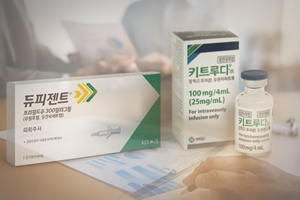
- Keytruda, Dupixent begin negotiations for reimb expansions
- by Jung, Heung-Jun Oct 17, 2025 06:10am
- The immuno-oncology drug Keytruda (pembrolizumab) and the atopic dermatitis treatment Dupixent Pre-filled (dupilumab) have entered price negotiations, moving one step closer to expanding reimbursement in Korea. Both MSD Korea’s Keytruda and Sanofi-Aventis Korea’s Dupixent received reviews deeming reimbursement adequate for expanded indications at the September meeting of the Drug Reimbursement Evaluation Committee. Keytruda added an impressive 11 new indications, including gastric cancer, esophageal cancer, endometrial cancer, colorectal cancer, squamous cell carcinoma, cervical cancer, breast cancer, small intestine cancer, and biliary tract cancer. Previously, it was covered for 7 indications across 4 cancer types: non-small cell lung cancer, Hodgkin lymphoma, melanoma, and urothelial carcinoma. The addition of 11 indications is expected to increase annual claims by approximately KRW 400 billion. Due to increased usage, Keytruda became subject to monitoring for fourth-quarter price-volume agreement negotiations this year. Dupixent, a treatment for severe atopic dermatitis, received approval for expanded reimbursement for ‘severe type 2 inflammatory asthma in adults and adolescents’. Dupixent, the only targeted biologic for atopic dermatitis in Korea, had its indications expanded in March this year to include ‘additional maintenance therapy for adult COPD patients with elevated blood eosinophil counts inadequately controlled by standard inhaled therapy’. According to Sanofi's performance data, Dupixent's global sales for the second quarter of this year reached approximately KRW 6.617 trillion. This represents a 15.6% increase compared to the same period last year. Sanofi is continuing to expand its indications for Dupixent through additional clinical studies. According to the market research institution IQVIA, sales in 2023 reached KRW 143.2 billion . This represents an increase of over 36% compared to the previous year, showing an upward trend. Due to its increased use in Korea, it is also included as a subject for monitoring for fourth-quarter PVA negotiations alongside Keytruda. If negotiations with the National Health Insurance Service proceed without breakdown and lead to expanded coverage, this is expected to further bolster the upward sales trend.
- Policy
- "Korea Passing concerns…'dual pricing system' under review"
- by Lee, Jeong-Hwan Oct 17, 2025 06:10am
- Minister of Health and Welfare Jeong Eun Kyeong Minister of Health and Welfare Jeong Eun Kyeong announced that the Ministry would strengthen administrative efforts for 'fast track National Health Insurance (NHI) listing of new drugs' and review the introduction of a 'dual pricing system' to prevent global pharmaceutical companies from "Korea Passing" of their new drugs. On October 14, Minister Jeong stated this during a Parliamentary Inspection, responding to an inquiry from People Power Party Rep. Jia Han regarding the U.S. Trump administration's 'Most-Favored-Nation Prescription Drug Pricing.' Rep. Han stated concern, "If the Trump administration's new drug pricing system is fully implemented, patient access to new drugs in Korea could be significantly constrained," and added, "Global pharmaceutical companies like Pfizer and AstraZeneca have also stated participation in the most-favored-nation price system." Rep. Han further pointed out, "Recently, a key breast cancer treatment, Faslodex, was considered for withdrawal due to drug price issues, and some rare and intractable disease treatments cannot be introduced into Korea at all," and added, "If the most-favored-nation price system is implemented, Korea could devolve into a 'country with cheap drugs but no new drugs.' If major pharmaceutical companies delay launching or withdraw from Korea due to drug price transparency and low market potential, patients will lose access to life-saving new treatments." Rep. Han said, "South Korea's drug prices are about one-fifth of the OECD average, and its share of the global pharmaceutical market is only 1.7%, compared to the U.S. at 58.4%," and added, "If global pharmaceutical companies bypass Korea due to low drug prices and small market size, we would see withdrawal before launch, as already seen with some original drugs." Minister Jeong acknowledged the issue of delayed introduction or withdrawal of new drugs caused by the most-favored-nation price system and responded that the Ministry would strengthen Fast Track NHI listing and review the introduction of a dual pricing system. Minister Jeong said, "We are informed that the risk of delayed introduction or withdrawal from the domestic market for new drugs could increase due to the most-favored-nation price system. " She added, "We will strive to establish a reinforced compensation system for new drugs so that they can be swiftly listed on the NHI." Minister Jeong also said, "South Korea's drug pricing system is excessively transparent and is used as a reference price by other countries, which leads to disadvantages," and concluded, "To compensate for this, we are reviewing a dual pricing system and will work to improve our drug price disclosure methods and system."
- Company
- Expanded reimb prospect for 5 indications of 'Tevimbra'
- by Eo, Yun-Ho Oct 16, 2025 06:21am
- Product photo of Tevimbra The cancer immunotherapy 'Tevimbra' is gathering attention over whether it will receive expanded reimbursement following its previous success in the esophageal cancer indication. According to industry sources, five indications for BeOneMedicines Korea's PD-1 inhibitor immunotherapy Tevimbra (tislelizumab) are expected to be considered by the upcoming Cancer Disease Review Committee (CDRC) of the Health Insurance Review and Assessment Service (HIRA). In April, Tevimbra became the first immunotherapy to receive reimbursement for esophageal cancer. Following this, it has added five new indications for solid tumors, including esophageal cancer, gastric cancer, and non-small cell lung cancer. BeOneMedicines has submitted a reimbursement application concurrently with its application for Tevimbra's expanded indication. The indications are ▲first-line combination therapy for unresectable, locally advanced, or metastatic esophageal cancer ▲first-line combination therapy for unresectable or metastatic, HER2-negative gastric or gastroesophageal junction adenocarcinoma ▲two types of first-line combination therapy, and second-line monotherapy for non-small cell lung cancer. Since BeOne Medicines is quickly proceeding with reimbursement procedures for additional indications, Tevimbra's role is expected to expand across various cancer types in Korea. Expectations are particularly high due to BeOne Medicines' previous track record of successfully concluding negotiations with the government by advocating for 'fair drug pricing' since its initial listing. It remains to be seen whether BeOne Medicines can uphold its company philosophy of 'providing innovative new drugs at a reasonable price and leaving no patient behind.' Meanwhile, the efficacy and safety of Tevimbra were proven in various indications through the RATIONALE clinical trial series (RATIONALE-303, 304, 305, 306, 307). Notably, in studies of esophageal squamous cell carcinoma and gastric or gastroesophageal junction adenocarcinoma, Tevimbra demonstrated clinical benefits in the overall patient population. The trials showed consistent results in pre-specified subgroups based on PD-L1 expression.
- Policy
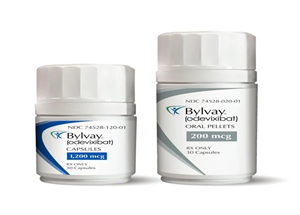
- Bylvay granted orphan drug designation for Alagille syndrome
- by Lee, Tak-Sun Oct 16, 2025 06:21am
- From this month, Bylvay Cap (odevixibat, Ipsen Korea)—which was recently listed for reimbursement as a treatment for progressive familial intrahepatic cholestasis (PFIC)—has been designated as an orphan drug for treating cholestasis-associated symptoms in patients with Alagille syndrome. The orphan designation is expected to accelerate the indication expansion, as it provides benefits such as expedited review and exemption from application fees. As a result, Bylvay is now poised to compete with GC Biopharma’s Livmarli oral solution (maralixibat chloride), which is currently in the final stage of pricing negotiations for reimbursement for Alagille syndrome in Korea. According to industry sources on the 15th, the Ministry of Food and Drug Safety announced the designation of Bylvay Cap as an orphan drug for treating Alagille syndrome, effective as of the 1st of this month. Bylvay Cap obtained domestic marketing authorization last August as a treatment for pruritus in patients with progressive familial intrahepatic cholestasis (PFIC) aged three months or older. This month, it also succeeded in securing reimbursement listing for the same indication. This drug was selected for the parallel approval-evaluation-negotiation pilot program, enabling it to shorten the time to approval and reimbursement listing compared to other drugs. Its recent designation as an orphan drug for Alagille syndrome is expected to further expedite the process for adding this new indication. Orphan drug designation grants access to expedited review and waives application fees. Additionally, even before final approval, the drug can be supplied to patients through the Korea Orphan & Essential Drug Center. Currently, the only approved treatment for Alagille syndrome in Korea is GC Biopharma’s Livmarli oral solution, which was approved in February 2023 for the treatment of cholestatic pruritus in patients aged three months and older with Alagille syndrome (ALGS). Livmarli is also designated as an orphan drug in Korea. In August, Livmarli passed review by the Health Insurance Review and Assessment Service’s (HIRA) Drug Reimbursement Evaluation Committee and is now in final pricing negotiations with the National Health Insurance Service (NHIS). Once listed for reimbursement, Alagille syndrome patients will be able to use Livmarli with insurance benefits in Korea. Alagille syndrome is a condition where the number of bile ducts within the liver is significantly reduced, preventing bile from being excreted from the liver and causing it to accumulate and cause complications in the cardiovascular, skeletal, ocular, and dermatologic systems. The disease primarily affects children, and due to the lack of effective treatments, it causes significant suffering for patients and their families. There are currently an estimated 136 patients with the condition in Korea. During its review, the Central Pharmaceutical Affairs Council deemed the orphan drug designation for Bylvay to be appropriate, considering the drug’s safety, efficacy, and supply feasibility. The fact that Bylvay has also been designated as an orphan drug for Alagille syndrome in the United States and Europe was also taken into account. As such, once Bylvay obtains formal approval for the Alagille syndrome indication, it is expected to directly compete with GC Biopharma’s Livmarli, which is nearing reimbursement approval. Furthermore, the orphan drug designation is anticipated to somewhat improve patient access.
- Policy
- Will regulations emerge for Wegovy prescriptions?
- by Lee, Jeong-Hwan Oct 16, 2025 06:20am
- Health and Welfare Minister Eun-kyeong Jeong acknowledged the excessive prescription of the popular obesity drug Wegovy in some frontline medical institutions and pledged to devise measures to improve prescribing practices through consultation with the medical community. The minister also said that MOHW will cooperate with the Ministry of Food and Drug Safety (MFDS) to designate Wegovy and other obesity injections as drugs of concern for misuse and abuse, raising the level of regulatory control and strengthening post-marketing adverse event monitoring systems. Minister Jeong made the remarks on October 15 in response to on-site inquiries from Rep. Nam-hee Kim of the Democratic Party of Korea during a National Assembly audit session. Rep Kim pointed out the problem that Wegovy, launched domestically last year and enjoying explosive popularity, is being prescribed without restriction beyond the approved indications. She further pointed out that prescriptions have been issued even to pregnant women and children under 12, both of whom are contraindicated for Wegovy. Rep. Kim asked Minister Jeong, “Do you believe the prescribing standards for Wegovy are being properly followed in clinical practice? There are numerous cases where it has been prescribed to children and pregnant women, despite clear restrictions.” Rep. Kim questioned, “This cannot be left unchecked. The lack of adequate legal grounds to regulate doctors and pharmacists is a problem, and some doctors sacrificing patient safety for profit is also a problem. The public's health must not be compromised, and national health insurance funds must not be wasted due to side effects from unprincipled prescribing and indiscriminate abuse of drugs.” Minister Jeong responded, “I believe Wegovy is being quite excessively and inappropriately prescribed in clinical settings. It is important to adhere to the dosing guidelines, but under the current Medical Service Act, physicians are granted discretionary authority in their prescriptions. Prescribing to children and pregnant women is certainly problematic,” she acknowledged. She also pointed out that there are limits to oversight because Wegovy is a non-reimbursed medication. “We will actively consult with the medical community to explore ways to adjust these excessive prescribing behaviors.” She added, “The Ministry of Food and Drug Safety has a system to designate and manage drugs of concern for misuse and abuse. We will utilize this system to collaborate on developing measures for drug management and post-marketing adverse reaction surveillance systems.”

- Policy
- MOHW Minister Jeong 'Will expedite orphan drug listings'
- by Jung, Heung-Jun Oct 16, 2025 06:20am
- The Ministry of Health and Welfare announced it will support the expedited listing of new drugs to enhance access to rare disease treatments and develop tailored measures for each rare disease. It also plans to collaborate with the Korea Disease Control and Prevention Agency to expand the legal designation of rare diseases. During the National Assembly Health and Welfare Committee audit held on October 14, Rep. Gae-ho Lee of the Democratic Party of Korea urged the ministry to take measures to strengthen support for rare diseases. Rep. Lee said, “Around 7,000 rare diseases have been identified worldwide, but only 1,314 are legally recognized as rare diseases in Korea. Patients also face significant challenges in accessing new therapies, and coverage under the national insurance system remains limited,” he added, calling for a comprehensive review by the ministry. In response, Minister Jeong stated, “We are well aware that rare diseases are marginalized, leading to insufficient access to new drugs and inadequate welfare support. We conduct annual demand surveys to expand the list of rare diseases and will consult with the Korea Disease Control and Prevention Agency to ensure this process is conducted meticulously.” She added, “We will also ensure new drugs can be listed promptly. Since medical and welfare needs vary by rare disease, we believe strengthening tailored countermeasures is necessary and will actively pursue this.”
- Policy
- "Overseas transfer of KOR genomic data by China's Novogene"
- by Lee, Jeong-Hwan Oct 16, 2025 06:20am
- During the Parliamentary Inspection, Rep. Lee Ju-young questioned the possibility of Novogene Korea transferring Korean citizens Rep. Lee Ju-young of the Reform Party pointed out an issue regarding Novogene, a Chinese genomics analysis company that established a branch in Korea, that the company has no genetic analysis equipment in Korea. Rep. Lee's concern is that Novogene's holding company, BGI, was globally reported in 2021 for allegedly collecting and sharing genomic data from over 8 million pregnant women across 52 countries with the People's Liberation Army. This raises serious concerns regarding the export of domestic genomic information and poses a threat to national security. Furthermore, Novogene Korea is located in a building owned by the Korea Association of Health Promotion, where the tenancy rights reportedly include the authority to use the Association's big data. This suggests an increased risk that Novogene could directly pose a national security threat by exporting Korean citizens' genomic data. Rep. Lee suggests that the current 'Bioethics and Safety Act' does not regulate Novogene Korea's reporting, which has triggered these concerns. She urged the Ministry of Health and Welfare (MOHW) to prepare responses. Minister of Health and Welfare Jeong Eun Kyeong stated that she would examine the facts regarding the sharing of domestic genomic big data between Novogene Korea and the Association. On October 14, during the parliamentary inspection of MOHW, Rep. Lee questioned Minister Jeong regarding the overseas export of domestic patient genomic data by Novogene Korea and the related threat to national security. According to Rep. Lee, Novogene Korea has not been registered as a genetic testing institution because the current law does not require such registration. As a result, the company operates as a sales organization with only six employees without the necessary equipment for genomic analysis. Rep. Lee criticized this, arguing that it makes it inevitable that genomic samples collected domestically by Novogene Korea will be sent to the company's centers in Mainland China, Hong Kong, and Singapore for analysis. It may be concluded that domestic biological genomic information is being exported. Rep. Lee said, "Institutions like Novogene Korea, which perform research and not testing for purposes defined by the Bioethics and Safety Act, are not subject to reporting as a genetic testing institution," and added, "The legislative gap or regulatory blind spot was created when the regulation mandating reporting for research-purpose testing companies was deleted in 2013." Rep. Lee also pointed out, "Current law does not restrict the export of biospecimens for genetic analysis or limit the performance of genetic testing overseas," and added, "Even if there is a concern that genetic testing prohibited domestically might be carried out overseas or that domestic genomic information might be exported, there is no legal basis to sanction it." She further pointed out, "Novogene Korea is located in the Korea Association of Health Promotion building. The arrangement appears to be a co-sharing lab model with the tenant. The company has no equipment or personnel for genetic analysis or experimentation. It has six employees, all of whom are administrative or sales staff, and the CEO does not even reside in Korea." Minister Jeong Eun Kyeong promised to verify the allegation.Rep. Lee asked, "I requested the attendance of Novogene Korea's witness, but they submitted a statement of non-attendance. The Association's national genomic big data is clean data of the Korean people. It is highly valuable and risky if leaked, directly affecting the national security of the Republic of Korea. When were you briefed on this?" Minister Jeong replied, "I received a report confirming that Novogene Korea and the Association have a simple lease agreement and no history of information sharing or joint research," and added, "We need to verify how the Association's big data is being shared." Minister Jeong further said, "I will verify the details of whether Novogene Korea receives requests for genomic information analysis from other Korean hospitals or institutions and then sends those samples overseas for testing."
