- LOGIN
- MemberShip
- 2026-09-13 17:47:42
- Discussion on hADM safety…traceability tracking from the donation phase
- by Hwang, byoung woo | translator Hong, Ji Yeon | 2026-06-29 09:42:25

Amid growing interest in human-derived extracellular matrix (ECM), the industry is also focusing on its safety profile. Currently, ECM is reported to be properly regulated through rigorous validation protocols.
Human acellular dermal matrix (hADM) used in aesthetic and reconstructive fields is supplied to patients through a strict full project lifecycle management system that spans from donor consent and infectious disease screening to processing, sterilization, quality review, and traceability tracking.
At the 16th Summer Symposium of the Korean Society for Anti-Aging Dermatology held on June 28, Faith P. Case, a tissue bank expert, introduced the ethical standards, regulatory compliance, and safety validation frameworks of US tissue banks during a session titled 'hADM, The center of the ECM era, Their similar yet different stories.'
Case is an American Society for Quality (ASQ) Certified Quality Manager and an American Association of Tissue Banks (AATB) Certified Tissue Bank Specialist, currently serving as the Vice Chair of the AATB Accreditation Committee. She also has extensive experience conducting inspections and audits for the US Food and Drug Administration (FDA) and the South Korean Ministry of Food and Drug Safety (MFDS).
The hADM safety management system initiates from donor consent
Case emphasized that human-derived tissue allografts, such as hADM, fundamentally differ from synthetic biomaterials from their very origins. She noted that a donor's decision precedes the manufacturing process, serving as the critical first step in safety management.
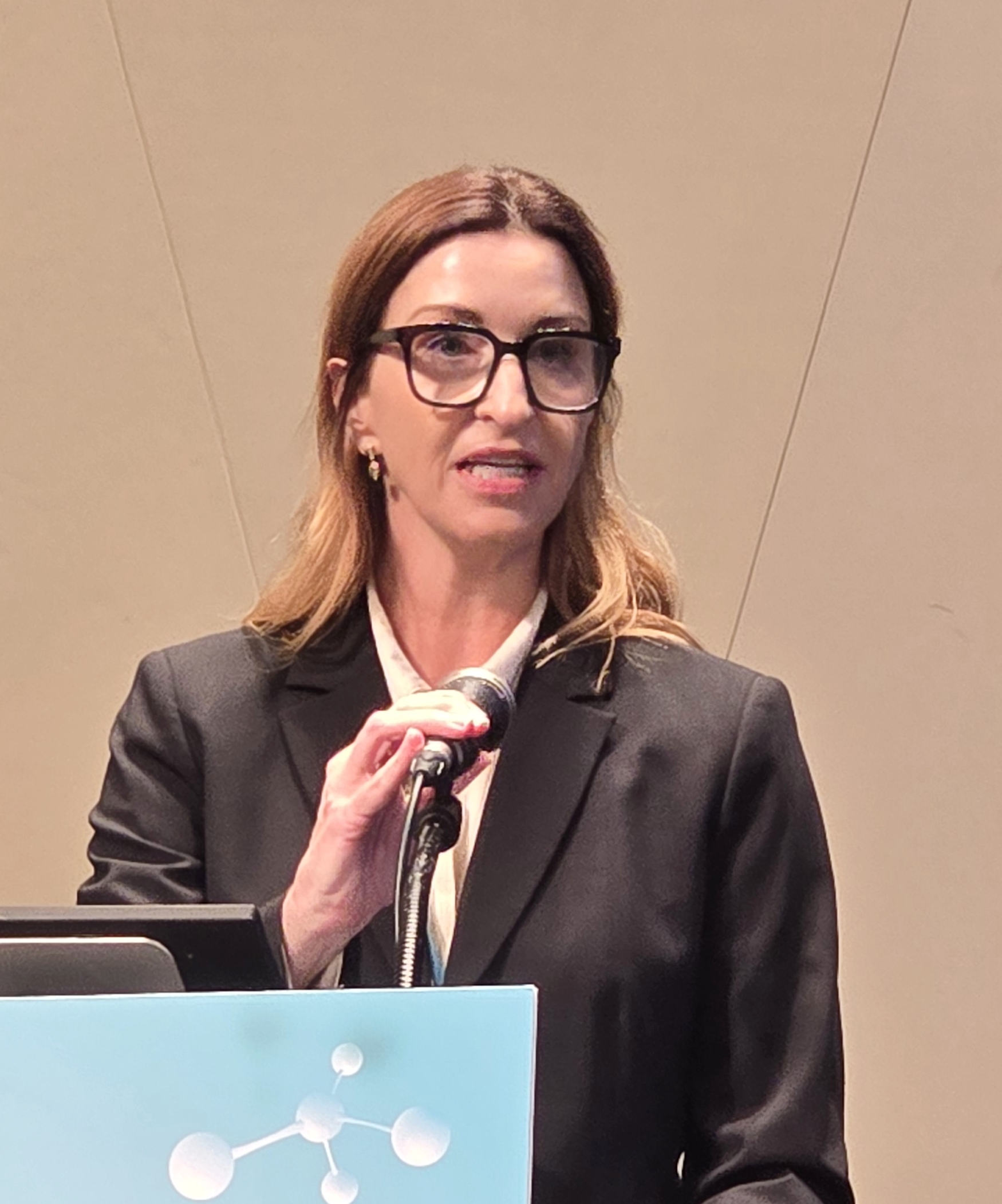
"Human tissue does not originate in a laborator. It begins with a human decision to donate," she stated. "This decision leads to a moral responsibility to manage the donation process with absolute transparency."
The ethical foundation of the US tissue banking system is the Uniform Anatomical Gift Act (UAGA). This legislation serves as the legal bedrock for voluntary tissue donation and informed consent protocols. Donors or their families provide explicit authorization for which specific tissues may be recovered and the exact clinical fields, such as reconstructive or aesthetic purposes, in which they may be used.
Case explained, "Securing high-caliber tissue and maintaining rigorous safety standards is not merely a regulatory compliance, but a pledge to honor the donor's intent," and added, "When public trust is protected, the continuity of sustainable therapeutics for patients is guaranteed."
Case further explained the structurally integrated relationship between donor consent and FDA regulations. While the donor's authorization serves as the trigger for tissue recovery, FDA regulations provide the mechanism to validate whether the recovered tissue meets the standards required for patient administration.
"Donation is merely the starting point. It does not automatically guarantee the production of an allograft," Case said. "If a donor fails to pass the initial safety screening protocols, the process stops at that stage, and no tissue is recovered."
Only validated tissues reach patients following infectious disease screening and aseptic recovery
Following recovery, the timeline proceeds through infectious disease screening, aseptic recovery, and validated processing and sterilization.
According to Case, US tissue banks review donors' medical and behavioral histories and use Nucleic Acid Amplification Testing (NAT) to minimize the risk of acute asymptomatic infections. The screening panel comprehensively covers HIV, Hepatitis B, Hepatitis C, Syphilis, HTLV, and West Nile Virus, among others.
Case highlighted that the regulatory directions of the US FDA and the Korean MFDS converge on the singular goal of patient protection.
"While the FDA and the MFDS may vary in procedural and administrative actions, their ultimate destination is identical, which is absolute patient protection," Case said. "The core safety values demanded in donor screening and infectious disease testing remain fundamentally aligned."
Regarding safety validation, operational environmental control was proposed as a key factor. Case stressed that "Microorganisms do not read documentation. They react to the environment. Tissue safety validation must function as a multi-layered defense system that actively mitigates contamination risks across every single phase of the tissue lifecycle."
Contamination risks are strictly controlled from the recovery phase onward, after which processing eligibility is determined through formal evaluations by physicians and the tissue bank's medical director. The processing phase operates under a strict protocol in which only one donor's tissue is processed in a designated zone at any given time, supported by cleanroom environments, HEPA filtration, validated sterilization protocols, and cold-chain management.
Finished products are never distributed immediately. A dedicated quality professional must independently review the medical director's release determination, donor testing records, processing logs, and sterilization data before the tissue can finally advance to the patient administration phase.
Completing safety validation via unique ID-based traceability systems
Case detailed traceability as another core benchmark that substantiates hADM safety.
Every donor is assigned a unique identification number, which remains seamlessly linked from tissue recovery through processing, storage, international logistics, and final clinical administration at the point of care. This system ensures that if an adverse event or issue arises, the system can trace the lineage back to the initial donation phase or pinpoint exactly which patient received a specific tissue unit.
Case mentioned, "The true sophistication of modern allografts does not lie merely within the clinical application itself, but within the invisible safety nets that ensure patient safety."
"Tissue banking is ultimately about honoring the gift of donation and protecting the patients who receive it," Case added. "This responsibility is sustained through error-proof operating systems and precise accountability frameworks."
Concluding the session, the chairperson tied the lecture's implications directly to the broader discussion on ECM safety. The chair evaluated, "This lecture provided a clear, scientific evidence-based understanding of the ethical considerations and safety concerns previously raised by some regarding ECMs, based on validated international management and regulatory standards."
-

- 0
댓글 운영방식은
댓글은 실명게재와 익명게재 방식이 있으며, 실명은 이름과 아이디가 노출됩니다. 익명은 필명으로 등록 가능하며, 대댓글은 익명으로 등록 가능합니다.
댓글 노출방식은
댓글 명예자문위원(팜-코니언-필기모양 아이콘)으로 위촉된 데일리팜 회원의 댓글은 ‘게시판형 보기’와 ’펼쳐보기형’ 리스트에서 항상 최상단에 노출됩니다. 새로운 댓글을 올리는 일반회원은 ‘게시판형’과 ‘펼쳐보기형’ 모두 팜코니언 회원이 쓴 댓글의 하단에 실시간 노출됩니다.
댓글의 삭제 기준은
다음의 경우 사전 통보없이 삭제하고 아이디 이용정지 또는 영구 가입제한이 될 수도 있습니다.
-
저작권·인격권 등 타인의 권리를 침해하는 경우
상용 프로그램의 등록과 게재, 배포를 안내하는 게시물
타인 또는 제3자의 저작권 및 기타 권리를 침해한 내용을 담은 게시물
-
근거 없는 비방·명예를 훼손하는 게시물
특정 이용자 및 개인에 대한 인신 공격적인 내용의 글 및 직접적인 욕설이 사용된 경우
특정 지역 및 종교간의 감정대립을 조장하는 내용
사실 확인이 안된 소문을 유포 시키는 경우
욕설과 비어, 속어를 담은 내용
정당법 및 공직선거법, 관계 법령에 저촉되는 경우(선관위 요청 시 즉시 삭제)
특정 지역이나 단체를 비하하는 경우
특정인의 명예를 훼손하여 해당인이 삭제를 요청하는 경우
특정인의 개인정보(주민등록번호, 전화, 상세주소 등)를 무단으로 게시하는 경우
타인의 ID 혹은 닉네임을 도용하는 경우
-
게시판 특성상 제한되는 내용
서비스 주제와 맞지 않는 내용의 글을 게재한 경우
동일 내용의 연속 게재 및 여러 기사에 중복 게재한 경우
부분적으로 변경하여 반복 게재하는 경우도 포함
제목과 관련 없는 내용의 게시물, 제목과 본문이 무관한 경우
돈벌기 및 직·간접 상업적 목적의 내용이 포함된 게시물
게시물 읽기 유도 등을 위해 내용과 무관한 제목을 사용한 경우
-
수사기관 등의 공식적인 요청이 있는 경우
-
기타사항
각 서비스의 필요성에 따라 미리 공지한 경우
기타 법률에 저촉되는 정보 게재를 목적으로 할 경우
기타 원만한 운영을 위해 운영자가 필요하다고 판단되는 내용
-
사실 관계 확인 후 삭제
저작권자로부터 허락받지 않은 내용을 무단 게재, 복제, 배포하는 경우
타인의 초상권을 침해하거나 개인정보를 유출하는 경우
당사에 제공한 이용자의 정보가 허위인 경우 (타인의 ID, 비밀번호 도용 등)
※이상의 내용중 일부 사항에 적용될 경우 이용약관 및 관련 법률에 의해 제재를 받으실 수도 있으며, 민·형사상 처벌을 받을 수도 있습니다.
※위에 명시되지 않은 내용이더라도 불법적인 내용으로 판단되거나 데일리팜 서비스에 바람직하지 않다고 판단되는 경우는 선 조치 이후 본 관리 기준을 수정 공시하겠습니다.
※기타 문의 사항은 데일리팜 운영자에게 연락주십시오. 메일 주소는 dailypharm@dailypharm.com입니다.