
- LOGIN
- MemberShip
- 2026-06-13 18:48:43
- Company
- Prescription of severe asthma drug 'Tezspire' at general hospital imminent
- by Eo, Yun-Ho Jun 11, 2026 09:25am
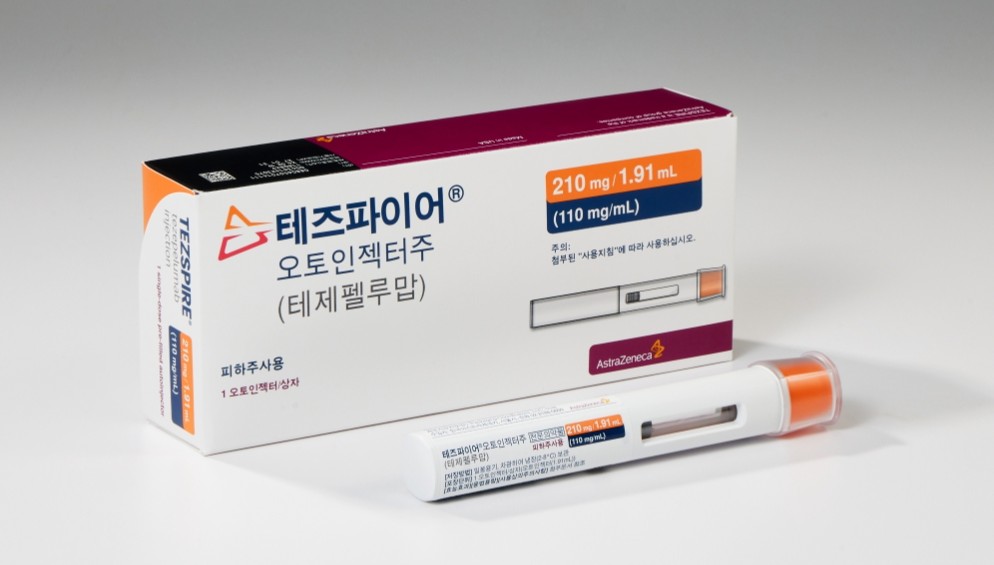
- Product photo of TezspireNovel drug 'Tezspire (tezepelumab)' for severe asthma is becoming available for prescription in general hospitals.According to industry sources, AstraZeneca Korea’s severe asthma treatment Tezspire (tezepelumab), an anti-human thymic stromal lymphopoietin (TSLP) monoclonal antibody, has passed the drug committee (DC) reviews at Seoul National University Hospital, Gyeongsang National University Hospital, Kyungpook National University Hospital, Kyungpook National University Chilgok Hospital, Hallym University Sacred Heart Hospital, and Soonchunhyang University Hospital Seoul.Tezspire, approved in Korea in 2023, works by blocking TSLP, an upstream cytokine central to the asthma inflammatory cascade, thereby demonstrating efficacy in controlling symptoms and improving lung function across a broad spectrum of severe asthma patients, irrespective of their specific asthma phenotypes.The clinical efficacy of Tezspire was proven through two clinical studies, PATHWAY and NAVIGATOR. The primary endpoint for both clinical trials was the annualized rate of clinically significant asthma exacerbations measured over 52 weeks.In the PATHWAY study, which followed 550 severe asthma patients aged 18 and older for 52 weeks, the Tezspire group demonstrated an asthma exacerbation rate of 0.20, showing a significant difference compared with 0.72 in the placebo group.In the NAVIGATOR study, which evaluated 1,061 patients aged 12 and older with uncontrolled severe asthma over 52 weeks, Tezspire recorded an exacerbation rate of 0.93, significantly lower than the 2.10 of the placebo group.Regarding the secondary endpoint in both trials, the Tezspire group had a greater improvement from baseline in forced expiratory volume in one second (FEV₁) than placebo.Meanwhile, Tezspire recently secured a new indication for chronic rhinosinusitis with nasal polyps (CRSwNP). The efficacy of this indication was established via the WAYPOINT study.The WAYPOINT trial was a multi-center, randomized, double-blind, placebo-controlled Phase III clinical study conducted across 10 countries, involving 408 adult patients aged 18 and older presenting with severe, uncontrolled chronic rhinosinusitis with nasal polyps.The study results revealed that at week 52, the Tezspire group showed statistically significant improvement, demonstrating a reduction of -2.07 in the Nasal Polyp Score (NPS), which evaluates the size and extent of polyps, and a reduction of -1.03 in the Nasal Congestion Score (NCS), which measures the severity of nasal blockage, compared to the placebo cohort. Furthermore, these therapeutic improvements were maintained as early as week 4 and week 2 of treatment, respectively, and were sustained throughout the full 52-week duration.
- Policy
- Application for salt-modified version of palbociclib filed in Korea
- by Lee, Tak-Sun Jun 11, 2026 09:25am
- Pfizer's breast cancer treatment ‘Ibrance Tab’A salt-modified version of palbociclib (brand name: Ibrance), a breast cancer treatment, has been submitted for regulatory approval.Generic versions of palbociclib are expected to enter the market in March 2027, when the original Ibrance substance patent expires. Daewoong Pharmaceutical and Kwangdong Pharmaceutical have already secured first generic exclusivity for products containing the same active ingredient and are preparing for launch.Against this backdrop, a salt-modified palbociclib product has emerged as a new variable in the upcoming generic competition. The product is believed to have been developed by Boryung.According to the Ministry of Food and Drug Safety (MFDS) on June 10, a tablet formulation containing palbociclib hemiadipate was submitted for approval on May 7.The product is intended for the treatment of hormone receptor (HR)-positive, human epidermal growth factor receptor 2 (HER2)-negative advanced or metastatic breast cancer.Its approved indications are identical to those of the original Ibrance, including use in combination with an aromatase inhibitor as initial endocrine therapy in women and in combination with fulvestrant in women whose disease has progressed following endocrine therapy.Ibrance is Pfizer's oral targeted therapy for breast cancer. The drug generated KRW 23 billion in outpatient prescriptions last year, according to UBIST data.Domestic companies have long prepared for market entry upon expiration of Ibrance's substance patent by challenging patents and developing products. In addition to the substance patent, Ibrance’s formulation patents were invalidated through patent invalidation trials, while crystal-form patents were circumvented through product differentiation strategies.In particular, Daewoong Pharmaceutical and Kwangdong Pharmaceutical satisfied the requirements for first generic approval and secured first generic exclusivity rights.Daewoong's tablet product ‘Ranclib Tab’ and Kwangdong's capsule product ‘Alenci Cap’ obtained exclusive marketing rights from March 23, 2027, through December 22, 2027, the period immediately following expiration of the substance patent. During that period, other generic tablet and capsule formulations containing palbociclib cannot enter the market.Boryung, which had also successfully challenged the patents, failed to obtain first generic approval. Industry observers believe the company adopted a strategy to launch the product early in the market by bypassing the patent through a salt-modified product strategy.In December last year, Boryung challenged the crystal-form patent with a product based on ‘palbociclib hemiadipate crystalline particles,’ the same active ingredient used in the product for the current approval application. In April, the Intellectual Property Trial and Appeal Board ruled that the product did not fall within the scope of the patent claims.Accordingly, if Boryung's product satisfies certain conditions, such as the initial filing of marketing authorization, it is expected that they will be able to overcome the market exclusivity barrier created by Daewoong and Kwangdong, and launch the product simultaneously when the substance patent expires next year.Under Korea's Pharmaceutical Affairs Act, the sales injunction resulting from first generic exclusivity applies only to generics containing the same active ingredient. Since the 'hemiadipate' form applied for by Boryung differs chemically from the original 'base-free' (salt-free) form, it falls outside the scope of Daewoong and Kwangdong's exclusive rights for tablets and capsules. As a result, Boryung will be able to launch its product immediately following the expiration of the substance patent in March 2027."Boryung has continued expanding investment in its oncology business while strengthening its breast cancer treatment portfolio.The company already markets breast cancer therapies including ‘Xeloda’ and ‘Taxol,’ as well as ‘Samfenet,’ a biosimilar version of Herjuma developed by Samsung Bioepis. In 2024, the company also secured ‘Nerlynx Tab.’ through a co-promotion agreement with Bixink Therapeutics.The company further completed preparations for palbociclib commercialization by obtaining reimbursement listing last year for Letrobo Tab, a letrozole product used in combination with palbociclib.Meanwhile, both capsule and tablet formulations of Ibrance are currently reimbursed in Korea. Pfizer has introduced a tablet version that improves upon the food effect (which previously required administration immediately after a meal) of the existing capsule formulation.

- Policy
- Drug price cuts for listed drugs to be discussed in detail next week
- by Jung, Heung-Jun Jun 11, 2026 09:24am
- The Ministry of Health and Welfare (MOHW) plans to convene a working-level consultative meeting with the pharmaceutical industry next week and discuss detailed issues related to drug pricing reform, including criteria for reducing the prices of already-listed medicines.At the previous working-group meeting held in late April, participants discussed calculation rates, management of multiple product listings, and the implementation cycle for drug price reductions. However, price cuts for existing listed drugs were not discussed at the meeting, making the issue a key agenda for the upcoming meeting.According to industry sources and relevant authorities on June 9, the MOHW will hold another working-group meeting with pharmaceutical companies next week as part of efforts to implement its drug pricing reform plan.The April meeting was attended by officials from the Health Insurance Review and Assessment Service (HIRA), the National Health Insurance Service (NHIS), and pharmaceutical companies. Participants discussed various measures for reforming the pharmaceutical pricing system. Following the meeting, the ministry accepted the feedback and issued a legislative notice for amendments to the "Criteria for the Determination and Adjustment of Pharmaceuticals."At that time, discussions on listed drug price reductions were not included on the agenda. The meeting concluded with a consensus that further discussion would be necessary.As a result, detailed criteria distinguishing Phase 1 and Phase 2 products subject to price cuts of listed drugs will likely be discussed at the next meeting.The overall framework has already been established - price cuts for existing listed drugs will begin at the end of this year and be implemented gradually over a ten-year period through 2036. However, products will be divided into Phase 1 and Phase 2 categories based on a 2012 cutoff, with different timelines for when the price reductions take effect.To date, not all products have been classified into either Phase 1 or Phase 2. Additional discussions are needed regarding products for which the applicable criteria remain unclear, such as fixed-dose combination drugs and other products. The industry and regulators are still discussing how these products should be categorized under the proposed framework.For instance, there may be disagreements regarding whether a combination product should be classified as a Phase 1 product when some components of a combination drug still retain patent protection or PMS (Post-Marketing Surveillance) status.Unlike the industry's stance, the government maintains that if even a single component was listed before 2012, it should be classified as a Phase 1 drug.The distinction between Phase 1 and Phase 2 products could have a significant impact on the pharmaceutical industry. Products classified as Phase 2 would begin price reductions in 2030 and gradually converge to a reimbursement rate of 45% by 2036.Given the revenue implications of delaying the reduction schedule by 4 years, pharmaceutical companies are expected to seek classification of as many products as possible under the more favorable Phase 2 category.

- InterView
- [Reporter's View] A key to the virtuous cycle of open innovation
- by Son, Hyung Min Jun 11, 2026 09:24am
- Recently, collaboration between global pharmaceutical companies and Korean biotech companies has expanded beyond technology in-licensing to joint research and development, platform technologies, and early-stage asset discovery. The partnership landscape is shifting, moving away from its historical focus on late-stage clinical assets that had already undergone substantial validation toward increasingly diversified collaborative models.Eli Lilly recently in-licensed a GLP-2-based novel drug candidate from Hanmi Pharmaceutical. Last year, the company also signed licensing agreements with domestic biotech firms for novel drug candidates, including ABL Bio, Rznomics, and OliX.Multiple global pharmaceutical giants, including MSD, Roche, Pfizer, Novartis, Bayer, AstraZeneca, and Amgen, are also expanding joint research initiatives and promising biotech discovery programs in South Korea. This shift indicates that domestic biotech companies' technological capabilities are gaining significant recognition globally.Global pharmaceutical companies review numerous candidate molecules and platform technologies every year. They make investment decisions only after comprehensively assessing R&D probability of success, clinical competitiveness, and commercial viability. While a technology transfer or co-development agreement does not automatically guarantee the ultimate success of a novel drug, it at least signifies that the technology has secured an opportunity to validate its competitiveness in the global market.The South Korean government is also emphasizing open innovation as a core pillar of its biotech industry growth strategy. The objective is to enhance the probability of success in developing innovative new drugs by blending domestic R&D capabilities with the development and commercialization expertise of global pharmaceutical companies. Even if a technology discovered by a domestic company is advanced into a novel drug through collaboration with a global pharmaceutical company, it faces evaluations focused on clinical utility and cost-effectiveness when entering the Korean market.This is a reasonable principle. National health insurance finances are finite, and marketing authorizations and reimbursement decisions must be adjudicated on the basis of objective evidence. A product cannot receive preferential treatment simply because it was developed by a specific company or within a particular country. However, given that the government is actively pursuing open innovation and nurturing the biotech industry as a key national strategy, discussions are necessary on how to evaluate the value of innovation generated by the domestic R&D ecosystem within the current institutional framework. When a technology discovered by a domestic firm proves its competitiveness in the global market through collaboration with a multinational pharmaceutical company, careful consideration is necessary as to whether it is appropriate to view the achievement as parallel to other imported novel drugs.In fact, several domestic technologies successfully entered global standard-of-care treatment areas through partnerships with global pharma, considerable time remains before domestic patients can tangibly experience those benefits. This is because the process of settling globally recognized innovation within local clinical practices requires clearing an entirely separate set of regulatory and pricing hurdles.Of course, this does not imply that marketing authorization or reimbursement criteria should be relaxed. The core principle of cost-effectiveness and clinical value must be rigidly maintained.However, if the state is politically incentivizing the vitalization of open innovation and the promotion of the bio-industry, discussions must simultaneously take place on how to adequately reflect the value of the innovation generated through that very process.There are clear limitations to evaluating the outcomes of open innovation solely by total contract size for technology exports or by the volume of upfront payments. The virtuous cycle is truly completed only when innovation discovered domestically undergoes global development and ultimately returns to contribute to the treatment of patients in South Korea.The government labels the biotech sector as a future growth engine. Global pharmaceutical companies are also competing to seek out the technologies of South Korean enterprises. Now is the time to take a step beyond merely exporting technology and deliberate on structural frameworks that ensure these achievements extend seamlessly to the Korean market and patients.

- Company
- ‘Statin side effects overstated…benefits of treatment outweigh risks’
- by Son, Hyung Min Jun 11, 2026 09:24am
- The growing perception online that statins cause muscle damage or diabetes has led to a new issue - delayed treatment for patients with dyslipidemiaExperts emphasized that while the risks of statin side effects are often exaggerated, the drug's efficacy in preventing myocardial infarction and stroke has been confirmed through large-scale clinical trials, underscoring the need for evidence-based treatment decisions.On June 10, Viatris Korea held a media session in Seongsu-dong, Seoul under the theme "Statin Myths and Facts," highlighting changes in the health information landscape and the importance of managing dyslipidemia.Dyslipidemia is a major chronic disease affecting approximately half of the adult population in Korea. Although it is a major risk factor for cardiovascular and cerebrovascular diseases such as myocardial infarction and stroke, many patients fail to recognize the need for treatment because the condition is often asymptomatic. Recently, the spread of unverified health information through social media platforms such as YouTube has led some patients to defer or discontinue treatment.Viatris media sessionSpread of "Don't take statins" messages raises concerns about treatment delaysDr. Min-wook Jang of the Jang Min-wook Brain Navigation Neurology Clinic noted that distorted information about statins is being repeatedly shared online.Common claims include denying the need to manage LDL cholesterol or suggesting that statins cause muscle damage and diabetes, making them more harmful than beneficial.Dr. Jang said, "An increasing number of younger patients have been deferring treatment because of unverified information. Postponing statin therapy can ultimately lead to irreversible outcomes such as heart attacks or strokes. Treatment decisions should be based on accumulated clinical evidence."He shared cases from his practice in which patients discontinued statin therapy after receiving misleading information and later suffered strokes, stressing the importance of relying on verified medical evidence rather than sensational online content.According to experts, the key goal of statin therapy is LDL cholesterol management.Multiple large-scale clinical studies and meta-analyses have shown that every 1 mmol/L (approximately 38.8 mg/dL) reduction in LDL cholesterol lowers the risk of major cardiovascular events, including heart attack and stroke, by about 22%.Among high-risk populations, which includes patients with diabetes, higher LDL cholesterol levels are associated with increased cardiovascular risk. Statin therapy has been shown to significantly reduce the risk of major cardiovascular events in these patients.The timing of treatment is also important. Delaying therapy after diagnosis prolongs exposure to elevated LDL cholesterol, thereby increasing cardiovascular risk. In contrast, initiating treatment relatively early can provide long-term preventive benefits.Experts also noted that concerns regarding statin side effects differ from what is observed in actual clinical data.From left: Prof. Nan-do Kim (Emeritus Professor, Consumer Science, Seoul National University), and Dr. Min-wook Jang (Director, Jang Min-wook Brain Navigation Neurology Clinic).Muscle-related adverse events have not shown significant differences compared with placebo groups in randomized controlled trials, while the risk of severe muscle damage such as rhabdomyolysis remains extremely low. The possibility of a nocebo effect—where patients experience or perceive symptoms more strongly because they expect side effects—has also been raised.In studies involving patients who considered discontinuing statin therapy because of muscle symptoms, no significant difference in muscle-related adverse events was observed between statin and placebo groups. Presenters suggested that some reported symptoms may be influenced more by patient perception than by the medication itself.Although some studies have reported a potential increase in diabetes risk, current clinical guidelines conclude that the overall benefits outweigh the risks when considering its effect in reducing heart attacks, strokes, and cardiovascular mortality.Dr. Jang explained that the annual risk of new-onset diabetes mellitus (NODM) associated with long-term statin use is approximately 0.1%, which is relatively low. In contrast, the benefits of LDL cholesterol reduction, stabilization of coronary plaque, and prevention of major atherosclerotic cardiovascular disease (ASCVD) events have been clearly demonstrated.Another meta-analysis found that treating 255 patients with statins for 4 years resulted in one additional case of new-onset diabetes. Dr. Jang noted that while the risk exists, the absolute risk remains relatively low.Dr.Jang said, "Patients at higher cardiovascular risk derive substantially greater clinical benefits from statin therapy. Rather than delaying treatment because of vague concerns about side effects, patients should assess their individual risk and begin treatment at an appropriate time."'Health intelligence' becomes more important amid the flood of health informationThe event also featured discussions on changes in health information consumption.Prof. Nando Kim, Emeritus Professor of Consumer Science at Seoul National University, argued that in an era overflowing with health information, the ability to search for, evaluate, and utilize health information has become increasingly important.Dr. Kim said, "We have moved beyond the era of IQ and EQ into the era of Health Quotient (HQ), the ability to understand one's health status, seek and evaluate health information, and choose appropriate medical interventions. As more people acquire medical knowledge through artificial intelligence, the ability to critically interpret information and make careful decisions becomes even more important."He added, "For conditions such as dyslipidemia, patients need to obtain science-driven information and take a proactive approach to management amid widespread misconceptions and misinformation."
- Policy
- Will PPC injections make a comeback? MFDS review underway
- by Lee, Tak-Sun Jun 10, 2026 08:41am
- AI-generated imagePPC (phosphatidylcholine) injections, which dominated the aesthetic and obesity market in the late 2000s but subsequently disappeared, are preparing for a spectacular comeback with a formal marketing authorization in hand. In the past, PPC injections were approved as an adjunct treatment for hepatic coma caused by liver cirrhosis, but they became controversial due to their widespread "off-label" use for fat reduction.According to industry sources on the 9th, the Ministry of Food and Drug Safety (MFDS) recently initiated a Good Clinical Practice (GCP) inspection regarding the application for a change in product approval for "Amiraju Inj. 5mL," a PPC-based drug. The GCP inspection is a critical final hurdle where the MFDS verifies the reliability of clinical data just before granting drug approval. This implies that the MFDS has entered the final stages of the product approval review.Amipharm has been known to have applied for approval. The company has developed a proprietary formulation technology that completely eliminates surfactants and utilizes only pure soybean-derived phosphatidylcholine (PPC) to induce the "apoptosis" (programmed cell death) in fat cells. Unlike earlier formulations that forcibly caused cell necrosis, the new composition selectively induces the death of fat cells only, thereby significantly reducing pain and swelling while maintaining a semi-permanent fat reduction effect.Amipharm successfully completed a domestic Phase III clinical trial involving 252 patients with submental (double chin) fat, demonstrating a high improvement rate of approximately 73.7%. Following this, the company applied for formal product approval as a ‘localized fat reduction agent’ and is known to be s proceeding simultaneously with manufacturing license approval procedures.PPC injections like Lipobin Inj were originally approved as prescription drugs for the treatment of hepatic coma associated with liver cirrhosis. However, rumors that American pop star Britney Spears had lost weight using PPC injections fueled a craze in aesthetic clinics and plastic surgery practices, where the products were widely prescribed off-label to reduce fat under the chin and in the upper arms.The product's popularity, however, did not last. Manufacturers ultimately failed to demonstrate post-marketing efficacy for the originally approved indication of hepatic coma, while growing criticism over the indiscriminate use of PPC injections as obesity treatments further intensified. As a result, the products were eventually withdrawn from the Korean market.An industry official commented, “It is highly meaningful that PPC, a substance that once disappeared from the aesthetic market, is returning as a formally approved therapeutic product after demonstrating its safety. If the MFDS inspection proceeds smoothly, official marketing authorization is certainly within reach.”
- Company
- SK Bioscience and CDC to develop an injectable rotavirus vaccine
- by Choi Da Eun Jun 10, 2026 08:41am
- SK Bioscience is partnering with the US Centers for Disease Control and Prevention (CDC) to develop an injectable rotavirus vaccine. Through collaboration with a global public health institution, the company aims to secure next-generation vaccine technologies and respond to growing vaccine demand, particularly in low- and middle-income countries.On the 9th, SK Bioscience announced that it had signed a licensing agreement with the CDC for the development of an injectable rotavirus vaccine.SK Bioscience headquarters in SongdoUnder the agreement, SK Bioscience will acquire technology for the CDC’s injectable inactivated rotavirus vaccine candidate and carry out process development aimed at improving manufacturing productivity. Once process development is completed, the company plans to proceed with subsequent clinical trials, regulatory approval, and eventual commercialization.The CDC has already developed the injectable inactivated rotavirus vaccine technology and completed a Phase I clinical trial. Building on this technology, SK Bioscience intends to accelerate development by establishing manufacturing processes that improve vaccine efficacy while reducing production costs.Research and development expenses will be jointly funded with a global health foundation. In June of last year, SK Bioscience signed an agreement with the RIGHT Foundation to receive support for process-development R&D costs related to the vaccine.The RIGHT Foundation is a public-private nonprofit organization established through joint funding from the Bill & Melinda Gates Foundation, the Korean government, and domestic life sciences companies. The foundation supports R&D projects aimed at reducing the burden of infectious diseases in low- and middle-income countries.Rotavirus is one of the leading infectious diseases causing severe diarrhea and dehydration in children under the age of five. According to research from Johns Hopkins University, approximately 24.4% of child deaths worldwide are associated with diarrhea resulting from rotavirus infection.Although currently available oral rotavirus vaccines demonstrate preventive efficacy over 85% in developed countries, their effectiveness reportedly falls below 50% in low- and middle-income countries with poor nutritional status and sanitation conditions. As a result, there has been a growing demand within the global health community for injectable vaccines capable of overcoming the limitations of oral formulations.The market is also experiencing strong growth. According to global market research institution Business Research Insights, the worldwide rotavirus vaccine market is expected to expand from approximately USD 8.1 billion in 2024 to USD 13.9 billion by 2033, representing an annual growth rate (CAGR) of about 6.2%.Annual procurement rose from approximately 900,000 doses in 2011 to 57 million doses in 2023, while demand from countries supported by Gavi, the Vaccine Alliance, is expected to reach approximately 64 million doses by 2028.UNICEF's procurement of rotavirus vaccines has been steadily increasing. The procurement volume, which stood at approximately 900,000 courses in 2011, grew to 57 million courses in 2023. Furthermore, the demand from countries supported by Gavi, the Vaccine Alliance, is projected to reach approximately 64 million courses by 2028.Jaeyong Ahn, President&CEO of SK Bioscience, stated, “We are honored to be able to contribute to solving global public health challenges based on innovative technology developed by the CDC. Working together with the RIGHT Foundation, we will continue developing innovative vaccines that improve the health of children in low- and middle-income countries and fulfill our role and contribute to advancing the global public health paradigm.”
- InterView
- [Reporter’s View] More regulations for CSO rebates
- by Lee, Jeong-Hwan Jun 10, 2026 08:41am
- The Office for Government Policy Coordination has designated the eradication of illegal rebates between pharmaceutical companies and contract sales organizations (CSOs) as a government-wide ‘national normalization task.’ The announcement came shortly after the Ministry of Health and Welfare declared its intention to improve the fundamental structure of the domestic pharmaceutical and biotech industry through a reform of the drug pricing system, signaling administrative action that is expected to have a significant impact on the industry.The move reflects the Lee Jae-myung administration’s strong commitment to achieving its key policy objectives of ‘fostering a globally competitive pharmaceutical and biotechnology industry’ and creating ‘blockbuster innovative drugs.’ However, contrary to the blueprint expected by the government's policy, variant forms of CSO (Contract Sales Organization) rebates are still prevalent in the field of drug prescriptions.With generic drug price reductions decisively introduced to improve the financial sustainability of the National Health Insurance system and shift the industry toward innovation-driven growth, dishonest CSOs are exploiting regulatory blind spots and hindering the advancement of Korea’s pharmaceutical sector. Reports of some illegal CSOs even taking advantage of preferential criteria in the Ministry’s pricing reform plan, such as R&D investment requirements for innovative drugs, to proactively offer disguised rebate schemes to pharmaceutical companies, underscore the need for both the government and the National Assembly to accelerate regulatory measures through administrative and legislative action.Another ongoing problem involves medical institution directors establishing CSOs under the names of their children or relatives and receiving excessive kickbacks or fictitious service fees disguised as sales agency commissions. CSOs, which should be growing alongside efforts to modernize the pharmaceutical industry, have instead continued to evolve in undesirable ways that undermine the healthcare ecosystem.One encouraging sign is that many CSOs advocate greater industry transparency and promote a division-of-labor model in which pharmaceutical companies focus on drug discovery and regulatory approval while CSOs carry out dedicated sales and marketing. While the direction is appropriate, the reality is that pharmaceutical companies still have little trust in CSOs, highlighting the need for broader industry reform and self-reflection.It is now the time when stronger self-regulation by the industry, coupled with follow-up regulations by the government and NA beyond the recently introduced mandatory CSO reporting system, is required to become free from the criticism that it is difficult to find a ‘clean CSO free of rebate practices’ that pharmacuetical companies can reliably outsource sales activities to.The time has come to address the long-overdue task of transforming CSOs, which have become synonymous with indirect rebate channels, into legitimate and transparent organizations. Although discussions regarding commission rate controls or licensing systems may raise constitutional concerns or be difficult to implement immediately, policymakers should immediately contemplate, establish, and implement a realistic next-stage regulatory track to elevate the currently proliferating, fragmented CSO (Contract Sales Organization) structures to a more advanced level.One example of a tangible regulatory proposal is legislation introduced by Representative Jin-sook Jeon of the Democratic Party of Korea, a member of the National Assembly’s Health and Welfare Committee. The bill would require CSOs to submit proof of their business location when filing reports and establish stricter management standards capable of objectively demonstrating that they are legitimate organizations engaged in lawful pharmaceutical sales activities.The Ministry of Health and Welfare should use the ongoing CSO surveys and comprehensive investigations as a starting point to proactively formulate additional measures aimed at eliminating CSO-related rebates and work closely with both ruling and opposition parties to advance those efforts.The pharmaceutical industry must also seize this opportunity to break the cycle of illegal rebate supply and demand. Beyond formal compliance training, stakeholders should strengthen measures such as the certification system for medical representatives (MRs) to help CSOs develop into true specialists, while jointly reforming the ‘multi-product generic environment’ that encourages the mechanical misuse and abuse of CSOs as rebate channels.Greater transparency in pharmaceutical distribution is an irreversible trend. Blockbuster innovative drugs with global competition capability cannot be created through sales practices built on illegal rebates. Now that the government has declared its commitment to restoring normality, the 22nd National Assembly should, upon completing its second-half organizational setup, work with the government to introduce comprehensive measures that both legitimize CSOs and advance Korea’s pharmaceutical industry, enabling Korean pharma and biotech to evolve to the next level.
- Company
- Topical JAK inhibitor 'Anzupgo cream' set for general hospital prescription
- by Eo, Yun-Ho Jun 10, 2026 08:41am
- The topical JAK inhibitor 'Anzupgo cream' is closer to being prescribed in general hospitals.According to industry sources, LEO Pharma Korea's Anzupgo (delgocitinib), a new drug for Chronic Hand Eczema (CHE), has passed drug committees (DC) of medical institutes, including Seoul National University Hospital, National Medical Center, and Hanyang University Seoul Hospital.As Anzupgo is being processed for insurance reimbursement listing, more hospitals will be able to prescribe this drug.Anzupgo is the only non-steroidal topical cream formulation approved for the treatment of moderate-to-severe CHE in adult patients who have not responded to, or for whom topical corticosteroids are not advisable.Anzupgo does not contain parabens or steroids. It works by suppressing the JAK-STAT signaling pathway, which is involved in various inflammatory reactions, by inhibiting the activity of JAK1, JAK2, JAK3, and TYK2, thereby helping to alleviate skin inflammation and pruritus.Previously, treatment options for CHE have been limited, with strong topical corticosteroids primarily being used. However, prolonged use of these agents can carry various risks, including skin barrier damage, skin atrophy, and dilated blood vessels.For cases where treatment effects did not appear in a short period, Korean treatment guidelines also recommended combining them with topical calcineurin inhibitors or systemic steroids.GSK's 'Alitoc (alitretinoin)', currently the only approved oral treatment for severe CHE, is used in patients who have not responded to at least 4 weeks of potent topical corticosteroid therapy. It improves symptoms through its skin-regulatory, anti-inflammatory, and immunomodulatory actions. It is known to be effective for the long-term management of chronic, severe hand eczema with a high risk of relapse.However, its continued use has been limited by concerns over various side effects, including hepatotoxicity, hypothyroidism, dyslipidemia, and fetal malformation.Anzupgo's efficacy was proven through the DELTA FORCE and DELTA 2 clinical studies, which included a direct comparison with GSK's Alitoc (alitretinoin).Anzupgo's efficacy was proven through the DELTA FORCE and DELTA 2 clinical studies, which included a direct comparison with GSK's Alitoc (alitretinoin).The DELTA 2 study enrolled 473 patients with moderate-to-severe CHE. Participants were randomized to either the delgocitinib cream or placebo cream application group, receiving treatment twice daily for 16 weeks.The primary endpoint was an Investigator's Global Assessment for Chronic Hand Eczema (IGA-CHE) score of 0/1 measured at Week 16. Key secondary endpoints included the IGA-CHE score and the Hand Eczema Symptom Diary (HESD) score, both evaluated at Weeks 4 and 8.The results showed that the delgocitinib group significantly improved chronic hand eczema at Week 16 compared to the placebo group, meeting the primary and key secondary endpoints.
- Policy
- OTC Formulation changes to become easier in KOR
- by Lee, Tak-Sun Jun 09, 2026 10:01am
- Going forward, companies seeking approval for over-the-counter (OTC) drugs that use the same route of administration as an already approved or notified product but differ only in formulation will be required to submit significantly fewer review documents. By establishing specific criteria for what constitutes a ‘minor formulation difference,’ a concept that had previously remained ambiguous, the revision is expected to substantially reduce the burden associated with product development and approval changes for pharmaceutical companies.The Ministry of Food and Drug Safety (MFDS) announced on the 5th that it had issued a public notice of a proposed amendment to the ‘Regulations on the Approval, Notification, and Review of Pharmaceutical Products.’ The revision was introduced to address shortcomings in the current pharmaceutical approval, notification, and review system while rationalizing existing regulations.The core objective of the amendment is to streamline the administrative procedure by clearly specifying which supporting documents are required when changing the formulation of OTC drugs.Previously, if a company sought approval for a new product that had the same route of administration as an already approved or notified drug but differed in formulation, it was required to submit extensive review materials, such as head-to-head trial data or bioequivalence study data.However, under the revised proposal (Appendix 1), if the difference between the proposed OTC formulation and the existing formulation is considered ‘minor’ and falls within the same specified category, existing data for the drug may be used in place of the required review data.According to examples provided by the MFDS, eligible formulation changes include: Changes among tablets (plain tablets, sugar-coated tablets, and non-enteric film-coated tablets); capsule formulations; granules and powders; Changes among ointments, creams, gels, topical solutions, and topical powders; Changes among oral liquid formulations (excluding emulsions and suspensions) and syrups; Changes between cataplasms and adhesive patches.The pharmaceutical industry expects the measure to significantly reduce both development time and costs when diversifying OTC formulations to better align with consumer preferences and improve dosing convenience.In addition to simplifying formulation-change procedures, the amendment includes a number of broader regulatory rationalization measures.For medical high-pressure gases such as oxygen, a new exemption provision has been established, allowing safety validation data (long-term stability and accelerated stability study results) to be replaced by prior use cases for already approved or registered products. For orphan drug products whose active pharmaceutical ingredient quality data have already been submitted, multiple specifications for the active ingredient may be listed if it can be demonstrated that they do not affect the quality of the finished pharmaceutical product.In addition, a new provision stipulates that when only the name of a general test method in an official compendium has changed without any modification to the test procedure itself, the approval or notification will be deemed automatically updated without requiring a separate amendment procedure. In addition, efforts to refine legal terminology into easy-to-understand Korean, such as replacing Japanese-style Chinese characters like ' sujaedoen (recorded)’ with 'sillin(included)’ and ' jeokbu (judgment of suitability)’ with 'judgment of conformity/non-conformity’ were also includedThe MFDS will accept public comments on the proposed amendment until August 4, 2026. The revised regulation will take effect immediately upon promulgation and will apply to pharmaceutical products for which manufacturing, marketing, or import approval and notification applications (including amendments) are first submitted after the effective date.
