
- LOGIN
- MemberShip
- 2026-06-22 01:09:01
- Company
- The era of compound management for obesity
- by Whang, byung-woo Jan 23, 2025 05:54am
- Wegovy (semaglutide), an obesity drug hailed as a game-changer, is seeking synergy with its cardiovascular benefits in addition to weight loss. Experts say that the obesity treatment paradigm is already evolving beyond weight loss to overall health care. In the future, it will be a challenge to improve access through expert review and reimbursement. (from the left) Soo Lim, Professor of endocrinology and metabolism at Seoul National University Bundang Hospital, Jong Chan Yoon, Professor of Cardiology at Seoul St. Mary Novo Nordisk held a media session on the 21st of this month to highlight the weight loss and cardiovascular disease risk reduction effects of Wegovy. Wegovy is an obesity treatment that is administered once a week. It is licensed in Korea as an adjunct to weight loss and weight management in patients with weight-related comorbidities. In July last year, the indication was expanded to include the risk reduction of major cardiovascular events (cardiovascular death, nonfatal myocardial infarction, or nonfatal stroke) in overweight and obese patients with established cardiovascular disease. “The 20% reduction in major adverse cardiovascular events (MACE) seen with semaglutide in adult obese patients with cardiovascular disease is a significant step forward in the treatment of obesity,” said Julie Broe Honore, Senior CMR (Clinical, Medical, and Regulatory) Director at Novo Nordisk Korea. “From a clinical perspective, semaglutide is a treatment option that can be used in conjunction with diet and increased physical activity to help manage weight and reduce the risk of major cardiovascular events.” Korean experts also emphasize the importance of active treatment interventions as obesity is a chronic disease that goes beyond simple weight gain and leads to multiple metabolic and cardiovascular complications. “The comorbidities of diabetic patients in Korea include hypertension (60%), kidney disease (40%), hyperlipidemia (70%), and obesity (50%),” said Dr. Soo Lim, Professor of endocrinology and metabolism at Seoul National University Bundang Hospital. ”It is time to control multiple diseases together, and I think GLP-1 will be the best medicine to manage them all at once.” Jong Chan Yoon, Professor of Cardiology at Seoul St. Mary Jong Chan Yoon, MD, Professor of Cardiology at Seoul St. Mary's Hospital, noted that obesity significantly increases the risk of cardiovascular disease. “Cardiovascular disease is one of the leading causes of death globally, and after analyzing data from 195 countries around the world from 1990 to 2015, we found that about two-thirds of obesity-related deaths were associated with cardiovascular disease,” said Professor Yoon. In the SELECT study, Wegovy demonstrated a significant 20% reduction in the risk of major cardiovascular events in the Wegovy arm compared to the placebo arm over a median follow-up of 39.8 months. “The results of the SELECT study demonstrate that the treatment goals for obesity can be expanded beyond simple weight loss to include reducing the risk of major cardiovascular events,” said Professor Yoon. In particular, Professor Lim emphasized that the results of the study showed that GLP-1 class drugs have greater cardiovascular benefits than other diabetes medications. “When we directly compared the cardiovascular disease reduction effects of GLP-1 and SGLT2, GLP-1 showed better benefits, and in stroke, SGLT2 had no effect, but GLP-1 showed good effect,” Lim analyzed. However, Wegovy, which was launched in Korea in October last year, is currently non-reimbursed and has a cost hurdle. Apart from its clinical benefits, it is unclear how much it can be utilized in practice considering its cost-effectiveness. Soo Lim, Professor of endocrinology and metabolism at Seoul National University Bundang Hospital. In response to this, Professor Lim said, “It is good to use a lot of good drugs, but there is a limit to their use because they are not reimbursed. The government needs to also take the view that severe obesity is a disease,” adding, ”If a person with a BMI of 35 or 40 or more is socially disadvantaged due to obesity, it is necessary to consider providing some support through insurance.” “Although the treatments are also expensive in the U.S., if you consider the cost of procedures and hospitalization due to cardiovascular diseases, papers that show that treatments like Wegovy are rather cost-effective,” said Professor Yoon. ”I expect prescriptions to gradually increase in Korea, and if there is no cost hurdle, it will likely be used without limitation within the given indications.” In the end, the will of pharmaceutical companies in attempting reimbursement will be important to resolve the cost issue. In this regard, Novo Nordisk is considering mid- to long-term plans to strengthen access. “We understand that it is necessary to expand access to therapeutics, but this is something that needs to be discussed extensively,” said Ju Ok Lim, head of Medical Affairs at Novo Nordisk. ”It requires mid- to long-term discussion, but we are in the beginning stages of the process and are exploring various ways to expand access.”
- Policy
- If atrial fibrillation develops, Rx 'Omega-3' API
- by Lee, Hye-Kyung Jan 23, 2025 05:54am
- Product photo of Kuhnil The administration of the active ingredient 'omega-3-acid ethyl esters90,' which is used for treating dyslipidemia, will be permanently discontinued if a patient develops atrial fibrillation. Starting February 10, the Ministry of Food and Drug Safety (MFDS) will modify the approval specification based on the results of the European Medicines Agency (EMA)'s safety assessment and monitoring of 'omega-3-acid ethyl esters90.' Last year, EMA's Pharmacovigilance Risk Assessment Committee (PRAC) agreed to add atrial fibrillation (irregular, rapid contraction of the heart) as a common side effect to the product information for medicines containing omega-3. The review result of a Periodic Safety Update Single Assessment (PSUSA) procedure conducted by the PRAC highlighted a dose-dependent increased risk of atrial fibrillation in patients with established cardiovascular disease or cardiovascular risk factors treated with omega-3 compared to placebo. The atrial fibrillation risk is highest with a dose of 4g per day. EMA concluded that if atrial fibrillation develops, omega-3 treatment should be permanently discontinued. The MFDS also concluded to reflect such change on the approval specification for omega-3-acid ethyl esters (monotherapy) and will include the clause, 'atrial fibrillation has been reported to be a common side effect' in the adverse reaction section. Additionally, the MFDS will add a clause that 'a dose-dependent increased risk of atrial fibrillation in patients with established cardiovascular disease or cardiovascular risk factors is observed. If atrial fibrillation develops, omega-3 treatment should be permanently discontinued' in the general safety section. Omega-3-acid ethyl esters90 is the only prescription medicine available containing omega-3 fatty acids and Kuhnil's 'Omacor' in the original drug. 56 Omacor generics have been approved. Omacor is a medicine made of omega-3 fatty acids extracted from fish oil. It is used for the treatment of hypertriglyceridemia. According to a pharmaceutical market research firm, UBIST, Omacor's outpatient prescription sales were reported to be KRW 34.6 billion.
- Policy
- MFDS approves immune thrombocytopenia drug Tavalisse
- by Lee, Hye-Kyung Jan 23, 2025 05:54am
- The Ministry of Food and Drug Safety (MFDS) announced on the 20th that it has approved Tavalisse Tab 100 mg (fostamatinib sodium hydrate), an orphan drug used to treat immune thrombocytopenia in adults. Adult immune thrombocytopenia is an autoimmune disease in which antibodies against platelets are produced and platelets are destroyed in the spleen, resulting in petechiae and purpuric spots on the skin. Tavalisse inhibits the activation of spleen tyrosine kinase (Syk), which inhibits the production of antibodies against platelets, thereby preventing platelet destruction while also interfering with platelet ingestion by macrophage. Spleen tyrosine kinase is a non-receptor tyrosine kinase that is widely present in blood cells and plays an important role in activated signal transduction within beta cells of the pancreas. The MFDS said, “We expect the treatment to provide a new treatment opportunity for patients with adult immune thrombocytopenia who have had an inadequate response to previous treatments,” the agency said. In July 2023, Tavalisse was designated as a priority review target and fast-tracked for rapid introduction into Korea. In particular, JW Pharmaceutical applied for health insurance reimbursement benefits to the Health Insurance Review and Assessment Service last year using the approval-evaluation linkage system. JW Pharmaceutical signed a contract with Japan's Kissei Pharmaceutical in 2021 for the domestic distribution right to Tavalisse. The original developer is the U.S. company Rigel Pharmaceutical, and Kissei acquired the development and exclusive commercialization rights for the Korean, Japanese, Chinese, and Taiwanese markets in 2018. “We will continue to make the best efforts to quickly supply new treatments to patients with rare and intractable diseases based on our regulatory science expertise, to expand treatment opportunities for the patients,” said the MFDS.
- Company
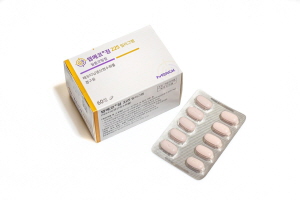
- MET inhibitor Tepmetko enters last stage to reimb in KOR
- by Eo, Yun-Ho Jan 23, 2025 05:54am
- MET-targeted anticancer drug ‘Tepmetko’ has entered the final gateway to insurance reimbursement nearly 3 years after its domestic approval. According to industry sources, Merck Korea has recently started negotiating drug prices with the National Health Insurance Service for its Tepmetko (tepotinib), a treatment for locally advanced or metastatic non-small cell lung cancer with a confirmed MET exon 14 skipping mutation. The drug passed the Health Insurance Review and Assessment Service’s Drug Reimbursement Evaluation Committee review in December last year. Tepmetko obtained domestic approval and went through the reimbursement process in 2021 at the same time as the same mechanism drug Tabrecta (capmatinib). However, no MET cancer drug has been listed for reimbursement in Korea yet. Therefore, it remains to be seen whether Tepmetko will complete the reimbursement process. The drug has failed to meet the criteria for insurance reimbursement twice, including failing review by the Health Insurance Review and Assessment Service's Cancer Disease Deliberation Committee in March. It then voluntarily suspended the coverage process and submitted another application for coverage in July, and this time, it passed the committee. This achievement was made 3 years after its domestic approval. Non-small cell lung cancer accounts for 80% of all lung cancer diagnoses. MET exon 14 skipping mutation is a rare type of cancer that is present in approximately 3-4% of these patients. In Korea, of the 1,020 NSCLC patients in Korea, 1.9% of the NSCLC patients were confirmed to have MET exon 14 deletion. Tepmetko’s efficacy was demonstrated through the VISION study, which enrolled the largest number of NSCLC patients with MET exon 14 skipping mutations. The results showed a significant life extension effect, with a median progression-free survival (PFS) of 15.3 months and an objective response rate (ORR) of 56.8 percent. The median duration of response (DoR) was 46.4 months, and the median overall survival (OS) was 25.9 months, showing continuous antitumor activity in the long term. Also, according to a presentation by Ji-Youn Han, Professor of Oncology at the Center for Lung Cancer at the National Cancer Center, which was at the Korean Association for Lung Cancer International Conference last year after analyzing 79 Asian patients that participated in the VISION study, the ORR was quite high at 66.7%, and 48.1% in the second-line treatment group. Meanwhile, Tepmetko also showed significant results in a follow-up analysis of Asian patients enrolled in the pivotal Phase III VISION study. In this analysis, Tepmetko demonstrated an objective response rate of 56.6%, a median duration of response of 18.5 months, a median progression-free survival of 13.8 months, and a median overall survival of 25.5 months. The objective response rate was 64.0% in treatment-naïve Asian patients, confirming previous findings that the first dose was more effective. No new safety information was identified, with 39.6% of patients experiencing grade 3 or higher adverse events. In addition, Tepmetko has now passed the Drug Committees (DCs) of more than 30 medical institutions nationwide, including the Big 5 tertiary hospitals - Samsung Medical Center, Seoul National University Hospital, and Seoul St. Mary's Hospital, Seoul Asan Medical Center, and Sinchon Severance Hospital.
- Company
- "C-Trelin proven effective for SCD treatment…reimb needed"
- by Lee, Seok-Jun Jan 22, 2025 05:55am
- Product photo of There is currently no standard therapy available for 'spinocerebellar degeneration (SCD).' Doctors write prescriptions based on a patient's condition, but there are still unmet needs in 'SCD treatment.' Patients affected by disease likewise. SCD is a degenerative disease affecting the cerebellum or spinal cord due to various underlying causes. Ataxia and dysarthria commonly occur at an early stage, but the disease progression accompanies complications, including dysfunction of the heart, lungs, spine, and bones, causing the risk of death. Other diseases have specific medications; for instance, 'Levodopa' is used for Parkinson's disease and 'aspirin' is used for cerebral thrombosis. However, there is currently no major medication available for SCD. This is because no medication has been proven to improve symptoms or slow down disease progression. The efficacy and safety of C-Trelin Orally Disintegrated Tab (taltirelin hydrate) was demonstrated in large-scale Phase 4 clinical trials in patients with SCD. Dr. Seong Beom Koh, Professor at the Korea University Guro Hospital's Department of Neurology who led the Phase 4 clinical trial, stated, "None of the medications used in patients with SCD are better than C-Trelin Orally Disintegrated Tab." "C-Trelin Orally Disintegrated Tab has proven effective and safe in patients with SCD. Its oral formulation also yields favorable patient compliance. It means that it is a valuable treatment for patients. We should widely use this medication through reimbursement." The efficacy and safety of the drug has been demonstrated in the large-scale Phase 4 trial The clinical trial was published in the Journal of Movement Disorder under the title, 'The Efficacy and Safety of C-Trelin Orally Disintegrated Tab in Patients with ataxia induced by SCD.' The clinical trial involved 160 study participants, including randomly assigned 79 experimental group and 81 control group, and the results showed a significant reduction in the K-SARA (Korean version of Scale for the Assessment and Rating of Ataxia), objective evaluation index for ataxia at 24 weeks treatment, thus confirming the statistical significance of the drug. The standing up and impairment in language entries showed that the average difference in K-SARA of the experimental group was statistically lower than that of the control group. While no suitable medication is available for ataxia in SCD, publication of the Phase 4 trial results in the international journal is significant. Doctors are stating the importance of providing reimbursement for C-Trelin Orally Disintegrated Tab. "C-Trelin Orally Disintegrated Tab is an oral tablet required twice daily. This drug had no significant issue based on the clinical trial evaluating the efficacy and safety. Patient tolerance was favorable, and there were no side effects after administration. To date, no other treatments administered to patients with SCD are said to be efficacious than this drug. Therefore, this drug provides a valuable treatment option for patients with SCD," Dr. Koh remarked. "C-Trelin Orally Disintegrated Tab may require long-term use, which can be costly. This drug should be considered for patients with good mobility and could benefit from it. If a drug is as effective as this, we should pursue active treatment options through reimbursement," Koh added. 'C-Trelin Orally Disintegrated Tab 5 mg' obtained the Ministry of Food and Drug Safety (MFDS) approval in 2015. It costs KRW 4,900 per tablet as a non-reimbursable drug. Two tablets per day cost KRW 9,800 daily and cost KRW 3.5 million yearly. Doctors say that without National Health Insurance reimbursement coverage, it is practically impossible for patients, about 80% of those who do not have jobs, to continue taking the drug that requires long-term administration. Based on these clinical trial results, HLB Pharmaceutical has recently applied for reimbursement again.
- Company
- "Foreign drug price re-evaluation, unfair direct comparison"
- by Kim, Jin-Gu Jan 22, 2025 05:54am
- The Q&A session at the New Year press conference hosted by the KPBMA on January 21. Yunhong Noh, President of the Korea Pharmaceutical and Bio-Pharma Manufacturers Association (KPBMA), has criticized the government's re-evaluation of foreign drug price comparison. Noh points out that making a simple drug price comparison poses problem despite differences in socioeconomic circumstances and healthcare systems between South Korea and the countries being compared to. "South Korea faces an important turning point for leaping to the advanced country in the global new drug development field," Noh said. "The government should establish a policy by assessing comprehensive effects on the pharmaceutical and biotech industry." Noh made this statement during the Q&A session at the New Year press conference hosted by the KPBMA on January 21. The government is pursuing a measure to lower domestic drug prices compared to those from 8 countries (U.S., Japan, Germany, U.K., France, Switzerland, Italy, and Canada). The government plans to reference the average adjusted price of six countries, excluding the highest and the lowest, for lowering domestic drug prices. The government and the pharmaceutical industry established a public-private consultative body last year and discussed the specifics of this measure. The previous meeting was held in July 2024, and the government is set to announce the final draft and implement the measure soon. Even after the meeting concluded, the pharmaceutical industry continued criticizing this matter. Despite the upcoming implementation of this system, it is still being criticized. Noh has a similar opinion. "During the ten meetings, I have suggested concerns on this matter," Noh said. "Each country has a different socioeconomic situation. healthcare system, and drug price system with foundation. However, it is worrisome to compare drug prices without considering the difference in the systems." "In advanced pharmaceutical countries, generics are priced high when initially registered, then later lowered due to various mechanisms. However, in South Korea, these drugs are priced low and maintained for a long time," Noh said. "Drug prices differ by time, so it is problematic to compare drug prices at a particular time point superficially." Additionally, Noh suggested to the government to adequately consider the consequences to promote the pharmaceutical industry. "South Korea faces an important turning point for leaping to the advanced country in the global new drug development field," Noh said. "The government should establish a policy by assessing comprehensive effects on the pharmaceutical and biotech industry."
- Company
- Leqembi may be prescribed in general hospitals in Korea
- by Eo, Yun-Ho Jan 22, 2025 05:54am
- The new Alzheimer’s drug Leqembi is landing in general hospitals in Korea According to industry sources, Leqembi (lecanemab) has passed the drug committees (DCs) of top tertiary hospitals in Korea, such as Samsung Medical Center, Seoul Asan Medical Center, and Sinchon Severance Hospital, as well as medical institutions such as Busan Paik Hospital and Gachon Dae Gil Hospital. Since its official launch at the end of last year, the drug has been rapidly expanding its prescription area. Leqembi has been proven to reduce the rate of disease progression and slow cognitive decline by selectively binding to amyloid beta (Aβ) aggregates, which are a known cause of Alzheimer's disease. Due to the lack of treatments for the disease, the desperation of the patients and their families had been indescribable. In addition to public petitions, the MFDS's Korea Orphan & Essential Drug Center has been inundated with inquiries on the date of Leqembi’s approval and supply in Korea. However, the problem is the price of the drug. In the U.S., Leqembi costs about KRW 35 million per year; in Japan, it costs KRW 27 million. Due to its high price, it will take a while for the drug to be approved in Korea and be listed for reimbursement as it requires a tug-of-war between pharmaceutical companies and the government. In the Clarity AD study, Leqembi achieved statistically significant results in both its primary and secondary endpoints. Specifically, Leqembi delayed clinical decline in brain function by 27% at 18 months compared to placebo. While the market for amyloid-targeted therapies such as Leqembi is gaining recognition for its effect in delaying the onset of dementia, the use of the drug has been hampered by its characteristic side effects. The amyloid-related imaging abnormalities (ARIA) that are often mentioned as an issue, are abnormal signals observed on MRI scans, such as brain edema or microhemorrhage that are detected with the drug’s use. Depending on how the adverse event occurs, ARIA is classified as ARIA-E and ARIA-H. ARIA-E can be observed on MRI as brain edema or sulcal effusions, and ARIA-H as microhemorrhage and superficial siderosis. Meanwhile, a special committee composed of 11 members of the Korean Dementia Association recently announced guidelines on using Leqembi that are tailored to Korea’s condition. The guidelines include specific details on ▲ selection of eligible patients for the drug, ▲ necessary tests and preparations before administration, ▲ administration method, ▲ monitoring and response to adverse drug reactions, and ▲ counseling for patients and guardians.

- Policy
- MOHW to 'carefully review' post-dispensing notification law
- by Lee, Jeong-Hwan Jan 22, 2025 05:54am
- A bill to add the Health Insurance Review and Assessment Service to the post-notification subjects for dispensing substitute drugs by pharmacists is scheduled to be reviewed on the 21st, but the government's cautious stance is expected to be a hurdle. The Ministry of Health and Welfare has not changed its stance on the bill, saying it should be carefully reviewed considering the scope of the HIRA’s work and concerns about the safety of drug use caused by the increased notification term. Physicians and hospital organizations are also opposed to the expansion of post-notification, citing concerns that it would undermine the doctors' prescription rights and delay the time of notification to doctors. There are a total of three bills related to dispensing substitute drugs pending in the National Assembly as of the 19th. Rep Byung-Deok Min, Young-seok Seo, and Sujin Lee of the Democratic Party of Korea have separately introduced the 3 bills. The bills are to change the “dispensing substitute drugs” clause in the Pharmaceutical Affairs Act to “same-ingredient drugs” (Young-Seok Seo, Sujin Lee) and to expand the subjects for post-notification of substitute drug dispensing to include HIRA (Byung-deok Min, Young-Seok Seo, and Sujin Lee). MOHW-HIRA “Drug safety concerns arise due to increased notification period of dispensing substitute drugs” The MOHW has been showing a cautious stance on both the provisions to change the ‘dispensing substitute drugs’ clause and the post-notification to HIRA clause. This is a reversal of the opinion as the MOHW had expressed plans to accept the post-notification provision for the same Act mentioned in the bill introduced by Rep. Young-Seok Seo in the 21st National Assembly. The MOHW explained, “Changing the phrase to same-ingredient drug dispensing may be misunderstood as being able to substitute will all drugs that contain the same ingredients,” adding, “There are differences in perceptions and positions between the medical and pharmaceutical communities on dispensing substitute drugs, so careful review is necessary.” “We agree on the need to improve the convenience of the post-notification system, which is currently conducted via phone or fax.” It added, “However, stipulating that the review committee should receive the results of the dispensing substitute drugs and renotify the prescribing physician should be carefully reviewed considering the purpose of the organization's establishment, the scope of its work, and concerns about drug safety due to the increased notification period.” HIRA also expressed a cautious view. “The notification period would inevitably increase when post-notification is made through the review committee. If a weakening incident occurs in a situation without the doctor’s awareness, patient safety issues can also arise as a concern. Since HIRA can only perform the tasks entrusted by law, separate grounds for entrusting alternative notification-related tasks is necessary.” “A unique identification number in accordance with the Personal Information Protection Act, regulations based on handling sensitive information, and provisions on granting immunity for HIRA in the event of a weakening incident would also be necessary.” Doctors and hospitals oppose the revisions...only pharmacists are in favor In addition to the cautious stance expressed by MOHW and HIRA, there are many other expected legislative hurdles. The opposition of doctors and hospital organizations is one of them. In addition, legislation to promote dispensing substitute drugs is expected to be more difficult in the 22nd National Assembly. This is because the NA Health and Welfare Committee is composed of a large number of doctors. In the 21st National Assembly, the bill to promote dispensing substitute drugs failed to pass due to the strong opposition of a single lawmaker who was a physician, although a number of lawmakers, including 3 pharmacists (Young-Seok Seo, Jeong-sook Seo, and Hye-sook Jeon), emphasized the need for legislation. The ratio of doctors and pharmacists in the 22nd National Assembly's Welfare Committee was 5 (Yoon Kim, Myung-ok Seo, Jia Han, Sun-min Kim, Joo-young Lee) to 1 (Young-Seok Seo), which is a great increase in the cap compared to the 21st National Assembly. Just in the 1st Subcommittee of the Legislative and Judiciary Committee alone there are 3 physicians (Yoon Kim, Myung-ok Seo, and Joo-young Lee). Of course, it cannot be assumed that physicians will necessarily oppose the bill to enable dispensing of substitute drugs. However, it is widely believed that the majority of doctors will serve as a major obstacle to the bill's passage. The Korean Medical Association and the Korean Hospital Association also opposed the bill. The KMA said, “If the details of the dispensing substitute drugs are first sent to HIRA, pharmacists can arbitrarily change the drug without the consent of the doctor, which may undermine the doctor's prescription right. It will be difficult to respond quickly to the patient’s drug side effects and may cause liability problems for the prescriptions and side effects.” The KHA also said, “It may be difficult to share information on dispensing substitute drugs between doctors and pharmacists, which may delay the doctors' recognition of inappropriate substitutions and further actions required by the patients. Frequent changes to doctors’ prescriptions may affect treatment outcomes.” Only the Korean Pharmaceutical Association is in favor. “It is often difficult to notify the prescribing doctors and dentists due to lack of fax numbers or telephone connection failures,” said the KPA, ”Improving the process to electronically notify HIRA will eliminate administrative inconveniences and streamline the process to facilitate dispensing substitute drugs.”
- Company
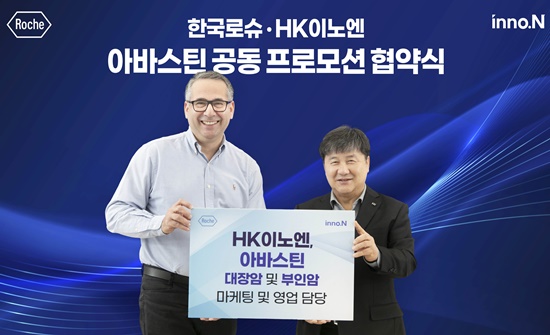
- HK Inno.N and Roche will co-promote Avastin
- by Chon, Seung-Hyun Jan 22, 2025 05:54am
- Dalwon Kwak, CEO of HK Inno.N.(right), and Ezat Azem, General Manager of Roche Korea (left) HK Inno.N announced on the 21st that it has signed a co-promotion agreement with Roche Korea for Roche’s targeted anticancer drug Avastin (bevacizumab). Avastin is an anticancer drug indicated for the treatment of metastatic colorectal cancer, metastatic breast cancer, non-small cell lung cancer, advanced or metastatic renal cell carcinoma, glioblastoma, epithelial ovarian cancer, fallopian tube cancer, primary peritoneal cancer, and cervical cancer. Under the agreement, HK. Inno.N will be responsible for marketing and sales of Avastin in colorectal and gynecologic cancers. Roche Korea will conduct sales and marketing of Avastin in areas other than colorectal and gynecologic cancers and conduct research and clinical trials to enhance the clinical value of Avastin. “This partnership is designed to address the unmet medical needs of patients in Korea and bring the clinical benefits of Avastin to more patients,” said the companies. “We are pleased to announce the co-promotion of Avastin following our agreement with Roche Korea to distribute and co-market the influenza treatments Xofluza and Tamiflu,” said Dalwon Kwak, CEO of HK Inno.N. ”The prevalence of colorectal and gynecologic cancers is rapidly increasing due to aging and lifestyle changes, and will work with patients and caregivers to help them overcome their cancers with Avastin.” Continuing innovation for the patients is a top priority for Roche Korea,” said Ezat Azem, General Manager of Roche Korea. “We look forward to leveraging the synergies of this agreement to further contribute to benefiting the lives of more people with cancer.” Avastin has been prescribed to more than 4.2 million cancer patients worldwide in the nearly 20 years since its FDA approval in 2004, treating 340,000 patients annually. In Korea, Avastin was first approved for metastatic colorectal cancer in 2005 and has since expanded to include 7 other cancer types, including non-small cell lung cancer, renal cell carcinoma, epithelial ovarian cancer, cervical cancer, and glioblastoma. When including the combination therapy with Tecentriq, it is indicated for the treatment of 8 cancers.
- Policy
- Yuyu seeks to expand the scope of its fexofenadine to ETC
- by Lee, Tak-Sun Jan 21, 2025 05:54am
- Yuyu Yuyu Pharma, which developed a 60mg OTC drug containing the antihistamine fexofenadine, is now seeking to enter the specialty drug market. Currently, only Handok, the original drugmaker, and Hanmi Pharm own a 180 mg fexofenadine product, but Yuyu Pharma is expected to barge in and pave its way into the two-drug market with its new product. According to industry sources on the 20th, Yuyu Pharma’s Fexoone Tab. 180mg (fexofenadine hydrochloride) will be reimbursed as of the 1st of next month. The upper insurance price ceiling was set at KRW 309 per tablet, which is cheaper than Handok’s Allegra Tab 180 mg (KRW 310) and Hanmi Pharmaceutical’s Fexonadine Tab 180 mg (KRW 314). Since there are two other drugs containing the same ingredient, and Yuyu Pharma met all the criteria for pricing premiums the company was able to receive the highest price of KRW 314, but Yuyu lowered its price to KRW 309 to become the lowest-priced drug in the market. Fexofenadine hydrochloride is a 2nd generation antihistamine. Depending on the dose, it is divided into over-the-counter and ethical-the-counter (specialty) drugs, with 60mg and 120mg classified as OTC and 30mg and 180mg classified as ETC drugs. However, Yuyu’s 60mg formulation recently received approval as an ETC drug. The 60mg dose, which was developed by Yuyu, has never been available before. The 120mg version is usually taken as a single pill before bed, but the effects do not last until the next day. In contrast, the company said that the 60mg version can as two pills a day to remain effective throughout the day. With Yuyu receiving approval for the 60mg formulation as an OTC, ETC, fexofenadine 60mg became an OTC/ETC drug. With the addition of Fexoone Tab 180 mg, Yuyu now has 4 fexofenadine products on Korea’s reimbursement list. The four items include Fexogien 60mg, an OTC drug, Fexogien 60mg, an ETC drug, and Alesta 120mg, a general drug. Of these, Fexozien 60mg and Fexoone 180mg have been or will be reimbursed. Yuyu’s focus on fexofenadine is likely influenced by the fact that the second-generation antihistamines olopatadine and bepotastine are undergoing reimbursement reevaluations this year. The company focused on developing fexofenadine as an alternative to these drugs. The original fexofenadine, Allegra, generated KRW 7.2 billion in outpatient prescription sales (UBIST) last year. It has the advantage of having steady market sales. It will be interesting to see if Yuyu’s fexofenadine expansion strategy will gain success.
