
- LOGIN
- MemberShip
- 2026-06-22 01:09:01
- Policy
- CKD completes acquisition of diabetes drug 'Januvia'
- by Lee, Tak-Sun Jan 21, 2025 05:54am
- Chong Kun Dang has completed the sale transfer and takeover of 'Januvia (sitagliptin phosphate hydrate),' a diabetes drug that generates annual sales of KRW 23 billion in South Korea. Conseqently, what was previously labelled as MSD's is now labelled as Chong Kun Dang's in South Korea. According to industry sources on January 20, the pharmaceutical company label for three Januvia items (25 mg, 50 mg, 100 mg) registered in the National Health Insurance Service's reimbursement list will be changed from MSD Korea to Chong Kun Dang. The change is due to adjustments following the sale transfer and takeover. The insurance authority allows the final ceiling price to be the same as the transferred item if the acquired item holds the production rights. As a result, the prices will remain the same: KRW 200 for Januvia Tab 25 mg, KRW 301 for Januvia Tab 50 mg, and KRW 453 for Januvia Tab 100 mg. In 2023, Chong Kun Dang signed an agreement with the MSD headquarters to acquire all domestic rights for three items: Januvia, Janumet, and Janumet XR. Chong Kun Dang will acquire domestic sales and distribution rights, as well as approval, trademark, and production rights. The contract period is from July 15, 2025, to August 31, 2038. Chong Kun Dang has been selling the Januvia series since 2016 through joint promotion with MSD Korea. Now that Chong Kun Dang wholly owns Januvia's domestic rights, it has secured a stable cash cow. Januva recorded outpatient sales of KRW 23 billion in 20224, according to UBIST. The annual sales performance of Januvia, Janumet, and Janumet XR exceeds KRW 100 billion. Currently, Chong Kun Dang has completed the process for Januvia's permit and is expected to takeover the reimbursement permit soon. The company is proceeding with the sale transfer and takeover of Janumet XR Tab. Chong Kun Dang explained on the sale transfer and takeover of the Januvia series as "By securing the Januvia series in addition to previously acquiring Duvie, new drug for diabetes, we have stably expanded treatment options for patients."
- Policy
- MFDS approves Vyvgart for severe myasthenia gravis
- by Lee, Hye-Kyung Jan 21, 2025 05:54am
- The Ministry of Food and Drug Safety (MFDS, Minister Yu-Kyoung Oh) announced on the 20th that it has approved the orphan drug Vyvgart(efgartigimod alfa) for the treatment of adult patients with general myasthenia gravis (gMG) who are anti-AChR antibody positive. Myasthenia gravis is an autoimmune disease characterized by decreased neuromuscular signaling and generalized muscle weakness caused by IgG (Immunoglobulin G) autoantibodies that target components of the neuromuscular junction. Vyvgart Inj works by preventing the binding of autoantibody IgG to the neonatal Fc receptor (FcRn)*, which promotes the degradation of autoantibodies, bringing therapeutic benefit in patients with autoantibody-mediated myasthenia gravis. The neonatal Fc Receptor (FcRn) is specific for antibody IgG homeostasis in the body and prevents IgG from being degraded by lysosomes. This is the first drug to be approved in Korea with a new mechanism of action that binds to FcRn, and the approval is expected to broaden the treatment options for adult patients with myasthenia gravis. For reference, the MFDS designated the drug as the 22nd Global Innovative product on Fast Tracking (GIFT) (November 2023) and announced it would expedite its review so that it could be quickly introduced into the field for myasthenia gravis patients in Korea. “Based on our regulatory science expertise, we will continue to do our best to ensure that new therapies are quickly supplied to patients with rare diseases to expand treatment opportunities,” said the MFDS.
- Policy
- MFDS' pharma policy keyword, 'shorten time'
- by Lee, Hye-Kyung Jan 21, 2025 05:54am
- According to the business plan announced by the Ministry of Food and Drug Safety (MFDS) this year, support policy to facilitate quick market entry for new drugs and innovative products stands out. The 'Ministry of Food and Drug Safety's Major Policy Implementation Plan for 2025' announced on January 21 by the MFDS contains its aim to shorten the duration of development to commercialization using various systems. First, the MFDS will newly establish a dedicated review team this year to provide expert consultation services at each approval stage. Improvement of panel·process for approval·review. The new drug approval fee increased to KRW 410 million. The MFDS will prioritize document review and GMP site monitoring and plan to shorten the approval duration from 420 to 295 days. The MFDS will implement a priority review policy to expand the number of interview consultations (3→10) and prioritize the review of a document that requires supplementation as soon as it is completed. Additionally, the MFDS will improve the expetise of the review panel and regulatory capacity by continuosly expanding the percentage of experts within the review panel, including doctors and pharmacists, developing educational programs for the latest technologies, and conducting training programs customized to the panel's work experience (basic·core·intensive). Notably, companies can apply for a single pre-registration consultation session before applying for a new drug marketing authorization. It has been reported that two consultation sessions have been held to date. Kim Sang Bong, Director of the Pharmaceutical Safety Bureau, stated during the briefing held on January 20, "We have held two pre-registration consultation sessions until today." Kim added, "Yet, we do not have a record of the new drug application that was submitted." "The MFDS announced a documented plan for a procedure that is equivalent to the level of new drug assessment in advanced pharmaceuticals countries such as the U.S. and Europe," Kim said. "To efficiently run the annouced process, we will assign review panels and expand expert personnel with a strong background." Starting in April, the MFDS will implement a regulatory suitability review system where innovative product R&D research as part of government R&D projects will be selected and provide regulatory requirements, process, and commercialization strategy. The The MFDS will run a 'Path Program,' providing approval guidelines to support new technology-based product development, including gene diagnosis and antibody-drug conjugate technologies, and facilitating prior-registration consultation for each stage, such as clinical trials·approval, and expedited review. "The MFDS will implement a 'Path Program' linking the With-U prior-registration consultation, clinical trial review, and GIFT expedited review," Kim said. "Previously, we received a review that each program runs without smooth transition, so we designed a program to overlook the transition." The 'Path Program' is projected to shorten the time for innovative product development to commercialization. Kim stated, "We cannot guarantee that the time will greatly reduce, but the program has the advantage in terms of predictability and transparency." Kim Sang Bong, Director of the Pharmaceutical Safety BureauThe MFDS also plans to establish a stable pharmaceutical supply network this year. Starting in April, to prepare for the pharmaceutical supply shortage, the MFDS will set a preliminary report date of 180 days before the supply discontinuation of production and imports by pharmaceutical production·import companies and mandate reporting of supply shortage. "The government is in the process of establishing a safety network for efficient transaction between various policies, including national essential drugs, private-public committee for supply shortage, and consignment production·production by orders," Kim said. "Reporting of supply shortage is one of the advanced measures." "The pharmaceutical industry may take these updates as another regulatory measure, but the intent of these policies is to predict supply shortage in advance and to secure time for each policy measure to run smoothly," Kim said. "The MFDS aims to prevent supply shortage in advance and allow companies to receive administrative support."

- Company
- Astellas 'Xtandi' offers high efficacy with low side effects
- by Whang, byung-woo Jan 21, 2025 05:54am
- As more treatment options are covered by reimbursement, concerns about 'how' best to treat prostate cancer are increasing. Given the increasing number of prostate cancer patients increases each year, it is important to discuss which options to provide based on the patient's condition. Dr. Hong Koo Ha, Professor in the Department of Urology at Pusan National University HospitalThe specialist in the field, Dr. Hong Koo Ha, Professor in the Department of Urology at Pusan National University Hospital, emphasizes that there must be discussions about patient-customized treatment. The incidence of prostate cancer is rising among men diagnosed with cancer. The increase in diagnosis is attributed to factors such as aging, westernized dietary habits, and more frequent PSA (Prostate Specific Antigen) testing. "PSA testing was available in the past. However, prostate cancer surgery has increased 5-6-fold," Dr. Ha said. "Increased access to PSA testing due to heightened interest in changed dietary habits and disease has contributed to the increased incidence." Dr. Ha explained. What's different from the past is the variety of available treatment options. Dr. Ha analyzes that prostate cancer treatment options are extensive as new therapies continue to be introduced. "Most patients, when initially diagnosed, fall into the early-stage hormone-responsive prostate cancer where patients respond to hormone therapy. During diagnosis, metastasis affects the later treatment direction. The size of cancer also contributes significantly to prognosis and treatment response. The treatment course differs depending on the patient's condition, even in the mid-stage," Dr. Ha said. Hormone therapies play significant role…Extandi with extended reimbursement, 'positive sign' At the early stage of prostate cancer, surgery is recommended. When cancer progresses, combinations of surgery, radioactive therapy, and hormone therapy are used. And treatment outcomes have been reported to be similar to those received at the early stage. The issue arises when there is metastasis. According to Dr. Ha, a patient's survival period depends on the treatment selection in this case. Currently, when there is metastasis, the most common option is hormone therapy. Hormone therapy advanced after the first generation, and now three types of next-generation hormone therapy have been demonstrated to provide extended survival periods. One of the latest updates is approval of essential reimbursement to the use of Astellas Pharma's Xtandi (enzalutamide) in combination with an androgen deprivation therapy (ADT) for the treatment of hormone-responsive metastatic prostate cancer (HSPC). An expanded role of Extandi has been projected, as the drug can be used regardless of the presence of metastasis (whether in hormone-responsive prostate cancer or following biochemical relapse). Now that a year has passed since the expanded reimbursement, what would be Dr. Ha's opinion be on this? Dr. Ha focused on the effectiveness of Extandi and the low likelihood of side effects. "When outpatient patients with HSPC were treated with Extandi, the results were comparable to those of the ARCHES Phase 3 study, which demonstrated that Extandi significantly reduces disease progression and the death risk, were shown," Dr. Ha said. "As for side effects, Extandi is relatively free of side effects. Therefore, doctors prescribe this drug based on its proven safety and effectiveness." Previously, in the ARCHES Phase 3 study, a 'combination therapy of Extandi+ADT" has been shown to reduce radiographic Progression-Free Survival (rPFS) by 61%. "Extandi can be widely used in almost all patients with prostate cancer regardless of the presence of metastasis, and it is relatively free of side effects than other medications that are similar in administration methods and molecular formulation," Dr. Ha remarked. "As doctors, we are less burdened to explain side effects within the tight time of outpatient consultation." "Regional hospitals pay a crucial role in the treatment of prostate cancer, which requires continuous treatment" Also, Dr. Ha mentioned the role of regional medical centers where patients can continue to receive treatments for prostate cancer, which is diagnosed with increased age and patients have accompanying diseases. "Considering the nature of prostate cancer, we must discuss issues that arise during the continued treatment course. Continuance of treatment at initially diagnosed hospitals has the benefit of quick response when an unexpected issue arises and provides safe care for patients. Regional medical centers play an important role regarding this matter," Dr. Ha said. Dr. Ha recommends patient-customized therapy for the treatment of prostate cancer. Dr. Ha has been conducting collaborative research to develop methods for analyzing patient characteristics and diagnosing using Artificial Intelligence (AI). "Compared to data on prostate cancer surgery from 6-7 years ago, prostate cancer in South Korea had higher malignancy and stages than those in the United States. We are reviewing the proteomics data," Dr. Ha said. "Also, we are collaborating with a Korea-based AI company to use the latest trend AI for research on prostate cancer diagnosis." Additionally, Dr. Ha emphasizes that expanding reimbursement of prostate cancer treatment options and enabling government-funded PSA tests is essential. "Most prostate cancer treatments are costly. If government-funded insurance reimbursement is not applied, it is difficult for doctors to prescribe this medication to patients. We hope that a quick reimbursement process will provide practical and benefits for patients when new prostate cancer is introduced," Dr. Ha remarked. Dr. Ha added, "Cost-effectiveness is important for testing and screening. PSA test costs KRW 10,000 per session and can be done once every 1-2 years, which is relatively inexpensive." He added, "Conducting PSA tests more widely for early diagnosis of prostate cancer, early diagnosis of prostate cancer, can lead to efficient patient treatment and lower costs in the long run, which is projected to become the top cancer among men."
- Company
- Darzalex is granted reimb extension in Korea
- by Moon, sung-ho Jan 21, 2025 05:54am
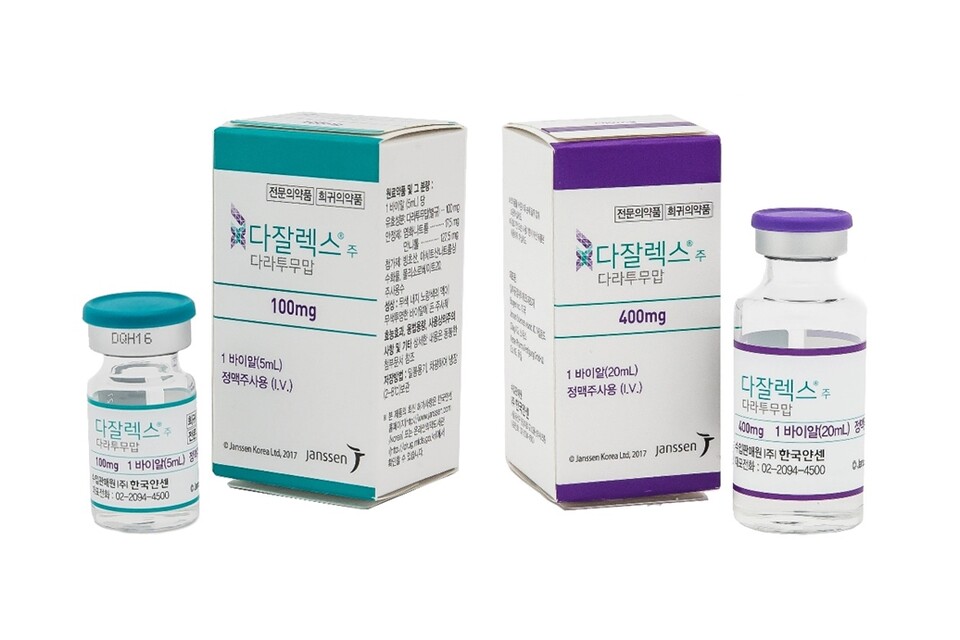
- Multiple myeloma drug Darzalex (daratumumab) will enter the clinical field next month after successfully expanding its coverage. As new drugs such as bispecific antibody-based therapies are becoming the last treatment option in Korea, Darzalex’s success in expanding coverage has raised the prospect that combination therapy could emerge as the standard of care. # According to industry sources on the 18th, the National Health Insurance Service and Janssen Korea recently completed drug pricing negotiations on the multiple myeloma drug Darzalex for its reimbursement extension. Multiple myeloma is highly resistant and refractory to existing therapies and relapses frequently. Patients who have experienced triple-refractory multiple myeloma - those who have experienced three or more relapses or three or more failures to prior therapies - represent approximately 15% of all multiple myeloma patients and have a median life expectancy of only 5.1 months. Therefore, it is important to treat multiple myeloma with a combination of clinically proven agents from the earliest stage of diagnosis. In the global market, combination therapies that use Darzalex are regarded as the standard of care for the initial treatment of multiple myeloma. “Darzalex is used as a first-line treatment worldwide and is the first monoclonal antibody drug approved for the treatment of multiple myeloma,” said Dr. Chang-Ki Min, Professor of Hematology at St. Mary's Hospital in Seoul. ”Patients who are candidates for newer therapies such as CAR-T cell therapy and bispecific antibody therapy are those who have failed therapies using monoclonal antibodies such as Darzalex, proteasome inhibitors, and immunotherapies.” The DVTd regimen (Darzalex+Bortezomib+Thalidomide+Dexamethasone) is a 4-drug regimen that adds Darzalex to the VTd regimen (Bortezomib+Thalidomide+Dexamethasone). However, in Korea, Darzalex has been used only as a fourth-line monotherapy since it was approved for the treatment of relapsed or refractory multiple myeloma) that has received three prior therapies (fourth or later line). Among them, Janssen Korea has been actively promoting the reimbursement extension of Darzalex since last year and recently agreed to negotiate the drug price with the National Health Insurance Service, which is the final step. Following the conclusion of the drug price negotiations, the Health Insurance Review and Assessment Service has also started revising the anticancer drug reimbursement standards. In other words, HIRA has decided to establish reimbursement standards for DVTd therapy for multiple myeloma patients who have not previously received chemotherapy. HIRA explained that DVTd therapy is “mentioned in many textbooks, and is recommended as category 2A in the NCCN guidelines and as the new standard induction therapy in the ESMO guidelines ([I, A]). However, the ESMO guidelines state that there is no established standard of care for consolidation therapy.” It added, “This regimen consists of 4 cycles (induction) and 2 cycles (consolidation) before and after hematopoietic stem cell transplantation, however, the consolidation therapy is not yet a standard of care in this disease, so the reimbursement standard is set only for the 4 cycles of induction therapy, considering how maintenance therapy is also reimbursed after transplantation, reducing the medical need for consolidation therapy.” With the drug price negotiations settled and the HIRA’s reimbursement notice, it is likely that the reimbursement extension will take effect next month. In the clinic, when the Darzalex-containing DVTd therapy is reimbursed as a first-line therapy, subsequent treatment strategies will also likely be quickly revised. Bispecific antibodies and the CAR-T therapy Kymriah will likely become more prominent as fourth-line options for multiple myeloma. Bispecific antibody-based drugs include Janssen's Tecvayli (teclistamab), Talvey (talquetamab), and Pfizer's Elrexfio (elranatamab). These drugs have been approved and used in the field as the fourth-line therapy option for multiple myeloma in recent years. At the same time, Janssen also has a CAR-T treatment, Carvykti (ciltacabtagene autoleucel), approved in Korea. “Without Darzalex, the application of the latest therapies, such as CAR-T therapies and bispecific antibody drugs, may be delayed,” said a professor of Hematology at a tertiary hospital who requested anonymity. ”According to current standards, patients must first use Darzalex before receiving CAR-T cell therapy. This delays access to effective treatments.” “If Darzalex’s reimbursement is successfully extended, the reimbursement challenges of bispecific antibody drugs will rise as a hot topic this year.”

- Company
- Only half of the multiple myeloma drugs reimb in KOR
- by Eo, Yun-Ho Jan 20, 2025 05:54am
- Despite the increased number of treatment options, patient access to those multiple myeloma drug options has not changed much. Multiple myeloma remains an incurable disease, but in the past, survival rates were very low due to limited treatment options. In recent years, however, innovative treatment options such as monoclonal antibodies, CAR-T therapies, and bispecific antibodies have diversified the treatment options, improving survival. In fact, over the past 20 years, the five-year survival rate for multiple myeloma patients has increased from 29.8% in 2001-2005 to about 50.1% in 2017-2021. However, this is still less than the 60% survival rate found in developed countries such as the United States, and limitation in access to care is regarded as the major contributing factor. Only half of the guideline-recommended drugs are reimbursed in Korea In Korea, only 13 (52%) of the 22 drugs recommended in the NCCN guidelines for multiple myeloma are covered by reimbursement (based on the NCCN guidelines 2024 v2). For example, Darzalex (daratumumab) was approved in 2019 as a first-line combination therapy for multiple myeloma but was only granted reimbursement as a fourth-line monotherapy in Korea. In October last year, 5 years since the Drug Reimbursement Evaluation Committee recognized the appropriateness of expanding Darzalex’s reimbursement coverage under the Risk Sharing Agreement (RSA). Also, Xpovio (selinexor) was granted reimbursement in July 2024, after 4 reimbursement attempts after its approval in 2021. Burden of proving cost-effectiveness for rare cancers such as multiple myeloma One of the reasons why it takes longer to reimburse the crucial multiple myeloma drugs and hinders access is that multiple myeloma is a rare cancer, which renders it more difficult to prove cost-effectiveness than other cancer drugs. In order to apply for reimbursement of high-priced anticancer drugs, the companies must submit data that demonstrates the drug’s cost-effectiveness, as per the guidelines for pharmacoeconomic evaluations. In particular, due to the rising financial expense spent on anticancer drugs in recent years, the government has been setting higher standards for the submitted data to demonstrate the improvement in the effectiveness of new drugs over existing drugs. However, multiple myeloma is similar to rare diseases in that it has a limited number of patients that can enroll in clinical trials, and it is difficult to set a comparator drug. In the case of anticancer and rare disease drugs, clinical trials often have a single-arm design or are limited to Phase II studies, which introduces uncertainties and challenges in the reimbursement review process. Add to this, the number of new treatment options has been growing. Recently, bispecific antibodies, which are regarded as the next-generation biotechnology, have been approved and released for multiple myeloma. Bispecific antibody treatments are immune cell therapies that consist of two monoclonal antibodies that recognize the target antigens of multiple myeloma and T cells. Bispecific IgG2 kappa antibodies, which are composed of two monoclonal antibodies that recognize the target antigens of multiple myeloma, B-cell maturation antigen (BCMA) and CD3 antigen, respectively, are common and are a novel treatment that directly targets cytotoxic T cells to BCMA-expressing multiple myeloma cells. Despite their high clinical efficacy, the bispecific antibody therapies currently approved in Korea, including Pfizer's Elrexfio (elranatamab) and Janssen's Tecvayli (teclistamab) and Talvey (talquetamab), remain non-reimbursed. Suk Jin Kim, Professor of Hematology-Oncology at Samsung Medical Center and the President of the Society of Hematology said, “Although treatment outcomes have improved significantly with the active development of new drugs, the limited access to high-priced anticancer drugs have been preventing patients from receiving optimal treatment as needed.” Kim added, “Policy changes are needed, including flexibility in Korea’s reimbursement standards, to ensure that patients in Korea have access to treatment that meets global standards. We must urgently expand patient access to treatment through early adoption of innovative therapies to close Korea’s survival gap compared with other countries.”
- Policy
- Boryung’s Pomalyst generic first to be reimbursed in Korea
- by Lee, Tak-Sun Jan 20, 2025 05:54am
- Boryung will be the first in Korea to receive reimbursement for its generic version of Pomalyst (pomalidomide, BMS), a multiple myeloma treatment. As a product from an innovative pharmaceutical company, the drug also receives premium pricing. According to industry sources on the 17th, four dosage forms (1, 2, 3, and 4 mg) of Boryung's ‘Pomalikin Cap’ that contains pomalidomide will be listed for reimbursement on February 1. The insurance price ceiling was set at KRW 132,184 for the 1mg, KRW 132,493 for the 2mg, KRW 134,140 for the 3mg, and KRW 135,271 for the 4mg formulation. This is 53.55% of the highest list price, plus a 68% premium granted as a product by an innovative pharmaceutical company. Pomalikin Cap is the first generic version of the original Pomalyst Cap. This month, the cap was adjusted due to the termination of the reimbursement risk-sharing agreement for Pomalikin Cap. Before the adjustment, the ceiling price of the 1mg product was KRW 356,691, while the adjusted price was KRW 194,389, a 44.6% price adjustment. Compared to Pomalikin Cap 1mg, the adjusted price of the original product is around KRW 60,000 higher. So Boryung’s first generic can be seen as competitive in terms of price. The premium pricing markup for Pomalikin Cap will end in February 2026, and the price will fall to 53.55% of the highest price thereafter. Meanwhile, Pomalyst is a blockbuster product that posted sales of KRW 22.8 billion as of 2023 according to IQVIA data. It is indicated ▲for the treatment of multiple myeloma patients who have received at least one prior therapy, including lenalidomide, in combination with bortezomib and dexamethasone; and ▲for the treatment of relapsed or refractory multiple myeloma patients who have received at least two prior therapies, including lenalidomide and bortezomib, in combination with dexamethasone. By securing a pomalidomide-based treatment in addition to lenalidomide, Boryung is expected to strengthen its position in the multiple myeloma treatment market,
- Company
- Ziihera receives orphan drug designation in Korea
- by Eo, Yun-Ho Jan 20, 2025 05:54am
- The first HER2 bispecific antibody drug Ziihera has received an orphan drug designation in Korea. The Ministry of Food and Drug Safety (MFDS) recently announced so through the first orphan drug designation in the new year. Its specific indication is for the treatment of adult patients with previously treated unresectable locally advanced or metastatic HER2-positive (IHC3+) biliary tract cancer. Ziihera (zanidatamab), a bispecific antibody that targets the HER2 gene, received accelerated approval from the U.S. FDA in November last year after demonstrating efficacy in patients with biliary tract cancer. This is the first time that a bispecific antibody targeting the HER2 gene has been used as a second-line treatment option for patients with biliary tract cancer who are identified as HER2-positive (IHC 3+). Biliary tract cancer is a fatal disease with a poor prognosis and a low five-year survival rate of less than 5% for metastatic disease. The company demonstrated Ziihera’s efficacy through the single-arm phase IIB HERIZON-BTC-01 study. In the trial, the drug met the primary endpoint of confirmed objective response rate (cORR) by independent central review (ICR). The objective response rate was 52%, and the median duration of response (DOR) was 14.9 months. The safety profile of Ziihera was demonstrated in the HERIZON-BTC-01 trial in 80 patients. During the study, 53% of patients treated with Ziihera experienced an adverse event. The most common adverse events were diarrhea, infusion-related reactions, abdominal pain, and fatigue. Serious adverse events occurring in 2% or more of patients were biliary obstruction, biliary infection, sepsis, pneumonia, diarrhea, gastric obstruction, and fatigue. The trial results were presented at the 2023 American Society of Clinical Oncology (ASCO) Annual Meeting and published in The Lancet Oncology. Long-term follow-up data showing improvement in the duration of response were reported at the 2024 ASCO Annual Meeting. Meanwhile, BeiGene has the domestic rights to Ziihera. The drug is currently being studied in multiple cancers, including Phase III trials in gastroesophageal adenocarcinoma (GEA) and metastatic breast cancer (mBC). It is also currently being studied in the Phase III HERIZON-BTC-302 trial, which compares the combination of Ziihera and standard of care (Soc) to Soc alone in patients with HER2-positive biliary tract cancer.
- Company
- [Reporter' View] Results from J.P. Morgan Conference
- by Lee, Seok-Jun Jan 20, 2025 05:53am
- The Annual J.P. Morgan Healthcare Conference (hereafter J.P. Morgan Conference) has ended. It is the largest funding event in the pharmaceutical and biotech industry and is held in January every year. Many Korean companies have also participated in the event, to the extent that many key R&D people in the Korean pharmaceutical and biotech industry were said to be not present in Korea. According to the J.P. Morgan Conference report, almost 30,000 one-on-one business meetings requested at this year's event were held, where 12,000 agreements have been met. The total market capitalization of 531 companies at the official presentation sessions is US$ 9.6 trillion. Consequently, the J.P. Morgan Conference presents an opportunity for Korean pharmaceutical and biotech companies. According to the J.P. Morgan Conference report, almost 30,000 one-on-one business meetings requested at this year's event were held, where 12,000 agreements have been met. The total market capitalization of 531 companies at the official presentation sessions is US$ 9.6 trillion. Consequently, the J.P. Morgan Conference presents an opportunity for Korean pharmaceutical and biotech companies. Companies referred to as conglomerates in the pharmaceutical industry have unveiled their specific accomplishments. For instance, Yuhan presented its latest data on the new lung cancer drug, Leclaza, through its partner, Johnson & Johnson (J&J). Joaguin Duato, CEO of J&J, said, "A combination therapy of Leclaza and Rybrevant demonstrated results of extending three-year life-expectancy of lung cancer patients over a year. It is a difference that may bring changes to the treatment paradigm." UK-based AstraZeneca's Tagrisso (osimertinib), the standard therapy used in patients with EGFR-mutated non-small cell lung cancer (NSCLC) has the median overall survival (mOS) of approximately 3 years. The combination therapy of Leclaza and Rybrevant is expected to have a mOS of over 4 years. J&J projected the yearly sales goal for Leclaza+Rybrevant to be over KRW 7 trillion. Samsung Biologics announced that it will begin the antibody-drug conjugate (ADC) service in the first quarter of this year. The company aimed to provide top-level Contract Development and Manufacturing Organization (CDMO) services in the ADC field. Moreover, the company announced the building of Plant 6 facility this year. Other companies, including Celltrion, Lotte Biologics, Hugel, and SK Biopharmaceuticals, presented their R&D vision. These companies have shared their success at the J.P. Morgan conference. In contrast, some companies showed a different stance before and after the conference. It is difficult to estimate, but based on yearly trends, more than half of the companies that promoted before the conference did not issue additional press reports afterwards. Despite using promotional keywords, such as promoting technology transports, disclosing growth strategies, conducting big pharma meetings, and establishing facilities, these companies failed to release feedback after attending the J.P. Morgan Conference. The J.P. Morgan Conference has ended. Companies must release their accomplishments following the conference if they genuinely wish to be acknowledged for their company values. Rather than issuing promotional press releases beforehand, they should share objective results afterward. If one issues a promotional subject, providing feedback is essential. Additionally, companies must announce their accomplishments. Disclosable materials are limitless, depending on how companies view them. This week is the best time for companies to showcase their successes at the J.P. Morgan Conference.
- Opinion
- [Reporter's View] Improving rare disease care environment
- by Eo, Yun-Ho Jan 17, 2025 05:54am
- A few patients can only make a small noise. Despite the need for the improvement of the rare disease treatment environment, which has risen year after year, the voice of its patients that implore difficulties has never ceased to exist. In particular, there are cases where a drug is available, but due to the small number of eligible patients, it is difficult to prove the drug’s cost-effectiveness and predict the potential financial expenditures, rendering the drug’s reimbursement listing difficult in Korea. According to the 'Status of Severe Diseases that were applied Special Calculation' released by the Health Insurance Review and Assessment Service, rare and incurable diseases accounted for 37%, 32%, and 33% of the distribution of the doctors’ office personnel, medical expenses, and reimbursement expenses per severe disease in 2022, respectively. From 2012 to 2019, the relative proportion of reimbursement paid for rare and incurable diseases among the severe diseases that were applied special calculation was around 33%. However, the government has a different story. The average reimbursement rate for rare disease drugs was 85.3% (2016-2020) and 100% in 2020. This would seem to indicate that patient access to rare disease drugs seems picture-perfect. However, why isn’t it so in reality? Results published by HIRA are based on the reimbursement rates for drugs that have undergone the review and evaluation process, which are different from the reimbursement rates of approved rare disease drugs. In other words, they exclude various factors such as applications of drugs that dropped out or made voluntary withdrawals. In order to increase the true reimbursement rate of rare disease drugs, the utilization of risk-sharing agreements and the special economic evaluation exemption system must increase. Rare diseases are those with a prevalence of 20,000 or fewer people, or where the number of patients is unknown due to difficulty in diagnosis. It is often difficult to conduct clinical trials due to the small number of patients. Due to the small number of patients, it is difficult to expect profitability in the market, making it difficult to actively develop new drugs, and even if a new drug is successfully developed, it is difficult to prove its cost-effectiveness through cost-effectiveness analysis. As a solution to this, the industry has been advocating the expansion of the pharmacoeconomic evaluation exemption system. The industry has been advocating for the expansion of the exemption system, such as applying the exemption system even if the drug is approved with placebo-controlled trial data if there is no alternative drug or applying the number of patient requirements same as those used for special calculation. However, it is also true that the government needs to worry about its limited finances. The government is even considering introducing a system to further control the listed drugs due to the increased number of drugs covered by the system. This means that the price of some drugs may be reduced even further from the current price. If the government wishes to reduce the risk, they also need to tend to the blind spots. As these are areas where there are few patients and no available medicines. It is important to hold a closer year to the small but desperate voices.
