
- LOGIN
- MemberShip
- 2026-06-23 12:58:09
- Company
- Hyperlipidemia Drug Leqvio’s nears market entry in KOR
- by Hwang, Byung-woo Jul 23, 2024 05:47am
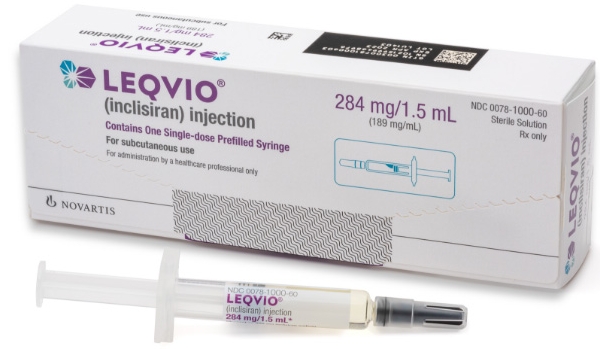
- Novartis’s Leqvio’s (Inclisiran), is preparing to enter Korea’s market as the first siRNA therapy, armed with its convenience of twice a year administration. However, in a situation where there are already many treatments for hyperlipidemia available on the market, the high cost of Leqvio compared to existing treatments may act as a hurdle, regardless of its advantages. Pic of Leqvio Leqvio is a first-in-class siRNA therapy that was recently approved in Korea as an adjunctive therapy to diet in patients with primary hypercholesterolemia (heterozygous familial and non-familial) or mixed dyslipidemia. It utilizes a naturally occurring siRNA to reduce LDL-C in the blood by inhibiting the production of PCSK9 protein, which raises LDL-cholesterol. It is injected directly by a healthcare provider twice a year, reducing the fear and discomfort of self-injection. In the three Phase 3 studies that confirmed the effectiveness of Leqvio - ORION-9, ORION-10, and ORION-11 -Leqvio reduced the LDL-C level by 47.9%, 52.3%, and 49.9% compared to placebo at Day 510, respectively. In all 3 studies, the safety profiles of Leqvio and placebo did not show statistically significant differences. In ORION-18, which was conducted on Asian patients including 24% Korean patients, Leqvio achieved a 57.17% LDL-C reduction compared to placebo at Day 330. These results have been driving Leqvio’s rapidly growing global sales. Leqvio’s global sales in the first half of the year amounted to $333 million, prompting Novartis to raise its full-year profit forecast. The company is expected to target the market armed with its twice-a-year dosing advantage in Korea. The question is how it can compete with the other competitors that are already being reimbursed. Higher cost compared to competitors...receiving reimbursement crucial for market suceess For Novartis, its first and utmost priority will be to receive reimbursement. According to industry sources, Novartis is considering a list price of KRW 1.5 million for a single dose of Leqvio. If so, the cost of the twice-a-year treatment is expected to be in the range of KRW 2 to 3 million. Considering how it is administered 3 months after the initial dose, and then every 6 months thereafter, the drug can cost even more in the first year. Current direct competition is Amgen's Repatha (evolocumab), which has overlapping indications for hypercholesterolemia and mixed dyslipidemia. Repatha’s sales had been around KRW 4.2 billion in 2021, KRW 7 billion in 2022, and KRW 10.5 billion in 2023, according to IQVIA. Repatha is priced at KRW 121,000 per dose with reimbursement. The recommended dose is 420 mg once every two weeks or once a month (three doses). Therefore, it costs 1.42 million won based on the higher dose of 420 mg once a month. The price gap becomes even wider when compared to Viatris’ Lipitor, which has expanded its indication and is recorded as a top-selling drug in Korea every year. Lipitor is priced at KRW 640 per 10mg tablet, which means it costs KRW 233,600 when taken once a day. Based on the largest dose of 80 mg, which costs KRW 1,523 per tablet, it still costs 558,895 won a year. In the end, the therapeutic effect of Leqvio and the convenience it provides to patients who have difficulty managing their medications will be the key to its future market competitiveness. "I think Leqvio will be in demand among elderly patients who have difficulty taking drugs consistently and those with poor prognosis. However, most patients are seeing significant therapeutic effects with existing medications and exercise," said a cardiology professor from A Hospiatl in Gyeonggi-do. In some cases, patients who are well-controlled on Repatha can maintain their levels well with once-a-month Repatha injections. From a personal point of view, the cost versus convenience of dosing is a difficult decision."
- Policy
- Breast cancer drug Phesgo will be reimb next month
- by Lee, Tak-Sun Jul 22, 2024 05:51am
- Roche Korea’s breast cancer drug ‘Phesgo SC Inj (pertuzumab, trastuzumab),’ is expected to be reimbursed next month. The drug was approved in September 2021, and in August last year, the Health Insurance Review and Assessment Service's Cancer Disease Review Committee (CDDC) set the standards for its reimbursement, but no news on its progress has been heard of since. According to industry sources on the 19th, Roche has completed negotiations with the National Health Insurance Service on supply and quality control obligations, and Phesgo will be listed on the payroll next month after being reported to the Health Insurance Policy Review Committee. The drug is a fixed-dose subcutaneous injection formulation that combines the company’s existing breast cancer treatments, Perjecta and Herceptin. Phesgo was recognized for its innovation in improving patient convenience and reducing treatment time by changing the IV-injected Herceptin and Perjeta into a fixed-dose subcutaneous injection and was named the first biobetter approved for cancer in Korea. Considering how biobetters are more difficult to develop compared to incrementally modified drugs (chemical drugs), the government decided to set the overall price of biobetters at the 100-120% range of the original drug. Phesgo’s price is known to have been set at 110% of its target drug. Phesgo was expected to be quickly reimbursed when it passed CDDC review in August last year. As it is a data submission drug that has already an established drug price for calculation, the industry expected that it would be able to skip DREC review and NHIS pricing negotiations once its reimbursement standard is established. However, there was no news of the drug's reimbursement until 11 months after the CDDC review, when the news of the completion of the negotiations with the NHIS was announced. "Due to the drug's large potential impact on healthcare finances, it is said that the company was in a tug-of-war with HIRA over the additional conditions," said an industry insider. Based on IQVIA sales last year, Herceptin and Perjeta sold KRW 56.5 billion and KRW 111.3 billion, respectively. Phesgo is expected to dominate the market in the short term by addressing two drugs' drawbacks of being injected intravenously while reducing dosing time. According to the company, metastatic HER2-positive breast cancer patients who had received maintenance therapy with IV Herceptin and Perjeta injections every three weeks may reduce their administration and monitoring time by 90% from 270 minutes (90min+180min) to 20 minutes (5min+15min) when switching to Phesgo. In addition, the drug can reduce the risk of vascular and nerve damage caused by repeated intravenous injections. Based on these advantages, although it is expected to be used a lot upon its launch, it is also expected to cost as much as a new drug.

- Policy
- Ilaris·Latuda newly reimb…Dupixent’s reimb extended
- by Lee, Jeong-Hwan Jul 22, 2024 05:51am
- New insurance reimbursement standards will be established for Novartis Korea’s Novartis' Ilaris (canakinumab), which is used to treat hereditary recurrent fever syndrome, and Bukwang Pharmaceutical’s imported drug Latuda (lurasidone HCI), which is used to treat schizophrenia and bipolar I depression. Also, the scope of reimbursement for Sanofi's severe atopic dermatitis treatment Dupixent (dupilumab) will be extended to cover infants and children 6 months to 5 years of age. On the 19th, the Ministry of Health and Welfare made a preannouncement of an administrative notice on the 'Partial Amendment to the Details on the Standards and Methods for Applying Medical Care Benefits’ and implemented the new standards starting on August 1st. ◆Ilaris Inj=Among its indications, the drug’s indications for Cryopyrin-Associated Periodic Syndromes (CAPS), Tumor Necrosis Factor Receptor Associated Periodic Syndrome (TRAPS), and Familial Mediterranean Fever (FMF) were deemed eligible for reimbursement. Otherwise, it is non-covered and the patient is responsible for the full cost of the drug. For CAPS, pediatric and adult patients 2 years of age and older with a confirmed NLRP3 gene mutation are eligible for reimbursement. Patients must meet both criteria for reimbursement: confirmed moderate-to-severe disease activity, and C-reactive protein (CRP) or serum amyloid A protein (SAA) >10 mg/L. In addition, the patient has to satisfy one of the following conditions: patients with Familial Cold Autoinflammatory Syndrome (FCAS)/Familial Cold Urticaria (FCU), Muckle-Wells Syndromes (MWS), who are unable to perform activities of daily living; or have a confirmed diagnosis of Neonatal-Onset Multisystem Inflammatory Disease (NOMID)/ Chronic Infantile Neurologic, Cutaneous, and Articular Syndrome (CINCA). In TRAPS, children and adults 2 years of age and older with a confirmed TNFRSF1A gene mutation will be eligible. The patient needs to meet both of the following criteria: confirmed moderate-to-severe disease activity and a C-reactive protein (CRP) or serum amyloid A protein (SAA) level of 10 mg/L or greater. IN FMF, children and adults 2 years of age and older with a confirmed MEFV gene mutation are eligible. These patients also need to satisfy all of the following three conditions for reimbursement: confirmation of moderate-to-severe disease activity; C-reactive protein (CRP) or serum amyloid A protein (SAA) of 10 mg/L or higher; and inadequate response to colchicine after 3 months of treatment, or inability to receive colchicine due to contraindications or side effects. ◆Latuda Tab= A new reimbursement standard will be set for oral lurasidone HCI 20mg. In principle, it is reimbursable when administered within the scope of its indication. When used for depression in individuals 24 years of age or younger, careful consideration should be given to whether the clinical benefit outweighs the risk, as indicated by the labeling (warnings, adverse reactions, general precautions, etc.) ◆Dupixent Inj=THe reimbursed indications for Dupilumab Prefilled Inj 300 mg will be extended. Currently available in children 6 to 11 years of age, its reimbursement will be extended to cover patients with chronic severe atopic dermatitis 6 months to 5 years of age. Patients must meet both of the following conditions for reimbursement: the condition has not been adequately controlled with first-line topical therapy (moderate-or-stronger corticosteroids or calcineurin inhibitors) for at least 4 weeks or is unable to use such due to side effects; EASI 21 or higher prior to initiation of treatment.
- Company
- Efforts to develop a new drug for dry eye syndrome continue
- by Son, Hyung-Min Jul 22, 2024 05:51am
- The domestic and foreign pharmaceutical industry is intent on developing new drugs for dry eye syndrome, making reattempts despite the failure of their clinical trials. Hanall Biopharma is conducting its third Phase III clinical trial, and Huons has started clinical trials with a new drug candidate. In the U.S., Aldeyra is reattempting FDA approval through a new clinical trial after receiving FDA rejection for its previous clinical trial. According to industry sources on the 22nd, Hanall Biopharma recently initiated a Phase III VELOS-4 trial for its dry eye drug HL036 (tanfanercept). The company had previously failed to prove the efficacy of HL036 in two previous trials. The new trial is designed to evaluate the efficacy and safety of HL036 and will enroll 750 dry eye patients at 60 eye hospitals in the United States. HL036 works by inhibiting the tumor necrosis factor (TNF), which causes inflammation in the eye. Results from the VELOS-3 trial, which the company disclosed last year, showed that HL036 did not achieve statistical significance in the primary endpoint of Central Corneal Staining Score (CCSS) and Eye Dryness Score (EDS) at the end of treatment. Specifically, HL036 failed to achieve statistical significance with a CCSS of -0.84 compared with -0.81 in the placebo group. No statistically significant difference was found in EDS as well, being -16.9 in the HL036-treated arm and -19.79 in the placebo arm. However, HL036’s efficacy was confirmed with the Schirmer test, which measures tear volume as a secondary endpoint. Focusing on this efficacy result, Hanall Biopharma aims to secure top-line results for its VELOS-4 trial within the second half of next year. HLB Therapeutics is conducting the 4th trial for its dry eye drug candidate RGN-257 through its US subsidiary, Regentry. Amid the numerous clinical failures, the company has been tirelessly making reattempts, changing the study design again and again. RGN-257 did not meet its primary endpoint in its last published clinical results in 2021. RGN-259 owns a unique mechanism of action that inhibits and modulates pro-inflammatory chemokines and cytokines of thymosin beta 4 and promotes corneal wound healing. HLB Therapeutics plans to complete clinical trials this year and apply for approval next year. Huons recently completed patient recruitment for its Phase III clinical trial to evaluate the efficacy and safety of its HU007 eye drops. In June 2021, Huons voluntarily withdrew its marketing authorization application for HU007 after receiving a data supplemental request from the Ministry of Food and Drug Safety. Following the voluntary withdrawal, the company restarted clinical trials for HU007 in December 2022. The company is also conducting a Phase I clinical trial on HUC1-394, its other drug candidate for dry eye syndrome that has a different mechanism of action. The trial will evaluate the safety, topical tolerability, and pharmacokinetics of HUC1-394 eye drops in gradually escalating doses in 60 adults. HUC1-394 is a peptide-based eye drop that was developed using technology outlicensed from Novacell Technology. The drug candidate is believed to improve keratoconjunctivitis, repairing damaged corneas and reducing inflammation and the likelihood of side effects, which are key factors of dry eye syndrome. US Aldeyra also reattempts approval Aldeyra will restart clinical trials for its dry eye drug candidate, reproxalap. In April, the FDA placed a hold on the approval of reproxalap as a treatment for dry eye syndrome. Aldeyra previously failed to meet its primary endpoint in a Phase III trial in December 2021. Reproxalap is a dry eye drug candidate that targets reactive aldehyde species (RASP). The retrial will enroll approximately 100 patients to assess the primary endpoint of ocular discomfort. In its review, the FDA required Aldeyra to conduct additional clinical trials of dry eye and treatment effectiveness. Aldeyra aims to reapply for approval after conducting additional trials, as it believes it has confirmed the efficacy of reproxalap in improving dry eye symptoms. Based on the clinical results published to date, reproxalap met its primary endpoints of safety and efficacy in 5 clinical trials, including dry eye symptom scores, ocular hyperemia, and Schirmer's test. The company had conducted a range of activities, from within minutes of drug administration to up to 12 weeks of treatment, crossover, and parallel-group clinical trial designs, and assessment in dry eye chamber challenge and natural environment settings, and has found no serious adverse events.
- Company
- The 1st cardiomyopathy drug 'Camzyos' lands in hospitals
- by Eo, Yun-Ho Jul 22, 2024 05:50am
- Product photo of Camzyos (mavacamten). 'Camzyos,' under consideration for insurance reimbursement listing, is becoming available for prescriptions at medical centers. Industry sources said that Bristol Myers Squibb (BMS) Korea's Camzyos (mavacamten), a new drug used to treat obstructive hypertrophic cardiomyopathy (oHCM), has passed the drug committees (DC) of 'Big 5' general hospitals, including Samsung Medical Center, Seoul National University Hospital, Seoul Asan Hospital, and Sinchon Severance Hospital, and approximately 50 medical centers across the country, including Kangwon National University Hospital, Kyungpook National University Hospital, Keimyung University Dongsan Hospital, Pusan National University Hospital, Seoul National University Bundang Hospital, and Chonnam National University Hospital. As a result, it remains to be seen whether Camzyos will be approved for reimbursement listing and actively prescribed. Camzyos has completed the review by the Drug Reimbursement Evaluation Committee (DREC) of the Health Insurance Review and Assessment Service (HIRA). It is about to enter drug price negotiations with the National Health Insurance Service (NHIS). Camzyos is the only drug that selectively inhibits cardiac myosin-actin cross-bridge formation, which is the cause of oHCM. Its underlying mechanism involves dissociating myosin from actin, relaxing overstimulated heart muscle, thereby improving left ventricular outflow tract (LVOT) structure and LVOT outflow obstruction. Because no treatments have been available to treat oHCM for a long time, Off-label medications were used to manage symptoms. Last year, when Camzyos emerged, the European Society of Cardiology (ESC) updated its guidelines for managing cardiomyopathy for the first time in about nine years. Previously, the guidelines for HCM were based on evidence limited to small-scale monitoring data, retrospective analysis results, and consensus opinion. However, Camzyos has completely changed this situation. Two large-scale, phase 3 clinical trials conducted as randomized controlled trials (RCT) have confirmed the significant effects of Camzyos. Consequently, ESC guidelines recommend Camzyos with the highest evidence level A for the first time in treatment options. The American College of Cardiology (ACC) and the American Heart Association (AHA) are also preparing to update their guidelines. Furthermore, based on the phase 3 trial evidence, Camzyos was granted a Breakthrough Therapy Designation (BTD) and approval by the U.S. FDA. Considering these factors, Camzyos appears to have met the criteria of an innovative new drug, announced by the government last year: ▲There are no alternative products, therapeutically equivalent products, or therapies available ▲Extending the survival period significantly and showing clinically meaningful improvements ▲Has been approved for MFDS’ GIFT (priority review designation), U.S. FDA’s BTD, or Europe’s EMA expedited review (PRIME). Meanwhile, Phase 3 EXPLORER-HCM study confirmed the efficacy of Camzyos. In the clinical trial, Camzyos was shown to improve primary endpoints, the patient’s symptoms (NYHA classification) and exercise capacity measured with peak oxygen uptake (pVO2), by more than twofold compared to the placebo. Based on the results, 20% of the Camzyos treatment group met NYHA classification and pVO2 improvements. It also reduced the LVOT outflow obstruction index by fourfold after exercise. 10 out of 7 patients who received Camzyos treatment had improved indexes and ended up not considering surgery, and they maintained the effect for 30 weeks.
- Company
- 'Prostate cancer market leader' Astellas eyes on KRW 300 bil
- by Hwang, Byung-woo Jul 19, 2024 05:48am
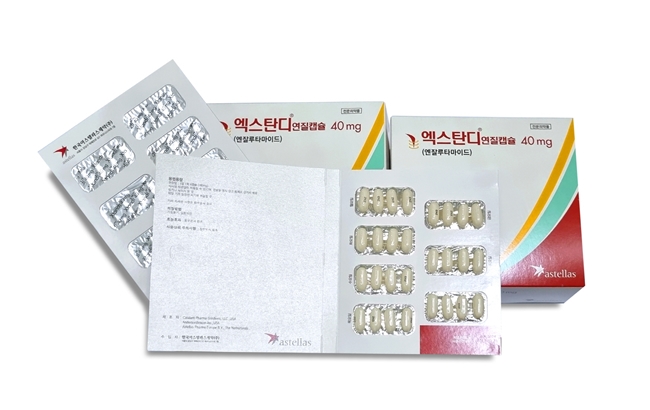
- Astellas Pharma Korea's sales rebounded within four years due to the sales growth of Xtandi (enzalutamide), a prostate cancer drug. In addition to its leading product, Prograf (tacrolimus), showing strong sales, the company is expected to continue to generate sales growth when Padcev (enfortumab vedotin), an ADC for the treatment of urothelial cancer, become reimbursable. Product photo of Xtandi After sales peaked at KRW 290 billion in 2019, Astellas Pharma Korea experienced a decline to KRW 232.2 billion in 2022 Last year, Astellas Pharma Korea's sales amounted to KRW 251. 1 billion, up 7.5% from KRW 232. 2 billion in 2022. This marks a rebound within 4 years after 2019. The company's sales peaked at KRW 290 billion in 2019, then declined every year with KRW 275.6 billion in 2020, KRW 246.4 billion in 2021, and KRW 232.2 billion in 2022. Astellas Pharma Korea's operational profit in 2019 was KRW 22.3 billion, and it declined to KRW 15.1 billion in 2022. After that, it recovered to KRW 16.7 billion in 2021 and KRW 17.5 billion in 2022. Last year, its operational profit rose to KRW 19 billion. Last year, Astellas Pharma Korea's selling and administrative expenses increased to KRW 80.9 billion from KRW 77.7 billion, up by KRW 13.2 billion. This rise included increased commission expenses (up by KRW 6 billion) and advertising and promotional expenses (up by KRW 2 billion). However, the company increased operating profit due to an overall increase in gross profit. 2019-2023 Astellas Pharma Korea Astellas Pharma Korea's sales growth was brought about by its prostate cancer drug, Xtandi. It is an oral androgen receptor inhibitor (also known as ARTA). Xtandi's sales (according to IQVIA) increased from KRW 43.2 billion in 2023 to KRW 29.1 billion in 2022. Xtandi's sales surpassed Erleada's KRW 15.9 billion and Xtandi's KRW 19 billion during the same period. Such marked growth can be attributed to expanded reimbursement. In August 2022, Xtandi was selectively reimbursed for the treatment of patients with advanced prostate cancer accompanied by distant metastasis when used in combination with androgen deprivation therapy (ADT). Since November of last year, reimbursement has been made regardless of using other androgen synthesis inhibitors. Xtandi is expected to generate further sales growth following expanded indication for the treatment of nonmetastatic, hormone-sensitive prostate cancer (nmHSPC). With this approval, Xtandi has become the only ARTA that can be applied to all stages of prostate cancer stages following biochemical recurrence, including hormone-sensitive, castration-resistant, non-metastatic, and metastatic stages. Prograf maintained KRW 90 billion range in sales for three consecutive years…sales growth expected for Xospata and Padcev While Xtandi has shown significant growth among Astellas products, Prograf, the leading product, has shown a strong presence with sales in the KRW 90 billion range for three consecutive years. Prograf is known for its indications in organ transplantation and immunosuppressive therapy. Generics were launched after the Prograf patent expired in 2005. However, Prograf still maintains over half of the market share in its ingredient segment. Prograf's sales peaked at KRW 90 billion range for the first time in 2021, at KRW 91.5 billion, and it is still maintaining sales, generating KRW 90.6 billion in 2022 and KRW 91.4 billion in 2023. In addition, it continues to expand its presence in the competitive rheumatoid arthritis market. 5 Years Sales Trend of Astellas Pharma KoreaAlthough the increase in sales was modest, the sales of Xospata (gilteritinib), an acute myeloid leukemia treatment, also contributed to the sales growth. Last year, Xospata's sales amounted to KRW 4.8 billion, up 63% from KRW 2.9 billion in 2022. This year's sales are anticipated to increase further due to expanded National Health Insurance criteria in March of last year. Initially, Xospata has been reimbursed with the National Health Insurance as a monotherapy in March 2022. However, it was reimbursed only for patients eligible for allogeneic hematopoietic stem cell transplantation, with a maximum limit of four cycles. However, starting in March of this year, the limitation on eligibility for allogeneic hematopoietic stem cell transplantation and treatment duration have been lifted. As a result, Xospata is reimbursable for all adult patients with FLT3 mutation-positive relapsed/refractory acute myeloid leukemia, in accordance with domestic approval requirements. With the removal of the previous restrictive reimbursement criteria, treatment access is expected to significantly improve for elderly patients who previously could not benefit from the medication and for those who had no treatment option due to ineligibility for allogeneic hematopoietic stem cell transplantation. It is to be watched whether Astellas Pharma Korea will once again reach its previous highest sales of KRW 290 billion in 2019. The pharmaceutical industry anticipates that Padcev, the company's new ADC prostate cancer drug, will drive future growth. In February, Padcev passed the Cancer Disease Review Committee (CDRC) of the Health Insurance Review and Assessment Service (HIRA) and has completed the economic evaluation. It remains to be seen when the drug will be considered for the Drug Reimbursement Evaluation Committee (DREC) review. Padcev's sales for last year were only KRW 900 million, but it is already expanding its presence in the global market. When it becomes available with reimbursement, it has the potential to generate steep sales growth.
- Company
- 'Adtralza' lands in general hospitals in KOR
- by Eo, Yun-Ho Jul 19, 2024 05:47am
- Product photo of LEO Pharma Korea’s Adtralza (tralokinumab). 'Adtralza,' the treatment of atopic dermatitis, is quickly establishing presence in the market. Industry sources said that LEO Pharma Korea’s Adtralza (tralokinumab), a treatment for atopic dermatitis with an underlying mechanism of neutralizing interleukin-13 (IL-13), has passed the drug committees (DC) of tertiary general hospitals, including Samsung Medical Center, Seoul National University Hospital, and Seoul St. Mary's Hospital, and other medical centers, including Korean University Ansan Hospital, Boramae Medical Center, Incheon St. Mary's Hospital, and Hanyang University Seoul Hospital. Adtralza was approved for reimbursement listing in May. The reimbursement criteria are set for treating ▲Adult patients (18 years or older) and adolescent patients (12-17 years) with chronic severe atopic dermatitis whose symptoms persisted for over three years, ▲Patients who had topical therapy (moderate corticosteroids or calcineurin inhibitors) as first-line treatment for more than 4 weeks, followed by systemic immunosuppressants for over 3 months, but have not responded well with at least a 50% reduction in Eczema Area and Severity Index (EASI) score or cannot be treated due to side effects, and ▲Patients who achieved over EASI 23 before Adtralza treatment. This drug is a biopharmaceutical that specifically targets IL-13. While Sanofi-aventis Korea’s Dupixent (dupilumab) targets both IL-4 and IL-13, it is difficult to compare the mechanism of actions of the two drugs directly. IL-13 is a crucial cytokine involved in the pathogenesis and symptoms of atopic dermatitis, such as immune response and skin barrier dysfunction. It is known to be overexpressed in atopic dermatitis skin and positively correlated with disease severity. The launch of Adtralza provides a new treatment option for treating atopic dermatitis with a biological agent, in addition to Sanofi's Dupixent, which inhibits IL-4 and 13. The phase 3 ECZTRA3 and ECZTEND studies demonstrated the efficacy and safety of Adtralza. The ECZTRA3 study compared Adtralza to placebo in patients aged 18 years and older with moderate-to-severe atopic dermatitis who had an inadequate response to previous topical therapy or require systemic therapy. The primary endpoints were the percentage of patients who improved their Investigator’s Global Assessment (IGA) score of 0 or 1 at week 16 and those who achieved EASI-75 (a reduction in EASI score of over 75%) improvements. The clinical trial demonstrated a significant improvement with Adtralza, as 56.0% of patients achieved a 75% or greater reduction in EASI score, compared to 35.7% of those receiving a placebo. The results have shown that 38.9% of patients treated with Adtralza improved their IGA score of 0 or 1 at week 16, compared to 26.2% of patients treated with placebo. Dong Hun Lee, Professor in the Department of Dermatology at Seoul National Hospital, said, "Adtralza is a convenient option because patients who achieve clear or improved skin condition after week 16 can be dosed every four weeks at the physician's guidance. In particular, it will reduce the economic burden on patients because the reimbursable price is cheaper than competitors."
- Opinion
- [Reporter’s View] ‘Cool time’ too short for price cuts
- by Kim, Jin-Gu Jul 19, 2024 05:47am
- There is a gaming term called 'cool time.’ It refers to the cooling down time a character in a game needs to wait before reusing a certain skill. Looking at the government's recent drug price reduction measures, its ‘cool time’ seems to be too short. The price cuts have been imposed on generic drugs continuously since around the 2020 drug price reform. In July 2020, the government revived the 'tiered drug price system'. If a generic drug meets the requirements of conducting a self-bioequivalence test and registering a domestic active pharmaceutical ingredient, the price of the generic drugs listed on the 21st and later were cut by 15%. The government retroactively applied the new system to previously listed generics. Twenty thousand listed generics were subject to price reevaluations, and the prices of more than 7,000 generics were lowered simultaneously last year. Earlier this year, a second round of reevaluations was conducted on listed generics, resulting in additional price cuts of more than 1,000 items. In July this year, the price cuts on actual transaction price that is conducted every 2 years were conducted. The prices of more than 4,000 drugs that were supplied and billed at lower prices than the upper limit were reduced. In addition, since 2020, the annualized reimbursement reevaluation has been repeatedly eliminating reimbursements, reducing the scope of reimbursement, and forcing voluntary drug price reductions. Drug prices have also been repeatedly reduced due to price-volume agreement negotiations. Since the end of last year, the government has been discussing comparative reevaluation of overseas drug prices (external reference pricing reevaluations). The plan is to reduce the price of generic drugs in Korea by comparing their price with A8 countries, which are Korea’s drug price referencing countries. The repeated drug price cuts have caused much confusion in the pharmaceutical industry. Pharmaceutical companies are bearing losses due to price cuts, and pharmacies are experiencing confusion due to the monthly changes in drug prices. Some pharmaceutical companies challenge the drug price cut measure through lawsuits. The confusion on the front lines is amplified when courts issue and lift injunctions. This is not to say that price reductions have not happened before, but the pharmaceutical industry has had plenty of time to adapt at the time. Historically, major generic pricing policies have typically been in place for 6-7 years upon implementation. The tiered pricing system, introduced in 2007, operated until 2012. After the 2012 generic price cuts, the system of equal pricing for identical ingredients was implemented until 2020. However, since the revival of the tiered drug price system in 2020, various price reduction measures have been operated simultaneously. And another huge wave of reevaluations is set to hit the field, with the imminent implementation of the external reference pricing system. Games have a ‘cool time’ because the overuse of a specific skill can put off the balance of the entire game. The same goes for the drug price reduction measures. Too many repetitive drug reductions will unbalance the entire pharma-bio industry. The current ‘cool time’ is too short.
- Policy
- Was AZ's plan to maintain Forxiga’s drug price all along?
- by Lee, Tak-Sun Jul 19, 2024 05:47am
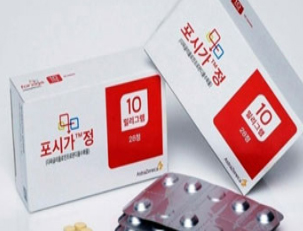
- With the market withdrawal for the diabetes drug ‘Forxiga Tab,' which retained its insurance price ceiling, already decided upon, AstraZeneca’s decision to withdraw its relevant lawsuit has been gaining much attention. AstraZeneca had filed a lawsuit against the ex-officio reduction in the price of Forxiga and Xigduo that was imposed on May 1 last year upon the emergence of their generics. The lawsuit enabled the company to retain Forxiga’s insurance price. On the 17th, the Ministry of Health and Welfare announced that AstraZeneca had withdrawn its lawsuit filed to cancel the reduction in the insurance ceiling price of Forxiga and Xigduo, ending the lawsuit and lifting the suspension of execution previously made on the price cut for Xigduo. As a result, the price of Xigduo XR 10/1000mg will be reduced from KRW 717 to KRW 512, and Xigduo XR 10/500mg will be reduced from KRW 717 to KRW 473. Dapagliflozin is a diabetes combination drug that contains dapagliflozin and metformin. The price of the single-agent dapagliflozin Forxiga Tab will not be reduced because Forxiga Tab has already been removed from the reimbursement list. Fosiga was removed from the reimbursement list on June 1, following the withdrawal of its domestic marketing authorization on April 25. With its removal, its final insurance ceiling price remains the same at KRW 734. AstraZeneca has made tireless efforts to retain this KRW 734 price. In April last year, when the Ministry of Health and Welfare announced an ex-officio adjustment to its price to KRW 514 due to the introduction of generics, AstraZeneca immediately filed a lawsuit to cancel and suspend the administrative disposition. As the first trial dragged on, the suspension of execution remained in effect. Eventually, the company was able to maintain its KRW 734 price until it was removed from the reimbursement list. Industry officials believe that AstraZeneca defended the price cut in order to sell Forxiga at a higher price in other countries that reference Korea’s drug prices. However, Forxiga almost underwent price cuts not just from ex-officio adjustments but due to post-marketing control measures - the Price-Volume Agreement negotiations. The National Health Insurance Service and AstraZeneca had been in PVA negotiations before June when Forxiga was removed from the reimbursement list. After the first round of negotiations broke down, the parties renegotiated until the end of May, when they decided to leave the price as is without changing the insurance ceiling price. This has led to speculation in the industry that the Ministry of Health and Welfare and AstraZeneca had some sort of agreement within. AstraZeneca would have had to make a counterpayment for the government to allow Forxiga to withdraw from the market at its original price. The news of the litigation withdrawal came a month after Forxiga’s removal from the reimbursement list was finalized. While the price cut of Xigduo was inevitable, AstraZeneca still chose to drop the lawsuit. AstraZeneca could have delayed the price reduction of Xigduo by waiting for the outcome of the first lawsuit. This has led some to speculate that AstraZeneca's withdrawal of the lawsuit was a trade-off for Forxiga’s PVA negotiations. There are also rumors that the Ministry of Health and Welfare was very dissatisfied with AstraZeneca filing the lawsuit. In any case, the withdrawal of the lawsuit reinforces the idea that AstraZeneca's original goal was to maintain the cap on Forxiga, not Xigduo. Unlike Forxiga, Xigduo will continue to be sold in the domestic market. In January, AstraZeneca Korea signed a co-marketing agreement with HK Inno.N for Xigduo. However, some distribution industry insiders have speculated that the company may be abandoning Xigduo as well because of the lack of notification on returns and settlements following the price reduction. However, it seems unlikely that the company would abruptly abandon Xigduo, given how Forxiga has been in the process of market withdrawal for half a year. Last year, Xigduo generated KRW 47.2 billion in outpatient prescriptions, according to UBIST.
- Policy
- MOHW imposes 'CSO Reporting & Training' duty to copromoters
- by Lee, Jeong-Hwan Jul 19, 2024 05:47am
- The government announced on the 18th an amendment to the Enforcement Rules of the Pharmaceutical Affairs Act that imposes the same level of local government reporting and employee training obligations on pharmaceutical companies that have signed co-promotion agreements with drug companies that have obtained the official marketing authorization. Initially, the government considered adjusting the reporting and training obligations for co-marketing pharmaceutical companies to a reasonable level in the amendment to the Enforcement Rules, but ultimately decided it would be difficult to exempt co-marketing pharmaceutical companies from the CSO reporting and education obligations in a subordinate law without changing the parent law, the Pharmaceutical Affairs Act. In order for CSOs to register their business with local governments and perform the contract pharmaceutical sales and promotion services for pharmaceutical companies, the CSO company’s representatives and employees must complete 24 hours of new training. In addition, the employees need to receive 8 hours of refresher training every year from the date of completing the initial training. The training covers order in the distribution of medicines, writing economic benefits and expenditure reports, and CSO compliance. If CSOs file false or fraudulent business reports to the local governments, they will be subject to closure, and if they fail to file a change report or file a false or fraudulent change report, they will be subject to a 3-day business suspension for the first offense, 7 days for the second offense, 15 days for the third offense, and 1 month for the fourth offense. If a CSO engages in drug sales promotion activities using employees who have not received mandatory training, the CSO will be suspended for 15 days for the first offense, 1 month for the second offense, 3 months for the third offense, and 6 months for the fourth offense. On the same day, the Ministry of Health and Welfare made a pre-announcement of legislation on the partial amendments to the Enforcement Rules of the Pharmaceutical Affairs Act and will collect opinions until the 27th. The amendment to the enforcement rules is being promoted to set detailed regulations for the revised Pharmaceutical Affairs Act, which will introduce a CSO reporting system and impose training obligations. The revised Pharmaceutical Affairs Act is scheduled to take effect on October 19th. First, a procedure for reporting new, changes, closure, suspension, and succession of CSO status has been established. CSOs are required to complete 24 hours of new training when registering with local governments to fulfill the notification criteria. Requirements for CSO training and standards for administrative penalties were also established. CSOs are required to receive 24 hours of initial training on the order of drug sales order and 8 hours of refresher training every year starting from the year following the date of initial training completion. The contents of the CSO consignment contract and notification of re-consignment were also stipulated. The amended rule specifies the contents that should be included in the CSO contract, such as the name of the consigned drug, the commission rate for each item, and the matters that require compliance of the consignee and requires written notification to the CSO supplier within 30 days of re-consigning its sales promotion business. The scope of allowable economic benefits has also been clarified. The amended regulation clarified the scope of business activities allowed by drug promoters, such as product presentations, and improved some deficiencies such as by specifying the food and beverage standards that can be provided at product presentations conducted by CSOs at individual nursing institutions. Specifically, in the product presentation category, CSOs are allowed to provide economic benefits within the scope of the law. The previous food and beverage standards at individual care organizations that allowed "food and beverages of KRW 100,000 or less per day (limited to 4 times per month)" were clarified to "food and beverages (excluding taxes and service charges) of KRW 100,000 or less per day, limited to 4 times per month. Meanwhile, from this year, CSOs will also be subject to submit and disclose economic benefit expenditure reports. Active CSOs are required to submit last year's expenditure report to the Health Insurance Review and Assessment Service by the 20th of this month. The implementation of this reporting system is expected to be an opportunity to identify the current status of CSOs in Korea.
