
- LOGIN
- MemberShip
- 2026-06-23 15:18:37
- Company
- SGLT-2 diabetes drug Jardiance outsells mkt leader Forxiga
- by Nho, Byung Chul Jun 26, 2024 05:47am
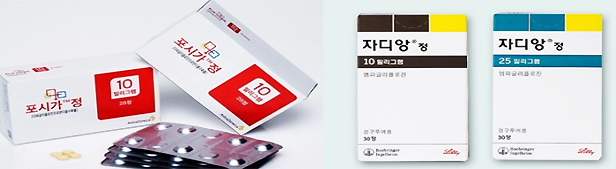
- Boehringer Ingelheim's Jardiance and AstraZeneca's Forxiga are striving for mastery of the KRW 110 billion SGLT-2 inhibitor class single-agent diabetes drug market in Korea. In the first quarter of this year, Jardiance and Forxiga generated sales in the range of KRW 11.1 billion and KRW 8.0 billion, respectively. Notably, this is a reversal of fortune for Forxiga, which had held the lead SGLT-2 class drug market for the past 5 years. In 2020-2021-2022-2023, Forxiga was ahead of second-place Jardiance with sales of KRW 32.2 billion, KRW 38.1 billion, KRW 45.4 billion, and KRW 49.9 billion, but in the first quarter of this year, Jardiance outperformed Forxiga by nearly KRW 3 billion. This is likely due to the rumor of AstraZeneca’s market withdrawal of Forxiga in Korea. While news that AstraZeneca's diabetes combinations, including Xigduo (dapagliflozin-metformin) and Sidapvia (dapagliflozin-sitagliptin), will replace the single-agent Forxiga has been around for over 2 years, Forxiga had remained the market leader. If the anticipated withdrawal of Forxiga takes place, sales of its competitor Jardiance will rise, as well as that of less-selling dapagliflozin products. Among dapagliflozin drugs, Forxiga is followed by Boryung’s Trudapa and Hanmi Pharmaceutical's Dapalon, which generated sales of KRW 2.1 billion and KRW 1.6 billion respectively last year. The reimbursement extension granted for Jardiance is also gaining attention. If Forxiga is withdrawn from the market, Jardiance will be the only product that owns 3 indications - diabetes, heart failure, and kidney - among the original drugs. If Jardiance were to gain reimbursement for chronic kidney disease, this would further expand its share in the SGLT-2 inhibitor market. However, AstraZeneca has granted HK Inno.N Forxiga’s clinical data in chronic heart failure and chronic kidney disease. In April, the indication for HK Inno.N's Dapa N Tab was extended to include chronic heart failure and chronic kidney disease. However, the outlook for Jardiance’s performance is not so rosy. A number of domestic pharmaceutical companies are developing a generic version of Jardiance with the goal of releasing it within the first half of next year. Astellas Korea, which generated sales of about KRW 3.7 billion last year, also reported to the MFDS that it will stop supplying its drug in mid-August for business reasons. In March, MSD Korea reported to the MFDS that it would supply Steglatro Tab 5 mg (ertugliflozin L-pyroglutamic acid) until May. The decision was based on declining market demand. SGLT-2 inhibitors inhibit glucose reabsorption in the kidneys, allowing sugar to be excreted in the urine, and have the advantages of being able to control blood sugar while not stimulating the pancreas, and reducing the risk of heart failure. The downside is that as sugar is excreted in the urine, patients become more prone to hypoglycemia and urinary tract infections, both of which are less common. Clinical studies have shown that dapagliflozin-based agents like Forxiga, etc. were associated with a 39% reduction in the composite efficacy endpoint, which was defined as the risk of death from worsening renal function, cardiovascular and renal disease, compared with placebo. Dapagliflozin also reduced cardiovascular death and heart failure exacerbation in chronic heart failure patients with reduced left ventricular systolic function with or without type 2 diabetes. Chronic kidney disease is a severe and progressive disease with a high risk of heart failure and cardiovascular events, and the results above indicate the potential of dapagliflozin as a new treatment option in the area. Jardiance and other empagliflozin drugs have been shown in clinical studies to reduce the incidence of cardiovascular death and hospitalization for heart failure in patients with heart failure with preserved ejection fraction who were receiving standard of care. The study is regarded as the first to show empagliflozin’s effect in patients with heart failure with preserved ejection fraction.
- Boryung’s early release of its Lenvima generic unclear
- by Kim, Jin-Gu Jun 26, 2024 05:46am
- Boryung’s plan to launch a generic version of the liver cancer drug Lenvima (lenvatinib) early to coincide with the expiration of Lenvima’s product patent is facing setbacks. Despite the amount of time spent overcoming the patents, the number of remaining patents seems to be increasing rather than decreasing. With less than a year left before the expiration of the product patent, Boryung has been unable to overcome all the remaining patents. Rather, the original company filed appeals for some of the first-instance decisions that Boryung won, signaling a prolonged dispute. In addition, Boryung recently discovered an unlisted use patent and filed claims to both invalidate and evade the patent. According to industry sources on the 25th, Boryung recently filed for invalidation and passive trial on the scope of rights against Lenvima’s unregistered use patent. The unregistered patent expires in December 2035. The patent relates to the combination therapy of Keytruda and Lenvima. Lenvima is approved for 4 indications ▲locally advanced or metastatic thyroid cancer; ▲first-line treatment of hepatocellular carcinoma; ▲combination therapy with Keytruda in advanced endometrial cancer; and ▲combination therapy with Keytruda as first-line treatment of advanced renal cell carcinoma. The unlisted patents for Lenvima reportedly relate to the third and fourth indications. Lenvima is primarily used to treat liver cancer, but its use has recently been expanded in combination with Keytruda. Given the reimbursement extension potential of the Lenvima+Keytruda combination, it is in Boryung’s long-term interest to overcome the patents before launching its generic version. This explains why Boryung has filed both an invalidation and a passive trial on the scope of rights for Lenvima’s new patent. Boryung’s simultaneous filing of both trials indicates the company’s commitment to overcoming patents related to its use as combination therapy with Keytruda by any possible means. Boryung is challenging Lenvima’s patents across the board, including unregistered use patents. Lenvima was previously protected by 5 patents: a product patent, a use patent, a salt and crystalline form patent, a formulation patent, and a composition patent. Of these, Boryung’s plan was to evade and invalidate 4 patents, all but the product patent that expires in April 2025, and then launch its generic version early. However, the patent dispute over the use of patents is being prolonged, without even a first instance judgment. In November 2022, Boryung filed a request to invalidate Lenvima’s use patent, but nearly a year and a half passed without a ruling made by the Patent Trial and Appeal Board. As for the challenge to the composition patent, Boryung won the first trial, but the original’s company appealed. Boryung filed for the invalidation of the composition patent in August last year and won the first trial in March this year. However, Eisai filed a lawsuit to cancel the ruling to the Intellectual Property High Court last month, claiming that the decision was unjust. For Boryung, there are 3 patents left to overcome with less than a year to go before Lenvima’s material patent expires. Amid Lenvima’s recent sales decline, Boryung's plan to launch a generic upon the expiration of the substance patent is likely to be disrupted. According to the market research institution IQVIA, Lenvima’s sales last year were KRW 10.3 billion, down 24% from KRW 13.6 billion in 2022. Lenvima’s sales steadily increased from KRW 7.5 billion in 2019 to KRW 12.2 billion in 2020, then to KRW 15.8 billion in 2021, but have been declining ever since.
- Company
- Another anticancer drug 'Augtyro' set to be launched in KOR
- by Eo, Yun-Ho Jun 26, 2024 05:46am
- Augtyro (repotrectinib), an anticancer drug effective regardless of cancer types. A ROS-1 targeting lung cancer treatment called 'Augtyro' is entering the Korean market. According to the industry sources, Bristol Myers Squibb (BMS) Korea has recently applied for market approval from the Ministry of Food and Drug Safety (MFDS) for its Augtyro (repotrectinib), an anticancer drug effective regardless of cancer types. This drug has been designated as an orphan drug by the MFDS in early June. Augtyro is specifically indicated for ▲the treatment of patients with ROS-1 positive topical advanced or metastatic non-small cell lung cancer (NSCLC) ▲the treatment of patients with NTRK(Neurotrophic tyrosine receptor kinase) fusions in topical advanced, metastatic solid cancer or who have a high likelihood of severe morbidity upon surgical removals. Augtyro initially received U.S. FDA approval for the treatment of NSCLC in November of last year. Its indication for the treatment of solid cancer accompanying NTRK fusions is being processed for approval after having been designated for expedited review in February. The drug’s efficacy was confirmed through multinational Phase 1/2 TRIDENT-1 studies. The results showed that 71 patients who had not previously received TK1 treatments had an objective response rate (ORR), which was the primary endpoint, of 79% after Augtyro treatment. Progression-free survival (PFS) doubled compared to conventional targeted therapy. The ORR was defined by the percentage of patients showing decreased tumor sizes (partial response) or no more cancer symptoms (complete response) during the specified treatment period. The median duration of response (DOR) was 34.1 months. 56 patients who had previously undergone ROS1 TK1 therapy and no chemotherapy had an ORR of 38% and a median DOR of 14.8 months. The study also demonstrated the drug’s effectiveness in patients who had developed drug tolerance to previously administered targeted therapies. 56 patients with drug tolerance had an ORR of 38% and a PFS of 9 months. Notably, 17 patients who acquired G2032R mutation had an ORR of 59% and a PFS of 9.2 months. TRIDENT-1 study was published in the New England Journal of Medicine (NEJM, IF 176.082) with Byoung Chul Cho (Director of the Lung Cancer Center at Yonsei Cancer Hospital) as the corresponding author. Meanwhile, lung cancers with ROS1 mutation account for 2% of all lung cancers. Conventional therapy includes targeted anticancer therapies that target the mutated gene. The common drugs are 'crizotinib' and 'entrectinib.' 'Repotrectinib' is gaining attention as the next-generation drug.
- Policy
- ‘Hypertension·hyperlipidemia generics are pricier in KOR'
- by Lee, Jeong-Hwan Jun 26, 2024 05:46am
- According to a government study, generic drugs for some indications, such as those for the gastrointestinal system, hypertension, and hyperlipidemia, are more expensive in Korea than in major overseas countries other than the United States, such as the United Kingdom, Switzerland, and Japan. As of 2022, Korean generic hyperlipidemia drugs were more than 10 times more expensive than those in the UK and 3 times more expensive than those in Japan, while those for hypertension were 2 times more expensive than those in the UK and 3 times more expensive than those in Japan. Based on such findings, the study concluded that the government may directly reduce the price of hypertension and hyperlipidemia drugs with more than 20 generic listings. The researchers proposed the government consider a policy that collectively reduces the price of hypertension and hyperlipidemia drugs to 85% of the lowest price when 20 or more items are listed at the same time. In addition, it was suggested that the domestic generic drug price system should be converted to an indirect price reduction structure, in which the drug price is reduced when the number of listed items increases above a certain level. "Domestic generic drugs for gastrointestinal system-hypertension-hyperlipidemia are more expensive than in overseas" The Ministry of Health and Welfare compared the generic drug prices in South Korea with the "A8" countries (the United States, the United Kingdom, Germany, France, Japan, Italy, Canada, and Switzerland) for 323 ingredient-dose drugs that contain 160 ingredients in 5 efficacy groups Specifically, the study compared the Price-to-Consumer (PTC) price rather than the Price-to-Pharmacists (PTP) price as PTPs in countries abroad include pharmacy dispensing fees and are not comparable to domestic prices. When comparing the PTC price based on the buying power index, the A8 countries' drug price index in 2022 ranged between 0.52 to 0.86 and was lower than Korea's index except for diabetes drugs and antibiotics which were 1.66 times and 1.81 times higher, respectively. Excluding diabetes drugs and antibiotics, generics for gastrointestinal drugs, hypertension drugs, and hyperlipidemia drugs were about 14% to 48% more expensive in Korea than in the A8 countries. In particular, the study looked at the drug prices of the 7 individual countries other than the U.S., given that the U.S. has a relatively high drug price among the A8 countries. Results showed that generics in 3 out of 5 therapeutic classes in Canada were more expensive than in South Korea, while in Germany antibiotics, in Switzerland antibiotics, and UK gastrointestinal drugs and antibiotics were more expensive than in South Korea. Except for these, the price of hyperlipidemia drugs in most countries was 0.09 to 0.41 times less expensive than those in Korea. This means that hyperlipidemia drugs were priced at 9% to 41% of the price of the same in Korea. In addition, the ratio of original to generic drug prices was below 0.5 in most countries, whereas it was closer to 1 in Korea. "20 product criteria for differential pricing of generic drugs is adequate" The study analyzed the market share of the top products by drug market segment and found that the top 20 products accounted for more than 90% of the market in most cases, and 60% in the lowest cases, indicating that the top 20 products dominate the market. This means that the current threshold of 20 products set for differential pricing of generics is sufficient to motivate companies to enter the generic market and to maintain the generic market within an ingredient. In addition, the researchers added that the market share of the top 10 products ranges from 50% to 80%, which accounts for a significant portion of the market but is not considered sufficient to maintain the market. Therefore, according to market logic, the price of ingredients with multiple products should be allowed to be reduced, and policy mechanisms should be put in place to compensate for the market failure of ingredients that no longer enter the market. "For drugs that have 20 or more generics listed simultaneously, setting its price at 85% of the lowest drug price should be reviewed" The study concluded that the comparison of domestic generic prices with those of A8 countries showed price differences by drug class and ingredient and that there are limitations to applying a one-size-fits-all approach. Since the domestic generic drug price level is not unilaterally higher or lower than foreign countries across all efficacy groups and varies by efficacy group, the research diagnosed that the generic policy currently in place should be observed so it could show effect, then be reviewed again and modified. Nevertheless, in terms of maintaining the appropriateness of the generic drugs’ price level, the study suggested the government introduce price-reducing measures for multiple listed ingredients. In particular, the study pointed out that hypertension and hyperlipidemia drugs have many products listed and are expensive compared to foreign countries, so the price of items with more than 20 listed products can be directly reduced. The study suggested the government consider a policy that unilaterally reduces the price of hypertension and hyperlipidemia drugs to 85% of the lowest price when “20 or more products are listed at the same time.”
- Company
- Returned license-outs for new drugs one after another
- by Kim, Jin-Gu Jun 26, 2024 05:46am
- Korean biopharmaceutical companies have been receiving termination notifications from their partnering companies for their licensed-out new drug candidates one after another. Olix Pharmaceuticals and Curacle recently received notifications of contract terminations from France’s Thea Open Innovation. Voronoi’s license-out agreement for its new anticancer candidate was terminated in April. In the past two months, three accounts of license-out of new drug candidates were returned. The industry views this as a result of changes in the development strategies of contracting companies. Companies that had their rights returned rights are planning to change their strategies to in-house development. Olix Pharmaceuticals, Curacle, and Voronoi received termination notifications of their license-out agreements in the past two months Olix Pharmaceuticals announced that they received termination notifications of their licensed-out agreement for 'OLX301A,' which was under development for the treatment of dry and wet age-related macular degeneration, on June 24th. In March 2019, Olix Pharmaceuticals signed a license-out agreement with France’s Thea Open Innovation for its OLX301A. In October 2020, the company expanded the contract for OLX301A and added a license-out agreement for 'OLX301D,' a candidate for the treatment of wet age-related macular degeneration and subretinal fibrosis. Both contracts amounted to 166.95 million euros (approximately KRW 230 billion). In 2019, Olix Pharmaceuticals received an upfront payment of 2 million euros (approximately KRW 3 billion). In 2020, the upfront payment from the company expanded to 5.3 million euros (approximately KRW 7.9 billion). Then, the company additionally received milestone technology fees in 2022 and 2023, amounting to 1.33 million euros (approximately KRW 2 billion) and 400,000 euros (approximately KRW 600 million), respectively. The total amount that Olix Pharmaceutical received from the contract with Thea Open Innovation amounts to 7.03 million euros (approximately KRW 10.4 billion). This amount is non-refundable. Olix Pharmaceuticals, Curacle, and Voronoi received termination notifications of their license-out agreements in the past two months. Last month, Curacle was notified of the licensing return. Curacle announced that the company received notification of the return of the license for 'CU06,' which was under development for the treatment of diabetic macular edema and wet age-related macular degeneration. Curacle received the return of the rights from France’s Thea Open Innovation, just like Olix Pharmaceutical. In October 2021, Curacle had signed a licensing agreement with Thea Open Innovation for a contract totaling US$163.50 million (approximately KRW 190 billion). As part of the agreement, Curacle received a non-refundable upfront payment of US$6 million (approximately KRW 7 billion). In April, Voronoi also received notification of the return of the technology from METiS Therapeutics, a biotech company in the United States. In September 2022, Voronoi entered into a contract to transfer its technology of a pan-RAF inhibitor targeting solid cancers. The total contract amount was up to US$482.2 million (approximately KRW 670 billion), and Voronoi received US$1.7 million (approximately KRW 2.4 billion) cash up front, including the research milestone. Licenses were returned…K-bio will overcome via an in-house development strategy Companies that have had their license-outs returned are aiming to overcome this through in-house developments. These companies have explained that the return of licensed-out products is a result of the partnering companies' shift in development strategies, rather than a failure to demonstrate the efficacy of these candidates. Therefore, the companies are considering either continuing the development in-house or seeking another licensing opportunity. Olix Pharmaceutical said, “We will internally develop technology and conduct clinical trials in the future.” OLX301A obtained U.S. FDA approval for an IND for a phase 1 trial in August 2022. OLX301D is currently in the preclinical phase. Curacle also stated, “We will regain all the rights of CU06’s global licensing and clinical trial development in the future.” They explained, “Regardless of the licensing returns, we plan to conduct further clinical trials without delays.” Curacle explained, “We confirmed the vision improvement effects and safety of the drug through our recently completed CU06 Phase 2a trials.” And added, “During the researchers meeting at the ‘Association for Research in Vision and Ophthalmology (ARVO)’ conference in the United States, we received a lot of advice regarding the vision improvement effects. As a result, we plan to conduct further develop CU06 without any delays.” Voronoi stated, “We will review the development data and decide on future development.”
- Policy
- Fasenra·Idelvion, Ajovy·Emgality receive reimb in KOR
- by Lee, Jeong-Hwan Jun 25, 2024 05:47am
- AstraZeneca's severe eosinophilic asthma treatment Fasenra (benralizumab) and CSL Behring's hemophilia B drug Idelvion (albutrepenonacog alfa) will be reimbursed by the national health insurance starting on the 1st of next month. Also, the anti-malignant tumor agent rituximab (original brand name: MabThera) and the migraine drug Ajovy (fremanezumab) and Emgality(galcanezumab) will receive expanded reimbursement coverage. In addition, the reimbursement standards for psoriasis and macular degeneration treatments will be improved. The Ministry of Health and Welfare recently issued a pre-announcement of an administrative notice on the ’Partial Amendment of Details Regarding the Standards and Methods for Applying Medical Care Benefits (drugs)’ that contained the details stated above. The MOHW plans to collect opinions until the 25th and implement the amended standards from the 1st of next month. New reimbursement standards set for Fasenra·Idelvion Fasenra, a severe eosinophilic asthma drug that contains benralizumab, and Idelvion, a hemophilia B treatment that contains albutrepenonacog alfa, will be newly granted reimbursement in July. Fasenra will be granted reimbursement for use in adult patients with severe eosinophilic asthma who are not adequately controlled despite the use of high-dose inhaled corticosteroids-long-acting inhaled beta2-agonists (ICS-LABAs) and long-acting muscarinic antagonists (LAMA). More specifically, ▲ patients with a baseline blood eosinophil count of 300 cells/μL or greater and have experienced four or more acute asthma exacerbations requiring systemic corticosteroids within 12 months prior to treatment initiation, or received continuous use of oral corticosteroids at a dose equivalent to prednisolone 5 mg/day or greater for 6 months prior to starting treatment; or ▲patients with a blood eosinophil counts of 400 cells/㎕ or greater who have experienced 3 or more acute asthma exacerbations requiring systemic corticosteroids within 12 months prior to starting treatment, will be eligible for reimbursement. Patients will be evaluated every year before and after Fasenra’s use, and those who showed overall asthma control, such as ▲ those who showed a 50% or greater reduction in the frequency of acute asthma exacerbations from baseline, and ▲those requiring ongoing oral corticosteroid therapy who showed a 50% or greater reduction in the oral corticosteroid dose from baseline while improving or maintaining asthma symptom control, that submit a doctor’s note will be eligible for continued use of Fasenra with reimbursement. However, in patients for whom the drug’s effect is deemed insufficient based on clinical symptoms, the effectiveness of the treatment can be evaluated before one year. Patients who co-administer biological agents for severe asthma will not be granted reimbursement. Also, reimbursement will not be granted for patients switching between Nucala, Fasenra, and Cinqair, or switching from Fasenra to Xolair. However, patients switching to Fasenra after Xolair may be reimbursed on a case-by-case basis if the patient has been on Xolair for at least 3-6 months and is unable to continue taking Xolair due to inadequate efficacy, side effects, or the need to improve adherence. Such patients would need to submit a doctor’s note and satisfy the Fasenra reimbursement eligibility standards to receive reimbursement. Idelvion will be granted reimbursement as a routine prophylactic therapy for the control and prevention of bleeding, pre-and post-operative management, and reduction in the frequency of bleeding episodes in patients with hemophilia B, at 23 IU/kg (30 IU/kg in children) per dose. However, for patients with moderate or severe bleeding, up to 39 IU/kg (up to 50 IU/kg for children) may be reimbursable, based on the physician's medical judgment. For patients who need to be hospitalized but receive outpatient treatment and require dose escalation, their use of the increased dose can be reimbursed with the submission of a doctor’s note. In terms of dosing interval, up to 2 doses at the first visit and 1 dose (2 doses for severe patients) at the second visit every 4 weeks will be granted reimbursement, which totals to 3 doses every 4 weeks (up to 4 doses for severe patients with a coagulation factor activity of less than 1%). If the patient's condition is stable, up to a total of 3 doses per visit every 4 weeks (4 doses for severe patients) may be reimbursed at the doctor’s discretion, and if bleeding occurs after being administered 3 doses every 4 weeks (4 doses for severe patients), up to 1 dose per visit is granted reimbursement, and a doctor's note must be attached. If the dose is administered in the hospital, the administered dose is included in the calculation of the allowable number of reimbursed doses. Reimbursement expanded for Ajovy-Emgality Reimbursement for the migraine drugs Ajovy and Emgality had been previously limited to patients who had failed treatment with three or more migraine prevention drugs within one year, but the period limit has been lifted, expanding coverage. The anti-malignant tumor agent rituximab will additionally be reimbursable as maintenance therapy for patients with severe refractory pemphigus vulgaris and pemphigus foliaceus. Two doses of 500 mg/day every 6 months, 12 months after initiation will be granted reimbursement. In addition, the reimbursement exclusion phrase for macular degeneration treatments such as abatacept (original brand name: Eylea), brolucizumab (original brand name: Beovu), faricimab (original brand name: Vabysmo), and ranibizumab (original brand name: Lucentis) has been clarified. Also, the expected adverse events in the psoriasis-specific reimbursement standards for dimethyl fumarate (original brand name: Skilarence), guselkumab (original brand name: Tremfya), ixekizumab (original brand name: Taltz), Risankizumab (original brand name: Skyrizi), secukinumab (original brand name: Cosentyx), ustekinumab (original brand name: Stelara), adalimumab(original brand name: Humira), etanercept (original brand name: Enbrel), Infliximab (original brand name: Remicade) have been further specified.
- Company
- Trelegy 200 Ellipta may be prescribed at tertiary hospitals
- by Eo, Yun-Ho Jun 25, 2024 05:46am
- The double dose Trelegy Ellipta, which received approval in Korea for asthma, not COPD, may now be prescribed at general hospitals in Korea. According to industry sources, GSK Korea's Trelegy Ellipta (fluticasone furoate/umeclidinium/vilanterol) has passed the drug committees (DCs) of the Big 5 tertiary hospitals in Korea, including Samsung Medical Center, Seoul National University Hospital, Seoul Asan Medical Center, and Sinchon Severance Hospital. Trelegy 200 Ellipta, which was listed for reimbursement since March this year, may be prescribed to treat patients with "severe asthma that is not adequately controlled with a maintenance combination of a medium or high dose of an inhaled corticosteroids (ICS) and long-acting inhaled beta-2 agonists (LABA). As such, it remains to be seen whether GSK will be able to expand the indication beyond COPD to asthma in the near future. The efficacy of Trelegy 200 Ellipta was verified through the Phase III CAPTAIN study, which evaluated Trelegy 200 Ellipta versus a two-drug combination of fluticasone furoate/vilanterol (FF/VI) in 2,436 adult asthma patients aged 18 years and older whose symptoms were not controlled despite maintenance ICS/LABA therapy. The primary efficacy endpoint of the study measured the change in FEV1 (Forced Expiratory Volume in 1 second) in each arm after 24 weeks of treatment. Results demonstrated statistical significance, with the Trelegy 200 Ellipta arm showing a 110 mL improvement over FF/VI Also, the safety profile of Trelegy 200 Ellipta in treating asthma was comparable to what was previously seen with the active ingredient and the existing combination products. The most common adverse reactions were nasopharyngitis (13-15%), headache (5-9%), and upper respiratory tract infection (3-6%), and serious adverse reactions occurred similarly across all treatment arms. Professor Jaewon Jeong from Inje University Paik Hospital said, “Asthma is a chronic respiratory disease that requires lifelong management. This is why patients who experience asthma exacerbations need to receive appropriate treatment.” Jeong added, "Major asthma practice guidelines also recommend triple combination therapy that adds LAMA to ICS/LABA before starting oral corticosteroid therapy as the optimal treatment regimen for patients with severe asthma whose symptoms are not controlled by the two-drug ICS/LABA combination therapy."
- Company
- 'Camzyos' receives DREC’s reconsideration decision
- by Eo, Yun-Ho Jun 25, 2024 05:46am
- BMS Korea’s Camzyos (mavacamten). The final decision was not reached on the first attempt. The path to getting 'Camzyos,' the first novel drug for obstructive hypertrophic cardiomyopathy (oHCM), listed for reimbursement seems to be challenging. According to the industry sources, BMS Korea’s Camzyos (mavacamten), a novel drug used to treat obstructive hypertrophic cardiomyopathy (oHCM), was considered for review by the Drug Reimbursement Evaluation Committee (DREC) of Health Insurance Review and Assessment Service (HIRA) but received a 'reconsideration' decision. After clearing the Economic Evaluation Committee of Health Insurance Review, it was rapidly considered for the DREC review. However, as the drug is the first-in-class treatment option for the disease, it is likely not to have received a decision at the first attempt. Yet, since the government is making efforts to improve the value estimation of new drugs, including providing preferential measures for innovative new drugs, it is to be watched how these measures will affect the assessment of Camzyos in the upcoming DREC review. Camzyos is the only drug that selectively inhibits cardiac myosin-actin cross-bridge formation, which is the cause of oHCM. Its underlying mechanism involves dissociating myosin from actin, relaxing overstimulated heart muscle, and thereby improving left ventricular outflow tract (LVOT) structure and LVOT outflow obstruction. Because no treatments have been available to treat oHCM for a long time, Off-label medications were used to manage symptoms. Because of Camzyos, the European Society of Cardiology (ESC) updated its guidelines for managing cardiomyopathy for the first time in about nine years. Previously, the guidelines for HCM were based on evidence limited to small-scale monitoring data, retrospective analysis results, and consensus opinion. However, Camzyos has completely changed this situation. Two large-scale, phase 3 clinical trials conducted as randomized controlled trial (RCT) have confirmed the significant effect of Camzyos. Consequently, ESC guidelines recommend Camzyos with the highest evidence level A for the first time in treatment options. American College of Cardiology (ACC) and the American Heart Association (AHA) are preparing to update their guidelines. Furthermore, based on this phase 3 trial evidence, the U.S. FDA granted Camzyos Breakthrough Therapy Designation (BTD) and approval. Considering these factors, Camzyos appears to have met the criteria of an innovative new drug, announced by the government last year: ▲There are no alternative products, therapeutically equivalent products, or therapies available ▲Extending the survival period significantly and showing clinically meaningful improvements ▲Has been approved for MFDS’ GIFT (priority review designation), U.S. FDA’s BTD, or Europe’s EMA expedited review (PRIME). Meanwhile, Camzyos demonstrated efficacy through Phase 3 EXPLORER-HCM trials. In this trial, Camzyos improved primary endpoints, the patient’s symptoms (NYHA classification) and exercise capacity measured with peak oxygen uptake (pVO2), by more than twofold compared to the placebo. 20% of the Caymzyos treatment group met NYHA classification and pVO2 improvements. It also reduced the LVOT outflow obstruction index by fourfold after exercise. 10 out of 7 patients who received Camzyos treatment had improved indexes and ended up not considering surgery, and they maintained the effect for 30 weeks.
- Policy
- LG Chem and Samsung Bioepis's biosimilars are reimbursed
- by Lee, Tak-Sun Jun 25, 2024 05:46am
- LG Chem and Samsung Bioepis’ biosimilar products will be listed for reimbursement in July. LG Chem is launching a biosimilar of the autoimmune disease treatment Humira, and Samsung Bioepis is launching a biosimilar of Stelara. Both are aiming to list at the lowest price to compete with their respective original products. According to industry sources on the 23rd, LG Chem's Humira biosimilar Xelenka Autoinjector Inj 40mg/0.4L and Xelenka Prefilled Syringe Inj 40mg/0.4mL will be listed at KRW 220,390 from month. Samsung Bioepis' Stelara biosimilars Epyztek Prefilled Inj and Epyztek Intravenous Inj will also be listed the same month at KRW 1,292,890 and KRW 1,355,393, respectively. These are the first Stelara biosimilars to be reimbursed in Korea. Humira is a TNF-a inhibitor used for 13 autoimmune diseases, including rheumatoid arthritis, ankylosing spondylitis, psoriasis, psoriatic arthritis, ulcerative colitis, and adult Crohn's disease. The drug confirmed an effect in various diseases through its mechanism of action that inhibits TNF-α (tumor necrosis factor-alpha), which affects immune diseases. As of last year, its sales amounted to KRW 86.6 billion based on IQVIA. The domestic market for Humira biosimilars opened in earnest with Samsung Bioepis launching Adaloce with reimbursement in May 2021 and Celltrion launching Yuflyma in March 2022. According to IQVIA sales, Adaloce sold KRW 13.1 billion and Yuflyma sold KRW 1.8 billion last year. Sales of the biosimilars are fiercely chasing the original. LG Chem’s Xelenka was approved in December last year. It took 7 months for the drug to be listed for reimbursement after approval. Like other biosimilars, it is a high-concentration formulation that offers improved patient convenience. As a latecomer to the market, the company also paid attention to the price of Xelenka. Currently, for the 40mg/0.4mL dose, the original Humira is priced at KRW 280,891, and the biosimilars Adaloce and Yuflyma at KRW 248,877. LG Chem’s Xelenka is priced lower than these and will be listed at KRW 223,900. It is about KRW 20,000 cheaper than other biosimilars and KRW 60,000 cheaper than the original. Samsung Bioepis, the first company to introduce a Stelara biosimilar, also significantly reduced its product’s price from the estimated price. While biosimilars are usually priced at 80 percent of the original, Samsung Bioepis’s product will be listed at 50 to 60% of the original price. Stelara Prefilled Syringe Inj is priced at KRW 2,182,000, while Epyztek Prefilled Inj is priced at about KRW 900,000 cheaper at KRW 1,298,290. Also, when comparing the IV injection versions, Stelara IV Inj is priced at KRW 2,261,500, compared with EpyztekIV, which is priced at KRW 1,345,593. Stelara generated sales of KRW 47.4 billion last year based on IQVIA. Stelara is indicated and reimbursed for the treatment of moderate-to-severe plaque psoriasis in adults and pediatric patients 12 years and older, active psoriatic arthritis in adults, active Crohn's disease in adults, and moderate-to-severe ulcerative colitis in adults. Following Samsung Bioepis’s footsteps, Celltrion received approval for Steqeyma PFS on March 12. Samsung Bioepis is believed to have adopted a lowest-price strategy to occupy the market before Celltrion's product is listed. Biosimilars are products approved after demonstrating equivalence and effectiveness to the original product. As biosimilar companies sell their products at a significantly reduced price compared with the original product, the financial burden borne by patients is greatly reduced upon the introduction of biosimilars.
- Policy
- Combinatory drugs with linagliptin+dapagliflozin
- by Lee, Tak-Sun Jun 25, 2024 05:46am
- Following the patent expiration of DPP-4 inhibitor Trajenta (linagliptin), combinatory drugs containing linagliptin have been released. Next month, a combinatory drug containing linagliptin combined with SGLT-2 inhibitory dapagliflozin will enter the market. It is a combinatory drug with a new combination being introduced in South Korea. According to the industry sources on June 24th, Aju Pharm’s 'Dapalina Tab,' containing dapagliflozin propanediol hydrate combined with linagliptin, will be listed for reimbursement on July 1st. It is a combinatory drug with a new combination of SGLT-2 inhibitory dapagliflozin with DPP-4 inhibitor linagliptin. The Ministry of Food and Drug Safety (MFDS) categorized Dapalina Tab as an incrementally modified drug (IMD). Therefore, Dapalina Tab’s drug price was credited 59.5% instead of an adjusted amount of 53.55% for a year. Aju Pharm’s Dapalina Tab will be priced KRW 883 per tablet. However, companies receiving CMO products from Aju Pharm have not received IMD approvals. Therefore, the drug prices were calculated based on adjusted amounts. This has affected the prices of drugs such as Hutex Korea Pharmaceutical’s Traxiga Tab 10/5 mg, Boyung’s Trudapa L Tab 10/5 mg, Whan In Pharm’s Posarina Tab 10/5mg, Hanlim Pharm’s Daparo L Tab 10/5 mg, Ilhwa’s Posijenta Tab, GC Biopharma’s Linadapa G Tab, and HK inno. N’s Dapa N Jenta Tab 10/5mg. The prices of these drugs were calculated as KRW 795 per tablet. According to Aju Pharm, phase 3 trials of Dapalina Tab were conducted in 30 university hospitals in South Korea. The results showed a 0.88% reduction in HbA1c at 24 weeks compared to the placebo group (MET+linagliptin). There were no significant differences in drug-related adverse reactions observed. Combinatory drugs containing SGLT-2 inhibitor and DPP-4 inhibitor have been released after the reimbursement criteria for these drugs were established in April of last year. The Ministry of Health and Welfare (MOHW) approves reimbursement of prescriptions for combinations of these two classes of drugs with metformin. Drugs with SLGT-2 inhibitory and DPP-4 inhibitory mechanisms of action are commonly used to treat diabetes. Due to the complementary mechanisms of the two drugs, a combinatory drug is expected to have a superior effect on regulatory blood glucose levels. After the patent expiration of SGLT-2 inhibitor Forxiga (dapagliflozin propanediol hydrate) in April of last year and DPP-4 inhibitor Januvia (sitagliptin phosphate hydrate), pharmaceutical companies in South Korea have launched combinatory drugs containing Forxiga and Januvia. As the patent for DPP-4 inhibitor Trajenta (linagliptin) expires this month, combinatory drugs containing linagliptin will be introduced.
