
- LOGIN
- MemberShip
- 2026-06-23 15:18:40
- Company
- Will the shingles market shift affect NIP?
- by Hwang, Byung-woo Jul 04, 2024 05:52am
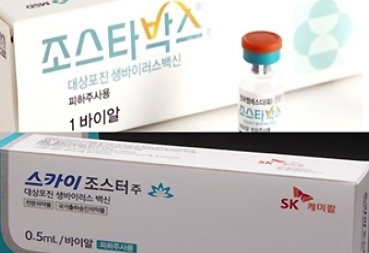
- The withdrawal of Zostavax from the shingles market is complicating the calculation of the National Immunization Program. In the government's 'National Immunization Program Priorities' study, there had been a large gap between the priorities of live and recombinant shingles vaccines, but with the number of live shingles vaccine options being reduced to one, the need for more options has increased considerations. Pic of Zostavax, SKYZoster, ShingrixIn late May, MSD Korea reported to the MFDS the discontinuation of its shingles vaccine, Zostavax. The final stock-out date is difficult to predict, but the discontinuation will bring to an end a nearly 15-year run of the drug since its approval in April 2009. Upon the withdrawal of Zostavax, the remaining options in Korea will be GSK's Shingrix and SK Bioscience's SKYZoster. The two vaccines have distinct characteristics. SKYZoster is a live attenuated vaccine, which means it is easier to access due to the lower costs required for its vaccination than its competitors. On the other hand, Shingrix is an inactivated vaccine that can be administered to immunocompromised and immunosuppressed patients who have previously been unable to receive live attenuated shingles vaccines. However, the high price and the two-dose regimen are considered hurdles. The shingles vaccine is one of the most common non-reimbursed vaccines, and with the withdrawal of Zostavax, its use is usually left to market choice. However, the issue arose with its planned introduction to the NIP. In the government's mid-to-long-term plan for NIP, the shingles vaccine was divided into live vaccines (SKYZoster, Zostavax) and recombinant vaccines (Shingrix). Live vaccines ranked 5th vs. recombinant vaccines ranked 15th among all vaccine priorities To summarize, the live vaccine was ranked 5th out of 15 vaccines, while the recombinant vaccine was ranked 15th and last. Although both were for shingles, they were prioritized differently. In a literature review of the effectiveness of live and recombinant shingles vaccines, live vaccines were found to be effective in 9 studies compared with a control group, but their effect decreased over time. In the case of recombinant vaccines, a total of 9 studies reported their significant vaccine effect, with 2 studies reporting a significant effect when assessed 7 years after vaccination. Despite the longer duration of effect seen with the recombinant vaccines, live vaccines are higher up on the priority list because of their cost-effectiveness. A cost-effectiveness study on implementing a live shingles vaccine for adults aged 60 years and older in the NIP found that its implementation was not a cost-effective strategy in the short term, but was cost-effective in the long term. Compared to the current self-vaccination practice, its introduction to NIP was analyzed as a cost-saving strategy from a societal perspective. Also, the ICER tended to decrease with age, when assessed in 60 to 75-year-old subjects. Another study found that the cost-effectiveness of the vaccine would be maintained at KRW 85,000 and that the cost-effectiveness would decrease if the cost of the vaccination increased above KRW 95,000. However, recombinant vaccines are expected to have greater uncertainty in terms of cost-effectiveness compared to introducing a live vaccine, although information on the exact pricing of recombinant vaccines was limited before the launch of Shingrix late last year. In the actual study, the annual estimated cost of the shingles vaccination support program for people aged 70 and older was about KRW 28.2 billion for a single dose of the live shingles vaccine and KRW 98.3 billion for two doses of the recombinant vaccine, which is a threefold difference. Fewer options remain for shingles vaccine...attention focused on the expanded influence of Shingrix Given the effectiveness and cost of the vaccine, the researchers concluded that introducing a live shingles vaccine in the NIP was practical. The problem is that at the time of the study, there were two live vaccine options, but with the withdrawal of Zostavax, there only remains 1 live vaccine option in the market. It would be difficult for SKYZoster to enter the NIP alone given the multiple aspects that require consideration, including price competition. In particular, it is more inefficient to supply both live and recombinant shingles vaccines at the same time than to introduce live and recombinant shingles vaccines separately for people over 70 years of age. In addition, the growing presence of Shingrix since its launch may rise as an issue for the government in the future. Last year, Shingrix’s sales reached KRW 38.4 billion (IQVIA) and rose to No.1 in the country. In the same period, rival vaccines SKYZoster sold KRW 26.2 billion and Zostavax sold KRW 22.3 billion. At the time of its launch, the vaccine was criticized for its high cost, as it costs up to KRW 600,000 for two doses, but it has been gaining share in general hospitals based on its strength as a quadrivalent vaccine that can be administered to immunocompromised individuals and its high prevention rate of over 90%. As a result, it is hard to ignore Shingrix in the shingles NIP discussion amid the vaccine’s rising market share based on cost-effectiveness alone. However, it remains to be seen whether the pharmaceutical company will be able to accept the cost of vaccination set by the government. Currently, it is not possible to confirm the cost of Shingrix vaccination from HIRA’s non-reimbursed medical expenses information, but it is observed that its cost per single dose is in the low KRW 200,000 range on site. An industry official said, "With the withdrawal of Zostavax, there are many considerations that need to be made in the discussion of introducing shingles vaccines in the NIP, including vaccine type and price. As price is important for NIP in addition to effectiveness, how these points are coordinated in the future will be an important factor in the entry of NIP."
- Company
- MBK Partners to acquire Japan pharma for KRW 3 trillion
- by Kim, Jin-Gu Jul 04, 2024 05:52am
- MBK Partners, the largest private equity firm in South Korea, will acquire Japanese company Alinamin Pharmaceutical for JPY 350 billion (around KRW 3.75 trillion). MBK Partners has been actively pursuing M&A in the biopharmaceutical and healthcare sectors in South Korea and overseas. Within the past year and a half, the company acquired Medit, Osstem Implant, and Geo-Young. The value of these M&As amounted to KRW 11 trillion. According to foreign press on July 3rd, MBK Partners agreed to acquire Japanese company Alinamin Pharmaceutical from Blackstone for JPY 350 billion on the same day. Alinamin Pharmaceutical was previously a business unit of Takeda Pharmaceutical. In 2021, Takdea Pharmaceutical established Takeda Consumer Healthcare Company Limited and sold the company to Blackstone. The acquisition amount was said to be JPY 240 billion (around KRW 2.06 trillion). The pharmaceutical industry is drawing attention to MBK Partners’ recent activities. Since the end of 2022, the company has succeeded in blockbuster M&As in the biopharmaceutical and healthcare sectors. In December 2022, MBK Partners announced the acquisition of Medit, a provider of intra-oral scanner, for KRW 2.425 trillion. The acquisition was completed in March last year. In January last year, MBK Partners and UCK consortium acquired the dental implant company Osstem Implant for KRW 2.6 trillion. The two companies established a special purpose company (SPC) named Dentistry Investment Co and acquired 96% of Osstem Implant’s shares. MBK Partners also acquired Japan’s elderly care business Unimat and Hitowa Holdings. Unimat was acquired for US$300 million (about KRW 370 billion), and Hitowa Holding was acquired for JPY 90 billion. In April, the company sought to acquire South Korea’s largest pharmaceutical distributor, Geo-Yeong. MBK Partners signed a Stock Purchase Agreement (SPA) with Blackstone to acquire Geo-Young. The agreement stated that MBK Partners would acquire a 71.25% stake in Geo-Young’s holding company, Cho Sunhae GY Holdings Co., for KRW 2 trillion. With the acquisition of Alinamin Pharmaceutical, MBK Partners has completed six biopharmaceutical and healthcare sector M&As in South Korea and Japan in the past year and a half. The company invested over KRW 11 trillion.
- Company
- Camzyos’s reimbursement in KOR will be redeliberated today
- by Eo, Yun-Ho Jul 04, 2024 05:52am
- Reimbursement deliberations for Camzyos, a new drug for obstructive hypertrophic cardiomyopathy (oHCM) that had received a redeliberation decision in the past, will again commence today. According to industry sources, BMS Korea's obstructive hypertrophic cardiomyopathy (oHCM) drug Camzyos (mavacamten) will be presented to the latest Drug Reimbursement Evaluation Committee of the National Health Insurance Review and Assessment Service on the 4th. Therefore, whether Camzyos will be deemed adequate for reimbursement and move on to the drug price negotiation stage with the National Health Insurance Service remains to be seen. After passing the Economic Evaluation Subcommittee, Camzyos was sent to DREC faster than expected but received a pending decision at the DREC meeting. Camzyos is the first and only cardiac myosin inhibitor that specifically targets excess cross-bridge formation of myosin and actin proteins, the main cause of oHCM. It improves left ventricular hypertrophy and left ventricular outflow tract obstruction by separating myosin from actin, relaxing the overcontracted heart muscle. Due to the lack of a cure, oHC has long been managed with off-label drug use. In fact, the European Society of Cardiology (ESC) revised its HCM guidelines for the first time in 9 years with the introduction of Camzyos. Before then, HCM guidelines have been based on small observational data reported from individual institutions, retrospective analyses, or expert consensus opinions. Therefore, Camzyos was a game-changer in the field. After demonstrating its significant effect in two large-scale Phase III randomized controlled trials (RCTs), Camzyos was recommended at the highest evidence level, A, for the first time among treatment options in the ESC guidelines. The American College of Cardiology (ACC) and American Heart Association (AHA) are also currently preparing to update their guidelines. Based on the Phase III trial data, Camzyos received a breakthrough therapy designation (BTD) and was approved by the US FDA. Based on these factors, Camzyos appears to meet the criteria for an innovative new drug announced by the government last year, where: ▲ there is no substitute or therapeutically equivalent product or treatment; ▲ has shown clinically meaningful improvement, such as a significant prolongation of survival period; ▲has received the Ministry of Food and Drug Safety’s GIFT (Global Innovative products on Fast Track) designation, US FDA’s Breakthrough Therapy Designation (BTD), and was approved through the European EMA’s Priority Medicines scheme (PRIME). The drug’s efficacy was confirmed through the EXPLORER-HCM trial. In the trial, Camzyos achieved and improved the primary composite endpoint of the proportion of patients with decreased symptom burden (by NYHA class) and functional capacity (peak oxygen consumption, pVO2) by more than 2 times compared with placebo. In particular, 20% of the patients who received treatment with Camzyos achieved both primary endpoints, pVO2 improvement, and the NYHA class requirement. Also, the dynamic left ventricular outflow tract obstruction was reduced by over 4 times with the use of Camzyos. 7 out of 10 patients treated with Camzyos improved to the extent that they would not consider surgery, and showed consistent benefits over 30 weeks.
- Policy
- Daewoong·Ildong late entries to the dapagliflozin market
- by Lee, Tak-Sun Jul 04, 2024 05:52am
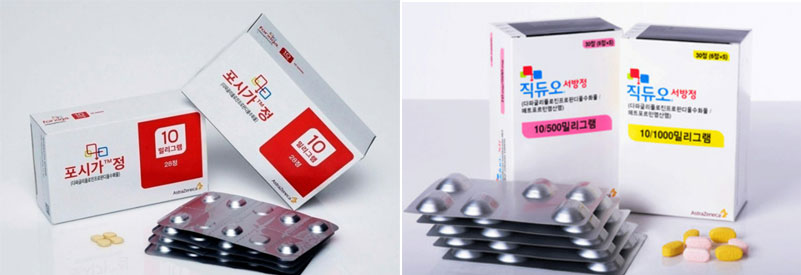
- Daewoong Pharmaceutical and Ildong Pharmaceutical have made late entries in the market for diabetes treatment containing 'dapagliflozin.' Although the door to the biosimilar market for dapagliflozin opened in April last year, these two companies did not join the market immediately. It was presumed because of the contract binding with AstraZeneca, which owns the original product. After resolving the binding contract and with Forxiga’s imminent withdrawal from the Korean market, two companies have likely entered the competition for the market. According to industry sources on July 3rd, Daewoong Pharmaceutical’s 'Forxilo Tab 10 mg (dapagliflozin propanediol hydrate)' and Ildong Pharmaceutical’s two products of 'Daformet SR Tab (dapagliflozin bis L-proline/metformin hydrochloride)' became listed for reimbursement as of July 1st. Forxilo Tab is a generic version of Forxiga (AstraZeneca), the original monotherapy, and Daformet SR Tab is a biosimilar referencing Xigduo XR tab (AstraZeneca) with a change to the salt form. As the substance patent for dapagliflozin expired on April 7th, most pharmaceutical companies in South Korea have released either generics or biosimilars, such as salt-form-changed products. However, Daewoong and Ildong were the exceptions. At the time, Daewoong was in a joint agreement with AstraZeneca to sell Forxiga and Xigduo. Ildong was preparing to launch reimbursed 'Qtern,' a combination therapy containing dapagliflozin plus saxagliptin. Because of the joint-sales agreement with AstraZeneca for Qtern, Ildong could not release biosimilar referencing Forxiga and Xigduo. Two companies entered the market for biosimilars as Forxiga was set to withdraw from South Korea after the canceling approval in April, and Xigduo’s joint-sales agreement was transferred to HK inno.N instead of Daewoong Pharmaceutical from January. Daewoong Pharmaceutical listed 'Forxilo Tab 5 mg,' acquired through a transfer and acquisition deal, for reimbursement in April. This month, Daewoong Pharmaceutical joined the competition in the market with reimbursed Forxilo Tab 10 mg, acquired through a transfer and acquisition deal. Daewoong Pharmaceutical and Ildong Pharmaceutical join the market for biosimilars referencing Forxiga or Xigduo. Daewoong Pharmaceutical has six years of experience selling the original Forxiga, from 2018 until last year. Its generic drug is expected to settle in the market quickly. Furthermore, Daewoong Pharmaceutical is also preparing to obtain reimbursement for its biosimilar, “Forxilomat SR tab (dapagliflozin·metformin hydrochloride).” The company is expected to launch biosimilars soon. Ildong Pharmaceutical launched the reimbursable 'Dafor Tab 10 mg (dapagliflozin bis L-proline),' a biosimilar containing a salt form change, and secured reimbursement for its combination therapy. The company is expected to pursue sales and marketing of its products. As major pharmaceutical companies, Daewoong Pharmaceutical and Ildong Pharmaceutical, enter the market despite their one-year delay, the competition among biosimilars is expected to intensify.
- Company
- Avastin biosimilars occupy over 40% of Avastin mkt
- by Chon, Seung-Hyun Jul 03, 2024 05:51am
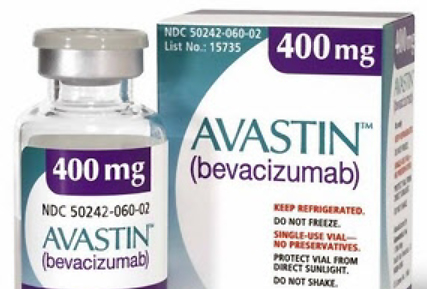
- Homegrown biosimilars are rapidly expanding their influence in the KRW 100 billion-a-year Avastin market. Biosimilars’ sales have increased to exceed 40% in less than 2 years. Samsung Bioepis' Onbevzi led the growth with sales close to the original drug. According to the market research firm IQVIA, the market size of bevacizumab anticancer drugs in Q1 this year reached KRW 32.7 billion, up 10.8% year-on-year. Compared to the KRW 21.1 billion in Q1 2022, the market has expanded 54.8% in 2 years. The original bevacizumab drug is Roche’s Avastin. It is an anti-cancer drug used for metastatic colorectal and metastatic breast cancer, non-small cell lung cancer, advanced or metastatic renal cell carcinoma, glioblastoma, epithelial ovarian cancer, fallopian tube cancer, primary peritoneal cancer, and cervical cancer. Samsung Bioepis' biosimilar has been the main driver of the recent market expansion for bevacizumab. Samsung Bioepis launched its biosimilar Onbevzi in September 2021, and Celltrion and Alvogen Korea have also entered the Avastin market thereafter. In the first quarter, Onbevzi’s sales increased 33.1% year-on-year to KRW 13.1 billion. This is more than 7 times the sales in two years from KRW 1.8 billion in Q1 2022. Onbevzi showed strong growth immediately after its launch and surpassed KRW 10 billion in sales in Q2 last year. It has recorded sales in the KRW 10 billion range for 4 consecutive quarters through Q1 this year. This is the first time that a domestically developed biosimilar product has exceeded KRW 10 billion in quarterly sales. Celltrion's Remsima posted sales of KRW 9.1 billion in Q1. Celltrion's Vegzelma, however, posted sales of less than KRW 100 million in Q1, unable to show prominence in the market. The analysis is that the fact that Onbevzi was the first biosimilar product to enter the market, along with its customized sales force, maximized the synergies. Samsung Bioepis signed an exclusive distribution agreement with Boryung shortly after Onbevzi’s approval in Korea. Boryung is a Korean company that has strengths in anti-cancer drug sales. In May 2020, Boryung established a new ONCO (oncology) division. The organization that was under the specialty pharmaceuticals division was made independent as a separate division. It secured the rights to various anti-cancer drugs and biosimilars from domestic and foreign companies and acquired Gemzar and Alimta through its Legacy Brands Acquisition (LBA) strategy, which involves buying the rights to original anti-cancer drugs. Boryung also secured the domestic rights to Samsung Bioepis' Avastin and Herceptin biosimilars in 2021. Samsung Bioepis' Samfenet reported first-quarter sales of KRW 1.9 billion, up 79.3% from 2 years ago. Onbevzi’s sales accounted for 40.0% of the Avastin market. This is the first time that a single domestically developed biosimilar product has exceeded 40% share in the anti-cancer drug market. The gap between Onbevzi and Avastin (KRW 18.8 billion) sales was only KRW 5.8 billion. As of Q1, the market share of the 2 domestically developed biosimilars, Onbevzi and Vegzelma, was 40.3% in the Avastin market. Sales of the original Avastin remained unchanged. Avastin’s sales in Q1 were KRW 18.8 billion, down 3.0% YoY. Avastin has maintained quarterly sales in the range of KRW 18 billion to KRW 19 billion range since Q1 2022 when it reported sales of KRW 19.3 billion. Avastin's growth was stable from Q1 to Q3 2021, with sales of KRW 28.7 billion, KRW 30.2 billion, and KRW 30.8 billion, but in Q4 2021, Avastin's sales fell 28.6% from the previous quarter to KRW 22 billion. The sales gap was caused by lower drug prices due to the emergence of biosimilars. The price of Avastin 0.1g/4mL was lowered by 30% from KRW 338,387 to KRW 231,271 in October 2021 due to Onbevzi’s listing. The price of Avastin 0.4 g/16 mL was lowered by 30% from KRW 1,073,531 to KRW 752,746. In principle, when a biosimilar is listed in the domestic drug pricing system, the upper price limit (insurance price ceiling) for the original drug is lowered by 30% compared to before patent expiry. Price of 'Items developed in partnership with innovative pharmaceutical companies, companies of the same status, and a subsidiary of multination companies, or items first approved in Korea, or items produced in Korea' are granted up to 80% of the original product’s price before patent expiry for both original drug and its biosimilars. However, as Samsung Bioepis is not a certified innovative pharmaceutical company, Avastin's drug price has been reduced to 70% of the original price. Although Avastin experienced a reduction in sales due to the price reduction, it has since generated similar sales in terms of volume, minimizing the additional sales gap due to the entry of its biosimilars. Given how Avastin did not experience a significant sales decline after the price reduction, Onbevzi effectively created a new market that generated over KRW 10 billion in quarterly sales. As a result, Onbevzi’s market entry reduced the price of the original drug by 30% and resulted in significant savings for insurance finances and patients.
- Company
- KOR, with 12 items, ranks '2nd' in FDA-approved biosimilars
- by Kim, Jin-Gu Jul 03, 2024 05:51am
- The U.S. Food and Drug Administration (FDA) has approved 56 biosimilars as of the first half of this year. Twelve of these were from Korean companies, ranking second after the United States. Until now, companies from the United States, South Korea, Germany, and Swiss dominated the U.S. biosimilar market. Recently, companies from India, Iceland, and China have joined the market. On July 2nd, the Korea Biotechnology Industry Organization posted an issue briefing and reported the current U.S. biosimilar approvals. According to the document, 56 biosimilar products received the U.S. FDA approvals as of the first half of this year. By country, the United States companies had the most approvals with 24 products, and Korean companies ranked the second with 12 products, followed by 6 from Switzerland, 5 from Germany, 2 from Iceland, and one each from China and Taiwan. Korean companies Celltrion and Samsung Bioepis received approvals for 5 and 7 products, respectively. In 2016, Celltrion received approval for Inflectra, a biosimilar to Remicade. In 2018, the company also received approvals for Rituxan, a biosimilar to Truxima, and Herzuma, a biosimilar to Herceptin. In 2022 and 2023, Celltrion received approval of Vegzelma, a biosimilar to Avastin, Yuflyma, a biosimilar to Humira, respectively. Samsung Bioepis received approval for Renflexis, a biosimilar to Remicade, in 2017. In 2019, the company secured approvals for Ontruzant, a biosimilar to Herceptin, Eticovo, a biosimilar to Enbrel, and Hadlima, a biosimilar to Humira. In 2021, Samsung Bioepis received approval for Byooviz, a biosimilar to Lucentis. In 2024, the company received approvals for Opuviz, a biosimilar to Eylea, and Pyzchiva, a biosimilar to Stelara. Briefing by the Korea Biotechnology Industry Organization on the list of biosimilars that received the U.S. FDA approvals. Listed by approval date, original drug, country, company, and product name. Previously, companies from the United States, South Korea, Switzerland, and Germany mainly received U.S. biosimilar approvals. Recently, companies from India, Iceland, and China also secured approvals. India emerged as a nation with biosimilars after Biocon Biologics’ acquisition of Mylan. In 2022, India’s Biocon Biologics acquired Mylan, acquiring four biosimilars that Mylan received approval for. India now has five biosimilars including these. By original product, approvals were granted for 10 Humira biosimilars, 6 Herceptin biosimilars, 6 Neulasta biosimilars, and 5 Avastin biosimilars. And one each of biosimilars referencing Soliris, Prolia, Tysabri, and Epogen.
- Company
- Eliquis generics will soon return to market
- by Kim, Jin-Gu Jul 03, 2024 05:50am
- Pic of Eliquis The patent for Eliquis (apixaban), a direct-acting oral anticoagulant (DOAC) worth KRW 80 billion a year, will expire in September. As such, generic versions of Eliquis, which were withdrawn from the market in 2021 due to the Supreme Court's reversed decision, will re-enter the market thereafter. The return of generics is expected to once again shake up the DOAC market, which includes Eliquis. In addition, the first generic exclusivity of Hanmi Pharmaceutical's Monterizine (montelukast-levocetirizine), Eisai’s Fycompa (perampanel), and Dong-A ST’s Jublia (efinaconazole) will expire in the second half of this year. This raises the possibility of further entry of generics upon the expiry of the preferential marketing period. Eliquis generics withdrawn by Supreme Court ruling will reenter after September According to the Korean Intellectual Property Office, 97 patents for 43 products will expire in the second half of this year alone. The most notable product among those is BMS’s Eliquis. Its product patent expires on September 9th. Except for the product patent, the rest of the patents have been invalidated by generic companies. The generic companies planned to relaunch the product in September to coincide with the expiry of the product patent. The companies have launched Eliquis generics since June 2019. However, the companies completely withdrew from the market nearly 2 years later in April 2021. Their products are returning to the market after more than 3 years. Their entry and withdrawal from the market was decided upon by the 1st to 3rd trial results of the patent suit. The generic companies won the first and second rounds of the product patent litigations in 2018 and 2019, based on which the companies launched their products. The generics quickly gained influence in the market, generating nearly KRW 10 billion in prescription sales in their second year. In Q1 2021, just before they were withdrawn from the market, the market share of apixaban-based DOACs reached 23%. But the tables turned in April 2021 when the Supreme Court reversed and remanded the trial court's decision. The companies pulled the infringing products from the market. Eliquis succeeded in regaining its unrivaled position in the apixaban-based DOAC market. During that period, Eliquis’s sales continued to grow steadily. Prescriptions for Eliquis jumped from KRW 52.3 billion in 2020 to KRW 63.1 billion in 2021, the year the generics were withdrawn. The prescription volume increased further to KRW 73.7 billion in 2022 and KRW 77.3 billion last year. Quarterly Prescription Sales of Eliquis and Eliquis Generics The return of generics after September is expected to significantly disrupt the overall DOAC market. In the past, Eliquis generics have quickly gained market share upon launch. In addition, they have secured plenty of new clients, selling generics of Xarelto (rivaroxaban), a drug in the same class whose patent expired before Eliquis. A total of 49 companies have authorized generics of Eliquis. 14 of them were selling the product before it was pulled from the market. The industry expectation is that around 15 of them will re-enter the market after September. In addition, patents for AstraZeneca's ovarian and breast cancer drug Lynparza (olaparib), Celgene's multiple myeloma drug Revlimid (lenalidomide), and Takeda Pharmaceuticals’ gastroesophageal reflux disease drug Dexilant DR (dexlansoprazole) will expire in the second half of the year. In the case of Revlimid, generic companies have already evaded the crystalline patent, which expires in September this year. Its product patent expired in 2017, and 4 companies had received approval for their generics then and have been selling generics. In the case of Dexilant DR, 6 companies, including Yuhan Corp, succeeded in avoiding all the remaining patents, including the formulation patent, which expires in July, and 1 generic has already been approved. In the case of Lynparza, one patent expires on the 23rd of this month. However, no company has yet challenged the development of Lynparza generics. First generic exclusivity of Monterizine-Jublia expires...opens the door for generic competition The exclusive sales period of major generics that have entered the market with a first generic exclusivity marketing authorization (first generic exclusivity) will also expire in the second half of this year. After the first generic exclusivity period expires, likely, latecomer generics will likely also enter the market. the first generic exclusivity period for Hanmi Pharmaceutical's asthma drug Monterizine expired on the first of this month. Monterizine’s patent was challenged by 20 companies, including Han Wha Pharm. The companies won the trial on 4 formulation patents last September and were granted a first 9-month generic exclusivity period. Within 9 months of launch, the companies won nearly 20% share in the montelukast+levocetirizine combination market. In Q1 this year, prescriptions for Hanmi Pharmaceutical's Monterizine amounted to KRW 4.3 billion, while the combined prescriptions for its generics amounted to KRW 1.1 billion. However, it is understood that there have been no follow-up actions made for the development of Monterizine generics thereafter. Industry analysts say this is because the market size of Monterizine is not large, around KRW 15 billion a year, and competition has been fierce, with as many as 20 companies having received the first generic exclusivity rights. On the 13th of this month, the distribution period for Eisai’s Fycompa generics for epilepsy will expire. Myung-in Pharm and Whan In Pharm successfully challenged and evaded Fycompa’s patent in 2020. Since October last year, Whan In Pharm’s Peranel Tab and Myung In Pharmaceuticals’s Pericompa Tab have been available as generic versions of Fycompa. However, the performance of the two generics during the marketing period has not been good. From the fourth quarter of last year to Q1 this year, the cumulative sales of Peranel and Pericompa were only around KRW 20 million each, compared to the KRW 2.2 billion earned by the original product during the same period. This is due to the high preference for original drugs in the CNS area. Dong-A ST’s nail fungus treatment Jublia will also expire in November. 16 companies challenged Jublia’s patent, and Daewoong Pharmaceutical and Dongwha Pharmaceutical received the first generic exclusivity rights to market its generics. Dongwha Pharmaceutical later handed over the license to Huons. So the other companies that challenged Jublia’s patent but did not receive the first generic exclusivity are expected to join in the generic competition. Given the summer peak in sales for nail fungus (onychomycosis) treatments, the companies may well join the competition next spring. Jublia’s sales last year were KRW 31.8 billion. This is up slightly from the KRW 31.4 billion in 2022.
- Company
- New drug 'Aquipta' for migraine available for prescriptions
- by Eo, Yun-Ho Jul 03, 2024 05:50am
- AbbVie Korea The new drug 'Aquipta,' an oral migraine treatment, is becoming available in general hospitals in South Korea. According to industry sources, AbbVie Korea’s Aquipta (atogepant), an oral calcitonin gene-related peptide (GRRP) receptor antagonist for migraine treatment, has passed the drug committee (DC) of the ‘Big 5’ tertiary general hospitals, including Seoul National University, Kangbuk Samsung Hospital, Hallym University Dongtan Sacred Heart Hospital, and Inha University Hospital. Since its official launch last month, it has expanded indications. Aquipta is drawing attention as the first and only oral treatment option within the same class. In 2021, the U.S. Food and Drug Administration (FDA) approved Aquipta for the prophylaxis of episodic and chronic migraine in adults. In August, it received European approval for the prophylaxis of migraine in adults who have four or more migraine days per month. The basis for the approval in South Korea was the PROGRESS, ADVANCE, and ELEVATE Phase 3 studies. In the PROGRESS study, the efficacy and safety of Aquipta in preventing chronic migraine was compared to those of placebo. In the study, 521 adult patients with a diagnosis of chronic migraine for at least a year (greater or equal to 15 headache days and at least 8 migraine days) were randomized 1:1 to the Aquipta treatment or placebo treatment. The primary endpoint was changes from baseline in monthly mean headache days across a 12-week treatment period. The results demonstrated that the Aquipta treatment group had a reduction in monthly mean headache days by 6.9 days from baseline, compared to 5.1 days for the placebo group. The ADVANCE study compared the efficacy of Aquipta in preventing episodic migraines to that of placebo. The study involved 458 patients with a history of chronic migraine 4 to 14 days per month. The results demonstrated that the Aquipta treatment group had a reduction of monthly mean migraine days from baseline by 4.2 days, compared to a reduction of 2.5 days for placebo. In the ELEVATE study, which evaluated the preventative effect of chronic migraine in patients who previously failed prophylaxis, Aquipta treatment showed more significant reduction in monthly mean migraine days compared to placebo. "CGRP treatment is significantly effective in preventing migraines. Previously released treatments of injection formulation required monthly hospital visits, whereas oral treatment provides patients with more treatment options," Byung-Kun Kim, Professor of Nowon Eulji Hospital, said.
- Company
- CSL Behring’s hemophilia B Tx Idelvion is reimbursed in KOR
- by Kang, Hye-Kyung Jul 03, 2024 05:50am
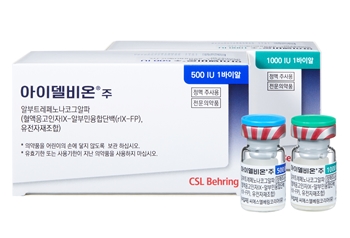
- CSL Behring Korea's hemophilia B treatment Idelvion (albutrepenonacog alfa,) will be reimbursed by Korea’s national health insurance starting in July for the treatment of adult and pediatric patients. Pic of IdelvionIdelvion is approved for the control and routine prophylaxis of bleeding in adults and pediatric patients and for perioperative management (control and prevention of bleeding during surgical procedures). According to the Ministry of Health and Welfare's 'Notification of Partial Amendment to the Details on the Application Standards and Methods of Medical Benefits (Pharmaceuticals)', its single dose is 23 IU/kg (30 IU/kg for children), and for moderate or severe bleeding, up to 39 IU/kg (up to 50 IU/kg for children) is allowed based on the medical judgment of the doctor. However, if hospitalization is required but outpatient treatment is provided, or if an increase in dose is absolutely necessary based on clinical symptoms and test results, it may be authorized with a physician's note. The standard for the number of doses is up to 2 doses at the patient's first visit every 4 weeks and 1 dose at the second visit (2 doses for severely ill patients). Patients may also be prescribed a total of 3 doses (4 doses for severely ill patients) at 1 visit every 4 weeks, at their physician’s discretion. Idelvion is a fusion protein formed by genetically fusing recombinant factor IX (rFIX) with recombinant human albumin (rFIX-FP). It is capable of maintaining high FIX trough levels and has a mean half-life of 143 hours at a 21-day dose (100 IU/kg). Professor Eun Jin Choi, Department of Pediatrics, Daegu Catholic University School of Medicine, said, "In the clinical trial, we found that more than 20% reached the lowest FIX trough level with prophylaxis at 7-day intervals in patients 12 years and older. The results were consistent in repeated PK measurements in a large number of patients, making it easy to predict its treatment effect." Professor Choi added, "Given the lifelong nature of hemophilia, which requires self-injection, we believe that the convenience of a once-every-3-weeks dosing regimen will also help patients manage their disease.” Idelvion was approved in Korea by the Ministry of Food and Drug Safety in March 2020 for the treatment of hemophilia B in children and adults based on top-line clinical results. It can be administered at intervals of up to 21 days as prophylaxis, making it the drug with the longest dosing interval among any extended half-life hemophilia B treatment approved in Korea.
- Company
- Daewoong and LG Chem launch Humira biosimilar 'Xelenka'
- by Kim, Jin-Gu Jul 03, 2024 05:50am
- Daewoong Daewoong Pharmaceutical and LG Chem said on July 1st that they have launched 'Xelenka,' a Humira (adalimumab) biosimilar. Daewoong Pharmaceutical and LG Chem signed a distributer agreement for domestic sales earlier. Under the agreement, LG Chem will supply Xelenka to Daewoong Pharmaceutical, and Daewoong will handle domestic sales and marketing. Xelenka is the third biosimilar to Humira, and it received market approval from the Ministry of Food and Drug Safety (MFDS) in December 2023. Since its release, Xelenka is priced at KRW 22,390 (40 mg) and is under insurance reimbursement. This is the most economical price among Humira biosimilars in South Korea. Both companies anticipate that Xelenka will relieve patients’ treatment burden and help reduce National Health Insurance finance. Xelenka is available in two formulations: a pre-filled syringe containing injectable drug and a pen-type autoinjector, which allows automatic injection of a drug through the device. Xelenka autoinjector is designed with LG Chem’s patient-friendly design. When using a conventional autoinjector, patients must place the device on an injection site and press a button. In contrast, Xelenka has been designed so that drug is injected automatically with a slight push at the injection site. The development, clinical trials, market approval, and production of Xelenka were carried out in South Korea. Because of the domestic production, issues arising during product manufacturing can be quickly solved. Furthermore, safety issues have been minimized by strictly regulating the distribution process, such as temperature control and storage conditions. Through joint research between South Korea and Japan, Korean physicians’ experiences in clinical settings were reflected. Comparative efficacy research demonstrated the equivalence of Xelenka to Humira. LG Chem conducted a clinical phase 3 trial, which evaluated the long-term efficacy and safety of Xelenka and Humira for 52 weeks in 383 patients with active rheumatoid arthritis in South Korea and Japan. The primary endpoint, 'DAS28-ESR score at 24 weeks compared to a reference value,' demonstrated Xelenka’s equivalence. Its safety profile was not significantly different from that of the group treated with Humira. The adverse reaction (AE) rate for the Xelenka group was 68.2%, and that for the Humira group was 71.2%. The AE rate for the entire study period (52 weeks) showed no significant difference. A patient group treated with Humira for the initial 24 weeks and then switched to Humira also showed no difference in efficacy and safety. Xelenka is indicated for the treatment, similar to Humira, of ▲Rheumatoid arthritis ▲Psoriatic arthritis ▲Ankylosing spondylitis ▲Chron’s disease in adults and children ▲Ulcerative colitis ▲Behcet disease ▲Uveitis ▲Hidradenitis suppurativa ▲Juvenile idiopathic arthritis ▲Juvenile plaque psoriasis. Daewoong Pharmaceutical will contribute to treating diseases and improving human quality of life through the continuing expansion of its biopharmaceutical pipeline, including biologics, and the development of various products. "We are delighted that the launch of Xelenka can reduce the cost burden for the nation and patients and also provide a reasonably priced treatment option in clinical settings,” Lee Chang-jae, CEO of Daewoong Pharmaceutical, said. And he added, "Daewoong Pharmaceutical will establish a foundation for growth as a global pharmaceutical company by expanding product lines in the biomedical market, including biosimilars."
