
- LOGIN
- MemberShip
- 2026-06-24 15:53:10
- Company
- Yuhan Chemical completes FDA and ANVISA inspections
- by Nho, Byung Chul Feb 07, 2024 05:59am
- Yuhan Chemical’s manufacturing plant in Hwaseong. Yuhan Chemical (CEO & President: Sang-Hun Seo) has confirmed its global-scale capacity for manufacturing and quality management systems. Yuhan Chemical announced on the 5th that the company has successfully completed the inspections of the United States Food and Drug Associations (FDA) and the Brazilian Health Surveillance Agency (ANVISA). As a result, the current inspection likely verified that Yuhan Chemical has the global-scale capacity for manufacturing and quality management systems, firmly establishing its position as Korea’s top active pharmaceutical ingredient (API) manufacturing company. The current FDA inspection lasted five days, serving as a Pre-Approval Inspection and a routine inspection for APIs intended for U.S. exports. The FDA assessed the company’s compliance with stringent good manufacturing practice (cGMP) standards, and the inspection successfully concluded with only minor notifications issued. Yuhan Chemical also cleared Pre-Approval Inspection of Brazil’s ANVISA, known to be as stringent as the FDA approval, with no observations. Regarding the current inspections, Yuhan Chemical stated, “This round of inspections reaffirmed that Yuhan Chemical holds a strong position as an API company. We have demonstrated our superior manufacturing facility, quality system, and commitment to Data Integrity, utilizing an IT-based quality system while upholding the company’s values of honesty and integrity.” Yuhan Chemical, a subsidiary of Yuhan Corporation, is an API development and manufacturing company. Founded in July 1980, the company has been pursuing global quality standards. Yuhan Chemical received FDA approval for its Ansan manufacturing plant in 2002 and is certified to comply with the advanced GMP quality standards of regulatory agencies in various countries, including European EDQM, Japanese PMDA, Brazil ANVISA, and Australia TGA. In January 2016, the company established its second plant in Hwaseong, Gyeonggi Province. To expand its manufacturing capacity to achieve further growth, Yuhan Chemical completed the construction of a new facility, HB Dong, in November 2023. The facility has the capacity to produce 144,000 liters annually. With these developments, Yuhan Chemical has a total production capacity of 843,000 liters annually. The company expects to secure new contracts with potential clients with its expanded manufacturing capacity. With scheduled inspections by regulatory agencies and client companies, Yuhan Chemical aims to achieve high-quality growth and further development. “Yuhan Chemical is strengthening its competitive position in producing top-quality APIs. Our company is actively working to implement a Continuous Manufacturing system, which will become a new industry standard worldwide,” Yuhan Chemical stated. “Yuhan Chemical aims to overcome the difficulties posed by the diminishing domestic API manufacturing landscape due to low price competitiveness. The company will strive to become a global API CDMO leader.”
- Company
- Bayer partners with Chong Kun Dang to sell Kerendia
- by Nho, Byung Chul Feb 07, 2024 05:59am
- An upturn is expected in the KRW 20 billion markets for chronic kidney disease treatments, with Bayer and Chong Kun Dang joining forces to establish a joint sales front for its chronic kidney disease treatment, Kerendia Tab, According to industry sources, Bayer and Chong Kun Dang signed a joint sales agreement for Kerendia Tab today (February 6) and will challenge the market as a ‘first-line treatment’ for chronic kidney disease. Bayer's innovative new drug Kerendia Tab. 10-20mg (finerenone) was approved by the Ministry of Food and Drug Safety in April 2022 for indications including as chronic kidney disease and was listed for reimbursement on the 1st of this month. The drug price is KRW 1,670 for both the 10m and 20 mg doses. Although there had been some hypertension drugs, the CKD treatment market had been virtually dominated by HK Inno.N’s Kremezin and Daewon’s Renamezin. Although Kerendia (finerenone) and Kremezin (spherical sorbent) or Renamezin (spherical sorbent) do not contain the same active ingredient, in terms of their 'broad indications,’ Kerendia is likely to pull the brakes on the growth of existing products. Although the field of kidney disease treatment is not divided into first-line and second-line like diabetes or hypertension drugs, it is likely that Kerendia will be prescribed first due to its initial treatment efficacy. Kerendia is a treatment for adult patients with chronic kidney disease (CKD) and type 2 diabetes (T2D)that reduces the risk of end-stage kidney disease (ESKD) and a sustained decrease in estimated glomerular filtration rate (eGFR), and cardiovascular death, nonfatal myocardial infarction, and hospitalization for heart failure. Kremezin and Renamezin, on the other hand, has indications for improving uremia and delaying dialysis, which occurs in in later stage chronic kidney disease. However, the launch of Bayer's new treatment option Kerendia, which adds on to the previous options of Kremezin and Renamezin, is welcome news for the patients, given that the drug is intended to prevent hemodialysis, a major costly treatment that can cost up to KRW 30 million per year. In addition, the introduction of Daewon Pharmaceutical's new formulation, Renamezin Cap., is expected to quickly penetrate the existing market that consists of fine-grained and fast-acting tablets, building on its strength of improved dosing convenience. This, coupled with Chong Kun Dang’s strong sales and marketing capabilities, is expected to raise Kerendia into a dark horse in the market.
- Company
- KRW 40 bil JAKi market is in a fierce three-way race
- by Kim, Jin-Gu Feb 07, 2024 05:59am
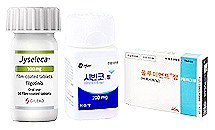
- (Clockwise) Jyseleca, Civinqo, Rinvoq, Olumiant, Xeljanz 제품사진. The competition is intensifying leadership in the Janus kinase (JAK) inhibitor market, an oral autoimmune disease treatment, in Korea. Lilly's Olumiant (baricitinib) became the market leader in Q2 last year, as sales of the longtime leader Pfizer's Xeljanz (tofacitinib) faltered. Then, in just 2 quarters, AbbVie's Rinvoq (upadacitinib) took over the lead. In addition, new drugs such as Pfizer's Civinqo (abrocitinib) and Eisai’s Jyseleca (filgotinib) have also been introduced to the market. This is why the pharmaceutical industry is competing to further intensify in the JAK inhibitor market. JAK inhibitor market amounts to KRW 40 bil last year…Rinvoq’s sales soar 61% YoY According to the market research institution UBIST on the 6th, the outpatient JAK inhibitor prescription market sold KRw 40 billion last year. This is a 19% increase from KRW 33.5 billion in 2022. JAK inhibitors are used for autoimmune diseases such as rheumatoid arthritis and atopic dermatitis. They block inflammation, pain, and cell activation by inhibiting inflammatory cytokines. Since the launch of Xeljanz in 2015, Olumiant and Rinvoq joined in the race in 2019 and 2021, respectively. Yearly prescriptions of major JAK inhibitors (Unit: KRW 100 million, Data: UBIST). By product, Olumiant, Xeljanz, and Rinvoq are in a three-way race. Last year, Olumiant’s prescriptions reached KRW 13.7 billion, Xeljanz KRW 13.3 billion, and Rinvoq KRW 12.4 billion. In particular, Rinvoq's rise in prescription sales stands out. Its sales rose 61% in 1 year, compared with the KW 7.7 billion it had posted in 2022. In the same period, Olumiant’s sales increased by 19% from KRW 11.5 billion and Xeljanz’s sales decreased by 8% from KRW 14.4 billion. Back and forth battle for the lead...Rinvoq tops the market in Q4 last year The quarterly battle for leadership in this market had been even more intense. Olumiant surpassed Xeljanz’s sales and rose to lead the market in Q2 this year with KRW 3.3 billion in prescription sales. It maintained its lead in Q3 with KRW 3.7 billion. However, in Q4, the lead changed hands. While Olumiant fared well in Q4 as well, posting prescription sales of KRW 3.7 billion, Rinvoq took the lead with KRW 4.1 billion. Rinvoq, which was released later than its competitors, Xeljanz and Olumiant, has been the most aggressive in expanding its indications and has grown rapidly. Changes in quarterly prescriptions of major JAK inhibitors (Unit: KRW 100 million, Data: UBIST). Rinvoq is indicated for the treatment of ▲rheumatoid arthritis, ▲psoriatic arthritis, ▲ankylosing spondylitis, ▲atopic dermatitis, ▲ulcerative colitis, and ▲Crohn's disease. Olumiant is indicated for ▲rheumatoid arthritis, ▲atopic dermatitis, and ▲alopecia areata, and Xeljanz is indicated for ▲rheumatoid arthritis, ▲psoriatic arthritis, and ▲ankylosing spondylitis. Among these, the atopic dermatitis indication is known to have led to the rise in the prescription performance of Rinvoq and Olumiant. However, the two products have different indications. Rinvoq is indicated for moderate-to-severe atopic dermatitis in adults and adolescents 12 years of age and older, while Olumiant is indicated for moderate-to-severe atopic dermatitis in adult patients. 4th and 5th JAKis – ‘Civinqo’ and ‘Jyseleca’ released to market…further heating competition in the market The pharmaceutical industry is expected to see fiercer competition in the market this year with the entry of 2 new drugs that joined the market last year. Last year, Pfizer launched Civinqo as a follow-up to its Xeljanz. Its prescriptions for the 6 months from July through the end of the year totaled at. KRW 700 million. Civinqo is approved for atopic dermatitis, an indication that has been driving prescription growth for Rinvoq and Olumiant. Civinqo’s sales are expected to grow rapidly as it is approved for moderate-to-severe atopic dermatitis in adults and adolescents aged 12 years and older, like Rinvoq. Last November, the 5th JAK inhibitor, Jyseleca, was released in Korea. Jyseleca is indicated for rheumatoid arthritis and ulcerative colitis. Prescription sales of the drug the 2 two months after its release amounted to KRW 20 million.
- Company
- Colorectal cancer drug Fruzaqla gets Orphan Drug Designation
- by Eo, Yun-Ho Feb 07, 2024 05:59am
- Fruzaqla (fruquintinib). The new colorectal drug ‘Fruzaqla’ received the Orphan Drug Designation in Korea. On the 1st, the Ministry of Food and Drug Safety (MFDS) announced this decision through the Orphan Drug Designation posting. Fruzaqla is indicated for the treatment of adult patients with metastatic colorectal cancer (mCRC) who have been previously treated with flouropyrimidine-, oxaliplatin-, and irinotecan-based chemotherapy, an anti-VEGF treatment, and if RAS wild-type, an anti-EFGR treatment (RAS); and at least one of trifluridine plus tipiracil or regorafenib treatment. Fruzaqla (fruquintinib) is a VEGFR-1, -2, -3 receptors inhibitor that Takeda Pharmaceutical acquired the rights to the drug from Hong Kong Hutchmed. The FDA designated Fruzaqla for priority review in May last year and approved the drug in November of the same year. The efficacy of Fruzaqla was evaluated based on the FRESCO clinical trial conducted in China and published in JAMA and the global FRESCO-2 clinical trial published in LANSET. These clinical trialss compared the combination therapy of Fruzaqla plus best supportive care (BSC) with placebo combination therapy in patients with previously treated metastatic CRC (mCRC). The FRESCO and FRESCO-2 clinical trials acheived primary endpoints and crucial secondary endpoints, demonstrating consistent effectiveness in 734 patients who received Fruzaqla treatment. In FRESCRO-2 clinical trial, the fruquintinib-treatment group yielded a median overall survival (OS) of 7.4 months, versus 4.8 months for the placebo group. In FRESCO clinical trial, the fruquintinib-treatment group yielded a median OS of 9.3 months, versus 6.6 months in the placebo group. In January last year, Takeda entered into an exclusive licensing agreement with Hutchmed, obtaining the rights for the further development and commercialization of Fruzaqla in territories outside of China. At that time, Takeda agreed to an upfront payment of $400 million (526.9 billion won) and $730 million (961.6 billion won) in additional payments related to milestones.
- Policy
- HIRA 'Ease entry of new drugs and strengthen post-evals'
- by Lee, Tak-Sun Feb 07, 2024 05:59am
- HIRA President Jung-Gu Kang is answering questions from the press corp on June 6 Jung-Gu Kang, President of the Health Insurance Review and Assessment Service, said that he will lower the barriers to entry for new drugs while strengthening post-listing evaluations. For this, Kang explained that HIRA had established the ‘Pharmaceutical Performance Assessment Department’ to improve the management system of high-priced drugs. Regarding the external reference pricing reevaluations, Kang said that the reevaluations will be conducted this year, but that the specific date of its implementation is unclear. He added that it will take time for their review. President Kang said so at a meeting with its press corp at HIRA headquarters in Wonju on June 6. Kang said, “Drugs that have waived pharmacoeconomic evaluations, immunotherapy drugs that have been studied for a short period of time, or drugs for rare and incurable diseases should be evaluated after being listed. We need to conduct long-term follow-up on the effect of these drugs to continue reimbursing effective drugs and removing or switching ineffective drugs.” Regarding the external reference pricing reevaluations that will be conducted using foreign drug prices,Gook-Hee Kim, Director of the Pharmaceutical Benefits Department at HIRA, said, "We are in discussions with the industry to come up with a reasonable and transparent plan. We plan to conduct the reevaluations within the year, but may only be able to release the specific implementation plan at a later time.” The following is a full transcript of Dailypharm’s interview with President Kang. Q. You have been working on a number of projects since your first year in office. What significant achievements and regrets have you had since your appointment? I would like to start by saying that my focus in my first year in office was on the ‘people.’ We sought to help more people benefit through adequate compensation for essential healthcare, which was also a key national agenda. In the lowest low fertility rate crisis, we focused on providing compensation for critically ill and emergency pediatric patients and strengthening the pediatric care system and delivery infrastructure while expanding reimbursement to the public by listing serious diseases such as cancer and brain diseases. While expediting the reimbursement listing of ultra-high-priced drugs, we also contributed to protecting health insurance finances through patient-level performance management. Q. Your organization had completed reorganization in the past year and began full-scale implementation on January 1 of this year. What was the main point and direction of this reorganization? HIRA’s new mission is to ‘Contribute to the Health and well-being of the people by establishing safe and advanced medical environments.’ The reorganization was conducted as a key part of our efforts to achieve this mission. To this end, we have established the Health Insurance Innovation Center, a dedicated organization to review and carry out national tasks such as preventing gaps in essential healthcare and improving the irrationalities in the medical service fee system. We will improve the existing insurance system by remedying the imbalances in the fee-for-service fees and developing various payment systems to create a sustainable compensation system. Also, to improve the management of high-priced drugs that weigh heavily on health insurance finances, we established the Pharmaceutical Performance Assessment Department. We defined high-priced drugs and prepared a performance management system for those drugs to ensure that the system stays effective in protecting public health as well as in managing health insurance expenditures. The 2nd Comprehensive National Health Insurance Plan contains a plan to re-evaluate drug prices by comparing them to overseas prices. I understand that the HIRA prepared its proposal at the end of last year and is in discussions with the pharmaceutical industry. Could you brief us on the time of its implementation, approximate method of reevaluation, and target drugs? (Gook-Hee Kim, Director of the Pharmaceutical Benefits Department) Regarding the external reference pricing reevaluations, we are holding discussions with the industry to come up with a reasonable and transparent method. I believe it will be carried out within the year, but will be able to share the specific timeframe later. When looking at the drug pre-approval review system, quite a few drugs with a very low number of new approvals stand out. I think it can be quite frustrating on the patients’ part to be rejected in the pre-approval process. There needs to be a way to fundamentally remedy this, and I would like to ask for your opinion. Also, could you tell us when the fair compensation on the value of new drugs that were also mentioned in the 2nd Comprehensive National Health Insurance Plan will be implemented? Pre-approval is possible only for the right indications. Therefore, the doctors would first need to accurately file for the right indication. There are also discontinuation criteria, so we need consent on that. Regarding the recent issues in drug reimbursement review, I would like to mention that the pharmaceutical companies first need to submit the required data accurately. A part of the misunderstanding comes from that. The pharmaceutical companies also need to cooperate. We have been working to shorten the review process to within 150 days. So what we want to do is lower the barriers to entry and strengthen the post-approval evaluation process for high-priced intractable diseases and anticancer drugs. The drugs that have waived pharmacoeconomic evaluations should be followed up to see how these drugs are working and if they are effective. Immunotherapies, targeted therapies, and treatment for rare intractable diseases have not been studied on a large scale, so we need to collect a lot of data and evaluate them after the drugs are on the market. Due to opinions on facilitating smoother entry of drugs that have verified their effect through post-evaluations, we are conducting research on that. Through long-term follow-up of listed drugs, we need to continue reimbursing effective drugs and removing or switching ineffective drugs.
- Company
- Oral ulcerative colitis drug Zeposia is actively prescribed
- by Eo, Yun-Ho Feb 06, 2024 06:10am
- Prescription of new oral ulcerative colitis drug Zeposia is being actively promoted in general hospitals in Korea. According to industry sources, BMS Korea’s ‘Zeposia Cap (ozanimod)’ has passed drug committee (DC) reviews of major tertiary hospitals in Korea including Samsung Medical Center, Seoul National University Hospital, Seoul Asan Medical Center, as well as medical institutions including Yeungnam University Hospital, Wonkwang University Hospital, Wonju Severance Hospital, Chonnam National University Hospital, Chosun University Hospital, and Hanyang University Guri Hospital. The drug has been expanding its prescription area after receiving insurance reimbursement in January this year. Zeposia, which is taken once daily orally, was approved in February last year to treat moderate-to-severe active ulcerative colitis in patients who respond adequately to existing treatment or biological agents including corticosteroids, immunosuppressants, etc., or have no response, or have resistance The company applied for reimbursement after approval and passed the Drug Reimbursement Evaluation Committee in August of the same year and was listed for reimbursement this year. Zeposia is a sphingosine 1-phosphate (S1P) receptor modulator used to suppress inflammation by preventing self-reactive lymphocytes from moving to the stomach in ulcerative colitis where immunomodulatory abnormalities are observed. It confirmed the effect of its new mechanism of action in the True North study, which was conducted on adult patients with moderate-to-severe ulcerative colitis. In the study, when evaluating the efficacy of once-daily Zeposia 0.92mg for 10 weeks as induction therapy, 18.4% of ulcerative colitis patients that received Zeposia reached clinical remission at the 10-week mark, which was significantly higher than the 6.8% of patients on placebo. 47.8% of the patients in the Zeposia arm achieved clinical response, which was significantly higher than that of the placebo arm (25.9%). When observing patients who achieved clinical response on Zeposia induction therapy through week 52, at week 52, 37% of patients maintained remission at the 52-week mark of treatment, which was significantly higher compared with 18.5% of those who received placebo. Clinical response was also higher in the Zeposia group than in the placebo group. Tae Il Kim, President of the Korean Association for the Study of Intestinal Diseases (Department of Internal Medicine and Institute of Gastroenterology, Severance Hospital), said, “As ulcerative colitis is a disease that fluctuates between remission and exacerbation and requires long-term treatment, the more treatment options available, the easier it is to tailor a treatment strategy for each patient,” Kim added, "The addition of Zeposia, a novel mechanism of action, is significant because it gives patients another good treatment option to choose from. The advantages of a once-daily oral drug can be very beneficial for patients who are often burdened by the time, cost, and spatial requirements of injectable therapies due to the long-term nature of the disease."
- Opinion
- [Reporter’s View] Handling AI-collected ‘cancer info’
- by Kim, Jin-Gu Feb 06, 2024 06:10am
- Medical AI company Lunit announced on the 5th that it will be participating in the establishment of an internet-only bank. Lunit will join the U-BANK consortium, including Lendit, Jobis & Villains, Travel Wallet, and Hyundai Marine & Fire Insurance, to establish Korea’s fourth internet-only bank. An interesting part of the information is the Lunit’s role within the consortium. “The company aims to develop insurance services personalized to individuals and accurate,” Lunit announced. Lunit plans to utilize the data gathered from its ‘Lunit INSIGHT,’ the company’s primary product of artificial intelligence (AI)-enabled cancer detection, to develop insurance products with exceptional accuracy. It is expected that Lunit’s business operations will expand. Previously, Lunit’s business model involved receiving patients’ medical files containing cancer-diagnosis information. The company then uses artificial intelligence to analyze this Big Data, allowing them to determine whether a patient has a cancer from a single MRI image. With a current approach to expanding their business into developing insurance services and sales, companies involved in the consortium will likely take on different roles. The consortium is expected to operate the business by Lunit gathering an enormous amount of data from media files of cancer diagnoses and relaying those data to the consortium’s insurance company (Hyundai Marine & Fire Insurance), which will utilize the data to develop insurance products. Then, the consortium’s newly established internet-only bank will sell those products in a Banccasurance-like manner. There are concerns regarding the possibility of leaks when sensitive cancer personal information is utilized as an ingredient to develop insurance product. Under the current privacy protection law, consortiums like Lunit must obtain consent from each patient to develop and sell insurance products, clearly specifying the purpose and duration of use. The collected information must go through a separate processing step to ensure it cannot identify individuals. To transfer the data collected by Lunit to insurance companies or banks, they must also obtain third-party data-sharing consent. Lunit appears to be prepared to obtain consent. “When we receive patient data, personal information is anonymized. If we actively pursue business, we will properly manage to obtain patient consent related to utilizing personal information,” a Lunit representative stated. “Currently, we have only decided to invest, and we do not plan to change article of association to include insurance business at this time.” Even though Lunit provided these explanations, a feeling of uneasiness persists. This is because incidents of patient data leaks continue to occur in Korea. In July of last year, 17 university hospitals in Korea leaked sensitive patient information. Between April 2018 and January 2020, the hospitals leaked 185,271 cases of patient information. It was discovered that hospital staff or employees of pharmaceutical companies accessed the hospital system and took pictures or downloaded patient prescription information. Several years ago, there was a large-scale data leak in which IMS Health Korea and Korea Pharmaceutical Information Center (KIPIS) leaked patients’ personal information. At that time, the personal information of 43.99 million patients was leaked, amounting to 4.7 billion cases. In the era of Big Data, information is equivalent to goods. If a company decides to transform information into goods, like ‘alchemy,’ it must establish a safety net to protect individuals or patients who own personal data. This does not entail distrusting the corporation’s security policy of handling personal information or criticizing the company’s business model. However, companies must be highly cautious when collecting and utilizing patient information.
- Opinion
- [Desk’s View] New principles rouse moral responsibility
- by Lee, Tak-Sun Feb 06, 2024 06:10am
- The government’s reevaluation of approved and listed drugs is in full swing. The stated purpose is to filter out ineffective drugs and provide coverage to better ones. As this is very necessary for the public, it is the government's responsibility to fulfill this task. The reevaluation is being conducted omnidirectionally by the Ministry of Food and Drug Safety (MFDS), which conducts the approval review, and the Health Insurance Review and Assessment Service (HIRA), which conducts the reimbursement evaluations. MFDS is in charge of conducting the bioequivalence reevaluations for generic drugs and clinical reevaluations for drugs with little evidence literature. HIRA is conducting a reevaluation of the reimbursement adequacy of drugs that lack clinical utility. Last year, it also conducted a reevaluation of the insurance ceiling price, lowering the ceiling price of generic drugs that did not conduct direct bioequivalence tests. Once the authorities create the standards, the evaluation itself progresses at lightning speed. The problem is that the evaluation standards that are being applied after approval and listing this time are different from what had been applied before. For example, in the case of generic versions of natural product-derived drugs, the MFDS requires a comparative disintegration test (a test that compares the disintegration rate under the same conditions for two solid dosage forms with the same active ingredient and route of administration before approval but requires more than a just a bioequivalence test during the post-marketing reevaluations. Similarly, in the price ceiling reevaluations, companies were required to submit direct bioequivalence test results regardless of the criteria that had been applied before. As a result, most generic versions of natural product-derived drugs such as Stillen and Layla were unable to pass reevaluations. One company is said to be preparing a lawsuit against the unilateral price ceiling reevaluation standards that were applied, as it does not reflect the characteristics of each drug. The MFDS is also expected to set ‘comparative clinical trials’ as the standard for natural product-derived drugs. Since bioequivalence tests cannot be applied to natural product-derived drugs, the government is considering applying a higher standard of comparative trials. Comparative clinical trials are more expensive and time-consuming than comparative disintegration tests or bioequivalence tests, and it is not easy to demonstrate equivalence through such trials, therefore, there is analysis that many companies will fail to pass reevaluation if the MFDS applies the comparative clinical trial card. It is rumored that HIRA’s reimbursement adequacy reevaluations in 2025 will also include natural product-derived drugs such as Stillen and Joins. In the case of Stillen, it is questionable whether it will be subject to reevaluations as it was judged to be clinically useful in the 2006 drug list reorganization project. No one can object to the idea of conducting post-evaluation to weed out ineffective drugs. However, if the criteria for pre- and post-evaluation are different, it would be unfair to those who already received the evaluations. In that case, the government owes it to the company to at least explain why the standards have changed and why it was right then but wrong now. Also, when a drug passed pre-evaluations and was taken with confidence by patients, but the post-evaluations showed opposite results, the government should at least express regrets, if not an apology, to the patients who may be unable to use the drug in the future. Various reasons may lead to the same results, such as a lack of scientific evaluation methods at the time, or the fact that clinical utility can only be determined after their release, but this does not eliminate the moral responsibility of the state that is responsible for verifying the safety of the drugs for the public. Therefore, the government should at least express their regrets at the least. This is not something that can be passed over.
- Policy
- Bill for consigned manufacture of advanced biologics
- by Lee, Jeong-Hwan Feb 06, 2024 06:10am
- A bill is being promoted to allow advanced biological products such as cell and gene therapies Kymriah and Zolgensma to be manufactured by government-authorized consignment organizations and facilities. The goal of the bill is to expand the domestic production infrastructure for advanced biological products to reduce the time and cost of manufacture while increasing patient access to treatments. Rep. Hye-sook Jun of the Democratic Party of Korea submitted a bill for the partial amendment to the ‘Act on the Safety and Support for Advanced Regenerative Medicine and Advanced Biological Products’ as representative. Cell and gene therapies are highly complicated and expensive to produce as they require the harvesting of patient cells, but if developed successfully, it is highly effective in treating serious and incurable diseases and are therefore attracting attention in the global pharmaceutical market. Currently, most of the cell and gene therapies used in Korea are developed by foreign pharmaceutical companies, and it takes a lot of time and money to send the patients’ cells overseas, manufacture them into therapeutic products, and then bring them back to Korea to be administered to patients. If the therapies can be manufactured in Korea, it will be possible to reduce this time and cost, thereby increasing patient convenience. Rep. Jun explained that she saw the need for this bill in this aspect. In particular, Jun pointed out that even if Korean companies succeed in developing and receiving approval for homegrown cell and gene therapies in the future, it is not realistically possible for all domestic cell and gene therapy developers to build and operate large cell processing facilities for manufacture. Therefore, to encourage the development and use of cell and gene therapies in Korea, Jun explained that it is necessary to reorganize the system and allow proactive consigned manufacture of cell and gene therapies. For this, Jun introduced a bill to allow advanced biological products to be manufactured on consignment by institutions and facilities authorized by the Ministry of Food and Drug Safety. Jun said, "The bill aims to increase patient access to treatment by reducing the time and cost of developing cell and gene therapies as well as time to administering it to patients. It also aims to expand the domestic infrastructure for the manufacture of advanced biopharmaceutical drugs."
- Opinion
- [Reporter’s View] Restructuring in pharmaceutical industry
- by Son, Hyung-Min Feb 05, 2024 07:27pm
- Korea’s biopharmaceutical industry is facing corporate restructuring. Both global and Korean pharmaceutical companies are undergoing aggressive employee reductions. AstraZeneca Korea is implementing a voluntary resignation as a follow-up measure related to the withdrawal of Forxiga, a diabetes treatment, from the Korean market. The company is reducing its employees and offering an Early Retirement Plan (ERP) compensation package. Pfizer Korea is also planning to implement a voluntary resignation program. Since Pfizer’s headquarters in the United States is reducing employees as part of its cost realignment program, the extent of the staff reduction for the Korean subsidiary of Pfizer is under discussion. Korean pharmaceutical companies are also considering implementing employee reduction. GC Biopharma is reducing its employee by 10%. Ildong Pharmaceuticals began a restructuring process in May of last year, including voluntary retirement, which led to a 20% reduction in its employee. Moreover, companies such as Kyung Dong Pharmaceutical, Aprogen, YuYu Pharma, and Genome & Company also implemented restructuring measures last year. In light of the recent economic downturn, many pharmaceutical companies face challenges, and there is a growing concern that this restructuring trend may continue throughout the industry. Moreover, the timing of these restructuring efforts, which coincides with the typical employee reshuffling season at the beginning of the year, is worsening these concerns. According to a spokesperson overseeing the restructuring measures, the internal atmosphere is depressing despite the provision of appealing compensation packages. There are concerns that the biopharmaceutical industry may be entering another challenging period. Even during the Covid-19 pandemic, when face-to-face marketing was not feasible and shortages of essential drugs occurred, the pharmaceutical industry successfully implemented countermeasures tailored to the circumstances. The pharmaceutical industry is selecting and focusing on business as if choosing a candidate product. Each pharmaceutical company focuses on what it is best at, chooses an area to focus on, and develops an R&D plan. The industry anticipates that restructuring in the pharmaceutical industry could serve as an opportunity for advancement. Some global pharmaceutical companies have achieved success in corporate improvement via aggressive restructuring. Pfizer underwent significant restructuring in 2007 and 2015. The company successfully revamped its portfolio, focusing on cancer drugs and developing new drugs such as Ibrance and Lorbrena. Pfizer also achieved success in vaccine development during the Covid-19 pandemic. GSK has undergone multiple restructuring efforts to successfully reshape its portfolio. The company has focused on respiratory drugs, cancer treatments, and vaccines, which have led to the development of several blockbuster drugs. The company's growth has been attributed to employee optimizations to increase profits. Government and industry experts have suggested that the industry should transition from a generic-centered approach to new drug development. Many pharmaceutical companies have invested heavily in new drug development. Certain pharmaceutical companies are actively undergoing R&D despite having to endure operating losses. However, investing beyond their limit would be risky. It is wise to come up with an effective investment strategy and employee optimizations. Hopefully, Korean biopharmaceutical companies will achieve success similar to global pharmaceutical companies that have successfully developed new drugs by revamping their portfolios after corporate restructuring.
