
- LOGIN
- MemberShip
- 2026-06-26 20:05:51

- Company
- Unlisted Trajenta patents hinder early release of generics
- by Kim, Jin-Gu Jun 29, 2023 05:56am
- The patent challenges made for the early release of antidiabetic ‘Trajenta (linagliptin)’ is going through a rough patch. The patents that the original company registered with KIPO but not with the MFDS are acting as obstacles. For the generics companies that filed patent challenges, a prolonged dispute is now inevitable as they would have to overcome all of Trajenta's unlisted patents, which may be up to 10 or more, in order to release their generics. Number of claims have been filed against Trajenta’s unlisted patents... 8 in total in 9 months Pic of TrajentaAccording to industry sources on the 28th, Genuone Sciences filed a trial against Boehringer Ingelheim to invalidate Trajenta’s use patent (10-2427380). The use patent was not listed on the Ministry of Food and Drug Safety’s Green List. Genuone Sciences had previously filed claims to has also requested a trial on 5 other unlisted patents of Trajenta. In September last year, the company filed a claim to confirm the passive scope of rights on Trajenta’s substance patent 10-2051281, and invalidation trials on 3 use patents (1558938/10-1655754/10-1806786) and 1 manufacturing method patent (10-1541791) in October last year. In addition, two other challenges are being made to Trajenta’s unlisted patents. In addition to Genuone Sciences, Sinil Pharmaceutical, Korea United Pharm, Hutecs Korea Pharmaceutical, Korea Biochem, and Hallim Pharmaceutical are also challenging Trajenta’s patent. In April this year, the companies requested a passive trial to confirm the scope of rights on two Trajenta formulation patents (10-1710881/10-1855323). This means that 8 of Trajenta’s unlisted patents have been targeted by generic companies in about 9 months from last September. Generic companies have no problem obtaining authorization as latecomer drugs even without overcoming unlisted patents. However, the situation is different when the companies actually release their generic products. Without overcoming all of the patents, the companies become embroiled in patent infringement lawsuits with the original company. If the original drug’s company files a petition for a preliminary injunction to block the release of the product when it files the patent infringement lawsuit, the release date of the generic company’s product may be delayed. In addition, if the company loses the patent infringement lawsuit, it may lead to additional lawsuits for damages. Trajenta’s last listed patent expires in June next year... Unlisted patents remain barriers The generic companies have succeeded in avoiding or invalidating most of Trajenta’s unexpired and listed patents on MFDS’s Green List. Boehringer Ingelheim, the original company, listed 6 patents for Trajenta in the Green List. Among them, one substance patent 1 (10-1150449) expired in September last year. Use patents 1 (10-1111101) and 2 (10-0926247) also expired in August and September last year, respectively. In 2016, the generic companies succeeded in evading or invalidating Trajenta’s substance patent (10-1478983) and crystalline patent (10-1452915) which were set to expire in April 2027. Therefore, the only listed patent that has a term remaining is Trajenta’s substance patent 2 (10-0883277), which is set to expire in June next year. Therefore, on the surface, the early release of generics seems possible after June next year. In fact, generic companies have originally planned to release their generic versions early, in line with the expiration of the second substance patent in June next year. However, the patents that were not listed on the Green List are acting as obstacles to the early release of their generics. Since releasing generic drugs without overcoming the unlisted patents will lead to patent infringement, the generic companies must overcome all of the patents before launching their generic drugs. "There may be up to or over 10 unlisted Trajenta patents”... increases the burden of dispute on generic companies↑ The problem is that Trajenta has too many unlisted patents. The industry expects that there may be a total of more than 10 unlisted patents, including those for which claims are yet to be filed. This means that there are more than 10 trials that generic companies would need to win additionally for the early release of their Trajenta generics. From the perspective of generic companies, the burden of concurrently ongoing patent disputes is not small. In particular, since they are not listed on the Green List, generic companies have to search for the patent information and individually request trials, which is also a hassle. Given this situation, the industry predicts there is a high possibility that the patent dispute related to Trajenta will continue in the long-term. An industry official said, “Because they are not listed on the Green List, generic companies have to find hidden patents one by one and request a trial. Moreover, when the original drug’s company applies to register a patent to the KIPO, the company does not enter the product or brand name in its inventions, therefore, finding the patents is in itself very cumbersome, and there is always the possibility that they may miss some patents.”
- Company
- SK Plasma supplies 39 billion worth of blood products
- by Jun 29, 2023 05:56am
- SK Plasma announced on the 28th that it will begin full-fledged production this month after receiving product approval for blood products (albumin and immunoglobulin) from the Singapore Health Authority (HSA). The company will independently supply a total of 30 million dollars (39 billion won) worth of blood derivatives over the next six years, starting with the initial export in the fourth quarter. When the Singapore health authorities send plasma secured through their own blood source to SK Plasma, SK Plasma produces finished blood products such as albumin using the plasma as raw material at the Andong plant and sends it to Singapore. In 2022, Singapore's health authorities designated SK Plasma's blood product as a priority review target. As a result, the approval review process, which normally takes 18 months, was shortened by 5 months. Blood products are medicines that use blood as raw material, and are manufactured in the form of medicines such as albumin and immunoglobulin by fractionating and refining blood components. It is used as an essential treatment in various fields such as shock caused by excessive bleeding, congenital immunodeficiency disease, and hemophilia. In a national disaster situation, blood products such as albumin and immunoglobulin are widely needed, so they are designated and managed as essential national medicines. The Singapore government is supplying blood products to its citizens in the form of a national tender. In the 2021 blood product bidding by the health authorities, SK Plasma was selected as the first Asian country to consign production of the entire volume. SK Plasma plans to process and export approximately 20,000 liters of blood products annually to Singapore. The Singapore plasma, which has been stocked since this year, will be put into production soon. In addition, it plans to accelerate its global business by cooperating with foreign countries to introduce local raw material plasma and promote consignment production. Kim Seung-Joo, CEO of SK Plasma, said, "This toll processing of blood products is an example of SK Plasma's technological prowess being recognized as the first exclusive toll processing export of a country at the EU GMP level." We plan to continue to expand," he said. SK Plasma is promoting the construction of a blood derivatives plant in Indonesia. In March, a blood product plant near Jakarta, Indonesia, which can process 1 million liters of plasma raw material per year, is under construction with the goal of completion in 2025.
- Company
- RET-targeted Retevmo lands in Big 5 general hospitals in KOR
- by Eo, Yun-Ho Jun 29, 2023 05:56am
- The RET-targeted anticancer therapy ‘Retevmo’ may now be prescribed at the Big 5 hospitals in Korea. According to industry sources, Lilly Korea’s Retevmo (selpercatinib) passed the drug committees of all the Big 5 tertiary hospitals in Korea - Samsung Medical Center, Seoul National University Hospital, Seoul St. Mary’s Hospital, Seoul Asan Medical Center, and Sinchon Severance Hospital. As the drug is undergoing drug pricing negotiations with the National Health Insurance Service, the drug is expected to be readily prescribed if it passes reimbursement. Whether the first targeted RET mutation-targeted anticancer drug option will be born remains to be seen. Retevmo, which received marketing authorization in March last year, was unable to pass CDDC review for reimbursement in May of the same year but then passed review in November and finally passed deliberation by the Drug Reimbursement Evaluation Committee in May this year. The drug is indicated for the treatment of ▲adult patients with metastatic RET fusion-positive non-small cell lung cancer (NSCLC); ▲adults and pediatric patients 12 years of age or older with advanced or metastatic RET-mutated medullary thyroid cancer who require systemic therapy; and ▲ adult patients who are refractory to radioactive iodine therapy and who have prior sorafenib and/or lenvatinib treatment, with advanced or metastatic RET-fusion benign thyroid cancer who require systemic therapy. The drug demonstrated its efficacy through the LIBRETTO-001 trial that was conducted on 702 patients with advanced or metastatic solid cancer with RET mutations. Patients with RET fusion-positive NSCLC, RET-mutated medullary thyroid cancer, and RET fusion-positive thyroid cancer patients with or without prior treatment experience enrolled in the LIBRETTO-001 trial. The primary endpoints of the trial were the objective response rate (ORR) and duration of response (DOR) as assessed by the independent review committee. In patients with RET fusion-positive NSCLC without platinum-based treatment experience, the ORR in the Retevmo-treated group was 85%. Although the median DoR was not yet reached, 79% of the patients showed a durated response during the follow-up period (median 7.4 months). In patients with platinum-based treatment experience, the ORR was 64%, and the median DoR was 17.5 months. Professor Min-Hee Hong of Oncology at Yonsei Cancer Center said, “Lung cancer patients with RET mutations are twice more likely to experience CNS metastasis, but had to be treated with chemotherapy due to the lack of options until now, which is less effective and more prone to toxicity.” Hong added, “Retevmo demonstrated a significant response in the LIBRETTO-001 trial, as well as an 82% ORR in patients with CNS metastasis. 23% of these patients achieved complete response.”

- InterView
- Immunotherapy for early lung cancer was used
- by Jun 29, 2023 05:56am
- As immuno-anticancer drugs can be used in early lung cancer, the prognosis of patients is improving. Unlike before, when chemotherapy and concurrent chemoradiation were all, it is evaluated that the number of cases of 'complete pathological remission' has increased. Opdivo was approved by the Ministry of Food and Drug Safety in October of last year for adjuvant therapy before non-small cell lung cancer surgery. This is the first case in which immuno-oncology drugs have advanced into adjuvant therapy before surgery. Specifically, Opdivo can be used along with chemotherapy in non-small cell lung cancer patients with tumors larger than 4 cm or with positive lymph nodes. The treatment proceeds by using 3 cycles of Opdivo + chemotherapy and undergoing surgery. Prof. Lee Kun-guk (left), Prof. Ahn Byeong-cheol (right), National Cancer Center Lee Kun-Guk, a professor of pathology at the National Cancer Center, gave a positive evaluation, saying, "The introduction of immuno-anticancer drugs has greatly increased the number of cases of pathological CR, which were rarely seen before." "CR was observed in 5 out of 7 cases at our hospital. Through a conversation with Professor Lee and Professor Ahn Byeong-Cheol of the Department of Hematology and Oncology at the National Cancer Center, Daily Pharm examined the changes brought about by the advent of immuno-anticancer drugs in adjuvant therapy before lung cancer surgery. -We know that the way to expect a complete cure for early lung cancer is through surgical treatment. What is the percentage of patients who can undergo surgery by stage? There are cases of recurrence even after surgery. What if there has been an unmet need? =Professor Ahn Byeong-Cheol (referred to as Professor Ahn): Looking at each stage, 80% of stage 1, 60% of stage 2, and 50% of stage 3A can be operated. It is known that all stages 1 to 3A can be operated, but not all patients can operate because of the complex effects of various factors, such as the patient's psychological burden for surgery and the state of the disease, in addition to the stage. Lung cancer is a carcinoma with a high recurrence rate, with studies showing that even stage 1 patients recur up to 40%. Three out of four patients with stage 3 disease with a high stage show recurrence. Therefore, there has always been an unmet need for therapies that can reduce the recurrence rate and improve the prognosis. There have been many attempts to increase the success rate of surgery by reducing the size of the tumor as an adjuvant therapy before surgery for patients with a difficult surgery. However, chemotherapy, which was a representative preoperative adjuvant therapy, did not show a therapeutic effect to such an extent that the pathological CR ratio remained in the single digits. Simultaneous chemoradiation had limitations due to toxicity and side effects such as pneumonia, decreased lung function, and adhesions. -Recently, immuno-anticancer drugs appeared in adjuvant therapy before lung cancer surgery in combination with chemotherapy. I am curious to see how much treatment has been achieved with the experience of actually prescribing this therapy. =Professor Lee Kun-Guk (Professor Lee): So far, immunotherapy was used as an adjuvant therapy before surgery in 7 cases, and in 5 of them, so-called pathological CR, in which lung cancer was not found, although lumps remained, could be confirmed. Certainly, it shows a significantly improved treatment effect compared to previous preoperative adjuvant therapy. Previously, pathological CR was rarely reached. Therefore, it was difficult to evaluate the treatment effect. If complete pathological remission is frequently achieved, as in the combination of Opdivo and chemotherapy, a significant part of the worry can be relieved from the perspective of medical staff. If it is confirmed that there is no cancer mass when observed under a microscope, a lot of burdens is relieved for pathologists who have to quantify the treatment effect. -Are there any concerns about missing the right time for surgery when treated with adjuvant therapy before surgery? =Professor Ahn: I think it is homework to be solved in the preoperative adjuvant treatment. Statistically, less than 10% of patients who were able to undergo surgery may miss the timing due to adjuvant therapy before surgery and may not be able to undergo surgery. However, the ratio of patients who underwent surgery in clinical trials with this immunotherapy was 83.2%, higher than 75.4% of the chemotherapy alone group. Ultimately, I think it is important for medical staff to select and treat patients who are suitable for preoperative adjuvant therapy. -Opdivo + chemotherapy combination therapy has been approved for use regardless of the PD-L1 expression rate and major gene mutations. Is there any difference in actual effect? =Professor Ahn: The higher the PD-L1 expression rate, the higher the therapeutic effect of immuno-anticancer drugs. The higher the PD-L1 expression rate, the lower the risk of recurrence and the higher the pathological complete response rate. However, since it showed a significant improvement effect in all patient groups regardless of the PD-L1 expression rate, it is prescribed regardless of the actual clinical setting. =Professor Lee: In patients with target gene mutations, the effect of immuno-anticancer drugs is relatively low, and a follow-up study on this is likely to be necessary. However, I think it is meaningful in that the opportunity for adjuvant therapy before immuno-oncology surgery is open to all patients. -It is expected that the importance of pathological examination will be further emphasized in lung cancer treatment. What do you think the pathological diagnosis system needs to change in the future? =Professor Lee: I think the pathology examination fee needs to be improved. About 400 genes are identified by the NGS test at medical institutions, and the fee is 1.5 million won based on the main hospital, which is a secondary hospital. This is a very small amount compared to about 6 million won in the United States. In Korea, the number of genes required to be tested is low compared to the number of genes that need to be tested, making it difficult for NGS testing to be universalized. Personally, I think NGS testing will become more common in more hospitals if NGS testing is lightweight and appropriately priced so that only necessary genes are tested rather than testing all 400 genes.
- Policy
- New oral ulcerative colitis drug Zeposia approved
- by Lee, Hye-Kyung Jun 28, 2023 05:53am
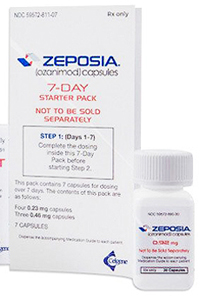
- BMS Korea’s new ulcerative colitis treatment ‘Zeposia Cap (ozanimod)’ seems to have been granted marketing authorization for its effectiveness in broadening the treatment option for patients with ulcerative colitis despite the small number of clinical trial subjects. The recent minutes of the Central Pharmaceutical Affairs Council that were recently disclosed by the Ministry of Food and Drug Safety revealed that the council had a discussion on the feasibility of applying the clinical trial results of an ulcerative colitis drug in Korea. The minutes also mentioned that the ulcerative colitis treatment discussed by the CPAC had the ‘advantage of being taken once a day orally,’ indicating that an advisory meeting had been held for Zeposia ahead of its approval in February. Zeposia is a sphingosine 1-phosphate receptor modulator used to suppress inflammation by preventing self-reactive lymphocytes from moving to the stomach in ulcerative colitis where immunomodulatory abnormalities are observed Zepocia is taken once a day and is indicated to treat moderate-to-severe active ulcerative colitis in ▲ patients who respond adequately to existing treatment or biological agents including corticosteroids, immunosuppressants, etc., or ▲ have no response, or ▲have resistance. However, whether to grant Zepocia’s approval was discussed due to the small number of Korean subjects available in the clinical trial results submitted by the company for approval. One committee member said, "Epidemiologically and statistically speaking, due to the small of Korean trial participants in the bridging data, the results of one or two patients can make a large difference in the results, rendering the judgment difficult.” The MFDS explained, “Population pharmacokinetics analysis data show that the drug’s pharmacokinetics in the total patient population and Koreans were similar.” Also, the MFDS explained that the US label shows that the AUC and Cmax increased in Japanese patients compared to Caucasians, but the difference was not clinically significant. Also, discussions were made on what is the best indicator that can be used to evaluate the effectiveness of the ulcerative colitis treatment as the number of Korean subjects in the trial was insufficient to conduct a sub-analysis. The members discussed whether clinical remission was the right indicator of clinical response efficacy, and whether to use any as secondary indicators in determining the efficacy of the discussed drug. In this regard, a member said, “In ulcerative colitis, drugs are administered for a short period of time to induce remission, and steroids and mesalazine are used as maintenance therapy after the patient reaches a response. When the condition progresses to a severe state, biological agents or immunomodulators are additionally used, then surgery if drug treatment is insufficient.” Since ulcerative colitis can be managed but not cured, there was also the opinion that inducing an initial remission only indicates that patients respond to the drug. Also, another member claimed that although the clinical remission results may not be enough to determine the efficacy of the drug due to the small number of subjects, the clinical response results are in favor of its use in Korea. A member said, “There are so many types of ulcerative colitis drugs with various mechanisms of action in the market because the treatment rate of the currently available treatments for the disease is low, and even this low response is often lost over time. Therefore, if an effect can be seen with a drug that has a different mechanism of action, its addition will increase the number of treatment options for the patients to choose from.” Another member also agreed that the drug can be useful in terms of providing additional drug selection opportunities.
- Company
- Imjudo, the No. 8 immune anti-cancer drug, landed
- by Jun 28, 2023 05:53am
- The 8th and 2nd immuno-anticancer drug with CTLA-4 inhibitory mechanism has appeared in Korea. After more than 10 years of development, AstraZeneca created the first immuno-oncology + immuno-oncology combination option in liver cancer. According to the pharmaceutical industry on the 26th, the Ministry of Food and Drug Safety recently granted product approval to AstraZeneca's CTLA-4 immunotherapy Imjudo. Imjudo is used in combination with AstraZeneca's Imfinzi as the first-line treatment for adult patients with advanced or unresectable hepatocellular carcinoma (liver cancer). Imjudo is the 8th licensed immuno-oncology drug in Korea. Since BMS Yervoy was approved as the first immuno-oncology drug in December 2014, a total of seven immuno-oncology drugs have entered the market, namely Opdivo by Ohno Pharmaceuticals, MSD Keytruda, Roche Tecentriq, Imfinzi by AstraZeneca, Bavencio by Merck, and Jemperli by GSK. With the approval of Imjudo, AstraZeneca has two immuno-oncology drugs. Imjudo is also a CTLA-4 immuno-oncology drug that appeared 9 years after Yervoy. CTLA-4 is a cytotoxic T lymphocyte-associated antigen-4 that is mainly expressed on the surface of T cells to control T cell activity. Imjudo is a mechanism that induces an anti-tumor immune response by activating T cells by selectively blocking the interaction between CTLA-4 and CD80/CD86. It is not an exaggeration to say that immuno-oncology drugs that appeared after Yervoy are all PD-(L)1 series, and PD-(L)1 series is currently holding the immuno-oncology market. Due to their mechanistic characteristics, the CLTA-4 series of immuno-oncology drugs failed to overcome the limitations of relatively low response rates and high side effects of autoimmune diseases. Because of this, Yervoy is limitedly used only in combination therapy with the PD-1 inhibitor Opdivo. Imjudo also suffered from numerous clinical failures during the development process. Imjudo was first developed by Pfizer, and global development rights were acquired by AstraZeneca in 2011. Since then, AstraZeneca has tried combination therapy with Imfinzi for various cancers such as lung cancer, bladder cancer, and head and neck cancer, but it has failed every time in clinical trials. Liver cancer is first cancer that gave the green light for the commercialization of Immudo. The primary endpoint was achieved by minimizing concerns about the toxicity of Imudo and increasing its effectiveness with the STRIDE regimen (first administration of Imjudo followed by administration of Imfinzi at 4-week intervals). AstraZeneca was able to obtain product approval for liver cancer after developing Immu for more than 10 years. According to the results of the HIMALAYA phase 3 conducted by AstraZeneca, Imjudo + Imfinzi STRIDE therapy recorded a median overall survival (mOS) of 16.4 months, reducing the risk of death by 22% compared to standard treatment Nexavar. At the time of the 36-month follow-up, the OS arrival rates of the Imfinzi + tremelimumab and Nexavar groups were 30.7% and 20.2%, respectively, confirming the long-term survival benefit of the combination therapy. Subsequently, in the results of the Asian sub-analysis, Imjudo + Imfinzi therapy proved a consistent effect with the global one. With the advent of Imjudo, changes are expected in the liver cancer treatment environment. In liver cancer, which has been the center of targeted anticancer drugs, the number of immunotherapeutic options is increasing. Roche's Tecentriq is the first immuno-oncology drug to be named for the first-line treatment of liver cancer. Tecentriq demonstrated excellent effects in combination with the targeted anti-cancer drug 'Avastin'. The overall survival period was increased by 6 months compared to Nexavar, the risk of death was reduced by 42% compared to Nexavar, and the response rate was more than twice as high as Nexavar. Following immuno-oncology + targeted anti-cancer drug, immuno-oncology + immuno-oncology combination represented by Imjudo + Imfinzi also appeared. It has the advantage of avoiding various side effects that reduce the quality of life, such as skin-related diseases such as hand-foot syndrome and diarrhea, which can be caused by targeted anticancer drugs. As the efficacy of immuno-anticancer drugs has been proven, immuno-anticancer drugs have come to the fore in domestic liver cancer treatment guidelines. According to the '2022 Hepatocellular Carcinoma Treatment Guidelines' announced by the National Cancer Center last year by the Korean Liver Cancer Society, 'Tecentriq + Avastin' and 'Imudo + Imfinzi' therapies were recommended (A1) as the first systemic treatment. For the first time this year, an immuno-oncology drug was recommended first, overtaking Nexavar, which had been the standard treatment for liver cancer for a long time. Kim Bo-hyun, professor of gastroenterology at the National Cancer Center, said in an interview with Daily Pharm at the time, "It was proven that the combination of Tecentriq + Avastin showed better effects than existing treatments, so it served as the basis for the decision to consider immuno-oncology therapy before Nexavar." “Imudo+Imfinzi therapy also showed a statistically significant effect of prolonging survival compared to Nexavar, so it was judged that it can be recommended as a first-line treatment.”
- Company
- Generic for Paxlovid PQ certification for 1 year
- by Jun 28, 2023 05:53am
- As of March 22, 2022, the number of pharmaceutical companies that introduced PaxlovidAmong the 36 pharmaceutical companies that have introduced Paxlovid's generic license for an edible COVID-19 treatment, some companies are attempting World Health Organization (WHO) pre-qualification (PQ) certification. Each pharmaceutical company is expected to obtain PQ certification even after the COVID-19 emergency is lifted and supply medicines to developing countries through public bidding. According to the WHO on the 26th, one out of 36 pharmaceutical companies that introduced Paxlovid's generics received WHO PQ certification. Indian pharmaceutical company Hetero obtained the first generic for Paxlovid PQ certification in December last year. Nine pharmaceutical companies, including Celltrion, are in the process of PQ approval. These include Fosun Pharma, Mylan, Desano, Strides Pharma Science, Xinjin, Yao Pharmaceutical, Zhejiang Apeloa, and Zhejiang Huahai. Pfizer received WHO PQ certification for its original Paxlovid product. For PQ certification, WHO is conducting ▲an advisory meeting ▲pre-document submission meeting ▲receipt of evaluation documents. Celltrion, Fosun Pharmaceutical, Mylan, Zhejiang Apeloa, and Zhejiang Huahai have gone through all three procedures and are waiting for approval. Desano and Strides pharma science even proceeded with the meeting process before submitting the documents. Xinjin and Yao Pharmaceutical held a meeting to receive advice from the WHO. The WHO PQ is a system that certifies the safety and effectiveness of medicines by evaluating the manufacturing process, quality, and clinical results. Pharmaceutical companies that have secured PQ certification are qualified to participate in international bidding for medicines organized by organizations affiliated with the United Nations (UN), such as UNICEF and the Pan-American Health Organization. WHO PQ certification is one of the ways to advance into developing countries through international bidding. The International Pharmaceutical Patent Pool (MPP) granted licenses for Paxlovid's generics to 36 companies in 13 countries in March last year. It is a measure following the fact that Pfizer allowed the sale of Paxlovid generics to low- and middle-income countries such as developing countries through MPP. Celltrion secured a license for Paxlovid's generic finished product. Celltrion Pharmaceuticals, an affiliate, is responsible for the development and production of finished products. Celltrion is in charge of overseas supply. Product production is carried out at Celltrion Pharmaceutical's Cheongju plant, which is a cGMP-certified facility. Paxlovid is an oral antiviral drug in pill form. In a phase 2/3 clinical trial conducted by Pfizer, it was confirmed that the rate of hospitalization and death due to COVID-19 was reduced by 89% compared to the placebo group. The WHO strongly recommended the prescription of Paxrovid for patients with mild or moderate COVID-19. Approval for use has been obtained and prescriptions are being made in major countries around the world, including the United States and the EU. According to an October 2021 survey by the WHO, the market for generic procurement of edible COVID-19 treatments to be supplied to low- and middle-income countries is estimated at 1.7 trillion won.
- Company
- Seize the promising target Claudin market
- by Jun 28, 2023 05:53am
- CLDN18.2 is a protein mainly present on the surface of gastric cancer cells and is known to be expressed at high levels in certain malignant tumors. (Source: Transcenta)Claudin 18.2 (CLDN18.2) is emerging as a new alternative for gastric cancer with a poor prognosis, and a development boom is brewing among global pharmaceutical companies. Various new drugs such as cell therapy drugs and bispecific antibodies have been put to the test in order to preoccupy this market, which is a communist communist country. According to the Ministry of Food and Drug Safety on the 27th, three CLDN18.2 target new drugs have been approved for clinical trials this year alone. Two cases are early-stage (phase 1/2 and phase 1) clinical trials, and one case is a late-stage phase 3 clinical trial. CLDN18.2 is a protein mainly present on the surface of gastric cancer cells. It is also present in normal cells but is expressed at high levels in certain malignant tumors. It is known to be involved in the proliferation, differentiation, and metastasis of cancer cells. BioNTech founder and CEO Ugur Sahin first discovered it in 2008 and started developing the drug at Ganymed Pharmaceuticals, which he was leading at the time. CLDN18.2 is highly anticipated in gastric cancer, where it was difficult to find biomarkers. Currently, gastric cancer is considered cancer with a poor prognosis because there are no suitable targeted therapies except for HER2-targeted anticancer drugs. CLDN18.2 can be a new alternative even in pancreatic cancer, where it is difficult to develop new drugs. Astellas, a Japanese pharmaceutical company, acquired Ganymed and acquired the rights to develop Zolbetuximab, the first CLDN18.2 target substance. The recently announced top-line results of phase 3 clinical trials were positive. Astellas submitted an application for product approval of Zolbetuximab to the Japanese licensing authority on the 9th. If Zolbetuximab is approved, it will be the world's first CLDN18.2 targeted anti-cancer drug. Challenges by competitors to pursue Zolbetuximab are also continuing. On the 16th, Chinese biotech Transenta received approval for a phase 3 clinical trial of TST001, a natural killer (NK) cell therapy targeting CLDN18.2. It is characterized by the fact that it is used in combination with the immuno-oncology drug Opdivo and chemotherapy.
- Policy
- The share of drug spending was about 23 trillion won
- by Lee, Tak-Sun Jun 28, 2023 05:53am
- Last year, the share of health insurance drug expenses was 23%, the lowest level in the past five years. Although drug costs themselves are steadily increasing, the rate of increase in total medical costs is much higher, indicating that the proportion of drug costs is continuously declining. According to the 'Current Status of Claims for Reimbursed Drugs in 2022' published by HIRA on the 26th, drug costs last year were 22,896.8 billion won, accounting for 23.34% of the total medical expenses of 98,121.2 billion won. 2022 is the only time in the last five years that the share of drug spending has fallen to the 23% level. It fell by 1.28%p from 24.62% in 2018. The decrease in the share of pharmaceutical expenditures is due to the greater increase in total medical expenditures. Total medical expenses increased by 11.32% compared to the previous year, far exceeding the 7.95% increase in drug expenses. Last year, there were 906 items on the list and 2,332 deleted items, a much larger number. As a result, the number of registered items also decreased by 1,404 from the previous year to 23,643. In 2019 and 2020, the number of listed items due to the reorganization of the drug pricing system approached 4,000, but after the implementation of the system, the number of deleted items gradually increased and the number of listed items decreased. In 2022, the number of claims for health insurance reimbursement drugs was 23.481 trillion won, hospitalized 2.8604 trillion won and outpatient 20.1877 trillion won. By type, the amount claimed for pharmacy-reimbursed drugs was 16,234.6 billion won, accounting for 70.4% of the total. This was followed by 13.2% (3.327 trillion won) of advanced general hospitals, 8.2% (1.8919 trillion won) of general hospitals, 4.3% (983.3 billion won) of clinics, and 3.8% (885.5 billion won) of hospitals. Claims for reimbursed drugs for those aged 65 and over accounted for 45.6% of the total at 10,505.8 billion won. This is an 8.4% increase from the previous year, and the share of reimbursed drugs for those aged 65 or older continues to increase.
- Company
- SK bioscience collaborates with the Doherty Institute
- by Jun 28, 2023 05:53am
- From left, SK Bioscience CEO Ahn Jae-yong, AustraliaSK bioscience announced on the 27th that it had signed a research cooperation agreement with the Peter Doherty Institute for Infection and Immunity in Australia for global influenza prevention and response. The Peter Doherty Institute for Infection and Immunity is an infectious disease research institute affiliated with the University of Melbourne, Australia. It is the World Health Organization (WHO) Influenza Collaboration Center and one of the world's three major sources of influenza strains. The signing ceremony was held at SK Bioscience Pangyo headquarters with Professor Sharon Lewin, Director of The Peter Doherty Institute for Infection and Immunity and Head of the Department of Infectious Diseases at the University of Melbourne, and Professor Kanta Subbarao, Director of The Peter Doherty Institute for Infection and Immunity and WHO Influenza Research and Surveillance Cooperation Center. , Professor Ian Barr, Deputy Director of The Peter Doherty Institute for Infection and Immunity and WHO Influenza Research and Surveillance Cooperation Center, SK Bioscience President Ahn Jae-yong, and Global R&BD CEO Kim Hoon attended. With the goal of advancing influenza vaccine research and development, the two organizations agreed to cooperate closely with ▲basic research on a new influenza vaccine platform ▲identification of the latest research technologies and industry trends related to global influenza. Through this cooperation, SK Bioscience plans to strengthen its influenza prevention and response system to secure competitiveness in the global influenza market and take the lead in advancing influenza vaccine R&D around the world. According to Fortune Business Insight, a global market research firm, the global influenza vaccine market will grow from $7.54 billion (9.8887 trillion won) in 2022 to $13.58 billion with an average annual growth rate of 8.8% by 2029. size is expected. Sharon Lewin, Director of the Doherty Institute, said, "Participating in this collaborative influenza vaccine development project is a significant achievement in our efforts to fight disease and improve public health." Ahn Jae-Yong, CEO of SK Bioscience, said, "We are looking forward to the synergy created by our know-how in successfully developing the world's first quadrivalent cell-cultured flu vaccine and the infrastructure of the Doherty Institute, a leader in research on global infectious diseases." SK Bioscience continues to cooperate with global institutions and research organizations with the goal of advancing its vaccine portfolio and improving human health. Currently, a number of projects are underway with global organizations and institutions such as the Bill & Melinda Gates Foundation, CEPI, International Vaccine Institute, Wellcome Trust, International AIDS Vaccine Initiative, and Hillemann Institute. It plans to take the lead in establishing an innovative system that can be developed within days and supplied within six months.
