
- LOGIN
- MemberShip
- 2026-06-26 20:05:51
- Company
- Xospata makes progress for reimb...up for DREC review
- by Eo, Yun-Ho Jun 23, 2023 05:45am
- The reimbursement review for the acute myeloid leukemia treatment Xospata is making way to overcome the existing restriction that limits the reimbursement to 4 cycles. According to industry sources, Xospata (gilteritinib), Astellas Korea’s new drug for patients with relapsed or refractory acute myeloid leukemia (AML) with an FLT3 mutation will be presented for review at the Health Insurance Review and Assessment Service’s Drug Reimbursement Evaluation Committee meeting on July 1st. The drug’s reimbursement application is seemingly making relatively quick progress after passing the Cancer Disease Deliberation Committee in May. However, since Xospata was waived the pharmacoeconomic evaluation process, the drug would also have to undergo drug pricing negotiations with the National Health Insurance Service for its reimbursement extensions as well. The drug is indicated as monotherapy for the treatment of patients with relapsed or refractory acute myeloid leukemia (AML) with an FLT3 mutation (FLT3mut+). However, only patients who received allogeneic hematopoietic stem cell transplantation are eligible for reimbursement, for up to 4 cycles. Other than the financial issues, there are no specific reasons to limit the number of administration cycles for Xospata. In the ADMIRAL trial, Xospata was used without limiting the treatment period, and the NCCN guidelines also issued a ‘Category 1’ recommendation for the drug without restricting its treatment period. The current best option to cure AML patients is hematopoietic stem cell transplantation, but this is accompanied by a high risk of recurrence, and transplantation is not an option for the large number of elderly AML patients that exist. Therefore, there is no suitable treatment alternative other than Xospata available for patients who cannot undergo hematopoietic stem cell transplantations, and these patients are still using the chemotherapy that was developed over 40 years ago due to ineligibility for reimbursement of Xospata. Xospata targets both types of FLT3 mutations, FLT3-ITD and FLT3-TKD, and may be self-administered at home as a single oral tablet once daily without frequent hospital visits. Also, Xostapa has demonstrated improved safety and efficacy compared with existing chemotherapy.
- Policy
- Scemblix is listed in July
- by Lee, Tak-Sun Jun 23, 2023 05:45am
- Novartis 4th generation chronic myelogenous leukemia treatment Scemblix Novartis' 4th-generation chronic myelogenous leukemia drug Scemblix is expected to be listed for reimbursement in July. This drug is used as monotherapy for 3 or more lines, and reimbursement is applied when used in patients with chronic myelogenous leukemia aged 18 years or older. On the 22nd, HIRA announced the revision of the reimbursement criteria for anti-cancer therapy. Scemblix is covered for treating patients with chronic myeloid leukemia aged 18 years or older who are Philadelphia chromosome-positive in the chronic phase and who have previously been resistant or intolerant to two or more TKIs. The administration stage is 3rd or higher, but benefits are recognized if there is no T315I or V299L mutation. Scemblix is approved for the treatment of adult patients with chronic phase Philadelphia chromosome-positive chronic myelogenous leukemia (Ph+ CML) previously treated with two or more tyrosine kinase inhibitors (TKIs). As a result of reviewing HIRA with reference to textbooks, guidelines, clinical papers, etc., the drug is mentioned in textbooks, and in the NCCN guidelines, chronic myeloid leukemia that has previously been resistant or intolerant to two or more TKI agents has been classified as category 2A and explained that it was recommended. In addition, in ASCEMBL targeting chronic myeloid leukemia patients aged 18 years or older, the clinical usefulness of the Asciminib administration group was confirmed and the reimbursement standard was established. This drug passed the 2nd Cancer Disease Review Committee in March and the 4th Pharmaceutical Reimbursement Evaluation Committee in April. It is understood that the drug will be registered as reimbursement in July after NHIS drug price negotiations. Currently, 2nd generation Tasigna and Sprycel, and 3rd generation Iclusig are listed as reimbursement for chronic myelogenous leukemia treatment in Korea, and Scemblix is the first for the 4th generation.
- Company
- IND of LegoChem Bio's ADC was approved by the FDA
- by Hwang, Jin-joon Jun 23, 2023 05:44am
- LegoChem Bioscience announced on the 22nd that it has received approval from the US Food and Drug Administration (FDA) for a phase 1/2 clinical trial plan (IND) for 'LCB84' targeting various solid cancers such as triple-negative breast cancer and colorectal cancer. It submitted a clinical trial protocol to the FDA in May and obtained plan approval within a month. This clinical trial will be conducted in the United States and Canada for about 300 patients with advanced solid cancer. The safety and tolerability of LCB84 monotherapy and immuno-oncology combination therapy will be evaluated. The phase 1 dose-escalation trial is conducted in up to eight institutions. The phase 2 clinical trial (Dose Expansion) is conducted in 20 institutions. LCB84 is ADC new drug candidate that targets the truncated TROP2 antigen specifically expressed in cancer cells. It is a drug that has improved safety and efficacy by applying LegoChem Bio's next-generation ADC platform technology. LegoChem Bio disclosed the efficacy of LCB84 on refractory cancer cells through the American Association for Cancer Research (AACR) last year and World ADC London this year. Refractory cancer cells are cancer cells that do not respond to competing drugs. LegoChem Bio also announced preclinical data showing that LCB84 did not show significant toxicity in TROP2-expressing normal cells. "The clinical entry of LCB84 is meaningful in that LegoChem Bio independently develops clinical trials in the field of ADC," said Kim Yong-joo, CEO of LegoChem Bio. CEO Kim Yong-joo added, "We will enter more than one pipeline into self-directed clinical development every year."
- Company
- Expansion of indications for Forxiga as a treatment for HFrE
- by Jung, Sae-Im Jun 23, 2023 05:43am
- AstraZeneca Korea announced on the 22nd that its SGLT-2 inhibitor Forxiga has additionally obtained indications for HFpEF and HFmrEF from the Ministry of Food and Drug Safety. The indication approved this time is to reduce the risk of death due to cardiovascular disease, hospitalization due to heart failure, and urgent hospital visits due to heart failure in NYHA class II-IV patients. This positions Forxiga as a treatment for patients with chronic heart failure across the entire ejection fraction range. This indication expansion is based on the DELIVER study. DELIVER is the largest clinical study of SGLT-2 inhibitors in heart failure patients with an LVEF of 40% or higher. 6263 patients with chronic heart failure with an LVEF of 40% or more, with or without type 2 diabetes, participated. This included patients with a history of type 2 diabetes, those who were hospitalized or discharged for heart failure, and those whose ejection fraction had improved to 40% or more at the time of study entry. As a result of the study, Forxiga reduced the risk of cardiovascular death or worsening of heart failure (unscheduled hospitalization and hospital visits due to heart failure) by 18% compared to the placebo group. The DAPA-HF study and the DAPA-CKD clinical trial for patients with chronic kidney disease confirmed a reduction in the risk of death as a secondary endpoint compared to a placebo. Forxiga had a 23% lower risk of worsening overall heart failure and cardiovascular death compared to placebo. The KCCQ standard symptom evaluation score improved by an average of 2.4 points more than the placebo group. Shim Il, executive director of AstraZeneca Korea's CVRM division, said, "Forxiga is the only SGLT-2 inhibitor that has all three indications for type 2 diabetes, chronic heart failure, and chronic kidney disease, and we will do our best to provide benefits to more patients." said.
- Company
- GO for patent litigation, NO for suspension of execution
- by Kim, Jin-Gu Jun 22, 2023 04:14pm
- Janssen Korea has decided not to file a lawsuit for canceling a drug price cut and a request for suspension of execution following the appeal in a patent dispute. It is interpreted as an intention to avoid controversy over the abuse of the suspension system related to the so-called 'Drug Price Reduction and Refund Act' that recently passed the National Assembly. Janssen Korea Opsumit Patent Dispute Appeal Decision. "We will not proceed with the lawsuit to cancel the drug price reduction" According to Janssen Korea on the 19th, the company decided to appeal to the Patent Court in a dispute with Samjin Pharmaceutical over the Opsumit composition patent. This dispute was sparked by Samjin's request for a passive trial to confirm the scope of rights to the Opsumit composition patent in May of last year. In April of this year, Samjin Pharmaceutical won the trial by obtaining a 'claim established' from the Intellectual Property Tribunal (1st trial). Samjin, which won the first trial, released Maciten as the first generic of Opsumit earlier this month. This product was also listed on the list at the same time. Opsumit's price is expected to drop by 30% with the generic drug's insurance coverage. Originally, a price cut was expected this month, but it is said that the drug price cut was delayed by one month of the opinion gathering period, and Janssen Korea has made an objection. Janssen Korea decided not to go through legal procedures to delay the drug price cut in addition to raising objections. It was decided not to file a lawsuit against the government to cancel the drug price cut and to suspend execution accordingly. Many original companies have actively utilized the judiciary's suspension system to delay drug price cuts. Among them, the most common form was prolonged patent disputes. As the final decision has yet to be made, the drug price cut is unfair, so it requested that the drug price cut be suspended until the court makes a ruling. The judiciary cited most of these applications for suspension of execution. Even if it lost in the second trial, the original company prolonged the dispute until the third trial with the same logic, and as a result, the original drug price was maintained for three to five years until the final decision of the Supreme Court. Criticism was raised that the suspension of execution was abused by some. It was criticized for abusing the suspension system, which has a very high quotation rate, to delay drug price cuts even though pharmaceutical companies know they will lose in the main lawsuit. In fact, the Ministry of Health and Welfare has won 100% of the main lawsuits that have been going on so far. When this situation was repeated, the Ministry of Health and Welfare promoted legislation of the so-called Drug Price Reduction and Refund Act. It is a law that contains the basis for recovering health insurance finances that were excessively paid during the suspension of execution after the final judgment. Controversy arose in the course of discussions in the National Assembly, but the government pushed ahead with legislation by adding a provision for refunds in case of opposition, and eventually, this law passed the National Assembly in April. In the case of Opsumit, according to the judgment of Janssen Korea, it was possible to file a lawsuit for canceling a drug price cut and apply for suspension of enforcement. This is because the Drug Price Reduction Refund Act will take effect in November. The law, which passed the National Assembly in April, was promulgated in May, and the effective date is November 20, six months after the date of promulgation. From the perspective of Janssen Korea, it was possible to make the same choice as AstraZeneca Korea recently maintained the drug price of Forxiga through administrative litigation and application for suspension of execution. Janssen Korea decided not to do this. Janssen Korea's decision is to accept the drug price cut for Opsumit, which is expected next month. An official from Janssen Korea said, "After much consideration, we decided against pursuing a separate legal action and accept the financial repercussions, in recognition of the Korean government's drug price system and the potential financial burden on our patients." An official from Janssen Korea explained, "That doesn't mean giving up the Opsumit patent." “We have decided to appeal to the Intellectual Property Trial and Appeal Board, which determined that Samjin Pharmaceutical’s generic products do not fall within the scope of the Opsumit patent, and we filled a lawsuit for revocation of the Patent Court’s decision.” he emphasized. "The application for provisional disposition for patent infringement has not yet been decided."
- Policy
- Expansion of # of members of the Committee to around 105
- by Lee, Tak-Sun Jun 22, 2023 05:43am
- The number of members of the Pharmaceutical Reimbursement Evaluation Committee of the Health Insurance Review and Assessment Service will be expanded from around 100 to around 105. It is a policy to strengthen the expertise in evaluating the adequacy of drug treatment benefits by increasing the number of experts recommended by pharmaceutical-related societies by five more. On the 21st, HIRA announced an administrative notice of a partial revision of the committee's operating regulations containing these contents. This committee is a special committee that makes the final decision on whether or not to apply for benefits and whether the benefits of expanded drugs are appropriate. To that extent, the decision of this committee determines the fate of the drug. Drugs that have passed the Drug Evaluation Committee go through negotiations with the National Health Insurance Corporation and are listed on the final reimbursement list. In addition, pharmaceutical companies are always paying attention because it is in charge of the final deliberation of re-evaluation, such as re-evaluation of benefit adequacy and re-evaluation of the maximum amount. The Pharmaceutical Reimbursement Evaluation Committee is held every month, and out of the current 102 members, 17 members will take turns participating in each meeting. Currently, the 8th chairperson is Professor Emeritus Lee of Asan Medical Center in Seoul. This time, HIRA has been reorganized by dividing experts recommended by the Korean Medical Association into detailed specialties. As a result, the Orthopedic Surgery, Colorectal and Rectal Society, Orthopedic Internal Medicine, and Oncology Surgery were added. It is explained that the expansion of the human component of the Pharmaceutical Reimbursement Evaluation Committee was promoted in line with this. In the future, the number of members of the Pharmaceutical Reimbursement Evaluation Committee is expected to increase from the current 102 to 107. In this amendment, the criteria for selecting the chairperson were also relaxed. Previously, there was a criterion that more than two-thirds of the members present to elect the chairperson, but this provision has been deleted. Kim Kook-hee, head of the New Drug Listing Department at HIRA, explained, "Compared to the subcommittee, unnecessary criteria were deleted." In this amendment, the criteria for the application of exclusion, evasion, and evasion are also revised in order to comply with the Public Officials Conflict of Interest Prevention Act to improve fairness, objectivity, and transparency in the operation of the committee. Accordingly, the period corresponding to private stakeholders was extended from 12 months to 2 years.
- Company
- Leclaza confirms brain metastasis benefits
- by Hwang, byoung-woo Jun 22, 2023 05:41am
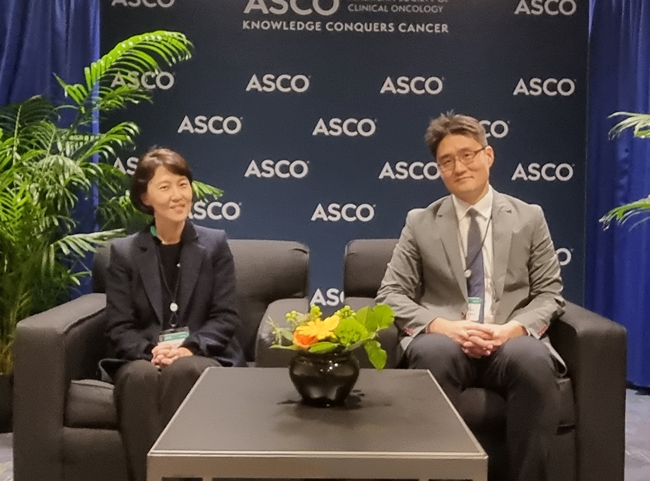
- "I think this is a meaningful study in that the third-generation EGFR TKI treatment, such as Lazertinib, showed data related to brain metastasis, but clearly focused on the intracranial response to confirm the effect." When brain metastasis occurs in non-small cell lung cancer patients using 1st or 2nd generation EGFR TKI agents, most patients' condition deteriorates rapidly, and furthermore, in the case of T790M negative, options are limited. A new therapeutic basis has emerged. A domestic phase 2 study that confirmed the effect of Lazertinib, the third generation, on patients with brain metastasis after failure of the existing 1st or 2nd generation EGFR TKI drugs in EGFR mutated non-small cell lung cancer was presented as a poster at the American Society of Clinical Oncology Annual Meeting (ASCO) this year. Professor Hye-ryeon Kim and Professor Min-hee Hong of Sinchon Severance Hospital Cancer Hospital, who led the study, said in an interview with the Medical Times, "It is meaningful in terms of IIT related to Lazertinib." It will be helpful in terms of future patient care.” In this study, 40 EGFR-positive patients who showed brain metastases after using first- and second-generation treatments were enrolled. The primary objective is to evaluate the intracranial activity effect of Lexraza in patients with asymptomatic or mild brain metastases. Professor Kim said, "When treating lung cancer patients with EGFR mutations, there are many experiences of brain metastasis, patients with poor prognosis, and rapidly deteriorating." It is very important to control the progression of brain metastases in EGFR-positive patients in a situation where they cannot survive long despite treatment such as back,” he explained. "In this respect, it is important to have a treatment that passes the Blood-Brain Barrier or BBB well, and Leclaza has good permeability to brain metastasis in preclinical studies, so we decided to evaluate it in clinical trials," he said. In the actual study, patients who failed the existing treatment were divided according to the presence or absence of the T790M mutation. The primary evaluation index was the intracranial objective response rate (iORR), and the secondary evaluation index was the intracranial iPFS. Regarding this, Professor Hong explained, "In clinical trials of Osimertinib, ORR was confirmed, and the brain was separately analyzed in relation to CNS metastasis in it." Professor Hong emphasized, “It is meaningful in that it is the first time that the objective response rate within the two was confirmed as the primary evaluation index.” In particular, the fact that the number of T790M-negative patients in this study was 33 compared to the T790M-positive five patients is also an eye-catching factor. In fact, Lazertinib and Osimertinib can be reimbursed in the case of T790M-positive patients, but in the case of T790M-negative patients, treatment options that can be used for patients are limited. It is the view of the two professors that they have it. Professor Hong said, “When metastasis occurs in the CNS, existing treatments have poor cerebral vascular penetration due to pharmacological mechanisms, so brain metastasis proceeds. In this case, secondary mutations of the tumor itself do not occur easily.” It was concluded that therapies focused on the CNS were able to prevent the progression of brain metastasis to some extent.” The results of the study showed that the intracranial ORR of 38 evaluable patients was 55.3%, with 3 complete responses and 18 partial responses. There were only 5 T790M-positive patients, but 4 showed a partial response, recording an intracranial response rate of 80%. Of the 33 T790M-negative patients, 3 complete responses and 14 partial responses showed an objective response rate of 51.5%. The overall PFS and the PFS period in the T790M positive and negative groups were analyzed to be 15.2 months, 9.9 months, and 15.4 months, respectively. The duration of intracranial PFS was similar for T790M positive and negative at 15.2 months and 15.8 months, respectively. Professor Hong said, “The design of the study itself is directly connected to the clinical field, and Lazertinib is helpful in patients with brain metastasis, and many of them did not have T790.” It is a study that shows the CNS response well while doing it.” It is evaluated that based on this study, options that can be considered in the clinical field can be increased. The two professors also mentioned plans to increase permits based on the research results. Professor Kim said, "The clinical trial was started and the recruitment of patients was faster than planned, which means that there is a lot of unmet demand." I would like to add significance in that this is a study that focused on iORR as the primary evaluation index and confirmed it, as the passing treatment is helpful." "Standard treatment is shifting from first-line treatment to third-generation treatment, but there are still many patients using first- and second-generation drugs," he said. We plan to try to increase the permits,” he added.

- Policy
- New drug pre-registration - post-evaluation non-face-to-face
- by Lee, Jeong-Hwan Jun 22, 2023 05:41am
- The government plans to include discussions on the need to apply innovative insurance systems such as new drugs and new medical technology 'seondeungjae-postevaluation' to strengthen treatment coverage for severe diseases such as cancer in the '2nd National Health Insurance Comprehensive Plan' to be established in the second half of this year. The purpose is to draw a blueprint for the future in which a sustainable health insurance policy to supply new drugs and new medical technologies to the people in a timely manner can be discussed at the social consensus body. In particular, it also revealed the direction that measures to activate home medical treatment and institutionalize non-face-to-face treatment will inevitably be included in the 2nd comprehensive health insurance plan to establish a health care policy that goes beyond time and space constraints. The Ministry of Health and Welfare and KIHASA, which initiated the establishment of the 2nd health insurance plan, made this announcement on the 19th at the 'policy debate for health insurance reform desired by the people hosted by Lee Jong-Seong, a member of the People's Power, and hosted by the Future Health Network. On this day, the results of a public awareness survey on national health insurance conducted with 5,000 people across the country were released. As a result of the survey, 85% of the respondents agreed to strengthen the guarantee of new drugs and new medical technologies for the treatment of severe diseases such as cancer or rare diseases. Shin Hyun-woong, a senior research fellow at the National Health Insurance Institute, who is in charge of research on the 2nd health insurance comprehensive plan, revealed the direction of the comprehensive health insurance plan. Researcher Shin Hyeon-wrong explained that although the details cannot be mentioned in detail as the research is still in progress, the outline of the health insurance plan set up by the Yoon government will be partially disclosed. Commissioner Shin said that the 2nd Comprehensive Health Insurance Plan would take a different direction than the previous administration, which focused on increasing the coverage rate by resolving economic accessibility. It was said that the 2nd Comprehensive Plan would contain not only economic feasibility, but also concerns about medical coverage policies that transcend time, space, geography, and service constraints anytime, anywhere. Commissioner Shin cited home medical services and institutionalization of non-face-to-face medical treatment as representative examples. In particular, he said that he would include in the research the health insurance pre-registration and post-evaluation policies for new drugs and new medical technologies, along with measures to resolve the current fee-for-service fee system limitations. Commissioner Shin said, "Currently, the people's medical need is high, but there is a problem that the medical service itself is not created. The essential medical vacuum comes out when you turn on the news." "We will provide medical guarantees that go beyond the limits of time and space. For a health care policy that resolves time and space constraints, home medical care and non-face-to-face care have no choice but to be dealt with," he explained. Commissioner Shin said, “The higher the frequency of the fee-for-service system, the higher the profit. The lower the investment, the lower the investment.” We are thinking about reorganizing the payment system," he added. Commissioner Shin said, "In terms of coverage, we will cover not only treatment but also prevention and health care, as well as mental health. We are considering a system that preemptively guarantees medical safety net funds, anticancer drugs, and expensive drugs for rare diseases." I am doing it," he said. Son Ho-Joon, head of the insurance policy department at the Ministry of Health and Welfare, also announced that he would establish a second health insurance plan to create a structure in which the health insurance system plays a role in ensuring people's medical care. He also said that he would improve the problem of financial leakage, and discuss the registration of health insurance for anticancer drugs, rare disease treatments, and innovative medical technologies and medical practices. Manager Son Ho-Joon said, "We plan to establish a second health care plan that includes not only the financial sustainability of health insurance but also the reason for the existence of the health insurance system." A representative case is to catch the unnecessary leakage of finance and invest in essential childbirth and pediatric medical care.” Manager Son said, "In addition to this short-term approach, a structural and health insurance approach is included in the comprehensive plan. We will also discuss the issue of the payment system and enter into it to ensure the people's essential medical care." It also includes discussing the application of an innovative insurance system for new drugs and new medical technologies to enable the continuous supply of medical services while looking at whether they will play a role.”

- Policy
- MFDS cautious about strengthening regulations
- by Lee, Jeong-Hwan Jun 22, 2023 05:40am
- The Ministry of Food and Drug Safety explained that although the MFDS with the purpose of the legislation to strengthen regulations on drugs that have been conditionally approved for expedited marketing authorizations before completing Phase III clinical trials from the current guideline level to the Pharmaceutical Affairs Act level, its application will require ample collection of opinions from stakeholders. In other words, the MFDS has a cautious stance regarding the reinforcement of related regulations. However, there was also the opinion that mandating all matters related to conditional expedited approval drugs to be decided through the Central Pharmaceutical Affairs Committee could lead to delay and overload of work in practice. Regarding the bill, the Korean Pharmacists Association for a Healthy Society expressed its support for its legislation while Korean Research-based Pharmaceutical Industry Association (KRPIA) took an opposing stance. On the 20th, the Ministry of Health and Welfare's position was included in the review report on the proposal for the amendment to the Pharmaceutical Affairs Act, which included reinforcing regulations of conditionally approved drugs, that was presented by the Democratic Party of Korea Rep. Jong-Yoon Choi. Choi’s bill stipulates that if a pharmaceutical company that has received conditional approval for a Phase III trial wants to extend the data submission period, including those for clinical trial data, it must apply for the extension to the Minister of Food and Drug Safety in advance and the minister shall listen to the opinions of the CPAC and decide whether to extend the period. It also contains a mandatory provision for pharmaceutical companies that have received conditional approval for items shall report their plans to submit data, such as clinical trial data of its users, to the Minister of Food and Drug Safety within 3 months from the date of approval. Also, the report on the implementation status of the reported plan, such as the status of clinical trials, was increased from the current once a year to semi-annually, that is, twice a year, to the Minister of Food and Drug Safety. However, no separate provisions for punishment were prepared for their non-compliance. To the bill, the Expert Committee of the National Assembly's Health and Welfare Committee judged that when considering the characteristics of conditionally approved drugs, there is a need to stipulate provisions in the current management guidelines to check whether the conditions to submit clinical data have been fulfilled. Specifically, to extend the deadline for submitting clinical trial data for currently conditionally licensed drugs, the MFDS first conducts an internal feasibility review, and then, if necessary, consults with the CPAC or external advisors before finally deciding whether to adjust the conditions for approval, such as by extending the submission deadline. The expert committee members agreed that a stricter review of the data submission obligation may be needed so that companies do not neglect the data submission obligation or abuse the extension system. On the part, the experts agreed with the purpose of the amendment, which will stipulate the procedure for extending the data submission period by law rather than just a guideline as in the current state and require CPAC advice when deciding on allowing the extensions. However, the committee also added that the opinion that MFDS’s compulsory consultation with the Central Pharmacy on all matters regardless of the severity of the case, could cause work delay. Regarding the provision to report the clinical trial plan to the Minister of Food and Drug Safety within 3 months from the date of approval of conditional approval drugs, the expert committee said that the provision does not conform to the reality of the situation as a clinical trial of some drugs are not approved at the time the conditional approval is granted. Also, the expert committee diagnosed that increasing the number of reports to the MFDS on the progress of clinical trials from the current once a year to twice a year would be beneficial for management as it will allow the authorities to quickly be known of changes made in clinical trials. At the same time, the expert committee asked for the authorities to comprehensively review the opinion that it may increase the risk of administrative burden on the pharmaceutical industry. Regarding the bill, the Ministry of Food and Drug Safety took a neutral stance, saying, “We will need to sufficiently collect industry opinion,” stating the need to minimize resistance from the pharmaceutical industry and secure receptivity for the regulations. The MFDS said, “We agree with the purpose of the amendment to strengthen the management and supervision of conditional approval drugs. However, further review will be needed in consideration of the working-level business process. "We need to sufficiently collect opinions from the industry to secure regulatory acceptance.” The Korean Pharmacists Association for a Healthy Society agreed to the bill, saying, “The bill strengthens the safety verification of conditionally licensed drugs. We agree with the purpose of the amendment to strengthen the responsibility of the MFDS in verifying drug safety, by requiring CPAC review when deciding whether to extend the submission period for clinical data for conditionally approved drugs." However, the Korean Research-based Pharmaceutical Industry Association opposed the bill. “In the case of conditionally licensed drugs, 6 months is generally too short to report any significant changes that require MFDS attention to the authorities. Semi-annual submission of reports will increase the burden of time and labor for companies."
- Policy
- Imported orphan drug specimen storage standards
- by Lee, Hye-Kyung Jun 22, 2023 05:40am
- The Ministry of Food and Drug Safety (Minister Oh Yoo-gyeong) announces a legislative announcement on the 21st of the amendment to the 'Rules on Safety of Pharmaceuticals, Etc. and, comments are accepted until August 21st. The main contents of this revision are ▲ rationalization of sample storage standards for importers of imported orphan drugs ▲ allowing companies applying for national release approval to directly collect and submit samples for testing ▲ operation of the number of samples approved for national release, processing deadlines, and inspection items in the form of public notice. Currently, all pharmaceuticals must keep a sample volume that can test the test items specified for each product more than twice. Importers may only keep samples for product identification. When applying for national shipment approval for pharmaceuticals such as vaccines, current public officials visit the drug storage facility to collect and collect samples and seal the rest. In order to increase the flexibility and promptness of the operation of the national lot release approval system, ▲the national lot release processing period ▲quantity of test samples ▲approval items, which were regulated by the Ministry of Food and Drug Safety*, will be improved so that the Minister of Food and Drug Safety can announce them in the future. The Ministry of Food and Drug Safety said it would continue to strive for a stable supply of medicines to ensure patient treatment opportunities, and to support the revitalization of the domestic pharmaceutical industry by rationally improving regulations within the scope of ensuring safety. Details on this amendment can be found on the Ministry of Food and Drug Safety website (mfds.go.kr) → Laws and Materials → Administrative Notice.
