
- LOGIN
- MemberShip
- 2026-06-27 15:47:59
- Company
- AZ runs a neurofibromatosis disease awareness campaign
- by Jung, Sae-Im May 22, 2023 05:42am
- AstraZeneca Korea announced on the 18th that it had conducted the 'Twinkling a Light for NF-1 Campaign' for its executives and employees to support domestic neurofibromatosis patients in celebration of 'World Neurofibromatosis Awareness Day'. The Children's Cancer Foundation designated May 17 every year as World Neurofibromatosis Awareness Day to raise social interest in neurofibromatosis. Worldwide, various activities are conducted every year to increase treatment access for patients with neurofibromatosis and support their overcoming disease. AstraZeneca Korea held in-house lectures, disease infographic exhibitions, etc. to better understand pediatric patients with neurofibromatosis in Korea, and executives and employees carried out a campaign to deliver messages of hope and commitment to improve the domestic treatment environment. Neurofibromatosis is a rare disease that causes developmental abnormalities in the nervous system, bones, and skin due to genetic mutations. The cafe-au-lait-spot is characteristic, and axillary/inguinal spots and Leish nodules, which are small hamartomas, appear on the iris. Accurate clinical diagnosis of neurofibromatosis type 1 can usually be made before the age of 10, and symptoms tend to intensify with age. About 20 to 50% of patients with type 1 neurofibromatosis experience plexiform neurofibroma, which can occur anywhere in the body except for the brain and spinal cord. Depending on where it occurs, it causes pain as well as various body deformities or damage to vision, hearing, and cognitive abilities. Surgical resection was the only fundamental treatment for neurofibromatosis. In the case of plexiform neurofibroma, it appears in various irregular shapes and is difficult to completely remove, leaving the risk of tumor recurrence even after surgery. AstraZeneca Korea received approval for Koselugo, the first type 1 neurofibromatosis treatment in Korea, in May 2021. Koselugo, the only treatment for neurofibromatosis type 1 to date, reduced the tumor size by more than 20% in 68% (34 out of 50) of patients administered in global clinical studies, and among them, 82% (28 patients) showed a response of more than 12 months. showed lasting results. Cheol-Woong Kim, Executive Director of AstraZeneca Korea's Rare Disease Division, said, "Through the Neurofibromatosis Awareness Day event, it was an opportunity to properly understand neurofibromatosis disease and think about what AstraZeneca Korea executives and employees can do for patients." said.
- Company
- Hana Pharm, signed a sub-license agreement for Byfav
- by Lee, Seok-Jun May 22, 2023 05:42am
- Hana Pharm announced on the 18th that it had signed a sub-license contract with Hyphens Pharma of Singapore for the exclusive rights to Byfavo 20mg, an anesthetic new drug. This contract is the first achievement of local partnering while Hana Pharm received licenses for six Southeast Asian countries from German PiON in 2020 and was in the process of obtaining licenses for each country. Byfavo 20mg has indications for surgical sedation that can be used for endoscopic sedation in addition to induction and maintenance of general anesthesia, which is the indication for 50mg. Hyphens Pharma of Singapore is a major pharmaceutical company in Singapore with branches in five major Southeast Asian countries and about 500 employees. Choi Tae-hong, CEO of Hana Pharm, said, "Partnering was made with Hyphens Pharma, which has excellent capabilities in the gastroenterology market in Singapore. We will accelerate the timing of approval and release in Singapore as much as possible and use it as a bridgehead to enter the Southeast Asian endoscopic sedation market."
- Policy
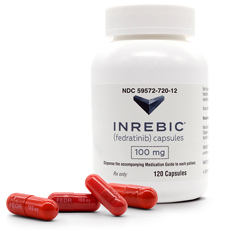
- Myelofibrosis tx BMS Inrebic to be covered from June
- by Lee, Tak-Sun May 22, 2023 05:42am
- BMS Korea's myelofibrosis drug Inrebic will be covered from June. This drug is expected as a second-line treatment option for myelofibrosis patients, of which there are about 1,700 in Korea. According to the industry on the 19th, Inrebic will be listed as a salary at 39,520 won per capsule for the maximum amount from June 1st. Inrevic Capsule is indicated for the treatment of splenomegaly or symptoms associated with the following diseases in adult patients previously treated with Ruxolitinib (Brand Name: Jakavi). The following diseases are ▲primary myelofibrosis, ▲myelofibrosis after polycythemia vera, ▲and myelofibrosis after essential thrombocythemia. In February, it passed the HIRA Cancer Disease Review Committee and the Pharmaceutical Reimbursement Evaluation Committee, and after negotiations with the NHIS, it was listed as reimbursement in June. Inrebic is the first medicine to treat myelofibrosis in 10 years. Myelofibrosis is a rare hematological cancer in which normal hematopoietic function is impaired along with the excessive fibrotic proliferation of the bone marrow. Patients experience symptoms that affect their quality of life, including an enlarged spleen, fatigue, itchiness, weight loss, night sweats, fever, and bone pain. Until now, patients with myelofibrosis had no alternative when treatment with the JAK inhibitor Jakavi failed, but with the release of Inrebic, a second treatment option was created. Jakavi is a blockbuster drug with global sales of $388 million last year.
- Company
- New formulations for schizophrenia are being commercialized
- by Eo, Yun-Ho May 22, 2023 05:42am
- According to related industries, new long-acting formulations of existing schizophrenia treatment drugs, such as Abilify and Invega, are being released one after another. Lundbeck and Otsuka Pharmaceutical obtained US FDA approval for Abilify Asimtufii, which is administered once every two months, last month. Abilify Asimtufii confirmed its efficacy through a clinical study comparing 266 patients with schizophrenia to Abilify Maintena. In pharmacokinetic analysis, Abilify Asimtufii induced plasma aripiprazole concentrations similar to those of once-monthly Abilify Maintena. Janssen's Invega Hafyera is a 6-month long-acting drug that is commercialized more quickly. After obtaining US FDA approval in 2021, the drug was approved in Korea in 2022, and insurance benefits were applied from this month. Invega Hafyera is eligible for reimbursement only when patients have been treated with Invega sustenna for at least 4 months or with Invega Trinza for at least one cycle. Invega Hafyera, which is administered every six months, has confirmed its safety and tolerability profile through PSY3015 clinical trials. Professor Kim Se-hyeon of the Department of Psychiatry at Seoul National University Hospital said, "We expect that patients with schizophrenia will be able to enjoy the benefits of returning to society and restoring confidence in life by continuing treatment with stable drug compliance and convenience through long-acting injections." said.

- Company
- “Need to increase support for new AI drugs in Korea”
- by Jung, Sae-Im May 22, 2023 05:42am
- “Although artificial intelligence (AI) new drug development ecosystem is being created in Korea, there are still many areas that we are lacking at a global level in terms of manpower or investment scale. Chinese companies that were established around the same time received more than KRW 500 billion in investments, while Korean companies only received KRW 87.8 billion, which delayed their growth. It's time to make efforts to expand this ecosystem while building success stories through step-by-step collaboration.” Wooyeon Kim, Head of Korea Pharmaceutical and Bio-Pharma Manufacturers Association (KPBMA)’s AI New Drug Development Support Center stressed so at the ‘Pharmaceutical-Bio AI Innovation Forum’ that was held at Lotte Hotel Seoul in Sogong-dong on the 19th. Wooyeon Kim, Head of the AI New Drug Development Support Center At the event, which was hosted by KPBMA, Kim explained that Korea’s AI drug development market has grown steadily over the past 5 years, forming a virtuous cycle ecosystem. Companies and research centers are actively collaborating with AI new drug development companies. There were 88 cases of such collaborative efforts being made for drug repositioning, target discovery, and candidate substance discovery including partnerships between ▲ Boryung Pharmaceutical - Oncocross ▲ Samsung Seoul Medical Center - NetTargets ▲ Dong-A ST - Pharos iBio, etc. The government has also been continuing its efforts. Ministry of Science and ICT has been investing a total of KRW 18 billion for the discovery of innovative new drugs using AI for 5 years since 2022. The Ministry of Health and Welfare is also planning to build a Korean-style Rosetta Fold (an AI-applied protein structure prediction and analysis platform) next year and promote technology matching between pharmaceutical companies and AI companies. In addition, supports for projects such as medical big data construction and AI-based new drug development education are also being carried out. However, Korean AI drug development companies are still experiencing difficulties in securing talent and attracting investment. The stark difference stands out when compared to the global environment. Kim cited the cases of Standigm, a Korean company, and XtalPi, a Chinese company. Although the two companies were founded at a similar foundation time and owned similar levels of technology. However, Standigm had received KRW 87.8 billion in investments while XtalPi attracted 6 times as much, which was KRW 533.8 billion. XtalPi has 700 professionals, which is 10 times more than the 54 experts at Standigm. On this, Kim said, “Although the two companies were established at a similar period, XtalPi has achieved far much on the global stage due to its overwhelming investment and manpower over Standigm. In this graph that shows the growth rate of each company, XtalPi has shown faster growth.” In order to revitalize the ecosystem, Kim saw the need to accumulate successful collaboration cases in each stage of development, and encouraged research on matching supply and demand in the area. "There should be more cases that show companies that drug development can be accelerated and efficiency increased through the use of AI in the industry." Kim added, "This difference is more due to the difference in investment and manpower rather than technology. Although the AI drug development ecosystem in Korea has grown considerably, we are still lacking in many, many areas.” Kim also asked for the government’s closer attention in the field as global competition is taking place. He said, "A lot of investment is being made, mainly in the US and China, for the development of new AI drugs. Korea should also make bold investments and accumulate results step by step." Kim stressed that Korea should also strive to nurture convergent talents that understand AI. Kim said, "Demand for talent training is very high. More than 3,800 people attended the 385 hours of lectures that were conducted at our center. In particular, as convergence is very important in this field, we need to establish a system that continues to nurture convergent talent."
- Policy
- Vemlidy’s price 4.7% ↓...Vemliver’s voluntarily 12.6% ↓
- by Kim, Jung-Ju May 22, 2023 05:42am
- Gilead’s adult chronic hepatitis B treatment, ‘Vemlidi Tab (tenofovir ala fenamide) will be subject to Price-Volume Agreement price cuts and be sold at a 4.7% lower price starting next month. Daewoong Pharmaceutical opted to reduce the price of its latecomer Vemliver Tab by 12.6%. According to industry sources on the 21st, the Ministry of Health and Welfare (MOHW) ‘Amendment to the drug reimbursement list and reimbursement ceiling price table’ contains the abovementioned changes that will become effective as of the 1st of next month. ◆Price cut for PVA drugs = The PVA price cut will be applied to two products next month, and the two drugs underwent PVA negotiations with the National Health Insurance Service, one as a Price-volume agreement type ‘A’ and the other as a Price-volume agreement type ‘B’ drug. First, the drug that completed negotiations as a PVA Type A drug was Abbvie’s Rinvoq (upadacitinib), and its price will be reduced by 0.9%. Among new drugs listed as negotiable after the introduction of the drug price negotiation system, the government applies PVA A type to drugs whose claims amount in the same product category exceeds the expected claims amount by over 30%. By same product category, drugs that have the same company name, route of administration, ingredient, and formulation are classified as drugs of the same product category.’ The drug subject to ‘Type B’ price reduction was Gilead’s Vemlidy Tab, and its price was cut by 4.7%. The government applies PVA Type B and reduces the price of drugs ▲whose price ceiling had been already adjusted according to Type A, ▲ whose claims amount increased by over 60% from the previous year without undergoing Type A negotiations, or 4 years after receiving Type A negotiations, or ▲ has increased by over 10% but the increased amount exceeds KRW 5 billion and does not fall under PVA Type A. ◆Products that submitted voluntary price cuts= Five products in total decided to make voluntary price cuts. When a pharmaceutical company submits a request to lower its drug price to an amount lower than the ceiling price set for the product, the government adjusts the insurance drug price of the product to the requested amount. One voluntary price cut for a latecomer drug was made in line with the PVA price cut of Vemlidy. Daewoong Pharmaceutical opted to make a double-digit reduction in the price of its latecomer Vemliver Tab, by 12.6%. BMS Korea decided to make a price cut in the 1% range for each of its dosage strengths of Baraclude (entecavir). Janssen Korea’ made a voluntary price cut of 0.5% each for its Tremfya Prefilled Syringe (guselkumab) and Tremfya Autoinjection Inj.
- Company
- Attempts to develop new drugs for hypertension
- by Hwang, Jin-joon May 22, 2023 05:41am
- Opinions were raised that it would be difficult for candidates under development as new drugs for hypertension, such as Baxdrostat, Aprocitentan, and Firibastat, to replace existing drugs. It is expected that it will fill the unmet demand rather than take the place of the prescribed treatment. Choi Ung-gil, professor at Konkuk University Chungju Hospital, is giving a presentation. (photo by Dailypharm) Professor Woong-Gil Choi of Chungbuk National University Hospital held a hypertension drug treatment update session at the '2023 Korean Society of Hypertension Spring Conference' held at COEX in Daegu on the 20th and said, "Major hypertension drug candidates are existing drugs rather than replacing drugs already prescribed in clinical settings. It will be a drug that can help the unfilled part.” The reason why the development of a new antihypertensive drug is needed is that it is a method to treat treatment-resistant hypertension. Professor Woong-Gil Choi explained, "Although the treatment control rate of hypertension has improved a lot, there is no further development after exceeding 70%." According to Professor Choi, major antihypertensive drug candidates include Baxdrostat, Aprocitentan, and Firibastat. Baxdrostat is a candidate substance secured by AstraZeneca, a global pharmaceutical company when it acquired CinCor Pharma, a US bio company. It is a new drug candidate for hypertension in the class of aldosterone synthase inhibitors (ASI). The efficacy of Baxdrostat in lowering blood pressure was confirmed in phase 2 clinical trial (BrigHTN) conducted on patients with treatment-resistant hypertension. In phase 2 clinical trial (HALO) conducted for uncontrolled hypertension patients taking up to two blood pressure medications, statistical significance was not achieved in the primary endpoint, but systolic blood pressure was reduced in subgroup analysis. Phase 3 clinical trials are expected to begin at the end of this year. Professor Choi said, “Baxdrostat appears to be relatively beneficial for hypertensive hypertension,” and “it is expected to give benefits to patients with primary aldosterone and metabolic syndrome.” Aprocitentan is a new drug candidate for hypertension being jointly developed by global pharmaceutical company Janssen and Swiss bio company Idorsia. It is an endothelin receptor antagonist. Applications for product approval were submitted to the FDA and EMA in December of last year and January of this year, respectively. Clinical data of Baxdrostat (Photo by Dailypharm) Aprocitentan has been confirmed to have a significant blood pressure-lowering effect in patients whose hypertension is not well controlled despite taking three or more existing treatments in phase 3 clinical trials (PRECISION). Professor Choi explained, "Although Aprocitentan has a stronger blood pressure lowering effect when used with other drugs, care should be taken about the fact that edema occurred after using the drug compared to placebo." Firibastat is a candidate material being developed by Quantum Genomics, a French biotech company. Firibastat is a candidate in the class of brain aminopeptidase A inhibitors. It is a mechanism that suppresses the production of angiotensin 3 in the brain's renin-angiotensin system (Brain RAS). Firibastat's efficacy with statistical significance was confirmed until the phase 2 clinical trial was conducted for patients with treatment-resistant hypertension. Afterward, it failed to achieve the primary evaluation index in phase 3 clinical trial (FRESH). Quantum Genomics is revising its development strategy to find new indications after the early termination of clinical trials. Professor Choi predicted, “There are still many cases of treatment-resistant hypertension, but if the development of a new drug for hypertension is successful, it will be possible to increase the treatment effect by adding it to existing drugs.”
- Company
- Forxiga price cut enforcement suspension extended
- by Jung, Sae-Im May 19, 2023 05:48am
- A decision on whether to suspend the execution of drug price cuts for AstraZeneca Korea’s diabetes treatments Forxiga and Xigduo is expected to be decided at the end of this month at the earliest. The temporary suspension period, originally until May 19, is also extended. On the 16th, the first division of the Seoul Administrative Court held an interrogation date for the suspension of drug price cuts filed by AstraZeneca Korea against the Ministry of Health and Welfare. The court, which conducted a private interrogation, decided to decide whether to quote a suspension of execution between the end of this month and the beginning of next month. As the court’s decision on whether to suspend enforcement is over 19 days away, the temporary suspension period for drug price cuts is also expected to be extended. Previously, the court had temporarily maintained the drug price until May 19, the scheduled date of the suspension trial. Forxiga and Xigduo, SGLT-2 inhibitors, are blockbuster products that raise outpatient prescriptions worth 90 billion won yearly as Dapagliflozin-based diabetes treatments. However, as a number of generics containing dapagliflozin were registered for reimbursement last month, they were subject to drug price cuts. The Ministry of Health and Welfare announced that it would cut the prices of Forxiga and Xigduo drugs by 30% from May 1 following the listing of generics. AstraZeneca Korea objected to this and filed an administrative lawsuit and at the same time applied for suspension of execution. As Forxiga and Xigduo also have indications for chronic heart failure and chronic nephropathy that have not expired patents, listing generics with only diabetes indications cannot be the basis for lowering original drug prices. It also argued that if the suspension of execution is not accepted, there is a risk of damage that is difficult to recover. If the court accepts the company's argument, the company can avoid losses of about 27 billion won a year until the prominent lawsuit is decided. In many cases, it takes more than three years from the citation of the suspension of execution to the cancellation of the drug price cut to the Supreme Court, so the company can prevent losses of tens of billions of won. However, it can be a burden that the judiciary's decision on the drug price cut enforcement suspension has been pointed out one after another it is fragmentary. In Korea's drug pricing system, which does not differentiate drug prices according to indications, questions are being raised as to whether the company's claims of inconsistency in price cuts due to inconsistency in drug prices are reasonable. This is because if the Ministry of Health and Welfare wins the prominent lawsuit after citing the suspension of execution, it will not be able to avoid criticism that the court cited the application for suspension of execution too broadly.
- Company
- HLB applies for liver cancer drug approval to FDA
- by Lee, Seok-Jun May 19, 2023 05:47am
- HLB submitted a New Drug Application (NDA) to the FDA for Rivoceranib, a targeted anti-cancer drug under development as a first-line liver cancer drug. This is the first time that a domestic bio company has completed its own clinical trials for its anti-cancer drug substance and proceeded with the new drug approval process in the global market. HLB started global clinical trials of Rivoceranib in 2011. Through its US subsidiary, Elevar Therapeutics, it has developed the combination of Rivoceranib and Camrelizumab as a first-line treatment for liver cancer. In the global phase 3 (CARES 310) study of 543 patients in 13 countries, compared to control sorafenib, 3 CR vs. 1 person, mOS 22.1 months vs. 15.2 months, mPFS 5.6 months vs. 3.7 months, ORR 25.4% vs. 5.9% was derived. It demonstrated therapeutic efficacy regardless of region (Asia vs. non-Asia) and cause (viral vs. non-viral). In particular, the Hazard Ratio was 0.62 for the overall survival period and 0.52 for the progression-free survival period, lowering the patient's risk of death by 40-50%. The FDA said at the pre-NDA (meeting before the application for new drug approval) that there was 'no problem' in the NDA submission for the Rivoceranib combination method. China already approved it as a first-line treatment for liver cancer in February this year. Rivoceranib is a TKI oral drug that effectively kills cancer by inhibiting VEGFR-2 and blocking the supply of oxygen and nutrients essential for cancer growth. To date, there is no approved first-line treatment for liver cancer that is a combination of a TKI anticancer drug with an angiogenesis inhibitory mechanism and an immune anticancer drug. HLB CEO Kim Dong-gun said, "We will do our best for the remaining procedures so that liver cancer patients and their families waiting for new treatment options, as well as employees and shareholders who have been with us on the long journey of new drug development can feel comfort and pride." On the other hand, HLB holds the global patent for Rivoceranib, HLB Life Science holds the Korean copyright and some profit rights in Europe and Japan, and Jiangsu Hengrui Medicine holds the Chinese copyright. All other global rights belong to Elevar Therapeutics.
- Company
- Korean pharma industry expands R&D investments
- by Chon, Seung-Hyun May 19, 2023 05:47am
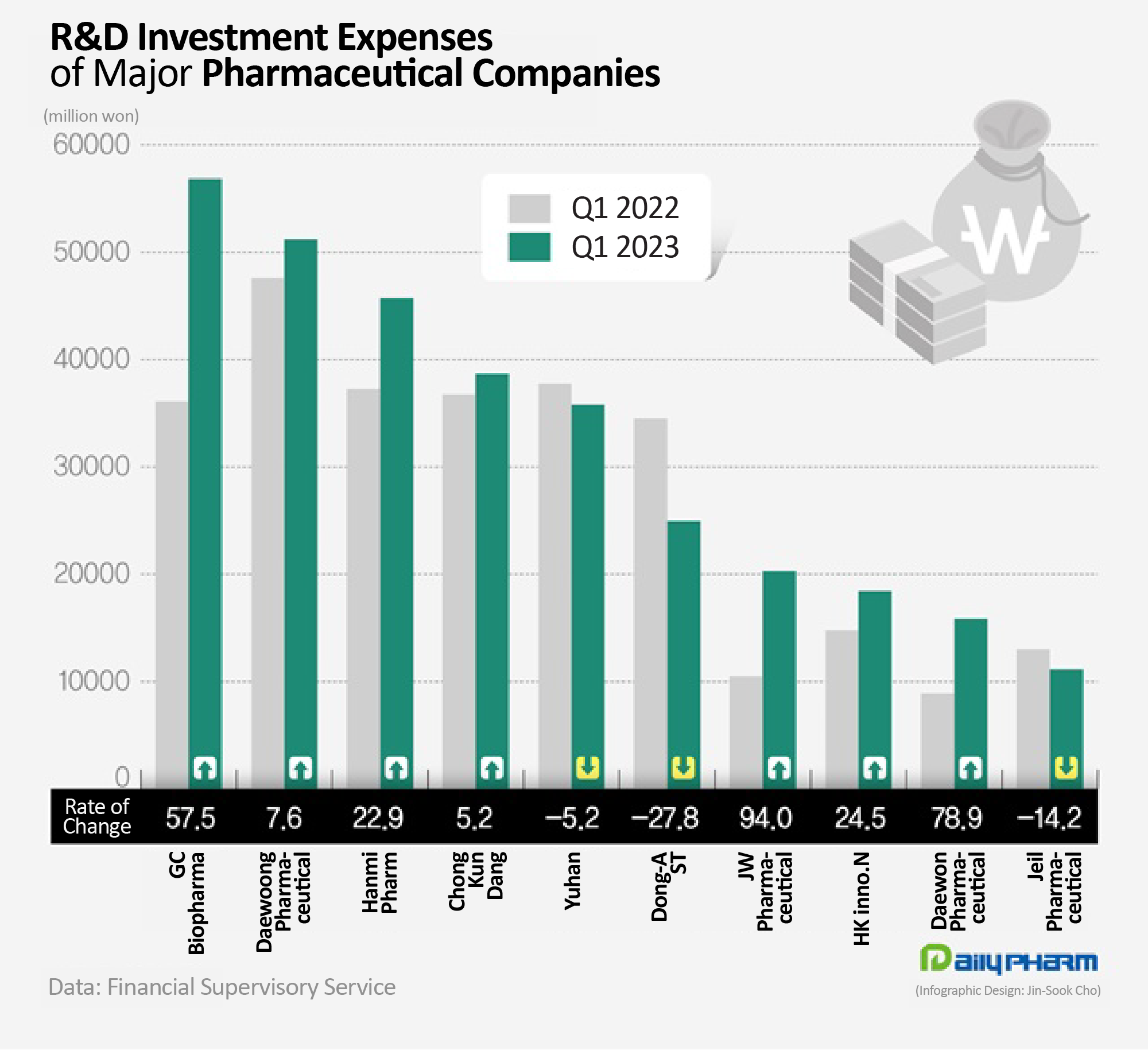
- Pharmaceutical companies have vigorously engaged in research and development (R&D) activities to discover future foods. 7 out of 10 major traditional pharmaceutical companies increased their R&D investment compared to last year. R&D expenditures have increased significantly due to the development of new drugs and the introduction of new R&D pipelines. In particular, R&D investments by GC Biopharma and JW Pharmaceuticals soared. According to the Financial Supervisory Service on the 25th, the R&D investment made by 20 major biopharmaceutical companies in Q1 totaled up to KRW 390.6 billion, which was 13.4% increase from the previous year. The top 20 sales of traditional pharmaceutical companies that submitted quarterly reports were counted. 14 out of 20 major pharmaceutical companies saw an increase in their R&D investment expense in Q1 this year compared to last year. Among traditional pharmaceutical companies in Korea, GC Biopharma was found to have spent the most on R&D. GC Biopharma’s R&D expenses in Q1 amounted to KRW 56.9 billion, which is a 57.5% YoY increase. GC Biopharma’s R&D expenditure increased because it recently introduced a new pipeline from a foreign company. In February, GC Biopharma signed an Asset Purchase Agreement with Catalyst Biosciences, a US new drug developer, for a pipeline related to rare blood clotting disorder. GC Biopharma acquired a total of 3 programs, including ‘Marzeptacog alfa (MarzAA)’ that the company is developing in the Global Phase III trial. In March, GC Biopharma exercised its license option to the Canadian company, Acuitas Therapeutics, for its lipid nanoparticle (LNP) delivery system to develop a messenger RNA (mRNA)-based therapeutics. LNP is a delivery system that safely transports nanoparticles to cells in the body to enable mRNA to function. The ratio of R&D investment to sales at GC Biopharma increased twofold from 8.7% to 16.3% in one year. Daewoong Pharmaceutical's sales increased 7.6% YoY to reach KRW 51 billion in Q1 this year. Daewoong Pharmaceutical is currently developing new drugs for ulcerative colitis, idiopathic pulmonary fibrosis, obesity, autoimmune diseases, and infectious diseases. It is also conducting joint research with HanAll Biopharma, Daewoong Therapeutics, Oncocross, and D&D Pharmatech. Daewoong Pharmaceutical received approval for its gastroesophageal reflux disease treatment Fexclu in 2021 and succeeded in commercializing Envlo, a new diabetes SGLT-2 inhibitor class drug last year. Hanmi Pharmaceutical’s R&D investment also increased 22.9% YoY to reach KRW 45.7 billion in Q1 this year. Hanmi Pharmaceutical is developing new drugs for nonalcoholic steatohepatitis and idiopathic pulmonary fibrosis in the field of new biological agents. The company is also developing new combination drugs for diabetes and antithrombosis. Among major pharmaceutical companies, JW Pharmaceutical’s R&D expenditure increased the greatest. JW Pharmaceutical’s Q1 R&D expenditure was KRW 20.3 billion, increasing 94.0% YoY from the KRW 10.5 billion in Q1 previous year. JW Pharmaceutical started a Phase III clinical trial of 'URC-102', a gout treatment, at the end of last year. URC-102 is a uric acid excretion promoter that inhibits Urate transporter 1 (URAT)-1, which allows uric acid to be absorbed back into the body. It is effective for gout disease caused by hyperuricemia in which the concentration of uric acid in the blood is abnormally high. The Phase III trial will compare URC-102 with a total of 588 gout patients with the existing treatment febuxostat. Daewon Pharmaceutical and Handok’s Q1 R&D investment increased 50% from the previous year. R&D expenditures increased by over 20% at Hugel, HK Inno.N, and Dong Wha Pharm. On the other hand, the R&D investment amount of companies including Dong-A ST, Il-Yang Pharmacuetical, Jeil Pharmaceutical, Boryung Pharmaceutical, United Pharm, and Yuhan Corp decreased YoY. In terms of the R&D-to-sales ratio, Daewoong Pharmaceutical’s rate was highest at 17.5%. GC Biopharma, Dong-A ST, Daewon Pharmaceutical, Hanmi Pharmaceutical, JW Pharmaceutical, United Pharm, Samjin Pharm, Chong Kun Dang, and Ilyang Pharm invested more than 10% of their sales in R&D.
