
- LOGIN
- MemberShip
- 2026-06-27 19:51:20
- Company
- Generic SPC therapies challenge 'Trajenta'
- by Kim, Jin-Gu Apr 25, 2023 05:56am
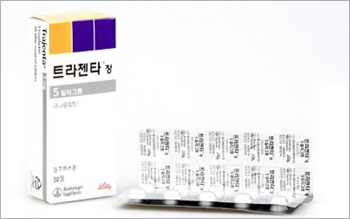
- Product photo of Trajenta Major generic companies are challenging the unlisted patent of 'Trajenta (linagliptin)', a DPP-4 inhibitor-based diabetes treatment. For 6 months since last September, 10 pharmaceutical companies have successively filed trials on 7 patents. It is believed that the companies are aiming for the release of Trajenta generics and Trajenta+Forxiga (dapagliflozin) combination products, as the product patent expires next year. According to the pharmaceutical industry, Sinil Pharmaceutical, Hutecs Korea Pharmaceutical and Hanlim Pharm recently simultaneously filed a defensive confirmation trial for the scope of rights and invalidation trial on three unlisted patents, on the 24th. The patents are for separate formulation patents that expires in April 2027. Since last September, challenges to unlisted patents of Trajenta have been continuing. In September of last year, Genuone Sciences have first filed for a defensive confirmation trial for the scope of rights against a formulation patent that expires in April 2027. Since then, Korea United Pharm, Korea Biochem Pharm, Sinil Pharmaceutical, Hutecs Korea Pharmaceutical, Hanlim Pharm, etc. have joined the challenge. In last October, Genuone Sciences, Boryung, Mother's Pharmaceutical, Kukje Pharm, and GC Biopharma have filed for invalidation trials against three different use patents of Trajenta, which expires in May 2027. In the last 7 months, 10 generic companies have challenged 7 unlisted patents of Trajenta. The patents are not listed in the Ministry of Food and Drug Safety Patent List. From the generic companies' standpoint, there is no problem in obtaining approval for a generic without challenging the patents. However, the matter becomes different when it comes to releasing an actual product. Administratively, it is possible to release a product at the time of the expiration of the patent, but there is a risk of being involved in a patent infringement lawsuit with the company of the original product. If the original company files for a patent infringement lawsuit as well as an injunction to prevent the release of the general product, the release date of the product may be delayed. This is because if the patent infringement lawsuit is lost, it could lead to a damages suit. It seems that the generic companies are challenging unlisted patents of Trajenta to resolve such uncertainties. If they succeed in avoiding or invalidating the unlisted patents of Trajenta, it could trigger the early release of generics after the product patent of Trajenta expires in June next year. In 2015, generic companies simultaneously challenged the crystalline form patent and product patent of Trajenta. However, they failed to overcome the product patent. The companies plan to release generics in June next year, as the product patent of Trajenta expires. The fact that the patent for Forxiga, an SGLT-2 inhibitor-based diabetes treatment, expired in March also seems to be a reason why generic companies are challenging an all-out attack on the unlisted patents of Trajenta. As reimbursement has recently been applied to DPP-4 inhibitors, SGLT-2 inhibitors and Metformin combination triple therapies, the combination therapy of such ingredients are expected to attract tremendous attention in the prescription drug market. It is expected that the generic companies will be releasing combination products of 'Linagliptin+Dapagliflozin' as the patent for Trajenta expires. Among major DPP-4 inhibitor-based diabetes treatments, the patents for Norvatis's Galvus (Vildagliptin) and Handok's Tenelia (Teneligliptin) have been expired. However, generic companies have been greatly interested in Januvia (Sitagliptin) and Trajenta, as the two were ranking first and second in the prescription drug market among the existing DPP-4 inhibitors. The product patent for Januvia will be expired in September this year. According to UBIST, a pharmaceutical market research institute, the prescription amount of Trajenta last year was KRW 64.2 billion. Trajenta Duo, in which metformin was added to Trajenta, recorded a prescription performance of KRW 68.3 billion.
- Company
- BeiGene’s ‘Brukinsa’ to be prescribed in general hospital
- by Eo, Yun-Ho Apr 25, 2023 05:56am
- Chinese pharmaceutical company BeiGene Korea's first new drug, 'Brukinsa', has been approved to be prescribed in general hospitals. According to sources from related industry, the BTK inhibitor Brukinsa (Zanubrutinib) has passed the Drug Committee of tertiary hospitals such as Samsung Medical Center, SNUH, and Asan Medical Center. As reimbursement is expected to be applied in May, it is believed that prescriptions will be available quite soon after being listed. Brukinsa has been approved in Korea in 2022, as ▲ monotherapy for adults with mantle cell lymphoma (MCL) who have received at least one prior therapy, and ▲ monotherapy for adults with Waldenström's macroglobulinaemia (WM) who have received at least one prior therapy. Among them, reimbursement is for the 'Waldenström's macroglobulinaemia' indication. After approval, only the reimbursement standard for WM was introduced and has been set at the HIRA's Review Committee for Cancer Diseases. In September of the same year, the company tried to add MCL to the list, but the results were not good. Since then, Brukinsa passed the Drug Benefit Evaluation Committee in February of this year and has recently concluded drug price negotiation and is set to be finally listed. Brukinsa is a targeted anticancer medicine that inhibits the survival and proliferation of malignant B cells by blocking the Bruton's tyrosine kinase protein, a signaling molecule that affects the survival and development of B cells. BTK inhibitors approved in Korea include Janssen's Imbruvica (Ibrutinib), AstraZeneca's Calquence (Acalabrutinib), and Ono Pharmaceutical's Velexbru (Tirabrutinib).
- Policy
- Original Concor voluntarily reduced the price
- by Lee, Tak-Sun Apr 25, 2023 05:56am
- Concor (Bisoprolol fumarate), the original β-blocker antihypertensive drug, voluntarily lowered its drug price, gaining recognition and price competitiveness. Many generic drugs are more expensive than original drugs, so marketing activities are expected to be difficult. According to the industry on the 24th, the price of Concor 5mg will go down from next month from 222 won to 200 won. The price of Concor 2.5mg will be reduced from 132 won to 120 won. The company lowered the price itself. Concor is a second-generation β-blocker that has been sold in Korea since 2001 and has established itself as a treatment for hypertension, angina pectoris, and chronic heart failure. In particular, as the awareness of original products increases, there is a big gap with generic products. As of last year, Concor's outpatient prescriptions amounted to 18.6 billion won. Since 2020, Daewoong Pharmaceutical has exclusively sold the drug in Korea. As the company's performance is sound and the market share of generic drugs is low, the market is also showing a skeptical response to the voluntary lowering of the drug price this time. The fact that Elyson's lowest-priced generics continued to increase their market share was a potential cause for concern. Bisoprolol fumarate 5mg has eight products, including Concor and Elyson Conbloc. Previously, Concor and six generics were priced the same at 222 won, and only Conbloc 5mg was listed at 198 won. For Bisoprolol fumarate 2.5mg, Elyson Conbloc 2.5mg was 124 won and Concor tablet 2.5mg was 132 won. With this price cut, Concor narrowed the gap with Conbloc by 2 won in the 5mg product and became 4 won cheaper in the 2.5mg market. Currently, in the generic market, all but Elyson are producing less than 1 billion won a year. On the other hand, Conbloc, which boasts drug price competitiveness, is increasing every year to KRW 3.6 billion last year according to UBIST. Conbloc is drawing an upward trend with 1.1 billion won in 2017, 1.8 billion won in 2018, 2.3 billion won in 2019, 2.9 billion won in 2020, 3.5 billion won in 2021, and 3.6 billion won in 2022. Compared to Concor's performance of 18.6 billion won in 2022, there is still a gap. However, Concor's 2022 performance is down 3% from the previous year. If this trend continues, Conbloc's market share may increase and Concor's market share may decrease. This drug price cut is interpreted as the intention of Concor to gain an absolute advantage in generic competition. It is expected that the six generic companies, which had the same drug price as Concor, could suffer damage. Previously, these six companies only produced less than 1 billion won per year, but it is expected that their market competitiveness will further weaken as the original drug price cut overlaps. There is also a way to lower the price of the drug depending on the original, but in this case, it seems that it will worry about whether to continue the business because it comes back to the cost burden. Elyson, which has put forward a low price, is expected to become a burden on marketing activities as the price becomes similar to the original. It remains to be seen what effect the original drug's voluntary price cut will have on the market.

- Company
- The atopic dermatitis tx market has grown into children
- by Hwang, byoung-woo Apr 24, 2023 05:53am
- Product photos of major atopic treatments Competition in the atopic dermatitis treatment market is intensifying again as new treatments have been made into health insurance benefits one after another. This is because salaries for severe atopic treatments have been expanded from April to children and adolescents. More fierce competition for market share is expected because the demand is high enough to insist on continuously expanding salaries in the clinical field. Experts say that Dupixent and Rinvoq, which directly benefited from the expansion of the salary range, have different characteristics, the choice of clinical sites will also depend on the patient's situation. According to the pharmaceutical industry on the 14th, competition among pharmaceutical companies has been accelerating as the scope of benefits for severe atopic treatments has been expanded from April to children and adolescents. Previously, patients with severe atopic dermatitis in children and adolescents over the age of 6 had a high burden of disease, but limited treatment options that could be used safely in the long run. TCS and Cyclosporine are mainly used to treat atopic dermatitis in children. Patients with moderate-severe atopic dermatitis needed additional systemic treatment because it did not improve with local treatments. Still, there were concerns about local side effects when using even low-grade TCS for a long time in thin skin areas. In addition, in the case of pediatric atopy, it was pointed out that it was difficult to use treatments strongly due to growth and development, so it was not in line with reality to apply for the existing special calculation benefits. "Symptoms such as severe itching caused by atopic dermatitis can have a greater negative impact than adults, such as hindering adolescents' growth and studies," said Woo Sang-wook, chairman of the Korea Atopic Dermatitis Association (KOREA University Ansan Hospital). Dupixent is expected to be most affected by the expansion of the salary range. In the case of Rinvoq, the salary target has increased for teenagers aged 12 or older, while Dupixent has a wider benefit standard for those aged 6 or older. Looking at the new standards for severe atopic patients in children and adolescents, the salary standards for adolescents are the same as those for adults aged 18 or older. The Dupixent benefit standard for children aged 6-11 is relatively low in cases where the ecological severity evaluation index (EASI) is 21 or higher before the start of ▲ Dupixent administration for more than 4 weeks, or cannot be used as a side effect. Chairman Son said, "There will be no major difficulty in using Dupixent because it uses topical treatment for 4 weeks in pediatric atopy and immunotherapy is included in the standard." Then, how will the choice of the clinical site be divided into the severe atopy of adolescents where Dupixent and Rinvoq will face off? Experts predicted that prescriptions would be made considering the method of administration, the speed of effectiveness, and safety according to the patient's condition. Ahn Ji-young, a professor of dermatology at NMC, said, "Since they are children, I think there will be more considerations than adults, such as preferences depending on how they think of injections and the burden of visiting the hospital." Along with this, the part that can be considered is the drug price. This is why Dupixent is expected to cost up to 1.33 million won to 1.74 million won although the patient's burden will be greatly reduced at the time of application. In the case of Rinvoq, it costs 60,300 won based on the premise that a month is 30 days with a drug price of KRW 20,010 per day of 15 mg. If 10% of the calculation special case is applied here, the patient burden is 60,030 won, which costs 72,360 won when converted into a year, so the patient burden is less than Dupixent. "It is true that Rinvoq has a few hundred thousand won less burden on patients compared to Dupixent," said a professor of pediatrics at A University Hospital. "However, I don't think there is a big difference between treatments, and I think which treatments will be more effective for patients will be a priority."
- Company
- Myelofibrosis new drug Inrebic can be prescribed
- by Eo, Yun-Ho Apr 24, 2023 05:52am
- The Myelofibrosis drug Inrebic is now available for prescription in general hospitals. According to related industries, Inrevic, a myelofibrosis treatment drug from BMS Pharmaceuticals, passed the Drug Committee (DC) of general hospitals such as SMC and Seoul St. Mary's Hospital. Inrebic received domestic approval in April of last year as 'treatment for splenomegaly or symptoms related to primary myelofibrosis, polycythemia vera, and myelofibrosis after essential thrombocythemia in adult patients previously treated with Jakavi. After that, he submitted an application for benefits but failed to pass HIRA once in June of last year. After re-applying, it passed both the Cancer Disease Review Committee and the Pharmaceutical Reimbursement Evaluation Committee last month, and the results of the drug price negotiations with The NHIS are expected to be released soon. This drug is a JAK-2 inhibitor and is expected to be different from Jakavi, a JAK1/2 inhibitor. Inrebic is the first to obtain approval for an oral once-a-day drug that greatly reduces the burden of spleen volume and symptoms in patients with myelofibrosis who have not had a history of treatment. Myelofibrosis is a rare blood cancer that affects the bone marrow and interferes with the body's normal production of blood cells. Patients suffer from symptoms such as an enlarged spleen, fatigue, itching, weight loss, night sweats, fever, and bone pain, which affect their quality of life. experience symptoms. Jakavi was the only JAK inhibitor approved for the treatment of myelofibrosis, and there was no alternative for patients who failed treatment. Inrebic is a treatment that appeared 10 years after Jakavi in the myelofibrosis market, where there was no second-line treatment option. Inrebic is currently covered through the Cancer Drug Fund in the UK. In 2021, NICE refused to apply Inrebic to NHS benefits. However, CDF recommends the use of Inrebic within its oncology fund for the treatment of splenomegaly or other symptoms associated with the disease in patients with myelofibrosis who have previously been treated with Jakavi.
- Policy
- Price of Eliquis reduced by 3.5%... Kanarb by 1.7% each
- by Kim, Jung-Ju Apr 24, 2023 05:52am
- Merck's Mavenclad tab. (cladribine), which is used to treat relapsing-remitting multiple sclerosis, has become subject to price cuts under the price-volume agreement and will be sold at a 6.9% lower price starting next month. The price of Boryung’s flagship hypertension drug, Kanarb (fimasartan potassium trihydrate), will be reduced by 1.7% for each dose, and the price of BMS Korea Eliquis will also be reduced by 3.5% for each dose. According to industry sources on the 21st, the Ministry of Health and Welfare is planning to revise the 'Drug Reimbursement List and Reimbursement Ceiling Amount Table' and apply it on the 1st of next month. A total of 6 products will be applied PVA price cuts. One is subject to ‘PVA Type A’ and the other 5 are subject to ‘PVA Type B’ and the subject drugs have been conducting negotiations with the National Health Insurance Service until now. ◆PVA Type A = Price of only 1 drug classified as 'type A' will be reduced after completing negotiations with the government. Among new drugs listed as negotiable after the introduction of the drug price negotiation system, the government applies PVA A type to drugs whose claims amount in the same product category exceeds the expected claims amount by over 30%. By same product category, drugs that have the same company name, route of administration, ingredient, and formulation are classified as drugs of the same product category. The drug subject to ‘Type A’ price reduction is Merck’s Mavenclad Tab. Its price is set to be reduced by 6.9%, and the price cut will be applied starting on the 1st of next month. ◆PVA Type B = Also, 5 drugs that were classified as Type B will receive price discounts this time. The government applies PVA Type B and reduces the price of drugs ▲whose price ceiling had been already adjusted according to Type A, ▲ whose claims amount increased by over 60% from the previous year without undergoing Type A negotiations, or 4 years after receiving Type A negotiations, or ▲ has increased by over 10% but the increased amount exceeds KRW 5 billion and does not fall under PVA Type A. By each item, the price of 60mg and 120mg doses of Boryung’s Kanab Tab. will be reduced by 1.7%, respectively. The price of its 30mg dose product will be reduced by 1.8%. Eliquis's insurance drug prices will fall by 3.5% each for both the 2.5mg and 5mg doses.
- Company
- Will reimb limitations for Xospata be resolved this time?
- by Eo, Yun-Ho Apr 24, 2023 05:52am
- Whether Xospata will be able to produce results and receive reimbursement extensions this time is gaining attention. Dailpharm’s coverage showed that the agenda on expanding reimbursement standards for Xospata will likely be deliberated by the Health Insurance Review and Assessment Service(HIRA) Cancer Disease Deliberation Committee. The drug had been first approved for reimbursement in March of last year, but demand had been rising for its improvement due to the low effectiveness of the set standards. The drug is indicated for the treatment of patients with relapsed or refractory acute myeloid leukemia (AML) with an FLT3 mutation (FLT3mut+). However, only patients who received allogeneic hematopoietic stem cell transplantation are eligible for reimbursement for up to 4 cycles. It has been pointed out that there were insufficient medical grounds to say that patients with a large therapeutic benefit were first offered benefits due to limited NHI finances, and various voices of concern followed immediately after the reimbursement was applied. As an acute disease, the current benefit restriction has been pointed to as an issue that needs to be addressed to save patients from missing real treatment opportunities. The current best option for a cure in AML patients is hematopoietic stem cell transplantation, but this is accompanied by a high risk of recurrence, and transplantation is not an option for the large number of elderly AML patients that exist. Therefore, there is no suitable treatment alternative other than Xospata available for patients who cannot undergo hematopoietic stem cell transplantations, and these patients are still using the chemotherapy that was developed over 40 years ago due to ineligibility for reimbursement of Xospata. Also, Xospata can offer an opportunity for a complete cure in patients who cannot receive transplantation from their initial treatment stage, but the limited reimbursement standards are depriving patients of the opportunity to start their initial treatment with Xospata. Therefore, it remains to be seen whether Xospata’s reimbursement extension will be deliberated in the upcoming CDDC meeting and produce positive results. Xospata targets both types of FLT3 mutations, FLT3-ITD and FLT3-TKD, and may be self-administered at home as a single oral tablet once daily without frequent hospital visits. Also, Xostapa has improved efficacy compared with existing chemotherapy.
- Company
- Hanmi Pharm, leading the outpatient prescription market
- by Chon, Seung-Hyun Apr 24, 2023 05:52am
- Hanmi Pharmaceutical continued its strong performance in the outpatient prescription market. With self-developed new complex drugs such as Rosuzet and Amosartan, it has been at the forefront of domestic and foreign pharmaceutical companies. Chong Kun Dang and Daewoong Pharmaceutical took the lead with high growth, while Daewoong Bio showed a steep rise. According to UBIST, a pharmaceutical research institute, on the 24th, Hanmi Pharm raised the highest outpatient prescription amount of 219 billion won in the first quarter, taking the lead among domestic and foreign pharmaceutical companies. It rose 7.0% from the previous year, predicting the lead for six consecutive years. Hanmi Pharmaceutical ranked first in prescription performance for the first time in 2018, and has been ranked first for five consecutive years until last year. Hanmi Pharmaceutical continued its leadership in the prescription drug market with new combination drugs. Rosuzet, a combination drug for hyperlipidemia, recorded W41.5bn in prescriptions, up 13.1% YoY in 1Q. Among all pharmaceuticals, it ranked second after Lipitor. Launched at the end of 2015, Rosuzet is a combination drug for hyperlipidemia consisting of Rosuvastatin and Ezetimbibe. Rosuzet is experiencing rapid growth thanks to market dominance and the popularity of its statin-ezetimibe complex. Rosuzet exceeded 100 billion won in prescriptions for three consecutive years from 2020. Rosuzet has been recording more than 10 billion won in prescriptions for 25 consecutive months from March 2021. Although domestic pharmaceutical companies are entering the statin/ezetimibe market in droves and competing overheated, Rosuzet has continued to grow rapidly based on its accumulated reliability. Amosartan also showed off its health. Along with Amosartan, Hanmi Pharmaceutical is selling Amosartanplus, Amosartan Q, and Amosartan XQ. Amosartan prescriptions increased 3.6% YoY to W22.1bn in the first quarter. Amosartanplus posted KRW 7.6 billion, up 6.5% YoY, and Amosartan XQ recorded KRW 2.3 billion, more than doubling from 1Q last year. Chong Kun Dang and Daewoong Pharmaceutical showed high growth and chased the leader. Chong Kun Dang's outpatient prescriptions in the first quarter were 172 billion won, up 14.9 percent from the previous year, ranking second. Chong Kun Dang ranked second in prescription performance for five consecutive years from 2018 to last year. Chongkundang Gliatirin, a brain function enhancer containing choline alfoscerate, recorded KRW 26.9 billion in prescriptions in the first quarter, up 13.7% from the previous year. Emorton, an osteoarthritis treatment, recorded KRW 14.4 billion in prescriptions in the first quarter, up 15.9% from the previous year. Imotun is an OTC made from extracts of 'Avocado-Soya Unsaponifiables'. As a result of the re-evaluation of benefits, the health authorities concluded at the end of last year that Emorten's benefits were appropriate, and it escaped from the danger of deleting benefits and its prescription performance increased further. Chong Kun Dang's new combination drug, Telminuvo, recorded KRW 13.4 billion in prescriptions, up 8.5% YoY in 1Q. Telminuvo is a combination drug combining Telmisartan and S-Amlodipine. Daewoong Pharmaceutical recorded KRW 137.6 billion in outpatient prescriptions in the first quarter, up 16.4% from the previous year. A new drug, Fexuclue, has been newly added. Fexuclue recorded KRW 10.8 billion in outpatient prescriptions in the first quarter. Fexuclue is a P-CAB class drug for the treatment of gastroesophageal reflux disease. Fexuclue received marketing permission from the Ministry of Food and Drug Safety in December 2021 and started selling in earnest as it was listed on the health insurance reimbursement list in July of last year. Fexuclue recorded KRW 3.3 billion in prescriptions in January, and expanded its prescription volume to KRW 3.6 billion and KRW 4 billion in February and March, respectively. Daewoong Bio showed the highest growth rate among major pharmaceutical companies. Daewoong Bio's first quarter prescriptions increased by 24.7% year-on-year to KRW 100.9 billion. Prescriptions for gliatamine, a component of choline alfoscerate, increased 25.8% from the previous year to KRW 37.1 billion in the first quarter.
- Company
- Dong-A ST, preclinical results for immuno-cancer drugs
- by Kim, Jin-Gu Apr 23, 2023 09:44pm
- Dong-A ST announced on the 20th that it announced the results of a preclinical study of the immuno-cancer drug candidate "DA-4505" at the American Association for Cancer Research, AACR) 2023 held in Orlando, Florida from the 14th to the 19th. The American Cancer Research Association is called the world's top three cancer societies, and is an annual academic conference where pharmaceutical bio companies from 120 countries participate to share cancer-related knowledge and research results. At the conference, Dong-A ST announced the "anti-tumor effect of DA-4505, a new aryl hydrocarbon receptor antagonist as an immune treatment in a tumor microenvironment," and "improving the efficacy of anticancer surgery and chemotherapy through the anti-tumor effect of a new AhR antagonist DA-4505. DA-4505 is an aryl hydrocarbon receptor (AhR) antagonist. AhR is a factor that regulates the immune system and plays a role in suppressing the immune response and preventing tumor cells from being attacked. Preclinically, DA-4505 has been shown to restore the inhibited immune response in the tumor microenvironment by inhibiting AhR. It has also been observed that stimulating immune cells such as dendritic cells and T cells are activated and cancer cells inhibit immunity. The improved tumor suppression effect was confirmed through preclinical comparison with AhR antagonists under development by global pharmaceutical companies. In addition, the increased tumor suppression effect was confirmed through the combination of DA-4505 and global pharmaceutical companies' anti-PD-1 immune checkpoint inhibitors. Global pharmaceutical companies are competing to develop AhR antagonists with new mechanisms of anticancer drugs, said Park Jae-hong, president of the R&D division of Dong-A ST. "We plan to apply for phase 1 clinical IND of DA-4505 in the second quarter of this year," he said.
- Policy
- The price of Envlo is 611 won & Qtern is 833 won per tab
- by Lee, Tak-Sun Apr 23, 2023 09:42pm
- Leading diabetes treatments such as Daewoong Pharmaceutical's new SGLT2i diabetes drug Envlo and AstroGeneca's SGLT2i+DPP4i complex Qtern will be poured out at once in May. In line with the expansion of the Forxiga patent expiration and diabetes drug combined salary standards this month, the application of new product benefits was concentrated in May. According to the industry on the 20th, Daewoong Pharmaceutical's salary will be applied to 611 won per table of 0.3mg per table on the 1st of next month. Envlo is known to have been determined at less than 90% of the price of existing SGLT2i drugs. It is lower than the existing SGLTi treatment Jardiance 10mg 660 won, Sugar 50mg 685 won, and Steglatro 5mg 666 won. The price of Envlo is higher than that of Forxiga, because at the time of calculating the Envlo price, Forxiga was before the patent expired. Forxiga 10mg will be reduced from 734 won to 514 won from May. Hanall Biopharma, an affiliate of Daewoong Pharmaceutical Co., Ltd. with Envlo, Eaglex and Daewoong Bio Benavo's price is the same. The SGLT2i+DPP4i compound will be reimbursed for the first time. Korea's AstraZeneca Qtern 5/10mg, Korea's Beringer Ingelheim's Esglito 10/5mg, Korea's MSD's "Stegluzan 5/100mg" and LG Chem's Zemidapa will be on the list in May. Qtern costs 833 won per tablet, Esglito costs 755 won for 10/5mg, Stgluzan costs 846 won, and Zemidapa costs 940 won per tablet. Chong Kun Dang Exiglu-S will also be on the list in May. It will be four months ahead of the expiration of the Sitagliptin material patent (September 1), drawing keen attention to Chong Kun Dang's strategy. The Dapagliflozin+Sitagliptin combination licensed by domestic companies is expected to be listed after September. These SGLT2i+DPP4i combination are only eligible for benefits in the third system combined with metformin according to the standard. It is on the list for 677 won per tablet, with Hutecs Korea Pharmaceutical's "Gluxiga 10/4mg," Jinyang Pharmaceutical's "Dapagreen-G 10/4mg," Kyungdong Pharmaceutical's "Dapamepi 10/4mg," and Mothers Pharm's Pharmaceutical's "Xig Double M 10/4mg."
