
- LOGIN
- MemberShip
- 2026-06-27 19:51:21
- Opinion
- [Reporter’s View] MSD Korea ‘Calm before the storm’
- by Jung, Sae-Im May 11, 2023 05:46am
- “There were rumors from a month ago, but they proved true. I am at a loss for words at the announcement that the department will be closed down." With the news that MSD Korea’s blockbuster antidiabetic treatment ‘Januvia Series’ will be handed over to Chong Kun Dang, the employees at MSD Korea received the crushing news that the company’s General Medicine Business Unit that used to sell Januvia will be shut down. Blinded by the unexpected blow, the employees are currently at a loss for words. Although the company refrained from directly using the term, ‘closure of a department,’ the notice included phrases such as ‘we are deeply grateful to MSD Korea’s GM employees who have shown dedication and worked hard to fulfill their responsibilities’ and that the company is ‘preparing a competitive voluntary retirement and external career support programs,’ indicates the imminent abolishment of the business unit. No more drugs are left for the GM unit to sell. When MSD spun off Organon 3 years ago, it handed over a large number of its off-patent drugs to Organon including Atozet, Cozaar, and Singulair. Only the Januvia series whose patent term remained and the company’s new SGLT-2 inhibitor drug ‘Steglatro’ had survived the spinoff. From July, all rights to Januvia will be transferred to Chong Kun Dang, and Steglatro and its combination therapy Steglujan will also be sold independently by Chong Kun Dang. No follow-up drugs await release either. The reduction of the GM unit had been expected to some extent due to the company’s shift in focus to anticancer and personalized vaccines. However, no one would have imagined that a department with about 100 employees would disappear so suddenly. Moreover, MSD Korea currently does not have a leader to oversee the company's business affairs. MSD Korea's Managing Director’s spot has remained vacant ever since Kevin Peters, who had actively engaged in communication with the labor union, took office as the Managing Director of the German branch in January. David Peacock, president of the Asia-Pacific region, is temporarily serving as the manager of MSD Korea as well. This is why concerns are rising on whether the voices of Korean employees will be well conveyed amid the change with no head in place to lead the company. The company had always chosen to go with the most profitable decision for the company so far. At the time of the Organon spin-off, the company did not hand over Januvia as it was bringing in profit then and then chose to hand it over now because the patent is scheduled to expire this year. By keeping Januvia, the company had earned more than KRW 200 billion in sales over the past 2 years from June 2021. Employees in the GM unit who will now be eligible for voluntary retirement would also want to make the most profitable decision for themselves. Therefore, the key question is, how well will the company compensate the employees? For employees who may wish to remain, the company should also actively consider ways to relocate personnel. The livelihood of as many as 100 employees and their families is at stake. Employees are not products that can be handed over when it’s of no use to other companies at an appropriate price. MSD Korea said, “The company will use all its available resources to help employees adapt to the new circumstances and prepare for another opportunity for growth. We will have individual meetings with each employee to sincerely discuss their career plans and concerns." It is our sincere hope that the company will hold true to its statement and that it is not just a brief excuse to calm the confusion.
- Company
- Scemblix can be prescribed at general hospitals
- by Eo, Yun-Ho May 10, 2023 11:18pm
- Novartis' new chronic myelogenous leukemia drug Scemblix is entering prescription rights in general hospitals. According to related industries, Novartis Korea's Ph+CML Philadelphia chromosome-positive chronic myeloid leukemia treatment drug Scemblix has been approved by the Drug Committee (DC) of medical institutions such as Seoul St. Mary's Hospital and Seoul Asan Hospital, as well as Kyungpook National University Hospital and Uijeongbu Eulji Hospital. As the insurance benefits process is currently underway, the prescription environment is being created quickly. Scemblix was approved in Korea in June last year for the treatment of Philadelphia chromosome-positive chronic myelogenous leukemia in the chronic phase, which was previously treated with two or more tyrosine kinase inhibitors. Chronic myelogenous leukemia is a malignant blood disease caused by myeloid cells making leukocytes. In this case, splenomegaly and frequent infections and bleeding may occur. Currently, TKIs are used for the treatment of patients with chronic myeloid leukemia, but treatment may be limited due to intolerance or resistance, and the failure rate increases as the treatment course is prolonged. According to the study results, up to 70% of the second-line treatment patients did not achieve a Major Molecular Response within 2 years. While existing TKIs may develop resistance due to mutations in the ATP binding site, Scemblix is also called a STAMP (Specifically Targeting the ABL Myristoyl Pocket) inhibitor. It shows high specificity to BRC-ABL1 and is unlikely to develop resistance due to mutations in the BCR-ABL1 gene associated with resistance and intolerance of patients with chronic myeloid leukemia, which have occurred with existing treatments. Scemblix proved its effectiveness through the ASCEMBL phase 3 study in chronic-phase Philadelphia chromosome-positive chronic myeloid leukemia patients who received at least two or more TKI treatments. As a result of the study, Scemblix was used as a control group. Compared to the Bosutinib administration group, the 24-week MMR rate was found to improve by about 2 times, and even in the discontinuation rate due to adverse reactions, the Scemblix group reduced to 5.8%, about 1/4 of the control group's 21.1%, confirming the safety profile. Professor Kim Dong-Wook of the Department of Hematology at Eulji University Hospital said, “Patients with chronic myelogenous leukemia have to take targeted anti-cancer drugs for the rest of their lives. As they are experiencing difficulties such as economic burden, side effects from long-term use, and the development of resistance, it is a very important task to develop a treatment that overcomes these difficulties. was," he said. "Scemblix, a 4th-generation targeted anti-cancer drug, has achieved clinical usefulness, such as achieving a higher major gene response and long-lasting effect than existing targeted anti-cancer drugs, and safety with relatively few side effects through clinical studies, so it can solve the unmet needs of existing patients and medical staff." It will be a cure," he said.
- Company
- Negotiation on the price of Onureg has started
- by Eo, Yun-Ho May 10, 2023 11:17pm
- Suggestion of treatment options for patients unable to undergo hematopoietic stem cell transplantation Onureg, an acute myelogenous leukemia maintenance treatment drug, recently entered into drug price negotiations for insurance coverage. After passing the HIRA Cancer Disease Review Committee in December of last year and the Pharmaceutical Reimbursement Evaluation Committee last month, it entered the NHIS procedure without any major changes. Considering the deadline for negotiations, the results are expected to come out in June at the latest. Onureg was approved on March 23, 2022, for maintenance therapy in adult patients with acute myeloid leukemia who achieved CR or CRi with incomplete hematologic recovery after induction therapy, with or without consolidation therapy, and who are not suitable for HSCT. Whether Oneurec can be recognized for its clinical value as the first and only treatment option that clinically extends the survival period for AML patients who cannot undergo hematopoietic stem cell transplantation and who have failed to extend their overall survival despite several R&D attempts over the years. Onureg confirmed efficacy and safety in phase 3 of QUAZAR AML-001 in 472 patients with acute myeloid leukemia. As a result of the study, the mOS of the patient group who took Onureg was 24.7 months, extending the survival time by about 10 months compared to 14.8 months of the placebo group. At 1 year and 2 years of treatment, the survival rate in the Onureg group was 73% (vs. 56% vs. placebo group) and 51% (vs. 37% vs. placebo group), respectively, both higher than those in the placebo group. RFS also confirmed that the Onureg group reached 10.2 months, 5.4 months longer than the placebo group (4.8 months), reducing the risk of recurrence. The proportion of patients without recurrence after 6 months of treatment was 67% in the Onureg group and 45% in the placebo group. Onureg has been recognized for its clinical usefulness in major overseas countries such as the UK and Australia and is being recommended for reimbursement to patients to be treated.
- Policy
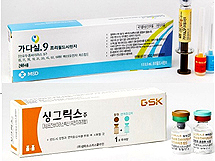
- A benefit study of the Gardasil 9 NIP is also forthcoming
- by Lee, Jeong-Hwan May 10, 2023 11:17pm
- The KDCA is ordering an additional policy research service to apply the National Vaccination Support Project (NIP) of the 'HPV 9-valent vaccine' to female adolescents and male adolescents over 12 years of age. As the result of the HPV 9 commissioned by KDCA to NECA earlier was found to be low in cost-effectiveness in vaccine research, it is in effect a follow-up study. In addition, the KDCA plans to conduct a cost-effectiveness study when applying NIP to the shingles vaccine. On the 8th, KDCA Medical Safety and Prevention Director Lim Eul-ki made this statement at a meeting with the Professional Reporters Association. Director Lim Eul-ki explained, "The additional study on the cost-effectiveness of the male HPV 9 vaccine will be conducted as quickly as possible and an order will be placed in May." The policy of free vaccination of Gardasil 9, a vaccine against HPV 9, to female and male adolescents was a pledge of President Seok-Yeol Yoon during the presidential election. To this end, the KDCA commissioned NECA to conduct a cost-effectiveness study, but it was concluded that it was not cost-effective in all analysis scenarios. Specifically, the research team analyzed the economic effects of three scenarios: ▲ 12-year-old girl 9-valent conversion, ▲ 12-year-old male and female 9-valent vaccination, ▲ and 12-year-old male HPV vaccine NIP subject to NIP However, as a result, the cost-benefit ratio was not significant in all scenarios. Accordingly, KDCA decided to conduct a cost-benefit analysis again through additional research. The subject of the follow-up study was decided to be kept private for the time being to maintain research fairness. Regarding the background of the additional research, Director Lim Eul-ki explained, "There were many experts' opinions that the research design of the research service conducted by NECA was carried out excessively conservatively." Director Lim explained, "For example, we underestimated the diseases that occur in men during the HPV vaccine effect." Director Lim said, "There was an expert opinion that the effect on side diseases such as head and neck cancer was also underestimated. In follow-up studies, we plan to actively reflect this aspect." Director Lim added, “In particular, it should have been studied compared to female non-vaccinated people, but there was also an evaluation that the sensitivity was lowered because of the study compared to female non-vaccinated people.” Director Lim added, "In fact, research services have been conducted overseas as well, and additional research is being ordered in Korea under the same conditions." The KDCA will also embark on a NIP cost-benefit study of the shingles vaccine. The research will also be ordered in May. Director Lim said, "It would be nice if NIP was implemented for the shingles vaccine, but it was difficult to proceed due to budget limitations. This research service will include the recently released Shingrix vaccine." Lim said, "Unlike HPV vaccine research, the period required for research on shingles is planned to be about one year with time to spare."
- Policy
- Prior HIRA approval is required to administer Crysvita
- by Lee, Tak-Sun May 10, 2023 06:00am
- Prior approval from the Health Insurance Review and Assessment Service will be required to administer the pediatric rickets treatment Crysvita Inj which is set to be reimbursed from May this year. Accordingly, HIRA has prepared the specifics for Crysvita’s prior approval and applied it from the 3rd of this month. According to the specific criteria, medical institutions that seek to administer Crysvita’s to children with X-linked hypophosphatemia (XLH), a rare inherited form of rickets, must apply for prior approval to HIRA. The deliberation will be conducted by the Crysvita subcommittee under the Healthcare Review and Assessment Committee (HCRAC). The subcommittee will convene on the third Wednesday of each month and will be deliberating applications submitted until 14 days before the date of the meeting. Medical institutions that receive HIRA’s Prior approval must administer Crysvita within 60 days of being notified of the deliberation results. If the institution seeks to administer it after 60 days, it must reapply for prior approval. Medical institutions that have been approved in advance and administered Crysvita can file claims for health insurance benefits. The institutions are also required to submit monitoring data after administering Crysvita. The medical institution in charge is required to submit a monitoring report every 12 months after initiating treatment before administering the maintenance dose, which is again subject to the subcommittee’s review. The subcommittee can reverse its approval if the institution approved to receive the health insurance benefits is found to have falsely filed related data in the applications and monitoring reports or submitted false data. However, a medical institution that has been notified of the subcommittee’s decision to cancel or withdraw the approval of health insurance benefits may file an objection within 90 days. With the addition of Crysvita Inj., a total of 9 items now require prior approval before being insurance benefits: ▲Immune Tolerance Induction; ▲Soliris‧Ultomiris Inj. ▲Strensiq Inj. ▲Spinraza‧Zolgensma Inj.; ▲ Autologous Stem Cell Transplantation; ▲Implantable Cardioverter Defibrillator & Cardiac Resynchronization; ▲Ventricular Assist Device therapy; ▲Clinical studies; and ▲Crysvita Inj. However, in the case of autologous stem cell transplantation, institutions can opt to receive a review after administration without undergoing prior approval procedures.
- Company
- Forxiga, has the largest number of clinical trials
- by Jung, Sae-Im May 10, 2023 05:58am
- With the expansion of SGLT-2 inhibitor coverage, which began in April, combination prescriptions of various diabetes drugs and SGLT-2 drugs are expected to increase. However, as the clinical basis for each drug is a prerequisite for the expansion of this benefit, there are differences in detailed application depending on the presence or absence of clinical trials. Expectations are growing that AstraZeneca's Forxiga, which has the most clinical trials among SGLT-2 inhibitors, will rise further. Kim Jong-hwa, Director of Insurance, Korean Diabetes Association Kim Jong-Hwa, head of the Department of Endocrinology at Bucheon Sejong Hospital (insurance director of the Korean Diabetes Association), said, “Forxiga is the first SGLT-2 inhibitor in Korea and has the most related clinical studies among drugs in the same class, so it will become the same as Lipitor in the statin class. expected". From April 1, the Ministry of Health and Welfare applied the expansion of the combination benefit for diabetes treatment SGLT-2 inhibitors. According to the notice, the reimbursement of two-drug combination therapy with sulfonylurea (SU), which was limited to some drugs, has been expanded to all SGLT-2 inhibitors. ▲Metformin + SU + SGLT-2, ▲Metformin + DPP-4 + SGLT-2, and ▲Metformin + Thiazolidinedione (TZD) + SGLT-2 can be used as reimbursements for the three-drug regimen. Daewoong Pharmaceutical's Envlo, which has no evidence in the SU+SGLT-2 inhibitor dual therapy, is not covered by insurance coverage. This is because Envlo has not proven its effectiveness through clinical trials in combination with the SU series. Even in the metformin + TZD + SGLT-2 triple therapy, MSD's Steglatro and Envlo, which have no clinical evidence, are not covered by reimbursement. The drugs that can be used in the two-drug regimen that is not included in this reimbursement are also limited. In the DPP-4+SGLT-2 two-drug regimen, only Forxiga and Steglatro can be used together with Januvia at the full cost of the first type patient. Among various exceptions, the drug that can be used most widely is, of course, Forxiga. As explained by Director Kim, Forxiga has proven its efficacy and safety in combination with monotherapy and other diabetes drugs through a total of 15 clinical trials. Clinical trials included not only metformin, but also various combination therapies such as sulfonylurea, insulin, DPP-4 inhibitor, TZD, sulfonylurea + metformin, and DPP-4 + metformin. This is the background of the increased utilization of Forxiga. By demonstrating the effect of protecting heart disease and heart function along with blood sugar control, Forxiga had a significant impact on changing the treatment guidelines to prioritize SGLT-2 inhibitors in patients with comorbidities such as cardiovascular disease. “The obesity rate of type 2 diabetic patients in Korea is getting higher and the number of patients with heart failure is also increasing,” said Kim. shows good compatibility with DPP-4 inhibitors and TZD, so a good effect can be produced if the combination therapy is used appropriately." Director Kim expected that Forxiga would become the same as Lipitor, a statin drug used to treat hyperlipidemia, as it accumulated long-term prescription experience and clinical data. Lipitor is an old drug that has been released in Korea for 25 years as a treatment for hyperlipidemia containing atorvastatin. Although more than 100 generics have been launched on the market since the patent expired, Lipitor still boasts an annual prescription of about 200 billion won. Forxiga also faces a full-fledged generic competition system this year. About 150 dapagliflozin products (including complex drugs) registered for a benefit that was released last month are reached. From the standpoint of Forsh, the expansion of the combination benefit widened the utilization and at the same time had to defend against the offensive of generics. It is expected that the strengths of the original product will be maintained even in the generic competition. He believed that it was necessary to pay attention to the side effects of SGLT-2 that would arise from the surge in generics. "If using SGLT-2 inhibitors indiscriminately in diabetic patients, they can be poisonous. We need to clearly determine which patients need SGLT-2 inhibitor prescription so that it can be used for appropriate patients," he urged.
- Company
- Betmiga generics’ market share rises to 49%...
- by Kim, Jin-Gu May 09, 2023 05:38am
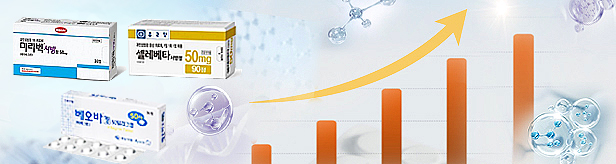
- Miragegron original Betmiga (left) and its generic versions Mirabek and Selebeta (right) Generic versions of mirabegron have increased their influence in Korea’s overactive bladder market. The overall market share of the generic products in Q1 was 49%, chasing sales of the original drug, ‘Betmiga,’ right under the nose. In particular, sales of Hanmi Pharmaceuticals ‘Mirabek’ and Chong Kun Dang’s ‘Selebeta’ have shown rapid growth. On the other hand, the prescription performance of the original product, Astellas Betmiga, dropped to less than half in 3 years after the release of its generics. Betmiga’s generics increase market share to 49%...Sales of original continue to decline According to the market research institution UBSIT on the 6th, the OAB market for the mirabegron ingredient had been KRW 15.6 billion in Q1, which is a 21% increase from the KRW 12.9 billion in Q1 2022. The market expansion was led by mirabegron generics. The overall prescription performance of the 22 Betmiga generics currently released in Korea reached KRW 7.7 billion, which is a 64% increase from the KRW 4.7 billion in Q1 last year. On the other hand, the decline in the prescription of the original mirabegron drug, Betmiga, is evident. In Q1, its prescriptions had fallen 3% from KRW 8.2 billion in Q1 2022 to KRW 8 billion this year. The amount is less than half of what it had made in Q1 2020, immediately before the release of its generics. Astellas had been delaying the execution of the price cut disposition on Betmiga that follows the release of generics by filing administrative suits and suspension of disposition execution requests, but had lost the final suit early last year and received price cuts. The increasing influence of its generics aggravated the decline in the prescription performance of the original drug. At this pace, sales of generics will exceed the original’s and take over the majority of market share in Q2 at the earliest. Mirabek and Selebeta’s sales grow rapidly... Domestic pharmaceutical companies’ new OAD drugs remain a variable in the market By product, sales of Hanmi Pharmaceuticals ‘Mirabek’ and Chong Kun Dang’s ‘Selebeta’ have shown rapid growth. In the case of Mirabek, its sales had increased 18% from KRW 3.2 billion in Q1 last year to KRW 3.8 billion in Q1 this year. In the same period, Selebeta’s sales have also risen from KRW 1.3 billion to KRW 1.7 billion. Sales of generics produced by the other 20 companies have raised less than KRW 0.5 billion in quarterly sales. Hanmi Pharmaceutical and Chong Kun Dang released their generics one after another after winning the patent dispute with Astellas in June 2020. In February last year, 20 additional companies released their generics after the generic exclusivity period expired for the two companies. The quarterly prescriptions of 20 companies that released products after the generic exclusivity period were all less than KRW 0.5 billion, but their growth rate is also quite steep. Therefore, the new OAD drugs released by domestic pharmaceutical companies are expected to act as the variable in this market. Jeil Pharmaceutical Jeil Pharmaceutical received approval for its new OAD drug, ‘Beova (vibegron)', in November last year. Jeil Pharm plans to supply this product, which was developed by Kyorin Pharmaceutical in Japan, within the year. Recently, it held a symposium for doctors, indicating its imminent entry into the market. By selectively acting on β3-adrenoceptor agonists, Beova relaxes the bladder and enhances urine collection. Its mechanism of action is similar to mirabegron, but Beova is known to have a higher response rate to β3 receptors and a low risk of cardiovascular side effects Dong-A ST is also in the final stages of developing a new OAD treatment. Dong-A ST has been conducting a Phase III trial in Korea for its OAD drug candidate 'DA-8010' since January last year. This drug is an antimuscarinic drug developed by Donga. Antimuscarinic drugs act primarily in the urine storage phase when the parasympathetic nerve is not activated, suppressing involuntary contraction of the bladder, reducing urinary urgency, and increasing bladder volume. In terms of mechanism, it is similar to another overactive bladder treatment, 'Veshcare (Solifenacin)'. DA-8010 is a new antimuscarinic being developed by Dong-A ST. Antimuscarinics inhibit involuntary contraction of the bladder and reduce urinary urgency to increase bladder capacity by primarily acting in the urinary storage phase where parasympathetic nerves are not activated. its mechanism of action is similar to that of ‘VESIcare (solifenacin),’ another OAD treatment.
- Policy
- Insurance price ceiling reeval results to be notified soon
- by Lee, Tak-Sun May 09, 2023 05:38am
- The Health Insurance Review and Assessment Service completed its first review on drugs subject to primary pricing ceiling reevaluations and will be notifying companies of the results soon. A 30-day objection period will follow HIRA’s result notification. According to HIRA on the 8th, HIRA’s Drug Reimbursement Evaluation Committee completed its first review of drugs subject to pricing ceiling reevaluations and will notify companies of the results within the week. About 14,000 items from about 200 companies were subject to primary evaluations. According to the original schedule, HIRA was supposed to complete the first evaluation and DREC review in April, but the period was delayed by a month due to the large amount of data the companies submitted in February, the last month of the data submission deadline. As a result, the plan for the results to be applied to the reimbursement list in July after negotiations is also likely to be delayed by a month. The re-evaluation of the upper limit amount of drugs includes the decision of whether to maintain or lower the upper limit after examining whether listed drugs met the self-bioequivalence testing and DMF listing requirements. Drugs that satisfy both the self-bioequivalence testing and DMF listing requirements are allowed to maintain their previous upper limit, and the price ceiling for drugs that satisfy only one of the two requirements is reduced to 85%, and those that satisfy none are reduced to 72.25%. In July 2020, the government applied the differentiated drug pricing system based on the standard requirements such as self-bioequivalence testing and DMF to new drugs and then started to reevaluate existing drugs (items listed as of August 1, 2020) after a grace period. The reevaluations were conducted in two groups in consideration of the pharmaceutical companies’ schedules. Companies that were subject to submit bioequivalence test results last year for their items (5,905 items) submitted data by July 31, and for other drugs, the standard requirements data were submitted from October of last year to February of this year. The items that will be notified of the first results are those whose data has been submitted by February. Once the first results are notified to each pharmaceutical company, a 30-day objection period will be available for the companies’ appeal. After the appeal process is concluded, the final result will be announced through DREC’s second review. According to the current schedule, it is highly likely that the final evaluation results will be deliberated at the second DREC meeting held at the end of June. Then, the results are expected to be reflected in the reimbursement list in August after the companies undergo main negotiations with the NHIS in July. The NHIS is currently forging preliminary discussions with pharmaceutical companies to complete the main negotiations in one month.
- Company
- Ildong’s diabetes combi Qtern registered for reimbursement
- by Kim, Jin-Gu May 08, 2023 05:41am
- Ildong Pharmaceutical announced on the 3rd that its type 2 diabetes combination drug 'Qtern 5/10mg' was registered as an item subject to medical care benefit as of May 1st. As a result, Qtern is covered by insurance as a three-drug therapy drug that can be used in combination with metformin when HbA1c is 7% or higher even if the two-drug therapy is administered for more than 2 to 4 months. 'Qtern 5/10mg' is a combination drug that combines ▲DPP-4 inhibitor Saxagliptin 5mg and ▲SGLT2 inhibitor Dapagliflozin 10mg. In 2016 and 2017, it obtained new drug approval in Europe and the United States, respectively, and in Korea, it was launched in 2021 after item approval from the Ministry of Food and Drug Safety in 2017. According to Ildong Pharmaceutical, as a result of phase 3 clinical trials, HbA1c decreased significantly in the three-drug combination therapy of metformin and Saxagliptin·Dapagliflozin compared to the two-drug combination therapy of metformin and Saxagliptin or metformin and Dapagliflozin. Ildong Pharmaceutical emphasized that Qtern is the only combination drug of dapagliflozin and DPP-4 inhibitor that both active ingredients are based on the original. In addition, the combination of three drugs, including metformin, has an economic advantage in that the drug cost is cheaper than prescribing a DPP-4 inhibitor and an SGLT2 inhibitor as single-component preparations, respectively. An official from Ildong Pharmaceutical said, "We plan to continue conducting academic marketing, including delivery of medical information, in consideration of newly changed standards such as the expansion of insurance benefits related to prescriptions for diabetes medications."
- Policy
- Retevmo passes DREC review and undergoes negotiations
- by Lee, Tak-Sun May 08, 2023 05:41am
- The anticancer drug ‘Retevmo Cap (selpercatinib, Lilly Korea)’ has passed redeliberations by the Health Insurance Review and Assessment Service’s Drug Reimbursement Evaluation Committee (DREC). Therefore, the drug is expected to be smoothly listed for reimbursement if it passes drug pricing negotiations with the National Health Insurance Service. On the 4th, HIRA announced that it had recognized the reimbursement adequacy of Retevmo Cap after deliberations at the 5th 2023 DREC meeting. Although the agenda had been discussed at the 4th DREC meeting held in April, a conclusion had not been made for Retevmo Cap, and was set to be rediscussed at a further meeting. Retevmo is indicated for ▲RET fusion-positive non-small cell lung cancer (NSCLC); ▲ RET-mutated medullary thyroid cancer; ▲ RET-fusion benign thyroid cancer. Although the number of patients is small, it is used in the RET mutation patient group with poor prognosis Along with Retevmo Cap the chronic kidney disease treatment ‘Verquvo Tab’ was also determined to be adequate for reimbursement. On the other hand, the Breztri Aerosphere inhaler and the Hemophilia A treatment Jivi Injection were determined to have reimbursement adequacy if they accept a price lower than DREC’s assessed amount. In other words, the two drugs will be able to pass DREC review and proceed further to receive pricing negotiations with the NHIS only if they accept the price presented by DREC.
