
- LOGIN
- MemberShip
- 2026-06-27 19:51:20
- Company
- Patent dispute for Soliris faces 2nd trial/original company
- by Kim, Jin-Gu Apr 23, 2023 08:22pm
- SolirisThe dispute over Soliris patents between Samsung Bioepis and Alexion will be dealt with in the second trial. According to the pharmaceutical industry on the 19th, Alexion recently filed a lawsuit against Samsung Bioepis to cancel the trial decision. Alexion registered two Soliris patents. However, among the two patents, the composition patent expired in July 2015. The remaining patents are patents for use that expire in 2025. In June last year, Samsung Bioepis filed a request for invalidation of the patent for use. In February this year, Samsung Bioepis won the first trial. Samsung Bioepis qualified for the release of the Soliris biosimilar by winning the first trial. However, there is a possibility that a reversal ruling will be made in the second trial, so the product release is burdensome. Samsung Bioepis completed Phase 3 clinical trials for Soliris biosimilar in October 2021. He then applied for an item license to the Ministry of Food and Drug Safety in July last year. In November last year, it applied for and registered trademarks under the names of EPYSQLI and EPIZQA. If the patent dispute with Alexion is resolved and the item is approved, the product can be released. Soliris is a rare disease treatment developed by Alexion in the United States. It is known to be an ultra-high-priced drug with an annual drug cost of 500 million won. In Korea, AstraZeneca Korea is in charge of sales. In January 2010, it was approved in Korea as an indication of PNH. Since then, indications have expanded to atypical uremic syndrome, systemic septal work force, and optic nerve ulcer. The pharmaceutical industry is paying attention to the timing of Samsung Bioepis' release of the Soliris biosimilar. This is because Soliris is rapidly being replaced by Ultomiris, a follow-up drug. According to IQVIA, a pharmaceutical market research firm, Soliris' sales were 10.1 billion won last year. It decreased by one-third from 31.1 billion won in 2021. Ultomiris, on the other hand, increased 2.2 times from 19.5 billion won to 43.2 billion won during the period.
- Company
- Pfizer Launches 'Pfizer Pro', a Customized Digital Platform
- by Eo, Yun-Ho Apr 23, 2023 07:48pm
- Pfizer Pharmaceutical Korea (CEO Oh Dong-wook) announced on the 12th that it has launched an integrated digital platform "Pfizer PRO" for health and medical experts to strengthen its Omni-Channel strategy. Pfizer Pro can be easily subscribed to by any health care professional and provides optimal content according to the preferred channel and format. Users can receive various pharmaceutical-related data, including the latest updates on Pfizer products, related disease information, and overseas treatment trends, and will be able to check product-related events and conference information and apply for participation right away within Pfizer Pro. Virtual Connect (VCC), a video meeting with a professional representative, can also be conveniently applied on the platform. Virtual Connect is a one-on-one video meeting held with professional managers on desired devices such as mobile, desktop, and tablet PCs at any time and place desired by medical staff. Pfizer Pro is an integrated customer communication channel prepared at the global level, has the same design and format around the world, and can be used intuitively with a UI configuration based on customer convenience. This is part of Pfizer's strategy to strengthen omnichannel, which puts customer-centered communication and experience first, and has been transformed into an integrated platform at the enterprise level by expanding the existing digital channels operated by each business unit. In the future, functions tailored to the needs of health care experts, such as communication channels, will be continuously developed and strengthened. Oh Dong-wook, CEO of Pfizer, said, "Pfizer is using bold investments and strategies that prioritize customer-centered innovation to provide the optimal customer experience in a rapidly changing market. We will not stop at the launch of this platform, which will play a pivotal role as a hub for various channels to communicate with customers, but will continue to lead various challenges and innovations according to customer needs."
- Policy
- CPAC 'Reducing PMS cases for Zerbaxa deemed valid'
- by Lee, Hye-Kyung Apr 21, 2023 05:56am
- Experts in Korea have agreed that it is valid for MSD Korea to change its post-marketing surveillance plan for ‘Zerbaxa inj (ceftolozane/tazobactam),’ which is used to treat severe multidrug-resistant Pseudomonas aeruginosa infections, in consideration of its usefulness and usage. The biggest reason was due to the company’s difficulty in collecting cases for surveillance caused by its low use due to long-term out-of-stock status, reimbursement restrictions after receiving marketing authorization, and a voluntary recall measure. According to the minutes of the Central Pharmaceutical Affairs Council that was recently disclosed by the Ministry of Food and Drug Safety, the CDDC decided to reduce the required number of cases from 3,000 to 460, and change the surveillance period from 6 years to '6 years + 4 years'. The minutes showed that one committee member said, “The drug is an essential medicine that is necessary for the treatment of carbapenem-resistant patients, and its reason for the sluggish collection of surveillance cases is reasonable. The company's PMS plan that was submitted includes efforts to collect cases in the future, therefore it is deemed appropriate for the council to allow the company to reduce the number of required surveillance cases.” Another member said, “ceftolozane and tazobactam formulations had been voluntarily recalled for a considerable amount of time. Considering its narrow scope of reimbursement and indication, I agree on changing its PMS plan." MSD Korea had previously recalled its products as a precautionary measure due to the non-conformity of sterility tests before shipping them to overseas manufacturing plants in 2020. Also, the drug was granted reimbursement approval only in October 2022, although it was approved in 2017. One committee member said, “I agree on the usefulness of the drug as a national essential drug used to treat patients with multidrug-resistant bacteria. I also agree that the sluggish case collection rate is attributable to the low prevalence rate of its indication, supply disruptions, and non-reimbursement matters.” In other words, experts saw that it was necessary to adjust the drug’s PMS plan and order the collection of 460 cases and extend the surveillance period by 4 years, and wait for the company’s efforts on the low prevalence and supply disruption part. In response, the CPAC said due to its non-reimbursement until recently and out-of-stock issue, it was difficult to report 3,000 cases of Zerbaxa use in the current 6-year period and agreed that around 100 patients commonly register in trials for efficacy evaluation, etc. for ceftolozane and tazobactam use.
- Company
- Piqray to soon be deliberated by CDDC for reimb
- by Eo, Yun-Ho Apr 21, 2023 05:55am
- Whether reimbursement discussions for the PIK3CA gene-targeting anticancer drug ‘Piqray’ will make progress is gaining attention. According to industry sources, Novartis Korea’s Piqray (alpelisib) is expected to be deliberated at the coming Health Insurance Review and Assessment Service’s Cancer Disease Deliberation Committee meeting. The drug had been unable to pass deliberations from the same committee in February last year and had refiled an application for reimbursement at the end of last year. However, based on CDDC’s A8 country assessment results that were disclosed after the meeting, reimbursement standards discussed this time will be narrowed to PIK3CA mutation-positive patients whose tumor had progressed after being treated with CDK4/6 inhibitor·aromatase inhibitor combination therapy. Currently, Piqray is being reimbursed in HTA countries including the UK and Canada. What kind of results Piqray and its narrowed reimbursement standards will produce this time remains to be seen. Piqray, which was approved in Korea in May 2021, is a PIK3Caα inhibitor that blocks the overactivation of the PI3K pathway by inhibiting the over-activation of PI3K-α caused by a mutation of a PIK3CA gene. The targeted therapy is prescribed in combination with ‘Faslodex (fulvestrant)’ for patients with HR+/HER2- metastatic or advanced breast cancer who have progressed on or after prior therapies. Meanwhile, the efficacy of Piqray was demonstrated in the SOLAR-1 trial, a study on 572 men and postmenopausal women with HR-positive, HER2-negative, advanced or metastatic breast cancer whose cancer had progressed while on or after receiving an aromatase inhibitor. Results showed that Piqray, when used in combination with Faslodex, improved the median PFS (Progression- Free survival) of cancer patients with the PIK3CA mutation from 5.7 months to 11 months. The objective response rate (ORR) that shows the proportion of patients whose tumor size had reduced by 30% or more was 35.7% in the combination therapy group, which was over a twofold difference from the 16.2% in the monotherapy group. Although the secondary endpoint, overall survival (OS) in the PIK3CA-mutated cancer group was 39.3 months in the combination therapy group, 8 months longer than the 31.4 months in the monotherapy group, the results were not statistically significant.
- Product
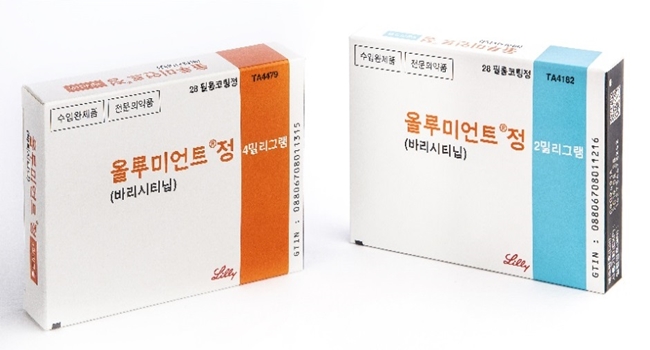
- Olumiant set the first milestone for circular hair loss
- by Hwang, byoung-woo Apr 20, 2023 05:58am
- As Olumiant is listed as a treatment for severe alopecia areata in adults for the first time in Korea, expectations are growing as to how much impact it will have. Experts say that there are many positive factors, such as increased interest in hair loss disease, as it is a treatment that has already been in high demand. However, some point out that future tasks such as a clear distinction between mild and severe in alopecia areata and the establishment of guidelines must be preempted in order for new indications to quickly take root. According to the pharmaceutical industry on the 4th, the Ministry of Food and Drug Safety approved Lilly's oral JAK inhibitor Olumiant as the first treatment for severe alopecia areata in adults in Korea. A specific target is severe alopecia areata in adult patients aged 18 years or older. It is true that there was no approved treatment for alopecia areata before the approval of Olumiant. Previously recommended treatments had limited evidence to support their effectiveness. Professor Kim Moon-beom (Pusan National University Hospital, Dermatology), president of the Korean Hair Society, said, "Severe alopecia areata has suffered from treatment limitations due to the low public awareness of alopecia areata and the absence of approved drugs for patients with alopecia areata." The society has already started efforts to improve the treatment environment for patients with severe alopecia areata through the revision of the treatment guidelines since last year.” Won Jong-hyeon, public relations director of the Hair Society (Seoul Asan Medical Center, Dermatology Department) said, "It is a drug that has been in standby demand for patients with severe hair loss, so it is expected that prescriptions and intake will become active with approval." It is positive that it has become a new hope for hair loss patients or patients who have experienced side effects for which the existing immunosuppressive treatment was not easy.” Olumiant's approval for severe alopecia areata in adults was based on the randomized, double-blind, placebo-controlled Phase 3 clinical trials BRAVE-AA1 and BRAVE-AA2. Both studies included Korea. The primary endpoint of the BRAVE-AA1 and BRAVE-AA2 studies was the proportion of patients achieving a SALT score of 20 or less (more than 80% hair-covered scalp) at week 36. Olumiant 2mg and 4mg showed superiority to placebo in terms of hair regrowth effect at 36 weeks. In BRAVE-AA1, the rates of achieving a SALT score of 20 points or less at week 36 of the Olumiant-administered group were 38.8% (4mg) and 22.8% (2mg), which were statistically significantly higher than 6.2% of the control group (placebo). If so, can Olumiant's indication for severe alopecia areata in adults leads to immediate prescription as long as there was a waiting demand? In the clinical field, in order for new drugs to take root more quickly, it is the view that a clear distinction between severe and mild conditions in alopecia areata and the establishment of a treatment guide should be given priority. According to the guideline for the treatment of alopecia areata published last year by the Hair Society, oral JAK inhibitors are systemic immunosuppressive agents (systemic steroid ± oral cyclosporine therapy) or diphenylcyclopropenone, DPCP and It is recommended as a first-line treatment agent. Regarding this, PR director Won said, "For future prescriptions, it is expected that the risk of side effects, including age, tumor occurrence, and presence of comorbidities, will be considered." The aspect of being able to do so will also be a consideration in the prescription,” he explained.
- Company
- Expansion of reimbursement for DM drugs
- by Moon, sung-ho Apr 20, 2023 05:58am
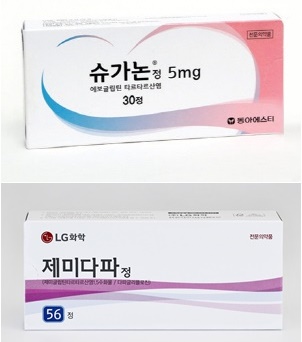
- Donga ST Suganon and LG Chem Zemidapa Amid the expansion of reimbursement criteria between diabetes treatments by class from April, attention is focused on the expansion of the two-drug combination of SGLT-2 inhibitor and DPP-4 inhibitor. This is because pharmaceutical companies are waiting for a reimbursement after receiving approval for a combination of DPP-4 inhibitor + SGLT-2 inhibitor. According to the pharmaceutical industry on the 11th, HIRA recently provided guidance through Q&A on matters to be aware of when prescribing medical institutions in accordance with the expansion of the reimbursement standard for diabetes treatment by category. First of all, since April, the number of subjects for the three-drug therapy has also increased. If the HbA1C is 7% or higher even if the two-drug regimen is administered for more than 2 to 4 months, combination therapy with one diabetes drug of a different mechanism added is acceptable. For the three-drug regimen, reimbursement standards for the combination of 'metformin + SGLT-2 inhibitor + DPP-4 inhibitor' and 'metformin + SGLT-2 inhibitor + Thiazolidinediones' have been set. However, combinations of drugs that are not recognized in the two-drug regimen should not be included. Among them, Steglatro has been excluded from the combination of metformin + SGLT-2 inhibitor + TZD. What is noteworthy is that the two-drug combination of 'SGLT-2 inhibitor and DPP-4 inhibitor', which was highly demanded in the April reimbursement standard expansion, was not included. Pharmaceutical companies are competitively launching 'SGLT-2 inhibitor and DPP-4 inhibitor' combination drugs. Recently, Dong-A ST obtained approval for Sugadapa, a combination drug of the SGLT-2 inhibitor family, and announced the release. Sugadapa is a combination drug that combines Evogliptin, the main ingredient of the DPP-4 inhibitor diabetes treatment 'Suganon' developed by Dong-A ST, and Dapagliflozin, an SGLT-2 inhibitor. Ildong Pharmaceutical is also actively conducting academic marketing for Qtern, which was introduced from AstraZeneca and released as a non-reimbursement, while LG Chem recently launched Zemidapa, a new diabetes combination drug based on Zemiglo. Zemidapa is also a combination drug that combines Gemipliptin, a DPP-4 inhibitor, and Dapagliflozin, an SGLT-2 inhibitor. Dong-A ST made it official that "Sugadapa will go through the health insurance registration process when the combined benefit is expanded after the release of non-coverage." The pharmaceutical industry evaluated that the two-drug regimen between SGLT-2 + DPP-4 inhibitors is also busy, as it is about to be reimbursed. An official from the pharmaceutical industry, who requested anonymity, said, "Since the two-drug regimen between SGLT-2 + DPP-4 is also scheduled to be reimbursed, pharmaceutical companies are also conducting various sales and marketing activities to preoccupy the market." There are concerns that it may not be able to preoccupy its position in the clinical field due to the expansion of reimbursement standards and the pouring in of numerous generic items,” he expressed regret. He said, “We are looking forward to clinical site launches according to reimbursement application within the first half of the year.” “Since it is a newly approved item, it seems to have been excluded from the reimbursement standard revision because it is necessary for the reimbursement application process such as drug price setting. I have no choice but to," he said.
- Policy
- SGLT2 Domestic new drug/combined drug market
- by Lee, Tak-Sun Apr 20, 2023 05:58am
- Forxiga, Jardiance, Suglat, and Steglatro have been market-leading SGLT-2 inhibitors as weight-loss diabetes drugs. Domestic pharmaceutical companies are also fighting back. Domestic pharmaceutical companies that have relaxed with Generic for Forxiga are anticipating a full-fledged offensive from next month with Daewoong Pharmaceutical's new domestic drug and LG Chem's DPP4+SGLT2 complex. ◆ Daewoong Pharmaceutical's Envlo= SGLT-2 inhibitor, which appears at an amazing timing, selectively inhibits sodium-glucose cotransporter 2 (SGLT2), which plays a major role in glucose reabsorption and discharges excessive glucose in the blood to lower blood sugar. Weight loss can also be seen in this process. Envlo is the only SGLT-2 inhibitor developed by a domestic pharmaceutical company. It was approved on November 30th and will be on the market in almost 5 months. The timing of the release is amazing. Envlo passed HIRA on March 2nd under the condition of accepting less than the appraisal amount. The evaluation amount is the weighted average price of commercially available SGLT-2 inhibitors. If Forxiga had passed the committee after April, after the patent expired, the weighted average price would have been much lower. Daewoong Pharmaceutical agreed to negotiate with NHIS on the 10th, skipping upper limit negotiations by accepting 90% of the weighted average price. It is expected to be on the payroll list on the 1st of next month. The benefit standard changed in April is also applied. Envlo has proven its combined effect with a DPP-4 inhibitor through clinical trials, so a combination of met + Envlo + DPP-4 is possible. However, since there is no verification data for TZD combination use, combination use of 3 drugs including met+TZD is not possible. It can be seen that pharmaceutical companies with other SGLT-2 inhibitors and DPP-4 inhibitors were registered for reimbursement at an amazing time in that they had to lower their drug prices on their own in accordance with the expansion of the standard for concurrent use. Generic for Forxiga has also been released less than a month, so Envlo's promotion is expected. ◆133 billion won performance LG Chem's Zemidapa = LG Chem, which first introduced a domestically produced DPP-4 inhibitor, is not a new SGLT-2 drug, but Forsyga is expanding its market area with a combination drug in line with the patent expiration. LG Chem is recording 133 billion won (Uvist 2022 standard) of outpatient prescriptions in the 1 trillion won diabetes treatment market only with the Zemiglo product line. LG Chem went further than Zemiglo and released Zemidapa with Forxiga's Dapagliflozin attached. On the 4th of this month, the non-payroll was released, and the payroll will be applied next month. LG Chem verified the effectiveness of met + Zemiglo + Dapagliflozin through a clinical trial in which more than 20 billion won was invested. The three-drug combination therapy showed a greater improvement in blood glucose than met+Dapagliflozin or met+Zemiglo. Since the benefits of the met+ddp4i+sglt2i 3 system will be applied from April, Zemidapa, a ddp4i+sglt2i combination drug, is also expected to benefit. ◆Dong-A ST, the first player in the Generic for Forxiga market, has a diverse lineup = Dong-A ST has been approved for 9 SGLT-2 drugs. Dong-A ST, which launched Dapapro, a prodrug of Forxiga through a patent strategy, as the first late-breaking drug in December of last year, received reimbursement for six late-breaking drugs of Forxiga and Jardiance this month. In addition to eight products, Sugadapa, a combination of Suganon and Dapagliflozin, an in-house developed drug, is expected to be released as reimbursements in June. With only nine dapagliflozin, the lineup is the most solid among pharmaceutical companies. Dong-A ST recently announced that it had applied for permission for 'Sugadapa met', a combination of metformin and Sugadapa. The product is planned for release next year. Dong-A seems to have established itself in the diabetes treatment market with Suganon, a domestically developed DPP-4 drug. However, although it is sluggish compared to competing drugs, it seems to be trying to expand its market share with dapagliflozin.
- Company
- New heart failure drug Verquvo lands at general hospitals
- by Eo, Yun-Ho Apr 20, 2023 05:58am
- The new heart failure drug ‘Verquvo’ can now be prescribed at general hospitals in Korea. According to industry sources, Bayer Korea’s soluble guanylate cyclase (sGC) stimulator that catalyzes the synthesis of intracellular cyclic guanosine monophosphate (cGMP), Verquvo (vericiguat) has passed the drug committees (DCs) of medical institutions including Samsung Seoul Medical Center, Pusan National University Yangsan, Chonnam National University, and Chonnam National University Hwasun Hospital. Also, Verquvo is being reviewed at drug committees (DCs) at Seoul National University Bundang Hospital, Chung-Ang University Gwangmyeong Hospital, and Chungbuk National University Hospital. Verquvo was approved in December 2021 as a combination therapy used to reduce the risk of cardiovascular death and heart failure (HF) hospitalization following a hospitalization for heart failure or need for outpatient IV diuretics, in adults with symptomatic chronic HF and ejection fraction less than 45%. After the company applied for Verquvo’s reimbursement last year, the agenda is making slow but solid progress. The application passed review by the Health Insurance Review and Assessment Service’s Drug Reimbursement Standard Subcommittee and is awaiting to be deliberated by the Drug Reimbursement Evaluation Committee. The efficacy of the drug was demonstrated through the Phase III VICTORIA trial. A total of 5,050 adult patients with symptomatic chronic heart failure (New York Heart Association [NYHA] class II-IV) and left ventricular ejection fraction (LVEF) less than 45%, following a worsening heart failure event were enrolled in the trial. A worsening heart failure event was defined as heart failure hospitalization or the use of outpatient IV diuretics for heart failure prior to randomization. 59.7% of the participants had been receiving 3-drug combination therapy, and 41% were severe patients - NYHA Class III or NYHA Class IV. In the trial, patients received up to the target maintenance dose of Verquovo 10 mg or a matching placebo combination with another heart failure therapy. Results showed that at 10.8 months of median follow-up, the risk of death from cardiovascular disease or first hospitalization due to heart failure was about 10% lower than that of the placebo group, and the trial met its primary efficacy endpoint with an annual absolute risk reduction of 4.2%. The annual absolute risk reduction of hospitalization from heart failure was 3.2%, and compared with the placebo, it delivered a 10% relative risk reduction in composite cardiovascular-related death and heart failure hospitalization. Meanwhile, previous heart failure treatments worked by blocking harmful effects caused by natural neurohormones that were activated by myocardial and vascular dysfunction. Unlike these existing options, Verquovo is an sGC stimulator that catalyzes the synthesis of intracellular cyclic guanosine monophosphate (cGMP) that modulates heart contraction, vascular tension, cardiac remodeling, etc. The drug is a first-in-class drug, the first sGC stimulator in the world to be approved as a treatment for chronic heart failure.
- Policy
- NA presses for Targrisso’s reimb in the first line
- by Lee, Jeong-Hwan Apr 20, 2023 05:58am
- The NA Health and Welfare Committee decided that reimbursement for AstraZeneca's lung cancer drug ‘Tagrisso (osimertinib)’ in the first line is necessary and requested its prompt reimbursement listing to the government. Min-soo Park, the 2nd vice minister of the Ministry of Health and Welfare, and the Health Insurance Review and Assessment Service also agreed to the National Assembly's decision and promised to promptly go through the reimbursement procedure. On the 18th, the Health and Welfare Committee's Petition Review Subcommittee (Chair Young-Hee Choi) reviewed the petition which requested reimbursement of the lung cancer drug Tagrisso as a first-line treatment. The subcommittee members decided to continue to review such drug-related issues including Tagrisso without immediately deciding whether to refer the petition for consideration to the plenary session. Its aim seems to be to closely monitor the progress of the petition until the results of the drug petition issues including Tagrisso's first-line reimbursement are confirmed. In Korea, Tagrisso is putting a heavy burden on cancer patients and their families due to its high drug price and non-reimbursement even though it has a superior effect as a first-line treatment in lung cancer. This is why the issue was submitted to the petition subcommittee, after achieving 50,000 National Assembly petition consents. Tagrisso had received marketing authorization from the Ministry of Food and Drug Safety as a first-line treatment for EGFR-positive non-small-cell cancer patients diagnosed with exon 19 deletion or exon 21 L858R substitution mutations and as a second-line or higher therapy for NSCLC patients with positive EGFR T790M mutations. However, its reimbursement has only been approved as a second or higher line of treatment since December 5, 2017. Currently, the reimbursement standards for Tagrisso as a first-line treatment were set to be established in March this year at the Cancer Disease Review Committee, and the agenda is being deliberated by the Economic Evaluation Subcommittee. The drug must still undergo Drug Reimbursement Evaluation Committee evaluations, HIRA-pharmaceutical company negotiations, and review by the Health Insurance Policy Review Committee to receive reimbursement. In response to the petition, the Health and Welfare Committee's expert members acknowledged the need for Tagrisso’s reimbursement in the first line. The experts believed that there is a need to improve public health and ease the economic burden by reinforcing patient access to new drugs for severe diseases. Also, MOHW and HIRA announced that it agrees on the need for Tagrisso's reimbursement in the first line and will make efforts to deliberate it as soon as possible. The MOHW said, “The agenda is currently under HIRA review, and HIRA will be reviewing the reimbursement extension after fully considering its cost-effectiveness." HIRA said, “Our Economic Evaluation Subcommittee and Drug Reimbursement Evaluation Committee will conduct deliberations based on data that will be submitted by the pharmaceutical company. We will work to proceed with the deliberation as soon as possible.” The validity and urgency of the first-line reimbursement of Tagrisso have also been known to have been stressed during the Petition Subcommittee’s review. The members of the subcommittee had asked Vice Minister Park to “conduct the reimbursement review as quickly as possible,” and Vice Minister Park accepted the request and promised their prompt reimbursement.
- Policy
- Enhertu, re-discussing with supplementary materials
- by Lee, Tak-Sun Apr 19, 2023 05:51am
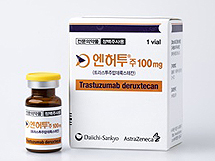
- Attention is focusing on whether the reimbursement standards for Enhertu, an anti-cancer drug from Daiichi Sankyo Korea, will be prepared through re-discussion by the Cancer Disease Review Committee. The drug has received more than 50,000 national petitions and is currently accelerating its reimbursement review. However, at the HIRA held last month, it was decided to discuss again without reaching a conclusion on the setting of the salary standard. According to the industry on the 14th, Enhertu's Daiichi Sankyo recently submitted complementary data to HIRA. Previously, at the review committee held on the 22nd of last month, supplementary data was requested on the grounds that the level of evidence for Enhertu's gastric cancer indication was low and that additional supplementation of financial sharing was necessary for the applied drug price. The indications for Enhertu, whose reimbursement criteria were discussed by the review committee, are ▲the treatment of patients with unresectable or metastatic HER2-positive breast cancer who have previously received two or more anti-HER2-based therapies, and ▲two or more therapies including prior anti-HER2 therapies. Treatment of locally advanced or metastatic HER-2-positive gastric or gastroesophageal junction adenocarcinoma. Among the two, the review committee explains that the basis for gastric cancer indication is weak and the price of the applied drug is high, so it is difficult to set the reimbursement standard right away. However, there is still the possibility of prompt reimbursement as the company decided to re-discuss it through supplementary data rather than deciding not to set the standard for reimbursement. As the pharmaceutical company submitted additional supplementary data, attention is focused on whether Enhertu's reimbursement standard will be successful in the next review committee. Cancer screening is scheduled for the 26th of this month. The key is also the price of the drug. It is known that Daiichi Sankyo applied for 2.4 million won per bottle as a salary indicator, which costs about 160 million won per year. It is explained that the key to passing the reimbursement standard is how the insurance authorities and pharmaceutical companies will share the financial burden because the health insurance budget is high. The health authorities seem to have the willingness to pay for this drug. Another positive factor for Enhertu's reimbursement is that the approval review for drugs that have been referred to the National Assembly is speeding up, with more than 50,000 petitions for reimbursement through the National Consent Petition website. Among the drugs referred to the Welfare Committee as a result of a national application, Crysvita, a treatment for pediatric rickets, is expected to be listed as a benefit next month, and Tagrisso, a first-line treatment for non-small cell lung cancer, has passed the review committee. Enhertu is a next-generation ADC (antibody-drug conjugate) drug that selectively acts only on cancer cells to increase treatment effects and minimize side effects. In clinical trials, it showed higher efficacy than existing drugs, raising expectations as a second-line treatment for HER2-positive breast cancer and a third-line treatment for gastric cancer. Enhertu applied for reimbursement to the HIRA in December of last year and launched non-reimbursement in January.
