
- LOGIN
- MemberShip
- 2026-06-22 03:09:08
- Company
- ‘Global healthcare M&A to recover this year... AI-China’
- by Cha, Jihyun Jan 15, 2025 05:53am
- Artificial intelligence (AI) and China are expected to be the keywords for mergers and acquisitions (M&A) in the global bio and healthcare sector this year. On the 14th, KoreaBIO disclosed a report by global accounting consulting firm Ernst & Young (EY) that contained the prospects above. According to the report, 130 M&A deals were made in the global bio-healthcare sector last year, including 95 for biopharmaceuticals and 36 for medical devices. This was similar to the previous year's 130 (81 biopharma and 49 medical devices). Deal values were down significantly from the previous year. The value of M&A deals last year was USD 130 billion (approximately KRW 190 trillion), down 41% from the previous year. Unlike 2023, which was dominated by large deals in safe-haven (risk-free) assets such as government bonds, last year was full of smaller deals. Bio-Healthcare M&A Deals (Source: Bio-Healthcare M&A) The report characterizes 2024 as a “reset year” for big pharma that was digesting and integrating acquisitions made the previous year. Regulation by the U.S. Federal Trade Commission (FTC) and the implementation of the Inflation Reduction Act (IRA) contributed to a slowdown in M&A activities last year. The average M&A deal size in 2024 was USD 1 billion (about KRW 1.5 trillion), which was down 42% from the previous year. Rather than invest billions of dollars to acquire less risky, market-ready assets, companies are looking to innovate by acquiring early-stage assets that are in pre-Phase III clinical development. “This means that global bio-healthcare M&A last year was smaller but smarter than in previous years,” the report concludes. The report predicted that the market will likely recover this year, but uncertainty remains. The industry has USD 1.3 trillion (KRW 190 billion) of M&A firepower, but some regulations and policies could be in the way, it said. The report cited emerging areas of ▲AI and ▲Chinese partnerships as trends in M&A this year. Over the past 5 years, the value of healthcare AI M&A deals has exceeded USD 60 billion. Most leading companies have formed at least one partnership for AI collaboration. In 2024, the number of deals reached a record high. The number and value of deals over the past 5 years reached 41 deals in 2020 (USD 5 billion), 54 deals in 2021 (USD 16.4 billion), 77 deals in 2022 (USD 15.5 billion), 55 deals in 2023 (USD 13.9 billion), and 87 deals in 2024 (USD 13.6 billion). Trends in AI-related Bio-Healthcare M&A Deals (Source: Bio-Healthcare M&A) The largest AI-related deal to date was the August 2024 acquisition of Exscientia by Recursion Pharmaceuticals. Recursion acquired Exscientia for USD 712 million. “The surge in AI partnerships and acquisitions over the past 5 years is indicative of the opportunities that AI presents to life sciences companies,” the report said, noting that the biggest focus is on using AI to discover new drugs and optimize development. The report added, “AI is delivering benefits across the value chain, from operations to commercial strategy, and the EY CEO Confidence Index shows that life sciences CEOs see emerging technologies, including AI, as the biggest disruptors over the next 12 months, along with talent acquisition.” The report also found that China is becoming a more important partner for companies looking to transfer technology for antibody-drug conjugates (ADCs) and other novel oncology therapies. In 2023, deals involving new modalities, such as ADCs, next-generation radiopharmaceuticals, and multi-specific antibodies, had been made in the Chinese market. The report also found that 43% of M&A with Chinese companies were aimed at acquiring ADCs. AstraZeneca paid USD 1.2 billion to acquire China's Gracell Biotech. It was the first outright acquisition of an innovative Chinese company by a global Big Pharma. Novartis' purchase of Shanghai Argo Biopharmaceuticals last year was also considered potentially the largest deal. However, the U.S. Biosecure Act is seen as the biggest challenge to the growth of China's life sciences sector. “This could limit the ability of companies to collaborate across borders,” the report said, adding that “the U.S.-China relationship also faces uncertainty under the Trump administration in 2025.”
- Company
- Cholangiocarcinoma·AML targeted anticancer drug 'Tibsovo'
- by Eo, Yun-Ho Jan 15, 2025 05:53am
- Product photo of Tibsovo 'Tibsovo,' a targeted anticancer drug for cholangiocarcinoma and acute myeloid leukemia (AML), is now available for prescription in general hospitals. According to industry sources, Servier's Tibsovo (ivosidenib), a drug targeting the isocitrate Dehydrogenase 1 (IDH-1) gene mutation, has passed the drug committees (DC) of the 'Big 5' tertiary general hospitals, including Samsung Medical Center, Seoul National University Hospital, and Seoul Asan Medical Center, and medical centers, including, Gangnam Severance Hospital, National Cancer Center, Gangnam Severance Hospital, and Chungbuk National University Hospital. Following receiving approval from the Ministry of Food and Drug Safety (MFDS) in May 2024, it was officially launched in September of the same year. Since then, it has expanded prescription areas. If a patient is tested positive for IDH1 mutation, Tibsovo can be used as a ▲Monotherapy in patients with locally advanced or metastatic AML and had prior therapy ▲Combination therapy with 'azacytidine' in adult patients over 75 years with accompanying disease that cannot be treated with chemotherapy. Cholangiocarcinoma is a cancer with a poor prognosis. The five-year relative survival rate is only 28.9%. 65% of the patients with cholangiocarcinoma of the liver are found be non-operable when diagnosed. Tibsovo is the only targeted drug recommended as a Category 1, the highest grade, by the National Comprehensive Cancer Network (NCCN) for a second-line treatment for cholangiocarcinoma. According to ClarlDHy Phase 3 clinical trial, Tibsovo reduced the disease progression by 63% compared to a placebo and had a median progression-free survival (PFS) of 2.7 months (placebo 1.4 months). Also, patients treated with Tibsovo had a median overall survival (OS) of 10.3 months, which was longer over twice than 5.1 months of those treated with a placebo. Do-Youn Oh, Professor of Department of Hematology-Oncology at Seoul National University Hospital, said, "Over the last five years, the development of treatments for cholangiocarcinoma got fast. Along with new drug development, many companies are focusing on developing drugs for cholangiocarcinoma. Patients with cholangiocarcinoma need to follow physician's advice, receive treatments, and seize new opportunities such as participating in clinical trials." Meanwhile, in the AGILE Phase 3 trial involving patients with AML, Tibsovo was demonstrated to improve event-free survival (EFS) when combined with azacytidine, and the overall survival (OS) was significantly improved. The patients treated with TIbsovo had a median OS of 24.0 months (placebo 7.9 months). In a long-term follow-up study, the median OS of Tibsovo combination therapy was 29.3 months, over 3.7 fold longer than that of placebo combination therapy.
- Company
- Samsung Biologics signs largest CMO deal…KRW 2 Trillion
- by Cha, Jihyun Jan 15, 2025 05:52am
- Pic of Samsung Biologics (Source: Samsung Biologics) Samsung Biologics announced on the 14th that it has signed a contract manufacturing organization (CMO) agreement worth USD 1.41 billion (approximately KRW 2.74 trillion) with a Europe-based pharmaceutical company. This is the largest contract in Samsung Biologics' history. It represents 40% of the total order value of KRW 5.4035 trillion last year. The contract will run through December 31, 2030. The customer and product names were not disclosed due to confidentiality. With the contract, Samsung Biologics has broken its record for the largest order. The record renewal comes just 3 months after the company signed a contract worth KRW 1.7028 trillion with an Asian pharmaceutical company in October last year. Last year, Samsung Biologics further solidified its position in the global market by signing 3 “big deals” worth KRW 1 trillion in major markets including the U.S., Europe, and Asia. Last year's annual orders totaled at KRW 5.4035 trillion, the largest ever amount, a 1.5 times increase compared to the previous year. Samsung Biologics currently has 17 of the top 20 global pharmaceutical companies as customers. Based on its core order-winning competitiveness, including overwhelming production capacity, quality competitiveness, and multiple track records, the company's cumulative order total has exceeded USD 17.6 billion since its establishment. Samsung Biologics is expanding its production capacity to proactively prepare for the growing demand for biopharmaceuticals. Plant 5, a 180,000-liter production plant that will incorporate the best practices of Plants 1 through 4, is under construction and is scheduled to be operational in April. Upon completion, Samsung Biologics will have a total production capacity of 784,000L. In terms of quality, Samsung Biologics has proven its competitiveness in all stages of drug manufacturing and management, including a 99% batch success rate. As of December 2024, the company has obtained a total of 340 global regulatory approvals, including 41 from the U.S. Food and Drug Administration (FDA) and 36 from the European Medicines Agency (EMA). Its regulatory on-site inspection pass rate is also among the highest in the industry. Samsung Biologics has been participating in a series of large-scale pharmaceutical and biotech industry conferences in the U.S., Europe, and Asia to strengthen business networking and order acquisition activities. Samsung Biologics is participating in the '2025 JP Morgan Healthcare Conference', the largest investment event in the pharmaceutical and biotechnology industry that is being held in San Francisco, U.S.A., from April 13-16 to strengthen networking for business expansion.
- Company
- Hanmi leads the prescription market for 7 consecutive years
- by Chon, Seung-Hyun Jan 15, 2025 05:52am
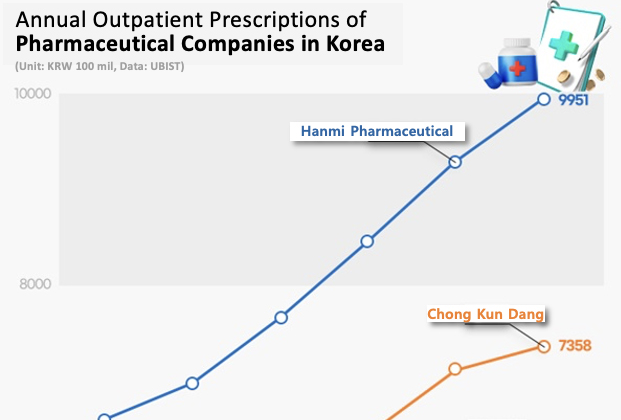
- Hanmi Pharmaceutical has led the domestic outpatient prescription market for 7 consecutive years. The company has solidified its lead in the market fueled by the strong performance of the new combination drugs it developed with its R&D capabilities. Large pharmaceutical companies such as Chong Kun Dang, Daewoong Pharmaceutical, Yuhan Corp, HK Inno.N, and Daewon Pharm showed high growth due to the strong performance of their flagship drugs that include new drugs and new combination drugs. According to drug research institute UBIST on the 15th, Hanmi Pharmaceutical posted the highest prescription sales among domestic and foreign pharmaceutical companies in the outpatient prescription market last year, up 7.1% from the previous year to record KRW 995.1 billion. Hanmi Pharmaceutical has held the lead in Korea’s market for 7 consecutive years since it first took the lead in prescription sales in 2018. Hanmi Pharmaceutical showed a steady rise in prescription sales from KRW 659.1 billion in 2019 to last year, expanding by 51.0% over the past 5 years. The gap between Hanmi Pharmaceutical and the second-place Chong Kun Dang was only KRW 63.1 billion in 2019, but last year, the gap increased to KRW 259.3 billion, establishing a solid lead in Korea’s market. Hanmi Pharmaceutical's strong sales in the prescription market were driven by its self-developed combination drugs. Rosuzet generated KRW 210.3 billion in outpatient prescriptions last year, up 17.6% year-on-year. Rosuzet is a combination of two ingredients, rosuvastatin and ezetimibe. Rosuvastatin is the first domestically developed drug to exceed KRW 200 billion in annual prescriptions, rising to lead the outpatient prescription market. Rosuzet has been setting new records every year since its launch. It has expanded 167.2% over the past five years from KRW 78.7 billion in prescriptions in 2019. Since 2020, Rosuzet has recorded prescription sales of more than KRW 100 billion for 4 consecutive years, surpassing KRW 200 billion last year. Prescriptions of Amosartan, a combination antihypertensive drug, recorded KRW 91.1 billion last year, up 2.2% from the previous year. Amosartan is a combination of amlodipine and losartan. Prescription of Amosartan Plus recorded KRW 31.5 billion last year, up 1.9% from the previous year. Amosartan Plus is a combination of three drugs used to treat high blood pressure: amlodipine, losartan, and chlorthalidone. Among the Amosartan family of products developed based on Amosartan, Amosartan XQ showed the strongest growth. Last year, Amosartan XQ's prescription sales reached KRW 12.7 billion, an increase of 21.0% year-on-year. It has nearly doubled in 2 years from KRW 6.6 billion in 2022. Launched in 2021, Amosartan XQ is a combination of Amosartan, rosuvastatin, and ezetimibe. Last year, large domestic pharmaceutical companies in general performed well in the prescription market. Chong Kun Dang posted outpatient prescription sales of KRW 735.8 billion last year, up 3.2% from the previous year. Chong Kun Dang has been ranked second in the prescription market after Hanmi Pharmaceutical for 7 consecutive years since 2018. The company's prescription sales decreased by 3.3% from KRW 619.8 billion in 2020 to KRW 599.5 billion in 2021 but has shown growth for 3 consecutive years from the following year. Prescription sales of the combination drug Telminuvo amounted to KRW 57.3 billion last year, up 5.9% from the previous year. Telminuvo is a combination drug that combines two antihypertensive drugs (telmisartan + s-amlodipine). Telminuvo’s sales continued to grow, increasing 35.3% over 5 years from KRW 42.3 billion in prescriptions in 2019. Choline alfoscerate-based brain function enhancer Chong Kun Dang’s Gliatamin recorded KRW 121.3 billion in prescriptions last year, up 8.5% from the previous year. Daewoong Pharmaceutical recorded KRW 615.3 billion in outpatient prescriptions last year, up 7.0% from the previous year. It has expanded 38.9% in 5 years from KRW 442.9 billion in 2019. The new drug Fexuclue led to the rise with a high growth rate. Last year, prescription sales of Fexuclue reached KRW 78.8 billion, up 47.3% YoY. Launched in July 2022, Fexuclue is a potassium-competitive acid blocker (P-CAB) drug for the treatment of GERD. In its first year on the market, Fexuclue recorded prescription sales of KRW 12.9 billion (USD 11.9 million) and soared more than sixfold in two years. Daewoong Pharmaceutical has been co-marketing the drug with Chong Kun Dang since April last year to strengthen its sales power. Yuhan Corp recorded prescription sales of KRW 540.4 billion last year, up 7.6% from the previous year. Outpatient prescriptions for the new anti-cancer drug Leclaza reached KRW 47.8 billion last year, up 91.5% year-on-year. Leclaza is a treatment for non-small cell lung cancer that was approved in January 2021 as the 31st new drug developed in Korea. Since then, outpatient prescriptions for Leclaza surged after Korea’s health insurance reimbursement coverage has been expanded to include it as a first-line treatment. HK Inno.N’s outpatient prescriptions amounted to KRW 522.1 billion last year, up 6.0% from the previous year. K-CAB, a P-CAB-based GERD drug, posted a 24.4% year-on-year increase in prescriptions to KRW 196.9 billion. K-CAB made a splash in 2019 with its first prescription sales of KRW 30.4 billion and has soared more than sixfold in 5 years. K-CAB’s growth is driven by its advantages over existing proton pump inhibitor (PPI) class products, such as faster onset of action and the ability to be taken before or after meals. Daewon Pharm posted the highest growth rate among the top prescription performers due to its strong sales of cold and anti-inflammatory drugs. Daewon Pharm’s outpatient prescriptions amounted to KRW 4738 billion last year, a 15.4% year-on-year growth. Prescriptions for cold medicine Codaewon S increased 35.1% from KRW 51.9 billion in 2023 to KRW 70.1 billion last year, while prescriptions for anti-inflammatory drug Pelubi increased 30.9% year-on-year to KRW 62.2 billion last year. Daewon Pharm’s prescriptions grew 68.3% in 5 years from KRW 281.5 billion in 2019.
- Policy
- Boryung’s Pomalyst generic soon to be released
- by Lee, Tak-Sun Jan 14, 2025 05:57am
- Boryung's multiple myeloma drug Pomalikin Cap may soon be released in Korea’s market. The drug is the first generic version of Pomalyst Cap (pomalidomide, BMS). The risk-sharing agreement (RSA) applied to the original drug, Pomalyst Cap, ended this month, and the insurance price cap of the drug had been adjusted following the reimbursement application of its generic drug, Pomalikin Cap. According to industry sources, four dosage forms (1mg, 2mg, 3mg, and 4mg) of Pomalikin Cap, which were approved in August last year, are expected to be listed for reimbursement and be released to the market soon. The insurance price ceiling of the original drug has already been adjusted upon the generic drug’s reimbursement application. According to Article 13, Paragraph 4, Item 5 of the Standard for Medical Care of National Health Insurance, if a drug with the same route of administration, ingredients, and formulation applies for reimbursement approval, the risk-sharing agreement signed by the NHIS for the original drug will be terminated after NHIS evaluations. After Health Insurance Review and Assessment evaluations, BMS underwent negotiations with NHIS for Pomalyst Cap and decided to terminate the RSA and adjust the drug’s upper price limit. The drug was applied the refund type RSA, so there was a difference between the list price and the actual price due to the dual drug pricing system. Upon the termination of the RSA, the actual price was revealed. Before the price adjustment, the upper limit of the 1mg product was KRW 356,691, and the adjusted price was KRW 194,389, a 44.6% price cut. The fact that Boryung’s Pomalikin Cap is the only drug approved with the same route of administration, ingredients, and formulation as Pomalyst Cap indirectly implies that Boryung had applied for the reimbursement of Pomalikin Cap. Boryung succeeded in circumventing the original’s patent last year by filing a trial to confirm the passive scope of the original drug's patent to enter the generic market. Pomalyst Cap is a multiple myeloma treatment that posted sales of KRW 22.8 billion as of 2023, according to IQVIA. It is indicated ▲ in combination with bortezomib and dexamethasone in patients with multiple myeloma who have received at least one prior therapy, including lenalidomide; and ▲in combination with dexamethasone in patients with relapsed or refractory multiple myeloma who have received at least two prior therapies, including lenalidomide and bortezomib. Boryung has been focusing on the multiple myeloma market, recently introducing the lowest-priced lenalidomide to the market. As the only company that has released a pomalidomide generic, it will be interesting to see how Boryung will fare in the market established by the original.
- Opinion
- [Reporter's View] K-Bio's development and human resource
- by Whang, byung-woo Jan 14, 2025 05:56am
- The Korean pharmaceutical and biotech industry (known as 'K-Bio') has grown robustly over the past few years. K-Bio has successfully out-licensed new drug developments, including the In Vitro Diagnostic (IVD), biosimilar, and CDMO, since the Covid-19 pandemic. However, the industry is concerned about sustainability. The key issue is human resource development. The difference between 'development' and 'human resource development' indicates that development is defined by technological‧material advancement, whereas 'human resource development' is focused on fostering human skills and developing potential. The biotech industry requires both types of development. Technology development is necessary for fostering product quality and competitiveness, and human resource development is a key source. However, K-Bio is currently struggling to juggle the balance between the two. Based on statistics reported by the Korea Biotechnology Industry Organization (Korea Bio), the number of employees working in the biotech industry in South Korea is approximately 64,849 people as of 2023, up 6.1% (3,705 people) from last year. Yet, considering the industry's growth rate, the workforce supply is significantly below rising demand. In particular, the R&D workforce shortage has been indicated as a significant problem. The number of employees in the biotech industry rose an average of 6.9% over the past 3 years (2021-2023). However, the rate of change showed a decreasing trend: 8.5% in 2021, 7.8% in 2022, and 6.1% in 2023. The statistics on the workforce in the biotech industry by degrees indicate that the number of employees with college degrees increased compared to last year. However, those with master's or Ph.D. degrees decreased by 12.7% and 22%, respectively. Overall, the industry is lacking employees with higher education. The statistics indicate that the key workforce for leading the technological innovation is in shortage, and it can be a key factor in weakening the competitiveness of the industry. This highlights the challenge of addressing human resources issues. Companies must consider not only the shortage of human resource but also skill sets. Industry experts say that it is often challenging to immediately put graduates from universities and research institutes into ongoing projects. One factor is the significant gap between academic knowledge and industry technology. Although Industry-University collaboration has increased, it remains insufficient for overall human resource development. Biotech companies in South Korea unanimously voice that systemically organizing human resource development is crucial to consistently generating achievements in the global market. Yet, the government's initiatives have primarily focused on expanding the industry's overall size rather than on developing the human resources needed. While fostering industry growth is needed, this approach falls short, especially considering that a skilled workforce is the main driver of the industry. The biotech industry needs people with convergent skills, similar to the AI-based new drug development. This is why the government-organized human resource development project may be necessary in addition to the current efforts by industry and academics. The biotech industry is often referred to as requiring highly skilled expertise and creativity. To achieve this goal, the industry needs long-term human resource development rather than short-term achievement. In other words, continued support and patience are required. This approach is in line with the new drug development direction. The industry stresses building an innovative system around human resources to sustain competitiveness in the global market. It is now the time for the industry, academics, and the government to collaborate for the sustainable growth of K-Bio.
- Opinion
- [Reporter’s View] Korean drugs go international this year
- by Son, Hyung Min Jan 14, 2025 05:56am
- Last year, new drugs developed by domestic pharmaceutical companies recorded remarkable achievements overseas. Hanmi Pharmaceutical's Rolontis (U.S. brand name Rolvedon) has continued to grow in the U.S. market. Rolontis is a neutropenia treatment developed by Hanmi Pharmaceutical and became the 33rd new domestic drug to be approved in Korea in March 2021. The drug was also approved in the U.S. in September of the same year. Since its launch in the U.S. in the fourth quarter of 2022, Rolontis has posted cumulative sales of USD 110.3 million (approximately KRW 155 billion). SK Biopharm's epilepsy drug Xcopri has also shown success in the U.S. market. Officially launched in the U.S. market in May 2020, Xcopri generated sales of KRW 78.2 billion in 2021, KRW 169.2 billion in 2022, and 270.8 billion in 2023. SK Biopharm expects Xcopri’s sales to have exceeded the KRW 400 billion mark last year. This year, Yuhan Corp’s new cancer drug Leclaza will be launched in the U.S. and European markets. Leclaza was approved in the U.S. and Europe last year for the treatment of non-small cell lung cancer in combination with Janssen's targeted therapy Rybrevant. The combination is currently recommended in the National Comprehensive Cancer Network (NCCN) guidelines. Leclaza is expected will be able to break the dark history of domestic anti-cancer drugs. In the past, SK Chemicals' Sunpla, the first new domestic drug, Hanmi Pharmaceutical's Olita, and Samsung Pharm’s Riavax have challenged the market dominated by foreign anticancer drugs, but they have left the market through cancelation or voluntary withdrawal. In contrast, Leclaza has gone from strength to strength, receiving domestic approval, and then global approval. HLB’s rivoceranib also seeking approval from global regulators this year. In May of last year, the company and its Chinese partner Jiangsu Hengrui Medicine received a complete response letter (CRL) from the FDA, but a was found to have no deficiencies in the recent review. The combination of rivoceranib and Jiangsu Hengrui Medicine’s immuno-oncology drug camrelizumab has shown the longest survival benefit among first-line liver cancer treatments. Domestic new drugs that emerged last year are also eyeing the global market. Onconic Therapeutics is in the process of licensing out its technology for its P-CAB-based gastroesophageal reflux disease drug Jaqbo. Vivozon Pharmaceutical's non-narcotic painkiller Unafra is also emerging as an alternative to narcotic painkillers. The domestic companies need to keep in mind not only the domestic market but also global expansions for survival. Last year, the global pharmaceutical industry market was valued at USD 1.44 trillion (about KRW 1901.6 trillion). Compared to Korea's market size of USD 18.2 billion (about KRW 25.5 trillion), the global market is about 79 times larger. To put it bluntly, none of the homegrown new drugs developed to date can be called a “global blockbuster drug.” Global blockbuster drugs usually refer to products that post annual sales of more than KRW 1 trillion, but a sufficient market is required to achieve such sales. A small market cannot generate KRW 1 trillion in sales. In the end, going global is not an option but a necessity to grow further in the domestic pharmaceutical bio-industry. It is necessary to consider various research institutions such as clinical sites with the global market in mind from the initial stages of development. If homegrown new drugs successfully go global, this is expected to drive the performance of later drugs. In addition, if the domestic pharmaceutical and biotech industry shows results overseas, a virtuous cycle of reinvestment in R&D and investment in promising biotech companies is expected to be established. Currently, various domestic new drugs such as K-CAB and Fexuclue are conducting clinical studies to enter the global market. If domestic pharmaceutical companies' new drugs pave the way this way, it will be easier for latecomers to enter the market. I hope this year domestic drugs will show performance not only on the domestic stage but also on the international stage.
- Company
- 'Leclaza·Rybrevant comb therapy' wins nod in KOR
- by Son, Hyung Min Jan 14, 2025 05:56am
- YuhanThe approval of Leclaza plus Rybrevant combination therapy in South Korea has expanded treatment options for patients with non-small cell lung cancer (NSCLC). As Leclaza combination therapy has shown a positive overall survival (OS) result, it is highly likely to be the first-line standard therapy for treating EGFR-positive NSCLC. According to industry resources on January 13, the Ministry of Food and Drug Safety (MFDS) granted approval for Leclaza plus Rybrevant combination therapy as the first-line treatment for EGFR-positive NSCLC. Following the approval, Leclaza plus Rybrevant combination therapy can be used in adult patients with advanced or metastatic NSCLC who have EGFR exon 19 deletion mutation or exon 21 (L858R) point mutation. Following the approvals in the United States and Europe last year, Leclaza plus Rybrevant combination therapy was approved in South Korea as the first in Asia. The US Johnson & Johnson aims to receive approval for Leclaza plus Rybrevant combination therapy in Japan and China. The basis of approval is the MARIPOSA Phase 3 trial. The study involved 1,074 patients with locally advanced or metastatic NSCLC. The median age of patients was 63, and over half of the participants were Asian (59%). Brain metastases occurred in 41% of the participants. Patients were randomly assigned in a 2:2:1 ratio to Leclaza plus Rybrevant combination therapy, Tagrisso monotherapy, and Leclaza monotherapy. The primary endpoint was progression-free survival (PFS), a period without disease progression, and the secondary primary endpoints were overall survival (OS), PFS after the first follow-up treatment (PFS2), and an overall response rate (ORR). The clinical trial results showed the Leclaza plus Rybrevant combination therapy group had 23.7 months of PFS. The Lecalza monotherapy group had 18.5 months of PFS, which was longer than the 16.6 months of the Tagrisso monotherapy group. The Leclaza plus Rybrevant combination therapy group had 30% lower disease progression and death risk compared to the Tagrisso monotherapy group. In the MARIPOSA study, adverse reactions of over Grade 3 were reported as 75% and 43% in the Leclaza plus Rybrevant combination therapy group and the Tagrisso monotherapy group, respectively. Significant adverse reactions were reported at 49% and 33%. Treatment-related adverse reactions in the Leclaza plus Rybrevant combination therapy group mainly were Grade 1-2, such as nail infection and rash. Recently presented OS results showed that Leclaza plus Rybrevant combination therapy is superior to the Tagrisso monotherapy. Johnson & Johnson explained that Leclaza plus Rybrevant combination therapy had statistically significant extended median OS over 1 year compared to Tagrisso therapy. Since Tagrisso recorded an OS of 38.6 months in the FLAURA study, the basis of approval, the OS of Leclaza plus Rybrevant combination therapy will likely be around 50 months. The current results indicate an improvement over previous clinical data. Previously, the Leclaza plus Rybrevant combination therapy has demonstrated the efficacy regarding the primary endpoint, PFS. The secondary endpoint, OS, had shown a favorable trend compared to Tagrisso. If the efficacy of Leclaza plus Rybrevant combination therapy is confirmed in OS, in addition to PFS, then it will become the next standard therapy for EGFR-positive NSCLC.
- Company
- Samsung Bioepis partners with Teva for Soliris biosimilar
- by Cha, Jihyun Jan 14, 2025 05:56am
- Pic of Samsung Bioepis Headquarters Samsung Bioepis announced on the 12th that it has signed a commercialization partnership agreement with the multinational pharmaceutical company Teva Pharmaceutical Industries to launch Epysqli, a biosimilar of the rare disease treatment Soliris (eculizumab), in the U.S. market. Epysqli is the first hematology biosimilar developed by Samsung Bioepis. Its original drug, Soliris was developed by Alexion, a U.S. company specializing in rare disease treatments. It is used for rare intractable diseases such as paroxysmal nocturnal hemoglobinuria (PNH) and atypical hemolytic uremic syndrome (aHUS). It is an ultra-high-priced drug that posted global sales of approximately KRW 5 trillion in 2023. Samsung Bioepis obtained the U.S. Food and Drug Administration (FDA) approval for Epysqli for PNH and aHUS in July last year. In November last year, the company expanded the indication to include generalized myasthenia gravis (gM) through additional FDA approval. Under the agreement, Samsung Bioepis will launch Epysqli in the U.S. market through Teva, and the release is expected in the first half of this year. Samsung Bioepis will be responsible for the production and supply of Epysqli. Teva will be responsible for marketing and sales activities in the U.S. “Epysqli is a drug that best realizes the essence of biosimilar development as it enables expanded access to ultra-high-priced biologics,” said Kyung-Ah Kim, CEO of Samsung Bioepis. “We look forward to working closely with Teva to improve the lives of patients with rare diseases in the U.S.” “We are pleased to partner with Samsung Bioepis to help expand patient access,” said Chris Fox, Executive Vice President US Commercial at Teva Pharmaceuticals. ”We look forward to leveraging our commercial capabilities with Samsung Bioepis to expand treatment access for our patients.”

- Company
- Will biotech companies continue 'K-Bio' success?
- by Moon, sung-ho Jan 13, 2025 05:53am
- Korean pharmaceutical and biotech companies have successfully outlicensed new drugs in various fields, including cancer, autoimmune disease, and Alzheimer's disease. However, compared to the year before, analysis suggests that the number of out-licensed cases decreased. Despite such a slowdown, companies focusing on global new drug development trends, including Alzheimer's disease treatment and antibody-drug conjugates (ADC), have drawn interest from the industry following achieving grand-size contracts. We analyzed major out-licensing cases from Korean pharmaceutical and biotech companies in 2024 and explored the potential of future out-licensing possibilities for 2025. According to pharmaceutical and biotech companies on December 30, 2024, the number of out-licensing transactions in the Korean pharmaceutical and biotech industry for 2024 was 14. Compared to last year's 18 cases, it is a slight decrease. However, analyzing out-licensed transactions, companies that have achieved this by focusing on global new drug development trends stand out. First, LigaChem Biosciences and Orum Therapeutics have successfully out-licensed for two consecutive years, and becoming blu-chip companies in the pharmaceutical and biotech industry. In October 2024, LigaChem Biosciences and a Japanese pharmaceutical company, Ono-Pharma, signed two technology transfer agreements, including the L1CAM-targeting ADC candidate 'LCB97.' According to the contract between both companies, the specific upfront payment remains undisclosed. Two agreements total over US$700 million (KRW 943.5 billion). L1CAM, targeted by LCB97, is a protein expressed in several solid cancers, including lung cancer, pancreatic cancer, and colorectal cancer. LigaChem Biosciences' proprietary ConjuAll linker was used in the development of LCB97. ADC is made of a linker, a payload, and an antibody. The ConjuAll linker is known to overcome the issue of releasing cytotoxic drugs into the blood and attacking healthy cells. In addition to the LCB97 deal, LigaChem Biosciences and Ono-Pharma signed an agreement to transfer the ADC platform technology designed to target dual targets. Based on the contract, using LigaChem Biosciences' platform technology, Ono-Pharma secured rights to discover·develop ADC candidates for multiple targets. Orum Therapeutics has proven its R&D capacity by successfully out-licensing the DAC platform to global pharmaceutical companies. In July last year, the company signed an out-licensing agreement with the U.S.-based biotechnology company Vertex Pharmaceuticals for its DAC. Orum Therapeutics received a US$15 million upfront payment and will receive up to $310 million in potential option fees, milestone payments per target, and tiered royalties. Notably, the company has succeeded in advancing the development of new drugs for cancer, autoimmune diseases, and Alzheimer's disease. HK inno. N signed a license agreement with Navigator Medicines, a US-based pharmaceutical company, for 'IMB-101,' a novel drug candidate for the treatment of autoimmune diseases. The contract totaled US$940 million (approximately KRW 1.3 trillion), including an up-front payment of US$20 million (KRW 27.6 billion). Navigator Medicines secured global development and sales rights through this agreement, excluding Asia. AprilBio also successfully out-licensed 'APB-R3,' an autoimmune disease candidate, to a US-based new drug developer, Evommune. It has been contracted for up to US$475 million (approximately KRW 655 billion), including a non-refundable upfront fee of US$15 million (KRW 20.7 billion), with a separate royalty payment for sales. Aribio successfully out-licensed 'AR1001,' a new drug candidate for Alzheimer's disease, to a Chinese pharmaceutical company in March 2024. Aribio received an upfront payment of KRW120 billion. The company made an advancement in developing an oral new drug candidate for Alzheimer's disease amid increased interest in Alzheimer's disease treatment following the release of Leqembi (lecanemab). AR1001 targets the underlying causes of Alzheimer’s disease through multimodal mechanisms, such as PDE5 and toxic proteins. This new drug candidate is based on Mvix (mirodenafil), which is similar to Viagra and a treatment for erectile dysfunction. Jai Jun Choung, CEO of Aribio, said, "The global market is closely watching Aribio's AR1001." Choung added, "Since Aribio is the first Korean biotech company to conduct a global phase 3 trial in the field, we are striving to achieve success." Particularly this year, Korean companies have not been limiting their goals in exporting new drug candidates. For instance, 'Alteogen' has achieved multiple successes in out-licensing its technology to change the type of anticancer agent formulation. In November 2024, Alteogen signed an exclusive license agreement with Daiichi Sankyo to develop and sell the new ADC drug 'Enhertu' of a subcutaneous (SC) formulation. The company received a non-refundable upfront payment of US$20 million. Enhertu, an antibody-drug conjugate (ADC) jointly developed by Daiichi Sankyo and AstraZeneca, has been approved for the treatment of HER2-positive breast cancer and gastric cancer. As Enhertu demonstrated to be effective in HER2 mutant NSCLC and HER2-low breast cancer, its indication was expanded. Soon Jae Park, CEO of Alteogen, said, "We will be able to provide an alternative administration route by developing a subcutaneous formulation of Enhertu by signing a partnership with Daiichi Sankyo and using ALT-B4," Park added, "We hope to provide a wide variety of treatment options to patients by utilizing ALT-B4 to numerous treatments in the future." Global pharmaceutical companies with major immunotherapy strive to change conventional injectables to subcutaneous formulations. In this process, Alteogen is co-developing the SC formulation of Keytruda with MSD. It has been reported that Alteogen achieved growth through pursuing the Enhertu formulation change project. Conventional anti-cancer treatments are primarily intravenous (IV) therapy, and the administration takes more than one hour. Anti-cancer treatments of SC formulation are expected to improve patient convenience since they can significantly reduce the administration duration to within 10 minutes. Professor Byoung Chul Cho (Director of the Lung Cancer Center at Yonsei Cancer Hospital) said, "The United States provides incentives to using injections, and the amount of incentives is the same between IV injectable or SC injectable," and explained, "There is no need to maintain IV formulation injectables, which commonly induce injection-associated adverse reactions." With these advancements, companies adopting differentiated strategies in global new drug development trends are likely achieve additional out-licensing cases by 2025. Analysis suggests that the global pharmaceutical industry will likely continue pursuing pipelines in various fields, such as autoimmune diseases, radiopharmaceuticals, cell therapies, and Alzheimer's treatments. If companies, like the case of Alteogen, also pursue a differentiation strategy as an advantage, they are expected to maintain strong competitiveness. Major global pharmaceutical companies, including Vertex Pharmaceuticals, Gilead Sciences, AbbVie, Lilly, Merck, and Sanofi, have actively expanded their pipelines through M&A this year. The largest M&A deal of the year was Vertex Pharmaceuticals's acquisition of Alpine Immune Sciences. A contract worth US$4.9 billion (approximately KRW 7.03 trillion), including milestone achievements, has been signed. Based on the agreement between the two US-based global pharmaceutical companies, Vertex has secured povetacicept. Povetacicept is a bispecific antibody targeting APRIL, which is involved in the proliferation of BAFF for B-cell activation. Vertex also signed an out-licensing agreement with the Korean biotech company Orum Therapeutics. Analysis suggests a high likelihood that global pharmaceutical companies will continue efforts to secure future growth opportunities as patents for their therapies expire, suggesting that Korean pharmaceutical and biotech companies have significant potential for out-licensing. However, investor sentiment has declined in the pharmaceutical and biotech industry this year, posing risks to clinical research efforts and potentially hindering technology export achievements next year. Seung-Kyou Lee, Vice President of the Korea Biotechnology Industry Organization (Korea Bio), said, "In response to the urgent issue of decreased investment in the biotech sector, we strive to actively facilitate domestic and international investor matching and operate a demand-supply company committee." Lee added, "We need measures to identify and support solutions for the business and policy demands of biotech companies working in various fields."
