
- LOGIN
- MemberShip
- 2026-06-22 07:22:28
- Company
- Samsung Bioepis to indirectly sell Soliris biosimilar in US
- by Cha, Jihyun Jan 13, 2025 05:53am
- Samsung Bioepis has signed a partnership agreement with the multinational pharmaceutical company Teva Pharmaceuticals to commercialize biosimilars of rare disease treatments in the United States. Samsung Bioepis will launch the biosimilar through Teva in the U.S. market in the first half of this year. Unlike in Europe, where Samsung Bioepis has been selling its drug directly, the company's strategy in the U.S. has been to forge a partnership to enter the market. Analysts say this is due to the complex structure of the U.S. drug market, which is centered on private insurance, and the cost burden of direct sales. Samsung Bioepis enters into a partnership with Teva to commercialize Epysqli... to launch in the U.S. in the first half of the year Samsung Bioepis According to industry sources on the 13th, Samsung Bioepis recently signed a commercialization partnership agreement with Teva to launch Epysqli, a biosimilar version of the rare disease treatment Soliris (eculizumab), in the US market. Soliris was developed by Alexion, a U.S. developer specializing in rare disease therapies. It received marketing authorization from the U.S. Food and Drug Administration (FDA) in March 2007 and the European Commission (EC) in June of the same year. In 2021, AstraZeneca acquired Alexion and took over the rights to Soliris. Soliris is indicated for rare diseases, including paroxysmal nocturnal hemoglobinuria (PNH), atypical hemolytic uremic syndrome (aHUS), neuromyelitis optica syndrome disorder (NMOSD) generalized myasthenia gravis (gMG). In 2023, Soliris reported global sales of USD 3.145 billion (approximately KRW 4 trillion). Of this, the U.S. market is estimated to be worth about KRW 2.3 trillion and the European market is estimated to be worth about KRW 1 trillion. Epysqli is the first hematology biosimilar developed by Samsung Bioepis. Samsung Bioepis obtained the EC marketing authorization for Epysqli for PNH in May 2023 and launched it in the European market in July of the same year. In Korea, it has been on the market since January last year after receiving approval from the Ministry of Food and Drug Safety. In the U.S., the FDA approved Epysqli for PNH and aHUS in July last year. In November last year, the FDA approved an additional indication for its treatment of gMG. Under the agreement, Samsung Bioepis will launch Epysqli in the U.S. market through Teva. The launch is expected in the first half of this year. Samsung Bioepis will be responsible for the production and supply of Epysqli. Teva will be responsible for the drug’s marketing and sales activities in the US. This agreement brings Samsung Bioepis' total number of international partners to four. Samsung Bioepis currently has forged commercialization partnerships with Biogen, Organon, and Sandoz in overseas markets. The partners have exclusive rights to sell the contracted products in the targeted territories and pay Samsung Bioepis milestones and sales commission royalties. Under the new agreement, Samsung Bioepis will receive milestone payments from Teva. Both companies will also share a percentage of product sales revenue. Specific milestone amounts and revenue-sharing percentages for each company were not disclosed. Decided to forge partnership in the U.S., unlike selecting direct sales in Europe, considering the U.S drug structure and costs Epysqli is the only product that contains the company’s name in the product name and is also Samsung Bioepis’ first direct sales product. Epysqli indications, PNH, and aHUS are among those ultra-rare diseases that have a very small number of patients. Samsung Bioepis decided to establish a direct sales system for the first time for Epysqli among all its products, believing that it could fully carry out sales activities with its small number of salespeople. By selling directly without distributing through partners, Samsung Bioepis can reduce commission expenses and increase profitability. Domestic companies pay around 30% to 40% of sales on average as commission to partners when expanding overseas. Another advantage is that it gives the company more market control. In Europe, the effects of the company’s direct sales are slowly showing results. As of the third quarter of last year, Epysqli held the No. 1 market share for eculizumab-based biosimilars in Germany and Italy. It has also secured contracts with the largest procurement group in France (UniHA) and the Dutch government. Samsung Bioepis Nevertheless, Samsung Bioepis' decision not to directly market Epysqli in the U.S. was based on the complex drug structure in the U.S. and the initial direct marketing costs. The European drug market uses a tender system, making it relatively easy to enter. On the other hand, the U.S. drug market has a complex structure centered on private insurance, so it would have been difficult for the company to go direct. The cost of establishing an initial direct sales system may also have been a burden. While the profitability of a direct sales system increases with the number of products sold, it requires large fixed costs to establish a local subsidiary and hire specialized sales and marketing personnel. Will seek to accelerate its entry into the U.S. market with its lower drug price than the original (KRW 400 million/year) and product competitiveness Samsung Bioepis aims to speed up its expansion into the U.S. market by capitalizing on Epysqli’s price competitiveness and product competitiveness. Soliris is an ultra-high-priced drug that costs about KRW 400 million per year. Epysqli’s domestic drug price is set at KRW 2.51 million per vial. This is half the price of the original drug, which costs KRW 5.13 million. This is also about 30% lower than the price of Soliris, which was newly introduced in April last year at KRW 3.6 million. The idea is to gain an advantage over the original through its price competitiveness and expand patient access. Being ‘sorbitol-free' is also considered a competitive advantage of Epysqli. Sorbitol is a substance that helps improve the stability of medicines. However, it can cause reactions in patients with fructose intolerance, who cannot digest fructose precursors such as fructose or sugar. In Europe, medications containing sorbitol are banned for people with fructose intolerance. The U.S. has no such prohibition. However, industry experts believe that given the potential for reactions in some patient populations, it is likely that clinicians will favor products without sorbitol. Epysqli’s competitor, Amgen's Soliris biosimilar Bkemv contains sorbitol. However, the original company’s patent defense strategy may serve as a variable. Alexion is marketing Ultomiris, a once-eight-weekly dosing version of Soliris that offers improved dosing convenience. Both Soliris and its biosimilar are administered intravenously every 2 weeks. In this regard, Samsung Bioepis believes that there is enough market potential as there is still a demand for Soliris in the medical field and there are many markets where Ultomiris has not entered yet. “Teva is a generic and biosimilar company with extensive sales and marketing infrastructure in the U.S. market,” said a Samsung Bioepis official. ”We chose Teva as our commercialization partner for Epysqli in the U.S. market because of its experience and expertise in the U.S. market.” The official added, “The market for Soliris is much larger in the U.S. than in Europe, and we are excited to see how Epysqli will sell in the U.S. given its success in Europe.”
- Company
- Wegovy can be prescribed in tertiary hospitals in KOR
- by Eo, Yun-Ho Jan 13, 2025 05:53am
- The obesity drug ‘Wegovy’ can now be prescribed in tertiary hospitals in Korea. According to industry sources, Novo Nordisk Korea's Wegovy (semaglutide) has passed the drug committees (DCs) of Korrea’s “Big 5 medical institutions,” including Samsung Medical Center, Seoul National University Hospital, and Sinchon Severance Hospital. Wegovy was approved by the U.S. Food and Drug Administration (FDA) in June 2021 and was granted marketing authorization in Korea in October last year. The once-weekly obesity treatment is approved as an adjunct to a reduced-calorie diet and increased physical activity for weight management, including weight loss and weight maintenance, in adult patients. Specifically, it is indicated for use in obese patients with an initial body mass index (BMI) of 30 kg/m2 or greater or in overweight patients with one or more weight-related comorbidities and a BMI of 27 kg/m2 or greater but less than 30 kg/m2. Obesity is associated with chronic diseases such as hypertension and type 2 diabetes and is known to contribute to the development of cardiovascular disease and cancer. The number of obese people in Korea is steadily increasing, with the obesity rate in Korea reaching 37.1% in 2021. The starting dose of Wegovy is 0.25 mg once a week and is gradually increased to a maintenance dose of 2.4 mg once a week for 16 weeks. Wegovy is available in five dosage forms: 0.25 mg, 0.5 mg, 1.0 mg, 1.7 mg, and 2.4 mg. The efficacy and safety profile of Wegovy was demonstrated through the large-scale STEP trial. In the multinational trial that involved 1,961 adult overweight or obese patients, the Wegovy-treated group demonstrated a mean weight loss of 14.9% from baseline over 68 weeks (1,306 patients) compared to 2.4% in the placebo group (655 patients), demonstrating a significant difference. All overweight or obese patients in the trial were on a reduced-calorie diet and increased physical activity.
- Policy
- Will 'Lorviqua' secure a deal on drug price negotiations?
- by Lee, Tak-Sun Jan 13, 2025 05:53am
- Product photo of LorviquaThe reimbursement expansion case for Lorviqua (lorlatinib, Pfizer), which was stalled during the drug price negotiation last year, has passed the Drug Reimbursement Evaluation Committee (DREC) of the Health Insurance Review and Assessment Service (HIRA) under a conditional term. It draws attention to whether it will succeed this round. Pfizer wants the termination of the Risk Sharing Agreement (RSA) and the reimbursement expansion for this drug, so the focus is on whether the company will reach an agreement with the insurance authority. The DREC meeting on January 9 ruled that Lorviqua would be appropriate for expanded reimbursement scope if the company accepted the drug price below the evaluated amount. Consequently, if Pfizer agrees with the drug price below the evaluated amount, it will proceed with the negotiation phase with the NHIS. Lorviqua is under consideration for reimbursement expansion as a first-line treatment for patients with anaplastic Lymphoma Kinase (ALK)-positive and metastatic non-small cell lung cancer. The drug passed the DREC last year, but it failed after negotiating with the National Health Insurance Service (NHIS). It has been reported that the company differed in opinion regarding adjusting the cap for reimbursement ceiling type during the negotiation process. Pfizer wanted to terminate the RSA and switch to general medicine reimbursement. When it was initially approved for reimbursement, Lorviqua was categorized as a reimbursement ceiling type under the cost-effectiveness evaluation waiver system. However, it was approved for being cost-effective after receiving the economic evaluation by the HIRA. However, the company failed to reach an agreement at the drug pricing negotiation because RSA was not terminated. Following the announcement of failed negotiations, doctors and patients called for immediate reimbursement listings. During the parliamentary audit held in October, Rep. Han Ji-ah, a member of the People Power Party, stressed the importance of reimbursement expansion while introducing a male patient's case. Regarding this, Lee Joongkyu, Director of the National Health Policy at the Ministry of Health and Welfare (MOHW), said, "We will help patients receive benefits by quickly reaching an agreement as soon as possible." The NHIS recently revised the RSA guidelines regarding the termination clause. Cost-effectiveness-evaluated drugs like Lorviqua that have demonstrated cost-effectiveness through the DREC review, companies and NHIS can renegotiate to adjust reimbursement ceilings, reset expected claim amounts, or modify·terminate total expenditure-capped RSAs. This opens the possibility of terminating total expenditure-capped RSAs through the renewal of the agreement. Drugs categorized as a basic refund type RSA can be terminated early when a pharmaceutical company wishes to terminate. In the case of Lorviqua, the company applied for RSA termination before the revision, early termination may be possible, even if it is not for renewing contract negotiations. Prior to the revision, drugs were not categorized into specific types that could be terminated early. Consequently, when the company begins negotiation with the NHIS, there will be a discussion about RSA termination and reimbursement expansion. The remaining issue is whether both parties could agree on the drug price without financial burden while allowing RSA termination. In the CROWN trial, Lorviqua reduced the disease progression and death risk by 81% compared to crizotinib, and 60% of treated patients were alive without disease progression after five years. The results indicate that reimbursement of the drug is necessary. The industry draws attention to whether the discussion for expanding Lorviqua's reimbursement, which previously failed in drug pricing negotiations, will lead to an agreement this year.
- Policy
- New criteria set for unstable supply and demand drugs
- by Lee, Tak-Sun Jan 13, 2025 05:53am
- The Health Insurance Review and Assessment Service has decided to clarify the criteria for evaluating adjustment applications for drugs with unstable supply and demand and strengthen preliminary management of high-priced anticancer drugs. HIRA announced so on the 9th while issuing a prenotification of the “Partial Amendments to the Evaluation Criteria and Procedures for Whether a Drug is Eligible for Medical Benefits” and the “Partial Amendments to the Operating Regulations of the Severe Disease Deliberation Committee.” The deadline for submitting opinions on the criteria is the 15th. First, in the prenotification of the “Partial Amendments to the Evaluation Criteria and Procedures for Whether a Drug is Eligible for Medical Benefits,” drugs with unstable supply and demand were newly added as evaluation criteria for adjustment applications. “In order to support the stabilization of drug supply in the context of health security, HIRA has established criteria for the evaluation of adjustment applications to be eligible for negotiations in cases where there is a request for cooperation from central administrative agencies regarding the supply of drugs due to an infectious disease crisis or an urgent shortage of supply, and in cases where an increase in drug price is necessary due to diversification of raw material supply as a national essential medicine.” Accordingly, the following items will be added to the evaluation criteria for adjustment applications: ▲ if there is a request for cooperation from central administrative agencies related to the supply of drugs due to an infectious disease crisis or urgent shortage of supply ▲ if a national essential medicine has diversified its supply of raw materials. The amendment to the regulation is a follow-up to the government's “Plan to Reflect the Innovative Value of New Drugs and Improve the Drug Price System for Health Security.” In particular, the evaluation criteria for adjustment applications to grant drug pricing premiums for national essential medicines that use domestically produced raw materials seems to have been established. The price of drugs with unstable supply and demand is already being raised through adjustment applications upon the council's recommendation. The amendment to the Operating Regulations of the Serious (Cancer) Disease Deliberation Committee also added a provision for the Head of the department in charge of drug post-management to attend the CDDC meeting. On this, HIRA explained, “The recent increase in the number of new drugs that are expensive and have great uncertainty in terms of efficacy has increased the importance of performance management after reimbursement and expansion. Therefore, the amendment was made to strengthen the practicality of drug management by allowing the head of the department that collects and evaluates the actual effectiveness of drugs to participate in the deliberation stage.” HIRA has recently been promoting the introduction of post-management of high-priced drugs through RWD. It has also established a drug performance evaluation division under the Health Insurance Review and Assessment Policy Research Institute. Prior to the full-scale implementation of the system, it is understood that the amendment was made to preemptively prepare a post-management plan by having the heads of relevant departments participate in the cancer review, the first gateway to the review of anticancer drugs.
- Company
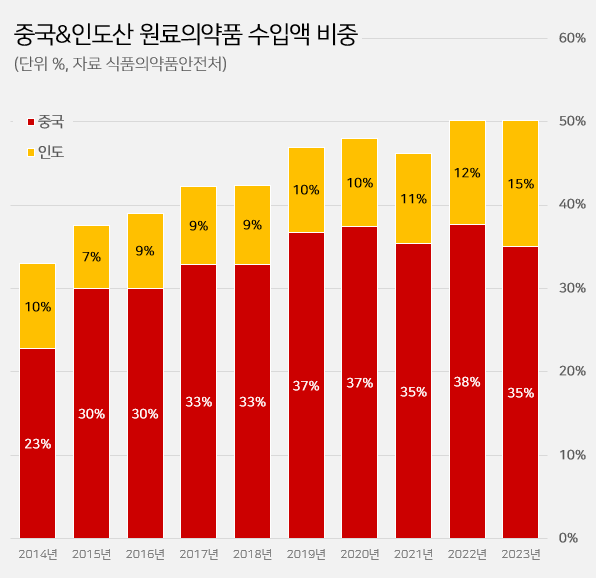
- Imported API from China·India reaches 50%
- by Kim, Jin-Gu Jan 13, 2025 05:53am
- It has been reported that half of the active ingredients (API) imported to South Korea are produced in China and India. The percentage of imported active ingredients originating from China·India surpassed 50% in two consecutive years. The percentage of imported API from India has robustly increased recently. Indian API imports were below 10% in 2018, now expanded to 15.2% in five years. In contrast, the percentage of Chinese API imports slightly dropped from 36.7% to 35.0%. According to the 'Annual report of food and drug statistics for 2024' by the Ministry of Food and Drug Safety (MFDS) on January 11, domestically imported API in 2023 totaled US$ 2.199 billion. Among these, API imports from China·India totaled US$ 1.1 billion. Imports from China·India account for nearly 50.2% of the total imported API. It indicates that half of domestically imported API is from China·India. Analysis suggests that reliance on API produced in China·India has consistently increased. The percentage of imported API from China·India surpassed 40% in 2017, rising to over 50% by 2022. It recorded over 50% in two consecutive years until 2023. The percentage of imported API from China·India: API imports from China and India surpassed 40% in 2017, rising to over 50% by 2022. It recorded over 50% in two consecutive years until 2023. (unit: %, source: Ministry of Food and Drug Saftey). API imports from China have declined, while imports from India have risen. Imported API from China in 2023 totaled US$ 769.76 million, a drop of 16.0% from US$ 916.87 million in 2022. Imported API from India rose by 10.1% from US$ 303.30 million in 2022 to US$ 334.00 million in 2023. Looking into the years before, imported API from India has shown an increasing trend for the past few years. In 2018, imported API from India was US$ 195.56 million, an increase of 70.8% in five years. The percentage of imported API from India was merely 9.5% in 2018, while it rose by 5.7% in five years to 15.2% in 2023. Analysis suggests that as the decrease in imports from China has been compensated by API from India, South Korea has increasingly depended on APIs produced from both countries. As of 2023, besides China·India, there are no imported API from other countries that account for more than 10%. Japan ranks third in the amount of imported API in 2023, totaling US$ 198.85 million (9.0%). Japan's share had sustained over 10% until 2022. Followed by France US$ 170.66 million (7.8%), Italy US$ 123.59 million (5.6%), Germany US$ 120.81 million (5.5%), the U.S. US$ 66.14 million (3.0%), Spain US$ 44.67 million (2.0%), Switzerland US$ 36.77 million (1.7%), and Belgium US$ 31.78 million (1.4%).
- Company
- Sanofi’s Hexaxim is included in NIP from this year
- by Whang, byung-woo Jan 10, 2025 05:52am
- Pic of Hexaxim Sanofi announced on the 9th that Hexaxim, its hexavalent combination vaccine for infants, has been included in Korea’s National Immunization Program (NIP). With its introduction to the NIP, Hexaxim can now be administered free of charge at designated medical institutions under the National Immunization Program for Children. As the first and only hexavalent combination vaccine in Korea (as of January 2025), Hexaxim can simultaneously protect against 6 infectious diseases including hepatitis b in addition to the 5 infectious diseases (diphtheria, tetanus, pertussis, polio, Haemophilus influenzae type b ) that can be prevented by existing pentavalent combination vaccines. Infants who received hepatitis B monovalent vaccines at birth are eligible for the vaccine, which is given in a series of 3 doses at 2, 4, and 6 months of age. However, infants born to hepatitis B-positive mothers will be vaccinated with the pentavalent combination vaccine and hepatitis B monovalent vaccine as before, as it is necessary to prevent vertical infection of hepatitis B. The designated medical institutions for the National Immunization Program can be found on the NIP KDCA website, and it is necessary to check the types of vaccines that can be administered at the designated medical institution before visiting, as the types of vaccines offered may differ depending on the medical institution. The hexavalent combination vaccine for infants has been already recommended as an essential vaccine in more than 40 countries, including Europe, Canada, and Australia. Hexaxim also reduces the total number of doses from 6 to 4 compared to the current schedule that requires separate doses of the pentavalent combination vaccine and hepatitis B monovalent vaccine, rendering it easier for parents and infants to get vaccinated and improving timely immunization rates by reducing delays and missed doses of recommended vaccines. Change in number of doses before and after introduction of Hexaxim In addition, Hexaxim is a ready-to-use formulation that maximizes convenience and efficiency of administration, requires no reconstitution, and is easy to use. This reduces vaccination preparation time and significantly reduces the risk of reconstitution errors, making the process more efficient for healthcare professionals and enabling them to provide safe and rapid immunization services to parents and infants. “The introduction of Hexaxim into the NIP is a recognition of Hexaxim’s public health value, and we are pleased to be able to contribute to easing the financial burden on parents and increasing the efficiency of the healthcare system,” said Hee-Kyung Park, Head of Sanofi Vaccines Business Unit. “As a long-standing public health partner in Korea, Sanofi has contributed to the prevention of infectious diseases in the country. We will continue to be committed to preventing infectious diseases by creating a seamless vaccination environment and the timely provision of vaccines.”
- Policy
- Chinese pharma targeting KOR, BeiGene gets greenlight
- by Lee, Hye-Kyung Jan 10, 2025 05:52am
- Product photo of BrukinsaBeiGene Korea expands market dominance by conducting clinical trials to achieve competitiveness in the Korean market. Based on this year's Ministry of Food and Drug Safety (MFDS)'s clinical trial approval report, two out of ten approved clinical trial applications were BeiGene Korea's Phase 1 clinical trials. BeiGene has been strengthening its pipeline of solid cancers, focusing on the PD-1 inhibitor, 'Tevimbra (tislelizumab).' The company was approved to conduct Phase 1 clinical trials for its new drug candidates, 'BGB-58067' and 'BG-C137.' BGB-58067 is a new drug candidate designed to avoid the hematological toxicity typically associated with PRMT5 inhibitors. It is recognized for its high efficacy and brain-penetrating capability. Domestic clinical trials are conducted in 'Big 4' hospitals, Samsung Medical Center, Seoul National University Hospital, Seoul Asan Medical Center, and Severance Hospital, enrolling patients with advanced solid tumors patients. BG-C137 is an antibody-drug conjugate (ADC) targeting FGFR2b in patients with advanced solid tumors. A Phase 2 trial is conducted in Severance Hospital, Seoul National University Hospital, Seoul National University Bundang Hospital, and Seoul Asan Medical Center. Meanwhile, BeiGene had prepared to enter the Korean market early, establishing a Korean subsidiary in October 2019. The company began conducting clinical trials in 2022. A total of 17 clinical trials were approved in South Korea. The company has new anticancer drugs, such as 'Tevimbra' and 'Brukinsa,' that received approvals from global regulatory institutes, including the US FDA. The second-generation BTK inhibitor 'Brukinsa (zanubrutinib)' and an immunotherapy 'Tevimbra' are new drugs designated as Korea's No.1 and No.2 new drugs, respectively. Brukinsa was approved by the MFDS in 2022 for demonstrated efficacy·effectiveness in ▲Monotherapy in adult patients with mantle cell lymphoma (MCL) who had one or more prior therapy ▲Monotherapy in adult patients with Waldenstrom macroglobulinemia (WM) who have had one or more prior therapy. Tevimbra, a PD-1 inhibitor immunotherapy cancer, received domestic approval in 2023 as a monotherapy for the treatment of adult patients with unresectable, recurrent, locally advanced, or metastatic esophageal squamous cell carcinoma who are unable to continue platinum-based chemotherapy or have experienced recurrence or progression following such treatment.
- Company
- Hexaxim may be administered in general hospitals in Korea
- by Eo, Yun-Ho Jan 10, 2025 05:52am
- Hexaxim, a hexavalent combination vaccine for infants that was included in the National Immunization Program, may now be administered in general hospitals. According to industry sources, Sanofi Korea's Hexaxim prefilled syringe has now passed the drug committees (DCs) of 17 medical institutions nationwide, including Seoul National University Hospital. With its inclusion in Korea’s NIP (National Immunization Program), the number of medical institutions that offer Hexaxim vaccinations is expected to continue to increase. As the first and only hexavalent combination vaccine in Korea (as of January 2025), Hexaxim can simultaneously protect against 6 infectious diseases, which includes hepatitis b in addition to the 5 infectious diseases (diphtheria, tetanus, pertussis, polio, Haemophilus influenzae type b) that can be prevented by existing pentavalent combination vaccines. Infants who received hepatitis B monovalent vaccines at birth are eligible for the vaccine, which is given in a series of 3 doses at 2, 4, and 6 months of age. However, infants born to hepatitis B-positive mothers will be vaccinated with the pentavalent combination vaccine and hepatitis B monovalent vaccine as before, as it is necessary to prevent vertical infection of hepatitis B. The designated medical institutions for the National Immunization Program can be found on the NIP KDCA website, and it is necessary to check the types of vaccines that can be administered at the designated medical institution before visiting, as the types of vaccines offered may differ depending on the medical institution. The hexavalent combination vaccine for infants has been already recommended as an essential vaccine in more than 40 countries, including Europe, Canada, and Australia. Hexaxim also reduces the total number of doses from 6 to 4 compared to the current schedule that requires separate doses of the pentavalent combination vaccine and hepatitis B monovalent vaccine, rendering it easier for parents and infants to get vaccinated and improving timely immunization rates by reducing delays and missed doses of recommended vaccines. In addition, Hexaxim is a ready-to-use formulation that maximizes convenience and efficiency of administration, requires no reconstitution, and is easy to use. This reduces vaccination preparation time and significantly reduces the risk of reconstitution errors, making the process more efficient for healthcare professionals and enabling them to provide safe and rapid immunization services to parents and infants. Sanofi has been working with SK Bioscience since the end of last year to ensure a steady and stable supply of Hexaxim to medical institutions designated for the National Immunization Program for children nationwide and will continue to work with SK Bioscience on the national distribution of infant and childhood combination vaccines including Hexaxim and conduct marketing activities.
- Company
- Lilly Korea releases Ebglyss for atopic dermatitis in Korea
- by Whang, byung-woo Jan 10, 2025 05:52am
- Pic of Ebglyss Lilly Korea announced on the 9th that it had launched Ebglyss (lebrikizumab) in Korea for the treatment of moderate-to-severe atopic dermatitis. Ebglyss is a novel biologic agent that selectively blocks cytokine interleukin (IL)-13, a major cause of atopic dermatitis. It was approved by the Ministry of Food and Drug Safety in August 2024 for the treatment of moderate-to-severe atopic dermatitis in adults and adolescents 12 years of age and older (weighing at least 40 kilograms) who are inadequately controlled by topical treatments or for whom such treatments are not recommended. Ebglyss demonstrated its clinical efficacy and safety profile in a pivotal Phase III clinical trial. Patients who achieve a clinical response after 16 weeks of treatment can thereafter receive a maintenance dose (250 mg) every 4 weeks, making it a useful first-line treatment option for patients with atopic dermatitis in Korea. The clinical studies on which the license was based are the Phase III ADvocate-1, ADvocate-2, and ADhere trials. The trials evaluated the clinical efficacy and safety of Ebglyss in 1062 adults and adolescents with moderate-to-severe atopic dermatitis. In ADvocate-1 and ADvocate-2, which evaluated Ebglyss as a monotherapy, Ebglyss improved outcomes, with 58.8% and 52.1% (16.2% and 18.1%, respectively in the placebo arm) achieving Eczema Area and Severity Index (EASI) 75; and 38.3% and 30.7% (9% and 9.5%, respectively in the placebo arm) achieving EASI 90 during the induction period (weeks 0-16) compared to placebo. Also, after one year of maintenance therapy (Week 52), 81.7% of the Ebglyss arm achieved EASI 75 (vs. 66.4% in the placebo arm) and 66.4% achieved EASI 90 (vs. 41.9% in the placebo arm), demonstrating significant symptom improvement in the long term. The most commonly reported adverse events following treatment with Ebglyss were conjunctivitis (6.9%), injection site reactions (2.6%), allergic conjunctivitis (1.8%), and dry eye (1.4%), with the majority of adverse events being mild or moderate and not leading to treatment discontinuation. “We are pleased to be able to quickly introduce Ebglyss, a novel biologic with a favorable clinical efficacy and safety profile, as well as improved dosing convenience, to patients with atopic dermatitis who require long-term treatment,” said Taehyun Kim, Immunization Business Unit Director at Lilly Korea. ”Lilly Korea will continue to actively engage with stakeholders, including healthcare professionals, to provide an improved treatment experience for patients with moderate-to-severe atopic dermatitis in Korea with Ebglyss.”
- Company
- Leclaza’s new trial data shows improved OS
- by Son, Hyung Min Jan 09, 2025 05:57am
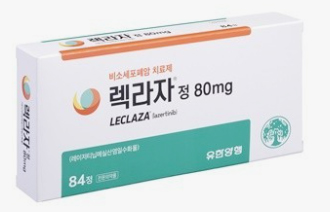
- The Leclaza plus Rybrevant combination achieved statistically significant overall survival (OS) results. Johnson & Johnson expects Leclaza plus Rybrevant to extend OS by more than a year compared to Tagrisso monotherapy. The positive OS outcome for the combination strengthens its potential to become the first-line standard of care for EGFR-positive NSCLC. On the 7th, Johnson & Johnson announced top-line OS results from the Phase III MARIPOSA study, which evaluated the efficacy of the combination of Leclaza plus Rybrevant in patients with locally advanced or metastatic NSCLC. Leclaza is a third-generation tyrosine kinase inhibitor (TKI) targeting exon 19, and exon 21 (L858R) in EGFR-positive NSCLC that was developed by Yuhan Corp. Johnson & Johnson acquired global rights to Leclaza and is conducting clinical trials for the drug in combination with its targeted therapy option, Rybrevant, which targets exon 20 and the MET mutation. The recently published OS results showed that Leclaza plus Rybrevant was superior to Tagrisso monotherapy. Johnson & Johnson explained that Leclaza plus Rybrevant extended median OS by more than a year compared to Tagrisso alone, which was a statistically significant result. As Tagrisso achieved a median OS of 38.6 months in the FLAURA study that became the basis of its approval, the OS for Leclaza plus Rybrevant is expected to have exceeded 50 months. This is progress over previous clinical data, which demonstrated efficacy in the primary endpoint of PFS, but only a favorable trend over Tagrisso in the secondary endpoint of OS. OS is one of the most important indicators in determining the clinical value of an anticancer drug. OS is the overall survival period from the time a patient starts treatment until death. OS also includes patients who die of non-cancer-related causes, such as side effects and other complications. In the case of PFS, PFS is the length of time that a patient survives with cancer that has not progressed, i.e., the tumor has not increased in size while receiving treatment. In other words, while PFS is a measure of how well a new treatment can slow the progression of cancer, OS is a measure of how well it can prolong survival. If the Leclaza plus Rybrevant is ultimately to have an effect in improving PFS and OS, it could become the standard of care for EGFR-positive non-small cell lung cancer. Johnson & Johnson succeeded in receiving FDA approval for Leclaza plus Rybrevant in August of last year based on the results of the MARIPOSA trial. In December last year, Johnson & Johnson received approval in Europe as well. The approval was based on clinical results that Johnson & Johnson presented at the European Society for Medical Oncology 2023 Annual Congress (ESMO 2023). The results showed a median progression-free survival (PFS) of 23.7 months in the Leclaza plus Rybrevant combination arm and 18.5 months in the Leclaza monotherapy arm, compared to 16.6 months in the Tagrisso monotherapy arm. “Achieved results with targeted therapy+ targeted therapy”...ignites competition between combination therapies” The competition between combination therapies has also started in earnest in the market for the first-line treatment of EGFR-positive NSCLC. Currently, AstraZeneca is defending the market with Tagrisso plus platinum-based chemotherapy, which is approved for the first-line treatment of EGFR-positive NSCLC. However, platinum-based chemotherapy is categorized as an option for use after a patient develops resistance to conventional targeted therapies. This is why some have argued that using platinum-based chemotherapy as a first-line option could lead to a shortage of later-line therapy options after developing resistance. The downside to the use of the Leclaza plus Rybrevant combination is that it may be less convenient to administer. All EGFR-positive targeted therapies, including Leclaza, Tagrisso (third generation), Boehringer Ingelheim’s Giotrif, Pfizer’s Vizimpro (second generation), Roche’s Tarceva, and AstraZeneca’s Iressa (first generation), are oral formulations. However, Rybrevant is an intravenous (IV) formulation that requires clinic visits every three weeks. This may not be convenient for patients with NSCLC. To address the issue, Johnson & Johnson has developed a subcutaneous (SC) formulation of Rybrevant and has been studying the formulation in combination with Leclaza. The subcutaneous formulation can be administered in as little as 10 minutes, significantly reducing dosing time for the patients. In recently published clinical trial results, the combination of the subcutaneous formulation of Rybrevant and Leclaza demonstrated similar outcomes to the intravenous (IV) formulation of Rybrevant plus Leclaza. Infusion-related adverse events were lower in the Rybrevant SC+ Leclaza arm. “Leclaza+Rybrevant delivered clinically significant results without chemotherapy,” said Yusri Elsayed, Global Head of Oncology at Johnson & Johnson. ”Extending median overall survival by more than a year can be a game-changer in the NSCLC treatment landscape.”
