
- LOGIN
- MemberShip
- 2026-06-22 07:22:28
- Product
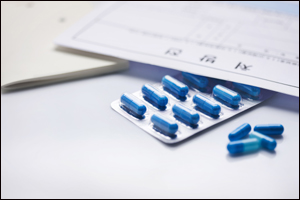
- Price of Pulmican, Pulmicort, Tantum Sol to be raised in Jan
- by Kang Hye-Kyung Dec 27, 2024 05:56am
- As of January 1 next year, items including Pulmican, Pulmicort, and Tantum Sol which are set to receive price hikes, will demand the pharmacists' attention. According to a notice from the Ministry of Health and Welfare on the 24th, the price of ▲ Whanin Imipramine HCl Tab 25mg ▲ Lithan Tab ▲ Myungin Lithium Carbonate Tab ▲ Myungin Lithium Carbonate Tab 150mg ▲ Whanin Trazodone HCl Cap ▲Spiracton Tab 50mg ▲ Pulmican Suspension for Nebulizer ▲ Pulmicort Respule 0.5mg/2mL ▲ Sama Tantum Sol. (100mL) ▲ Movizolo Tab 1mg ▲ Movizolo Tab 2mg ▲ Lavopa Inj ▲ Pine Inj 1000IU/mL ▲ Greencross Heparin Sodium Inj ▲Pine Inj 5000IU/mL ▲ Alkeran Tab will be increased. The price of Pulmican Suspension for Nebulizer will be increased by KRW 126 from 1,121 won to 'KRW 1,247,’ and Pulmicort Respule Nebulized Suspension will be increased by KRW 255 to 'KRW 1,380.’ Sama Tantum Sol's price will increase by KRW 311 from KRW 1,000 to 1,311. There are also items whose drug prices will be reduced. ▲ Epyztek PFS, ▲ Epyztek IV Inj. ▲ Olumiant Tab 2mg, ▲ Olumiant Tab 4mg, ▲ Tremfya Prefilled Syringe Inj, ▲ Tremfya One Press Auto-Injector Inj, ▲ Rinvoq ER Tab 15mg, ▲ Rinvoq ER Tab 30mg, ▲ Entresto Film Coated Tab 100mg, ▲ Entresto Film Coated Tab 200mg, ▲ Entresto Film Coated Tab 50mg, ▲ Alprolix Injection, ▲ Sugar Tree XR Tab, ▲ Vegzelma In, ▲ Pomalyst Cap 1mg, ▲ Pomalyst Cap 1mg 2mg, ▲ Pomalyst Cap 3mg, ▲ Pomalyst Cap 4mg, etc. are included for price cuts. Meanwhile, the prices of Pulmicort Respule Nebulized Suspension and Pulmican will be raised in just one year, as the public-private council has recently requested a preemptive drug price increase to secure domestic imports as Pulmicort supply and demand in global markets such as Japan and Canada.
- Company
- First RSV vaccine Arexvy Inj lands in Korea
- by Whang, byung-woo Dec 27, 2024 05:56am
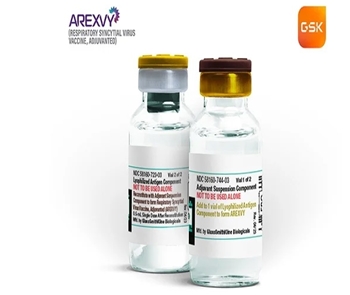
- Arexvy, GSK's global sales driver as a No. 1 adult RSV vaccine, is set to launch in Korea. Pic of Arexvy GSK Korea's Respiratory Syncytial Virus (RSV) vaccine Arexvy was recently approved by the Ministry of Food and Drug Safety (MFDS) for the prevention of lower respiratory tract disease (LRTD) caused by RSV in adults aged 60 years and older. After setting the milestone as the first RSV-LRTD vaccine, the vaccine was approved by the U.S. Food and Drug Administration (FDA) in May last year and then extended to those 50-59 years of age in June. The approval was based on results from two Phase III studies, RSV OA=ADJ-006 and RSV OA=ADJ-004, in adults aged 60 years and older. Study results showed, Arexvy significantly reduced the risk of RSV-LRTD by 82.6% and the risk of severe RSV-LRTD by 94.1% compared to placebo in subjects 60 years of age and older. In addition, vaccine efficacy for RSV-A-associated LRTD events and RSV-B-associated LRTD events was 84.6% and 80.9%, respectively. In addition, in 2 RSV seasons (from 15 days after the first dose in the Northern Hemisphere to the end of the second season), the mean follow-up period was 17.8 months, with 67.2% efficacy for RSV-LRTD and 78.8% efficacy for severe RSV-LRTD in patients aged 60 years and older. “RSV infections can be severe and even fatal in high-risk groups, such as the elderly, and bring a major social burden,” said Dr. Won Seok Choi, professor of infectious diseases at Korea University Ansan Hospital. ”Global health authorities in the U.S., U.K., and elsewhere are continuing efforts to prevent simultaneous outbreaks of RSV, influenza, and COVID-19.” “Older adults are at greater risk of infection due to age-related immune decline and a greater likelihood of complications,” said Professor Choi. ”Cross-infection can occur between young children and elderly grandparents, so practicing good personal hygiene and getting vaccinated early can help keep you, your family, and society safe.” Arexvy generated KRW 2 trillion in global sales last year...Records No. 1 in global share Currently, Arexvy’s global sales are on an upward trajectory, driven by its title as the first RSV vaccine. According to GSK's earnings release, Arexvy’s global sales in the second quarter were GBP 62 million (KRW 108 billion). Given that the RSV season is in the third and fourth quarters, sales are expected to become greater. Last year, the company's total revenue was GBP1.15205 billion (approximately KRW 2 trillion) GSK has raised its revenue forecast for 2024 based on the growth of its RSV vaccine and expects revenue to increase by 7-9% over last year. In particular, the company’s share is expected to grow despite the arrival of competing vaccines from Pfizer and Moderna. In the short term, the company plans to increase its global presence outside of the U.S. and European markets, including Japan. This includes South Korea, where it recently received approval from the Ministry of Food and Drug Safety. Arexvy is available in a vial containing the antigen (powder) in pre-fusion form of the RSV F-protein and a vial containing the immunostimulant (AS01E, suspension), where 0.5 mL of the reconstituted vaccine is administered intramuscularly using a needle. It can be administered in combination with the non-immune-boosting inactivated seasonal influenza vaccine, and the CDC recommends RSV vaccination for adults aged 75 and older or high-risk groups between 60 to 74 years of age. “RSV infections are a significant physical and economic burden for high-risk groups, including the elderly, and GSK is committed to the successful launch of Arexvy to not only prevent infection in adults but also to reduce the burden of disease for patients in Korea,” said Hyunji Kwon, Head of the Vaccines Business Unit at GSK Korea.
- Policy
- "Viread generic have saved KRW 400B in drug cost over 9 yrs"
- by Lee, Hye-Kyung Dec 27, 2024 05:56am
- It has been reported that market entries of 84 generics, which obtained priority marketing authorization, for 12 pharmaceuticals listed between 2015 and 2023 have saved medication costs of KRW 804.2 billion. Specifically, it lowered the listed pharmaceutical costs by KRW 536.3 billion and saved through drug substitution by KRW 267.9 billion, totaling KRW 804.2 billion worth of medication cost cuts. Sales from fourteen generics totaled KRW 397.3 billion, accounting for 49.4% of the total reduction in medication cost. Among these generics was 'Tefovir Tab,' a Viread generic with priority marketing authorization and showed the highest price impact over the past nine years. Generics that were introduced between 2015 and 2023 have resulted in savings of KRW 804.2 billion in medication cost These figures were included in the '2024 Pharmaceutical Drug Approval-Patent Linkage System Impact Assessment (organized by Lee Myung-hee, Researcher at Korea Institute of Intellectual Property),' presented by the Ministry of Food and Drug Safety (MFDS). As Pharmaceutical Drug Approval-Patent Linkage System Impact Assessment is conducted every year, the long-term impact assessment was conducted for the first time this year to overcome the limitations of the previous impact assessment. The previous impact assessment evaluated the priority sales period spanning nine months. The research team suggests that such evaluation results in a loss of information because pharmaceuticals falling into the criteria typically enter the market 1-2 months after the priority sales period. The long-term impact assessment involves sales-banned items and priority marketing authorization items. However, sales-banned items have been excluded from the long-term impact assessment to enhance the protection of pharmaceutical patents and to solve patent disputes between patent holders and pharmaceutical companies with generics before the launch of generics. The assessment involved pharmaceuticals subjected to impact assessment from 2016 to 2021. Two generic groups (12 listed pharmaceuticals and 84 generics) that generated the highest sales each year, totaling 58 generics with statements of financial position by NICE Information Service. Yearly medication cost savings from Gilead Science Korea's 'Viread,' a listed pharmaceutical that entered the market with priority marketing authorization. Its price decreased from KRW 4,850 to KRW 4,727 in April 2018, then to KRW 4,677 in September 2018, KRW 3,275 in December 2018, KRW 2,505 in November 2019, and finally KRW 2,403 in January 2022. Viread generics' market share significantly rose during the priority sales period. Their market share was 55.6% in October 2021, recording KRW 466.1 billion in medication cost savings from reducing Viread tab price (KRW 397.2 billion) and drug substitution with generics (KRW 68.9 billion). It was reported that Chong Kun Dang's 'Diquabel Eye Drops,' a generic version of 'Diquas Eye Drops 3%,' showed the most substitution impact. Diquabel Eye Drops' market share began to rise during the priority sales period, reaching 90.8% by December 2022, ultimately substituting the listed pharmaceutical Diquas Eye Drops. Yearly medication cost savings from Diquas Eye Drops 3% and Pazeo 0.7% Eye Drops (unit: KRW 1 million) Over the six years, it saved a medication cost of KRW 100.2 billion from the price cut of Diquas Eye Drops 3% (KRW 3.7 billion) and generics substitution (KRW 96.2 billion). This outcome resulted from the patent victory of six pharmaceutical companies, including Chong Kun Dang, producing The research team determined that "Such an outcome indicates that medication cost savings during the priority sales period may be significant factors for market share in the long-term." Yearly long-term impact assessment included 'Amosartan' in 2015, 'Stalevo Film Coated Tab' in 2016, 'Iressa Tab' and 'Pletal SR Cap' in 2017, 'Viread' and 'Layla Tab' in 2018, 'Diquas Eye Drops 3%' and 'Pazeo 0.7% Eye Drops' in 2019, and finally 'Alitoc Soft Cap' in 2020.
- Policy
- Generic verision of Citus Tab will be reimb-listed next mo.
- by Lee, Tak-Sun Dec 27, 2024 05:55am
- SAMA Pharm The generic version of 'Citus Tab,' SAMA Pharm's treatment for respiratory asthma and allergic rhinitis, will be reimbursement listed in January 2025 for the first time. Four pharmaceutical companies, including Dasan Pharmaceutical, are set to enter the market early through patent avoidance. According to industry sources on December 26, four products by four pharmaceutical companies, including Dasan Pharmaceutical's 'Prituss Tab. 50mg,' will be listed for reimbursement on January 1. Among these four products are DongKook Pharmaceutical's 'Pranpid Tab' 50mg, Green Cross' 'Neopran Tab. 50mg,' and Daewoong Bio's 'Cituone Tab. 50mg.' These products were approved in November and also approved for priority marketing authorization. The priority marketing authorization is valid until August 5, 2025. The companies successfully avoided Citus' ingredient patent (expires on June 1, 2035) and obtained priority marketing authorization. In October, Korea's Intellectual Property Trial and Appeal Board ruled in favor of generic companies in the passive trials to confirm the scope of a right. Citus is SAMA pharms' key item that generates sales of approximately KRW 50 billion annually. Based on last year's UBIST, its outpatient prescription sales amounted to KRW 42.6 billion. SAMA Pharmaceutical has begun to hold the market share with various product lineup, including CITUS Chewable Tab. Citus lineups includes Citus tab, Citus Disperable Tab, CITUS Chewable Tab, and Citus Dry Syrup. Dasan Pharmaceutical will be responsible for providing consignment production services for products that are set to be reimbursement-listed. Dasan Pharmaceutical has met all required criteria, and its generics will be listed at KRW 344 per tablet with an advantage. The other three companies only met one of the required criteria, so their generics will be listed at KRW 263 per tablet. Considering that SAMA Pharm's Citus Tab's ceiling price is KRW 526, the price has been reduced by half. Consequently, attention has been drawn to whether half-priced generic will shift the market share. "Citus tab is a pharmaceutical that showed skyrocketing sales during the surge of respiratory diseases," A pharmaceutical industry worker remarked. "The generic companies are likely to fiercely promote their products to take the share of KRW 50 billion worth market."
- Company
- SK Bioscience and Sanofi sign contract to co-develop
- by Cha, Jihyun Dec 26, 2024 05:51am
- SK Bioscience has extended the scope of vaccine development in collaboration with the global pharmaceutical company Sanofi. The company aims to advance the pneumococcal conjugate vaccine currently being developed to the next-generation vaccine. SK Bioscience and Sanofi announced on December 23 that they have signed an agreement to co-develop the next-generation pneumococcal conjugate vaccine for infants and young children. The new vaccine will provide a broad preventive effect compared to the currently commercialized products. This contract extends the scope of collaboration that both companies have previously signed for the development and commercialization of 'GBP410,' a 21-valent pneumococcal conjugate vaccine. Previously, SK Bioscience signed a co-development and sales agreement with Sanofi in 2014 for the next-generation pneumococcal conjugate vaccine. Based on the extended agreement, both companies plan to develop an innovative next-generation pneumococcal conjugate vaccine that is more advanced than 21-valent vaccines. Given new projects, SK Bioscience will receive a 50 million euros (about KRW 75.5 billion) upfront payment from Sanofi. The company will receive additional milestones per stage until the development is completed. Both companies will be equally responsible for development costs. Sanofi will be responsible for commercialization costs. Once commercialized, SK Bioscience will sell the vaccine in South Korea, and Sanofi will be responsible for global sales. Both companies will equally share revenues generated from sales at a predetermined rate. A conjugate form of pneumococcal vaccine is known to offer superior preventive effects among the developed pneumococcal vaccines. As of 2023, it takes 94% of the sales of the pneumococcal vaccine market worldwide. According to the global pharmaceutical statistics agency Evaluate Pharma, the pneumococcal vaccine market has achieved a compound annual growth rate (CAGR) of 4.7%. The market is projected to grow from KRW 11.9 trillion in 2024 to KRW 14.2 trillion by 2028. SK Bioscience plans to target the global pneumococcal vaccine market with advanced technology, aiming to secure a new growth engine for the future and establish itself as a leading global vaccine and biotech company. Photo of SK Bioscience In addition to developing next-generation vaccines, the clinical trial of GBP410 conducted by both companies is progressing smoothly. Last week, GBP410 entered a multinational Phase 3 clinical trial, with the first participant dosed. The Phase 3 trial involves over 7,700 infants, children, and adolescents aged six weeks to 17 years, comparing the immunogenicity·safety of up to four doses of GBP410 against an already approved pneumococcal vaccine. SK Bioscience and Sanofi confirmed the efficacy and safety of GBP410 in a Phase 2 clinical trial conducted last June. The comparative study involved 140 children aged 12 to 15 months and 712 infants aged 42 to 89 days, evaluating GBP410 against a control vaccine (Prevenar 13) for primary and booster vaccinations. The results demonstrated that the immunogenicity of GBP410 was comparable to that of the control vaccine. Regarding safety, no vaccine-related serious adverse events were reported in the GBP410 group. Even when co-administered with other recommended vaccines for infants and children, such as vaccines for tetanus, diphtheria, pertussis, polio, and Haemophilus influenza type B, GBP410 exhibited equivalent immunogenicity and safety to the control vaccine. GBP410 was the first to include a serotype over a 20-valent among the vaccine candidates that entered a phase 3 trial targeting infants. SK Bioscience anticipates that GBP410 will reduce invasive pneumococcal disease (IPD) in infants and young children. "The contract extension between SK Bioscience and Sanofi was based on trust between two companies, given the potential of a 21-valent vaccine and positive market outlook," Jaeyong Ahn, CEO of SK Bioscience. "As Korea's key company in the vaccine and biotech industry, SK Bioscience will secure vaccine market share and strive to launch a blockbuster vaccine successfully."
- Company
- Daiichi Sankyo to build manufacturing facilities in China
- by Kim, Jin-Gu Dec 26, 2024 05:50am
- Daiichi Sankyo will build a manufacturing facility in China for its ADC (antibody-drug conjugate) anticancer drug Enhertu. The plant, which will be built in Shanghai, is scheduled to be completed in 2030, and its products will be supplied to China. According to KoreaBIO, Daiichi Sankyo recently announced plans to build a manufacturing facility for Enhertu in Shanghai, China. A total of USD 152 million (approximately KRW 220 billion) will be invested in the construction of the facility. Completion is expected in 2030. Daiichi Sankyo explained that the products produced here will be supplied in China. The new construction plan is attributed to the fact that Enhertu was listed for health insurance reimbursement. China's National Healthcare Security Administration (NHSA) recently released the National Reimbursement Drug List for Basic Medical Insurance, Work-Related Injury Insurance and Maternity Insurance (NRDL). The list includes 91 new drugs, including Enhertu, that are covered by health insurance. The list includes 26 anti-cancer drugs, 15 drugs for chronic diseases such as diabetes, 13 drugs for rare diseases, 7 anti-infectives, 4 drugs for mental illness, 11 herbal medicines, and 21 other drugs. Their health insurance coverage will take effect next January. Pharmaceutical companies have been negotiating their drugs’ prices to be included in China's health insurance program. Of the 91 items to be reimbursed next year, 89 have undergone such price negotiations. The average reduction in drug prices is 63%. China's health authorities estimate that CNY 50 billion (about USD 10 trillion) in patient cost savings will be realized next year through reimbursement alone. However, the exact percentage reduction for Enhertu has not been disclosed. Enhertu was initially approved in China in 2023 for HER2-positive breast cancer. It has since been expanded to include HER2 low-expressing breast cancer, HER2-positive gastric or gastroesophageal junction cancer, and HER2-mutant NSCLC. “The ADC manufacturing facility for Enhertu is expected to be operational in 2030,” said Daiichi Sankyo. ”This investment marks the first instance of establishing an ADC manufacturing facility in China, and the products produced here will be supplied to China.”
- InterView
- "Reimb granted to drug switching between JAK inhibitors"
- by Son, Hyung Min Dec 26, 2024 05:50am
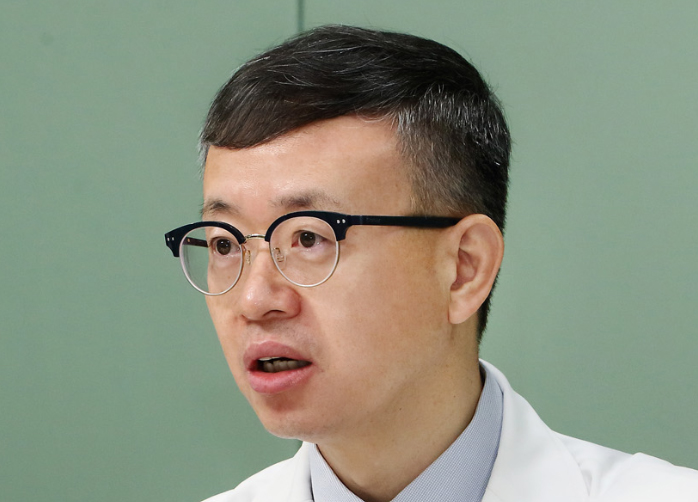
- Dr. Seung-Jae Hong, a Professor in the Department of Rheumatology at Kyung Hee University Medical Center "Until now, drug switching between JAK inhibitors has not been reimbursed, so there have been unmet patient needs for rheumatoid arthritis patients who do not benefit from conventional biological agents. As reimbursement for drug switching will be granted starting in December, patients will be less burdened by switching from biological agents to JAK inhibitors. Also, patients will no longer resort to treatments they do not benefit from. The reimbursement approval will significantly change the treatment landscape for rheumatoid arthritis." Dr. Seung-Jae Hong, a Professor in the Department of Rheumatology at Kyung Hee University Medical Center, remarked on changes to the treatment landscape for rheumatoid arthritis during a recent meeting with Daily Pharm. Rheumatoid arthritis treatments are one of the fields that accomplished the most advances in the past 20 years. Treatment options for patients have broadened after the introduction of steroids, anti-rheumatic drugs, biological agents, and Janus Kinase (JAK) inhibitors. Since drug switching was not approved for reimbursement, patients required to switch from biological agents to JAK inhibitors had to revert to biological agents if the switch was ineffective. As patients and doctors demanded drug switching, the government granted approval of insurance reimbursement for drug switching between JAK inhibitors; starting in December, patients will be less burdened by switching from biological agents to JAP inhibitors. "At the early stage, nonsteroidal anti-inflammatory drugs (NSAIDs) can be used to suppress inflammation and reduce pain. Steroids can then be temporarily used if inflammation is not controlled. However, such a treatment regimen can reduce the alleviation of symptoms but does not lower disease activation. As a result, treatments using disease-modifying antirheumatic drugs (DMARDs), such as methotrexate (MTX), may be necessary," Dr. Hong said. "If sufficient treatment effects are not observed within several months, targeted treatments such as biological agents or JAK inhibitors can be used. Such targeted treatment works by suppressing substances that induce inflammation in rheumatoid arthritis or targeting the signaling pathways of inflammatory substances. The targeted treatments can reduce side effects, while high treatment effects can be expected. This is why switching medications is necessary for treating rheumatoid arthritis," Dr. Hong said. Rheumatoid arthritis is an autoimmune disease caused by immune cells attacking the joints, which are part of our own body. At the early stage of the disease, inflammation occurs in the tissue lining of joints, causing pain, swelling, and deformities in surrounding bones and cartilage. Inflammation primarily affects small joints such as the fingers, wrists, toes, and ankles but can also involve larger joints like the knees. As a chronic disease that progresses over months or years, persistent inflammation of the tissue lining of joints can lead to cartilage damage, causing joint destruction, deformation, and functional disability. Symptoms such as fatigue, low-grade fever, and generalized musculoskeletal pain are often accompanied. However, among patients treated with biological agents, only 56.5% achieve remission or a low disease activity state within the first year of treatment. Furthermore, 43.5% of rheumatoid arthritis patients treated with existing therapies fail to reach remission. Many patients reaching remission still have severe pain, indicating a significant unmet need for medications that can effectively improve both remission rates and pain management. "Rheumatoid arthritis is a condition that causes deformities in finger joints. Patients with such deformities often find it difficult to grasp and self-administer injectables. In one case, we prescribed an oral JAK inhibitor to a patient, but since the medication was not effective enough, we needed to switch back to an injectable. However, the patient refused and chose to continue with the oral medication instead," Dr. Hongexplained. "Oral medications are a good option for patients who fear injections and are also beneficial for those who frequently travel or go on business trips. While there are differences among medications, clinical research data indicates that oral therapies demonstrate high 'remission' rates, defined as a state with minimal symptoms, and are effective in improving morning stiffness, pain, and fatigue, offering significant benefits to patients," Dr. Hong added. Establishing patient-centered treatment landscape…"Supportive policies are needed" With drug switching between JAK inhibitors now granted reimbursement, effective treatments like Rinvoq may be quickly adopted in clinical practice. Dr. Hong remarks that doctors previously reserved highly effective therapies before drug switching approval, but due to changes in insurance reimbursement policy, this approach is no longer necessary. "Several argued that Rinvoq should be used as a second-line treatment because of its significant efficacy, but this was when drug switching was not possible, and only one JAK inhibitor was available. Now that drug switching is approved among multiple medications, there’s no reason to use a specific medication for later treatment. When medication changes are needed due to ineffectiveness, doctors prioritize choosing the most effective treatment first," Dr. Hong stated. Rinvoq, whether used as a monotherapy or combined with existing DMARDs, has demonstrated superior clinical remission and low disease activity rates compared to placebo, MTX, or the biologic adalimumab (product name: Humira). Additionally, Rinvoq's SELECT-BEYOND study, targeting patients with inadequate responses to biologic therapies, confirmed that patients maintained physical function while improving symptoms such as pain, fatigue, and morning stiffness in patient-reported outcomes (PRO) at Week 12. Dr. Hong shared that it is important to utilize available treatments, as new drugs are no longer being introduced. An education course may be necessary to enhance patient compliance. "Untreated rheumatoid arthritis can lead to disability, and the government may have to provide a lifelong support for patients with disability. By preventing disabilities, significant social costs that the government has to be responsible for patient support can be reduced. This is why doctors emphasize early diagnosis and treatment," Dr. Hong said. "Doctors have to care for patients, but having patients manage their diseases is also important. Education allows patients to enhance disease-management skills." However, education costs are not covered for rheumatoid arthritis. The government must provide education cost coverage to reduce social costs," Dr. Hong stated. "The pain mechanism and joint-destruction mechanism differ for rheumatoid arthritis, but patients simply associate the disease with joint pains. Patients who are young children or elderlies may not understand well, so an education session must be conducted for both patients and caregivers," Dr. Hong emphasized.
- Company
- K-Bios seek drugs to be used in combination with ADCs
- by Son, Hyung Min Dec 26, 2024 05:50am
- The domestic pharmaceutical and bio-industry are changing clinical trial protocols and confirming the possibility of their use in combination therapy with antibody-drug conjugates (ADCs). In particular, a growing number of companies are trying to use their drugs in combination with Enterhu, which has shown an effect across solid cancers For example, GI Innovation and AbClon are aiming to maximize the effectiveness of their existing immuno-oncology and targeted anti-cancer drugs by using their drug in combination with Enhertu. In particular, they expect to show benefits in terms of side effects by combining a reduced dose of Enhertu with their respective new drug candidates that are under development. Change in clinical trial protocol…expects to double their drug’s effect by adding Enhertu Daiichi Sankyo and AstraZeneca According to industry sources on the 24th, GK Innovation and AbClon have been evaluating the possibility of combining their respective drug candidates with Enhertu. Enhertu is a new antibody-drug conjugate anticancer drug that was codeveloped by Daiichi Sankyo and AstraZeneca. It is a next-generation ADC that combines a monoclonal antibody with the same structure as trastuzumab, which binds to a specific target receptor overexpressed on the surface of cancer cells, and a topoisomerase I inhibitor payload with a tumor-selective cleavable linker, which is a novel and highly potent mechanism of action. ADCs are anticancer drugs manufactured by linking an antibody that binds to a specific target antigen on the surface of cancer cells with a drug that has cell-killing (cytotoxic) properties. ADCs act selectively on cancer cells, by using the selectivity of antibodies to their targets and the killing activity of drugs to increase therapeutic efficacy while minimizing side effects. While the first-generation ADC, Roche’s Kadcyla, was only approved for breast cancer, second-generation ADCs such as Enhertu have been succeeding in securing a variety of indications. Currently, Enhertu is approved for HER2-positive gastric cancer, breast cancer, and non-small cell lung cancer. The domestic pharmaceutical and biotech industry has also taken note of the effectiveness of Enhertu and is trying to change their clinical trials to attempt its use as a combination therapy. GI Innovation recently changed a Phase I/II clinical trial for its immuno-oncology drug candidate 'GI-102' in the U.S. to a study to confirm its efficacy in combination with Enhertu. GI-102’s pipeline targets tumors and immune cells by targeting CD80 and interleukin (IL)-2 and has been engineered to have lower alpha receptor binding compared to GI-101A. High alpha receptor binding is known to increase regulatory T cells, which reduces the anti-cancer effects. GI-102 is being developed as both intravenous (IV) and subcutaneous (SC) formulations. GI-102 has also shown promise as monotherapy in trials. Recently, the company's Phase I/IIa data showed an objective response rate (ORR) of 43% when GI-102 was administered to patients with melanoma. In addition, lymphocyte proliferation was enhanced by GI-102 treatment, with no serious drug toxicity observed. Therefore, GI Innovation expects that the combination of GI-102 and Enhertu will bring greater effect. The company believes that the combination of GI-102 with a reduced dose of Enhertu can reduce side effects such as interstitial lung disease (ILD) that occur with Enhertu alone. AbClon recently announced that a new IND for its lead drug candidate, AC1-01, has been approved in China. AC-101 is an antibody-drug developed by AbClon that targets HER2 mutations. Its technology was licensed out to Henlius in China in 2016. The new trial will test the effectiveness of AC-101 in combination with Herceptin or Enhertu, both of which are used in breast cancer. With this change, AbClon plans to test its potential in gastric cancer and other solid tumors. Previously, AC-101’s efficacy was validated in combination with Herceptin. In patients with HER2-positive gastric cancer, the ORR, which signifies the reduction in tumor size measured at 72 weeks post-dose, was 41.2% in the low-dose arm, 16.7% in the high-dose arm, and 5.6% in the control arm. Based on such results, the company expects the addition of Enhertu to extend the benefits of AC-101 across HER2-positive solid tumors. Voronoi is also open to the possibility of combining its drug with Enhertu. The company is developing VRN10, a HER2-positive targeted therapy. VRN10 entered Phase I clinical trials last month. The Phase I trial of VRN10 is being conducted at 5 sites in Korea and Australia in approximately 70 patients with solid tumors, including HER2-positive breast cancer. In preclinical studies, VRN10 was found to be highly active against Enhertu-resistant cells. Voronoi believes that its selectivity for the HER2 biomarker may improve side effects such as diarrhea and dermatitis, and its brain penetration is superior to existing therapies. Voronoi expects the combination of VRN10 and the HER2 ADC to bring synergy.

- Company
- Losartan prescription market has grown 15% in 3 years
- by Chon, Seung-Hyun Dec 26, 2024 05:50am
- The prescription market for the antihypertensive drug losartan has shown an upward trend. Its market plummeted in 2021 following the detection of excess impurities in all losartan products but has since recovered obviously. Prescriptions of both single and combination losartan drugs have risen over 10% from three years ago. Analysts say the recurring impurity issues have diluted fears of impurities in drugs. According to the drug research institution UBIST, outpatient prescriptions for losartan-containing drugs totaled KRW 70.3 billion in the third quarter, up 4.7% year-on-year. Compared to KRW 64.3 billion in the third quarter of 2022, prescriptions have increased 9.4% in two years. Quarterly prescriptions of losartan drugs in Korea (Purple: losartan combination therapy, blue: losartan monotherapy) This is the first time in 3 years since the fourth quarter of 2021 that quarterly prescriptions for losartan drugs exceeded KRW 70 billion. The prescription market for losartan formulations has been on the rise since 2021, despite a significant decline in prescriptions following the exposure of its impurity issue. In September 2021, 183 lot numbers of 73 products across 3 ingredients - losartan, valsartan, and irbesartan - were recalled for excess impurities. Later in 2021, impurity issues arose in the entire losartan formulation. In 2021, 295 batches of losartan formulations from 98 companies were voluntarily recalled for exceeding or potentially exceeding the standard for ‘losartan azide impurities.’ Of the 306 items from 99 companies on the market, 96.4% were included in the recall. The prescription market for losartan-containing drugs was worth KRW 81 billion in the third quarter of 2021, down 24.6% from KRW 61.1 billion in the second quarter alone. During the same period, sales of losartan monotherapies decreased 33.9% from KRW 24.5 billion to KRW 17.8 billion, and losartan combination drugs decreased 19.9% from KRW 51.9 billion to KRW 44.7 billion. The drop was due to the exposure of impurity issues across all losartan formulations, which led to prescription changes to other drugs in the same angiotensin II receptor blocker (ARB) class. At the end of 2021, 94 of the 295 total losartan products from 34 different manufacturers were available, effectively avoiding the total sales halt of losartan drugs. The prescription market appears to have recovered as many of the losartan formulations have resolved their impurity issues and returned to the market. In the second quarter of 2022, the prescription market for losartan drugs rebounded to KRW 62.7 billion, a 2.6% increase YoY, and the upward trend has continued since. In the third quarter, the total prescription market for losartan formulations expanded by 15.1% compared to the first quarter of 2021. Both losartan monotherapy and combination drugs have seen recent gains. Outpatient prescriptions for losartan monotherapy totaled KRW 20.7 billion in the third quarter, up 16.3% from Q1 2022. This is the first time in three years since the fourth quarter of 2021 that the quarterly prescription volume for losartan monotherapy exceeded KRW 20 billion. Combination losartan prescriptions grew 14.6% from KRW 43.3 billion in Q1 2022 to KRW 49.6 billion in the third quarter of this year. The recurrence of impurity issues across ARBs, starting with valsartan in 2018, has diluted the fears of such impurities in the prescription market. In 2018, the Ministry of Food and Drugs suspended sales of 175 products containing valsartan, an ARB antihypertensive drug. In 2021, impurity issues arose in losartan, valsartan, and irbesartan. Among the ARB class antihypertensives, telmisartan, candesartan, fimasartan, and olmesartan were not affected. Even if impurities above the approved threshold are detected, unless a sales ban or large-scale recall is conducted, some analysts argue that the detection itself is unlikely to affect the prescription market because there is no clear evidence of human harm.
- Opinion
- [Desk’s View] No external reference pricing next year?
- by Lee, Tak-Sun Dec 24, 2024 06:22am
- The plan to reevaluate drug prices based on foreign drug prices (external reference pricing), which was expected to be announced by the end of the year, has been delayed. The agenda did not make this year's list at the last Health Insurance Policy Review Committee meeting set for Friday (27th). It is unlikely that the plan will proceed as scheduled due to the impeachment of the president and the government's transition to an emergency system. This does not mean that the reevaluation plan for the next year has been completely scrapped. The government initially planned to announce the plan within the year with the goal to conduct the reevaluations next year and adjusting the drug price in the second half of the year. Due to the political situation, the announcement of the reevaluation plan has been delayed, but the goal of adjusting drug prices in the second half of next year may still be intact. The reevaluation plan could resurface at any time once the situation stabilizes. For the government, which prioritizes the stabilization of health insurance finances, reducing drug prices to save finances can be an attractive card. After freezing the health insurance premium 2 years in a row, the government is unlikely to expand government support in the face of a tight budget. Also, the authorities will not dare touch the rebellious physicians' service fees in the current state, so the easy way out would be to tighten the pharmaceutical companies' pockets. But the situation is not easy at all. Since the political turmoil following the imposition of martial law on December 3, economic growth forecasts for the next year have been lowered to 1%. Year-end specials have also disappeared, with group dinners being canceled one after another due to the unrest. Many have said that they cannot feel the Christmas spirit this year. Pharmaceutical companies are also worried about their livelihood next year. With the won-dollar exchange rate soaring to KRW 1,450, domestic pharmaceutical companies that rely on imports for raw materials are facing a heavy cost burden. Last year, the self-sufficiency rate of raw drug materials reached 75%. Under such circumstances, it is obvious that reducing the price of domestic chronic disease drugs with expired patents compared to foreign drug prices will further deteriorate the profitability of pharmaceutical companies. The industry expects losses worth tens of billions of won per company. While healthcare finances are important, we also need to look at the companies' pocket situation. Korean pharmaceutical companies have recently begun to show results in overseas markets based on their excellent human resources. The performance of pharmaceutical companies comes from research and development. However, if profits cannot support R&D, new drug development will have to be reduced. The government should not postpone the announcement of the external reference pricing reevaluation business plan, but at least declare that it will not be carried out within 2025 due to the recession and uncertainties. Delaying the announcement of the business plan will only increase the uncertainty of pharmaceutical companies' livelihoods next year. The government should urgently scrap next year's plan to conduct external reference pricing reevaluations, at least to revitalize the economy.
