
- LOGIN
- MemberShip
- 2026-06-22 07:22:28
- Company
- Kuhnil signs licensing agreement with Mochida
- by Whang, byung-woo Dec 18, 2024 05:55am
- Kuhnil Pharm announced on the 16th that it has signed a sales partnership agreement for Epadel, an original version of the highly purified eicosapentaenoic acid (EPA) ethyl ester formulation, with Mochida Pharmaceutical in Japan. Founded in 1913, Mochida Pharmaceuticals is a leading Japanese innovative pharmaceutical company that has played a leading role in the development of high-purity omega-3 fatty acid products. Epadel (generic name: icosapent) is a highly purified EPA ethyl ester formulation developed by Mochida as the world's first medical drug. The drug is indicated for hyperlipidemia and ulcer, pain, and chilliness associated with arteriosclerosis obliterans in Japan. Through this agreement, Kuhnil Pharm will own exclusive development and marketing rights to Epadel in Korea. Epadel has demonstrated an effect in preventing cardiovascular disease through Japan’s EPA Lipid Intervention Study (JELIS Study). Currently, Epadel’s active pharmaceutical ingredient is supplied by Nissui Corporation, which has advanced EPA purification technology and the capacity for mass production. Han-Kuk Lee, CEO of Kuhnil Pharm said, “The agreement allows us to add a new formulation to our existing portfolio, which includes Omacor and Rosumega, which have been leading the market for hyperlipidemia treatment, and further strengthen our leadership in the Korean hyperlipidemia market. Epadel will be a great treatment option for hyperlipidemia patients in Korea.
- Opinion
- [Reporter’s View] ERP hits industry again
- by Eo, Yun-Ho Dec 18, 2024 05:55am
- Another round of layoffs at multinational pharmaceutical companies are underway with the nearing end of the year. Starting in the second half of the year, 5 companies have already launched early retirement programs (ERPs). The reasons are varied. Whether it's their cash cow crisis, divestitures, or mergers and acquisitions, multinational pharmaceutical companies are taking a hard look at their situation and making layoffs where they deem necessary. This has become a common occurrence in the pharmaceutical industry. In fact, multinational pharmaceutical companies have made mergers and acquisitions (M&A) this year in a variety of rare disease areas, including autoimmune diseases, radiopharmaceuticals, cell therapies, and Alzheimer's disease treatments. They have focused on acquiring rare disease pipelines through small deals under $5 billion. Most of the spin-offs and divestitures of multinational pharmaceutical companies are driven by their “separation of innovation and legacy.” While the companies have undergone activities under the major premise of “choice and focus,” the spin-offs and divestitures have also brought a negative side effect - layoffs. Especially when it comes to layoffs as a result of divestitures, it's not your typical ERP. It's called voluntary retirement, but it's much less “resource-oriented." That's why the news of such an ERP process often leads to labor-management conflicts. The good news is that ERPs in multinational companies offer significant compensation. Especially ERPs that were initiated by spinoffs or selloffs often offer industry-leading compensation packages. For those who have been thinking about changing jobs, ERP can be a good thing. But not everyone wishes to change jobs. For some people, a company is more than just a place to make a living, it's a source of value and pride. When layoffs are unavoidable, companies should focus on maximizing compensation and succession. The coercion behind the word “voluntary” is something that needs to be addressed, and the size of the layoffs should not be vague. There are no good layoffs. Even if some people are happy, they are few and far between. Some people will feel a sense of loss and disconnection just knowing that they've been labeled as redundancies. As the company the employees relied on and were proud of, as an independent pharmaceutical company and not just a Korean subsidiary of a multinational pharmaceutical company, the companies should take the initiative to convince the headquarters if there is room for improvement and take an interest in the future of their employees.
- Company
- Celltrion launches subsidiary 'BioSolutions' for CDMO
- by Cha Jihyun Dec 18, 2024 05:55am
- Seo Jung-jin, chairman of Celltrion Group (source: virtual press conference photos).Celltrion group launches Celltrion BioSolutions, a company specializing in drug contract development and manufacturing organization (CDMO). The company aims to build a manufacturing plant and research center next year and generate sales from 2028. According to the Financial Supervisory Service on December 17, Celltrion acquired 2 million shares of Celltrion BioSolutions for KRW 10 billion. After the acquisition of shares, Celltrion will secure 100% of the shares of Celltrion BioSolutions. "We have decided to commence the CDMO business in September, considering increased demands for biological drugs globally and consistent requests for CDMO services from Korea and foreign markets," Celltrion said. "We have quickly established a corporate body and initiated establishing infrastructure, such as a manufacturing facility, and running the business." The new corporate body plans to provide services for drug development spanning all stages, including new drug candidate identification, cell culture, manufacturing development, clinical trial planning, regulatory document preparation, and commercial production. Lee Hyuk-jae, senior vice president of Celltrion, has been appointed the CEO of Celltrion BioSolutions. Lee has experience in product approval, clinical trials, and production. Based on Celltrion's experience running a contract manufacturing organization (CMO) service, Celltrion BioSolutions aims to challenge the competition. Previously, Celltrion had a history of running a CMO service in 2002. However, as the company reestablished its core value of the company as a biosimilar developer in the late 2000s, the company discontinued the CMO service. "We plan to secure production by reducing the cost of expansion based on Celltrion's experience running a drug CMO service for global pharmaceutical companies spanning all phases of the pharmaceutical business, such as various business project records, proprietary production, and approvals, and also by securing price-cost competitiveness through high production·efficiency," Celltrion said. The company is reviewing site candidates for the new corporation's production facilities. Celltrion plans to design production facilities in South Korea with a maximum capacity of 200,000 liters, beginning construction on the first plant with a 100,000-liter capacity next year. The company will continuously assess the optimal location to ensure sustainable production and supply while expanding production capacity. The investment in the new company will be funded through internal capital and external funding. Initially, Celltrion plans to allocate up to KRW 1.5 trillion of its capital to establish facilities and launch contract development (CDO) services. Following this, the company plans to secure an additional KRW 1.5 trillion in external funding to expand specialized overseas research centers and to develop next-generation modality production facilities. The company plans to place multiple large·small-scale bioreactor placements to enable mass production in the new facility. Celltrion also plans to establish production facilities for next-generation modalities, including antibody-drug conjugates (ADC), multi-antibody therapies, cell and gene therapies, and peptide-based new drugs. To expand into new modality areas, strengthen production capabilities, and enhance technological competitiveness, the company will establish specialized research centers domestically and internationally, including in the United States, Europe, and India. The company aims to offer an integrated CDMO solution through the convergence of technologies. The company expects commercial production to begin in 2028, which is expected to generate significant revenue. "Based on our know-how accumulated over 20 years, Celltrion has commenced a CDMO company that could provide customized service spanning all phases of drug development for clients," Celltrion said. "Celltrion BioSolutions will strive to provide truly end-to-end service based on cost-price competitiveness and customer-oriented policy."
- Company
- Numerous K-Bio drugs secure FDA ODD
- by Son, Hyung Min Dec 18, 2024 05:55am
- Korean pharmaceutical and biotech companies seek to enter the market for rare diseases through the orphan drug designation. Th rare disease field has a small pool of patients, but companies can obtain an exclusive status by acquiring innovative new drugs when they succeed and create high-added value. New drug candidates from various companies, including Hanmi Pharm, GC Biopharma, GI Innovation, and Rznomics, successfully obtained the U.S. Food and Drug Administration (FDA)'s Orphan Drug Designation (ODD). According to industry sources on December 16, twenty-one new drug candidates under development by Korean pharmaceutical and biotech companies received ODD from the FDA. ODD provides companies developing treatments for patients with rare and intractable diseases, which have a disease prevalence of under 100,000 population, benefits such as expedited review, tax reductions, and exclusive status for new drugs. Pharmaceutical companies, Boryung·GC Biopharma, have secured FDA's ODD in the first half of the year In the first half of this year, new drug candidates by Boryung, Rznomics, NeoImmuneTech, SPARK Biopharma, SN BioScience, Oscotec, Ingenium Therapeutics, Dr. Noah Biotech, Hanmi Pharm, GC Biopharma, and GI Innovation have successfully obtained ODD. First half-year 2024 report: new drug candidates by Boryung, Rznomics, NeoImmuneTech, SPARK Biopharma, SN BioScience, Oscotec, Ingenium Therapeutics, Dr. Noah Biotech, Hanmi Pharm, GC Biopharma, and GI Innovation have successfully obtained ODD. Boryung's BR-101801, a novel drug candidate to treat blood cancer, was the first to receive FDA ODD this year. Boryung is investigating BR-101801's potential in various blood cancers, including peripheral T-cell lymphoma and mycosis fungoides. In January, it received the approval for the treatment of angioimmunoblastic T-cell lymphoma. BR101801 is the first-in-class drug candidate to inhibit phosphoinositide 3-kinase (PI3K)γ/ δ and DNA-dependent protein kinase (DNA-PK). It can effectively induce cell death through triple target inhibition and suppress a cancer protein c-Myc. NeoImmuneTech's NT-I7 received an ODD in the treatment of pancreatic cancer. NT-I7 is a novel drug candidate that targets interleukin (IL)-7, which regulates T-cell development and function. It has been investigated for various indications. Besides the current ODD for pancreatic cancer, NT-I7 received ODDs in the treatment of CD4 lymphocytopenia (2019), multifocal leukoencephalopathy (2020), and glioblastoma (2023). A Fabry disease treatment, LA-GLA, developed jointly by Hanmi Pharm and GC Biopharma, successfully received an ODD in the United States. LA-GLA is formulated for once-per-month subcutaneous administration. Fabry disease is a type of lysosomal storage disorder (LSD) resulting from a genetic deficiency in a particular enzyme, leading to metabolic alterations. In June, GI Innovation's GI-102, a candidate immunotherapy for cancer, received FDA ODD. The company is developing GI-102, which acts on CD80 and interleukin (IL)-2. IL-2 is involved in immune cell proliferation and activation, and CD80 blocks CTLA-4, a receptor preventing immune cells from attacking cancer cells. In the second half of this year, 11 new drug candidates received FDA's ODD In the second half of this year, eleven new drug candidates from Korean pharmaceutical and biotech companies received ODD in the United States. Second half-year 2024 report: new drug candidates by K-Bio companies, including Zymedi, Connext, iLeadBMS, HysensBio, and Rezolute, successfully received the FDA Zymedi successfully received the FDA's ODD for its antibody-drug ZMA001 in July. ZMA001 targets intractable disease, pulmonary hypertension. Pulmonary hypertension is a disease characterized by narrowing of the blood vessels in the lungs, leading to increased pulmonary blood pressure and ultimately causing heart failure. In South Korea, approximately half of the patients with pulmonary hypertension die within five years of diagnosis. While treatments such as phosphodiesterase type 5 (PDE5) inhibitors and calcium channel blockers (CCBs) have been used, they only provide symptom management. More new drugs are needed. ZMA001, a human monoclonal antibody, prevents inflammatory macrophages from infiltrating the lungs, fundamentally inhibiting pulmonary hypertension symptoms from the initial stage. In preclinical animal model studies, ZMA001 demonstrated superior efficacy to existing drugs. In August, Connext's acute graft-versus-host disease (GVHD) treatment, 'CNT101,' was added to the FDA's ODD list. CNT101 is a recombinant protein that targets the TLR5 receptor expressed on epithelial and immune cells and is being developed as a treatment for acute radiation syndrome caused by radiation exposure. Connext explains that CNT101 minimizes gastrointestinal tissue damage resulting from radiation toxicity during hematopoietic stem cell transplantation, thereby preventing the onset of GVHD. In October, a Target Protein Degrader (TPD) molecular glue from iLeadBMS, Ildong Pharmaceutical's subsidiary specializing in new drug development, was designated as the FDA's ODD. iLeadBMS is developing a molecular glue that targets cyclin-dependent kinase 12 (CDK12), a protein that controls the expression of cancer-related genes. A complex formation between CDK12 and Cyclin-K is known to influence the growth and metastasis of cancer cells in refractory cancer. Earlier this year, iLeadBMS presented preclinical results at the ESMO Targeted Anticancer Therapies Congress 2024 (ESMO TAT 2024), demonstrating that its molecular glue effectively inhibits CDK12 activity and induces degradation of Cyclin-K, thereby suppressing the growth of HER2-negative gastric cancer cells. This success led to the designation of the drug as an orphan drug for gastric cancer. In December, HysensBio's treatment for amelogenesis imperfecta received ODD in the United States. Amelogenesis imperfecta is a rare genetic disorder that impairs the formation of enamel on teeth. The disease causes symptoms such as tooth sensitivity, erosion, and fractures, and currently, no effective treatment options are available. Rezolute, Handok’s US subsidiary, received the FDA ODD for its 'RZ358,' a treatment for tumor-mediated hyperinsulinism. VasThera's pulmonary arterial hypertension therapy 'VTB-10' also received the FDA's ODD this month.

- Policy
- Generic drugs without originals released in KOR
- by Lee, Tak-Sun Dec 18, 2024 05:54am
- Takeda Generic versions of drugs whose original versions are unavailable in Korea are expected to be released one after another. This is becoming a Korean phenomenon, where original drugs withdraw from the domestic market due to low drug prices and generics fill the void. According to industry sources, the National Health Insurance Service has begun negotiations for the reimbursement of a generic version of Otezla (Apremilast). Otezla is Amgen's treatment for psoriatic arthritis and psoriasis, which was approved in November 2017 but withdrawn from the market in June 2022. The drug had difficulty being listed for reimbursement. The drug had become the top-selling oral psoriasis treatment in the global market but was not even properly showcased in the Korean market due to the reimbursement hurdle. The analysis is that the drug missed its prime reimbursement time while changing hands three times, from Celgene, BMS, to Amgen. In the meantime, competitors such as Cosentyx, Stelara, Skyrizi, and Taltz entered the reimbursement market, weakening Otezla’s competitiveness in the domestic market. In Korea’s situation, as the price of the later entrants is set lower than their competitors, the pharmaceutical company’s concerns have deepened. In addition, with the patent’s expiry date approaching and the domestic generic companies’ patent challenges against Amgen, the company announced Otezla’s withdrawal from the market. As a result, generic products without original versions are on the verge of receiving reimbursement in Korea. The drugs are: Dong-A ST’s Oteria Tab, Daewoong Pharmaceutical's Apsola Tab, Chong Kung Dang's Otebell Tab, Dongkoo Bio Pharm’s Otemila Tab, and Han Lim Pharm’s Psopre Tab. In October, the Drug Reimbursement Evaluation Committee of the Health Insurance Review and Assessment Service (HIRA) held a review on the adequacy of Otezla generics and determined that their reimbursement was adequate if their price was less than the assessed value. As a result, the pharmaceutical companies accepted a price lower than the assessed value and moved on to the negotiation stage with the NHIS. Now that they have accepted the assessed value and moved on to the negotiation stage, it is expected that the products will be launched with reimbursement in the first half of next year at the latest. Takeda’s P-CAB class gastroesophageal reflux disease drug ‘Vocinti Tab (vonoprazan fumarate)’ is also expected to be the first generic product to enter the reimbursement market without an available original drug. This is because generic development by domestic pharmaceutical companies is in full swing, and Vosinty withdrew its license on the 12th. Generic companies are aiming for an early market launch by avoiding Vosinty’s patent. The product patent for Vosinty Tab expires in December 2027, but it can be released in October next year if the patent’s extended term is invalidated through patent avoidance. Vosinty also has missed the golden time for reimbursement in Korea. It is analyzed that it lost its competitiveness as domestic pharmaceutical companies' P-CAB class products such as K-CAB and Fexuclue Tab were first released on the domestic market. An industry official said, “U generic companies have the advantage of greater flexibility in drug pricing because their drug development cost is relatively low. They can enter the domestic health insurance market with a relatively lower price than the original companies, Therefore, it will be interesting to see how generic drugs without original drugs perform in the domestic market.
- Opinion
- [Reporter's view] The National Assembly must restore
- by Lee, Jeong-Hwan Dec 17, 2024 05:51am
- On December 14, the National Assembly passed an impeachment motion against President Yoon Suk Yeol, causing the government to be partially paralyzed. The Ministry of Health and Welfare, the Special Presidential Committee on Healthcare Reform, and the National Bio Committee face significant disruptions in their ongoing policy initiatives. On Monday, December 16, following the weekend and holiday period after the impeachment decision, Minister of Health and Welfare Cho Kyoo-hong convened an emergency executive meeting at 9 a.m. Vice Minister Lee Ki-il, Second Vice Minister Park Minsoo, and department heads and directors of all key offices attended the meeting. Minister Cho Kyoo-hong directed the preparation of emergency medical response plans, respiratory disease management measures, and emergency healthcare services for the upcoming Korean New Year holiday. Cho also emphasized consistently and thoroughly implementing the recently announced regional·essential healthcare reinforcement strategies. Cho has been steadfastly emphasizing the MOHW's duties under Prime Minister Han Duck-soo, who is currently serving as acting president. Cho also faces unavoidable administrative disruptions. Minister Cho is himself under investigation as a suspect by the prosecution. The Special Presidential Committee on Healthcare Reform, led by Chairman Noh Yeon-hong, is facing increasing opposition from the medical community, creating uncertainty about its continued operation. Similarly, the National Bio Committee, where President Yoon Suk Yeol serves as chairman, is at risk of having its launch derailed. President Yoon Suk Yeol's duties were immediately suspended, and the Constitutional Court of Korea's impeachment trial was underway, resulting in political turmoil. The ruling People Power Party's leader, Han Dong-hoon, resigned voluntarily. In contrast, Lee Jae-myung, leader of the opposition Democratic Party, proposed the establishment of a National Stability Council for the ruling party. However, this suggestion has yet to gain traction. The impeachment vote has initiated the countdown for the Constitutional Court of Korea's ruling, with a final decision expected within 180 days and a new president to be elected within 60 days of the verdict. As the presidential office, government ministries, affiliated organizations, and the entire political landscape face chaos, the healthcare, pharmaceutical, and biotech industries are also encountering damages. The future of healthcare reforms, particularly those aimed at strengthening regional and essential medical services, is uncertain. The momentum for expanding medical school quotas has diminished. The pharmaceutical and biotech industries closely monitor the government's chaos, especially regarding how new regulatory·support policies, such as drug approvals·pricing, in 2025 will take shape. The remaining task is for the government and political parties to collaborate in restoring stability to the healthcare·biotech renewal policies, which have been left in chaos and now show the sings of ongoing conflict. Instead of focusing on battles between the opposing parties after the impeachment, the National Assembly must quickly secure a path forward for healthcare reforms critical to the nation's future. Furthermore, the National Assembly must identify and promote policies that support the pharmaceutical and biotech industries, providing the necessary legislative and government administrative support.
- Company
- SK Plasma will exclusively distribute Janssen’s Velcade
- by Nho, Byung Chul Dec 17, 2024 05:51am
- (From the left) Seungjoo Kim, CEO of SK Plasma, Christian Rodseth, Managing Director of Janssen Korea) SK Plasma, which specializes in plasma derivatives, has secured an additional rare disease treatment for its portfolio. SK Plasma (CEO: Seungjoo Kim) announced on the 16th that it had signed an exclusive domestic distribution agreement for the multiple myeloma and mantle cell lymphoma treatment Velcade inj (bortezomib triple complex) with Jassen Korea, Johnson & Johnson’s pharmaceutical division. Under the agreement, Janssen will manufacture and supply Velcade Inj, and SK Plasma will be responsible for its distribution and marketing in Korea. With this agreement, SK Plasma now owns a portfolio of leading blood cancer treatments, including Dacogen (myelodysplastic syndromes, acute myeloid leukemia) and Velcade (multiple myeloma, malignant lymphoma). “This agreement strengthens our oncology portfolio and enables us to supply a drug that has become a standard of care for multiple myeloma patients,” said Seungjoo Kim, CEO of SK Plasma. ”We will continue to develop and introduce various treatments for rare and incurable diseases to contribute to improving the quality of life for patients in Korea.” Meanwhile, SK Plasma signed an exclusive agreement with Janssen Korea in 2023 to market and sell Dacogen Inj (decitabine), a treatment for myelodysplastic syndromes and acute myeloid leukemia.
- Company
- Celltrion receives CHMP positive opinion for 4 biosimilars
- by Chon, Seung-Hyun Dec 17, 2024 05:51am
- Celltrion announced on the 16th that the. European Medicines Agency’s Committee for Medicinal Products for Human Use (CHMP) recommended marketing authorizations for its 4 biosimilar candidates. With the recommendations, Celltrion’s 4 biosimilar versions for Actemra, Eylea, Prolia, and Xgeva are expected to be approved in Europe. The biosimilars are named Avtozma, Eydenzelt, Stoboclo, and Osenvelt, respectively. Avtozma is a biosimilar version of the original Actemra, which is used to treat autoimmune diseases such as rheumatoid arthritis and giant cell arteritis. Celltrion’s biosimilar demonstrated bioequivalence and similarity to the original in a global Phase III clinical trial. The original Actemra posted global sales of approximately KRW 4 trillion last year. Eylea, the original version of Eydenzelt is used to treat ophthalmic conditions such as (wet) age-related macular degeneration (AMD), retinal vein occlusion macular edema, and diabetic macular edema. It generated global sales of about KRW 12 trillion last year. Stoboclo and Osenvelt are biosimilar versions of Prolia and Xgeva, respectively. Prolia and Xgeva are based on different doses and dosing intervals of the active ingredient denosumab. Prolia is approved for the treatment of osteoporosis and Xgeva is approved for the prevention of skeletal-related events in patients with bone metastases and the treatment of giant cell tumors of the bone. Together, Prolia and Xgeva generated KRW 8 trillion in sales last year. If Celltrion’s 4 biosimilars receive marketing authorization in Europe, Celltrion will be able to achieve its goal of securing 11 products in its portfolio by 2025. Celltrion currently has received approval or recommendation for approval for 11 biosimilars: Remsima, Remsima SC, Zymfentra, Yuflyma, SteQeyma, Avtozma, Herzuma, Truxima, Vegzelma, Omlyclo, Eydenzelt, Stoboclo, and Osenvelt. The global market size for all of the original products is nearly KRW 13.5 trillion. A Celltrion official said, “It is rare for the CHMP to recommend marketing authorization of 4 products from a single company at the same time, which became an opportunity for us to demonstrate our technology and development capabilities globally. We look forward to completing the remaining marketing authorization process and commercializing our products in Europe.”
- Company
- Keytruda and Vyloy to transform gastric cancer treatment
- by Moon, sung-ho Dec 17, 2024 05:51am
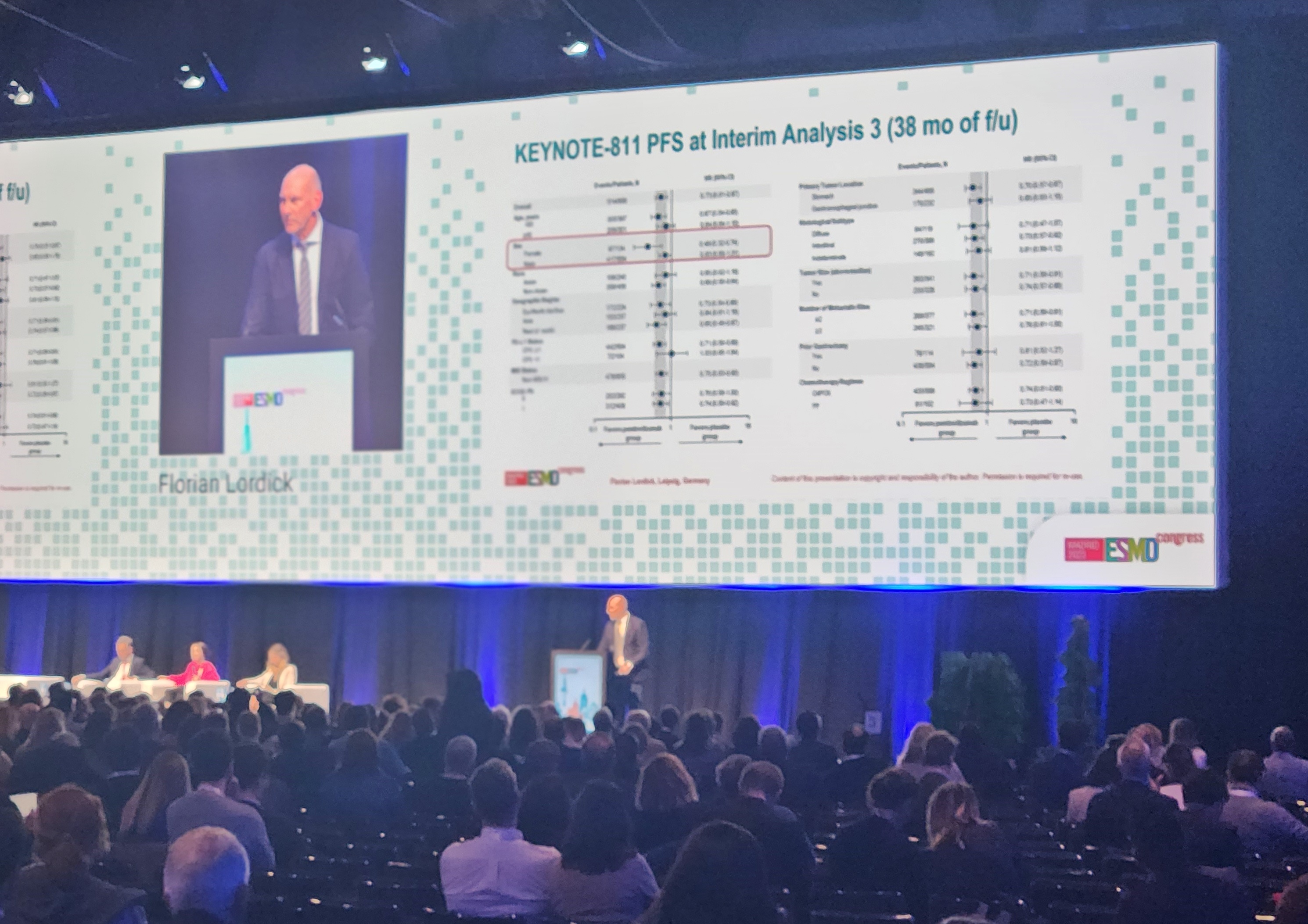
- Metastatic gastric cancer has long been labeled as a drug-barren area on site. Various clinical studies have been conducted to develop new therapies for the area, but most have been unsuccessful. This is due to the tumor's heterogeneity, which makes it difficult to prove the efficacy of treatments. However, the recent introduction of immuno-oncology drugs and targeted therapies has changed the treatment strategy in clinical practice. # The treatment paradigm for gastric cancer has now reached a state where the use of anticancer drugs is indispensable. However, due to obstacles in the domestic health insurance system, such as reimbursement and companion diagnostics, the use of these drugs in clinical practice is still limited. And pharmaceutical companies that are well aware of the situation have been scrambling to solve the problem. According to industry sources on the 13th, several drugs from global pharmaceutical companies have been approved in Korea for metastatic gastric cancer this year and are now available for clinical use. One representative drug is MSD Korea’s Keytruda (pembrolizumab). Keytruda was approved for the first-line treatment of metastatic HER2-positive gastric cancer, and in March this year, the indication was expanded to include HER2-negative gastric cancer. This makes Keytruda the first immuno-oncology option approved for both HER2-positive and HER2-negative gastric cancer. In the case of metastatic HER2-positive gastric cancer, the new indication was based on KEYNOTE-811, which was presented at the European Society for Medical Oncology’s ESMO Congress 2023. Specifically, after a median follow-up of 28.4 months, the Keytruda-trastuzumab-chemotherapy combination (10.0 months) reduced the risk of disease progression or death by 28% compared to trastuzumab-chemotherapy (8.1 months), resulting in a statistically significant improvement in PFS in the advanced HER2-positive gastric cancer ITT(intention to treat) population. The KEYNOTE-811 study, in particular, was expanded to a global clinical trial based on a trial led by Professor Sun Young Rha (Medical Oncology) at Yonsei Cancer Hospital. In addition, Keytruda was approved in March this year for the first-line treatment of HER2-negative gastric cancer, demonstrating clinical utility over chemotherapy regardless of the patient’s PD-L1 expression. Results from the KEYNOTE-859 trial, which became the basis of the drug’s approval for the indication, showed that at a median follow-up of 31 months, the median overall survival (OS) of the Keytruda-antineoplastic chemotherapy combination was 12.9 months, compared to 11.5 months with chemotherapy alone, and the risk of death was reduced by 22%. If Keytruda has changed the landscape of gastric cancer treatment as an immuno-oncology agent, Astellas' Vyloy (zolbetuximab) is the representative targeted therapy option. Vyloy is the first globally approved Claudin 18.2-targeted treatment, an immunoglobulin monoclonal antibody that binds to Claudin 18.2, a protein expressed and exposed in the stomach. Its approval in Korea allows Vyloy to be used in combination with fluoropyrimidine and platinum-based chemotherapy as a first-line treatment for patients with Claudin 18.2-positive, HER2-negative, unresectable locally advanced or metastatic gastric adenocarcinoma or gastro-oesophageal junction adenocarcinoma. The approval of Vyloy was based on two Phase 3 trials in patients with Claudin 18.2-positive and HER2-negative unresectable, locally advanced or metastatic gastric adenocarcinoma or gastro-oesophageal junction adenocarcinoma, the SPOTLIGHT and GLOW studies. In SPOTLIGHT, the median progression-free survival (PFS) in the Vyloy arm was 10.61 months, compared to 8.67 months in the control arm, reducing the risk of disease progression or death by approximately 25%. The secondary endpoint, median OS, was significantly higher in the Vyloy arm at 18.23 months versus 15.54 months in the placebo arm. Professor Sun Young Rha (Medical Oncology, Yonsei Cancer Hospital), Chairman of the Korean Cancer Association, said, “With an estimated prevalence of more than 100,000 patients with Stage IV gastric cancer in Korea, the approval of the first Claudin 18.2-targeted therapy will provide a breakthrough in the treatment of metastatic gastric cancer, an area that had limited options. In addition to expanding treatment options, the significant improvement in mOS compared to conventional chemotherapy, as Vyloy reduced the risk of disease progression or death by approximately 25%, is very encouraging in the treatment of metastatic gastric cancer due to its stagnant survival rate.” Keytruda’s expanded indication and the introduction of Vyloy have changed the treatment strategy for metastatic gastric cancer in Korea, but institutional obstacles have been obstructing its full use on-site. In the case of Keytruda, it has been difficult to cross the threshold of the Health Insurance Review and Assessment Service's Cancer Disease Deliberation Committee. It has applied for reimbursement for 17 indications but is being held up by the CDDC because it would require a significant investment in health insurance finances. As of August, the company has applied for insurance reimbursement benefits to the CDDC for a total of 17 indications, upon being granted marketing authorization for 33 indications in 17 cancers. After applying for reimbursement for 13 indications last year, the company added four more indications to the application this year, including MSI-H gastric cancer, MSI-H biliary tract cancer, HER2-positive gastric cancer, and HER2-negative gastric cancer. In addition, MSD Korea submitted a new reimbursement proposal in October to expand the reimbursement standard for 17 indications, including gastric cancer and is making every effort to set reimbursement standards this year. For reference, HIRA’s last CDDC meeting this year is scheduled for the 18th. However, it has been reported that there has not been a proper discussion made on the gastric cancer indication yet. If it fails to pass this year's CDDC review, Keytruda's application will enter its third year of deliberations. An MSD Korea official said, “Patients with gastric cancer, triple-negative breast cancer, and head and neck cancer, for which there are no current therapies available, are longing for the opportunity to be treated with Keytruda, which has demonstrated sufficient clinical utility. This reimbursement submission also includes the gastric cancer indication for which we applied for additional reimbursement expansion earlier this year. We hope it will be included in the final CDDC review.” Vyloy’s situation is different, but similar to Keytruda's. Companion diagnostics are required to use the drug, but this restriction is holding the drug’s use back. This is because HIRA is reportedly considering whether Roche Diagnostics' companion diagnostic test for Claudin 18.2, immunohistochemistry (IHC), should be evaluated as a new health technology in the reimbursement review process. If it is subject to a new health technology assessment, it would be difficult to utilize Vyloy in clinical practice during the review period, apart from its reimbursement. “If the companion diagnostic test method for Vyloy is subject to new health technology assessments, the introduction of the treatment in Korea may be delayed for up to a year,” said Rha. Targeted anticancer drugs and companion diagnostics inevitably go hand in hand, but the current system has structural limitations that do not support this, and patients are left to suffer the consequences. The KCA will continue to advocate for policy changes.”

- Policy
- Reimb of PE exemption drugs can be ex officio rejected
- by Lee, Tak-Sun Dec 16, 2024 05:53am
- In the future, drugs that sign refund-type risk-sharing agreements will be reviewed briefly by the Health Insurance Review and Assessment Service, focusing on changes, when a drug is reimbursed through the signing of the risk-sharing agreement more than 3 times. In addition, if a drug applies as a drug that can skip submission of pharmacoeconomic evaluation data but does not meet the requirements, such application can be rejected without committee deliberation. HIRA released a revision to the 'Detailed Evaluation Criteria for New Drugs and Other Drugs Subject to Negotiation' on the 12th that contains the changes above. The revision, which was finalized after deliberations by the Drug Reimbursement Evaluation Committee on the 5th, reflects improvements to the system for rewarding the innovation value of new drugs reported to the Health Insurance Policy Review Committee last year. HIRA has already revised the criteria once to reward the new drugs’ innovative value once in August. The new revision contains simplification of review for drugs that have signed 3 or more risk-sharing contracts. Specifically, it is possible to briefly review refund-type drugs, excluding multiple RSA-type drugs, starting from the evaluation related to the expiration of the second risk-sharing contract period (in the case the drug is signing the third or further risk-sharing contract), focusing on changes. There are also new requirements set to reject applications for ineligible PE exemption drugs. If an applicant applies for a determination that a drug falls under Article 6 (Drugs deemed essential for medical treatment) or Article 6.2 (Drugs that can waive the submission of pharmacoeconomic evaluation data) of the Regulations on Evaluation Criteria and Procedures for Eligibility for Medical Treatment Benefits, etc.’ HIRA stated that this addition was made to “clarify the processing criteria for drugs that are waived submitting pharmacoeconomic evaluation data for but fail to submit required data to improve work efficiency.”
