
- LOGIN
- MemberShip
- 2026-06-23 02:36:10

- Company
- J&J appoints Christian Rodseth as new Managing Director
- by Hwang, Byung-woo Sep 05, 2024 05:51am
- Christian Rodseth was appointed as the new Managing Director for J&J Janssen Korea, a subsidiary of Johnson and Johnson (J&J)'s pharmaceutical division in South Korea, announced on September 4th that Christian Rodseth was appointed as the new Managing Director for J&J's pharmaceutical division in North Asia as of September 2nd. As the CEO of Janssen Korea and Managing Director for J&J's pharmaceutical division in North Asia, Rodseth will lead the North Asia cluster, including South Korea, Taiwan, and Hong Kong. Rodseth joined J&J as a sales representative in South Africa in 2006 and has held sales, marketing, and strategic planning positions in various countries, including Africa, Europe, and the United States. Until recently, Rodseth served as the Managing Director for five European countries, including Greece, Poland, and Romania, and led significant business growth. He has also contributed to improving patient accessibility to innovative treatments by holding positions in pharmaceutical associations in various countries. Rodseth said, "I am pleased to lead the team with expertise in leading healthcare innovation in South Korea, Taiwan, and Hong Kong markets," and added, "I hope to solve complicated diseases by keeping close communication with physicians, the government, and patients and to improve patient accessibility to innovative medicines. Ultimately, I hope these efforts could save patient lives and change lifestyles." Rodseth graduated from University of the Witwatersrand in South Africa and Warwick Business School in the U.K.
- Policy
- ‘Policy support enabled the prompt approval of Envlo’
- by Lee, Hye-Kyung Sep 04, 2024 05:49am
- The backstory of Daewoong Pharmaceutical's Envlo 0.3mg (enavogliflozin), which is a representative success case of the MFDS’s expedited review process, was introduced recently. The government’s policy support for the commercialization of innovative products was what enabled Envlo’s clinical trial to approval in just 5 years. In general, diabetes drugs that require long-term use take an average of 7 years from clinical trials to approval. However, with MFDS support and Daewoong Pharmaceutical's R&D capabilities, Envlo succeeded in shortening this period to 5 years. The MFDS published the 'Successful Medical Product Commercialization Casebook' and revealed not only Envlo, but also cases such as Roche Korea’s Lunsumio Inj (mosunetuzumab) and Recordati Korea's Qarziba Inj 4.5mg/ml (dinutuximab beta). Envlo Tab= Envlo Tab, the first product to be subject to expedited review, received a quality review in advance through a rolling review process prior to its approval. During the approval review process, the company was able to closely communicate with the reviewer about the submitted data through product briefings and supplementary briefings, and the MFDS ordered data preparation guidance and requested supplementary material in real-time. While the average time to the approval of a new drug in Korea is 314 days, Envlo was approved in 243 days, reducing the time required by 71 days. Based on this, Daewoong Pharmaceutical licensed out Envlo’s technology for KRW 108.2 billion to Mexico and Brazil in February last year and for KRW 77.1 billion to Russia/CIS in December of the same year. The company is currently undergoing approval reviews in 12 countries, including Mexico, Saudi Arabia, and the Philippines. The MFDS said, “The rapid approval achieved by the collaboration of public and private sectors is expected to lead to the overall growth of the domestic pharmaceutical industry in the long run. The expedited review of Envlo was an opportunity to experience the MFDS’s determination to support domestically developed new drugs.” “After being designated as the first drug subject to expedited review, we communicated with the reviewers frequently through briefings and technical consultations, which helped clarify the direction of our future preparations,” said Jong-won Choi, Executive Director of the Development Division at Daewoong Pharmaceutical. ”The approval period was shorter than expected by two months with the help of the rolling review system.” Lunsumio Inj= Lunsumio Inj, a first-in-class CD20 and CD3 bispecific antibody treatment was designated as the No.1 GIFT drug, which allowed the review to begin immediately upon the submission of the application. In particular, the fast-track designation and approval process fostered the conditions for faster access for patients, as domestic approval was prepared without any time lag from overseas regulatory review. The number of patients with recurrent/refractory vesicular lymphoma in Korea increased from 885 in 2018 to 1,770 in 2022, and the number of patients is still increasing every year, increasing the disease burden on society. “We were able to communicate with the reivewee frequently and quickly prepare the necessary materials for the review,” the MFDS said, adding that ”we were able to grant marketing authorization faster than the usual drug license review period.” Qarziba Inj=Qarziba, which is a treatment for high-risk and relapsed/refractory neuroblastoma was eligible to GIFT and other support benefits in the approval process as the No.1 ‘approval-evaluation-drug pricing negotiation project.’ The reviewers from the Expedited Review Division communicated frequently with the company representatives and actively delivered their inquiries and comments on the submitted data. In particular, one of the benefits of GIFT is the opportunity to share opinions through supplementary briefings and frequent non-face-to-face consultations, which can be utilized through wired and wireless communication such as phone calls and emails, as well as opportunities such as product briefings and supplementary briefings. In the case of safety and efficacy, criteria, and test methods, the first round of supplementation was already made, and the reviewers provided detailed and professional counseling in the video supplementation session requested by the company.
- Company
- New drug Voranigo receives orphan drug designation in Korea
- by Eo, Yun-Ho Sep 04, 2024 05:49am
- Voranigo, the first new malignant brain tumor drug introduced in 20 years, has received an orphan drug designation in Korea. The Ministry of Food and Drug Safety announced so through an official orphan drug designation notice on the 3rd. Specifically, the drug is for the treatment of IDH-mutated diffuse glioma. Voranigo can be used to treat patients with low-grade glioma who are susceptible to isocitrate dehydrogenase-1 (IDH1) and isocitrate dehydrogenase-2 (IDH2) mutation. Voranigo (vorasidenib) is an IDH1/2 dual inhibitor class drug developed by the multinational pharmaceutical giant Servier that targets a difficult-to-treat brain tumor, gliomas (including oligodendrogliomas and astrocytomas). The drug received final approval from the U.S. Food and Drug Administration (FDA) on March 6 and is in the process of being approved in Europe and other countries around the world. The efficacy of Voranigo was demonstrated through the Phase III INDIGO trial. The results of the study were presented at the American Society of Clinical Oncology (ASCO) Annual Meeting last year. Results showed that the drug significantly reduced the risk of tumor progression or death by 61% compared with placebo in patients with residual or recurrent grade 2 IDH-mutant glioma, and reduced the risk for further treatment by 74%. These patients had not previously undergone any treatment other than surgery. The trial also showed that Voranigo was well tolerated, and its safety profile was consistent with the results observed in the Phase 1 trial. Glioma is the most common primary malignant brain tumor in adults, and nearly all (grade 2 diffuse glioma) adult patients have IDH1 or IDH2 mutations. The treatments for these patients are all off-label (drugs licensed for other uses) and not formally approved. In addition to Voranigo monotherapy, Servier is currently conducting a clinical trial on Voranigo in combination with MSD's immuno-oncology drug Keytruda (pembrolizumab) in patients with relapsed or advanced IDH1-mutant glioma. The company already owns a pipeline of IDH inhibitors, including Tibsovo (an IDH1 inhibitor) and Idhifa (an IDH2 inhibitor).
- Company
- Yuhan's investment in US subsidiary total KRW 27B over 5 yrs
- by Chon, Seung-Hyun Sep 04, 2024 05:48am
- Yuhan Corporation has invested KRW 3.9 billion additionally to the U.S.-based subsidiary of the company. The company invested KRW 27 billion over the past five years, expanding support for global entry. According to Financial Supervisory Service on September 4th, Yuhan Corporation invested KRW 3.9 billion in the first half of the year and acquired an additional 3 million shares. Yuhan Corporation Headquarter Office buildingEstablished in 2018, Yuhan USA is a U.S.-based regional subsidiary of Yuhan Corporation and and is responsible for investing in potential biotech ventures, conducting global clinical trials, and delivering technology transfers. It is Yuhan Corporation's wholly-owned subsidiary and will serve as a bridgehead for global entry. Yuhan USA operates by having an East Coast office in Boston and a West Coast office in San Diego, United States. Boston is the hub for the world's biotech industry, and San Diego is emerging as a major biotech cluster. It has been two years since Yuhan Corporation invested in Yuhan USA in 2022. In the second quarter of 2022, Yuhan Corporation invested KRW 7.7 billion in Yuhan USA and acquired 6 million shares. Yuhan Corporation invested KRW 1.9 billion when it set up Yuhan USA in 2018. It invested an additional KRW 3.5 billion and KRW 3.6 billion in 2019 and 2020, respectively. In 2021, the company invested KRW 6.4 billion. Including this investment round, Yuhan Corporation has invested a total of KRW 27 billion over the past five years. Yuhan USA's strategy focuses on visiting companies, research centers, and universities in the United States to make direct investments in potential technology and new drug candidates. Its indirect investment strategy involves investing in biotech ventures in the United States or opening its fund to invite U.S.-based biotech ventures and investors. Most of the Yuhan Corporation's investment in Yuhan USA is invested in an investment fund run by 5AM Ventures, a Boston-based biotech venture capital firm. The strategy is continuously investing in overseas biotech funds and seeking new R&D opportunities. Furthermore, Yuhan USA participates in international conferences in the United States and presents clinical data of new drugs developed by Yuhan Corporation to increase chances for out-licensing. In 2020, Yuhan USA successfully out-licensed Yuhan Corporation's gastrointestinal medication. Yuhan Corporation signed an out-licensing agreement with Processa Pharmaceuticals in August 2020 for its ' YH12852,' a candidate for the treatment of functional intestinal disorder. The agreement included exclusive development, manufacturing, and commercialization rights for 'YH12852' worldwide, excluding South Korea. The total agreement amount is up to US$410.5 million (about KRW 500 billion). Yuhan Corporation has secured US$2 million worth of Processa Pharmaceuticals shares for a non-refundable upfront payment. Processa Pharmaceuticals is an R&D company established in Maryland, U.S., in 2016. Yuhan USA identified a potential out-licensing partner in the United States and successfully reached the final agreement with Processa Pharmaceuticals.
- Company
- Generic companies lastly challenge Lixiana patent
- by Kim, Jin-Gu Sep 04, 2024 05:48am
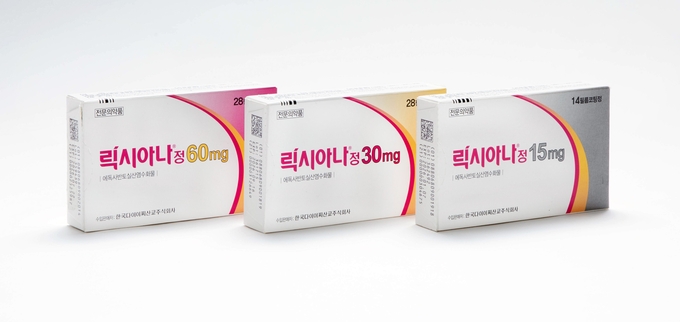
- Pic of Lixiana Generic companies have been filing late patent challenges against Lixiana (edoxaban), the market leader in the direct-acting oral anticoagulants (DOACs) market. This is due to the imminent expiry of the product's formulation patent, which is 2 years away. The strategy of the patent challengers is to avoid the formulation patent and launch generics early upon the expiry of the product patent in November 2026. According to industry sources on the 3rd, Dongkwang Pharmaceutical recently filed a trial to confirm the passive scope of Lixiana's formulation patent against Daiichi Sankyo. Prior to Dongkwang Pharmaceutical, Theragen Etex also filed a challenge to avoid the same patent last month. The interesting fact is that a series of such challenges had ended in the 2020-2021 season. The challenge to the Lixiana formulation patent began in July 2018 when Boryung Pharmaceutical first filed a trial to avoid Lixiana’s patent. Hanmi Pharmaceutical, Chong Kun Dang, Samjin Pharm, Kolmar Korea, Kolmar Pharma, HK. Inno.N, Hutecs Korea followed to receive trial decisions for the same patent. The companies won the first trial after May 2020. In 2021, Dong-A ST and Shinnil Pharmaceutical filed for the same judgment and won the first trial. The original manufacturer of Lixiana, dropped its appeal, and the first-instance victory was finalized as a ruling. This ended the patent challenge, with 10 generic companies avoiding Lixiana's formulation patent once and for all. Now, more than 3 years later, the challenge has resumed with Theragen Etex, Dongkwang Pharmaceutical filing the trials. The analysis is that the companies made the move as the expiry of Lixiana's product patent is now just 2 years away. There are 2 Lixiana patents listed on the MFDS’s green list: a product patent that expires in November 2026 and a formulation patent that expires in August 2028. Generic companies plan to avoid the formulation patent and launch generics of Lixiana early to coincide with the expiration of the product patent. If the companies that won the first trial won the invalidation trial, the patent itself would have been invalidated, rendering no need for latecomers to file separate challenges. However, since the previous companies won the passive scope confirmation trial rather than the invalidation trial, the latecomers must also file individual challenges. Of course, as other generic companies have already won, the chances of success for the latecomers are high. Quarterly DOAC prescriptions (Lixiana, Eliquis, Xarelto, Pradaxa) Industry insiders raised the possibility of additional patent challenges rising in the future due to Lixiana’s long-term lead in the DOAC market with prescription sales of more than KRW 100 billion per year. According to pharmaceutical market research institution UBIST, Lixiana’s prescription sales were KRW 105.3 billion last year. That is up 9% from the KRW 96.7 billion in 2022. In the first half of this year alone, the drug generated KRW 55.7 billion in prescription sales. Lixiana first became the market leader in 2019 and has maintained its lead ever since. The company attributed the rise in prescription sales to the copromotion synergy with Daewoong Pharmaceutical. Moreover, the gap with the second-ranked drug has been widening upon the expiration of the substance patents of its rivals Xarelto (rivaroxaban) and Eliquis (apixaban).
- Policy
- Alvogen voluntarily recalls Comtan Tab due to impurities
- by Lee, Hye-Kyung Sep 03, 2024 05:53am
- Single-agent entacapones, which are used for Parkinson's syndrome, are being recalled due to the detection of excess impurities. The issue of drug impurities continues to arise after MFDS has added nitrosamine impurity testing as a quality control test item to strengthen the management of nitrosamine impurities. On March 30, MFDS announced the recall of Alvogen Korea's Comtan Tab 200mg (entacapone) due to the detection of excess NDEA in the post-market stability test. In April, following the company's report that N-nitrosodiethylamine (NDEA) impurities were detected in its single agent entacapone, the MFDS began reviewing safety measures, including setting necessary temporary permissible standards based on the submitted test and inspection results. The MFD introduced the Carcinogenic Potency Categorization Approach (CPCA), which predicts carcinogenic potential based on the structure-activity correlation of molecules, to set standards for nitrosamine impurities as introduced by the European EMA and the U.S. FDA, and updated the daily intake allowance for nitrosamine impurities in Korea based on the standard-setting method. However, in the case of medicines with medical necessity or supply interruption (shortage), a temporary distribution allowance is applied for a certain period of time to address the supply and demand situation. The item being recalled this time is Comtan Tab 200mg with the lot number (expiration date) '2169627 (2026-07-30).’ Currently, there are only 2 items licensed in Korea as single-agent entacapone: Comtan Tab 200 mg and Myungin Entacapone Tab 200mg by Myung In Pharmaceutical. Single-agent entacapone is indicated as an adjunct to levodopa-dopa decarboxylase inhibitors in patients with Parkinson's syndrome whose symptoms do not improve with standard levodopa-dopa decarboxylase inhibitors therapy.
- Company
- Pharma companies jump into developing 'TPD' for cancer
- by Son, Hyung-Min Sep 03, 2024 05:53am
- The global and Korean pharmaceutical industries are focusing on securing Targeted Protein Degradation (TPD) technology, which has emerged following the success of Antibody-Drug Conjugates (ADCs). Recently, major global pharmaceutical companies such as Pfizer, Novartis, and Eli Lilly have successfully acquired TPD technologies, marking TPD as a new anti-cancer drug development strategy, following targeted therapies, immune checkpoint inhibitors, and ADCs. Korean pharmaceutical and biotech industries are also exploring the potential of TPD drug development and have achieved successful technology transfers. According to industry sources on September 3rd, several Korean biopharmaceutical companies, including Yuhan Pharmaceutical, SK Biopharmaceuticals, Daewoong Pharmaceutical, Samjin Pharmaceutical, and Orum Therapeutics, have jumped into developing novel TPD drugs. TPD drugs are the next-generation new drug candidate that can use an intracellular protein degradation system to degrade protein of interest specifically. Unlike conventional small-molecule targeted drugs that inhibit protein function, novel TPD drugs offer superior therapeutic effects and avoid tolerance by directly degrading and eliminating disease-causing proteins. TPD drugs can target over 80% of disease-causing proteins that conventional small-molecule drugs could not modulate. The mechanism of the TPD technology, previously referred to as PROTAC (source=KRICT). SK Biopharmaceuticals has identified TPD as a promising future field and is advancing its development as a follow-up to its epilepsy treatment, Xcopri. Last year, the company invested KRW 62 billion to acquire Proteovant, securing TPD technology. Founded in March 2020 in the U.S., Proteovant is a biotech venture with global-level technology in the TPD field and molecular glue technology. Yuhan Pharmaceutical is also eyeing the opportunity to develop TPD drugs as a follow-up to its non-small cell lung cancer treatment (NSCLC), Leclaza. The company acquired the prostate cancer drug candidate 'UBX-103' in July from Ubix Therapeutics. As a result, Yuhan Pharmaceutical has secured the lead for clinical trials and exclusive rights for the development and commercialization of UBX-103. The recently acquired 'UBX-103' by Yuhan Pharmaceutical is a novel prostate cancer drug candidate based on TPD technology. UBX-103 works by degrading the androgen receptor, overexpressed or hyperactivated in prostate cancer patients. In the non-clinical studies, UBX-103 showed ten times superior androgen receptor degradation and suppression of prostate cancer cell proliferation in wild type and mutant compared to 'ARV-110' of Arvinas, a U.S.-based company. In a castration-resistant prostate cancer mouse model, the drug showed three times more anti-cancer efficacy than ARV-110. Orum Therapeutics is proving its R&D capacity by successfully out-licensing TPD platform to global pharmaceutical companies. In July last year, the company signed an out-licensing agreement with the U.S.-based biotechnology company Vertex Pharmaceuticals for its TPD. Vertex Pharmaceuticals is a company that developed a CRISPR/Cas9 gene-edited therapy, exa-cel. Utilizing Orum Therapeutics' Dual-Precision TPD (TPD2), Vertex Pharmaceuticals plans to discover 'conditioning agents,' which are used to wash bone marrow before injecting patients with gene editing products. TPD, provided by Orum Therapeutics, is a technology that specifically degrades target proteins. Daewoong Pharmaceutical and Samjin Pharmaceutical have signed a strategic business agreement with the Korean TPD discovery company Pin Therapeutics to develop novel drugs. Pin Therapeutics is a novel drug discovery company established in 2017 that conducts global R&D by collaborating with 'PinUS,' a wholly-owned subsidiary in the United States. Global pharmaceutical companies proactively conduct novel TPD drugs Global pharmaceutical companies are also proactively developing novel TPD drugs. AstraZeneca has signed an out-licensing deal with the U.S.-based PineTree Therapeutics for exclusive sales and global rights. PineTree Therapeutics is a company established in 2019 in Boston, U.S., specializing in the development of novel drugs. PineTree Therapeutics' EGFR degrader candidate was developed using its proprietary multi-antibody platform, 'AbRaptor.' Based on the research, this candidate demonstrated anti-tumor activity when used in tumors resistant to drugs such as tyrosine kinase inhibitor (TKI). AstraZeneca has the EGFR drugs Tagrisso and Iressa for the treatment of non-small cell lung cancer (NSCLC). Utilizing the TPD technology, the company plans to develop follow-up drugs for Tagrisso and Iressa. Global pharmaceutical companies like Pfizer and Novartis have invested over KRW 1 trillion in Arvinas' TPD pipeline development. The U.S.-based company Arvinas is a leader in the TPD field. Arvinas' platform PROTAC was previously referred to as TPD technology. The company is the only company in the world to own a proprietary novel TPD candidate that has entered the Phase 2 trial. In 2021, Arvinas signed an out-licensing deal with Pfizer for its novel TPD drug, 'ARV-471,' for breast cancer treatment. It also transferred androgen receptor degrader 'ARV-766' to Novartis. With the agreement, Novartis will be responsible for the global clinical trial development and commercialization of ARV-766. Last year, Arvinas announced ARV-766's interim data from dose escalation research. Based on the clinical results, the drug demonstrated a 50% reduction of prostate-specific antibody (PSA) in 41% of patients with mutations in the ligand-binding domain in the androgen receptor. Novartis will aim to commercialize ARV-766 as a prostate cancer treatment and enter the later stage of clinical trials. Additionally, various global companies like Novo Nordisk, Astellas, and Eli Lilly have jumped into this field by investing in companies developing novel TPD drugs.
- Policy
- Prolia’s drug price cut 30% before the entry of biosimilars
- by Lee, Tak-Sun Sep 03, 2024 05:53am
- Prolia, the No. 1 product in the domestic osteoporosis treatment market, has had its upper insurance price limit adjusted this month through price-volume agreement (PVA) negotiations. The drug underwent 4 PVA negotiations in total, which led to a price drop of nearly 30% from the initial price it received in October 2017 upon reimbursement. According to industry sources on the 2nd, the upper limit for Prolia Prefilled Syringe (denosumab, Amgen Korea) was lowered from KRW 156,100 to KRW 154,700 from the 1st of this month under ‘Type B’ PVA negotiations with the National Health Insurance Service. The rate of reduction this time was -0.9% Type B negotiations are applied when the expected claims amount of a drug that has been previously adjusted through Type A negotiations or has not been adjusted for 4 years since its initial date of listing or price adjustment increased by 60% or more compared to the previous year, or increased by 10% or more but the total amount exceeds KRW 5 billion. This is the 4th time Prolia’s insurance price ceiling has already been adjusted through PVA negotiations. In December 2020, the cap was reduced by 6.5% due to an increase in expected claims amount of over 30%, which qualifies the drug for ‘Type A’ PVA negotiations. In August 2022, the price was reduced by 5.0% under Type A negotiations. And in August 2023, the cap was adjusted by 3.7%, also through Type A negotiations. Prolia’s sales have been on the rise ever since it was applied reimbursement benefit in October 2017. In particular, since April 2019, when reimbursement coverage was expanded to first-line therapies, its sales have grown to exceed KRW 100 billion in annual sales. The synergies of Amgen and Chong Kun Dang’s copromotion have also contributed to the steep rise. According to IQVIA, Prolia posted sales of KRW 47.3 billion in 2019, KRW 75.1 billion in 2020, KRW 92.1 billion in 2021, KRW 115.7 billion in 2022, and then KRW 151.1 billion in 2023. Sales in 2023 increased by 219% compared to 2019. The steep rise in performance has inevitably led the company to receive PVA negotiations 3 years in a row. In May, Prolia received reimbursement extensions in Korea. Prior to the reimbursement extension, patients with a bone mineral density measurement of -2.5 (T-score) or less were eligible for 1 year of benefits, but after the reimbursement extension, patients with a T-score of -2.0 or less and to -.2.5 are eligible for up to 2 years of reimbursement. At the time, Amgen had voluntarily reduced the price ceiling of its drug upon the reimbursement extension. That voluntary reduction likely reduced the reduction rate during this year’s PVA negotiations. Even so, the price is already down -28.3% compared to the price at the time of the October 2017 reimbursement (KRW 215,678). This is a further reduction in price than the 20% ex officio reduction an original drug would receive the first year a biosimilar is listed. Prolia's patent is scheduled to expire next March. Celltrion and other biotechs are preparing to receive approval for its biosimilars. Therefore, the price of Prolia is expected to drop further once a biosimilar enters the market. “Prolia is a biologic drug that targets the RANKL protein, which forms osteoclasts that destroy the bone. Its use in the field will continue to increase in the future due to its high compliance that is provided by its longer dosing interval of every 6 months, and has clinical results that have proven its effect even after 10 years of treatment,” said an industry official.

- Policy
- Rival party heads discuss pending issue in NA
- by Lee, Jeong-Hwan Sep 03, 2024 05:53am
- Dong-hoon Han, Chairman of the People Power Party, and Jae-Myung Lee, Chairman of the Democratic Party of Korea met at the National Assembly on the afternoon of the 1st and reached a consensus on resolving the parliamentary conflicts and medical gap. Han mentioned the need to resolve the public's anxiety over the medical gap, while Lee suggested that the National Assembly seek a solution to the parliamentary conflict. Although healthcare reform was not on the official agenda of the ruling and opposition parties' talks, due to the Corporal Chae’s Special Prosecutor Act, the abolition of the financial investment income tax, and the public KRW 250,000 support law, it was reportedly mentioned by Lee in the closed-door meeting. “I would like to say that healthcare reform is also ultimately for the people,” Han said in his remarks, ”but it is also the task of us politicians to resolve the people's anxiety about the medical gap in the immediate future.” Han had previously proposed to the President's Office to suspend the increase in medical school enrollment for the 2026 academic year as an intervention. However, the President's Office rejected the proposal and confirmed that the healthcare reform implementation plan, including the 2026 medical school enrollment quota, remains unchanged. In his meeting with Lee, Han reaffirmed the need for an alternative solution to the healthcare gap. “As party leader, I will make further efforts to address the concerns and anxieties of the people at this time while maintaining the essence and drive for the healthcare reform,” said Han. In his remarks, Lee also said, “It is unfortunate that the healthcare crisis is not on the official agenda. The medical crisis is linked to people's lives, which is why Mr. Han proposed certain alternatives even at the risk of gathering conflict with the government. It will not disappear just because we cover it with our palms and avoid it.” “I agree with the basic direction of healthcare reform, which is to increase the number of doctors and strengthen essential, public, and local medical care, as Mr. Han said,” said Lee, ”but it is essential to have sufficient dialog and seek compromise among groups with conflicting interests in the policy implementation process.” “If you use force to force people to give in, even if you succeed, the aftermath and damage are too great,” he said. ”If the policy implementation is as harsh, urgent, and excessive as it is now, inevitable side effects would have to appear“ “These side effects have led to a crisis in one of the world's best healthcare systems, and the number of people dying in emergency rooms who shouldn't have is already exceeding last year's total. We look forward to having sufficient dialogue with Mr. Han about this issue. First of all, let's seek a solution for the medical crisis in the National Assembly, the ruling and opposition parties together, through discussions and dialogues to accurately identify the current situation, recognize the problem, and reach a consensus.”

- Policy
- Usage recommendations for 3 JAK inhibitors to be changed
- by Lee, Tak-Sun Sep 03, 2024 05:53am
- After collecting opinions, the MFDS will change the usage·dosages section for PfizerAfter collecting opinions, the MFDS will change the usage·dosages section for Pfizer The Ministry of Food and Drug Safety (MFDS) will implement changes to approval for Janus Kinase (JAK) inhibitors, recommending low dosages when used to treat high-risk patients. This is a follow-up measure to the changes to the efficacy and effectiveness section for high-risk patient treatment in 2022. On August 30th, the MFDS posted on the website that it has started collecting opinions on the revised approval for JAK inhibitors based on reviewing the safety information from the European Medicines Agency (EMA). The posting indicates that the updated guidelines for tofacitinib in ulcerative colitis now include a recommendation against using the 10 mg maintenance dose in patients with major cardiovascular adverse events (MACE) or malignancy risk factors, regardless of the availability of alternative treatments. Baricitinib usage·dosages in the treatment of rheumatoid arthritis, atopic dermatitis, and alopecia areata will include "a recommendation for a daily dose of 2 mg for patients at high risk of venous thromboembolism (VTE), MACE, malignancy, those aged 65 or older, and those with a history of chronic or recurrent infections." Additionally, new guidelines for upadacitinib in treating atopic dermatitis, ulcerative colitis, and Crohn's disease will be updated. A clause such as "A daily dose of 15 mg is advised for patients at high risk of VTE, MACE, and malignancy" will be added. The revisions will be made to 18 products, including the original drugs such as Pfizer's Xeljanz tab, AbbVie's Rinvoq, and Lily's Olumiant. In June 2022, the MFDS added a guideline specifying that high-risk patients aged 65 and older, those with cardiovascular risks, and those at risk of malignancies could use the existing treatments only if they were deemed ineffective. This update was based on safety information from international data. In September 2021, the MFDS issued a safety communication based on international safety information, warning that the three substances, tofacitinib, baricitinib, and upadacitinib, could increase the risk of severe cardiovascular events, including heart attacks. As a follow-up measure, the MFDS is revising the approval requirements. JAK inhibitors are drugs used to treat various autoimmune diseases, including rheumatoid arthritis. It works by inhibiting JAK, a kinase regulating immune responses and inflammation. The JAK inhibitors sales in South Korea are high. Last year's IQVIA data show that Pfizer's Xeljanz tab recorded KRW 12.9 billion, AbbVie's Rinvoq recorded KRW 20.7 billion, and Lily's Olumiant recorded KRW 17.9 billion in sales.
