
- LOGIN
- MemberShip
- 2026-06-23 02:35:48
- Company
- Expansion of newly launched Kerendia underway in KOR
- by Moon, sung-ho Aug 23, 2024 06:18am
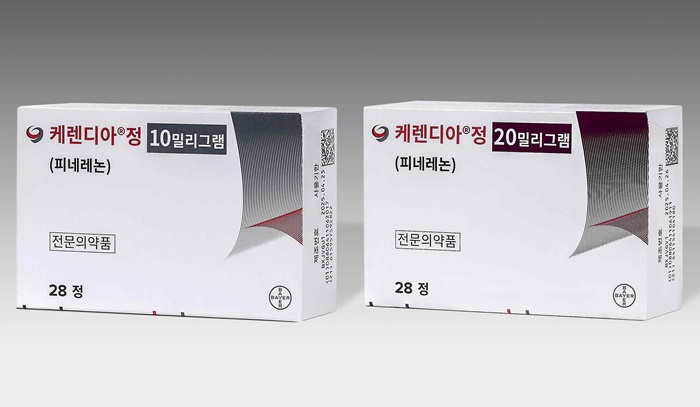
- Since early this year, Kerendia has been covered by reimbursement in clinical practices in South Korea. Kerendia's indication may expand to hypertension as it becomes available for prescriptions at clinical practices. Product photos of Kerendia. According to the pharmaceutical industry on August 13th, Kerendia (finerenone) is now being used in clinical practices after obtaining reimbursement coverage in February for adult patients with chronic kidney disease who have type 2 diabetes. Kerendia is the first non-steroidal, selective mineralocorticoid receptor antagonist and a novel therapeutic approach targeting inflammation and fibrosis in adult chronic kidney disease patients with type 2 diabetes. As a result, Kerendia has been prescribed this year in the departments of internal medicine and nephrology at medical centers in South Korea. Sung Hee Choi, Professor of the Department of Internal Medicine at Seoul National University Bundang Hospital, said "There is no drug like Kerendia that could directly suppress chronic suppression or kidney fibrosis. New treatment options that can directly target should be welcomed, and this could be an important part of changing the therapeutic strategy." Professor Choi explained, "I think we must consider the possibility that the drug could slow the progression of kidney disease when used early in diabetes patients and try to use it as early as possible." However, Kerendia is not actively prescribed because it is still in the early stages of its launch in South Korea. According to the medical market research firm UBIST, Kerendia generated approximately KRW 1 billion in prescription sales in the first half of this year. Considering that the government assigned KRW 9.95 billion for finance expenses in a year during the reimbursement process, it is still too early to determine if Kerendia is established in the market. Based on UBIST, the prescription amount for Kerenia is on the rise monthly, which suggests that the drug is expanding in clinical practices. Additionally, Bayer recently added Kerendia to treat patients with reduced left ventricular ejection fraction (LVEF) or preserved ejection fraction (HFpEF). The results met the primary endpoint of the Phase 3 FINEARTS-HF clinical trial, which evaluated the efficacy and safety of the drug compared to placebo. In the Phase 3 FINEARTS-HF clinical trial, the composite endpoints of heart failure events (including initial and recurrent events), defined as cardiovascular death and hospitalizations or emergency visits due to cardiovascular deaths and heart failure, demonstrated statistically and clinically significant risk reduction. As a result, Bayer is preparing to submit market authorization and expand the indication based on the clinical study. If realized, this would expand prescriptions across all areas, including endocrinology, nephrology, and cardiology. At the same time, it is expected to enable Bayer to actively target the market alongside its existing heart failure treatment lineup, including Verquvo (vericiguat). JinA Lee, CEO of Bayer Korea, explained, "Kerendia, which is now used for treating chronic kidney disease accompanying type 2 diabetes, has been shown to suppress additional chronic kidney disease progression and to show cardiovascular benefits when used in combination with standard therapy. It is expected to provide effective management and treatments for patients who need the new treatment option." Lee said, "In addition to Kerendia's role in treating chronic kidney disease accompanied by type 2 diabetes in South Korea, we will strive to provide better treatment benefits for patients with hypertension who have limited treatment options."
- Opinion
- [Reporter’s View]Gov’t disappointing response to COVID-19
- by Son, Hyung-Min Aug 23, 2024 06:18am
- COVID-19 is spreading rapidly in Korea. Currently, the variant leading the COVID-19 pandemic is KP.3 of the Omicron family. The spread of COVID-19 has been in full swing since the end of June, and the number of hospitalized patients in the 2nd week of this month reached 1,366, recording the highest this year. In the last four weeks, the number of hospitalized COVID-19 cases in 220 hospital-level surveillance centers nationwide was 226 in the 3rd week of July, 474 in the 4th week, 880 in the 1st week of August, and 1,366 in the 3rd week. The Korea Disease Control and Prevention Agency (KDCA) has stated that the KP.3 variant is highly contagious but has a low severity and fatality rate, making it manageable at current levels. Despite the government's opinion that it is manageable, there is much confusion at the point of care. Pharmacies are reportedly experiencing stockouts of cold medicines and diagnostic kits, and are having difficulty securing COVID-19 drugs. Relevant government agencies have been scrambling to come up with countermeasures. The Ministry of Health and Welfare has announced that it will start reimbursing COVID-19 treatments in October to ease the shortage. The Ministry of Food and Drug Safety has begun reviewing the approval of new COVID-19 drugs. After COVID-19 had turned into an endemic, the government has been lukewarm about approving and reimbursing COVID-19 drugs. Last year, public opinion had been formed on the need to introduce the major COVID-19 treatments that demonstrated clinical effectiveness and public opinion. Still, the KDCA delayed approving new COVID-19 drugs, citing the sufficient quantity of existing COVID-19 drugs. The reimbursement for the COVID-19 drug Paxlovid is also making little progress. Pfizer applied for reimbursement coverage of Paxlovid in October last year, but the application is yet to be reviewed by the Drug Reimbursement Committee. This is not unlike the situation at the height of the COVID-19 pandemic. Back then, the government struggled to secure COVID-19 vaccines and treatments. There were also shortages of acetaminophen-based antipyretic analgesics and non-steroidal anti-inflammatory drugs (NSAIDs), which can reduce the symptoms of COVID-19. Under the banner of securing vaccine sovereignty and treatment sovereignty, various government policies were launched, including the K-Bio Vaccine Fund and the establishment of a control tower for the pharmaceutical and biotech industry. However, since then, no domestic pharmaceutical or bio company has succeeded in receiving approval for new COVID-19 vaccines or treatments. Various domestic companies have taken up the challenge, but as the number of COVID-19 cases decreased, interest in vaccines and treatments faded. Some companies have applied for marketing authorization and reimbursement, but have not been approved. Like the rise of the KP.3 variant, there is a high probability that COVID-19 will resurface. While the KP.3 variant, like the Omicron variant, has lower rates of severity and fatality, no one can predict how or when it will spread. The COVID-19 pandemic and endemic have made the procurement of various treatments imperative. Rather than relying on the fact that there are enough existing treatments to keep the field on track, we need to proactively identify and acquire new treatments to ensure their availability when needed. There are still many areas that need to be addressed, including treatments, vaccines, healthcare infrastructure, staffing, facilities, and equipment. We should not forget the lessons we learned during the COVID-19 pandemic, including quarantines, the waiting lines for masks, the vaccine reservation rush, and cold medicine shortages.
- Company
- Will the SGLT-2i Jardiance be reimb for CKD in 2H?
- by Eo, Yun-Ho Aug 23, 2024 06:18am
- Attention is focused on whether the SGLT-2 inhibitor Jardiance can settle as a reimbursed prescription option for chronic kidney disease in the second half of the year. According to industry sources, the Health Insurance Review and Assessment Service is currently reviewing the reimbursement expansion of Boehringer Ingelheim and Lilly Korea’s Jardiance (empagliflozin). After the pharmaceutical companies submitted their applications in the first half of the year, HIRA began discussions in earnest after collecting expert opinions from relevant academic societies. The drug is for reducing the risk of progression of kidney disease or death from cardiovascular disease, regardless of the presence of type 2 diabetes, and the drug was approved for additional indication in Korea in October last year. As a result, Jardiance is now approved as a treatment for 3 conditions - diabetes, chronic heart failure, and chronic kidney disease. Chronic kidney disease is estimated to affect one in every 9 adults in South Korea. Patients with CKD are known to have 7.2 times higher the risk of death than those without chronic kidney disease. If not treated appropriately in the early stages, patients can progress to end-stage kidney disease (ESKD), which increases the risk of death. This is why the treatment of CKD is primarily aimed at delaying the progression of the disease, ultimately reducing progression to end-stage kidney disease. Jardiance’s efficacy in CKD was demonstrated through the Phase III EMPA-KIDNEY study, a large-scale SGLT-2 inhibitor clinical trial that was conducted on a broad patient population. The EMPA-KIDNEY trial included 6,609 participants with chronic kidney disease, many with comorbidities across the spectrum of cardiovascular, kidney, or metabolic conditions, regardless of Type 2 diabetes. Unlike previous SGLT-2 inhibitor studies, which focused specifically on patients with urinary albumin-to-creatinine ratios (UACRs), this study included patients with low UACR as well. The study met its primary endpoint, demonstrating a significant 28% reduction in the relative risk of kidney disease or cardiovascular death compared with placebo, and the effect was consistent across subgroups stratified by UACR, confirming a consistent treatment effect in patients with and without albuminuria The results also showed a statistically significant reduction in all-cause hospitalizations (14%) compared with a placebo, which was one of the pre-specified key secondary confirmatory endpoints, reducing the burden of hospitalization for CKD patients. Overall safety results were similar to the previously recognized safety profile. Meanwhile, Jardiance is expected to become the only original SGLT-2 inhibitor produced by a multinational pharmaceutical company in the country. Following AstraZeneca Korea's decision to withdraw Forxiga (dapagliflozin) from the market last December, Astellas Pharma Korea also recently announced the discontinuation of Suglat (ipragliflozin) in Korea.
- Policy
- DREC to review the COVID-19 drug Paxlovid a week earlier
- by Lee, Tak-Sun Aug 23, 2024 06:17am
- Product photo of Paxlovid. The Drug Reimbursement Evaluation Committee (DREC) of the Health Insurance Review and Assessment Service (HIRA) will convene a week earlier than scheduled. The DREC review evaluates the appropriateness of new drugs for reimbursement. Industry analysis suggests that the schedule has changed to quickly list the COVID-19 treatment 'Paxlovid (nirmatrelvir·ritonavir, Pfizer Korea)' for reimbursement. Previously, Minister of Health and Welfare Cho KyooHong stated that, due to the COVID-19 resurgence, Paxlovid will be reimbursed beginning in October. According to industry sources on August 22nd, the 9th DREC review for 2024 will convene on August 29th, a week earlier than the initially planned date of September 5th. The date change to the DREC review is likely due to hastening reimbursement process for Paxlovid. There is not much window of time to implement reimbursement by October, as Director Cho suggested. Typically, even if the duration it takes to negotiate with the National Health Insurance Service (NHIS) can be shortened by prior agreement, it takes 30 days to reach the drug price agreement after a drug passes the DREC review. If the drug were to pass the DREC review in early September as initially scheduled, it would be uncertain whether an agreement could be completed before the late September reporting session of the Ministry of Health and Welfare (MOHW)'s Health Insurance Policy Review Committee. As a result, it appears that an earlier DREC review date was set to provide more time for negotiation. Sources said that NHIS and Pfizer have begun discussing a prior agreement for drug price negotiation. During the COVID-19 spread, the government purchased Paxlovid so patients could use it for free. Since May, patients must pay KRW 50,000, which is approximately 5% of the drug price. It is a temporary measure before the implementation of reimbursement. However, due to the recent COVID-19 resurgence, demand for Paxlovid surged beyond the volume purchased by the government, so the drug is not being delivered to patients on time. As a result, the government aims to proceed with the reimbursement process quickly so that patients with severe diseases can receive medications properly. However, some argue that such a measure is inappropriate because once the reimbursement is applied, the co-payment would be much higher than the current KRW 50,000. Seo Youngseok, a member of the Democratic Party of Korea, criticized, " If Paxlovid price were to be set as KRW 700,000 and with 30% co-payment applied, patient's co-payment will be approximately KRW 200,000," and added, "What it means is that the National Insurance finance and patients will have to bear the financial burden of medication. In other words, the Korea Disease Control and Prevention Agency (KDCA) would fail to fulfill its job." Youngmee Jee, Commissioner of the KDCA, said, "Most countries have listed COVID-19 oral treatments for reimbursement, providing the treatments covered by insurance," and added, "Patient co-payments can be adjustable. We will minimize the financial burden on patients." Some expect Paxlovid's co-payment rate to be further reduced from 30%.
- Company
- Yungjin applies for approval of its Ofev generic
- by Hwang, Byung-woo Aug 23, 2024 06:17am
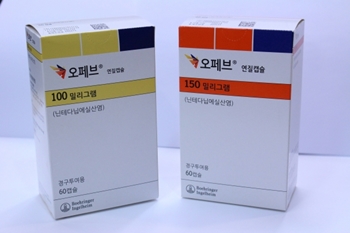
- Pic of Boehringer Ingelheim Yungjin Pharmaceutical announced on the 22nd that it has completed the license application for a generic version of Boehringer Ingelheim's ‘Ofev Soft Cap (Ofev)’ that it had developed by changing the original drug’s soft capsule formulation into a tablet. As a global blockbuster product, Ofev (nintedanib) is widely used in combination with pirfenidone to delay the decline in lung function in patients with idiopathic pulmonary fibrosis. Despite being a non-reimbursed drug in Korea, Ofev generated sales of around KRW 6 billion last year and is in such high demand that a petition is underway for its reimbursement. Yungjin Pharmaceutical was the first Korean pharmaceutical company to complete bioequivalence testing administration of its generic version of Ofev in March and recently completed submitting an application for its marketing authorization with the Ministry of Food and Drug Safety. The company had made the quickest progress among domestic pharmaceutical companies involved in the development of Ofev generics. Unlike Ofev soft capsules, it was developed as a tablet formulation, and it has a reduced size compared to the original, improving the convenience of intake for the patients. In addition, Yungjin Pharmaceutical has also succeeded in synthesizing the nintedanib raw material and is expected to become the only Korean pharmaceutical company to produce a finished product with its raw material. “Yungjin Pharmaceutical exports finished and raw pharmaceutical products to Japan and overseas based on production technology and facilities that meet global GMP standards,” said Ki-Su Lee, CEO of Yungjin Pharmaceutical. “We look forward to becoming the first to launch an Ofev generic in Korea with excellent raw materials and formulation technology to help reduce the suffering of pulmonary fibrosis patients and improve their convenience of administration.”
- Policy
- Ildong to continue oral 'GLP-1 receptor agonist' trial
- by Lee, Hye-Kyung Aug 22, 2024 05:55am
- Ildong Pharmaceutical will conduct an additional round of Phase 1 clinical trial for its proprietary new drug candidate, 'ID110521156,' for the treatment of type 2 diabetes. The drug, by the development code ID110521156, is an oral new drug targeting type 2 diabetes and obesity. On August 20th, the Ministry of Food and Drug Safety (MFDS) approved a 'Randomized, double-blind, placebo-controlled, multiple-ascending oral dose Phase 1 study of ID110521156 in healthy adults to evaluate the safety, tolerability, and pharmacokinetic and pharmacodynamic characteristics of the drug,' which has been submitted by Unovia. Unovia is an independent company established through a simple asset split by Ildong Pharmaceutical to spin off its R&D division. Ildong Pharmaceutical holds 100% of Unovia's shares as the parent company. The Phase 1 trial for ID11052115 was conducted from September 2023 to February 2024 in South Korea. The previous goal was to study 'single oral administration,' but this time, the study will evaluate the drug's safety by multiple-dose administration of ID110521156. When the clinical trial is completed successfully, Ildong Pharmaceutical plans to develop the new drug candidate as an oral new drug targeting type 2 diabetes and obesity. ID110521156 is a type of glucagon-like peptide-1 receptor agonist, and it works as an analog of GLP-1 hormone that induces insulin secretion in the body and regulates blood sugar levels. GLP-1 hormone is synthesized in the beta cells of the pancreas. It is known to be involved in insulin synthesis and secretion in the body, reducing blood sugar levels, regulating gastrointestinal movement, and suppressing appetite. ID110521156 is a small-molecule compound with the same function as GLP-1 hormones. It is structurally more stable and has a longer plasma half-life than peptide-based biological agents. The company explained that ID110521156's efficacy and toxicity evaluations using disease animal models have demonstrated significant effectiveness in insulin secretion and blood glucose control and superior safety compared to competing drugs in the same class. The company has already registered the candidate's substance patent in countries including South Korea, the United States, China, Japan, India, and Australia. Ildong Pharmaceutical's official stated, "We have evaluated the efficacy and toxicity profile of ID110521156 using disease animal models and have confirmed its effectiveness in insulin secretion, blood glucose control, and safety," and added, "We are currently in discussions with several global pharmaceutical companies regarding licensing and partnerships."
- Company
- Yuhan’s Leclaza enters US 6yrs after signing licensing deal
- by Chon, Seung-Hyun Aug 22, 2024 05:50am
- Yuhan Corp’s new anticancer drug Leclaza has successfully entered the U.S. market. The drug has reached the commercialization stage 6 years after licensing out its technology to Janssen. As a result, the company will receive USD 60 million as a milestone payment with Leclaza’s approval in the U.S. The company has earned nearly KRW 300 billion in technology fees since licensing out Leclaza’s technology. Yuhan Corp headquartersAccording to industry sources on the 21st, Yuhan Corp’s new anticancer drug Leclaza received marketing authorization from the U.S. Food and Drug Administration (FDA) on the 20th. The U.S. Food and Drug Administration (FDA) has approved Yuhan Corporation’s Leclaza in combination with Johnson & Johnson’s Rybrevant for the first-line treatment of adult patients with locally advanced or metastatic NSCLC with epidermal growth factor receptor (EGFR) exon 19 deletions or exon 21 L858R substitution mutations, as detected by an FDA-approved test. As a result, Leclaza became the first domestically developed cancer drug to receive U.S. approval. Leclaza, which was approved as the 31st domestically developed new drug in January 2021, is an NSCLC treatment. The company succeeded in entering the U.S. market 6 years after licensing out Leclaza to Janssen Biotech in November 2018. With the FDA approval of Leclaza, Yuhan secured additional milestone payments. The FDA approval milestone for Leclaza was set at USD 60 million (around KRW 80 billion). This is more than the company's operating profit of KRW 56.8 billion last year. In November 2018, the company received a USD 50 million upfront payment for Leclaza. In April 2020, the company received a USD 35 million milestone payment from Janssen. Johnson & Johnson paid the additional milestone to the company after initiating a clinical trial for the Rybrevant and Leclaza combination. In November 2020, Johnson & Johnson paid an additional milestone of USD 65 million to Yuhan Corp as it began recruiting subjects for the trial. Additional milestone payments followed upon successful completion of the trial and FDA approval. In total, Yuhan Corp has earned a total of USD 210 million in technology fees since licensing out Leclaza’s technology. Of the total technology fee revenue, 40% is to be paid to the original developer, Oscotec. In 2016, the company acquired the rights to develop the preclinical drug Leclaza from Oscotec and its subsidiary Genosco. The total value of the agreement had been KRW 1.5 billion. Of the amount, KRW 1 billion was set to be paid within 30 days of the signing of the agreement and KRW 500 million was to be paid after the approval of Phase I clinical trials. Since exporting Leclaza’s technology, the drug settled as Yuhan’s stable cash cow. From 2020 to Q2 this year, the company has recognized a total of KRW 253.8 billion as technology fee revenue. Quarterly saels of Leclaza (Unit: KRW 100 million, Source: IQVIA) Leclaza has already successfully settled in the domestic market. According to drug research institution IQVIA, sales of Leclaza reached KRW 22.6 billion last year, up 40.3% year-on-year. The year after its launch, Leclaza’s sales surpassed the KRW 10 billion mark and recorded KRW 16.1 billion, then exceeded KRW 20 billion last year. Demand in Korea has surged since the drug was granted first-line treatment status this year. Initially, Leclaza was approved for the second-line treatment of locally advanced or metastatic NSCLC with a specific gene (T790M) resistance after receiving first- or second-generation epidermal growth factor receptor (EGFR) tyrosine kinase inhibitors (TKIs). In June last year, the MFDS approved the marketing authorization expansion for Leclaza to ‘first-line treatment of NSCLC.’ The MOHW approved the drug’s reimbursement expansion to first-line this year. In Q1, Leclaza reported sales of KRW 18.9 billion, up 269.9% year-on-year from the KRW 5.1 billion in Q1 the previous year. Leclaza’s revenues more than tripled in the first quarter compared to the previous quarter. Since its launch in South Korea, the company's cumulative sales of Leclaza through the first quarter totaled to KRW 61.7 billion. Together with the technology fee revenue, the company earned more than KRW 300 billion with Leclaza alone. According to MFDS, Leclaza's production performance was KRW 112.2 billion last year. Leclaza generated its first production revenue of KRW 9.8 billion in 2021, which soared to KRW 39.3 billion in 2022. Last year, the company's production scale exceeded KRW 100 billion for the first time. The increase in domestic sales and the acceleration of global clinical trials led to a rise in production performance. Leclaza, which is produced and supplied by Yuhan, is being used in global clinical trials. Therefore, the faster the global clinical trials progresses, the more the production of Leclaza increases. The MOHW analyzed that reimbursement of Lexarza as a first-line treatment will cost an additional KRW 88.1 billion. Based on Q1 sales of Leclaza and the reimbursement expansion, Leclaza’s sales will likely exceed KRW 100 billion this year.
- Company
- Bavencio shows clear benefit in urothelial cancer
- by Hwang, Byung-woo Aug 22, 2024 05:50am
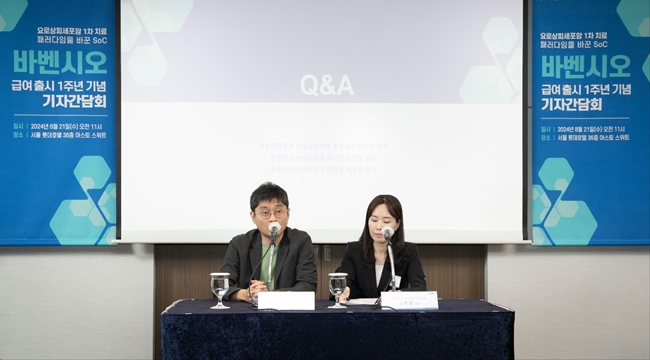
- The treatment landscape for metastatic urothelial cell carcinoma has changed after Bavencio (avelumab) was granted reimbursement as a first-line maintenance therapy in Korea. Bavencio addressed the high unmet need that had remained for a maintenance therapy option on site, rapidly changing the prescribing pattern. (From the left) Inho Kim, Professor of Oncology at Seoul St. Mary Merck Biopharma Korea held a press conference celebrating the first anniversary of the reimbursed launch of its Bavencio in Korea, highlighting the changes in Korea’s prescribing environment and Bavencio’s clinical value. The indication for the anti-PD-L1 immuno-oncology drug was expanded in August 2021 to include first-line maintenance therapy for patients with metastatic urothelial cell carcinoma whose disease has not progressed following chemotherapy, then reimbursed for the indication in August last year. Bavencio’s reimbursement for first-line maintenance therapy was significant because it allowed the drug to be covered for patients who previously had no available treatment options following first-line therapy. For example, if there were 10 patients with urothelial carcinoma, 3-4 would progress to second-line treatment, while the remaining 6-7 whose disease had not progressed would maintain their state without receiving further treatment. In this regard, experts have positively evaluated Bavencio’s reimbursement expansion as later lines of therapy were only conducted if the prognosis worsened after 3-4 months of non-treatment. “Personally, I think it's useful because it treats patients well,” said Dr. Inho Kim, Professor of Oncology at Seoul St. Mary's Hospital. Kim explained that there is no reason not to proceed to maintenance therapy if the patient's condition does not worsen after chemotherapy. Kim added, “In Korea, reimbursement is always an important factor, so patients who respond to first-line treatment will likely use the reimbursement maintenance therapy with Bavencio. In terms of treatment convenience, patients have been experiencing the benefits of the immuno-oncology drug.” Bavencio’s efficacy was confirmed through the long-term follow-up Phase III JAVELIN Bladder 100 trial, which involved 700 patients with locally advanced or metastatic urothelial cancer in 29 countries, including Korea, for over 38 months. The trial results showed a median OS of 29.7 months with Bavencio+maintenance therapy, which was over 9 months longer than the 20.5 months found in the maintenance monotherapy arm. The drug has been increasing its presence after confirming its effect in the real world among Koreans through the early access program (EAP). Patients using Bavencio through the EAP showed a median progression-free survival (PFS) of 7.9 months after starting treatment with Bavencio, which is higher than the 5.5 months reported in the long-term follow-up of the global JAVELIN Bladder 100 (JB 100) trial. Min Jung Koh, Country Medical Director at Merck Biopharma Korea, said, “These results are the first real-world data (RWD) that confirms the clinical effectiveness and safety of Baevncio in the Korean population, demonstrating Bavencio’s consistent benefits in Korea as in global clinical trials.” However, the changing urothelial cancer treatment landscape remains a challenge on the company’s part. While not yet reimbursed, the growing number of first-line treatment options may change Bavencio’s position as a first-line maintenance therapy in the future. “Other drugs like Padcev have shown good results recently, and I think each drug has its pros and cons. Cost is also a consideration, and as we gain more prescription experience and accumulate more information on the patients’ conditions, we will be able to set guidelines for this.”
- Company
- MET-targeting anticancer drug 'Tepmetko' prescribed at Big 5
- by Eo, Yun-Ho Aug 22, 2024 05:50am
- Product photo of The MET-targeting anticancer drug 'Tepmetko' is now available for prescription at general hospitals. Sources said that Merck Korea's Tepmetko (tepotinib), a treatment for patients with topically advanced or metastatic non-small cell lung cancer (NSCLC) harboring mesenchymal-epithelial transition factor gene exon 14 (METex14) skipping mutations, has passed the drug committees (DC) of 'Big 5' tertiary general hospitals, including Samsung Medical Center, Seoul University Hospital, Seoul St. Mary's Hospital, Asan Medical Center in Seoul, and Sinchon Severance Hospital, and 30 medical centers nationwide. However, Tepmetko is non-reimbursable. This drug failed to set the insurance reimbursement criteria twice, including the past Cancer Disease Review Committee review of the Health Insurance Review and Assessment Service (HIRA) in March. Afterward, the company voluntarily withdrew from the reimbursement process and reapplied for reimbursement last month. Tepmetko received domestic approval in 2021 at the same time as 'Tabrecta (capmatinib),' a drug with the same mechanism of action as Tepmetko, and proceeded with the reimbursement process. However, no MET anticancer drugs have yet been listed for reimbursement in South Korea. NSCLC accounts for 80% of all lung cancer diagnosis. METex14 skipping occurs in 3-4% of patients with NSCLC. Based on the diagnosis of 1020 patients with NSCLC in South Korea, 1.9% of patients were confirmed to have METex14 skipping. The effectiveness of Tepmetko was evaluated through the VISION study, which enrolled the largest number of participants than any other clinical trials that enrolled patients with NSCLC harboring METex14 skipping mutations. Based on the clinical results, patients treated with the drug had a median progression-free survival (PFS) of 15.3 months and an objective response rate (ORR) of 56.8%, demonstrating significant life extension effects. The median duration of response (DOR) was 46.4 months, and overall survival was 25.9 months, demonstrating long-term and continued anti-tumor activity. During the international conference of the Korean Association for Lung Cancer (KALC), Professor Han Ji-Youn, Division of Hemato-Oncology of the Center for Lung Cancer at the National Cancer Center, presented analysis outcomes of 79 Asian patients enrolled in the clinical trial for Tepmetko. Based on the results, the ORR was substantially high, with 66.7%. The second round of patients treated with the drug showed a 48.1% ORR. In the Phase 3 VISION follow-up study, Tepmetko also showed significant results in analyzing Asian patients. The analysis showed that Tepmetko-treated patients had an ORR of 56.6%, a median DOR of 18.5 months, a PFS of 13.8 months, and a median OS of 25.5 months. In particular, Asian patients with no prior therapy experience had an ORR of 64.0%, reconfirming the previous study results that the drug is effective in the first round of treatment. 39.6% of patients experienced adverse reactions over Grade 3, indicating that the safety-related issue has not been found.

- Policy
- Preferential pricing delayed for homegrown new drugs
- by Lee, Tak-Sun Aug 22, 2024 05:50am
- The delay in issuance of a revised draft that includes preferential drug pricing measures for domestic new drugs is raising concerns in the pharmaceutical industry. This month, a revised draft that reflects the innovative value of new drugs was released by the Health Insurance Review and Assessment Service, but the revision lacked a measure for homegrown new drugs. The preferential treatment for such homegrown new drugs was expected to be included in the amendment to the Ministry of Health and Welfare’s “Criteria for Decision or Adjustment on Drugs,” but it is difficult to predict when the notification of the amendment will be issued due to the recent change in the Director Division of Pharmaceutical Benefits at MOHW. On the 8th, HIRA issued an amendment to the "Criteria for Detailed Evaluation of Drugs Subject to Negotiation, such as New Drugs" upon DREC deliberations. The amendment included: ▲ New criteria for flexible ICER threshold evaluation; ▲ Addition of severe diseases to the risk-sharing agreement scheme; ▲ Omission of the Drug Evaluation Committee review when expanding the reimbursement range of RSA drugs that claim less than KRW 1.5 billion; ▲ New conditions that require submission of clinical evidence such as RWD and RWE when renewing RSA schemes. However, the draft did not include preferential treatment of domestically developed drugs, which raised questions in the industry. The plan to apply preferential measures for homegrown new drugs was already included in the ‘2024 Implementation Plan for the 2nd Comprehensive National Health Insurance Plan’ in April. The plan contained preferential drug pricing measures for companies that lead healthcare innovation through R&D investment, supply of essential drugs, job creation, and stable supply and plans to expand the scope of new drugs eligible for preferential pricing and risk-sharing agreement to include those made by pharmaceutical companies with a high R&D ratio. It also included content that generic drugs that contain ingredients designated as national essential drugs will be given higher drug prices than other generics if they newly registered the drug after using domestic ingredients. The Ministry of Health and Welfare announced that it would revise the criteria for determining and adjusting drug prices by the first half of this year. However, the amendments have not been made two months into the first half of the year, raising concerns among some in the industry that it will become a non-event. In particular, the Director of the Division of Pharmaceutical Benefits of MOHW, who is in charge of the work, was replaced last month, making the timing of the amendment less predictable. The MOHW changed the Director of the Division of Pharmaceutical Benefits from Chang-hyun Oh (currently the Director of the Division of Health Industry Promotion) to Yang-soo Song on March 29th. The new director Song is an administrative officer who past the 50th Public Administrative Examination and has served as the head of the research and planning department at the Korea Centers for Disease Control and Prevention's Korea National Institute of Health. An industry insider said, “There is also talk that the new head, Song, is reviewing the preferential pricing treatment for homegrown new drugs again. At first, The amendment was expected to be released in the first half of the year, but no news has been heard on its issuance even after HIRA issued an amendment to the ‘Criteria for detailed evaluation of drugs subject to negotiation, such as new drugs.’” HIRA and the NHIS are having difficulty giving a clear answer on when the measure will be implemented, except that the MOHW is reviewing it. The new Director Song is reportedly revisiting major issues of industry interest, from preferential drug pricing for homegrown new drugs to raising the maximum reduction rate for Price-Volume Agreement drugs, to external reference pricing reevaluations. As such, there is talk that the review and outcome may differ from the new review. In particular, as the price of homegrown new drugs that are currently being reviewed for reimbursement by HIRA may change depending on Song’s review, the industry is eyeing its outcome. Another industry official said, “There are many areas that need to be addressed through notification, such as RSA for domestic non-inferior new drugs. There are also drugs that are currently under review that are applicable, which is why the pharmaceutical industry is eagerly awaiting MOHW’s notification.”
