
- LOGIN
- MemberShip
- 2026-06-21 20:16:28

- Policy
- NA starts Special Act to support the pharma and bio industry
- by Lee, Jeong-Hwan Feb 27, 2025 05:56am
- The National Assembly is pushing for the enactment of a special law to bring together the capabilities at the national level to promote and foster the biopharmaceutical industry. The policy agenda includes the establishment of a basic plan every 5 years, the establishment of a Pharmaceutical Biohealth Innovation Committee, and the provision of policy support such as research and development facilities, tax incentives for bio special zones, and practical support such as substantial budget support and tax cuts. On the 24th, Rep. Il-Young Jung, a member of the National Assembly's Strategy and Finance Committee, and the Democratic Party of Korea, proposed the ‘Special Act on the Promotion of the Pharmaceutical Biohealth Industry and Strengthening of Competence (Bio Special Act).’ As the bio industry is a core industry with strategic value in health, medicine, society, economy, and security, the need for support for biotechnology development and the industry as a whole has been raised. In particular, after the COVID-19 pandemic has passed, the bio industry has established itself as a national strategic industry that has a significant impact not only on the health of the people but also on the national economy and security, and there has been a growing demand to foster the industry at the national level. In response, Rep Il-Young Jung proposed the Bio Special Act to enable the government to provide comprehensive support and foster the bio industry in a timely manner, and establish a legal basis for supporting the bio industry. The bill includes ▲the establishment and implementation of a five-year basic plan, ▲the establishment and operation of the Pharmaceutical Bio-Health Innovation Committee, ▲budget support for R&D and infrastructure construction, ▲designation of bio-special zones, and the ▲provision of special exemptions such as tax support for special zones and exemption from preliminary feasibility studies and regulatory improvements. In addition, the plan includes ▲tax and financial support for foreign-invested companies and companies returning to Korea, ▲the creation of a bio-industry fund, and ▲support for the training of professionals and vocational training. Among these, the tax support is intended to reduce taxes on pharmaceutical and bio-health companies in accordance with the relevant tax laws, such as the Act On Restriction On Special Cases Concerning Taxation and Act On Restriction On Special Cases Concerning Local Taxation, to promote investment in the pharmaceutical and bio-health industry and revitalize special zones. “The current Korean economy is facing a difficult situation with a growth rate of just over 1%, and this economic difficulty is largely due to structural problems in the Korean industrial structure, rather than a temporary phenomenon,” said Rep. Il-Young Jung. He also pointed out that ”The trade environment is deteriorating further due to domestic political instability and the tariff war that began under the Trump administration in the United States, which will significantly hurt the semiconductor and automobile industries, which have driven the Korean economy.” “The need for new growth industries has been continuously raised to overcome the difficulties of the Korean economy, and the bio industry is the most in the spotlight,” said Jung, ”It is necessary to intensively foster the bio industry and quickly develop it into a major industry that will lead the Korean economy.” “The global bio industry market will grow to about USD 3.3 trillion by 2027. We will establish a legal and institutional foundation for the promotion of the bio industry through the Bio Special Act so that the Korean bio industry can become globally competitive and serve as a new economic engine for Korea, to succeed the semiconductors and automobile industry.”
- Company
- Dongwha makes record sales record for 4 consecutive years
- by Kim, Jin-Gu Feb 26, 2025 06:30am
- Dongwha Pharmaceutical has broken its sales record for 4 consecutive years. The company's active overseas investment and entry into new businesses are cited as the driving forces behind the record sales streak. In particular, the Vietnamese pharmacy chain it acquired in 2023 has contributed greatly to the expansion of the company's business. Vietnam's Trung Son Pharma recorded sales of more than KRW 100 billion last year. The company plans to fully promote its business in Vietnam this year and expects its performance to improve further in the process. According to the Financial Supervisory Service on the 26th, Dongwha Pharmaceutical recorded sales of KRW 464.9 billion last year, up 28.7% from the previous year. Sales have increased for 4 consecutive years. Dongwha Pharmaceutical's sales have steadily increased from KRW 272.1 billion in 2020 to KRW 293 billion in 2021, KRW 340.4 billion in 2022, and KRW 361.1 billion in 2023. Compared to 2020, the sales volume has increased by more than 70% in four years. In particular, sales growth was remarkable last year. This is in contrast to the 10% annual average increase it had made from 2020 to 2023. By growth rate alone, it is three times than that of previous years. Dongwha Pharmaceutical The analysis is that the Vietnamese pharmacy chain that the company acquired led to the expansion of its external appearance. Dongwha Pharmaceutical acquired Trung Son Pharma in Vietnam in August 2023. It purchased a 51% stake in Trung Son Pharma for a total of KRW 39.1 billion. Trung Son Pharma generated KRW 101.1 billion in sales last year alone. With the addition of sales of KRW 100 billion, Dongwha Pharmaceutical's consolidated sales exceeded KRW 400 billion for the first time. Other sales, excluding Trung Son Pharma’s sales, have also increased year-on-year. Dongwha Pharmaceutical's separate sales last year were KRW 363.8 billion, an 8.6% increase from KRW 335.1 billion in 2023. However, Trung Son Pharma had a negative impact on Dongwha Pharmaceutical's operating profit. Dongwha Pharmaceutical's consolidated operating profit fell 28.7% from KRW 18.8 billion in 2023 to KRW 13.4 billion last year. Dongwha Pharmaceutical explained that the “operating profit decreased due to the recording of consolidated income and expenses in the Vietnamese pharmaceutical distribution chain.” Dongwha Pharmaceutical expects its Vietnam business to be in full swing this year, with Trung Son Pharma at the center and said that sales and operating profit are expected to improve further once the related businesses go on track. “After the acquisition of Trung Son Pharma, the company has been focusing on post-merger integration (PMI) and is now in the stage of full-scale business promotion,” said a Dongwha Pharmaceutical official. ”Once the time-consuming drug approval issues are resolved, we expect Trung Son Pharma’s sales and operating profit to improve further.”
- Opinion
- [Reporter's View] Gov't OKs JAK inhibitor drug switching
- by Eo, Yun-Ho Feb 26, 2025 06:30am
- It has been a flexible and swift measure. Drug-switching between JAK inhibitors and biological agents for the treatment of severe atopic dermatitis will be reimbursed starting in March. The Ministry of Health and Welfare (MOHW) issued an administration notice of a partial revision draft of the pharmaceutical long-term care reimbursement requirement standard. In this administrative notice, the MOHW improved the standard so that despite previous treatment with biological agents, when a patient does not adequately respond or has no tolerability, drug switching to JAK inhibitors will be covered by reimbursement. Also, when a patient does not benefit from JAK inhibitors or cannot continue treatment due to side effects (the switched drug is recommended to be administered for at least 6 months), one can switch to biological agents. Reimbursement is not provided when a patient switches to another drug more than once. Concerns have been raised often regarding drug switching not being covered by reimbursement in South Korea. At the end of last year, an issue in one area was resolved. The MOHW decided to approve drug switching for rheumatoid arthritis patients when tumor necrosis factors (TNF) or JAK inhibitors are not effective or cannot continue treatment due to side effects. Of course, there is still room for improvement regarding expanded reimbursement for atopic dermatitis medicines. Drug switching between the same class medicines has been excluded from the reimbursement list. We must acknowledge that this is the first step. The current expanded reimbursement is a result of the government's swift response. Until now, the government has been hesitant to reimburse JAK inhibitor drug switching due to insufficient clinical evidence. For atopic dermatitis, reimbursement was no longer provided when a patient used biological agents, such as interleukin, or oral agents, like JAK inhibitors, and then switched to another medicine. Despite experiencing side effects after the initial treatment or ineffectiveness, patients were not easily switched to another medicine. Academics have consistently provided opinions. However, the government faced difficulty revising the system without documents showing clear evidence. It was reviewed multiple times but did not result in expanded reimbursement. Amid this situation, the Korean Atopic Dermatitis Association submitted a statement that drug switching must be allowed for the atopic dermatitis area. Furthermore, the association stated that after the revision of the guidelines after nine years, there were no therapeutic differences between biological agents and oral agents. The government responded again to multiple requests. At the end of last year, a review was started again regarding drug switching for atopic dermatitis. Soon after, the government responded to requests swiftly. Clear communication can provide another opportunity. The effective communication between the health and welfare authority and clinical practices deserves praise.
- Company
- SK Bioscience will start a global trial for its mRNA vaccine
- by Cha, Jihyun Feb 26, 2025 06:29am
- SK Bioscience's messenger ribonucleic acid (mRNA) vaccine has entered full-scale clinical trials. SK Bioscience announced on the 25th that it has begun Phase I/II global clinical trials of GBP560, a Japanese encephalitis mRNA vaccine candidate. The Phase I/II clinical trial will involve 402 healthy adults living in Australia and New Zealand. It will be conducted to evaluate the immunogenicity and safety of the vaccine after vaccination. In the first stage, the tolerability and immunogenicity of the subjects will be checked after administering low, medium, high, or control doses twice at 28-day intervals. In the second stage, the dosage and administration method will be set based on the results of the first stage, and the immunogenicity and safety will be evaluated by comparing it with the control group. SK Bioscience plans to secure interim results from the GBP 560 Phase I/II clinical trial next year. Previously, SK Bioscience confirmed the safety and immunogenicity of the candidate substance through repeated dose toxicity tests, safety pharmacology tests, animal efficacy tests, and immune-mediated attack tests in the GBP 560 non-clinical trial. The development of the Japanese encephalitis vaccine is part of the '100-day Mission' project to prepare for the next pandemic, which SK Bioscience is conducting with international organizations to establish an mRNA vaccine platform. The 100-day Mission aims to develop and mass-produce a vaccine within 100 days of the outbreak of an unknown infectious disease (Disease-X) to respond to the pandemic within 100 days. SK Bioscience signed an agreement with the Coalition for Epidemic Preparedness Innovations (CEPI) in 2022 to receive an initial research and development grant of USD 40 million and launched the project. When it enters the later development stage, CEPI will provide SK Bioscience with up to an additional USD 100 million. Through this project, SK Bioscience aims to secure mRNA vaccine platform technology that can respond to pandemics and various diseases, and establish a new pipeline to gain global competitiveness. Jae-Yong Ahn, President and Chief Executive Officer of SK Bioscience, said, “If the technology is expanded with the mRNA platform, we will be able to respond quickly to unknown diseases and ensure fair access to vaccines and sufficient supply. We will conduct clinical trials successfully to contribute to global public health and solidify our position as a vaccine R&D leader.”
- Company
- Celltrion tops KRW 1T in 2024 sales
- by Chon, Seung-Hyun Feb 26, 2025 06:29am
- Celltrion's sales and operating profit are reported to be the highest in history due to expanded sales of biosimilars. Its sales exceeded KRW 1 trillion in both North American and European markets. According to the Financial Supervisory Service (FSS), Celltrion's operating profit for last year was KRW 1.2110 trillion, up 89.7% from the previous year. The sales amounted to KRW 3.7092 trillion, up 98.0%. Both sales and operating profit are the largest in history. The company explained, "Existing products, including Remsima, Truxima, and Herzuma, have shown stable growth, and new products, including Remsima SC, Yuflyma, and Vegzelma, have generated a record high annual sales." Celltrion recorded KRW 1.0636 trillion in Q4 sales, up 178.0% Year-over-Year (YoY). The company's quarterly sales exceeded KRW 1 trillion for the first time. Celltrion's biological drug sales last year in both the North American market and the European market topped KRW 1 trillion for the first time. Celltrion Celltrion's sales of biological drugs in the North American market reached KRW 1.0453 trillion, a 66.1% increase from the previous year. Inflectra showed steady performance, and Truxima, Yuflyma, Zymfentra, and Vegzelma also showed sales growth. Biological drug sales in the European market increased from KRW 986 billion in 2023 to KRW 1.5468 trillion last year, an expansion of 56.9%. As the expansion of new drug sales accelerated, sales rose significantly. Annual sales of the intravenous (IV) formulation Remsima, a biosimilar to Remicade, alone exceeded KRW 1 trillion for the first time in history. According to market research firm IQVIA, Remsima's European market share is reported to be 62% as of Q3 of last year. Including Remsima SC, it showed high market share in major European countries: 88.8% in the U.K., 80% in France, 75.8% in Spain, and 73.8% in Germany. Guided by a pharmacy benefit manager (PBM), Remsima SC, sold as a new drug in the United States, has been listed on approximately 90% of formularies in the U.S. insurance market, and the production continues to increase significantly. Truxima, a biosimilar to the anticancer drug MabThera, is recording a market share of 30% range in Europe and the United States. Herzuma, a biosimilar to anticancer drug Herceptin, shows market share of 72% in Japan. Biosimilar version of autoimmune diseases treatment Humira is expanding its market share in both Europe and the United States. Last year's sales more than doubled compare to the previous year, recording KRW 349.1 billion. The 2024 global sales of Vegzelma, a biosimilar to the anticancer drug Avastin, expanded more than four-fold compared to the previous year, with KRW 221.2 billion. Based on the company's direct-sales marketing network and competitive production cost, Vegzelma showed fast growth, recording a market share of 29% in Euope and reaching No.1 in the list. Celltrion employee said, "This year, we will ensure the internal stability of the company by launching a new portfolio, improving production cost, and generating cost-effectiveness. We plan to continue company growth quantity-wise and quality-wise." He said, "This year's production cost rate will be improved quickly by depleting the remaining stock with high production costs, expanding Plant 3 production, and terminating compensation for the development cost of existing products.

- Company
- Samsung Bioepis launches Stelara biosimilar Pyzchiva in US
- by Whang, byung-woo Feb 26, 2025 06:29am
- Pic of Pyzchiva Samsung Bioepis announced on the 25th that its autoimmune disease treatment Pyzchiva (ustekinumab) has been launched in the US through its marketing partner Sandoz. Stelara’s biosimilar Pyzchiva is Janssen’s treatment for autoimmune diseases such as psoriasis, psoriatic arthritis, Crohn's disease, and ulcerative colitis. Stelara’s annual global sales are about KRW 15 trillion (USD 10.361 billion), and its sales in the United States are about KRW 10 trillion (USD 6.72 billion). Pyzchiva is an autoimmune disease treatment that inhibits the activity of interleukin (IL)-12,23, a type of inflammatory cytokine involved in immune responses. With the launch of Pyzchiva, Samsung Bioepis has expanded its portfolio in the US market with the launch of its third autoimmune disease treatment, an interleukin inhibitor, following the launch of two existing autoimmune disease treatments that are tumor necrosis factor-alpha (TNF-a) inhibitors. This is the company's fifth product in the US market, including anticancer drugs and ophthalmic disease treatments. “With the launch of Pyzchiva in the US, we will be able to provide a variety of treatment options for patients with autoimmune diseases,“ said Linda Y. MacDonald, Executive Vice President and Head of Global Commercial Division at Samsung Bioepis. “Expanding treatment options will reduce medical costs and ultimately contribute to the establishment of a sustainable healthcare system.” ”We will continue to work to address unmet needs in the US pharmaceutical market,” she added. Meanwhile, Samsung Bioepis is also selling Pyzchiva through Sandoz in Europe and is ranked first in the biosimilar market with a 43% share of the European Stelara biosimilar market. In addition, in South Korea, Epyztek (the domestic brand name for Samsung Bioepis’s Stelara biosimilar) was launched and sold in July last year through a direct sales system at about 40% lower price than the original drug.
- Policy
- Priority mkt authorization for Trajenta generics ends
- by Lee, Tak-Sun Feb 25, 2025 05:57am
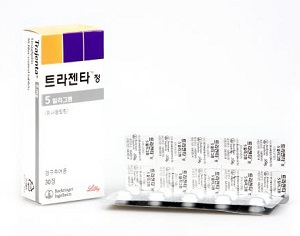
- Product photo of TrajentaAs the priority marketing authorization for the generic version of Trajenta (linagliptin), a DPP-4 inhibitor used to treat diabetes, launched last year will end on March 8, generics that have been waiting for 10 months will be launched. The list of generics to be launched includes Hanmi Pharmaceutical and Genuone Sciences. According to the industry sources on February 23, 12 generics containing linagliptin such as Hanmi Pharmaceutical's 'Linaglo Tab' will be added to the reimbursement list, starting March 9. The market for a generic version of Trajenta became available after the patent of the original drug expired in June 2024. At that time, 16 monotherapy products were launched into the market. Only a portion of the 60 approved items have been launched because of the priority marketing authorization. Sixteen pharmaceutical companies have avoided two Trajenta patents, and they challenged the market when the composition patent expired on June 8, 2024, following the substance patent expiration. These companies also obtained priority marketing authorization, a policy established in February 2019 granting items meeting the first approval·patent avoidance criteria. The priority sales were approved for 10 months, between June 9, 2024, and March 8, 2025. During this period, generics with the same ingredient cannot be launched. Pharmaceutical companies with priority marketing authorization include Dongkoo Bio, Daewon Pharmaceutical, Jeil, Huons, Shinil Pharma, KyungDong Pharm, Kukje Pharm, Hana Pharm, Ildong Pharmaceutical, Dong Wha Pharm, Hanlim Pharmaceutical, Boryung, Aju Pharm, Albogen Korea, Hutecs Korea Pharmaceutical, and Arlico. These companies took the market for the first 10 months and gained a favorable spot. As priority marketing authorization ends on March 8, these companies will face new competitors. Changes to the competition landscape are expected since the late-launching group includes big pharmaceutical companies with established sales, such as Hanmi Pharmaceutical. Among the later-launch products, Hanmi Pharmaceutical's 'Linaglo Tab' is priced the same as the highest price (KRW 510) of the previous generics for meeting all criteria requirements and receiving credit (68%) for innovative-type pharmaceutical companies. Genuone Sciences' 'Tra-K Tab' and Aprogen Biologics 'Linahana Tab' will be reimbursed at KRW 447 for meeting all criteria requirements and receiving credits for first generics (the number of drugs with the same ingredient below 19, 59.5%). Products from Jinyang Pharm, Nexpharm Korea, DaehanNupharm, PharmGen Science, Genupharma, Withus Pharmaceutical, and Unimed Pharm meeting only one of the criteria requirements will be listed for reimbursement at KRW 341. Il Wha's 'Trina Tab 5mg' will be listed at KRW 402, which has been priced lower than the estimated price. However, credited prices for newly reimbursed drugs will end in June, at the same time as the products launched last year, because they were added to the reimbursement list late. After three months, the ceiling prices for all items will be adjusted to 53.55% of the highest price. Meanwhile, according to the market research firm UBIST, generics with linagliptin recorded KRW 4.7 billion in prescription sales between the launching date of June 2024 and December. The market share is about 4%. As they are in the early phases of the market launch, robust growth has not been achieved. It will likely present an opportunity for generic companies to launch late. An employee of the pharmaceutical industry said, "The group with priority marketing authorization launched 10 months earlier, but it has been reported that they did not achieve noticeable growth due to the original drug." Adding, "This will present an opportunity for the second group to launch." The sales for the original drugs Trajenta·Trajenta Duo decreased by 16%, from KRW 123.5 billion to KRW 103.9 billion. Despite a 30% reduction in mandatory drug pricing, they defended well.

- Policy
- Only Rinvoq to undergo drug pricing reduction
- by Lee, Tak-Sun Feb 25, 2025 05:57am
- Rinvoq ER Tab has been subjected to the preliminary drug pricing reduction after approval of drug switching between biological agents and JAK inhibitors for severe atopic dermatitis. The ceiling price will remain unchanged for Dupixent, Adtralza, Cibinqo, and Olumiant. As the reimbursement of drug switching between biological agents and JAK inhibitors for the treatment of severe atopic dermatitis will be implemented next month, additional claim amounts are reported to be insignificant. Rinvoq ER Tab (AbbVie, upadacitinib) is the only product to see drug pricing reduction due to the expected additional claim amount following approval of drug switching. According to the industry sources on February 21, the ceiling price of Rinvoq ER Tab 15 mg will reduced from KRW 18,740 to KRW 18,328, and that of Rinvoq ER Tab 30 mg will be reduced from KRW 29,850 to KRW 29,193 due to expanded scope of use. The reduction rate is 2.2%. The rate has been calculated according to the preliminary drug pricing index table. The preliminary drug pricing reduction following expanded scope of use is a system where drug pricing reduction is determined based on a calculation during the Health Insurance Review and Assessment Service (HIRA)'s evaluation process for pharmaceuticals with the expected additional claim amount below KRW 10 million following expanded scope of use. When the calculation is applied, companies do not undergo negotiations with the health insurance authority. The preliminary drug pricing reduction has been applied because the expected claim amount is below KRW 10 billion following approval of drug switching between biological agents and JAK inhibitors for severe atopic dermatitis. Only Rinvoq ER Tab has been subjected to the reduction. Pharmaceuticals with expanded reimbursement following drug switching approval include biological agents such as Dupixent and Adtralza and JAK inhibitors like Cibinqo, Olumiant, and Rinvoq ER Tab. However, besides Rinvoq, the other agents have not been subjected to drug price reduction because their additional claim amounts are below KRW 1.5 billion following expanded reimbursement. It is reported that Dupixent, which holds 80% of the severe atopic dermatitis treatment market in South Korea, is priced higher than other agents. Patients who used Dupixent and then switched to JAK inhibitors will likely benefit from the drug-switching approval. According to the study published in the Journal of the American Academy of Dermatology (JAAD) in 2023, the patient group switching from Dupixent 30 mg to Rinvoq 30 mg experienced an improvement in dermatological symptoms and itching regardless of previous responses to Dupixent. Furthermore, Rinvoq is the first JAK inhibitor used in atopic dermatitis and is cheap. Rinvoq costs about KRW 600,000 per month, which is less than half of the monthly drug cost of Dupixent. Consequently, patients will likely choose less expensive pharmaceutical after drug-switching approval. Considering the National Health Insurance finance, the additional claim amount burden will not be significant. The drug pricing reduction rate for Rinvoq is 2.2%, and the expected additional claim amount falls between over KRW 2.5 billion and below KRW 5 billion. Rinvoq's additional claim amount is likely below KRW 5 billion. An employee of the industry said, "Approval of drug switching between biological agents and JAK inhibitors is essentially patient moving from expensive Dupixent to cheap Rinvoq, so the loss of finance is expected to be none." Adding, "Yet, if the authority had allowed drug-switching to include pharmaceuticals of the same class, expansion of reimbursement would not have been easy due to financial burden."
- Policy
- Generic drugs enter KRW 150 billion Prolia market
- by Lee, Tak-Sun Feb 25, 2025 05:57am
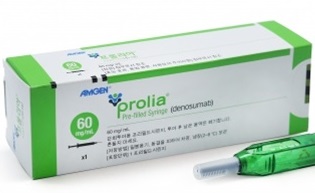
- A competitor to Prolia (Amgen, co-marketed by Chong Kun Dang), which has dominated the market for osteoporosis treatment with its convenience and efficacy, will be released next month. Celltrion will make the launch. Celltrion plans to launch its biosimilar after the expiration of the Prolia product patent on the 17th of next month. According to industry sources on the 24th, Celltrion's Prolia biosimilar ‘Stoboclo Prefilled Syringe (denosumab)' will be listed as a reimbursed drug on March 18. The insurance ceiling price of the drug is KRW 111,384, which is cheaper than Prolia (KRW 154,700). Celltrion could have charged a higher price, but it lowered the price. This is interpreted as a measure that takes into account the drug’s price competitiveness in the market. As a result, patients can now receive the same drug at a lower price. Initially, Celltrion could have listed the drug at KRW 123,760 by receiving an additional 80% premium as a bio-equivalent drug by an innovative pharmaceutical company. Prolia, which was launched in Korea in November 2016, dominates the domestic osteoporosis treatment market. Conventional treatments are affected by meal intake, and if the dose is increased, Prolia maintains its effectiveness with a single injection every 6 months, greatly improving convenience. This drug is a biopharmaceutical that targets the RANKL protein, which forms osteoclasts that destroy bones. In particular, there is clinical evidence that the drug remains effective even after 10 years of administration. Its sales in 2023, based on IQVIA sales, had been a whopping KRW 151.1 billion. It has been dominating the market without any competitors, but with the entry of Celltrion's biosimilar, it will face competition. Meanwhile, Celltrion will also launch the biosimilar Xgeva, a treatment for multiple myeloma based on denosumab, on the same day. The 2 drugs have the same ingredients but different uses. Since the ingredients are the same, the expiration date of the product patent is also the same. Xgeva recorded sales of KRW 10.5 billion in 2023 based on IQVIA's data.
- Company
- Celltrion’s Actemra biosimilar Avtozma receives EU approval
- by Chon, Seung-Hyun Feb 25, 2025 05:56am
- Celltrion announced on the 24th that it has received approval from the European Commission (EC) for the marketing authorization of its ‘Avtozma, a biosimilar of the autoimmune disease treatment 'Actemra (tocilizumab).’ The final approval was granted 2 months after receiving a recommendation for approval from the Committee for Medicinal Products for Human Use (CHMP) under the European Medicines Agency (EMA) in December last year. The approval of Avtozma was granted for the main indications of the original drug such as rheumatoid arthritis (RA) and giant cell arteritis (GCA). Celltrion obtained approval for Avtozma in South Korea at the end of last year and in the United States last month. Actemra is an interleukin inhibitor that reduces inflammation by inhibiting the interleukin (IL)-6 protein, which is involved in the induction of inflammation in the body. In 2023, global sales of Actemra posted approximately CHF 2.63 billion (KRW 4 trillion). Celltrion has received approval for a total of four products this month alone, including Avtozma, Eydenzelt (Eylea biosimilar), Osenvelt, and Stoboclo (Prolia and Xgeva biosimilars). Celltrion plans to build a more enhanced product lineup in the autoimmune disease market and significantly expand its therapeutic areas, including bone and eye diseases, to expand product synergies in major countries, including Europe. “Through a series of product approvals in Europe, we have achieved our goal of 'building a product lineup of 11 products by 2025' without a hitch and once again demonstrated our ability to develop our own drugs in the market,” said a Celltrion official. ”We will do our best to accelerate our entry into the global market and speed up our growth by focusing on the remaining approval procedures and commercialization.”
