
- LOGIN
- MemberShip
- 2026-06-22 12:26:15
- Company
- 'Lalaola' wins 2024 Pharma Industry ad grand prize
- by Son, Hyung Min Dec 11, 2024 05:54am
- The winner of the 2024 pharmaceutical and biotechnology industry advertising·PR awards has been announced. Yuhan's 'Lalaola' won the Grand Prize in the advertising category, and Amgen Korea's 'Blue Wish campaign' won the Grand Prize in the PR category. On December 10, Dailypharm (Publisher: Lee Jeong Seok) hosted the '2024 Korean Pharmaceutical & Biotech Industry Advertising·PR Awards Ceremony' at the Korea Pharmaceutical and Bio-Pharma Manufacturers Association (KBPMA)'s K-Room. This year, the awards ceremony marked 12 years, and 66 contents in the advertising and PR categories were submitted to compete. On December 10, Dailypharm (Publisher: Lee Jeong Seok) hosted the 12th The awards were categorized into the advertising and PR sectors. In the advertising category, a grand prize, three best prizes, and seven excellence awards have been selected. In the PR category a grand prize, two best prizes, and three excellence awards have been awarded. The awards were presented in the advertising category by the following sections: ▲TV·CF ▲Prints·Radio▲Internet·SNS, in the PR category: ▲Social Contribution·Disease Awareness Campaigns ▲Corporate·Product Promotion. Yuhan's 'Lalaola' won the Grand Prize in the advertising cateogry. The winner was presented with a plaque and a cash prize of KRW 5 million. Yuhan won the Grand Prize in the advertising category. The award recipient Kim Jong-won, Director of External Affairs at Yuhan, stated, "Lalaola was launched in South Korea in July 2023, and this year, we have made efforts to promote the product. We hope Lalaola will grow in the market for high-dose arginine, similar to Mag-B. We look forward to participating in the ceremony next year again." In the TV·CF category, Johnson & Johnson Korea's 'Tylenol' and Iksu Pharmaceutical's 'Iksu Kongjin-dan' were awarded the best prize, receiving plaques and a cash prize of KRW 3 million. Handok's 'Ketotop,' Chong Kun Dang's 'Braining Cap,' Reckitt Korea's 'Gaviscon,' and Daewon Pharm's 'Coldaewon Kids' won the excellence awards. In the Internet·SNS category, Jeil Health Science's 'Jeil Cool Pap' was awarded the best price. Excellence awards were given to Dongkook Pharmaceutical's 'Cencia' and Kyung Nam Pharm's 'PM-Zol-Q series,' each receiving trophies and a cash prize of KRW 2 million. Dongsung Bio Pharm's 'Loxo-N Gel' won the excellence award in the Prints·Radio category. In the PR category, entries that delivered meaningful messages to society, particularly those focusing on social contributions and ESG activities, were awarded. This year's grand prize in the PR category went to Amgen Korea's 'Blue Wish campaign,' a social contribution initiative fulfilling the wishes of children with rare diseases. The award included a plaque and a cash prize of KRW 5 million. Seohyun Kim, Director of External Affairs at Amgen Korea, said, "We are pleased to receive such an honorable award. Three weeks ago, we decorated a room for a child who has been battling leukemia for a long time. The child's dream was to have a newly decorated room, and fulfilling that dream was deeply moving. I'll be joining the volunteers tonight, and I intend to dedicate this award to them. I will also donate the prize money." In the PR subcategory for Social Contribution·Disease Awareness Campaigns, the best awards went to Novartis Korea's 'Shine a Light on HS (Hidradenitis Suppurativa)' campaign. Sanofi's 'Helping Hands' campaign received the excellence award. In the Corporate·Product Promotion category, the best prize was awarded to HK Inno. N's corporate promotion program, which received a plaque and a cash prize of KRW 3 million. JW Pharmaceutical's 'JW R&D Insight' and Shinshin Pharmaceutical's 'Short Form' campaign won excellence awards. Korean Pharmaceutical & Biotech Industry Advertising·PR Awards were established in 2013 to encourage advertising and PR professionals who bring new value to the pharmaceutical industry and medicines and promote the creation of advertisements that resonate with pharmacists, the primary target of pharmaceutical advertising. In his opening remarks, In-ho Ga, Head of the Dailypharm's Press Department, stated, "I believe the fresh and creative ideas of advertising and PR professionals have made significant contributions to pharmaceutical branding. I sincerely congratulate the winning companies." This year's contest was judged by a panel led by Daechun Ahn, the former President of the Korean Advertising Society (Professor at Korea University), along with Jae Hoon Cheong, Professor at Sahmyook University College of Pharmacy, and Jae-Kook Lee, Senior Vice President of the Korea Pharmaceutical and Bio-Pharma Manufacturers Association (KPBMA). "We evaluated whether the strategy and messaging were clear and effectively conveyed in the advertising category. In the PR category, we focused on the campaigns' authenticity, consistency, and sustainability. Many excellent works that met the judging criteria were submitted," Ahn explained. "This event is meaningful in recognizing the hard work of advertising and PR professionals in the pharmaceutical and biotech industry over the past year. Next year, many PR professionals are expected to continue to play a pivotal role," Jae-Kook Lee, Senior Vice President of KPBMA remarked. Youngshin Lee, the CEO of the Korean Research-Based Pharma Industry Association (KRPIA), said in a video message, "The importance of precise pharmaceutical information has been emphasized, and the media environment is changing. Delivering accurate medication information is essential for helping patients and their families return to their daily routines. I extend my gratitude and encouragement to the advertising and PR professionals who design sincere campaigns to promote pharmaceuticals. I hope this advertising award acts as a meaningful platform that enhances the pride of PR professionals in the industry."

- Company
- Lilly will directly distribute Trulicity in Korea next year
- by Lee, Tak-Sun Dec 11, 2024 05:54am
- Pic of Trulicity Lilly, who holds the marketing authorization for the diabetes drug ‘Trulicity (dulaglutide),’ which has been distributed by Boryung since 2016, will directly distribute the drug in Korea from next year. With the launch of the diabetes and obesity drug Mounjaro (tirzepatide) expected next year, it is expected that this change of distributors will have an impact. According to industry sources on the 9th, Lilly Korea told its customers that the distributor for Trulicity 0.75mg/0.5ml and 1.5mg/0.5ml disposable pens will be changed from Boryung to Lilly from next year. Boryung and Lilly signed a joint sales agreement in June 2016 to market and sell Trulicity in Korea. Under the agreement, Boryung has been the exclusive distributor of Trulicity in Korea. Trulicity is a GLP-1 receptor antagonist class diabetes drug. GLP-1 analogs are developed using the hormone glucagon-like peptide-1 (GLP-1), which is involved in the regulation of blood sugar in the body. GLP-1 analogs stimulate insulin secretion but are less likely to cause hypoglycemia, therefore has the advantage of lowering the risk of hypoglycemia compared to conventional insulin. It is also used to treat obesity because it suppresses appetite and supports weight loss. In particular, Trulicity has almost monopolized the domestic GLP-1 analog diabetes treatment market with its convenience of once-weekly administration to control blood sugar. Based on IQVIA, domestic sales were KRW 41.8 billion in 2020, KRW 49.9 billion in 2021, KRW 59.5 billion in 2022, and KRW 54.5 billion in 2023. However, the drug has been struggling with domestic supply due to increasing global demand. With Trulicity’s distributor changing from Boryung to Lilly, attention is also focused on the domestic supply of Mounjaro, which is expected to become the next-generation GLP-1 product. In addition to diabetes, Mounjaro gained an indication for obesity last year and has been regarded as a viable rival to Wegovy (semaglutide, Novo Nordisk). Given Lilly's relationship with Boryung, which had been tied by Trulicy, many in the industry had expected Boryung to distribute Mounjaro. However, with Lilly taking over direct distribution from next year, it is expected that Mounjaro will be supplied by Lilly itself or a third domestic pharmaceutical company. An industry insider explained, “It is difficult to predict a drug’s copromotors because there are many interested parties involved. The company said it will distribute Trulicity directly next year, but we don't know how the situation will change.”
- Company
- Jemperli expands indication to all endometrial cancers
- by Whang, byung-woo Dec 11, 2024 05:52am
- Jemperli's (dostarlimab) indication was expanded to include its use as a first-line treatment in combination with platinum-based chemotherapy for all patients with advanced or recurrent endometrial cancer. The drug is expected to further expand its influence, with the Health Insurance Review and Assessment Service's Cancer Disease Deliberation Committee passing the drug’s use as first-line treatment of advanced or recurrent dMMR/MSI-H endometrial cancer in combination with platinum-based chemotherapy in October. Pic of Jemperli On the 10th, GSK Korea announced that it had received approval from the Ministry of Food and Drug Safety (MFDS) to expand Jemperli’s indication to include all patients with advanced or recurrent endometrial cancer on the 9th. This indication expansion allows Jemperli to be used as a first-line treatment for all patients with advanced or recurrent endometrial cancer, regardless of whether they have a mismatch repair defect (dMMR)/high-frequency microsomal instability (MSI-H). The Phase III RUBY study, which became the basis of Jemperli’s approval, evaluated Jemperli in combination with platinum-based chemotherapy (carboplatin plus paclitaxel) versus placebo and platinum-based chemotherapy in 494 patients with advanced or recurrent endometrial cancer. The study was designed to include at least 3 years of treatment given that the median survival for conventional platinum-based chemotherapy is less than 3 years. The primary endpoints were progression-free survival (PFS) and overall survival (OS) according to Response Evaluation Criteria in Solid Tumors (RECIST). Study results showed that the Jemperli combination arm reduced the risk of death by 31% compared to the control arm in patients with advanced or recurrent endometrial cancer. Over a median follow-up of 37 months, the median overall survival (OS) of patients receiving the Jemperli combination was 44.6 months, 16.4 months longer than the control arm (28.2 months), and the risk of death was reduced by 31%. The safety profile was consistent with the last interim analysis, with no new safety information observed. The most common treatment-related adverse events were fatigue, hair loss, and nausea, most of which were mild to moderate. Jae Kwan Lee, Professor at Korea University Guro Hospital (President, Korean Society of Gynecologic Oncology), said, “Endometrial cancer is a disease that carries a high risk of recurrence even after initial treatment. This is why an effective first-line treatment option is critical for the patients. The RUBY study is regarded as an important study that demonstrated the long-term effectiveness of immune-oncology drugs in endometrial cancer.” Lee added, “Jemperli in combination with platinum-based chemotherapy is the only immuno-oncology agent available for the treatment of endometrial cancer in Korea that has been shown to improve OS. We look forward to seeing more patients benefit from the clinical value of Jemperli in the future, as we have shown significant clinical value even though the study included patients who relapsed 6 months after chemotherapy and patients with high-risk diseases such as carcinosarcoma.” As a humanized IgG4 monoclonal antibody, Jemperli is a programmed death receptor-1 inhibitor (PD-1 inhibitor) that shows sustained antitumor activity in dMMR/MSI-H carcinoma. It was approved by the Ministry of Food and Drug Safety in December 2022 for the treatment of adult patients with recurrent or advanced dMMR/MSI-H endometrial cancer who are on or have progressed after prior platinum-based systemic chemotherapy and is reimbursed by health insurance.
- Company
- MM drug Revlimid continues to thrive after patent expiry
- by Eo, Yun-Ho Dec 11, 2024 05:52am
- Sales of the multiple myeloma drug Revlimid continue to thrive even after patent expiry in Korea. According to industry sources, Bristol Myers Squibb Korea’s Revlimid (lenalidomide) still boasts its originality with an 80% market share. As of Q3 2024 (IQVIA), Revelimid's sales were KRW 11.2 billion, significantly outpacing the sales of generics such as Lenaloma (KRW 800 million), Lenalid (KRW 981.1 million), Leblikin (KRW 305.85 million), and Lenaldo (KRW 35.51 million) during the same period. Revlimid has been used for various blood diseases for nearly 20 years since its approval by the U.S. Food and Drug Administration (FDA) in 2005 and has solidified its position as the “forefather” in the blood cancer treatment space. In particular, it has become the backbone in the multiple myeloma treatment space, being used in combination with newer therapies. Since its launch in 2009, it has been expanded to gain approval for 7 indications in four diseases, including multiple myeloma, and has been used in various combinations regardless of transplantation history or lines of treatment. In the recently updated National Comprehensive Cancer Network (NCCN) guidelines, combination therapies that include Revlimid are now recommended as Category 1 Preferred regimens, demonstrating the solid foundation it has built over the past 20 years. In clinical practice, Revlimid is actively used in combination with various therapies as a first-line treatment for multiple myeloma in Korea and abroad. Since April 2022, RVd therapy has been reimbursed by insurance in Korea, enabling newly diagnosed patients with multiple myeloma to receive REVLIMID regardless of whether or not they receive an autologous stem cell transplant. In addition to the first-line treatment, the relapsing nature of multiple myeloma makes it critical to maintain a favorable post-transplant prognosis with maintenance therapy, and starting in January 2023, Revlimid maintenance therapy was reimbursed and is available as a treatment option that focuses on improving survival in patients who achieve a stable disease response or better following autologous stem cell transplant. In a meta-analysis of three randomized controlled trials of Revlimid (CALGB 100104, IFM 2005-02, GIMEMA RV-MM-PI-209) conducted on 1,208 patients (605 in the lenalidomide maintenance arm and 603 in the placebo or observation arm), the PFS (progression-free survival) of patients that used Revlimid maintenance as monotherapy was 52.8 months, which was an over twofold improvement from the 23.5 months observed in the control arm, reducing the risk of relapse and death by 52%. At a median follow-up of 79.5 months, median overall survival (OS) in the Revlimid maintenance arm was not reached, compared to 86.0 months in the placebo or observation arm. At a median follow-up of 88.8 months, median overall survival (mOS) in the maintenance arm was 111 months, an increase of 25 months compared to 86.9 months in the placebo or observation arm, and the risk of death was significantly reduced by 23% compared to placebo or observation arm. Revlimid maintenance therapy is recommended at the highest level in both the NCCN and European Society for Medical Oncology (ESMO) guidelines. Hyeon Seok Eom, Professor of Hematology/Oncology at the National Cancer Center said, “Revlimid has been used for many years in multiple myeloma patients at various stages of treatment, from first-line to maintenance therapy,” said Dr. Hyunseok Eom, Professor of Hematology/Oncology at the National Cancer Center. As it has consistently provided multiple treatment options for patients with multiple myeloma in Korea and abroad, we expect it to bring positive synergies with the new drugs under development.”

- Company
- Antibiotic clarithromycin market grows fourfold in 3 yrs
- by Chon, Seung-Hyun Dec 10, 2024 05:53am
- The prescription market for the antibiotic clarithromycin has significantly expanded. The market size grew by nearly fourfold over three years. Impurities-related cautions were once issued, but the volume of use increased during the COVID-19 pandemic and endemic period. According to a pharmaceutical market research firm UBIST on December 9, the outpatient prescription market for clarithromycin in Q3 amounted to KRW 35.6 billion, up 45.6%. The macrolide antibiotic clarithromycin is a medicine used to treat respiratory infections, pneumonia, pharyngitis, tonsillitis, and sinusitis. Quarterly outpatient prescription sales for clarithromycin (unit: KRW 100 million, source: UBIST). The prescription market for clarithromycin has significantly increased throughout the pandemic and endemic period. In Q3 2021, prescription sales of clarithromycin amounted to KRW 9.3 billion, which was nearly a four-fold expansion in three years. During the early spreading of COVID-19, strengthened individual hygiene behaviors, such as washing hands and wearing masks, decreased patients with infectious diseases such as flu and the common cold. The market for clarithromycin also shrunk significantly. In Q3 2019, the prescription market size for clarithromycin amounted to KRW 14.7 billion. However, it shrunk by 36.9% in two years. As patients tested positive for COVID-19 rapidly increased since the end of 2021, the prescription market for clarithromycin entered a boom cycle. Analysis suggests that the market for clarithromycin grew more even after the end of the pandemic due to increases in patients with flu or the common cold. The prescription market size for clarithromycin in Q3 was recorded as second in history following Q4 last year. Even after the past issue of impurities, prescription demands for clarithromycin increased significantly. In September 2022, the Ministry of Food and Drug Safety (MFDS) issued pharmaceutical companies with the mandate to check the N-Nitrosodimethylamined (NDMA) contents of pharmaceuticals containing the active ingredient clarithromycin. The MFDS has ordered pharmaceutical companies to submit test results for representative batches of finished products containing clarithromycin that are available on the market. This action follows reports of NMDS exceeding acceptable limits in clarithromycin tablets overseas, which led to product recalls. The MFDS requested companies to submit the results immediately once the testing is completed, even before the deadline for the impurities document submission. After that, voluntary returns of clarithromycin-containing medicines as a precautionary measure were taken. The market for clarithromycin recorded KRW 46.5 billion in 2022. Last year, it grew to KRW 120.2 billion, exceeding KRW 100 billion for the first time in history. As mycoplasma infections quickly spread in China last year, concerns about clarithromycin production have risen in South Korea. At the end of last year, the MFDS visited manufacturing plants of pharmaceutical companies and monitored supplies and production·amount of shipment of active ingredients, such as clarithromycin and azithromycin, used for treating mycoplasma pneumonia infections.
- Company
- 1st MET-targeting anticancer drug likely to get reimb in KOR
- by Eo, Yun-Ho Dec 10, 2024 05:53am
- Product photo of Tepmetko (tepotinib) The MET-targeting anticancer drug 'Tepmetko' has passed the review process for reimbursement listing three years after being approved in South Korea.. Sources said that Merck Korea's Tepmetko (tepotinib), a treatment for patients with topically advanced or metastatic non-small cell lung cancer (NSCLC) harboring mesenchymal-epithelial transition factor gene exon 14 (METex14) skipping mutations, has passed the Drug Reimbursement Evaluation Committee (DREC) review of the Health Insurance Review and Assessment Service (HIRA). Now, the remaining procedure is the drug price negotiations with the National Health Insurance Service (NHIS). Tepmetko received domestic approval in 2021 at the same time as 'Tabrecta (capmatinib),' a drug with the same mechanism of action as Tepmetko, and proceeded with the reimbursement process. However, no MET anticancer drugs have yet been listed for reimbursement in South Korea. This drug failed to set the insurance reimbursement criteria twice, including the Cancer Disease Review Committee review of the Health Insurance Review and Assessment Service (HIRA) in March. Afterward, the company voluntarily withdrew from the reimbursement process and reapplied for reimbursement in July. The drug passed the DREC review this time. This milestone was achieved three years after obtaining domestic approval. NSCLC accounts for 80% of all lung cancer diagnosis. METex14 skipping occurs in 3-4% of patients with NSCLC. Based on the diagnosis of 1020 patients with NSCLC in South Korea, 1.9% of patients were confirmed to have METex14 skipping. The effectiveness of Tepmetko was evaluated through the VISION study, which enrolled the largest number of participants than any other clinical trials that enrolled patients with NSCLC harboring METex14 skipping mutations. The clinical results showed that patients treated with the drug had a median progression-free survival (PFS) of 15.3 months and an objective response rate (ORR) of 56.8%, demonstrating significant life extension effects. The median duration of response (DOR) was 46.4 months, and overall survival was 25.9 months, demonstrating long-term and continued anti-tumor activity. During the international conference of the Korean Association for Lung Cancer (KALC), Professor Han Ji-Youn, Division of Hemato-Oncology of the Center for Lung Cancer at the National Cancer Center, presented analysis outcomes of 79 Asian patients enrolled in the clinical trial for Tepmetko. Based on the results, the ORR was substantially high, with 66.7%. The second round of patients treated with the drug showed a 48.1% ORR. In the Phase 3 VISION follow-up study, Tepmetko also showed significant results in analyzing Asian patients. The analysis showed that Tepmetko-treated patients had an ORR of 56.6%, a median DOR of 18.5 months, a PFS of 13.8 months, and a median OS of 25.5 months. In particular, Asian patients with no prior therapy experience had an ORR of 64.0%, reconfirming the previous study results that the drug is effective in the first round of treatment. 39.6% of patients experienced adverse reactions over Grade 3, indicating that the safety-related issue has not been found. Tepmetko has passed the drug committees (DC) of 'Big 5' tertiary general hospitals, including Samsung Medical Center, Seoul University Hospital, Seoul St. Mary's Hospital, Asan Medical Center in Seoul, and Sinchon Severance Hospital, and 30 medical centers nationwide.
- Company
- GC Biopharma&Dong-A ST research mRNA-LNP-based treatment
- by Kim, Jin-Gu Dec 10, 2024 05:52am
- On the 9th, GC Biopharma announced that it had signed a follow-up joint research agreement with Dong-A ST to develop mRNA-LNP-based new drugs for chronic inflammatory diseases The companies had jointly selected new drug targets for chronic inflammatory diseases in October last year after forging a collaboration agreement that covers the joint research and development of novel modalities. The follow-up agreement will further identify mechanisms of action (MOAs) for drug targets selected last year and evaluate their efficacy and safety in preclinical models. GC Biopharma will synthesize mRNAs that can act on select targets, and screen and optimize LNPs that can be delivered to specific tissues. Dong-A ST will analyze the mechanism of action of the mRNA-LNP product derived by GC Biopharma and evaluate their efficacy in animal models. GC Biopharma has selected mRNA-LNPs as one of its next-generation drug development platforms and has secured its technology and patents. Based on this, it is currently conducting research on various preventive vaccines including flu vaccines and treatments. This agreement will expand the application of the mRNA-LNP platform to the field of immune diseases. Dong-A ST is focused on developing therapeutics for inflammatory diseases. In November last year, it began joint research on AAV (Adenovirus-associated virus) mediated gene therapy with the UMass Chan Medical School to target chronic inflammatory diseases. In January, the company transferred milk exosome-based oral nucleic acid delivery system technology from KIST to develop a treatment for inflammatory bowel disease. Jae-Uk Jeong, Executive Vice President and Head of Research and Development at GC Biopharma, said, “We will actively collaborate to develop therapeutics for chronic inflammatory diseases with high unmet medical needs. Through the joint research, we will advance GC Biopharma’s mRNA-LNP-based technology and expand its application to the development of various new drugs.” “We plan to continue our joint research in greater depth as our collaboration has achieved positive results in the past year,” said Jaehong Park, President & CSO at Dong-A ST. ”We will do our best to develop innovative new drugs for immune diseases by fully utilizing our respective capabilities and resources.”
- Company
- ‘Pluvicto, a new standard therapy for prostate cancer?'
- by Whang, byung-woo Dec 10, 2024 05:52am
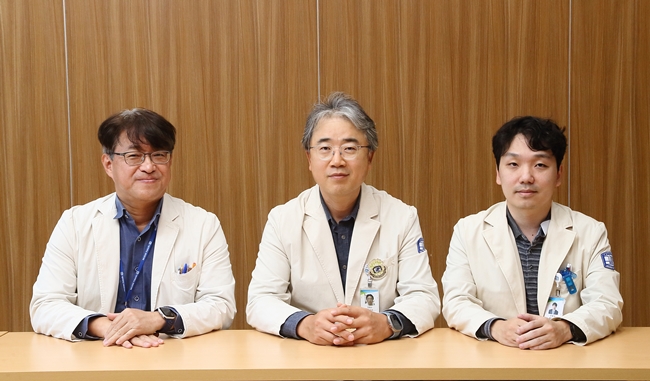
- Prostate cancer is one disease area where the treatment environment has been improving with the increasing number of treatment options listed for health reimbursement benefits. Recently, Pluvicto (vipivotide tetraxetan), a radioligand therapy with a new mechanism of action, has emerged and is attracting attention as a viable new standard of care. Although the prescription is still in its early stages in Korea, it is already expanding its influence in the global market. At a meeting with Dailypharm, SeungJu Lee, Professor of Urology; Byung-Yong Sim, Professor of Oncology; and Hyuk-Jin Yoon, Professor of Nuclear Medicine at Catholic University St.Vincent’s Hospital, expressed their views on how the new treatment option Pluvicto is expected to provide a new option for patients who are not responding to existing treatments. (From the left) Byung-Yong Sim, Professor of Oncology; Seung Ju Lee, Professor of Urology; and Hyuk-Jin Yoon, Professor of Nuclear Medicine at Catholic University St.Vincent’s Hospital Prostate cancer has been ranked as the leading cancer among men in recent years, and its diagnosis rate has been increasing due to the aging population and westernization, as well as active PSA (Prostate Specific Antigen) screening. Metastatic castration-resistant prostate cancer (mCRPC) is estimated to account for 20-30% of all prostate cancer patients. Its prognosis is favorable if detected early, as its 5-year survival rate exceeds 90%, but if the disease has already metastasized by the time of diagnosis and become mCRPC, the prognosis differs significantly from that of early-stage prostate cancer, as it cannot be cured with drugs. “Ten years ago, there was no way to cure mCRPC other than androgen deprivation therapy, but the introduction of antiandrogens had improved the condition and response of the patients,” said Professor Seung-Ju Lee. ”However, as even these treatments can lead to resistance, so we are looking forward to the development of further therapies.” Professor Byung-Yong Sim said, “In the treatment of mCRPC patients, patients are forced to move on to the next line of treatment due to resistance and eventually are left to receive chemotherapy. However, since most prostate cancer patients are elderly, there is also an issue that they cannot receive chemotherapy properly.” Radioligand therapy emerges for mCRPC...multidisciplinary care is key One such option is Pluvicto, a radioligand therapy (RLT). The drug was approved by the Ministry of Food and Drug Safety Korea in May for the treatment of adult patients with PSMA-positive mCRPC who had previously received ARPI therapy and taxane-based chemotherapy. In other words, the drug is expected to become a new treatment option for patients who have had a poor prognosis despite receiving existing therapies. “Previously, anticancer drugs were administered systemically through pills or injections, which then reached the cancer cells, but radioligand therapy’s mechanism of action allows radioactive substances to find and enter the target,” said Professor Lee. ”It is an effective treatment option that aligns with the characteristics of prostate cancer that can be administered with less impact on other cells.” It is also expected to be effective in terms of resistance, which is one of the challenges that exist with mCRPC treatment. “Continued treatment can lead to resistance, but Pluvicto selectively binds to prostate-specific membrane antigen (PSMA), which increases during the process of developing resistance to existing treatments,” said Professor Hyuk-Jin Yoon. ”Before treatment, patients can be tested with a radiopharmaceutical called PSMA PET-CT to determine their suitability in advance, allowing for more effective treatment.” However, due to the complex mechanism of RLT, multidisciplinary care is essential during the patient screening process. For this reason, only a few hospitals in Korea, including St. Vincent's Hospital, are currently able to prescribe Pluvicto. “Collaboration for RLT is only possible in hospitals that are large enough and are equipped with the facilities to handle nuclide materials,” said Professor Sim. ”We are forging multidisciplinary care, supported by a nuclear medicine department equipped with the scale to use radiotherapy materials related to bone metastases, and other departments screening the right patients.” “Pluvicto is administered in 6 cycles at 6-week intervals, and when you come to the hospital, you visit all 3 departments together,” he said. ”The whole body blood test is done by the oncology department, and the prostate is also related to urinary problems, so the urology department checks each of these problems and provides total care.” So how does Pluvicto actually work? While it's still early days for the drug and is hard to definitely say, the evaluation on-site is that has been shown to be effective in relieving bone pain. “A decrease in PSA levels by more than 50% is an important indicator of response, which can take as early as 2 weeks or as long as 4 weeks if the response is slow, so it's still too early to tell,” said Professor Yoon. ”However, one of the patients we recently treated was satisfied with the elimination of bone pain after the first treatment and is continuing onto the second treatment.” Pluvicto shows promise, but its high cost remains a challenge Aside from its therapeutic benefits, its high price tag is likely to be a hurdle like in many other new drugs. Currently, 6 cycles of Pluvicto are estimated to cost around KRW 200 million. Without reimbursement constraints, it is estimated that around 10% of men with castration-resistant prostate cancer (mCRPC), which accounts for 20-30% of all metastatic prostate cancer, would be eligible for Pluvicto. The number may be further reduced when screening eligible patients with PSMA PET-CT. “A lot of people could be helped if they didn't consider the price. Patients are highly interested in the drug, and we have visitors who received information about PSMA PET-CT and the list of hospitals that can treat it in patient advocacy groups, cafes, etc.” “There are some prostate cancer patients who are in good physical condition even though they have undergone all chemotherapy and hormonal treatments and have seen no effect. In such cases, Pluvicto would be a good option despite its high cost.” In the long run, however, the challenge will be its reimbursement. Professor Lee predicts that the reimbursement discussions will be made with the accumulation of prescription experience. “Reimbursement discussions have not been very active at academic conferences because Pluvicto is still new. Once we have a year or two of patient prescription experience, demand will also rise, and once there is demand, reimbursement discussions will be made one way or another.” “In urology, I think the introduction of Pluvicto will serve as momentum to the evolution of prostate cancer treatment, along with robotic surgery and antihormonal drugs,” added Professor Lee. ”I think the basis of the change is PSMA PET-CT, which will be a game-changer in diagnosis, and I think the related treatments will become an important issue that will attract the attention of academics for the next 2-3 years.”

- Policy
- Cancellation policy for innovative pharmas certification
- by Kang, Shin-Kook Dec 09, 2024 05:47am
- Choi Sang-Mok, deputy prime minister and Minister of Economy and Finance It has been reported that the cancellation standards of 'Innovative Pharmaceutical Companies Certification' will be relaxed for pharmaceutical companies fined for rebates. Some argue that certification requirements for illegal rebates are strict. Further criticism is anticipated as these measures deviate from the government’s longstanding anti-rebate policies. On December 4, the government finalized the "Innovate Economic Regulatory Plan for Enhancing Corporate Dynamism and Promoting New Industries" at the Emergency Ministerial Meeting on Economic Affairs. This plan was prepared by the Ministry of Economy and Finance and the Office for Government Policy Coordination of South Korea, actively·promptly reflecting suggestions from economic organizations and companies. ◆Improvement of certification cancellation standards for 'Innovative Pharmaceutical Companies' = The government has determined that the strict certification requirements related to illegal rebates in the 'Innovative Pharmaceutical Companies Certification' system could discourage pharmaceutical companies from developing new drugs. In detail, the government plans to revise the standards stipulating that certification can be canceled if ▲A company receives two or more penalties for violating the Pharmaceutical Affairs Act due to illegal rebates within three years or ▲The total amount of rebates exceeds KRW 5 million. After consulting with experts from the industry and academics, the government plans to devise a draft for the revision to the cancellation standards for the 'Innovative Pharmaceutical Companies Certification' (according to the Ministry of Health and Welfare notice) next year. Meanwhile, 'Innovative Pharmaceutical Companies Certification' offers several benefits, including: ▲Incentives when participating in government R&D projects related to new drug development ▲Corporate tax deductions for research personnel development costs ▲Eased location regulations for constructing research facilities ▲Special loan arrangements for policy funds. ◆'Advanced regenerative clinical research' results to be used for drug approvals = Different standards from clinical trials under the Pharmaceutical Affairs Act have been applied to Advanced regenerative clinical research, making it difficult to use as a basis for approval in developing advanced biopharmaceuticals. Guidelines will be established this month to allow advanced regenerative clinical research results to be used as approval review data for advanced biopharmaceuticals. Guidelines will be established this month to allow advanced regenerative clinical research results to be used as approval review data for advanced biopharmaceuticals. A draft guideline, tentatively titled "Guidelines relating to the Advanced Regenerative Medicine Clinical Research and Marketing Authorization," will be developed to utilize research results that meet specific standards as part of the review data for marketing authorization. ◆To introduce simultaneous analysis methods for vitamin B products in functional foods = Currently, the "Standards and Specifications for Functional Foods" do not include a test method for simultaneously analyzing the Vitamin B group (B1, B2, B6, niacin, and folic acid), which has delayed the product development. In response, the government plans to develop·implement a test method capable of analyzing properties across various formulations for functional foods through a research project starting in January next year. ◆To develop a pilot service of a health management system for young children·adolescents = A health management service utilizing AI and digital technology will be implemented to minimize long wait times for treatment and reduce public inconvenience. In particular, with declining birth rates exacerbating the reduction of pediatric medical demand and resources, the government aims to develop a health management system for young children to address reduced access to pediatric care. The system will be designed to include AI-based support for diagnosis and treatment guidance, assistance with medical record documentation, health consultations for managing pediatric diseases and providing information to caregivers on pediatric rare diseases. The government will allocate a total of KRW 32 billion over four years for this project. Additionally, the government suggested other innovative measures, ▲Establishment·operation of a regulatory support center for digital medical products ▲Regulatory improvements for consumer direct-to-consumer (DTC) genetic testing for minors ▲Enactment of legislation to promote alternatives to animal testing ▲Support for precision oncology technology development using next-generation sequencing (NGS) panel data ▲Simplification of required documentation for filing innovative medical technology applications.
- Company
- Padcev seeks reimb as mono and combo therapy in KOR
- by Eo, Yun-Ho Dec 09, 2024 05:47am
- The ADC bladder cancer drug Padcev is seeking reimbursement as both monotherapy and combination therapy in Korea. According to industry sources, Astellas Pharma Korea recently submitted reimbursement applications for Padcev (enfortumab vedotin) as monotherapy and combination therapy with PD-1 inhibitor Keytruda (pembrolizumab) in the treatment of adult patients with locally advanced or metastatic urothelial carcinoma who have received prior treatment with PD-1 or PD-L1 inhibitors and platinum-based chemotherapy agents. The monotherapy option passed the Health Insurance Review and Assessment Service's Cancer Disease Deliberation Committee review in February this year, but the application was rejected after the government and pharmaceutical companies failed to agree on the cost-effectiveness after the company completed the pharmacoeconomic evaluation. In response, Astellas Pharma plans to supplement the monotherapy data and reapply for its reimbursement in addition to the combination therapy. The drug is recommended as Category 1 in the National Comprehensive Cancer Network (NCCN) guidelines. It is a new treatment option for urothelial cancer patients whose cancer has progressed or recurred even after receiving treatment with immunotherapy drugs and platinum-based chemotherapy. The drug was approved in March in Korea for the treatment of adult patients with locally advanced or metastatic urothelial cancer who have received prior treatment with PD-1 or PD-L1 inhibitors and platinum-based chemotherapy, then approved in combination with Keytruda in July. “The Padcev combination is the first first-line therapy in metastatic urothelial cancer in 30 years to change the treatment paradigm and demonstrate unprecedented clinical benefit. We will continue to work closely with the government and stakeholders to ensure that patients with metastatic urothelial cancer in Korea can benefit from the use of our therapy,” said a company official. Padcev’s efficacy as a monotherapy was demonstrated through the EV-301 study, an open-label, Phase III trial that was conducted on 608 patients with locally advanced or metastatic urothelial cancer who have previously been treated with platinum-based chemotherapy and PD-1 or PD-L1 inhibitors. Study results showed that Padcev reduced the risk of death by 30% compared to chemotherapy. The median overall survival (OS) of the Padcev group was 12.9 months, demonstrating a significant improvement in survival compared to chemotherapy's 9.0 months. In addition, Padcev significantly improved progression-free survival (PFS) with a 38% reduction in disease progression or death risk, with the median progression-free survival (PFS) for Padcev being 5.6 months and 3.7 months for the control group. In the case of the Keytruda-Padcev combination, its efficacy was demonstrated through the randomized Phase III EV-302 trial that was presented at the European Society for Medical Oncology Annual Meeting (ESMO 2023) last year. The trial evaluated Padcev+Keytruda versus conventional chemotherapy in 886 patients in 25 countries. In the trial, the combination demonstrated a median progression-free survival (PFS) of 12.5 months over a median follow-up of 17.2 months, with a 55% reduction in the risk of disease progression and death compared to 6.3 months in the placebo arm.
