
- LOGIN
- MemberShip
- 2026-06-22 12:26:15

- Company
- New CGRP antagonist 'eptinezumab' expected to be marketed
- by Eo, Yun-Ho Nov 21, 2024 05:46am
- Product photo of Lundbeck Yet another CGRP antagonist drug for migraine is expected to be marketed. Lundbeck's 'eptinezumab (Vyepti),' a CGRP antagonist for the preventive treatment of migraine, showed positive results in the global Phase 3 clinical trial in Asia involving Koreans. The drug is expected to enter South Korea quickly based on this result. Lundbeck has announced that in the Phase 3 pivotal SUNRISE trial, which was conducted to evaluate the efficacy and safety of the drug in patients with chronic migraines, eptinezumab met primary and all key secondary endpoints. Lundbeck's eptinezumab is an intravenous (IV) therapy used for preventive migraine treatment, sold in Europe and the United States. It was approved by the U.S. Food and Drug Administration (FDA) as a preventive migraine treatment in adults in February 2020. In January 2022, it received marketing authorization from the European Medicines Agency (EMA). Eptinezumab is being sold in over 30 markets worldwide in addition to the U.S. market. Ahead of its launch in Asia, Lundbeck achieved positive outcomes from the SUNRISE clinical trials. The SUNRISE clinical trial enrolled adult patients with chronic migraines who required preventive treatment. Symptoms of chronic migraine were defined as having a headache lasting more than 15 days in a month, with migraines occurring more than 8 days in a month. In a randomized, double-blind clinical trial, 983 patients were randomized and double-blinded to three treatment groups to receive eptinezumab 300 mg, 100 mg, or placebo by IV infusion. The effects were monitored for 12 weeks. The SUNRISE clinical trial results showed that eptinezumab significantly reduced monthly migraine days (MMD) compared to the placebo, meeting the primary endpoint. Measuring changes to MMD in chronic migraines during the 12-week treatment showed that the 300 mg-administered patient group had -7.5 days, the 100 mg-administered patient group had -7.2 days, whereas the placebo patient group had -4.8 days. Additionally, the eptinezumab 300 mg-or 100 mg-administered patient group had a significant MMD reduction of over 50% during the 12-week treatment compared to the placebo. In the SUNRISE clinical trial, the percentage of patients experiencing migraines the next after the eptinezumab infusion was significantly lower than the placebo, confirming that eptinezumab's preventive effects are experienced early. "In Asia, millions of people are affected by frequent and severe migraines, but only a few individuals use preventive therapy due to limitations of efficacy, safety, and drug tolerance," Johan Luthman, Executive Vice President in the R&D sector, stated. "We are very pleased with the SUNRISE clinical trial results. The current results will play a key role in Lundbeck's effort in providing eptinezumab to Asian patients who suffer from severe migraines," Luthman added. Meanwhile, Lundbeck plans to initiate the process of obtaining approval from the regulatory authority so that patients in Asia regions, including South Korea, China, and Japan, who suffer from migraines can readily use eptinezumab.
- Policy
- Strengthed regulations on human drug use in vet clinics
- by Lee, Jeong-Hwan Nov 20, 2024 06:08am
- A bill that requires frontline pharmacies to record detailed distribution details on human specialty drugs sold to veterinary hospitals has passed the Bill Review Subcommittee review. Although there was a lot of disagreement over the bill between the professions subject to the regulation - the pharmacists and the veterinarians - the Health and Welfare Committee’s Bill Review Subcommittee members agreed on the need to address the issue of misuse of human specialty drugs in veterinary hospitals. On the 19th, the 1st Bill Review Subcommittee of the National Assembly's Health and Welfare Committee reviewed and voted, and passed the bill to amend the Pharmaceutical Affairs Act, introduced by Representative Young-Seok Seo of the Democratic Party of Korea. The core of Seo's bill is to impose reporting obligations on pharmacists when they sell specialty drugs for human use to veterinarians at veterinary hospitals. The bill establishes a distribution management system that requires pharmacists to report their sales to the Korea Pharmaceutical Information Center every time they sell specialty drugs to veterinarians to prevent misuse and abuse of human drugs through veterinary hospitals. In addition, when pharmacists sell specialized drugs to veterinarians, they are required to submit the name of the veterinary hospital, contact information, drug name, quantity, and date of sale to the Korea Pharmaceutical Information Center in accordance with the Ministry of Welfare decree. If a pharmacist fails to submit the sales details or submits them falsely, he or she will be fined up to KRW 1 million. In particular, the bill mandates the computer network of the Korea Pharmaceutical Information Center to be linked to the veterinary prescription management system operated under the Veterinarians Act to transparently manage the distribution channels of specialty drugs sold to veterinarians. The Korean Pharmaceutical Association submitted a position in favor of the bill and the Korean Veterinary Medical Association submitted a position against the bill, but the Bill Review Subcommittee decided to pass the bill. Although the bill passed the Bill Review Subcommittee, it remains to be seen whether it can pass the Legislation and Judiciary Committee as the two professions are at odds. Earlier, Rep. Seo explained the background of the bill, saying that the process of selling specialized drugs for human use to veterinary clinics is causing issues of misuse and abuse, while at the same time, 'drug delivery,' which is prohibited by the current law, is also being carried out covertly.
- Product
- Gout drug allopurinol side effect alert
- by Kang, Shin-Kook Nov 20, 2024 06:08am
- As reports of adverse reactions to allopurinol, a drug prescribed for gout, continue to mount, health authorities are calling for genetic testing of patients before prescribing it to prevent side effects. According to medical and pharmaceutical associations on the 19th, the NMC Adverse Drug Reaction Committee recently reviewed applications for side effect damage relief of allopurinol-containing medicines and suggested the need for medical institutions to be informed of the ‘reimbursement of genetic testing before prescribing allopurinol.’ A notice regarding the reimbursement of genotyping fees before the first administration of allopurinol for all patients was issued in August 2021, but the committee believes the notice should be revised to request testing before prescribing. Allopurinol may cause a rare and potentially fatal Severe Cutaneous Adverse Drug Reaction (SCAR). Examples include Stevens-Johnson syndrome, toxic epidermal necrolysis, and drug hypersensitivity syndrome. As of 2023, allopurinol was the No. 1 drug (ingredient) causing adverse drug reactions in Korea, according to the Korea Institute of Drug Safety & Risk Management. The MFDS explained that “allopurinol-induced SCARs are highly associated with the HLA-B5801 allele,” and that Koreans have a higher rate of the gene than Westerners, allowing the prevention of adverse reactions through genetic testing. As a result, doctors and pharmacists should pay attention to follow-up, guidance, and medication guidance for allopurinol’s side effects.
- Company
- ‘Use of Prevenar 20 will rise to address the unmet need'
- by Son, Hyung Min Nov 20, 2024 06:08am
- Dr. Su-Eun Park, professor of pediatrics at Pusan National University Children Prevenar 20 has become the pneumococcal vaccine that covers the most serotypes in Korea. Experts believe that its use will increase to address the unmet need for a treatment that protects against serotypes not targeted by existing vaccines. Pfizer Korea held a press conference at the Lotte Hotel in Jung-gu, Seoul on the 19th to celebrate the approval of Prevenar 20 in South Korea. The Ministry of Food and Drug Safety approved Prevenar 20 as a new pneumococcal vaccine on March 31st. With the approval, Prevenar 20 is now available for ▲ the prevention of invasive disease, pneumonia and acute otitis media caused by 20 Streptococcus pneumoniae strains (1, 3, 4, 5, 6A, 6B, 7F, 8, 9V, 10A, 11A, 12F, 14, 15B, 18C, 19A, 19F, 22F, 23F, and 33F) in individuals 6 weeks and older; ▲ For the prevention of invasive disease and pneumonia caused by pneumococci (serotypes 1, 3, 4, 5, 6A, 6B, 7F, 8, 9V, 10A, 11A, 12F, 14, 15B, 18C, 19A, 19F, 22F, 23F, 33F) in persons 18 years of age and older. Prevenar 20 is Pfizer's first new pneumococcal vaccine in 14 years, which adds 7 serotypes (serotypes 8, 10A, 11A, 12F, 15B, 22F, and 33F) to the existing Prevenar 13 vaccine. In a clinical trial, the company confirmed Prevenar 20’s immunogenicity and tolerability against 20 serotypes in healthy infants after 4 doses. The results were also similar in another clinical trial that was conducted on adults. “Prevenar 20 demonstrated immunogenicity and safety against all 13 serotypes it shared with Prevenar 13, and 7 additional serotypes compared to the existing 13-valent pneumococcal polysaccharide vaccine,” said Dr. Sunju Kim, Medical Lead at Pfizer Korea. “More serotypes, more protection with Prevenar 20” Pneumococcus pneumoniae is an infectious disease caused by the bacterium Streptococcus pneumoniae, of which there are approximately 100 serotypes. In the United States, more than 150,000 adults are hospitalized for pneumococcal pneumonia each year. Streptococcus pneumoniae is the leading cause of bacterial pneumonia, meningitis, and sepsis in children worldwide. While the incidence of invasive pneumococcal disease is declining due to the availability of various vaccines, including Prevenar, the disease burden due to serotypes not covered by existing vaccines still remains. In a surveillance study on Korean pediatric invasive pneumococcal disease conducted from January 2014 to December 2019, frequent serotypes isolated from 168 cases included 10A (40 cases). 10A is one of the serotypes not targeted by existing vaccines. In addition, among the serotypes (67 strains) of invasive pneumococcal disease in children and adolescents in Korea that occurred between 2018 and July 2021, serotypes targeted by Prevenar 20 accounted for 54%. Dr. Su-Eun Park, professor of pediatrics at Pusan National University Children's Hospital, said, “The serotypes that were of an issue in Korean children have been added to Prevenar 20. It is expected to provide an additional 40% protection against pediatric invasive infection, 30% against otitis media, and 20% protection in adults.”
- Policy
- Stelara biosimilars face increasing competition
- by Lee, Tak-Sun Nov 20, 2024 06:08am
- Product photo of Janssen Competition among biosimilars referencing Stelara (ustekinumab) for treating autoimmune diseases heats up. Samsung Bioepis added its biosimilar to the reimbursement list in July, and Celltrion added theirs in September. Since Celltrion is set to cut the price starting next month, attention has been drawn to future competition. According to industry sources on November 19, Celltrion will cut the prices of existing products after their Steqeyma IV Inj, an intravenous formulation (IV), becomes listed for reimbursement in December. In September, Celltrion listed two Steqeyma PFS products for reimbursement, although the IV formulation was not included then. In contrast, the original Janssen Stelara and Samsung Bioepis Epyztek are available on the market with a total of three formulations, including the IV formulation. With the launch of Celltrion's IV formulation, the company has positioned well agaisnt the competitors. Additionally, by cutting its drug price, Celltrion has gained a competitive edge in pricing. The ceiling price for Steqeyma IV is KRW 1,278,313, making it more affordable than comparable formulations from Janssen and Samsung Bioepis. Janssen's Stelara S.C. Inj is priced at KRW 1,809,200, and Samsung Bioepis's Epyztek IV Inj is set at KRW 1,345,593. This makes Steqeyma approximately KRW 530,000 cheaper than the original product and about KRW 70,000 less expensive than the Samsung Bioepis formulation. Additionally, Celltrion has voluntarily reduced the price of its prefilled syringe formulation. Steqeyma PFS 45 mg price has been lowered from KRW 1,298,290 to KRW 1,233,376. For comparison, Janssen’s Stelara S.C. Inj·Stelara PFS are priced at KRW 1,745,600, while Samsung Bioepis’s Epyztek PFS is priced at KRW 1,298,290. This makes Celltrion’s product approximately KRW 510,000 cheaper than the original and about KRW 60,000 less expensive than Samsung Bioepis’ product. Additionally, the Steqeyma PFS 90 mg price has been reduced from KRW 1,342,320 to KRW 1,275,204. Currently, the original product is priced at KRW 1,804,800, and Samsung Bioepis' product is priced at KRW 1,342,320. Celltrion's prefilled syringe products were previously priced the same as Samsung Bioepis' products. However, Celltrion has officially entered the price competition with the recent price reduction. The price of the original Stelara will decrease to the KRW 1,500,000 range after its additional reimbursement ends in July next year. However, there will still be a significant gap compared to Celltrion's product, giving Celltrion an advantage in price competitiveness. According to IQVIA, Stelara's sales reached KRW 47.4 billion last year. It is reimbursed for treating moderate-to-severe plaque psoriasis in adults and children aged 12 and older, active psoriatic arthritis in adults, active Crohn's disease in adults, and moderate-to-severe ulcerative colitis in adults.
- Company
- Drug switching policy for atopic dermatitis fails to address
- by Whang, byung-woo Nov 20, 2024 06:08am
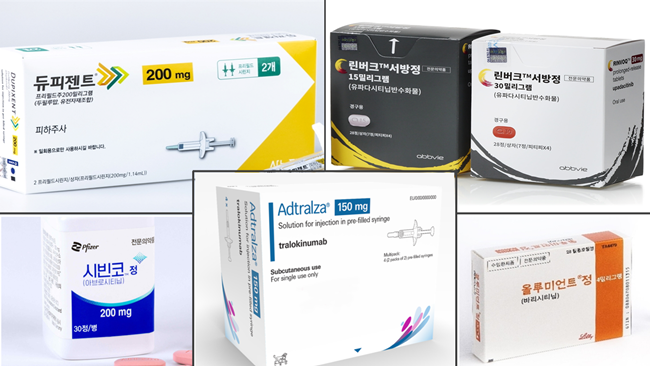
- A discussion has been advancing to allow drug switching between a biological agent and a JAK inhibitor for treating atopic dermatitis (hereafter referred to as atopy), and there have been further suggestions for the revision. The Health Insurance Review and Assessment Service (HIRA) has already established reimbursement criteria, but concerns have been raised about potential challenges in the effective use of the drug, including drug switching between drugs of the same class. (clockwise from top left) Product photos of Dupixent, Rinvoq, Olumiant, Adtralza, and Cibinqo The Embassy of Denmark in Korea met with the Severe Atopic Dermatitis Association (SADA) to discuss potential improvements to atopy treatment settings and systems. The HIRA has exchanged opinions with experts about allowing drug switching between a biological agent and a JAK inhibitor since September, and they have established the reimbursement criteria based on the latest documents and clinical practices. According to the pharmaceutical industry, pharmaceutical companies have submitted measures to voluntarily cut drug prices as part of financial allotment following expanded reimbursement. Attention has been drawn to whether it will pass the Drug Reimbursement Evaluation Committee (DREC) review, which is the final step during the appropriateness review process. However, the Severe Atopic Dermatitis Association (SADA) emphasizes that, while they have positive views towards the ongoing discussion about drug switching between treatments, an additional review of the revision to reimbursement criteria is necessary. Their chief suggestion for the draft of revision is recognizing the need for drug switching within the same class of drugs in addition to drug switching between different classes. Currently, drug switching for atopy is approved for drug switching between a biological agent and a JAK inhibitor. As a result, drug switching between drugs of the same class is not allowed. For instance, drug switching between biological agents such as Dupixent and Adtralza or JAK inhibitors such as Rinvoq and Cibinqo has been limited. However, drug switching between the same classes must also be considered considering many underlying mechanisms of atopy. In fact, SADA's '2024 Guidelines for the Treatment of Atopic Dermatitis in Korea,' which has been updated after 9 years, does not provide detailed recommendations for switching drugs between treatments due to the different properties of atopy. A SADA member said, "We do not have a set order of treatments because it is difficult to decide which drug is more suitable. The associations hope that drug switching becomes possible regardless of the classes." "Still limited drug switching between atopy treatments, we must consider all aspects" During the meeting with Daily Pharm, SADA President Joeun Park said, "Due to the nature of atopy, patients have different characteristics of atopy. When treatment options for drug switching are limited, patients may have difficulty in switching drugs." Park added, "Since the discussion about improvements to treatment setting is ongoing, in my opinion, there should be no limitations to the classes of drugs and the number." Currently, patients are more likely to choose drugs with the greatest market presence within the same class based on their experiences. Therefore, they may not significantly benefit from the treatment. In other words, Park is concerned that the current revision for atopy drug switching may not produce effective outcomes and could remain merely an administrative action. However, Park states that the government's draft for revision of six months for switching is sufficient. Park emphasized the need for the government to pay more attention to patients who are unable to receive JAK inhibitors. "In my opinion, patients typically do not respond to atopy treatment until around four months, with noticeable effects starting to appear around six months. Therefore, I support continuing treatment for up to six months," Park stated. "However, in a few cases, patients become pregnant while undergoing JAK inhibitor treatment. As a result, the government should implement more flexibility concerning these situations." (from left) Joachim Arup-Fischer, Commercial Counselor at the Embassy of Denmark in Korea, and Mads Friborg, Health & Medical Counselor at the Embassy of Denmark in Korea. & Medical Counselor at the Embassy of Denmark in Korea Regarding this issue, the Embassy of Denmark in Korea plans to collaborate on healthcare issues, including atopy. "In Denmark, the importance and influence of patient advocacy groups are growing. We are considering including this aspect in next year's business plan when collaborating with the Ministry of Health and Welfare (MOHW)," Mads Friborg, Health & Medical Counselor at the Embassy of Denmark in Korea, said. "We started to pay attention to atopy when HIRA's agenda was hotly debated. Additionally, we are considering discussing and bringing suggestions about the disease," Joachim Arup-Fischer, Commercial Counselor at the Embassy of Denmark in Korea, said. "Drug pricing was the chief discussion point during the recent meeting with the HIRA. From now on, we expect to discuss various aspects."
- Company
- Returned out-licensing, Daewoong's autoimmune disease drug
- by Son, Hyung Min Nov 19, 2024 06:13am
- Daewoong Pharmaceutical. Daewoong Pharmaceutical's new drug candidate, 'DWP213388,' for the treatment of autoimmune diseases is set to return after a year and a half. DWP213388, a new drug candidate developed as the First-in-Class, has entered the Phase 1 clinical trial. According to the Financial Supervisory Service (FSS) on November 16, Daewoong Pharmaceutical announced the U.S.-based biotech company Vitalli Bio has notified of out-licensing agreement termination for DWP213388, a treatment for autoimmune diseases. Both companies will undergo 60 days of negotiation and finalize the contract termination. Daewoong's upfront payment amounting to US$1.1 million is non-refundable. Daewoong Pharmaceutical had signed a global out-licensing agreement with Vitalli Bio, a subsidiary of the biotech investment firm, for its DWP213388 during the 'Korea-U.S. Digital and Bio-Health Business Forum' held on April 2023 in Boston, U.S. DWP213388 has a bispecific mechanism of inhibiting both Bruton's Tyrosine Kinase (BTK) and Interleukin-2-inducible T-cell Kinase (ITK), which are involved in activating immune cells such as B cells and T Cells. This new drug candidate received Phase 1 approval from the U.S. Food and Administration Agency (FDA) in 2022. In a preclinical trial, DWP213388 confirmed efficacy and safety in an autoimmune disease animal model. The Graft vs Host Disease (GvHD) mouse model study showed that DWP213388 effectively suppresses symptoms and improves survival rate. In a rheumatoid arthritis mouse model, DWP213388 demonstrated efficacy with a lower dosage than existing treatment and effects protecting bone damage. Additionally, an animal model study of cytomegalovirus (CMV) infections confirmed that DWP213388 effectively killed the virus. Most BTK inhibitors work selectively on B cells, suppressing BTK overexpression in B cells. The most prominent diseases caused by B-cell overexpression are blood cancers such as leukemia and lymphoma. DWP213388 also selectively targets ITK, another type of protein that regulates the immune function of T cells. BTK and ITK overexpression can result in the development of autoimmune diseases, including psoriasis, lupus, and inflammatory bowel disease. DWP213388 is different from existing BTK inhibitors in that it has high ITK-selectivity and low EGFR-selectivity, providing benefits of lower risk of side effects such as liver toxicity. BTK inhibitor may secure new indication…will it be a new opportunity for Daewoong? Daewoong Pharmaceutical's return of a new drug candidate is highly possible. Yet, attention is drawn to whether the company would obtain a new opportunity similar to the case of Hanmi Pharm. Hanmi Pharmaceutical had 'Poseltinib' returned from the global pharmaceutical company Eli Lily. However, Hanmi Pharm continues to develop the drug after changing indications. Poseltinib is a new drug candidate developed by Hanmi Pharm in 2010 for the first time, and it was out-licensed to Eli Lily in 2015. After that, Elily Lily failed Poseltinib's Phase 2 clinical trial for patients with autoimmune diseases and returned the development rights in 2019. After that, in collaboration with Korean bioventure NOBO Medicine (previously Genome Opinion), Hanmi Pharm discovered a new possibility of Poseltinib in diffuse large B-cell lymphoma (DLBCL) in a clinical trial. Both companies confirmed the safety and effectiveness of the combination therapy containing Poseltinib+Columvi+Revlimid. Based on the clinical results presented to date, of the 14 patients who can be assessed for response, the percentage of patients who met the objective response rate (ORR) recorded was 79%. Although it was early data, 36% of the patients reported complete response (CR) with a lack of all signs of cancer cells. No adverse reactions were reported in a cohort assessed for safety. In October 2021, Hanmi Pharmaceutical signed a joint development agreement with the Korean bioventure NOBO medicine for Poseltinib and jumped into the market for blood cancer treatments. Genome Opinion has been conducting an Investigator Initiated Trial (IIT) for triple-combination therapy containing Poseltinib, Roche's Columvi, and BMS' Revlimid for patients with relapse/refractory DLBCL at Seoul National Hospital.
- Company
- Three months after Pluvicto launch
- by Moon, sung-ho Nov 19, 2024 06:13am
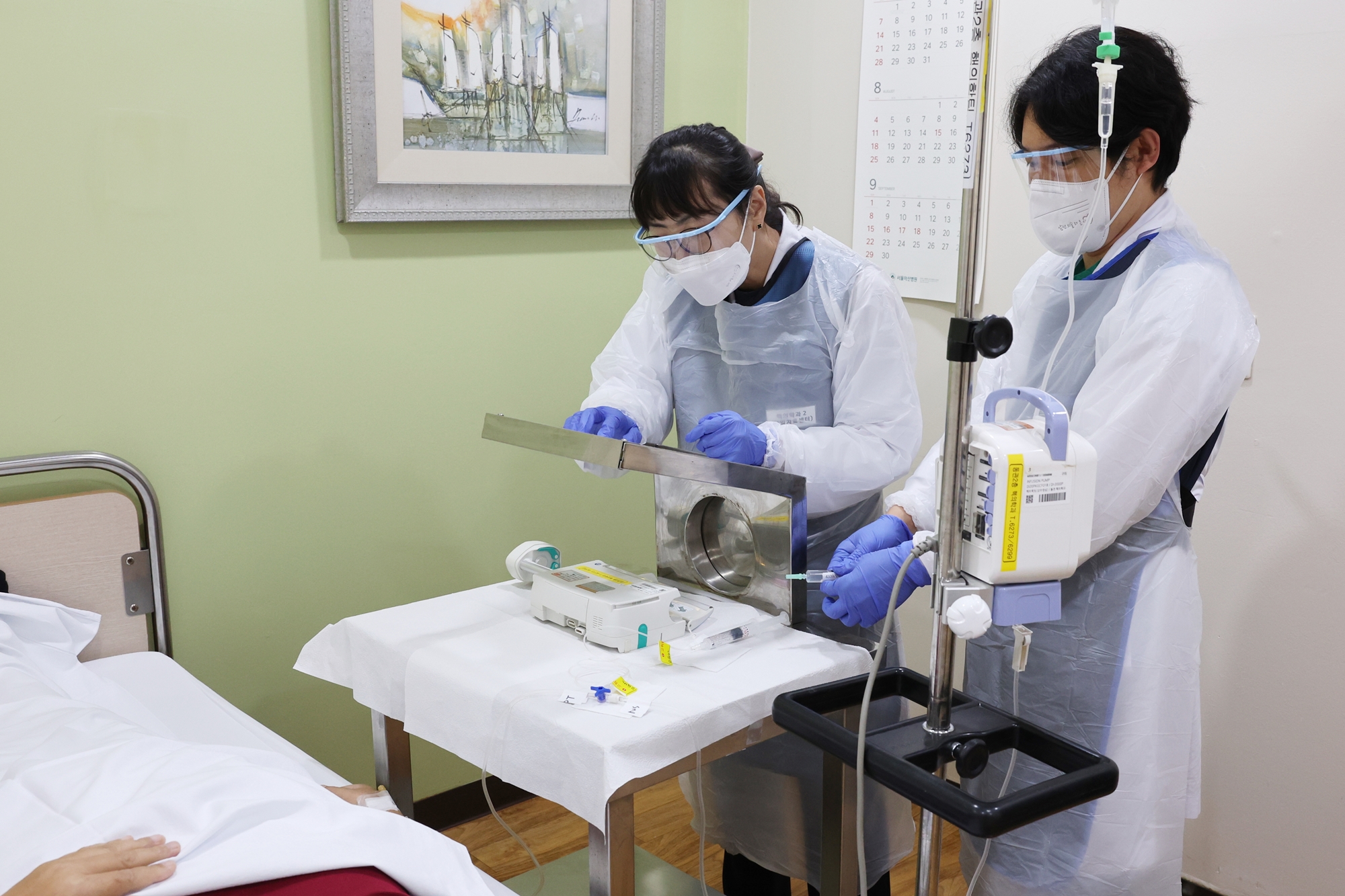
- Novartis Korea's prostate cancer treatment, Pluvicto, which has garnered attention since its approval by the Ministry of Food and Drug Safety (MFDS), has now been administered to Korean patients for three months. Pluvicto is a blockbuster drug that generated over KRW 1 trillion in global sales last year and is recognized as a product initiating the so-called "radioactive missile" era. Pluvicto can primarily be prescribed in large hospitals in South Korea, leading to a growing number of patients receiving the treatment. However, its high cost and non-reimbursable status remain significant barriers to patient access. As the use of radiopharmaceuticals becomes more widespread in domestic clinical settings, competition among local pharmaceutical‧biotech companies developing similar treatments is intensifying once again. According to the medical community on November 14, since the MFDS approved Novartis Korea's prostate cancer treatment Pluvicto (Lutetium (177Lu) vipivotide tetraxetan injection) at the end of May, six medical institutions, including the National Cancer Center, have administered or plan to administer the treatment as of November. Pluvicto is a radioligand therapy that targets prostate-specific membrane antigen (PSMA), which is overexpressed in prostate cancer, by binding the radioactive isotope Lutetium-177 (177Lu) to PSMA to eliminate cancer cells. Radioligands are therapies that combine a ligand (a targeting molecule) with a therapeutic radioactive isotope. When the radioligand binds to the target cell, it emits therapeutic radiation, which suppresses cancer cell proliferation. The basis of domestic approval was the Phase 3 VISION clinical tiral. The trial involved 831 patients with PSMA-positive metastatic castration-resistant prostate cancer (mCRPC). It was designed to compare the efficacy and safety of Pluvicto combined with standard therapy versus standard therapy alone. The clinical trial results showed that the Pluvicto group recorded a median radiographic progression-free survival (PFS) of 8.7 months, significantly longer than 3.4 months in the control group. The median overall survival (OS) was 15.3 months for the Pluvicto group, compared to 11.3 months for the control group. Administration of Pluvicto reduced the risk of disease progression or death by 60%. To introduce Pluvicto, medical institutions must have dedicated PSMA PET-CT equipment for prostate cancer and facilities for preparation, quality control, and separate spaces for patient administration. Additionally, multidisciplinary collaboration involving nuclear medicine, oncology, and urology specialists is essential. The treament requires significant investment in medical institutions' facilities, equipment, and personnel. Currently, 15 medical institutions nationwide, including major hospitals in South Korea, have adopted PSMA PET-CT for diagnostic purposes. As of November, six of these institutions are providing treatment using Pluvicto. The remaining issue is the cost. The recommended dose of Pluvicto is 7.4 GBq (200 mCi), administered intravenously every six weeks (±1 week) for up to six doses. Each dose costs KRW 30-40 million out-of-pocket in clinical practices, bringing the total treatment cost to approximately KRW 200 million. However, despite the high cost, the clinical efficacy of Pluvicto has been proven to surpass existing treatments. Nearly 20 patients have completed or are undergoing Pluvicto therapy within three months after launch. Considering the expense, this is a significant number of patients. Dr. Inkeun Park from the Oncology Department at Asan Medical Center in Seoul said, "From a medical professional's perspective, the introduction of Pluvicto sheds a positive light as it provides an additional effective treatment option with manageable side effects." Park added, "The challenge lies in its high cost, the limited number of institutions equipped to perform PSMA PET-CT, and the restricted availability of facilities capable of administering the treatment." Novartis, fully aware of these challenges, has set reimbursement for Pluvicto as a chief objective for next year. A representative from Novartis Korea said, "We are currently conducting internal reviews to secure reimbursement for Pluvicto." Adding, "Given its role in transforming the prostate cancer treatment paradigm, we aim to improve patient accessibility by obtaining reimbursement approval next year."
- Company
- Imfinzi passes first step to reimb in KOR… key is the price
- by Whang, byung-woo Nov 19, 2024 06:13am
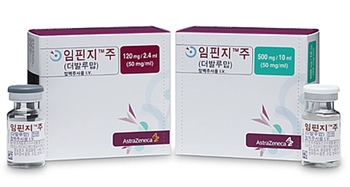
- With the reimbursement standard set for the immuno-oncology drug Imfinzi (durvalumab), which is under review for reimbursement extensions, how the discussions will develop thereafter is gaining attention. Although the first step has been taken, attention is being paid to the future process as the matter was mentioned during the National Assembly’s Health Insurance Review and Assessment Service National Audit. The drug price is the key issue. Consensus on the cost is expected to be crucial amid the rising health insurance expenses being spent on anticancer drugs. Pic of Imfinzi According to industry sources on the 18th, the Health Insurance Review and Assessment Service recently held the 8th Cancer Disease Deliberation Committee (CDDC) meeting in 2024 to deliberate on whether to establish reimbursement standards for major anticancer drugs. As a result, Imfinzi was set reimbursement standards in combination with gemcitabine and cisplatin for the first-line treatment of patients with locally advanced or metastatic biliary tract cancer. In addition, AstraZeneca's Imjudo (tremelimumab) has also been set reimbursement standards in combination with Imfinzi in liver cancer, raising expectations for further coverage of the drug. In a response to a written inquiry during the NA Audit, HIRA had said, “As a result of the CDDC review that was held in November last year, the committee decided Imfinzi’s cost should fully be borne by patients due to its high price and high financial spending compared to clinical benefits.” However, the CDDC changed its decision and recognized Imfinzi’s clinical benefits this time around. In fact, a Korean subgroup analysis of TOPAZ-1, Imfinzi’s Phase 3 trial in biliary tract cancer, which was presented at the Korean Society of Medical Oncology (KSMO) International Conference in September, showed improved median overall survival (mOS) and 3-year OS rate in Korean patients. Korean patients treated with the Imfinzi combination showed an mOS of 16.6 months, compared to the 11.3 months found in Korean patients treated with conventional therapy, which is a 5.3-month extension in overall survival. The OS rate at 3 years also improved over twofold, being 21.0% in the Imfinzi combination arm and 8.8% in the conventional therapy arm. ▲ Key Results of the TOPAZ-1 overall patient and Korean subgroup analysis The industry also believes that AstraZeneca's improved financial proposal to the government for Imfinzi would have played a role during the CDDC review. The key question is whether it will pass the next stage, the Drug Reimbursement Evaluation Committee review. Although the company has succeeded in expanding the reimbursement standard for Imfinzi and setting the reimbursement standards for Imjudo in biliary tract cancer and liver cancer, respectively, there is also the burden of increased use for Imfinzi that would affect the drug’s price. Currently, Imfinzi costs around KRW3.34 million per bottle, and the cost of administering the drug is even higher for liver cancer patients who receive the drug in combination with Imjudo. In the end, it will be important to find a compromise between the fact that Imfinzi has become the global standard of care for biliary tract cancer in 12 years and its increasing burden on health insurance finances. In the U.S., U.K., and Japan, Imfinzi was reimbursed within a year of its approval. The industry believes the U.K.’s case would provide clues for Korea’s implementation. During reimbursement discussions, the U.K. used a quality-adjusted life years (QALYs) weight of 1.2 and a flexible ICER in recognition of the fact that Imfinzi was the first immuno-oncology drug approved for the first-line treatment of biliary tract cancer. However, as Imfinzi’s ICER does not meet the criteria for the Korean government's 'preferential treatment for innovative new drugs', it remains to be seen how the discussions will unfold. The industry analyzes that it will come down to what the pharmaceutical companies will propose in terms of financial sharing and whether the government will accept the proposal. “AstraZeneca Korea is committed to providing innovative treatment options for biliary tract cancer patients in Korea. We will continue to do our best in the coming process,” said an AstraZeneca official.
- Policy
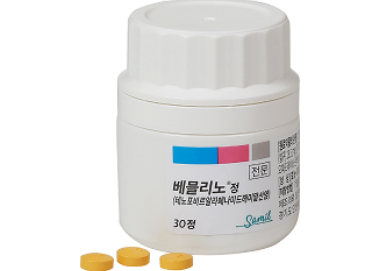
- Samil voluntarily cuts price of its Vemlino to lowest price
- by Lee, Tak-Sun Nov 19, 2024 06:13am
- Samil Pharm is voluntarily reducing the price of its hepatitis B drug Vemlino (Tenofovir Alafenamide Hemimalate). This will render the drug to be the lowest-priced drug among tenofovir alafenamide drugs, increasing its price competitiveness. According to industry sources on the 18th, the price of Vemlino will be reduced from KRW 2,425 to KRW 2,358 starting next month. There are currently 9 tenofovir alafenamide-based hepatitis B treatments, including the original Vemlidy (tenofovir alafenamide hemifumarate, Gilead). The other 8 are salt-modified agents. Vemlidy is an upgraded version of Gilead's Viread. Viread was associated with side effects of decreased kidney function or bone density in some patients, so the upgraded Vemlidy has become the most commonly recommended initial treatment on site as it contains one-tenth the active ingredient dose of Viread while providing the same level of viral suppression. The salt-modified versions of Vemlidy have been sequentially released to the market starting with Dong-A ST’s ‘Vemlia Tab (tenofovir alafenamide citrate). The companies were able to enter the market by avoiding patents through salt modification. However, even with the introduction of such versions, the original's status remained unchanged. Vemlidy’s sales continued to soar, reaching KRW 27.9 billion in 2021, KRW 39.3 billion in 2022, and KRW 49.2 billion in 2023, according to UBIST. This is the third consecutive year that the drug’s upper limit has been reduced through the price-volume agreement negotiations due to increased usage. The price of Vemlino, whose price was lowered this time, was only KRW 300 million (UBIST) last year. Samil had listed its drug at KTW 2,425, lower than the calculated amount when it was listed in July last year, to gain price competitiveness. However, the lowest price title went to Dongkook Pharmaceutical’s Alfoterin Tab (Tenofovir Alafenamide Hemimalate). The upper limit for Alfoterin is KRW 2,424. This time, Samil lowered the price of Vemlino to KRW 2,328 and took over the lowest price title. The highest price for tenofovir alafenamide is currently KRW 3,235 for the original Vemlidy Tab, and the difference between Vemlidy and Vemlino is KRW 887. HBV patients are sensitive to the price because they need to take medications for life. Therefore, it will be interesting to see if Vemlino can gain market share with its competitive price. An industry insider said, “The market for tenofovir alafenamide preparations has only 8 generic contestants that entered the market through patent evasions, so there is less competition and the companies can take more of the market share. However, the generic companies are struggling due to high dependence on the original, and the eyes are on whether the low-price competition can break this pattern.”
