
- LOGIN
- MemberShip
- 2026-06-22 12:26:36
- Company
- New treatment options for pancreatic cancer arise
- by Son, Hyung Min Dec 09, 2024 05:47am
- New antibody drugs are showing results in pancreatic cancer, a disease area that has been regarded as an incurable disease. Recently, a new bispecific antibody drug from the Dutch company Merus was approved for the treatment of pancreatic cancer in the United States. In clinical trials, the drug has shown therapeutic effects in patients with pancreatic cancer and non-small cell lung cancer. In Korea, efforts to develop new antibody drugs for pancreatic cancer are also underway. Prestige BioPharma, Aptamer Sciences, and ABL Bio have confirmed the potential of antibody drugs in pancreatic cancer. Merus’s HER2·HER3 targeted bispecific antibody secures indications for pancreatic cancer and non-small cell lung cancer According to industry sources on the 7th, the US FDA approved Merus' bispecific antibody Bizengri for the treatment of pancreatic cancer and non-small cell lung cancer. Bizengri is the first bispecific antibody approved for neuregulin 1 gene (NRG1) fusion lung and pancreatic cancer. The drug received accelerated approval and is subject to further confirmatory clinical trials to determine full approval. Bizengri was first under clinical development as a HER2-targeted antibody but was redirected to simultaneously target the NRG1 gene fusion, a variant of the HER2 and HER3 antibodies, to increase the therapeutic effect. Bizengri’s license was based on a Phase I/II eNRGy study. The study included 30 patients with NRG1-positive pancreatic cancer and 64 patients with non-small cell lung cancer who had failed prior therapy. The mean age of the pancreatic cancer patients was 49 years, and 57% were male. The primary endpoints were overall response rate (ORR) and duration of response (DOR) as determined by Blinded Independent Central Review (BICR). Clinical results showed an ORR of 40% in patients with pancreatic cancer. DOR ranged from a median of 3.7 months to up to 16.6 months. Bizengri showed a strong suit in terms of safety. The most common adverse events occurring after treatment with Bizengri were diarrhea, musculoskeletal pain, fatigue, nausea, constipation, vomiting, and abdominal pain. Adverse reactions occurred in approximately 10% of patients and were generally mild. Merus is recruiting patients to participate in a confirmatory clinical trial for full approval of Bizengri. The company expects Bizengri to be effective in all cancer types driven by NRG1 fusions. Monoclonal antibody, ADC, bispecific antibody for pancreatic cancer Korean companies are also trying to develop new drugs for pancreatic cancer through antibody drugs. Prestige Biopharma, LigaChem Biosciences, ABL Bio, and Aptamer Sciences are checking the potential of monoclonal antibodies, ADCs, and bispecific antibodies. Pancreatic cancer has one of the lowest survival rates among cancer diseases. According to the National Cancer Center, the 5-year survival rate for pancreatic cancer from 2017 to 2021 is only 15.9%. Due to its organ location, pancreatic cancer has an early detection rate of less than 10%, making it easy to metastasize to surrounding organs. New drugs from various domestic and foreign pharmaceutical companies have tried their hand in this field, but most of them have failed in the clinical trial stage. As such, antibody drugs are emerging as an alternative. Antibody-drug conjugates (ADCs) and multi-antibodies that target 2 or more biomarkers at the same time are actively being tested to conquer intractable diseases. Prestige Biopharma is developing an antibody drug candidate, PBP1510. PBP1510 neutralizes the pancreatic ductal adenocarcinoma overexpression factor PAUF protein, which is a therapeutic target for pancreatic cancer. PBP1510 is currently in Phase I/IIa clinical trials in Spain, the United States, Singapore, and Australia. Through this study, Prestige Biopharma plans to determine the safety and tolerability of PBP1510 in combination with gemcitabine. Aptamer Sciences recently signed a collaboration agreement with Kolon Pharmaceuticals to jointly develop its ADC candidate AST-203. The two companies plan to conduct clinical studies of AST-203 with the goal of securing an indication for pancreatic cancer. Aptamer Sciences and Kolon Pharmaceuticals will jointly develop its ADC candidate AST-203 for pancreatic cancer AST-203 targets TROP2, a protein mainly expressed in breast, pancreatic, stomach, and lung cancers. The new drug candidate selectively binds to TROP2-positive tumors and penetrates the cell, releasing MMAE, which inhibits cell division, to induce cancer cell death. TROP2 is an intracellular calcium signal transducer involved in cell proliferation and survival. The protein is present in normal cells but tends to be overexpressed in cancer cells and has been linked to drug resistance. The only commercialized drug targeting TROP2 is Gilead's ADC Trodelvy, which is approved for triple-negative breast cancer. In preclinical studies, Aptamer Sciences has shown promise for AST-203 in tumor spheroid (3D aggregates of tumor cells) models. According to the company, AST-203 demonstrated a 6.7-fold higher tumor penetration rate than the existing Trodelvy. ABL Bio is developing bispecific ADCs targeting major solid tumors, including pancreatic, esophageal, colon, and head and neck cancers. Its target antigens are not yet known, but the company says it has shown efficacy compared to single-target ADCs. The company plans to file an IND later next year to test the bispecific ADC in the clinic.
- Company
- Auto part company confirms potential of novel antibody drug
- by Son, Hyung Min Dec 09, 2024 05:46am
- Kumho HT's candidate product for cancer immunotherapy demonstrated drug tolerance and effectiveness in human-subject clinical trials. At the European Society for Medical Oncology (ESMO) Asia Congress 2024, held for three days from December 6, the Phase 1 clinical trial result of Kumho HT's DNP-002, a new anticancer drug, has been unveiled. Kumho HT anticipates collaboration with global pharmaceutical companies based on the results from the Phase 1 clinical trial. In 2021, Kumho HT, an automotive electronics company, acquired the antibody drug developer DiNonA, officially making an entry into the biotechnology sector. The company's largest shareholder, S-MAC, aims to secure a new revenue stream through this acquisition, diversifying its business portfolio beyond electronic components and materials. Based on DiNonA's antibody drug development platform, Kumho HT is developing anticancer agents, immune modulators, and COVID-19 therapies. Cancer immunotherapy with a novel mechanism demonstrates results in the Phase 1 trial Kumhu HT According to industry sources on December 9, Kumho HT unveiled the Phase 1 trial result of its 'DNP-002,' a candidate product for cancer immunotherapy targeting CEACAM6, at ESMO ASIA. The current result has been presented in about four years after the approval of the Investigational New Drug Application (IND) in South Korea in 2020. DNP-002 targets 'CEACAM6,' a protein overexpressed in cancer cells and myeloid-derived suppressor cells (MDSC). By targeting both tumor and MDSC, it re-activates the patient's immune system. CEACAM is a novel target protein known to selectively target regulatory T cells expressed within tumors without affecting T cells. Cancer immunotherapy and antibody-drug conjugates (ADCs) targeting CEACAM 1, 5, and 6 are undergoing clinical trials for major solid tumors such as gastric and esophageal cancers. The clinical trial involved 36 patients with solid tumors registered at Asan Medical Center in Seoul and the National Cancer Center. The study aimed to evaluate the efficacy, safety, and tolerability of DNP-002. Participants were 18 years or older, had a prior treatment history, and had an Eastern Cooperative Oncology Group Performance Status (ECOG PS) of 1 or lower. Higher ECOG scores indicate more severe symptoms. The cohort was divided into four groups based on patient characteristics. Clinical results showed that 1 out of 12 patients who could be evaluated for tumor assessment had a partial response (PR) of over 30% reduction in cancer cells. Seven patients were confirmed to have a stable disease (SD) with maintained tumor size. Patients with esophageal cancer registered to another cohort group showed a total of 69% reduction in tumor size compared to the baseline of administration and maintained PR for 30 weeks. Researchers stated, "0.03mg/kg of DNP002 treatment demonstrated a partial response and drug tolerance. We are conducting a study to determine the maximum drug dosage." Automotive electronics company acquires a novel drug developer, making an entry into the biotech industry An automotive electronics company, Kumho HT, began generating results in developing cancer immunotherapy in 2021. At that time, Kumho HT's largest shareholder, S-MAC's Chief Executive Officer & Director Kyung-Suk Cho, acquired DiNonA, a company developing novel antibody drugs. Cho established a corporate governance structure spanning Ohsung Advanced Materials-S-MAC-Kumho HT-DiNonA-Hwail Pharmaceutical through 'East Burgundy,' a management consulting firm wholly owned by Cho. Cho identified biotechnology as a future cash cow, transitioning from a business structure focused on automotive parts and materials. DiNonA, acquired by Kumho HT, specializes in antibody-based drug development and is currently conducting clinical trials for three anticancer drug candidates. One of these is 'DNP-002,' for which the Phase 1 clinical trial results were recently disclosed. Additionally, the company is conducting the clinical development of 'DNP-007,' an immunosuppressant candidate that received IND approval for Phase 1 in 2021. Previously, in 2018, DiNonA also licensed four antibody drug candidates to Aprogen. Kumho HT DNP-007 modulates dendritic cells and targets an antibody that induces acquired immune tolerance. Immune tolerance is the process by which immune cells are prevented from attacking one of our cells. Without proper immune tolerance, autoimmune diseases such as rheumatoid arthritis and multiple sclerosis can occur. DNP-007 is an antibody therapy known as MD-3, a humanized anti-ICAM-1 antibody that employs a novel mechanism to induce immunosuppression in transplanted organs by modulating dendritic cells. The company is conducting joint research with Seoul National University Hospital for DNP-007. According to recently released preclinical study results, monkeys that received continuous administration of DNP-007 maintained normal liver function for over three years, while those treated with conventional immunosuppressants survived less than three months. The company aims to develop 'DNP-007' as an alternative to calcineurin inhibitors, which are known to cause severe side effects such as diabetes, neurotoxicity, renal dysfunction, and alopecia. Based on the antibody drug candidates acquired through DiNonA, Kumho HT is exploring the potential for developing a wide range of antibody-based therapies in addition to the field of oncology. The company has completed Phase 1 clinical trials for its leukemia antibody therapy 'DNP-001.' An ongoing study is also being conducted for the COVID-19 treatment 'DNP-019' and the atopic dermatitis therapy 'KHT-2031' for pets.
- Policy
- Janssen seeks reimb for Balversa in Korea
- by Lee, Tak-Sun Dec 09, 2024 05:46am
- ’Balversa (erdafitinib, Janssen),’ which has been approved as a targeted therapy for bladder cancer, has reportedly applied for reimbursement 2 years after being approved in Korea. It is believed that the company is seeking Balversa’s entry into Korea’s health insurance market based on its proven effectiveness in patients who have used immuno-oncology drugs. According to industry sources on the 6th, Janssen’s Balversa recently applied for a reimbursement decision to Korea’s Health Insurance Review and Assessment Service. Balversa was approved by the Ministry of Food and Drug Safety in January 2022. Specifically, the drug is indicated for the treatment of adult patients with locally advanced or metastatic urothelial carcinoma (mUC) with FGFR2 or FGFR3 genetic alterations whose disease has progressed on or after at least one line of prior systemic therapy, which includes platinum-based chemotherapy, or whose disease has progressed within 12 months of neoadjuvant or adjuvant treatment with platinum-based chemotherapy. The drug gained attention as the first targeted therapy to target a specific gene mutation in bladder cancer. It works by inhibiting a mutation in the fibroblast growth factor receptor (FGFR), which is one of the biological signals involved in cancer cell growth, and 20 to 30% of patients are known to be carrying mutations. However, even after its approval, Balversa was not released in the domestic market for two years. Then, in October, the company held a business meeting and declared that it would officially launched the drug in the domestic market. The delay is explained by the fact that immuno-oncology drugs have settled as a major treatment option for bladder cancer. In response, Balversa has focused on demonstrating efficacy in patients whose disease progressed after immuno-oncology treatment. The THOR study included patients with metastatic urothelial carcinoma with FGFR3/2 mutations whose disease progressed after first-line treatment with an anti-PD-(L)1 immuno-oncology agent. The results showed a median overall survival (OS) of 12.1 months in the Balversa arm compared to 7.8 months in the chemotherapy arm over a median follow-up of 15.9 months, resulting in a 36% reduction in the risk of death. Based on the study, the U.S. FDA formally approved Balversa in January. With the efficacy data, the company seeks to start sales in Korea. It will be interesting to see if Balversa will enter the Korean health insurance market and become a new option in the bladder cancer treatment landscape.
- Policy
- Reimb extension discussions for Kyprolis break down
- by Lee, Tak-Sun Dec 06, 2024 05:57am
- The proposal to extend reimbursement coverage for the multiple myeloma drug Kyprolis (carfilzomib, Amgen) has failed to make it past the negotiating stage with the National Health Insurance Service. The negotiations, which began last October, have broken down. The National Health Insurance Service announced the news of Kyprolis' negotiation failure on the 4th while updating the list of drugs that have completed drug price negotiations on its website. Kyprolis was set reimbursement standards by the Health Insurance Review and Assessment Service's Cancer Disease Deliberation Committee in April as a ‘combination therapy used with daratumumab and dexamethasone (DKd regimen) for the treatment of multiple myeloma patients who have received one or more prior therapies’. However, the coinsurance rate for daratumumab is set at 100%, for the patient to pay in full as out of pocket price. Since then, the agenda has passed the Drug Reimbursment Evaluation Committee review and was in negotiations with the NHIS since October. In February 2018, Kyprolis was successfully listed on the reimbursement list as part of the RSA (risk-sharing agreement, refund type) scheme. The reimbursed therapies at the time were KRd therapy (Kyprolis+lenalidomide+dexamethasone) and Kd therapy (Kyprolis+dexamethasone). With the reimbursement, the out-of-pocket cost for the patients was reduced from KRW 10 million to KRW 500 to 600 thousand. The DKd regimen had shown evidence that it was effective in patients exposed to lenalidomide, which is why it is expected to be beneficial to patients if reimbursed. However, the breakdown in negotiations means it will take longer for the drug to be reimbursed. The drug will have to undergo another review by HIRA DREC before it can be re-negotiated with the NHIS. As a blockbuster drug that recorded sales of KRW 32.2 billion last year (IQVIA), it will be interesting to see how Amgen will respond to its negotiation breakdown.
- Company
- ‘Various treatment options emerged for ulcerative colitis'
- by Son, Hyung Min Dec 06, 2024 05:57am
- Tae Oh Kim, Professor of Gastroenterology, Inje University Haeundae Paik Hospital “Various treatment options such as biologics and JAK inhibitors have emerged for ulcerative colitis, but the patients’ options are limited because the government does not allow switching between drugs. Especially as the number of young patients in their 20s and 30s and their life expectancy is both increasing, securing various treatment options for these patients has become the more important.” Tae Oh Kim, Professor of Gastroenterology at Inje University Haeundae Paik Hospital explained so in a recent interview with Dailypharm regarding Korea’s ulcerative colitis treatment landscape. Ulcerative colitis is a chronic inflammatory growth disease of an unknown cause characterized by inflammation localized in the mucosal or submucosal layer of the large intestine. Due to the nature of ulcerative colitis, which is characterized by flare-ups and exacerbations and a varying clinical course, consistent medication is currently regarded as the only treatment option for affected patients. The good news is that there are many different treatment options available for the disease. There are several treatment options available for ulcerative colitis, including anti-inflammatory drugs, corticosteroids, immunomodulators, antibiotics, biologics, Janus kinase (JAK) inhibitors, and S1P receptor modulators. Kim said, “While many of these treatments have proven clinically effective, the patients we see in practice have different comorbidities, ages, etc. Therefore, we can't use the therapies based on clinical data alone,” said Dr. Kim. “We need to try drugs that are not only effective but also safe, but the current prescription standards for ulcerative colitis in Korea do not allow for effective treatment,” he added. Increased patients' life expectancy...“Various treatment options should be secured” According to the Health Insurance Review and Assessment Service, the number of patients with ulcerative colitis and Crohn's disease in Korea increased by 32% from 67,741 in 2017 to 80,289 in 2021. The prevalence of younger patients, especially those in their teens to 20s, has increased significantly due to Westernized eating habits. “As the life expectancy of the patients increased to 80-90 years, the more treatment options we have, the better,” said Kim. “However, all drugs lose their effectiveness over time. In the case of TNF alpha inhibitors, patients develop antibodies in the body, making it difficult to continue the use of the drug.: “We use drugs even if they are only 30% effective, and some patients do not respond to the drug from the beginning. However, due to the limitations of Korea’s insurance reimbursement system, we have to continue administering the ineffective drug to these patients.” In ulcerative colitis, switching between JAK inhibitors is not allowed in Korea. Korea’s insurance reimbursement standards allow patients to use steroids or immunosuppressants first, then switch to other therapies if they don't work. Biologics or JAK inhibitors can only then be used, but if a patient switches from one treatment to another, he or she cannot go back to the previous therapy. JAK inhibitors cannot be cross-administered. This is why the patients’ options are rather limited despite the many treatment options on the market. While developers have supported the use of various medications with efficacy and safety clinical data on switching, overseas cases, and accumulation of real-world data, the regulatory authorities have disallowed switching in ulcerative colitis, citing a lack of clinical evidence. “Some treatments have shown strengths in efficacy, such as Rinvoq, and others are strong in safety, such as Jyseleca,” said Kim. “However, I think it is problematic that we are not able to try new drugs due to Korea’s restrictive treatment selection standards. We should be allowed to switch drugs and then go back if the new option doesn't work for the patient. We may not have known enough about the effectiveness of the previous drug because it was used for a short period of time.” “Oral agents, such as JAK inhibitors and TYK2 inhibitors, have the advantage of not developing antibodies. It is important to increase patient access to a range of oral treatment options in addition to injectables, as antibodies can lead to loss of response. Some patients do not respond to any treatment. There is no set treatment sequence for ulcerative colitis and as patient characteristics also vary, it is important to have multiple treatment options available.”
- Policy
- Expanded clinical use of orphan drug 'Joenja' in children
- by Lee, Hye-Kyung Dec 06, 2024 05:56am
- Product photo of Joenja. The administration·dosage in children for a clinical trial of 'Joenja (leniolisb),' an APDS treatment designated as an orphan drug in South Korea, is expected to be expanded. The meeting record of the Central Pharmaceutical Affairs Advisory Committee (CPAC), released by the Ministry of Food and Drug Safety (MFDS) on December 4, indicates that there has been a consultation regarding the application for approval of a medication on clinical trial intended for therapeutic use, which is currently undergoing clinical trials in a foreign country. It was reported that the medication is Joenja, a treatment for activated phosphoinositide 3-kinase delta syndrome (APDS). In June, Joenja was designated as an orphan drug. APDS is caused by mutations in one of the genes encoding PIK3CD or PIK3R1 that is needed for the development and function of immune cells. The disease occurs in 1 in 1-2 million people. Patients exhibit autoimmunity and inflammatory symptoms. Symptoms include ears infections, paranasal infections, and upper·lower respiratory infections. Lymph nodes or the spleen may enlarge, and patients have increased risk of developing cancer, such as lymphoma. The approval of Joenja was based on the results of multinational, triple-blinded, placebo-controlled, randomized clinical 2/3 trials. The clinical trial involved 31 APDS patients over 12 years old. At the recent CPAC meeting, discussions were held on the age range eligible for approval based on pediatric administration·dosage and predicted through pharmacokinetic (PBPK) modeling data and case studies from a compassionate use program (10 patients). The CPAC concluded that approval could be granted for patients aged four years and older, with further discussions required for those under four. Regarding the PBPK modeling data, one committee member stated, "Metabolism is proportional to body weight and liver volume, with differences of about 20% observed even among adults, making application in children reasonable." "However, since kidney function, liver function, and body composition become similar to adults only after two, predicting results for patients under two years old is challenging." Most committee members state that the submitted modeling document presents no significant issue. One committee member commented, "FDA reports indicate that medication use in ages 4-11 will not pose any problem based on the modeling result. However, the applications below the age of 4 or 2 must need further discussion." Another committee member stated, "The CYP cell maturity is similar after age 2, larger liver size and hepatic clearance. We believe that this has been incorporated in the modeling." Once patients start taking medication, they are likely to continue treatment. Therefore, concerns have arisen that administration should only begin after safety results are reviewed. However, the committee chair noted that data collection could be challenging since the target population comprises children with rare diseases. Regarding this, "The medication has been designated as an orphan drug in both the U.S. and Korea, with four additional approved cases," the MFDS stated. "We need consultation on whether the clinical trial data from U.S. approval, submitted as evidence of safety and efficacy, along with the modeling data and case studies from 10 patients, can substitute for therapeutic confirmatory or exploratory clinical trial results." Consequently, it was concluded that CPAC must give a green light, as the unapproved status in South Korea and CPAC's opposition to access would deny Korean patients treatment opportunities. Meanwhile, since the currently available 70 mg product is a film-coated tablet that children may be unable to swallow, the company plans to provide the medication in 10 mg and 30 mg tablets.
- Policy
- Linking 'Prior review-performance evaluation-reevaluation'
- by Lee, Tak-Sun Dec 06, 2024 05:56am
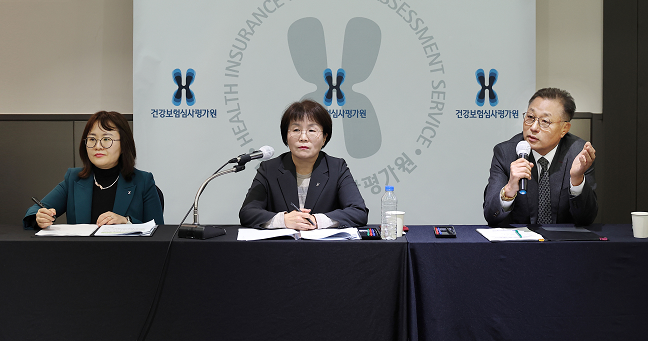
- HIRA The Health Insurance Review and Assessment Service announced that it has been reviewing a measure that links preliminary review, performance evaluation, and reevaluation for newly listed high-priced drugs. In other words, for newly listed high-priced drugs, the authorities will conduct a proper cost-effectiveness evaluation through a preliminary review process. In this way, the new system will build a virtuous cycle with the existing preliminary review system. HIRA's Healthcare Review and Assessment Committee (HCRAC)’s Review Department and Review Division explained so at a press conference with press corp reporters on the 3rd. The Review Department and the Review Division are TF-type departments that were established this year to improve HIRA’s review standards. Min-Sun Kim, Head of the HCRAC Department, said, “The HCRAC Department was newly established earlier this year when a new task of overseeing and improving the general review standards was added to the committee’s preliminary review task.” Kim explained that the HCRAC's key achievements this year were the voluntary efforts it had made to improve the review standards and the establishment of a virtuous cycle of the preliminary review system. “As the need for preliminary review has increased with the increase in the number of high-priced drugs, we have established and operated a monitoring and return system that switches items that have been under review for a long time to post-review and quickly introduce newly listed high-priced drugs through preliminary review,” explained Kim. Of the 12 preliminary review items, 5 items, including a treatment for paroxysmal nocturnal hemoglobinuria, were stably transitioned to items for post-review, and a new treatment for the inherited retinal disease was introduced. In addition, the committee improved and expanded the reimbursement standards for 6 items through analysis of the review status and expert discussions. This year, HIRA switched the preliminary review status of Strensiq, Soliris Inj (paroxysmal nocturnal hemoglobinuria), Ultomiris Inj, ICD (implantable cardioverter-defibrillator), and CRT (cardiac resynchronization therapy) as subject to post review. Kim added, “In the case of preliminary review, we will promote the introduction of high-priced new drugs, and consider ways to utilize data that can be linked from preliminary review to performance evaluation and re-evaluation for a solid reimbursement management system of high-priced drugs." Jung Gu Kang, President of HIRA who also attended the conference, added, “Drugs whose data has not been verified at the time of their introduction should be objectively verified for cost-effectiveness through post-evaluations. Newly introduced drugs should undergo preliminary review to reduce unnecessary spending.” However, he said there are no plans to move the atypical hemolytic-uraemic syndrome treatment, which has been receiving many requests to transition the item to post-review due to its low pre-approval rate. “The reason we switched paroxysmal nocturnal hemoglobinuria treatments to post-review is because they are stable in terms of reimbursement coverage, but atypical hemolytic uremic syndrome treatments are not so,” added Kim, ”The Anti-Corruption & Civil Rights Commission did not recommend abolishment of the drug’s preliminary review status.” In addition to the reorganization of the preliminary review system, the HCRAC’s review office said it has improved the review standards for 114 applications. Kim explained, “At the end of last year, we reviewed a total of 410 cases, including spine surgeries that clinical societies and associations filed appeals and opinions on improving the review criteria and revised and reflected their opinion on 114 cases into review guidelines and notices, and improved the review process. We met and discussed with academic societies and held advisory meetings more than 50 times.” “Of the 410 cases, 58%, or 238 cases, were resolved within the year. For 124 cases where the medical community misunderstood the review and criteria, we provided detailed guidance to clinical societies and associations for better understanding of the medical community, and 114 cases with medical grounds were reflected in the review guidelines and notices.” “For the other 172 cases that have not yet been resolved, some cannot be resolved immediately due to lack of clinical evidence, while others need to be improved, but may take several months to a year or more to resolve due to equity issues between medical departments or financial requirements. We have shared these situations with clinical societies and associations, and we ask for the understanding and cooperation of the medical community and the government for their resolution.”

- Company
- Roche's new PNH drug 'Piasky' expected to be launched in KOR
- by Eo, Yun-Ho Dec 06, 2024 05:56am
- A new PNH drug, 'Piasky,' is expected to be launched in South Korea. According to industry sources, Roche Korea is currently undergoing the approval review process for Piasky (crovalimab), a treatment for Paroxysmal Nocturnal Hemoglobinuria (PNH). This drug received the U.S. Food and Drug Administration (FDA) approval in June. In August, it was commercialized in Europe. In February Piasky was designated as an orphan drug in South Korea. Discovered by Japan's Chugai Pharmaceutical and developed by Roche, crovalimab is a type of new anti-complement (C5) antibody. Low-dose subcutaneous administration every four weeks enables circulation of the drug in the blood, thereby repeatedly inhibiting the complement. The drug's potential was confirmed based on the Phase 3 COMMODORE 2 study, which directly compared the drug to AstraZeneca's 'Soliris (eculizumab).' The study results showed that subcutaneously injected crovalimab provides disease control. The safety of the drug was non-inferior compared to Soliris, a standard therapy that is intravenously administered every two weeks. In the clinical study, adverse reactions occurred in 78% of the crovalimab group and 80% of the eculizumab group. The most common adverse reactions were infusion-related reactions. Based on the efficacy and the safety data secured from a separately conducted Phase 3 COMMODORE 1 study, patients with PNH who switched from complement C5 inhibitors that are approved and in use to crovalimab also showed a stable effectiveness profile. Meanwhile, competition in the market for PNH is expected to get more intense. AstraZeneca has launched Ultomiris (ravulizumab) as a follow-up drug to Soliris. The European patent for Soliris expired in 2023, while the U.S. patents are set to expire in 207. Unlike Soliris, which is intravenously injected every two weeks, Ultomiris offers an expanded administration interval once every eight weeks. Novartis obtained the U.S. approval of 'Fabhalta (iptacopan),' an orally administered treatment for PNH. Fabhalta is a Factor B inhibitor that acts proximally in the immune system's alternative complement pathway, providing comprehensive control of red blood cell (RBC) destruction. Additionally, 'Epysqli,' Samsung Biepis' biosimilar to Soliris, has been commercialized in South Korea. It was the first case of Soliris biosimilars to receive domestic approval, and Samsung Bioepis also obtained approval in Europe last year.
- Company
- GC Biopharma will distribute and sell Fluad Quad in Korea
- by Kim, Jin-Gu Dec 05, 2024 05:53am
- GC Biopharma will distribute and sell CSL Seqirus’s quadrivalent flu vaccine, ‘Fluad Quad Prefilled Syringe (Fluad Quad),’ in Korea. According to industry sources on the 3rd, GC Biopharma recently signed a contract with Meditip to distribute and sell Fluad Quad in Korea. Meditip holds the domestic rights to the main product of the Australian pharmaceutical company CSL Seqirus. It has domestic licenses for the quadrivalent influenza vaccine Fluad Quad and another cell-based quadrivalent influenza vaccine, Flucelvax Quad. GC Biopharma already owns its own quadrivalent influenza vaccine, GC Flu. With the addition of Fluad Quad from Seqirus, the company is expected to distribute and sell it alongside GC Flu in Korea. GC Biopharma has been strengthening its external partnerships in recent years. In December 2022, it signed an agreement with GSK to co-market the shingles vaccine Shingrix. Earlier last year, it signed a deal with Sanofi to co-promote the antiplatelet drug Plavix. Around the same time, it expanded its deal with BMS to sell the hepatitis B drug Baraclude.
- Policy
- Astellas’s Xtandi Tab 40mg and 80mg approved in KOR
- by Lee, Hye-Kyung Dec 05, 2024 05:53am
- Pic of Xtandi Soft Cap Astellas, the original company of the oral androgen receptor inhibitor (ARTA) class prostate cancer treatment, became the first company to receive marketing authorization for the tablet formulation of Xtandi in Korea. The Ministry of Food and Drug Safety approved two dosage forms of Astellas' Xtandi Tab - 40 mg and 80 mg – on March 3. Since Astellas received approval for ‘Xtandi Soft Capsules 40 mg (enzalutamide)’ in Korea in 2013, the company has only been supplying the soft capsule formulation until now. Soft capsule formulations have a disadvantage in that increasing the dose increases the size of the capsule itself, which can reduce patient convenience, making it difficult to develop higher-strength products. Astellas has been developing Xtandi Tab since 2020, increasing the dose to 80 mg and selling them alongside its soft capsule product after receiving approval for the tablet formulation in the US and Europe. However, in Korea, only the soft capsules have been released due to delays in approval, and domestic pharmaceutical companies have been developing tablet formulations of enzalutamide, the main ingredient of Xtandi. Recently, Ildong Pharmaceutical and Boryung Pharmaceutical have been developing tablet formulations of enzalutamide. However, Astellas registered its patent technology for Xtandi’s tablet formulation with the Korean Intellectual Property Office in July, and then recently received approval for Xtandi Tab. According to IQVIA, domestic sales of Xtandi Soft Capsules have increased from KRW 29.1 billion in 2022 to KRW 43.2 billion in 2023, accounting for one-fifth of Astellas' sales. Xtandi's growth has been largely driven by the drug’s reimbursement extension. In August 2022, Xtandi was granted reimbursement for patients with advanced prostate cancer with distant metastases when used in combination with androgen blockade therapy (ADT), and in November last year, it became reimbursable regardless of the patient’s prior use of other ADTs. In addition, the reimbursement was extended to non-metastatic hormone-sensitive prostate cancer (nmHSPC) in June, leaving room for further growth. Meanwhile, Astellas Pharma Korea's sales reached KRW 251.1 billion last year, up 7.5% from KRW 232.2 billion in 2022.
