
- LOGIN
- MemberShip
- 2026-06-22 12:26:15
- Policy
- Academia requests reimb expansion for Perjeta, Verzenio
- by Lee, Tak-Sun Nov 25, 2024 05:53am
- Lymph node-positive patients will now be reimbursed for their use of the breast cancer drug Perjeta inj (pertuzumab, Roche). The reimbursement extension was requested by the relevant medical societies and will take effect in December. It is interesting to note that the new criteria for reimbursement of anticancer drugs were established based on the opinions of academic societies rather than pharmaceutical companies. The Health Insurance Review and Assessment Service recently issued a notice for the opinion inquiry on the amendment to the 'Details on the Application Criteria and Methods of Medical Reimbursement Benefits for Drugs Prescribed and Administered to Cancer Patients' notice. The amendment is set to take effect on December 1. The most notable change in the amendment is that the expansion of reimbursement benefits was being made at the request of academic societies rather than pharmaceutical companies. One such example is the breast cancer drug ‘Perjeta inj.’ Currently, the Perjeta-based combination as neoadjuvant combination therapy is being reimbursed for “locally advanced, inflammatory, or early-stage (>2 cm in diameter) HER2-positive breast cancer. However, in other countries, its use is also covered for lymph node-positive patients. In other countries such as the United States (FDA) and Australia (TGA), lymph node-positive patients are included in the indication, and the NCCN guideline recommends the regimen subject to the application as category 2A for cN1 or higher, and ESMO recommends the regimen as [I,A] for lymph node-positive patients. As a result, HIRA decided to set the reimbursement standard to include lymph node-positive patients because HER2-positive lymph node-positive breast cancer patients are at high risk of recurrence and need to improve survival with neoadjuvant chemotherapy, and pertuzumab-based neoadjuvant chemotherapy for lymph node-positive patients is a therapy with proven clinical benefit, being recommended in major guidelines such as NCCN and ESMO. The application for this reimbursement expansion was made at the request of the relevant academic societies. Perjeta is not the only drug to benefit from reimbursement expansions at the request of a medical society this time. Verzenio Tab will also be added reimbursement standards for use in combination with endocrine therapy. It, in combination with endocrine therapy, will be approved as adjuvant treatment for adult patients with hormone receptor (HR)-positive, human epidermal growth factor receptor 2 (HER2)-negative, lymph node-positive, early-stage breast cancer at high risk of recurrence. This regimen was mentioned in the textbook as an effective agent for hormone receptor-positive, HER2-negative, lymph node-positive, high-risk recurrent early breast cancer and is recommended as category 1 in the NCCN guidelines (2024. v.1.). As the combination demonstrated a significant difference in IDFS (invasive disease-free survival) compared to the group that received an alternative, endocrine monotherapy, HIRA set its reimbursement standard to grant 'Anastrozole, Letrozole, Exemestane, Tamoxifen ± LHRH agonist' partial co-insurance (5/100) and ‘Verzenio’ no co-insurance (100/100, full out-of-pocket cost) within the scope of Verzenio’s indication.. In addition, the new drugs ‘Qarziba Inj’ and ‘Vyxeos liposomal Inj’ have been added to the reimbursement list among anticancer drugs. In addition, a benefit expansion for ‘Trisenox Inj’ (induction of remission and consolidation in patients with newly diagnosed low-risk (white blood cell count ≤10×109/L) acute promyelocytic leukemia) was added. In addition, for the ‘Braftovi+Erbitux’ combination therapy, reimbursement was additionally approved as a biweekly treatment for previously untreated patients with BRAF V600E-mutant metastatic colorectal cancer. Currently, only the weekly regimen was granted reimbursement.
- Company
- "Korean pharma draws attention, open innovation will heat up
- by Son, Hyung Min Nov 22, 2024 05:56am
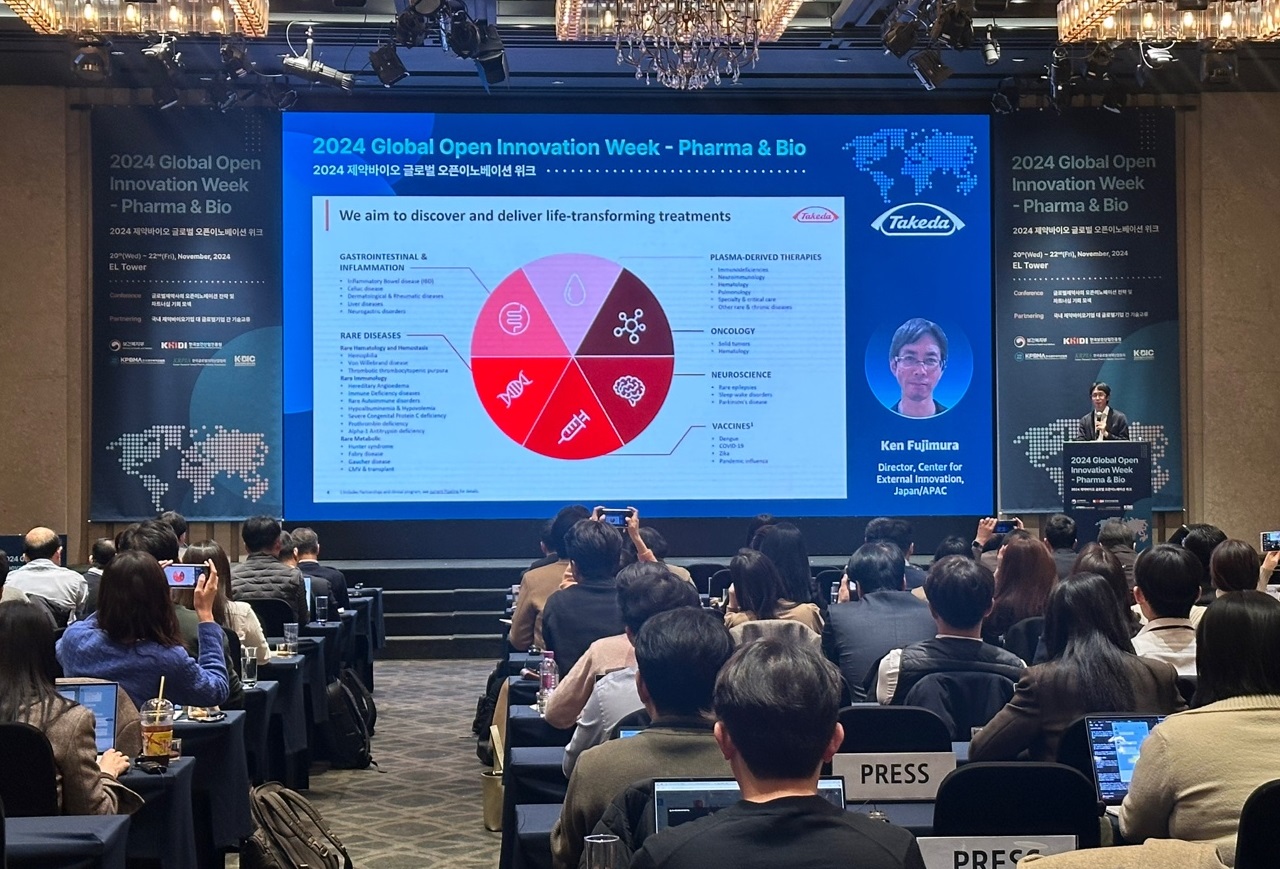
- The Ministry of Health and Welfare (MOHW) and the Korea Health Industry Development Institute (KHIDI) held the Global pharmaceutical companies continue to invest in research & development (R&D) to overcome patent expiration. Industry experts have said that open innovation between global pharmaceutical companies and Korean pharmaceutical companies will be fired up, enabling collaborations in various diseases. According to industry sources on November 21, the Ministry of Health and Welfare (MOHW) and the Korea Health Industry Development Institute (KHIDI) held the '2024 Global Open Innovation Week' on November 20 at El Tower, Seoul. Representatives from various global pharmaceutical companies, including BMS, Novo Nordisk, and Takeda, attended the event and presented about R&D approaches and collaboration opportunities for open innovation. Aiming new diseases…BMS develops ADC·radiopharmaceutical·neuroscience-drug BMS is one of the companies actively involved in open innovation and merger & acquisitions (M&A) deals. The company's patents for new drugs, coagulant agent 'Eliquis,' and multiple myeloma drug 'Revlimid,' have expired. Due to the introduction of generics, BMS is facing a reduction in sales. The immune checkpoint inhibitor, 'Opdivo,' which emerged as a global blockbuster drug, is also set to expire. In the past year and this year, BMS has invested in Karuna Therapeutics (US$14 billion), RayzeBio (US$4.1 billion), Mirati Therapeutics (US$4.8 billion), and SystImmune (US$8.4 billion), expanding its pipeline. BMS developed a new schizophrenia drug, Cobenfy, by acquiring Karuna Therapeutics. It also jumped into the radiopharmaceutical market by acquiring RayzeBio, and the company plans to develop new drugs for cancer through Mirati Therapeutics and SystImmune. Additionally, BMS signed a technology transfer agreement with Orum Therapeutics last year, which was the first collaboration on open innovation with a Korean company. BMS paid Orum Therapeutics US$180 million last year, successfully securing antibody-drug conjugate (ADC) technology. Mariko Hiramatsu, BMS "Until now, the company has significantly been relying on Opdivo. Not only focusing on immune checkpoint inhibitors, but we also plan to secure new pipelines in various diseases," Mariko Hiramatsu, BMS' Head of Japan in Business Development and Asia Search, stated. "BMS is interested in collaborating with global companies and partnering with Asian companies, including those in South Korea, for new drug candidates. For example, gastric and pancreatic cancers have high incidence rates in the Asia-Pacific region, and collaborating with Asian companies can enhance the potential for new drug development. Such strategies often consider regional disease prevalence to tailor drug development approaches," Hiramatsu said. "When evaluating the introduction of new drug candidates, we consider how quickly milestones can be achieved and the associated investment costs, which are also key factors." "The contract with Orum Therapeutics is one of the important contracts for BMS. We aim to bolster innovation in South Korea and focus on developing new drugs for global patients," Hiramatsu emphasized. Continue to invest in fields where they have strengths…Novo Nordisk searches new drug candidates for treating diabetes·obesity·MASH Novo Nordisk said the company will continue investing in areas where they have strengths. The company has drugs that belong to a class of GLP-1 and obesity treatments, including Saxenda, Wegovy, Ozempic, and Victoza. The company's chief focus is developing new drug candidates for metabolic diseases, such as MASH treatments. To bolster its pipeline, Novo Nordisk pulled off M&A deals one after another. In August 2023, Novo Nordisk acquired Inversago Pharma, a company specializing in developing new drug candidates for obesity, at US$1.1 billion (about KRW 1.5 trillion), strengthening their obesity pipeline. Inversago Pharma is developing INV-202, a CB1 receptor-based novel drug candidate for diabetes·obesity. According to Phase 1 clinical trial results, INV-202 has demonstrated tolerability and safety in adult patients showing signs of metabolic syndrome. After that, Novo Nordisk acquired the Danish biotechnology company Embark Biotech. Embark is a spinout company from the Novo Nordisk Foundation in 2017. Embark Biotech is developing 'EMB1,' a novel obesity treatment candidate targeting the G-protein-coupled receptor on fat cells. Calvin Chen, Associate Director of Global Search & Evaluation at Novo Nordisk "Novo Nordisk remains open to various possibilities and is not solely focused on late-stage drug candidates in Phase 3 clinical trials. We are interested in all competitive drug candidates in our key areas of expertise, including obesity, diabetes, and MASH," Calvin Chen, Associate Director of Global Search & Evaluation at Novo Nordisk, stated. Chen added, "Our focus is on sustainability. We are seeking an open innovation partner who is responsible for various aspects, such as societal and environmental aspects."
- Company
- Industry eyes myelofibrosis drug Ojjaara’s reimb progress
- by Eo, Yun-Ho Nov 22, 2024 05:55am
- Interest is gathering on the insurance reimbursement of Omjjara, a targeted therapy for myelofibrosis. According to industry sources, GSK Korea is preparing to submit a reimbursement application for its myelofibrosis drug, Ojjaara (momelotinib) in Korea. The company is expected to submit its application next month (December). Specifically, the indication the company will apply for reimbursement is for the “treatment of myelofibrosis in intermediate- or high-risk adults with anemia.” The drug’s approved indication includes both primary myelofibrosis and myelofibrosis post-polycythemia vera (PV) and post-essential thrombocythemia (ET). Unlike existing drugs that act on a single target, Ojjaara is a multi-target drug that blocks all three major signaling pathways that lead to the disease, providing a potent treatment effect. The drug blocks three key signaling pathways, including the JAK1 and JAK2 proteins that were inhibited by existing therapies, and the ACVR1 (activin A receptor type). The recommended dose is 200 mg orally once daily and can be taken with or without food. Myelofibrosis is a rare blood cancer in which the bone marrow becomes fibrotic, causing symptoms such as anemia, thrombocytopenia, and spleen and liver enlargement. It affects about 1 in 100,000 people worldwide, and in Korea, about 2,292 patients were confirmed to have received inpatient and outpatient treatment for the condition as of 2023. Patients with anemia symptoms in particular have a poor prognosis, and the problem is that the majority of patients experience anemia. In one study, 87% of patients with myelofibrosis were anemic at the time of referral, and in another study, 46% of patients required a blood transfusion more than a year after diagnosis. In general, the development of anemia in myelofibrosis patients doubles the risk of death compared to other prognostic factors such as age, leukocytosis, and systemic symptoms. In 2 global Phase III clinical trials - the SIMPLIFY-1 study and the MOMENTUM study - Ojjaara confirmed the clinical efficacy and safety profile of anemia in adult myelofibrosis patients, including the treatment of key symptoms such as improved splenomegaly and reduced transfusion dependency in patients with anemia. The SIMPLIFY-1 study directly compared Ojjaara to ruxolitinib in 432 adult myelofibrosis patients who had not previously received JAK inhibitor therapy, with a post hoc analysis in the anemia subgroup. The results demonstrated non-inferiority of Ojjaara to ruxolitinib for the primary efficacy endpoint of spleen volume response (>35% reduction) at 24 weeks of treatment but did not show non-inferiority in terms of total symptom score improvement. The proportion of patients in each arm who were transfusion-free was 66.5% in the Ojjaara arm and 49.3% in the ruxolitinib arm, with significantly lower transfusion dependence (better transfusion independence) in the Ojjaara arm. In the MOMENTUM study, another pivotal trial, which evaluated the efficacy and safety of Ojjaara versus danazol in 195 adult patients with myelofibrosis who were previously treated with a JAK inhibitor and had symptoms and anemia. All subjects enrolled in the study had previously received ruxolitinib, and 4.6% had received fedratinib. The co-primary efficacy endpoints were the proportion of patients with a 50% or greater reduction in Total Symptom Score (TSS) at 24 weeks of treatment and transfusion independence. Key secondary endpoints included spleen volume response.

- Company
- Latecomer psoriasis treatment 'Bimzelx' launches
- by Whang, byung-woo Nov 22, 2024 05:55am
- UCV Korea has launched Bimzelx (ingredient: bimekizumab) for treating psoriasis and is set to challenge the market. Although existing psoriasis treatments have taken a share of the market, the company will target unmet needs based on the drug's new mechanism. Ki Heon Jeong, Professor of the Department of Dermatology at Kyung Hee University Medical CenterUCB Korea held a media session on November 20 to celebrate the launch of Bimzelx in South Korea and presented the product's competitiveness in the market. Bimzelx is the first treatment for plaque psoriasis that bi-specifically inhibits interleukin-17A and 17F (IL-17A, IL-17F). It received the Ministry of Food and Drug Safety (MFDS) approval at the end of August. IL-17A and IL-17F are cytokines that play a central role in inducing inflammatory cascade in psoriatic diseases. Bimzelx works by simultaneously selecting, directly targeting, and inhibiting both cytokines. In the Phase 3 BE READY clinical trial, which was the basis of approval, 90.8% of the Bimzelx-treated group reached 'PASI 90' at 16 weeks, and 68.2% of those reached 'PASI 100.' In a clinical trial comparing Bimzelx to different biological agents, a difference has been observed in the percentage of patients reaching 'PASI 100,' an indicator of complete skin clearance. In detail, the results have shown ▲59% for BE VIVID Bimzelx, 21% for ustekinumab (Stelara) ▲60.8% for BE SURE Bimzelx, 23.9% for adalimumab (Humira )▲61.7% for BE RADIANT Bimzelx, 48.9% for secukinumab (Cosentyx). The study results demonstrated that Bimzelx has the advantage of a higher PASI 100 score than previously launched biological agents. Due to the recurrent and remissive nature of psoriasis as a refractory disease, there remains an unmet need for effective treatments. The introduction of Bimzelx, with a novel mechanism, is being evaluated as a potential addition to the therapeutic arsenal. "Psoriasis patients seek treatment and expect rapid, strong, and lasting therapeutic effects, which are closely tied to improving their quality of life. Despite the availability of various treatment options, there has been an unmet need for safe psoriasis medications that maintain long-term efficacy," Ki Heon Jeong, Professor of the Department of Dermatology at Kyung Hee University Medical Center, explained. "Bimzelx has demonstrated superior efficacy to some existing treatments through direct comparison clinical trials. Additionally, its maintenance therapy allows administration at 8-week intervals, offering improved convenience compared to existing IL-17 inhibitors," Hojin Lee, UVB Korea's Medical Strategy Lead, said. Currently, UCB Korea has entered into a distribution agreement with Geo-Young and is actively preparing for the launch of Bimzelx. However, given the number of psoriasis treatments already available on the market and covered by national health insurance, the impact of Bimzelx remains uncertain. Regarding this Professor Jeong stated, "It has been quite some time since biological agents were introduced to the market, yet there are still patients suffering despite having tried all available biologic therapies. Introducing a new treatment option with strong efficacy for patients with severe psoriasis is highly significant." UCB Korea has emphasized that securing reimbursement is their top priority regarding Bimzelx's market entry. "Following Bimzelx's approval on August 29, we submitted a reimbursement application to the Health Insurance Review and Assessment Service (HIRA) the next day. While we are still in the early stages, including holding drug briefings, we aim to achieve reimbursement by next year," Il Shim, Executive Director of UCB Korea, stated. "Since previously approved treatments are in the market, the company is aware of the drug pricing issue. We aim to obtain reimbursement for the drug quickly," Shim added.
- Policy
- Korea’s 2nd GIFT drug Nefecon is approved in KOR
- by Lee, Hye-Kyung Nov 22, 2024 05:55am
- Meditip's Nefecon (budesonide), which was designated as the 2nd Global Innovative Products on Fast Track (GIFT) drug, has been approved in Korea. The Ministry of Food and Drug Safety approved Nefecon on the 18th. Nefecon is used to treat primary IgA nephropathy in adults with a urinary protein-to-creatinine ratio of 1.5 or greater who are at risk of rapid progression. Budesonide, the main ingredient, is already on the market and in use in Korea, but the indication Meditip applied for budesonide's approval as a treatment for new patients who have no existing treatment option, which is why the government designated it as a GIFT drug in March last year. Nefecon was approved by the U.S. FDA on December 15, 2021, as an accelerated review (AA) and priority review (PR) drug, and was approved by the European Medicines Agency (EMA) on July 15, 2023, as an accelerated assessment (AA) and conditional marketing authorization (CMA) drug. In China, the National Medical Products Administration (NMPA) designated Nefecon as a Breakthrough Therapy Designation (BTD) in 2020, and the Taiwan Food and Drug Administration granted it an Accelerated Drug Designation (ADD). In Korea, it was designated as an orphan drug on November 17, 2022. In a presentation made at Kidney International, Nefecon was associated with a 27% lower urinary protein-to-creatinine ratio at 9 months of treatment compared to placebo. The glomerular filtration rate remained stable, with a difference of 3.87 ml/min/1.73㎡ compared with placebo. IgA nephropathy is a disease caused by the deposition of immune complexes, including IgA, in the glomeruli of the kidneys, causing an inflammatory response. About 9,000 patients are known to be affected by IgA nephropathy in Korea. In clinical practice, antihypertensive drugs such as ARBs and ACEIs, immunosuppressants, and diuretics are used to treat IgA nephropathy. However, these drugs are symptomatic treatments that prevent the worsening of symptoms, and there is no drug that fundamentally treats the condition.
- Opinion
- [Desk's View] Re-evaluation of eye drops
- by Lee, Tak-Sun Nov 22, 2024 05:55am
- The government has established reimbursement criteria for single-use ophthalmic solutions, including hyaluronic acid eye drops for conditions like dry eye syndrome. A year has passed after the primary result of the re-evaluation regarding the reimbursement appropriateness for hyaluronic acid eye drops were released in September 2023. When the primary result was released, no one anticipated establishing reimbursement criteria would take this long. The pharmaceutical companies had accepted the primary results without filing objections. At the time, the Drug Reimbursement Evaluation Committee (DREC), responsible for evaluating the reimbursement appropriateness, approved the appropriateness of reimbursement for hyaluronic acid eye drops in treating intrinsic conditions such as Sjögren's syndrome, keratoconjunctivitis sicca, and dry eye syndrome. However, DREC determined that there was no reimbursement appropriateness for extrinsic conditions, including post-surgical use, drug-induced dryness, trauma, or contact lens-related issues. Furthermore, the DREC stated that usage restrictions for intrinsic conditions should be included in the reimbursement criteria. Because prescriptions for intrinsic conditions account for 80% of the total, pharmaceutical companies accepted the results of the primary result. However, the situation quickly changed after the meeting details revealed a discussion to limit prescriptions to four boxes per year (each box containing 60 vials), which was considered a radical measure. During the National Assembly audit in October, concerns were raised about reduced patient access for seniors and potential price surges for non-reimbursed products. Faced with these issues, the government refrained from making a hasty decision. In December 2023, during the secondary review, it was decided that further review was necessary. The MOHW's Health Insurance Policy Review Committee also recommended establishing reimbursement criteria for hyaluronic acid eye drops and other single-use ophthalmic solutions to prevent a balloon effect. The review results were published in the administrative notice on drug reimbursement criteria on November 15. As per the Health Insurance Policy Review Committee's recommendations, to prevent a balloon effect where prescriptions shift from hyaluronic acid eye drops to six other single-use ophthalmic solutions, reimbursement will be limited to only one type of eye drop for keratoconjunctivitis sicca. However, the final proposal can be seen as a step back from the primary re-evaluation results from last year. In 2023, reimbursement for hyaluronic acid eye drops was excluded for extrinsic conditions. In contrast, the final draft now allows reimbursement for cases diagnosed as persistent intrinsic corneal and conjunctival epithelia following extrinsic conditions, effectively expanding the scope of use compared to the first re-evaluation result. The usage limit for hyaluronic acid eye drops has been set at a maximum of six vials per day, typically three boxes (60 vials per box) for 30 days. It is a much more lenient policy than the primary draft of a four-box annual limit. Given the social controversy surrounding this issue, it is presumed that the final decision was made with exceptional caution. The final draft likely has been designed to minimize backlash by considering patient access, the perspectives of prescribing healthcare professionals, and other relevant factors. However, it seems inevitable that the scientific standards for evaluation, such as clinical utility and cost-effectiveness, were somewhat relaxed during the process. Comparing last year's primary results from the DREC with the final proposal, it is likely that many would feel this way. We respect the final draft because social demands are also significant. Even so, was it necessary for the re-evaluation to take a year? By the time the 2024 reimbursement appropriateness re-evaluation was completed and the National Assembly audit concluded, the issue had almost faded from memory. Releasing the final draft at this point is close to dereliction of duty. If the final draft had any potential cost-saving effects, it is fair to say that a year of savings was lost due to the delayed conclusion. Furthermore, analysis suggests that the delayed decision likely resulted in considerable damages, including uncertainties and chaos in the practices. The government must elaborate on the analysis of re-evaluation results of single-use eye drops and the background of taking an entire year.
- Company
- ‘Global Bio M&A Trends: Fewer New Drugs, More CDMOs’
- by Kim, Jin-Gu Nov 22, 2024 05:55am
- The global pharma-bio M&A trend is showing a distinct trend of 'risk aversion'. Due to the macroeconomic impact, investments in stable areas became more active, while investments in high-risk, high-return areas have plummeted. This explains the sharp decline in M&A related to new drug development, which is high-risk and the increase in M&A related to CDMOs, which are relatively stable. Je Sung Pyun, Director of Strategy, Risk & Transactions at Deloitte Korea, explained so at a seminar on “Global Market Entry and Intellectual Property Protection” that was held at EL Tower in Yangjae-dong, Seoul, on the 21st, hosted by the Korea Pharmaceutical and Bio-Pharma Manufacturers Association/ According to Pyun, there were 172 global M&As involving global CDMOs through the third quarter of this year. This has already surpassed the total of 153 relevant M&As that were completed last year. CDMOs are being regarded as the most active M&A area in the pharma-bio sector this year. On the other hand, M&A related to new drug development has declined significantly recently. Last year, there were 74 drug development M&As, which is less than half of the 196 completed in 2021 and 167 in 2022. This year, there have been only 72 so far through the third quarter. “While CDMO deals have been active, deals for new drug development companies have been declining,” said Pyun, “This reflects the investors’ preference for lower risk due to volatility in the financing environment driven by macroeconomic conditions.” Pyun disclosed the results of a survey on global pharma and biotech leaders. Deloitte asked pharma and biotech leaders about their outlook for biotechs in 2024 compared to 2023 and found that 85% believe the risk of biotech bankruptcies will be higher or similar to the previous year in 2024. “The risk of biotech bankruptcy is being taken more seriously,” says Pyun, ”and risk-averse investing has increased significantly. As we move through this year and into next year, we'll see the gems and pebbles be quickly distinguished among biotechs.” The decrease in investment in anticancer drugs by disease group and the increase in investment in new platforms such as ADCs and radiopharmaceuticals can also be explained in the same line of context. While anticancer drugs are high-risk investments, ADCs, and radiopharmaceuticals are less risky because they are often improvements to existing therapies. Especially in the ADC space, market demand is increasing as more effective and stable linkers are developed. The concentration of M&A on drugs in Phase III or the commercialization stage is also attributed to risk aversion. In fact, 74% of M&A in pharma & biotechs in 2023 occurred in late-stage clinical development. This is a significant increase from 60% in 2022. This is likely due to the concentration of M&A deals on targets that are less risky than those in Phase I and II trials and that can be monetized in a shorter period of time. “Partnerships are favored over deals due to the higher risk in the early clinical stage,” explained Pyun, ”Partnerships are being forged to proactively acquire technology platforms and innovative drug candidates.”

- Opinion
- [Contribution] On MFDS’s new drug approval fee hike
- by Whang, byung-woo Nov 21, 2024 05:46am
- Kyung-won Seo, Chair Professor, Department of Food& Medical products Regulatory Policy, Dongguk University The Ministry of Food and Drug Safety recently announced a significant rise in its new drug approval fee to KRW 410 million. In Korea, the new drug approval fee had remained very low at KRW 8.83 million for decades, compared to the US FDA's KRW 5.3 billion, the European EMA's KRW 490 million, and the Japanese PMDA's KRW 430 million. The fee hike had been long desired by the industry and the MFDS alike, and the MFDS had worked hard to raise the fee. So the significant increase in the new drug review fee means that the value of the new drug review work being carried out by the authorities has been properly recognized, which the MFDS and the MFDS members in charge of new drug approvals should be proud of. Congratulations and a big round of applause to MFDS for their hard work and this long-awaited achievement. Since a new drug is a substance that has never been administered to humans before, the development company must conduct extensive experiments to confirm the quality, safety, and effectiveness of the new drug, and regulatory authorities must evaluate the adequacy of its process and results. The process of reviewing new drug data requires a large number of experts from regulatory agencies and takes more than a year, so the labor cost of this process is reflected in the new drug review fee, which renders the fee high. The industry has been receiving the news with mixed emotions – welcoming the long-awaited increase of the new drug review fee but then panicking at the unexpectedly large increase. As the industry will be paying a significant amount - KRW 410 million – it will expect high-quality regulatory services. The MFDS’s announcement of the 'Innovative Plan for New Drug Approval' along with the administrative notice of the 'Fee Regulations for Drug Approvals, etc.' is an expression of its strong will to provide high-quality regulatory services that can meet industry expectations. Until now, the biggest complaint of the industry has been the unpredictable review period/approval date of new drugs. A particularly notable part of the MFDS’s innovation plan is that it will shorten the review period from an average of 420 business days to 295 calendar days. Unlike other countries, the MFDS’s review period is calculated in working days and does not include the time spent by the company preparing the data, so the total review period was delayed by 420 days on average, even if the statutory deadline was not met. If the review period for new drugs is shortened to 295 calendar days, the Korean public will benefit by using innovative new drugs with verified efficacy and safety sooner, and the industry will receive the greatest gift of all: predictability in their approval. In order for the MFDS to meet the actual 295-day timeframe, it will need to recruit a large number of highly qualified reviewers with expertise, conduct a thorough prior review to ensure that supplemental requirements that require significant time to prepare do not arise during the review process and harmonize review regulations internationally to ensure that no data or tests are required only by MFDS. As most of the delays had occurred due to requests for supplementary data that require a significant amount of time to prepare, to prevent this from happening, a thorough preliminary review should be conducted and a system put in place to prevent the application from being accepted if it lacks required data. Once the application has passed the preliminary review, the 295-day review period promised by the MFDS must be met. Looking more closely at the reasons for the delays in the review period for new drugs, it can be assumed that there are still test items and data that only MFDS requires, and the preparation of these materials by supplementation was a factor in the delay. Since Korea became a member of the ICH, most of the guidelines have been internationally standardized, but there are still items that need to be improved, and this fee hike is the opportunity to harmonize the details of the review regulations internationally. With the development of the pharmaceutical industry and the advancement of new drug evaluations, the number and volume of review materials have increased dramatically, and the depth and complexity of the contents have reached a level that is incomparable to the past. So the reviewers of regulatory agencies who have to evaluate these materials are required to have the highest level of professional capabilities. Although the MFDS has been making great efforts to secure these talents, it has not been able to secure competent reviewers at the level of advanced regulatory organizations due to various constraints. Now that the new drug review fee has been raised to the level of advanced regulatory organizations, everyone is expecting that the MFDS will attract a large number of reviewers who own the best expertise. The increase in new drug reviews is expected to open a new era where various review innovations begin to be introduced. For the new system to take off and succeed, the MFDS, industry, and academia must continue to communicate, coordinate, and improve the system through open discussion. The MFDS has been working with many partners, including the industry, to become an advanced regulatory organization. I expect that the MFDS will continue to move forward step by step with its long-standing partners to become the world's leading regulatory agency, and I extend my warmest support to the MFDS as one of its former members and now one of its most enthusiastic supporters.
- InterView
- ‘Improve new drug access to treat rheumatoid arthritis'
- by Son, Hyung Min Nov 21, 2024 05:46am
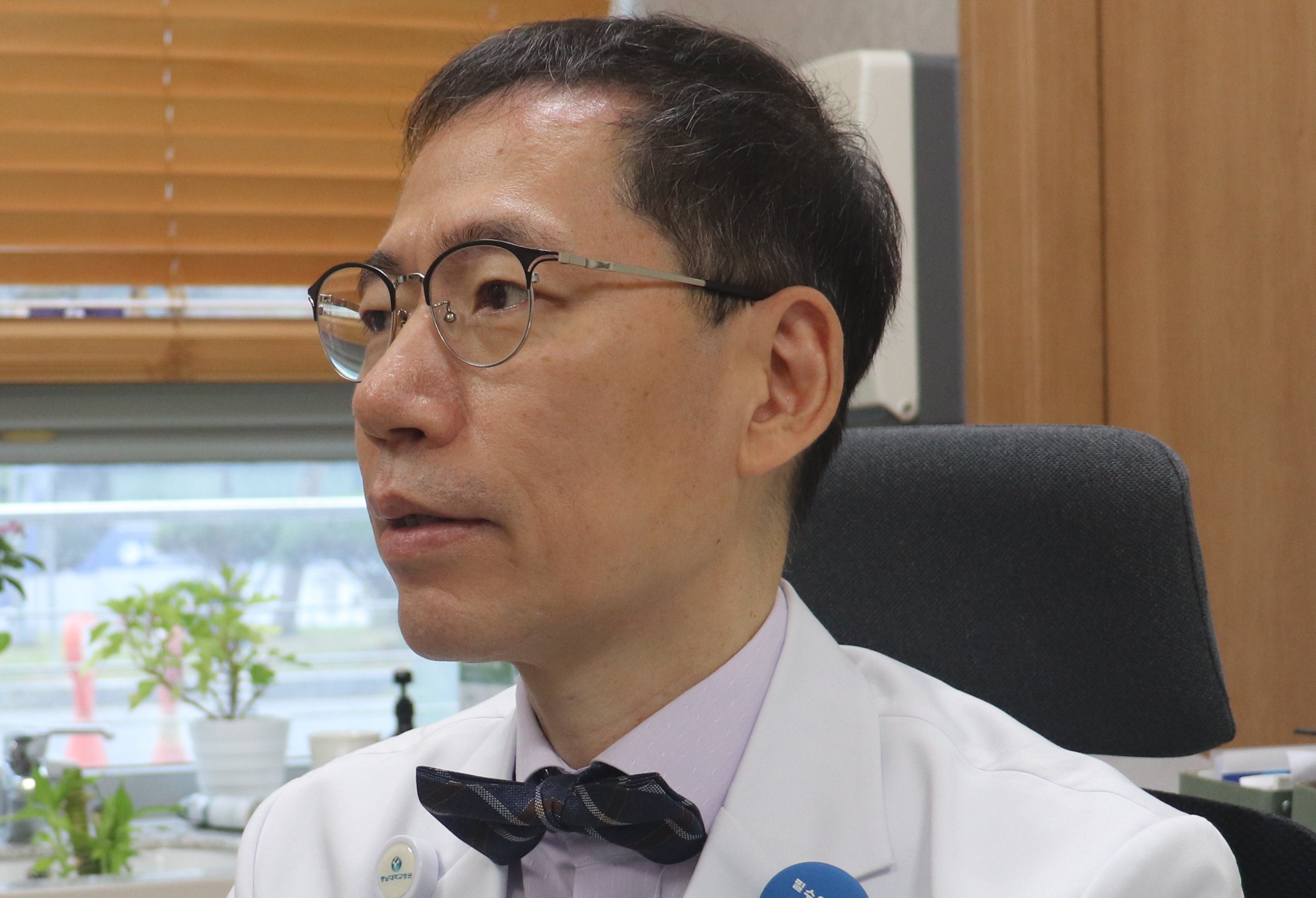
- Dr.Sung Chul Shim, Professor of Rheumatology, Chungnam National University Hospital “Rheumatoid arthritis is not just a painful disease, but a disease that can cause direct damage to the joints. Patients need to start treatment with good treatments in a timely manner, but their access to new drugs is still limited. Switching between JAK inhibitors should be allowed freely so patients can receive personalized treatment.” Sung Chul Shim, Professor of Rheumatology at Chungnam National University Hospital, evaluated the current treatment landscape for rheumatoid arthritis as so during a recent interview with Dailypharm. Rheumatoid arthritis is a disease in which the synovial membrane becomes inflamed due to immune dysfunction. The disease initially starts with tingling and pain in the hands, but if left untreated, joint deformities can occur, accompanied by anemia, dryness, subcutaneous rheumatoid nodules, and pulmonary fibrosis. “People with rheumatoid arthritis don't realize that their joints are being damaged,” said Professor Shim. “They are often reluctant to start treatment early because they believe that taking pain medications is enough to relieve their symptoms.” “However, the molecules that cause pain are not the same molecules that are involved in joint damage. If you control the molecules that are involved in pain, such as prostaglandins, you can reduce the pain, but if you don't target the molecules that are involved in joint damage, your joints may continue to be damaged.” Professor Shim noted how rheumatoid arthritis has a poor early diagnosis rate. The golden time to treat rheumatoid arthritis is 2 years, and if treatment is not started within this period, joint deformity will begin, which is why early diagnosis and aggressive treatment are important. “The lack of early diagnosis in rheumatoid arthritis is due to low patient awareness,” said Professor Shim. If they recognize rheumatoid arthritis as a disease that destroys joints, they will start treatment sooner, but if they recognize it as just a painful disease, they will postpone treatment.” Multiple rheumatoid arthritis treatment options available...switching between drugs should be considered" The good news is that there are many treatment options available for the disease. From steroids to anti-rheumatic drugs to biologics to Janus kinase (JAK) inhibitors, there is a wide range of options available for prescriptions. “There are more treatments for rheumatoid arthritis than for any other disease, including oral and injectable medications,” says Dr. Shim, ”Yet as many as 10% of patients do not respond to the currently available treatment options. As such, having more treatment options doesn't necessarily mean they will work for everyone. Timely access to the right treatment requires an accurate diagnosis and a specialist who can switch medications at the right time for patients who have developed resistance. Currently, four JAK inhibitors are available, including Jyseleca, Xeljanz, Rinvoq, and Olumiant, but they cannot be switched between JAK inhibitors once started. Also, they cannot be switched to a biologic drug either. This is why the patients’ choices are limited despite the many treatment options available. In September, health authorities were expected to announce an amendment that allows switching between JAK inhibitors in rheumatoid arthritis but postponed it. The authorities are now expected to issue the amendment in December. “At this point, even with other therapies available for the same indications, we cannot use them,” said Professor Shim. There are patients who don't respond to one treatment, so we need to switch between drugs. There's no reason to keep them on the same drug when they're getting worse with it.” He added, “The goal of rheumatoid arthritis treatment should be to protect the joints, not control pain. For this, we need to be able to use the various treatment options available to us. It seems that governments are hesitant to allow switching because of the immediate budget impact. If the disease worsens and patients have to undergo surgery, this will be more costly in the long run.”
- Policy
- CKD drug Kerendia seeks indication expansion in KOR
- by Lee, Hye-Kyung Nov 21, 2024 05:46am
- Bayer Korea's Kerendia (finerenone), which is used to treat adult patients with chronic kidney disease with type 2 diabetes, will enter Phase III clinical trials in Korea to expand its indication. On the 20th, the Ministry of Food and Drug Safety (MFDS), approved a ‘randomized clinical trial to determine the efficacy and safety of finerenone on the morbidity and mortality of heart failure patients with left ventricular ejection fraction greater than 40% who were hospitalized for acute non-targeted heart failure episodes.’ Kerendia, which received domestic approval in May 2022, is indicated for the sustained reduction in estimated glomerular filtration rate (eGFR), progression to end-stage renal disease, and reduction in the risk of cardiovascular death, nonfatal myocardial infarction, and hospitalization for heart failure in adult patients with chronic kidney disease with type 2 diabetes. Kerendia is a first-in-class, orally administered, selective, nonsteroidal mineralocorticoid receptor antagonist (MRA) that has a novel mechanism that inhibits kidney inflammation and fibrosis in adult chronic kidney disease patients with type 2 diabetes. In addition, Kerendia has recently been shown to prevent heart failure-related secondary events in HF with mildly reduced ejection fraction (HFmrEF) and HF with preserved ejection fraction (HFpEF) with a left ventricular ejection fraction (LV ejection fraction) of 40% or greater and has entered into global Phase III trials. The clinical trial to expand the indication to heart failure has also been approved in Korea. Meanwhile, results from the Phase III FINEARTS-HF trial, which evaluated Kerendia in heart failure patients with left ventricular ejection fraction greater than 40%, were presented at the European Society of Cardiology Annual Congress 2024 (ESC 2024) in September. Data from the Phase III FINEARTS-HF study showed that at a median follow-up of 32 months, there were a total of 1,083 worsening heart failure events in 624 of the 3003 patients in the Kerendia arm and a total of 1283 events in 719 of 2998 patients in the placebo arm. The total number of worsening heart failure events was 842 in the Kerendia arm and 1024 in the placebo arm, with an 18% lower incidence rate in the Kerendia arm. In addition, the proportion of patients who died from cardiovascular causes was 8.1% and 8.7%, respectively, with a 7% lower hazard ratio observed in the Kerendia arm. However, there was no significant difference between death from cardiovascular events and all-cause mortality. According to drug research institution UBIST, prescriptions for Kerendia totaled KRW 1 billion in the first half of this year, and Bayer Korea is expected to expand the indications to further gain a competitive advantage.
