
- LOGIN
- MemberShip
- 2026-06-22 12:26:15
- Opinion
- [Reporter's View] Restricting vs expanding access
- by Eo, Yun-Ho Dec 05, 2024 05:53am
- The addition of a post-listing control system seems to be a fixed deal. The establishment of the Drug Performance Evaluation Office under the Health Insurance Review and Assessment Policy Research Institute has already taken place, and government officials have been publicly discussing using RWD (Real-world data) for drugs subject to the exemption from submission of pharmacoeconomic evaluation data. So the key to its implementation will be in the contents of the ‘dialogue.’ Will the system act as another mechanism to lower drug prices and cause much friction, or will it be a reasonable 'uncertainty resolution' device per government claims? Is the PE exemption system necessary? Its need is one question both the government and industry see eye to eye on. Only some academics and civil society organizations are opposed to its need in itself. In Korea's insurance policy environment, the pharmacoeconomic evaluation exemption system is the only way to ensure that the treatments needed by patients with rare diseases and rare cancers are listed for insurance reimbursement. Based on the evaluation results in major HTA countries (UK, Australia, Canada, Germany, and France) of the 37 drugs that have been approved through the PE exemption system, foreign countries either recognize single-arm clinical studies as indirect comparisons or regard the clinical needs of patients and healthcare providers, innovation, and urgency of treatment, to promptly approve drugs even if its cost-effectiveness is somewhat uncertain under the Korean criteria. If the uncertainty about the long-term effectiveness and cost-effectiveness of these new drugs had to be reviewed within the pharmacoeconomic evaluation system, they would have been reimbursed later than other countries or would have remained non-reimbursed. It is true that there is much to discuss, such as the methodology for implementing RWD and who should bear the expense. But as the agenda is already on the plate, it is clear that something has to be done. If so, to address the growing concerns over the rise in PE exemption drugs, a measure needs to be set in place to address the diminishing benefits. The time has come to revitalize the indirect comparisons that the industry has been advocating for so long, compensate for the lower prices of substitutes that have been lowered by years of post-listing control measures, and at least consider a flexible approach to the ICER thresholds. In the same context, the amendments to the ‘Detailed Evaluation Criteria for Drugs subject to Negotiations, including New Drugs,’ which was announced in August need to be finalized and implemented quickly to ensure the provision of benefits. Both sides, those who want to restrict and those who want to extend reimbursement, cannot be satisfied at once. The key is compromise. The fact that more taxes are spent on people with serious illnesses is no excuse to neglect them.
- Company
- Sales of new CAR-T drugs Carvykti 88%↑· Kymriah stalled
- by Son, Hyung Min Dec 05, 2024 05:53am
- Sales performance of Chimeric Antigen Receptor (CAR)-T Cell therapies has been interchanging. Novartis' Kymriah, which entered the market first, is troubling as latecomer competitors enter the market. In contrast, sales of Jansen's Carvykti and BMS' Breyanzi expanded significantly due to expanded indications. According to the pharmaceutical industry on December 3, Carvykti generated sales of US$286 million (about KRW 40 billion) in Q3, up 88% YoY. Carvykti recorded US$629 million in net sales for 9 months this year, up 84% from US$341 million last year. CAR-T is a gene and cell therapy, which involves engineering T-cells to express receptors responding to particular types of cancer cells. The cells are then injected into the patient. This approach has shown potential effectiveness in patients unresponsive to conventional anticancer treatments. Carvykti's strength lies in its efficacy. Initially utilized as a fourth-line treatment for multiple myeloma, subsequent clinical trials have expanded its indication to second-line therapy in the U.S. and Europe. Clinical studies have demonstrated that Carvykti significantly prolongs survival in multiple myeloma patients. Sales trend of major new CAR-T drugs (unit: US$1 million). Sales of BMS' two new CAR-T drugs, Breyanzi and Abecma, also significantly increased. First, Breyanzi recorded sales of US$224 million in Q3, up 143% YoY. Breyanzi's 9 months sales of this year amounted to US$484 million, up 84% YoY. Breyanzi has shown an upward trend for four consecutive quarters after recording sales of US$92 million in Q3. Breyanzi's strength lies in its broad scope of use. Breyanzi secured indications to treat relapsed·refractory diffuse large B-cell lymphoma (DLBCL), chronic lymphocytic leukemia, and follicular lymphoma. Analysis suggests it has the most potential to treat various blood cancers among other new CAR-T drugs. BMS seeks to expand approval for Breyanzi in countries in the field of lymphoma. Breyanzi recently secured follicular lymphoma indication in Japan, and it is under review for approval in Europe. Abecma generated sales of US$124 million in Q3, up 33% YoY. Breyanzi is the fifth approved new drug of CAR-T in the U.S. It targets BMCA, an index involved in immune cell overgrowth. Unlike CD19-targeting Kymriah and Breyanzi, Abecma has a novel mechanism of action, thereby opening a new market. Sales of Yescarta·Kymriah have stalled following the introduction of competing drugs Sales of Gilead Sciences' Yescarta, which has been in a leading position in the market for new CAR-T drugs, slightly decreased from the previous year. Yescarta recorded US$387 million in Q3, down 1% YoY. Yescarta is the new CAR-T drug introduced to the market following Kymriah. Yescarta was quickly established in the market after successfully expanding its indications. In March 2021, Yescarta was initially approved for follicular lymphoma. Last year, it was approved for the second-line treatment of DLBCL and acute lymphocytic leukemia. However, as Carvykti and Breyanzi rapidly became competing drugs to Yescarta, the upward trend of Yescarta has been slow. Yescarta's Q2 sales of last year amounted to US$380 million, and Q3 sales slightly increased to US$391 million. However, sales have been stalled after recording US$380 million in Q1 of this year. Sales of Novartis' Kymriah has been continued to slow down. Kymriah recorded sales of US$102 million in Q3, down 18% YoY. Kymriah recorded sales of US$120 million in Q1 this year, showing a decreasing sales trend for three consecutive quarters. Kymriah was approved to treat relapsed and refractory DLBCL and acute lymphocytic leukemia as the first among new CAR-T drugs, opening a new market. However, as the additional indication was delayed, Kymriah fell behind the competition. Yescarta secured an indication to treat follicular lymphoma in the United States in March 2021. Kymriah was approved for the indication a year later, in May 2022. Yescarta and Breyanzi were approved for the second-line treatment of lymphoma. However, Kymriah failed to demonstrate effectiveness in the clinical trial. Novartis expects Kymriah to demonstrate strength in terms of the safety profile. Certain CAR-T drugs have shown neurotoxicity-related adverse reactions. Novartis anticipates the use of Kymriah, which has superior tolerability, will expand to elderly and high-risk patients.
- Company
- Biosimilars Onbevezy·Remsima compete for sales lead in KOR
- by Chon, Seung-Hyun Dec 05, 2024 05:53am
- Biosimilars developed by Celltrion and Samsung Bioepis have been expanding their presence in the domestic market. Samsung Bioepis' Onbevezy has surpassed sales of KRW 10 billion, becoming the top-selling biosimilar developed in South Korea. Since Q3 of last year, Celltrion's Remsima has allowed Onbevezy to take a market-leading position. However, it shows a rebound, with quarterly sales increasing to KRW 10 billion, reducing the gap with the market leaders. According to the Financial Supervisory Service on December 5, domestic sales of Samsung Bioepis' Onbevezy increased by 12.9% year-over-year (YoY), with KRW 11.5 billion. Onbevezy has recorded the highest sales among domestically developed biosimilar products, surpassing Remsima by a difference of KRW 300 million. Sales trends were analyzed based on disclosed sales by Boryung and Celltrion Pharm, companies selling biosimilars from Samsung Bioepis and Celltrion. Domestic sales trend of major biosimilars developed in KOR. Onbevezy (purple), Remsima (blue), Herzuma (orange), and Truxima (grey). (unit: KRW 1 million, source: FSS) Onbevezy is a biosimilar to the anticancer drug Avastin. It is an anticancer drug used to treat patients with metastatic colorectal cancer, metastatic breast cancer, non-small cell lung cancer, advanced or metastatic renal cell carcinoma, glioblastoma, epithelial ovarian cancer, carcinoma of the fallopian tube, primary peritoneal cancer, and cervical cancer. Samsung Bioepis launched Onbevezy in September 2021 in the Avastin market. Celltrion and Alvogen Korea also entered the market. In Q2, Onbevezy surpassed sales of KRW 10 billion for the first time, maintaining the increasing trend through Q3 2024. The sales of Onbevezy exceeded Remsima, reaching KRW 9.2 billion in Q1. However, Onbevezy allowed for a reversal in Q2. Onbevezy regained the market-leading position in Q3 2023, exceeding Remsima's sales. It maintained this position for five consecutive quarters. Onbevezy's cumulative sales in Q3 amounted to KRW 34.6 billion, an increase of 17.4% YoY compared to last year's KRW 29.5 billion. Onbevezy entered the market first among other biosimilar products. Analysis suggests that a customized marketing strategy maximized the synergy. After obtaining the domestic approval of Onbevezy, Samsung Bioepis signed an exclusive sales agreement with Boryung, one of the Korean companies with strength in the field of anticancer drugs. In May 2020, Boryung newly established an ONCO (anticancer) sector. The company independently separated the sector from the prescription medicine sector. Boryung secured sales rights to various anticancer drugs and biosimilars owned by Korean and international companies. With the LBA (Legacy Brands Acquisition) strategy of acquiring sales rights for original anticancer drugs, Boryung secured Gemzar and Alimta. Boryung also secured Korean sales rights for Herceptin biosimilar from Samsung Bioepis. Remsima, which Celltrion Pharm sells, recorded sales of KRW 11.2 billion in Q3, up 13.3% from last year. Remsima is a biosimilar to the autoimmune disease treatment Remicade. It was approved as the first domestically developed antibody biosimilar in 2012. Remsima is used to treat Crohn’s disease, ankylosing spondylitis, ulcerative colitis, and rheumatoid arthritis. Upon launch, Remsima continued to take the leading sales position among biosimilars in South Korea for over 10 years. Last year, Remsima recorded KRW 13.4 billion in Q2. However, it generated KRW 80-90 billion in sales from Q3 2023 to Q2 this year, giving over the leading position in biosimilar sales to Onbevezy. Q2 sales of Remsima increased by 15.7% from the previous quarter, exceeding KRW 10 billion, and it continued to show an increasing trend in Q3. The sales difference between Remsima and Onbevezy was KRW 1.8 billion in Q1. As these drugs recovered an upward trend, the difference was reduced to KRW 300 million in Q3. Onbevezy generated much higher sales. Remsima's cumulative sales in Q3 amounted to KRW 31.8 billion, up 1.2% from the previous year. Celltrion's Herzuma and Truxima generated over KRW 10 billion in sales, showing a stable presence in the market. Herzuma and Truxima are biosimilar to Herceptin and MabThera, respectively. Herzuma's domestic sales amounted to KRW 5.5 billion in Q3, up 20.9% YoY. Herzuma's cumulative sales in Q3 amounted to KRW 15.9 billion, up 46.3% YoY, exceeding last year's sales of KRW 14.9 billion in 9 months. In 2022, Herzuma recorded sales of KRW 13.8 billion. Truxima's sales in Q3 amounted to KRW 3.1 billion, up 12.2% from last year. Cumulative sales in Q3 amounted to KRW 8 billion, down 27.2%. Truxima generated KRW 13.8 billion and KRW 14.9 billion in 2022 and last year, respectively.
- Policy
- 30-day negotiation window for essential medicines
- by Lee, Tak-Sun Dec 04, 2024 05:57am
- The National Health Insurance Service (NHIS) has started revising guidelines related to the government's initiative to improve the drug pricing system to 'reflect on the new drug innovative value.' First, the NHIS announced to introduce Risk Sharing Agreement (RSA) types and has reduced the time required to negotiate pricing adjustments for national essential medicines. The NHIS has recently drafted a revision to the guidelines for drug price negotiations and detailed matters for RSA drug price negotiations, collecting public opinions. The deadline for submitting opinions is December 4. Regarding revision to the guidelines for drug price negotiations, the NHIS established a basis for shortening the time required for drug price negotiation and pre-negotiating the national essential medicines. In detail, the NHIS decided that the negotiating period for drugs evaluated at the Drug Reimbursement Evaluation Committee (DREC) to require assistance from the central administrative agency for drug supply issues, such as crisis for infectious diseases or emergency drug shortages, will be 60 days instead of 30 days. Also, pre-negotiation is possible, and the pre-negotiation application will be the same as a submitted document to the Health Insurance Review and Assessment Service (HIRA). For detailed matters for RSA drug price negotiations, the NHIS announced introducing an early-stage treatment cost refund type and an achievement-based refund type. The early-stage treatment cost refund type is for applicants seeking refunds from NHIS for a portion of the initial administration cost. Also, the achievement-based refund type is for applicants requesting refunds of a portion of the total claim amount of the drug from NHIS when an individual does not meet the predetermined treatment effects after a follow-up·monitoring for a specified time. Recently, these two types have been applied to high-priced drugs. With the newly added types, contract additions·changes will be permitted during negotiations, and post-management procedures will be officially incorporated. Additionally, the current revision will simplify the procedure required at RSA termination. Previously, the NHIS requested an evaluation of the RSA-approved drug's clinical usefulness and cost-effectiveness before the contract termination. The current revision will skip the drug procedure under the third contract for RSA. Also, the NHIS will request confirmation from the HIRA director related to changes to RSA drugs, including substitute drugs or reimbursement criteria. "The revision has been established to bring improvements to the drug pricing system to reflect on new drug innovative value and to ensure healthcare security," the NHIS explained regarding the current revision. "To promote innovative new drug value and incentivize innovative growth, the NHIS aims to support sustainable, innovative systems for the pharmaceutical and biotech industry. This includes ensuring stable drug supplies by setting reasonable drug prices for essential pharmaceuticals required by patient treatments and establishing a foundation for essential healthcare." The current revision is a follow-up to the 'Specific evaluation criteria of new drugs and medicines in consideration for negotiation,' which was established by the HIRA in August, and the 'Pharmaceutical Approval and Adjustment Criteria,' which was announced in October. The government plans to promote new drugs' innovative value and to improve the drug pricing system to ensure healthcare safety by favoring the national essential medicine. The government will expand the number of pharmaceuticals for RSA and provide benefits for the drug pricing of the national essential medicines that use domestic raw materials. An NHIS employee explained, "We plan to implement the revised draft by hearing public opinions alongside the announced draft by the Ministry of Health and Welfare (MOHW).

- Company
- Boryung starts in-house producing lung cancer drug 'Alimta'
- by Heo, sung-kyu Dec 04, 2024 05:56am
- As Boryung has started in-house production of 'Alimta (pemetrexed),' a non-small cell lung cancer (NSCLC) treatment that Boryung acquired the sales right in 2022, attention is drawn to the background. Analysis indicates that Boryung aims to take a share of the market worth KRW 20 billion as part of a synergistic strategy for operating a manufacturing facility at the Yesan Campus. Product photo of According to the pharmaceutical industry on December 25, Boryung withdrew its import approval for two 'Alimta Inj' items that the company had imported from Lily. After that, Boryung is reported to have acquired approval for domestic production of the items. The current approval and withdrawal are intended to transition from imported to domestically produced items. Boryung's 'Alimta' is an NSCLC treatment approved in the U.S. in 2004. Alimta is used as a chemotherapy or used in combination with the immune checkpoint inhibitor Keytruda for treating patients with nonsquamous NSCLC. After commencing the anticancer agent business in 2019, Boryung has expanded the anticancer cancer agent business. In line with this, Boryung signed an agreement to acquire domestic sales rights from Lily in 2022. At that time, Boryung invested about KRW 100 billion to acquire Lily's sales rights and approval for Alimta in South Korea. Ahead of the time of the contract, the sales of Alimta in 2021 amounted to approximately KRW 20 billion, and Boryung had been focusing on anticancer business, such as acquiring 'Gemzar (gemcitabine).' After the acquisition, Boryung transitioned an acquired item to in-house production in about two years. The rate of return is expected to be significantly greater. Alimta's sales increased after the acquisition. Based on Boryung's business report, Alimta generated KRW 22.6 billion in 2023. Boryung's sales performance has risen to KRW 30.5 billion, based on the business report in Q3. Considering that in-house produced items yield a higher rate of return than imported items, Boryung will likely have an improved rate of return amid rising sales. Additionally, in-house production of 'Alimta' is expected to increase the capacity utilization rate of its manufacturing plant. The average capacity utilization rate of Boryung's manufacturing plant for anticancer injectables in Yesan Campus is 74.07%, based on the Q3 business report. Consequently, when the company fully produces 'Alimta' in-house, it will likely improve the rate of return and more use of the anticancer injectable manufacturing line. Yet, the introduction of in-house produced items is estimated around early 2025. The estimated product entry relates to remaining stocks of imported items and reimbursement procedures for newly approved items during the in-house production process. "Once imported volume is all used, we will receive pricing of the in-house produced item, then launch," Boryung's representative stated regarding this issue. "Drug pricing is expected to be around February 2025."
- Policy
- Legislation of ‘INN prescriptions’ for drugs begin
- by Lee, Jeong-Hwan Dec 04, 2024 05:56am
- The government is promoting legislation to recommend international non-proprietary name prescriptions for national essential medicines and drugs with unstable supply and demand and to encourage the use of 'product name and the international non-proprietary name’ when obtaining a marketing authorization. The bill also includes a provision that requires the government to establish a policy to resolve stockouts by legislating the definition of unstable drugs and giving them the same status as national essential medicines. The legislation recommends that the government prescribe and approve the use of ingredient names only for drugs with unstable supply and national essential medicines, which are frequently out of stock and cause inconvenience to pharmacies and patients. On the 2nd, Rep. Yoon Kim, a member of the Democratic Party of Korea, introduced a bill as representative to amend the Pharmaceutical Affairs Act. First, the bill defines an unstable supply drug as a drug designated by the Minister of Health and Welfare and the Minister of Food and Drug Safety in consultation as a drug that needs to secure a stable supply due to unstable supply and demand. The amendment puts unstable drugs on the same level as national essential medicines. The Minister of Welfare and the Minister of Food and Drug Safety are obligated to carry out support tasks to promote the production and utilization of drugs with the same ingredients as drugs with unstable supply and demand. The Minister of Welfare and the Minister of Food and Drug Safety are required to establish and promote comprehensive measures to stabilize the supply of drugs with unstable supply and demand and to support the establishment of a stable supply base, research and development, and safe use. Recommendation of international non-proprietary name prescriptions and approving ingredient-containing product names In particular, the law recommends doctors prescribe ingredient names for national essential medicines and drugs with unstable supply and demand and encourages pharmaceutical companies to receive marketing authorization based on ingredient-containing product names. Specifically, the Minister of Welfare is required to establish a policy to activate the use of ingredient names for nationally essential medicines and drugs with unstable supply and demand in prescriptions. This provision has the effect of encouraging the prescription of nationally essential medicines and drugs with unstable supply and demand. In addition, the Minister of Food and Drug Safety recommends the use of international non-proprietary names for those who intend to sell or import national essential medicines and drugs with unstable supply and demand. The Minister of Food and Drug Safety can provide administrative and financial support for those who want to sell and import nationally essential medicines, etc. Through the provision, the government recommends pharmaceutical companies planning to sell and import drugs with domestic marketing authorizations to include the names of ingredients in the product names. The law also stipulates that the MFDS National Council for Stable Supply of Essential Drugs shall consult on matters related to national essential medicines. The Korea Orphan & Essential Drug Center will manage drugs with unstable supply along with national essential medicines. The amendment is expected to create a government organization dedicated to drugs with unstable supply and demand. “In recent years, the problem of unstable supply and demand of certain drugs has not been easily resolved and is often prolonged,” said Rep Yoon Kim. ”This causes problems within the drug supply process, from distribution to consumer purchases, such as stockpiling, issuing long-term prescriptions, and over-the-top trading between pharmacies.” “Therefore, the government will establish a stable supply mechanism for drugs with unstable supply and demand and promote the use of international proprietary names for nationally essential medicines to lay the foundation for stable and timely supply of drugs to consumers.” Yoon Kim was joined in the bill by Democratic Party members Gi-Pyo Kim, Nam-Geun Kim, Nam-Hee Kim, Seung-won Kim, In-soon Nam, Ji-won Park, Hae-Cheol Park, Hee-Seung Park, Seung-A Bak, Hoon-Gi Lee, and Mi-ae Lim.
- Company
- SK Bioscience wins 2nd trial on pneumococcal patent dispute
- by Kim, Jin-Gu Dec 04, 2024 05:56am
- SK Bioscience has won the second trial of its patent infringement lawsuit against Pfizer over its pneumococcal vaccine, overturning the ruling made in the first trial. The two companies have been engaged in a long-running lawsuit over SK Bioscience's 13-valent pneumococcal vaccine, ‘Skypheumo Prefilled Syringe (Skypheumo).’ According to the pharmaceutical industry on the 3rd, the patent court recently ruled in favor of the plaintiffs in the appeal of SK Bioscience's patent infringement lawsuit against Pfizer and Wyeth LLC. The two companies' conflict over Skypheumo dates back to 2017. Wyeth, the Korean patent holder for the pneumococcal vaccine Prevenar 13, and its Korean distributor, Pfizer, filed a lawsuit alleging that SK Bioscience's Skypheumo infringed on their patent rights. The case went to the 3rd court, and the Supreme Court sided with Pfizer in 2019 with a settlement recommendation. The Supreme Court ruled that Pfizer's patent was valid and banned SK Bioscience from producing and launching Skypheumo until 2027. SK Bioscience voluntarily withdrew the marketing authorization for Skypheumo, then in June 2021, and again received marketing authorization for Skypheumo. The conflict between the two companies persisted since then. Faced with difficulties in launching the vaccine in Korea, SK Bioscience signed a license agreement to transfer the technology to Russian pharmaceutical companies to develop the vaccine in the region and supply the undiluted solution of the pneumococcal vaccine. SK Bioscience believed that the supply of an undiluted solution for research trials, not the finished product, was outside the scope of patent infringement. However, Pfizer and Wyeth put the brakes on the act as well. In 2020, the companies filed a patent infringement lawsuit and won the first trial in August last year. SK Bioscience appealed, and eventually, the patent court overturned the first ruling and ruled in favor of SK Bioscience. The ruling is expected to have a significant impact on other disputes between the two companies. The Korea Trade Commission under the Ministry of Trade, Industry, and Energy has been investigating SK Bioscience for unfair trade practices. Pfizer and Wyeth have sued to sanction SK Bioscience's export of its undiluted solution. Pfizer and Wyeth sued SK Bioscience in 2019, and the KTC sided with Pfizer in February this year and issued a correction order. SK Bioscience responded by filing an appeal with the Seoul Administrative Court. In October of this year, Pfizer-Wyeth filed another suit against SK Bioscience with the same allegations. The industry’s analysis is that the KTC sided with Pfizer because of the first patent infringement ruling. It is analyzed that the KTC issued a correction order to SK Bioscience based on Pfizer’s win in the first patent infringement trial. However, as the second trial of the patent infringement lawsuit resulted in a ruling that was opposite to the first trial, there is the prospect that the KTC’s judgment may also change regarding SK Bioscience's unfair trade practices.
- Company
- Sanofi announces entering the RSV vacc. market for children
- by Whang, byung-woo Dec 04, 2024 05:56am
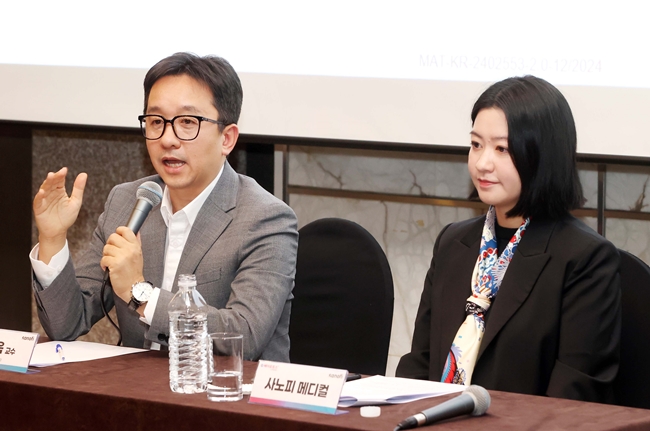
- Sanofi has announced the launch of Beyfortus, an injectable antibody drug to prevent respiratory syncytial virus (RSV) lower respiratory tract disease, for the first time in South Korea. The company aims to take a market share. As clinical practices are in high demand for the vaccine, proactive RSV prevention will become possible following the launch of Beyfortus. Sanofi held a press conference to showcase the preventative effects of its Beyfortus (active ingredient: nirsevimab), an injectable antibody drug for infants to prevent RSV lower respiratory tract disease (left: Ki Wook Yun, Professor of Seoul National University College of Medicine). On December 3, Sanofi held a press conference introducing the preventative effects of its Beyfortus (active ingredient: nirsevimab), an injectable antibody drug to prevent RSV lower respiratory tract disease for infants. Beyfortus was approved by the Ministry of Food and Drug Safety (MFDS) in May as an injectable antibody to prevent RSV. It can be administered to all newborns and infants during their first RSV season. Beyfortus can also be given to infants under 24 months who are at high risk for severe RSV disease during their second RSV season. Previously, RSV immunization product for infants and children in South Korea was only available for high-risk infants and children who are expected to have a high risk of contracting severe RSV disease, including preterm infants. However, Beyfortus can be treated in all infants and children. "Individuals of all ages can contract RSV, but 90% of infants under 2 years old become infected. When infected, a mild cold symptom can advance to lung infections, possibly leading to hospitalization," Ki Wook Yun, Professor of Seoul National University College of Medicine, explained. "When infants without completely developed bronchial tubes contract RSV, symptoms can be worse. It could result in socioeconomic loss in addition to affecting family members." According to Yun, taking care of one's hygiene was the only RSV prevention available. There were unmet needs for RSV prevention, and Beyfortus is expected to bring a positive change. The Phase 3 MELODY study, which was the basis of Beyfortus approval, showed that evaluating the effectiveness of Beyfortus in 3012 infants during their first RSV season, Beyfortus reduced the lower respiratory infection by RSV, which requires medical attention, by 74.5%. Vaccination with Beyfortus is non-reimbursed at launch. However, the early vaccine rate is expected to be high considering that needs rather than cost drive the market for young children. Yet, around the time of the launch, vaccination is expected to focus on high-risk patient groups due to cost hurdles. "Based on the reported price at launch, the cost hurdle is relatively high considering insufficient RSV awareness. When RSV is circulating, there would be more demand for vaccination. However, around the time of the launch, caregivers to patients who have high-risk diseases would be more likely to access vaccination." Ahead of the upcoming launch, Sanofi puts efforts into raising awareness of RSV disease. For example, Sanofi has started an 'It turned out to be RSV, story contest,' aiming to gather patient stories related to the disease and share them. In the long run, entering the National Immunization Program (NIP) will be a concern. Given the effects of other NIP vaccines, Beyfortus effectively reduces the disease burden. "RSV infection poses a greater burden on infants and young children. Compared to the pneumococcal vaccine, which is immunized yearly, the cost effect of Beyfortus is sufficient. In the future, the drug must be listed in the NIP, and more children will have access to immunization," Yun said.
- Company
- GSK seeks HIV paradigm shift with long-acting injectable
- by Whang, byung-woo Dec 04, 2024 05:56am
- With the long-acting HIV drug Vocabria+Rekambys combination therapy seeking insurance reimbursement coverage, attention is being paid to whether the drug’s introduction will bring about a shift in the treatment environment. GSK Korea applied for the reimbursement of the Vocabria+Rekambys combination in May According to industry sources on the 3rd, GSK Korea has completed pharmacoeconomic evaluations for its new HIV drug combination, Vocabria (cabotegravir)+Rekambys (rilpivirine), and is awaiting review by the National Health Insurance Review and Assessment Service Drug Reimbursement Evaluation Committee. GSK Korea filed for reimbursement review in May and may be presented as an agenda at the last Drug Reimbursement Evaluation Committee meeting of the year, which is scheduled for December. Vocabria+Rekambys was previously approved by the MFDS in February 2022 as a combination therapy for the treatment of HIV-1 infection in adult patients who are virologically suppressed, have no history of virologic failure, and have no known or suspected resistance to either cabotegravir or rilpivirine. Its biggest strength is convenience. While traditional HIV treatments require daily oral dosing 365 days per year, the Vocabria+Rekambys combination can be administered as a monthly or bimonthly intramuscular injection, reducing dosing frequency to up to six times per year. In the head-to-head SOLAR study, which directly compared the Vocabria+Rekambys combination with the conventional three-drug regimen (BIC/FTC/TAF), Vocabria+Rekambys demonstrated non-inferior virologic suppression compared to the three-drug regimen, demonstrating both efficacy and convenience. SOLAR trial’s 11/12 month viral suppression results Patients who switched to Vocabria+Rekambys reported higher treatment satisfaction at 11-12 months of treatment compared to patients who continued on their existing oral regimen. The expected clinical benefit of the less frequent dosing is that patients may feel less anxious about disclosing their HIV status. According to the '2024 HIV Treatment Awareness’ survey conducted by Love4One, an organization for people living with HIV, 73% of people living with HIV in Korea responded that they felt afraid of being judged by others when taking HIV medications. In addition, 53% said they had difficulty taking the medications because of inconveniences such as having to take them on time every day or on an empty stomach. At the Korean Society of Infectious Diseases’s Annual Fall Meeting, Yeon-Sook Kim, Professor of Infectious Diseases at Chungnam National University Hospital, said, “South Korea is still one of the countries where HIV is still highly stigmatized and discriminated against, which can affect the peoples’ adherence to medication, leading to virological failure or resistance to treatment.” “In Korea, HIV remains a disease with a high unmet need in terms of adherence and quality of life (QoL), and the introduction of long-acting HIV injectables will be an important turning point in positively improving the lives of people living with HIV in Korea,” added Professor Kim. The key question is whether the Vocabria+Rekambys combination, which has been already approved for 2 years, will be eligible for reimbursement coverage in Korea. Currently, Vocabria is licensed and reimbursed in the United States (FDA approval in 2021), as well as in A8 countries and Australia, which are key reference countries used during HIRA’s reimbursement evaluations. The cost of the two-drug combination varies by country, but in the UK and Canada, where the price is determined through health technology assessment (HTA) like Korea, the convenience of the once-every-2-month cycle regimen was recognized. Based on a single administration, its reimbursement price was set at approximately GBP 1637.49 (KRW 2.9 million) in the United Kingdom and approximately CAD 2568.71 (KRW 2.57 million) in Canada.
- Policy
- 17 drugs receive essential medicine designations
- by Lee, Hye-Kyung Dec 03, 2024 05:53am
- Seventeen medicines that are essential for pediatric patients, cancer patients, and others, but require government support due to unstable supply, have been newly designated as national essential medicines. The Ministry of Food and Drug Safety (MFDS, Yu-Kyung Oh) announced on the 29th that it held a meeting on the stable supply of national essential medicines and newly designated 17 items (ingredients and formulations) as national essential medicines. Newly designated national essential medicines include cisplatin injection, an anti-cancer drug used for testicular and bladder cancer; clofarabine injection, a treatment for pediatric leukemia; and citric acid-sodium citrate-glucose mixtures, which prevents blood from clotting in blood donations. Newly designated national essential medicines Formoterol dry syrup, a cold medicine used to relieve bronchitis symptoms, whose designation has been discussed since last year at the 'Public-Private Consultative Committee that Responds to the Unstable Supply and Demand of Drugs' jointly run by the Ministry of Food and Drug Safety and the Ministry of Health and Welfare, was also newly designated as a national essential medicine. This new designation brings the total number of National Essential Medicines to 473, an increase of 17 from 456. The National Council for Stable Supply of Essential Medicines, which discusses issues related to the stable supply of medicines at the pan-governmental level, has been establishing comprehensive measures for the stable supply of essential drugs and discussing important matters necessary for the operation of the system, such as the designation or removal of new essential drugs. At this meeting, they shared information on the stable supply system of national essential medicine and discussed ways to collaborate between organizations to operate the national essential medicine system more efficiently. The MFDS said it will continue to actively cooperate with related ministries and medical sites to ensure a stable supply of nationally essential drugs, and will do its best to provide institutional and administrative support to ensure the timely and stable supply of drugs essential for patient treatment. "The National Essential Medicine Designation System, which designates and supports medicines that require stable supply, is essential for securing national health security," said MFDS deputy minister Yumi Kim, who chairs the council. "We will work together to create an environment where people can use medicines with peace of mind without supply insecurity."
