
- LOGIN
- MemberShip
- 2026-06-24 04:51:55
- Policy
- Four Otezla generics were authorized simultaneously in Korea
- by Lee, Hye-Kyung Apr 19, 2024 06:24am
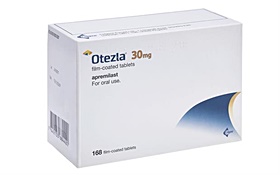
- Amgen Four generic versions of Amgen's oral psoriasis drug Otezla (Apremilast) have been approved simultaneously in Korea. With the resolution of Otezla’s 'use patent' issue, which had served as an obstacle to the launch of generics, domestic pharmaceutical companies that have previously succeeded in avoiding the drug’s composition patent seem to have applied for approval of their generic versions at once. On the 17th, the Ministry of Food and Drug Safety approved four apremilast-based formulations, including Dong-A ST's ‘Otelia Tab,’ Daewoong Pharmaceutical's ‘Apsola Tab,’ Dongkoo Biopharm’s ‘Otemila Tab,’ and Chong Kun Dang’s ‘Otebell Tab.’ Otezla, the original apremilast formulation of these generics, was the first oral psoriasis treatment to be approved by the MFDS in November 2017, but the company voluntarily withdrew the drug’s license in June 2022 after failing to cross the reimbursement threshold. In the process, domestic pharmaceutical companies began filing patent suits to launch their generic versions of Otezla. Otezla has 3 registered patents, including a use patent (10-0997001) and two formulation patents (10-2035362 and 10-2232154). In the case of the 2 formulation patents, 7 companies, including Daewoong Pharmaceutical, Dong-A ST, DongKoo Bio&Pharma, Huons, Chong Kun Dang, Mothers Pharm, and Cosmax, filed to confirm the passive scope of rights in May 2021 and November 2022 and succeeded in avoiding the patents. However, the companies still had to overcome the use of patents to launch their generic versions. Otezla’s use patent was set to expire on March 18, 2028. The companies must invalidate the use patent as well to launch their generic versions, and on August 24 last year, the court decided to ‘partially reject and dismiss’ the use patent’s invalidation trial. Despite withdrawing from the Korean market, Amgen appeared to be vigorously defending its patent rights, leading to criticism that it was blocking the entry of generics that were preparing to launch in Korea. And with no further news of the domestic pharmaceutical companies filing appeals to evade the use of patents since August last year, the news of the 4 generic Otezla approvals drew attention to their background. A representative from a relevant Korean pharmaceutical company said, "We have been continuously making an agreement with Amgen regarding the use of the patent. Amgen withdrew its license for Otezla in 2022 and had no intention of launching it in the future, so there was no reason to prevent generics from entering the market." "Amgen said that it didn't want to continue litigating a product that they had no intention of launching in the country. They agreed that the patent would not be a barrier to generic entry in the future, which is why we went through the process." Currently, the legal status of Otezla's use patent, (+)-2-[1-(3-ethoxy-4-methoxyphenyl)-2-methylsulfonylethyl]-4-acetylaminoisoindoline-1,3-dione, and methods of synthesis and compositions thereof" is indicated as “revoked," according to Korea’s Intellectual Property Trial and Appeal Board bulletin. An industry official said, "The Otezla generics have not been jointly developed by the companies, but seem to have been approved at the same time upon the resolution of the patent issue. We plan to apply for reimbursement immediately upon approval and start drug price negotiations."
- Company
- Adcetris’s IPS requirement for reimb may be removed
- by Eo, Yun-Ho Apr 19, 2024 06:23am
- A green light has been given for the removal of the IPS score requirement for Adcetris, which had been a long-standing wish of the patients. According to industry sources, Takeda Pharmaceutical Korea’s reimbursement expansion application to remove the International Prognostic Score (IPS) score criteria for prescribing its Adcetris (brentuximab vedotin) in combination with chemotherapy (AVD, adriamycin+bleomycin+dacarbazine) in Hodgkin's lymphoma passed the Health Insurance Review and Assessment Service's Cancer Disease Review Committee review on the 17th. Adcetris )’ was granted reimbursement as a first-line treatment for Hodgkin’s lymphoma in 2021, but a restriction of "IPS score of 4" was applied, meaning that the drug was only reimbursable for patients with severe disease. As a result, patients with an IPS score of 2-3 have been prescribed an existing chemotherapy combination, ABVD (adriamycin+bleomycin+vinblastine+dacarbazine), instead of Adcetris. Even patients with stage IV disease were unable to benefit from Adcetris and its better efficacy if they had a low IPS score. However, when analyzing the results of the 1,344 patients in the ECHELON-1 trial, Adcetris demonstrated efficacy in high-risk patients who were Stage IV, male, younger, and had an IPS score of 4-7. The National Comprehensive Cancer Network (NCCN) guidelines recommend Adcetris+AVD for the treatment of patients with stage III and IV disease, and the European guidelines allow Stage IV patients to be treated with Adcetris regardless of the IPS score. Therefore, the medical community has been pushing for the removal of the IPS score requirement from Adcetris’s reimbursement criteria, and expectations are rising with its passage of the CDDC review this time. However, it remains to be seen if Adcetris can clear the remaining hurdles, including the Drug Reimbursement Evaluation Committee and drug price negotiations, and remove the IPS score requirement from its reimbursement criteria. In the Phase III ECHELON-1 trial, Adcetris demonstrated superior clinical efficacy compared to ABVD in previously untreated patients with stage III or IV classical Hodgkin lymphoma. Its three-year progression-free survival (PFS) analysis showed that the Adcetris combination therapy (PFS rate 83.1%) reduced the risk of disease progression by 30%, compared with ABVD (PFS rate 76%).
- Company
- Drug exports escape ‘COVID-19 endemic slumps’ with botox
- by Kim, Jin-Gu Apr 19, 2024 06:23am
- The export values of drugs developed by Korean pharmaceutical companies increased 16% year-over-year in Q1. Compared to other quarters, it is the highest amount two years after Q1 of 2022. The export performances of domestic drugs had stagnated after the announcement of the endemic. However, the pharmaceutical industry has a positive outlook, as exports have started to recover since Q3 last year. According to the Korea Customs Service, exports of domestic drugs amounted to US$1.72 billion (approximately KRW 2.38 trillion). This is an increase of 16.1% over a year, compared to US$1.4 billion in Q1 of 2023. Around the same period, drug imports amounted to US$2.24 billion (approximately KRW 3.1 trillion), down 6.7%. As exports increased while imports decreased, the trade balance improved from KRW 925.38 million at loss to KRW 527.21 million at loss. Domestic drug exports have skyrocketed during the prolonged COVID-19 pandemic. In Q4 of 2020 and Q1 and Q4 of 2021, export values increased to over US$2 billion. Domestically produced COVID-19 vaccines played a significant role in boosting the export performance at that time. Quarterly drug exports (Unit: US$1 million, Source: Korea Customs Service). After the announcement of the COVID-19 endemic, export values declined due to decreased exports of domestically produced vaccines. Since Q4 of 2022, the export value has been consistently around US$1.5 billion, gradually decreasing. However, it was KRW 1.27 billion in Q3 of last year, the lowest after the endemic, but rebounded. The export value increased to US$1.6 billion in Q4 last year and over US$1.7 billion in Q1 of this year. It is the highest quarterly value since Q1 of 2022. Among major items, Botolinum toxin exports increased while vaccine exports decreased. Botolinum toxin exports in Q1 amounted to US$87.95 million (approximately KRW 120 billion), up 16.3% compared to US$75.64 million in Q1 of last year. In terms of countries, the export of botulinum toxin to the United States increased by 16.4% from US$14.5 million to US$16.88 million. Exports to China doubled from US$7.26 million to US$14.65 million. Exports to Japan increased by 64.1% from US$4.11 million to US$6.74 million. However, exports to Brazil decreased by 31.1% from US$9.73 million to US$6.71 million, and exports to Thailand decreased by 18.2% from US$6.53 million to US$5.34 million. Quarterly export values of vaccines and botolinum toxin (Unit: KRW 100 million, Source: Korea Customs Service). Vaccine exports decreased by 40.5% from US$135.6 million in Q1 of last year to US$61.59 million (approximately KRW 85 billion) in Q1 this year. The last export of domestically produced COVID-19 vaccines was in Q1 last year. However, COVID-19 vaccine exports sharply declined, steadily decreasing until Q4 and rebounding in Q1 this year.

- Company
- Korean pharma companies accelerate global market entry
- by Heo, sung-kyu Apr 18, 2024 05:54am
- Domestic pharmaceutical companies are targeting the Southeast Asian and Latin American markets as a bridgehead to their entry into the global market. As these are still emerging markets, the companies believe that they can secure relative competitiveness in those markets. For this, the companies are exploring the market through various strategies such as seeking local approvals or indirect entry through agreements, among others. According to industry sources on the 15th, pharmaceutical companies in Korea have recently started to accelerate their efforts to enter the Southeast Asian and Latin American markets. The reason the companies are primarily targeting these emerging markets is due to their high growth potential, as they point of entry for the companies’ global expansion. As these markets show high growth potential, domestic pharmaceutical companies have been prioritizing entry into these regions as a starting point for their global expansion. To this end, domestic pharmaceutical companies have already confirmed their entry into various Southeast Asian countries such as Thailand, Vietnam, and Indonesia. The need for companies to enter emerging markets in addition to markets such as the U.S. and Europe have been rising, sparking interest in the so-called ‘pharmerging’ markets. Pharmerging is a new term that combines 'Pharma' and 'Emerging' and refers to emerging pharmaceutical markets such as the Middle East, Latin America, and Southeast Asia. Due to the companies’ continued interest in emerging markets, the entry of pharmaceutical companies – especially mid-sized pharmaceutical companies - into the Southeast Asian market has risen further. In fact, companies that have recently accelerated their entry into the Southeast Asian market include Yuyu Pharma and Jeil Pharmaceutical, which have been receiving marketing authorizations and signing related agreements. First of all, Yuyu Pharma has received approval for its ‘Yuhylys Soft Cap (dutasteride)’ from the Philippines Food and Drug Administration and the Myanmar Food and Drug Administration. Yuhylys is sold under the brand name ‘Armadart’ in the Philippines and the same as Yuhylys in Myanmar. Jeil Pharmaceutical recently signed a memorandum of understanding with Universiti Kebangsaan Malaysia (UKM) University Hospital for the exclusive supply of pharmaceuticals and R&D cooperation, and plans to promote technology transfer and local production with UKM through the agreement. In addition, companies that have already entered the market are also making further inroads. For example, LG Chem held a symposium on its 'Zemiglo Tab' at the Philippine College of Endocrinology, Diabetes & Metabolism conference. LG Chem has been working to penetrate the global market since 2017 and had already entered the Philippines in 2019. LG Chem plans to continue holding symposiums with Korean endocrinology professors in Thailand later this month and then in Latin America, including Mexico, in the second half of the year. As the company has already entered the markets of all these countries, the symposium held will help expand the company's presence in the exporting countries. In addition, Daewoong Pharmaceutical has recently applied for marketing authorization for its ‘Envlo Tab’ in Mexico. Daewoong's Envlo has already entered Southeast Asian markets such as Indonesia, the Philippines, Thailand, and Vietnam, and is expanding its area to Latin America, seeking approval in Brazil and Mexico. In addition, Hugel recently received marketing authorization for its PDO (polydioxanone) suture brand ‘Licellivi’ in Brazil and announced that it will establish a strategy for its rapid market settlement. Korean companies are entering the Southeast Asian and Latin American markets because they are expecting growth in these markets. According to an export support report released by the Korean Health Industry Development Institute, the pharmaceutical market in 6 major emerging countries (Indonesia, Vietnam, the Philippines, Thailand, Malaysia, and Singapore) is worth about USD 20 billion, or KRW 26 trillion. In particular, the per capita cost of drugs in the countries was about USD 36 last year, an increase of 6.6% YoY, and is expected to reach USD 46 by 2026 at an average annual growth rate of 7.4%. In addition, in Latin America, the pharmaceutical market is growing rapidly due to the high demand for products and high prevalence of hypertension and gastrointestinal diseases. The market is expected to grow at an average of 7% per year through 2023 to reach a total value of USD 76 billion. As such, more companies are also expected to take on the challenge of entering these emerging markets.
- Policy
- PVA exemptions expanded to drugs below KRW 3 billion
- by Lee, Tak-Sun Apr 18, 2024 05:54am
- Effective this year, the price-volume agreement (PVA) criteria will be expanded to provide an exemption to products with a claim amount below KRW 3 billion. This amount represents an increase from the previous criteria, which was below KRW 2 billion. Also, any product that has undergone more than two price reductions in the last five years will receive a 30% cuts. The reduction rate will be differentially applied depending on the claimed amount. Since April 15th, the National Health Insurance Service (NHIS) has been collecting opinions regarding the partial revision of the 'Detailed Matters regarding PVA negotiation’s operational guidelines.' The revised program will be implemented starting on May 1st. ◆Expansion of drugs eligible for exemption·Addition of drugs eligible for reduction =Exempted drugs from negotiations will be expanded from same-class products with an annual claim amount of less than KRW 2 billion to less than KRW 3 billion. If a product has undergone more than two price reductions in the last five years before the end of the analysis period, it will be eligible for a reduction. However, drugs that have already received a reduction rate during the two negotiations with agreements before the end of the analysis period will not be eligible for the reduction. Drugs eligible for reduction will include those developed by innovative pharmaceutical companies or companies with R&D expenses to sales as of the year preceding the end of the analysis period, with a ratio of 10% or more and recognized by NHIS. The reduction rate is set to 30%. ◆Differential reduction rate based on claimed amounts = A formula for reference price for negotiation will be differentially calculated based on the claim amount. A higher reduction rate will be applied to drugs with a larger claim amount. For example, if the claim amount of 'Drug-type Ga' during the analysis period is more than KRW 3 billion and less than KRW 5 billion, the formula will be 'Reference price for negotiation = 0.95×(Price ceiling)+(1-0.95)×{Price ceiling×(Expected claim amount/Claimed amount by same-class product during the analysis period)}'. If the claim amount is more than KRW 5 billion and less than KRW 30 billion, the formula of 'Reference price for negotiation = 0.9×(Price ceiling)+(1-0.9)×{Price ceiling×(Expected claim amount/Claimed amount by same-class product during the analysis period)}' will be applied. If the claim amount is more than KRW 30 billion, the formula of 'Reference price for negotiation = 0.85×(Price ceiling)+(1-0.85)×{Price ceiling×(Expected claim amount/Claimed amount by same-class product during the analysis period)}' will be applied. The differential formula will be used for 'Drug-type Na' and 'Drug-type Da'. If the claim amount is more than KRW 3 billion and less than KRW 5 billion, the formula of 'Reference price for negotiation = 0.9×(Price ceiling)+(1-0.9)×{Price ceiling×(Claimed amount by same-class product during the analysis period)}' will be applied. If the claim amount is more than KRW 5 billion and less than KRW 30 billion, the formula of 'Reference price for negotiation = 0.85×(Price ceiling)+(1-0.85)×{Price ceiling×(Claimed amount by same-class product during the analysis period)}' will be applied. If the claim amount is more than KRW 30 billion, the formula of 'Reference price for negotiation = 0.8×(Price ceiling)+(1-0.8)×{Price ceiling×(Claimed amount by same-class product during the analysis period)}' will be applied. ◆Expanded refund contracted drugs = Drugs eligible for a refund contract instead of a drug reduction will be expanded. Drugs with multiple indications for the initial listing will be eligible for a refund contract. A one-time refund contract is also possible. The NHIS can enter into a one-time refund contract with a company instead of adjusting the reference price for negotiation when there is a temporary increase in the volume and upon the company’s request. The new guidelines will be implemented starting on May 1st, 2024. Drugs undergoing PVA monitoring or negotiations will be applied first. Therefore, any drugs subjected to this year’s 'Drug-type Da' monitoring will be eligible for the new guidelines.
- Policy
- KRW 10 Bil antiemetic drug Akynzeo seeks reimb for injection
- by Lee, Tak-Sun Apr 18, 2024 05:54am
- Akynzeo Inj has applied for reimbursement. HK inno.N is expanding the lineup of 'Akynzeo,' a medicine used to prevent vomiting in cancer patients. In addition to the capsule formulation currently covered by health insurance, the company has applied for reimbursement to the Health Insurance Review and Assessment Service (HIRA) for Akynzeo inj. According to industry sources on the 17th, Akynzeo inj, approved in October 2022, has applied for HIRA review. Akynzeo was introduced to South Korea by HK inno.N from the Swiss pharmaceutical company Helsinn. It is used for the prevention of acute and delayed nausea and vomiting associated with initial and repeat courses of moderately and highly emetogenic cancer chemotherapy. It is a combination of netupitant and palonosetron hydrochloride, with a mechanism of action inhibiting the nerve pathway associated with causing nausea and vomiting. According to analysis, the two active ingredients have a long plasma half-life, which makes them effective antiemetics. The capsule formulation was already available in South Korea. Akynzeo cap was approved in 2018 and listed for reimbursement in December of the same year. After the listing, the sales of the drug have skyrocketed. According to IQVIA, its sales of KRW 1.8 billion in 2019 increased to KRW 4.5 billion in 2020, KRW 6.4 billion in 2021, KRW 7.3 billion in 2022, and recorded KRW 9.8 billion last year (KRW 2 billion shy of KRW 10 billion). Akynzeo cap usage was expanded after the approval of reimbursement expansion in June 2022. Before the expansion, it could be used as a combination therapy with corticosteroids in patients who fell into the high-risk group (over 90%). After the reimbursement expansion, it can now be administered to severe patient groups (30~90%) without combination with corticosteroids. Akynzeo Inj, which has applied for reimbursement, is an IV injection. It is expected to benefit cancer patients who have difficulty ingesting oral medicines. Akynzeo Inj will undergo HIRA review for reimbursement appropriateness and seek health insurance listing.
- Company
- Cinqair continues to land in general hospitals in Korea
- by Eo, Yun-Ho Apr 18, 2024 05:54am
- The biologic therapy for asthma, ‘Cinqair,’ is actively expanding its prescription area in Korea. According to industry sources, Teva-Handok’s monoclonal antibody Cinqair (reslizumab), which targets interleukin (IL)-5, has passed the drug committees (DC) of tertiary hospitals in Korea such as the Gangnam Severance Hospital, Samsung Medical Center, Seoul National University Hospital, and Seoul Asan Medical Center. The drug has been landing in hospitals in Korea after being listed for reimbursement in October last year. Cinqair has been granted reimbursement 8 years after failing its first attempt to enter the reimbursement system when it was approved in Korea in 2017. GSK's Nucala (mepolizumab), an antibody drug that has the same mechanism of action as Cinqair, was reimbursed with Cinqair through the risk-sharing agreement (RSA) system, while reimbursement for AstraZeneca's Fasenra (benralizumab) is being negotiated under the RSA track. These drugs are interleukin (IL)-5 antagonists, which work by reducing levels of blood eosinophils, a type of white blood cell involved in the development of asthma exacerbation. The drugs attracted attention upon their approval as a valid treatment option that hadn’t existed before. With reimbursed treatment options finally available for asthma, how the three drugs compete in the future is also receiving attention. Teva-Handok is currently co-promoting Cinqair with Teva-Handok. Meanwhile, Cinqair’s efficacy had been demonstrated through five placebo-controlled clinical studies that evaluated the safety and efficacy of Cinqair 3mg/kg in 1,028 adult and adolescent asthma patients that were uncontrolled with currently available therapies. In three Phase III clinical trial programs that were conducted on asthma patients with high blood eosinophil counts, Cinqair reduced the frequency of asthma exacerbations by up to 59% and significantly improved lung function, symptoms, and asthma-related quality of life. Also, Cinqair received attention for releasing the post-hoc analysis results of asthma patients who require Step 4 and Step 5 treatment among all patients who participated in the Phase III trial. Cinqair reduced the clinical degree of asthma exacerbations in patients classified as Step 4 or 5 under the Global Initiative for Asthma guidelines by 53% and 72%, respectively, and increased the level FEV1 (forced expiratory volume in 1 second) by 103ml in Step 4 patients and by 237ml in Step 5 patients, demonstrating that the benefit was found to be greater in Step 5 patients.
- Policy
- Will Fasenra be applied RSA for reimbursement in KOR?
- by Lee, Tak-Sun Apr 18, 2024 05:54am
- AstraZeneca has entered into drug price negotiations with the National Health Insurance Service for its ‘Fasenra Prefilled Syringe Inj (benralizumab, AZ),’ a severe eosinophilic asthma treatment that passed the Health Insurance Review and Assessment Service's Drug Reimbursement Evaluation Committee review in March. With other drugs with the same mechanism of action such as Cinqair and Nucala already listed for reimbursement in Korea, whether Fasenra will also be granted reimbursement in Korea is gaining attention. According to an industry source on the 16th, the National Health Insurance Service is in drug price negotiations with AstraZeneca for Fasenra. In particular, Fasenra’s reimbursement is receiving attention in particular for the fact that 2 other drugs with the same mechanism of action – Cinqair (reslizumab, Teva-Handok) and Nucala (mepolizumab, GSK) - have already been approved in Korea. In October last year, the 2 interleukin (IL)-5 antagonists were granted reimbursement at the same time. However, Cinqair was approved through the regular reimbursement process, and Nucala was approved through the RSA process. This was the first time a drug in the same class had been approved through two different reimbursement schemes. Fasenra is also seeking reimbursement through the RSA track, which is likely to rise as a new case. In principle, it is possible for latecomers to be listed through the RSA track, but there have been almost no cases of drugs being listed through RSA after a same-class drug was listed through the general track. Moreover, as RSA was limitedly applied to anticancer drugs and rare diseases, Fasenra is regarded as an example of its expanded application, being a treatment for severe asthma. Meanwhile, the Health Insurance Review and Assessment Service is also conducting drug pricing negotiations for ‘Idelvion Inj (CSL Behring),’ which is used to treat hemophilia B.
- Company
- Targrisso+chemo approved as 1st-line Tx for NSCLC in KOR
- by Son, Hyung-Min Apr 17, 2024 06:07am
- AstraZeneca Korea announced today that its Tagrisso in combination with platinum-based chemotherapy has been approved for the first-line treatment of EGFR-mutated non-small cell lung cancer. The approval marks the first time a combination therapy has been approved for the first-line treatment of EGFR-mutated lung cancer. The approval is based on the Phase III FLAURA2 trial in 557 patients with locally advanced or metastatic NSCLC who had received no prior systemic therapy and were positive for EGFR exon 19 deletion or exon 21 mutation. The study evaluated the efficacy and safety of the Tagrisso combination therapy versus Tagrisso monotherapy. Results showed that Tagrisso plus platinum-based chemotherapy reduced the risk of disease progression or death by 38% compared to Tagrisso monotherapy. Median progression-free survival (PFS) by investigator assessment was 25.5 months for patients treated with Tagrisso plus chemotherapy, an 8.8-month improvement versus Tagrisso monotherapy (16.7 months). Also, PFS results from blinded independent central review (BICR) were consistent with the results by investigator assessment, showing 29.4 months median PFS with Tagrisso plus chemotherapy, a 9.5-month improvement over Tagrisso monotherapy (19.9 months). In addition, in patients with the L858R mutation, the median PFS of Tagrisso plus platinum-based chemotherapy was 24.7 months, a 10.8 months extension over Tagrisso monotherapy (13.9 months.) Also, the benefits were consistent in patients with a greater unmet need, such as those with brain metastases or the L858R mutation. Dr. Sang-We Kim, professor of medical oncology at the Seoul Asan Medical Center who served as the principal investigator of the FLAURA2 trial in Korea, said, “The treatment of EGFR-positive lung cancer patients with brain metastases or the L858R mutation is challenging, their prognosis poor. We believe the approval has great significance in that patients will now be able to choose between two first-line treatment options, Tagrisso monotherapy or Tagrisso combination therapy.” Misun Yang, Director of the Oncology Business Unit at AstraZeneca, said, “We are pleased to see the Tagrisso+chemotherapy option approved this year, in addition to the reimbursement of Tagrisso in the first-line. With this reaffirmation of Tagrisso's value as a global standard of care in EGFR-mutated NSCLC, we will continue to work to ensure that more patients can benefit from Tagrisso’s value."
- Company
- Will DREC recognize Trodelvy’s reimbursement adequacy?
- by Eo, Yun-Ho Apr 17, 2024 06:06am
- Will another ADC breast cancer drug, ‘Troldelvy,’ follow the footsteps of ‘Enhertu’? According to industry sources, Gilead Sciences Korea's triple-negative breast cancer (TNBC) drug Troldelvy (sacituzumab govitecan-hziy), which passed the Health Insurance Review and Assessment Service's Cancer Disease Review Committee in November last year, is yet to be presented from the Drug Reimbursement Evaluation Committee for review. Therefore, whether the agenda will be discussed at the upcoming DREC meeting is gaining attention. Trodelvy is an antibody-drug conjugate (ADC) that consists of a monoclonal antibody that binds to the cell surface antigen Trop-2 and ‘SN-38,’ a TOP1 inhibitor payload. The drug received approval from the Ministry of Food and Drug Safety in May last year to treat adult patients with unresectable locally advanced or metastatic triple-negative breast cancer (mTNBC) who have received at least two prior therapies, including at least one prior therapy for metastatic disease. Trodelvy is the only non-cytotoxic chemotherapy approved as a second or higher line of treatment for the entire TNBC patient population that has demonstrated an improvement in overall survival, but the cost-effectiveness evaluation remains a major hurdle to reimbursement. However, there is hope as another ADC, ‘Enhertu (trastuzumab deruxtecan),’ which was reimbursed in April, was recognized for innovativeness and applied a beneficial ICER from the government. In fact, Trodelvy is known to satisfy the government’s innovativeness standards. The criteria for innovativeness are drugs that satisfy all of the following three conditions: ▲ there is no substitute or therapeutically equivalent product or treatment ▲ demonstrated clinically meaningful improvement, such as a significant extension in survival ▲ the new drug has been approved by the Ministry of Food and Drug Safety under Article 35(4)(2) of the Pharmaceutical Affairs Act (designation of priority review) and were approved through the fast-track (GIFT) or received a breakthrough therapy designation (BTD) by the US FDA or a priority review (PRIME) by the European Union’s EMA. A petition calling for Trodelvy's reimbursement had garnered 50,000 signatures, and as drugs for triple-negative breast cancer having difficulty gaining access into the reimbursement system, whether Trodelvy will be presented to DREC and its outcome is gaining increasing attention. Trodelvy’s clinical efficacy was confirmed through the Phase III ASCENT study. In the study, Trodelvy significantly reduced the risk of death by 49% compared with a treatment of physician’s choice (TPC) in patients with unresectable locally advanced or metastatic triple-negative breast cancer (mTNBC) who have received two or more prior systemic therapies, at least one of them for metastatic disease. Also, the Trodelvy arm showed a 57% improvement in progression-free survival (PFS). These effects were observed regardless of the patient’s brain metastasis status.
