
- LOGIN
- MemberShip
- 2026-06-24 04:51:51
- Policy
- NHIS expands info disclosure about drug pricing negotiations
- by Lee, Tak-Sun Mar 29, 2024 05:53am
- The National Health Insurance Service (NHIS) has decided to expand the scope of information disclosure on its website. Starting in April, the public will have expanded access to information regarding drug pricing negotiations. Information on the types of negotiations of drugs under review and the outcomes of agreements will be made open to the public. According to industry sources on the 28th, the National Health Insurance Service (NHIS), in agreement with the pharmaceutical industry, is expected to expand the disclosure of information related to drug pricing negotiations. Starting from May 2019, people will be able to access information related to drug pricing negotiations by going to ‘NHIS Website-Pre-release Information-Laws/Business Standards-Standards for long-term care reimbursement-Drug pricing negotiations menu.’ The website provides information related to product and pharmaceutical company names of new drugs under drug pricing negotiations, the date of registration, and a list of medicines that concluded drug pricing negotiations. Previously, the NHIS disclosed the information on the website after notifying the pharmaceutical company and following the legal process. Negotiation details and submission documents related to the pharmaceutical company's trade secrets were excluded. However, many have pointed out that such information alone is insufficient to fulfill the rights of citizens and patients to access information. For example, the website currently discloses information on ‘new drugs’ among medicines under drug pricing negotiations. Moreover, the outcomes of the concluded negotiations are not available. Considering the criticism, the NHIS has decided to expand the scope of information disclosure. Starting in April, new drugs, 'medicines exempt from price negotiations,' and 'medicines with expanded indications' that are under negotiation will be disclosed. Additionally, after April, the scope of disclosure will be extended to include medicines subject to negotiation orders from the Ministry of Health and Welfare (MOHW). Furthermore, the NHIS plans to post the agreement outcomes of the drugs that concluded negotiations. Currently, the NHIS does not disclose information on agreement details and only posts medicines that concluded negotiations. There were instances where drugs renewing risk-sharing agreements (RSA) made it onto the list despite failed renegotiations, as initial negotiations were completed. It is anticipated that people can easily find accurate information on medicines under negotiation and agreements reached. “During the meeting, we have notified pharmaceutical companies about the measures to expand information,” an official of the NHIS said. “If pharmaceutical companies with drugs subject to negotiation orders do not raise objections upon receiving notification of disclosure, their details will be posted on the website.”
- Policy
- JW Pharmaceutical agrees on RSA renewal terms for Hemlibra
- by Lee, Tak-Sun Mar 29, 2024 05:53am
- JW Pharmaceutical has reportedly agreed to renew its risk-sharing agreement (RSA) for its hemophilia treatment ‘Hemlibra SC injection’ with the National Health Insurance Service. The company for the leukemia drug ‘Venclexta Tab,’ which was also in the process of negotiating the terms of RSA renewal, is expected to push for a temporary extension of the contract as it failed to reach an agreement by the RSA negotiation deadline. JW Pharmaceutical signed an RSA contract for Hemlibra from May 1, 2020, to April 30 this year. The expenditure cap type of RSA was applied. Hemlibra was unable to reach an agreement in the first round of renewal negotiations but succeeded in reaching an agreement in subsequent negotiations. In May 2020, Hemlibra was first reimbursed for severe hemophilia A antibody patients, and the coverage was extended to patients without antibodies last year. As there are more patients without antibodies than those with antibodies among the 1,700 hemophilia A patients in Korea, the number of insurance claims is expected to increase. Last year, the company's annual sales exceeded KRW 10 billion. With the successful renewal, the RSA contract will continue to be applied for 5 years from May 1 this year to April 30, 2029. On the other hand, discussions on the leukemia drug Venclexta (AbbVie, venetoclax) are having difficulty reaching an agreement within the RSA contract deadline. Venclexta is currently reimbursed as a third-line or greater monotherapy in patients with chronic lymphocytic leukemia (CLL) who have relapsed or are refractory to chemotherapy and B-cell receptor inhibitors, or as a combination therapy in the second-line in patients with chronic lymphocytic leukemia (CLL) who have received at least one prior chemotherapy. The drug’s RSA contract term is from April 1, 2020, through March 31 this year, and was applied the expenditure cap type RSA. In February last year, the drug’s insurance ceiling price was reduced by 12.2% due to the expanded scope of its use. The NHIS and its pharmaceutical company are expected to push for a temporary RSA extension as it would be difficult for the parties to reach an agreement by the end of the RSA term. Sanofi had also signed a temporary term extension agreement for its Dupixent after its contract expired in December last year, and the company successfully renewed its RSA last month.
- Company
- Samsung Bioepis makes 3rd investment in ADCs
- by Son, Hyung-Min Mar 28, 2024 05:52am
- Samsung Group, together with Samsung Bioepis, has made its third investment in companies discovering Antibody-Drug Conjugates (ADCs). Samsung Group plans to actively participate in new drug commercialization through acquiring the original technology as Samsung Biologics expands its CDMO facility for producing ADCs. Samsung Group announced on the 26th that it has invested in BrickBio, a company focused on developing ADCs, through Life Sciences Fund. Life Sciences Fund is a venture investment fund established jointly with Samsung Bioepis, Samsung C&T Corporation, and Samsung Biologics, collectively pooling KRW 170 billion. This is Samsung Group’s third investment in companies developing ADCs, following its investments in Swiss Araris Biotech and Korea’s AimedBio. Samsung Biologics anticipates completing the production facility for ADCs this December. Samsung Group aims to secure ADC CDMO production capacity while acquiring its new drug through investment in shares. Samsung Bioepis focuses on acquiring ADC technology. The US-based company BrickBio, which Samsung Group recently invested in, has the Evolved tRNA Localization (ETRNAL) platform. Through this platform, BrickBio can utilize modified tRNA (transport RNA) to attach artificial amino acids to specific positions on proteins. Notably, BrickBio's linkers are soluble in aqueous solutions like blood, enabling the antibody/payload structure to bind to cancer cells appropriately without additional editing. BrickBio’s current candidate products are BRKB-300, BRKB-400, BRKB-20, BRKB-500. BRKB-300 is a solid tumor ADC that targets B7-H3. It is currently in the process of preparing for an Investigational New Drug (IND) approval. There are no other commercialized products with this mechanism. The rest of the candidate products, like BRKB-400, are either in the preclinical or candidate exploration stages. AimedBio holds the ADC candidate ABM302, which targets FGFR3, a biomarker mainly expressed in bladder cancer. ABM302 is co-developed with China's GeneQuantum Healthcare, combining AimedBio's developed FGFR3 antibody with GeneQuantum's linker-payload technology. AimedBio's ADC technology is characterized by having control of the Antibody-Payload Ratio (DAR). Currently, no ADCs use this mechanism for solid tumor therapy targeting the FGFR3 protein. While FGFR3 is a key protein for solid tumor therapy, no drugs are currently developed using this mechanism as an ADC. In preclinical studies, ABM302 demonstrated pharmacokinetics and safety in nonhuman primates. Samsung Bioepis begins ADC research and development with the Swiss company Araris Biotech. Araris has linker technology capable of conjugating antibodies through a single process. Araris' linker technology enables payload attachment at amino acid (Q295) sites within IgG-Fc. When payloads attach to this site, antibodies maintain nearly identical pharmacokinetic performance. Moreover, the linker payload, connected to the antibody via peptide conjugation, maintains excellent stability in circulation, avoiding damage to healthy tissues. These three characteristics are considered key factors that enable efficient payload delivery and maximum ADC efficiency. Focuses on acquiring ADC technology… Increasing need for developing third-generation ADCs ADC is a novel anticancer drug that connects an antibody, which binds to specific antigens on the surface of cancer cells, with a cytotoxic drug linked by a linker. ADCs take advantage of antibodies' selectivity for their targets and the drug's cytotoxic activity to selectively target cancer cells, thereby increasing therapeutic efficacy while minimizing side effects. Securing target selection and linker technology is essential to developing new ADCs. If the drug-antibody connection is weak, the drug may detach from the antibody before reaching the cancer cells. The companies invested by the Samsung Group are recognized for their success in securing antibody drugs and their linker technologies. While first-generation ADCs such as Roche’s Kadcyla have been limited to breast cancer indications, second-generation ADCs are successfully securing a variety of indications. Enhertu, for example, has shown effectiveness in various solid tumor areas such as breast cancer, gastric cancer, non-small cell lung cancer (NSCLC), and colorectal cancer. Gilead's Trodelvy, which has secured indications for breast cancer, has also shown efficacy in NSCLC, urothelial cancer, and other types. There is a growing interest in developing follow-up ADCs for multiple indications, both domestically and internationally. ADCs approved for use or under development utilize microtubule inhibitors or DNA-damaging agents as payloads to conjugate with immunoglobulin G (IgG) antibodies and pH-dependent or non-cleavable linkers. pH-dependent linkers may cause incomplete systemic cytotoxicity during plasma circulation, while hydrophobic linkers are prone to aggregation, resulting in poor pharmacokinetics and efficacy in the body. Therefore, there is an increasing need for new ADCs with novel mechanisms of action that can maintain a high and consistent drug-antibody ratio, employ cleavable linkers for plasma stability, and demonstrate efficacy even in heterogeneous tumor environments with low target protein expression.
- Company
- HK Inno.N speeds up clinical research on its NSCLC candidate
- by Nho, Byung Chul Mar 28, 2024 05:52am
- On the 27th, HK inno.N announced that it will present the non-clinical trial results of its next-generation allosteric EGFR-tyrosine kinase inhibitor ("EGFR-TKI") candidate through a poster presentation at the American Association for Cancer Research (AACR) Annual Meeting 2024 from April 5 to 10 in the United States. e AACR is one of the world's three most prestigious cancer conferences along with the American Society of Clinical Oncology (ASCO) and the European Society for Medical Oncology (ESMO), and annually attracts a large number of experts from around the world to share their latest cancer research findings. At the conference, HK Inno.N will present the results of its nonclinical study on its ‘allosteric EGFR-TKI drug’ that targets patients with the L858R gene mutation in non-small cell lung cancer. HK Inno.N is studying the use of IN-119873, a fourth-generation targeted anticancer drug for patients with L858R mutations who have shown resistance to existing first-line treatments for NSCLC. Unlike existing therapies that target the adenosine triphosphate (ATP) binding site, which is the energy source of cancer cells, HK Inno.N's IN-119873 targets the allosteric (one of the protein sites) binding site of the epidermal growth factor receptor (EGFR). IN-119873 is expected to show superior efficacy in EGFR mutations caused by existing first-, second-, and third-generation EGFR-TKI drugs, and be synergistic in combination with third-generation EGFR-TKIs. The interest in next-generation allosteric EGFR-TKIs has been rising with a major global pharmaceutical company recently acquiring a third-party candidate with the same mechanism of action for approximately USD 540 million (KRW 720 billion). According to global market prospects, the market for NSCLC drugs has reached KRW 30 trillion by 2022. Of this, the market for drugs that treat EGFR mutated NSCLC accounts for around KRW 5 trillion, and osimertinib, a third-generation EGFR-TKI drug, accounts for more than half of this market. Bong-Tae Kim, head of HK inno.N's New Drug Development Division, said, "We plan to present our EGFR-TKI research results to domestic and international companies and experts at AACR and explore potential partnership opportunities. Our goal is to complete the nonclinical study of IN-119873 and file an application to initiate Phase I IND within the year." HK Inno. N introduced IN-119873, a next-generation allosteric EGFR-TKI candidate, after bringing in the candidate substance from the Korea research Institute of Chemical Technology and being nominated as a project to be supported by the National Drug Development Program in August last year. In September last year, the company signed a collaborative research agreement with Dong-A ST on studying a ‘next-generation EGFR inhibitor,' to develop an existing allosteric EGFR inhibitor into an EGFR inhibitor degrader, and have continued to research and develop targeted anti-cancer drugs for non-small cell lung cancer.
- Company
- New breast cancer drug ‘Truqap’ soon to land in KOR
- by Eo, Yun-Ho Mar 28, 2024 05:52am
- New AKT inhibitor for breast cancer ‘Truqap.’ The AKT inhibitor 'Truqap' is likely to enter the Korean market. According to industry sources, AstraZeneca Korea has submitted an application for Truqap (capivasertib), which is used in combination with 'Faslodex (fulvestrant),' approval to the Ministry of Food and Drug Safety (MFDS), and is under review. The approval is expected to be granted within this year. Truqap is indicated for ‘the second-line therapy or more of patients with HR-positive or HER-negative locally advanced or metastatic breast cancer who have one or more 'PIK3CA/AKT1/PTEN mutations.’ In June of last year, Truqap received a Priority Review designation from the U.S. Food and Drug Administration (FDA). Subsequently, Truqap was approved in November of the same year. Tumors with resistance with endocrine therapies often harbor alterations in AKT signaling through PI3K-AKT-PTEN pathway. By blocking this signaling pathway, capivasertib exerts anti-growth effects and shows synergic effects with endocrine therapies. In the CAPItello-291 study, which was the basis for the U.S. approval, capivasertib in combination with fulvestrant extended progression-free survival (PFS) by more than twice compared to fulvestrant alone. The study enrolled 708 patients with alterations in the AKT pathway (41%), no alterations in the AKT pathway, and prior CDK4/6 inhibitor therapy (69%). The median progression-free survival (PFS) of combination therapy was 7.3 months, showing approximately 50% reduction in the disease progression or risk of death compared to 3.1 months in the comparator group. Truqap also prepares for the approval process in the European Union, China, and Japan.
- Company
- AI-based liquid biopsy companies deliver tangible results
- by Son, Hyung-Min Mar 28, 2024 05:52am
- Domestic companies have started to deliver tangible results with their liquid biopsy technology. The early cancer diagnosis accuracy of GC Genome’s ai-CANCERCH and IMBdx’s CancerFind were found to be over 80%. EDGC's (Eone-Diagnomics Genome Center) test showed an 80% sensitivity in diagnosing colorectal cancer. Liquid biopsy detects diseases from blood, body fluids, or urine, enabling faster and more convenient testing than standard biopsy, which involves removing the tumor directly. Liquid biopsy can be conducted even without the patient’s tissue. Extracting tissue from cancer patients becomes increasingly difficult after the development of chemoresistance. When a biopsy is first performed, tissue extraction is usually possible in more than 90% of cases, but that probability gradually decreases for patients who develop resistance to anticancer drugs. For this reason, liquid biopsy has been considered as a replacement for regular biopsy, but is only applicable to certain cancers and is not 100% accurate, thereby requiring further testing. However, it can be useful for early diagnosis and prediction of cancer, and major liquid biopsy diagnostic companies have been targeting the early cancer diagnosis market. Korean company secures a platform that can diagnose early solid cancer through blood According to data recently released by GC Genome on the 28th, ai-CANCERCH’s accuracy in diagnosing Stage I cancer reached 81.1%. ai-CANCERCH is an AI-based liquid biopsy diagnostic platform developed by GC Genome. The program was released in Korea in September last year. ai-CANCERCH’s uses AI algorithms to extract circulating tumor DNA (ctDNA) from cell-free DNA (cfDNA) floating in blood vessels and use next-generation sequencing (NGS) to identify the presence of tumors at an early stage. Cancer cell-derived cfDNA is DNA released from the cell into the blood and owns the characteristic of autologous cells. Ai-CANCERCH’s testing accuracy was verified through analysis of a total of 5,000 samples, involving more than 1,300 cancer patients and more than 3,700 general people. Ai-CANCERCH can diagnose the presence six cancers - lung, liver, colorectal, pancreatic, esophageal, and ovarian cancers. Earlier this month, GC Genome signed contracts for diagnostic genome analysis services with 6 companies – 1 in Jordan, 3 in Saudi Arabia, 1 in Oman, and 1 in Pakistan. In addition to GC Genome, IMBdx and EDGC are also developing AI-based liquid biopsy tests. IMBdx develops precision cancer diagnostics technology and was founded by Dr. Tae-You Kim, Professor of Medical Oncology at Seoul National University Hospital. The company is set to go public on KOSDAQ next month. IMBdx’s early cancer diagnosis platform is called CancerFind. It can diagnose 8 types of cancers including colorectal, liver, lung, prostate, ovarian, stomach, and pancreatic cancers, through a single blood draw. CancerFind analyzes the genetic and epigenetic signatures of ctDNA to detect cancer and provide information about the cancer site. It is a quick and easy cancer screening tool that can be used not only by those in need of biopsy, but also by general patients who have difficulty receiving imaging and endoscopy tests. To date, the company's cancer diagnostic test showed a 86% sensitivity and can localize cancer with 83% accuracy. EDGC has been demonstrating its liquid biopsy technology in early cancer screening for colorectal and lung cancer. EDGC uses its liquid biopsy-based platform OncoCatch to extract ctDNA from cell-free cfDNA floating in the blood. It then applies an AI algorithm to measure epigenetic changes associated with cancer development, enabling cancer diagnosis at the earliest stage. EDGC evaluated its cancer prediction model by type on 191 cancer patients and 126 members of the general public and found that the sensitivity was 78.1% for colorectal cancer and 66.3% for lung cancer. EDGC plans to first target the North American market with its testing tool. In August last year, the company joined the U.S. Cancer Moonshot project aimed at conquering cancer. Cancer Moonshot is a cancer conquest project promoted by the Biden administration that aims to reduce the mortality rate of cancer patients by over 50% within the next 25 years by accelerating the development of cancer R&D. EDGC also started exporting its liquid biopsy technology after acquiring the US company GDxLab last year.
- Policy
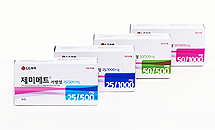
- LG Chem expands its Zemimet SR Tab lineup
- by Lee, Tak-Sun Mar 28, 2024 05:52am
- A new dosage form of LG Chem's diabetes combination drug ‘Zemimet SR Tab (gemigliptin /metformin) will be added to the reimbursement list next month. This is expected to increase prescription options in the field and allow fully personalized prescriptions for the patients. According to industry sources on the 27th, Zemimet SR Tab 25/750 mg will be added to the reimbursement list from April 1. Zemimet SR Tab 25/750 mg is a combination of 25 mg of gemigliptin and 750 mg of metformin. The addition of the 25/750mg dose will bring the total lineup of Zemimet SR Tab to five. This is the most diverse array of options provided among all DPP-4 inhibitor class products. Currently, Zemimet SR 25/500mg, 50/1000mg, 50/500mg, and 25/1000mg are listed in Korea’s reimbursement list. Zemimet SR Tab 25/750 mg will be the first option that provides 750 mg of sustained-release metformin among the combinations. The new product will allow patients to be prescribed various combinations of metformin in different doses depending on their symptoms. For example, patients will be able to receive fully personalized prescriptions that contain low to high-dose metformin- 500, 1000, 1250, 1500, 1750, and 2000 mg – suited to each patient’s specific condition. The product has been designated as an incrementally modified drug combination by the Ministry of Food and Drug Safety in recognition of its improved efficacy and utility. As a result, its drug price has also been incentivized. Since it is an incrementally modified drug combination and LG Chem is an innovative pharmaceutical company, a 68% pricing premium is added to the amount calculated using a set standard (calculating the upper limit of each single drug (or combination drug) by applying a content formula and then summing them). Accordingly, the company received a ceiling price of KRW 428. Last year, LG Chem’s Zemimet SR Tab lineup generated KRW 100.3 billion in outpatient prescriptions (UBIST), surpassing the KRW 100 billion mark for 2 consecutive years. LG Chem and Daewoong Pharmaceutical's joint sales of the drug are analyzed to be creating synergistic effects. LG Chem said, "The new dosage form has significance in that it provides a more targeted, step-by-step drug escalation option for diabetes patients. We will continue to make R&D investments in our Zemiglo product lineup to provide effective diabetes treatment options."
- Company
- Dt&CRO signs MOU with U.S. company Radyus Research
- by Nho, Byung Chul Mar 27, 2024 06:04am
- On the 25th, Dt&CRO announced that it had signed a memorandum of understanding (MOU) with Radyus Research, a U.S. clinical consulting organization. The MOU is expected to add momentum to the company’s full-cycle consulting service that is provided to domestic pharma and biotech companies that apply for Investigational New Drug (IND) or file a New Drug Application (NDA) to the U.S. Food and Drug Administration (FDA) or European Medicines Agency (EMA). As a GLP-certified organization, Dt&CRO is a full-service CRO capable of conducting non-clinical trials, Phase I-III clinical trials, post-marketing surveillance (PMS), observational studies (OS), as well as pharmacovigilance (PV) studies in various fields including pharmaceuticals, medical devices, and health function foods. Its another advantage is that the company works closely with its central laboratory HuScience, and SafeSoft, which develops and provides e-clinical solutions. Radyus Research is a consulting service provider for INDs. The company has experts with experience in various fields including pharmaceutical, biotech, academia, hospitals, and CROs. Building on its experience of receiving more than 100 IND approvals and 20 NDA approvals since its inception, the company has partners around the world, including those in the U.S., Europe, and Asia, and has signed an agreement with Dt&CRO to make the first step into Korea’s industry. Under the agreement, the two companies will provide a 3-step customized service for efficient application and approval of non-clinical and clinical trials by the FDA and EMA. To this end, the 2 companies will combine Dt&CRO’s Good Laboratory Practice (GLP) and Radyus Research’s US and European certification consulting expertise. In particular, Dt&CRO will be responsible for conducting testing and establishing consulting plans in accordance with the GLP standards. The two companies will meet at CPHI North America in May to discuss ongoing business, and then hold a joint seminar in Korea in July. Chae-Kyu Park, CEO of Dt&CRO, said, "In order for domestic companies to obtain IND/NDA approval from the FDA/EMA, they had to inconveniently receive consulting for non-clinical trials and IND/NDA approvals separately at different companies. For this reason, the companies had to endure a lot of time and money in each stage of company selection, testing, and consulting. Through the MOU, we can now provide quick and accurate services to help companies enter the overseas pharmaceutical market at a reasonable cost.”

- Policy
- Ruling party will focus on fostering Korea's pharma industry
- by Lee, Jeong-Hwan Mar 27, 2024 06:04am
- The ruling party has adopted a number of policies proposed by domestic pharmaceutical companies and the Korea Pharmaceutical and Bio-Pharma Manufacturers Association as pledges for the 22nd general election, foretelling its plan to concentrate on fostering the domestic pharmaceutical industry. The ruling party's main pledge, which is to create an environment for Korea to make the leap and become a central player in the global pharmaceutical market by expanding government investment in pharmaceutical and bio R&D, supporting the development of blockbuster new drugs, expanding pharmaceutical exports, and expanding incentives for finished pharmaceuticals that use domestic ingredients, largely coincides with the policy proposals that were made by KPBMA. The ruling party’s pledge also met the needs of the pharma-bio sector by adding a policy that strengthens incentives such as expedited review and drug price premiums for developing or manufacturing essential drugs for children or the elderly while establishing a supply management committee to respond to drug supply and demand instability, expanding the items and quantity of drugs in the national stockpile, and supporting manufacturing facilities for essential medicines. This observation was made while comparing between the People Power Party’s 22nd general election policy pledges and the KRPBMA’s policy proposals on the 25th. Specifically, the association requested the government to strengthen the R&D environment to become a global center, expand government R&D investment, support blockbuster drug development, and continue to expand the megafund for blockbuster drugs, and the ruling party responded to the request with such pledges. The plan also included creating a pharma-bio digital innovation ecosystem that incorporates advanced technologies such as AI and big data, expanding drug exports and supporting the development of global big pharmaceutical companies, improving the stability of essential drug supply, and establishing nation-wide measures to realize self-sufficiency of drug substances. The People Power Party will continue to promote and expand a Korean ARPA-H to create blockbuster new drugs and expand tax credits for investments in biotech companies by pharma and bio companies. Also, to improve the success rate of new drug development and commercialization, the government will strengthen support for late phase II-III trials and global expansion and improve the drug price compensation system for domestically developed new drugs. To expand drug exports and support the development of global big pharmaceutical companies, the ruling party also pledged to provide clinical and licensing consulting, distribution network construction and marketing, expand the pool of overseas pharmaceutical experts, and support the establishment of customized export strategies, and establishment of a global medical supply base (contract manufacturing organizations). To stabilize the supply of essential medicines, the government has announced amendments to the Pharmaceutical Affairs Act, including establishing a system to detect drug supply instability and establishing a supply management committee to respond to drug supply instabilities. In addition, the party decided to expand the items and quantity of drugs in the national stockpile, secure adequate inventory for pharmaceutical companies, realize services for the automation of essential drug production and manufacturing facilities, and expand government stockpiles. The drug shortage prevention system and the national essential medicine system will also be linked to support cost preservation. In particular, incentives for the development and manufacturing of essential drugs, especially for pediatric and elderly patients, will be strengthened. Development of essential medicines for pediatric and elderly patients will receive expedited review and separate drug pricing premiums. The government will also support the companies’ development of self-sufficient technologies for essential vaccine ingredients and drugs. Furthermore, a compensation system to reward the innovative value of new drugs will be established. The government will establish an incentive system for the development of new drugs for domestic and foreign pharmaceutical companies, and fully reflect the value of domestic and foreign innovative new drugs in their drug prices. The ruling party's pharma and biotech policy pledges will be implemented in the legislation and government administration depending on the outcome of the 22nd general election.
- Policy
- 'Trajenta-duo' generics as SR tablets…55 approved items
- by Lee, Hye-Kyung Mar 27, 2024 06:04am
- As the patent expiration of 'Trajenta-duo (linagliptin and metformin),' a DPP-4 inhibitor combination therapy for the treatment of diabetes, approaches, approvals of sustained-release formulations are increasing. According to the Ministry of Food and Drug Safety (MFDS), as of March 26th, 55 tablets containing the active ingredients linagliptin and metformin from 27 companies received approvals last year, starting with Daewon Pharmaceutical’s 'Tralitincombi Tab' Out of 55 items approved, 53 items received approvals this year, including 43 items approved in March. Trajenta-duo’s subsequent entry drugs in sustained-release formulation that received approvals in March. Boehringer Ingelheim Korea’s Trajenta-duo, the original drug, received approval on November 15, 2012. Trajenta-duo holds a patent for ‘xanthine and its manufacturing method’ until June 2024. As the patent expiration approaches, domestic pharmaceutical companies have received approvals for generics starting in 2018. The first Trajenta-duo generic was Hanmi Pharm’s 'Linaglo Duo Tab,' a film-coated tablet for rapid action, which is similar to the original. Domestic pharmaceutical companies have received approvals for film-coated tablets of Trajenta-duo after Hanmi Pharm. Until Daewon Pharmaceutical released a sustained-release tablet, 138 products received generic approvals in the form of film-coated tablets. After 'Tralitincombi Tab,' a sustained-release formulation, received approval on October 13, 2023, domestic pharmaceutical companies are releasing Trajenta-duo subsequent entry drugs as sustained-release formulation. Sustained-release tablets regulate the release or discharge mechanism of drugs, allowing them to be released into the body for an extended period after ingestion. This enables the drug to be slowly absorbed in the body for extended efficacy. Therefore, subsequent entry drugs of Trajenta-duo as sustained-release formulations have the advantage of once-daily evening dosing. Boehringer Ingelheim Korea is expanding its product line-up with combination therapies, such as Trajenta-duo and 'Esgliteo (Empagliflozin·linagliptin),' after Trajenta-duo. According to the pharmaceutical market research agency UBIST, Trajenta's outpatient prescription sales amounted to KRW 64.2 billion, and Trajenta-duo's amounted to KRW 68.3 billion, for a total of KRW 130 billion.
