
- LOGIN
- MemberShip
- 2026-06-24 04:51:51
- Company
- PharmaEssentia reattempts reimb of BESREMi in Korea
- by Eo, Yun-Ho Apr 02, 2024 05:53am
- PharmaEssentia is again attempting to list BESREMi, its new drug for polycythemia vera (PV), for reimbursement in Korea. Dailypharm’s coverage found that the Taiwanese pharmaceutical company PharmaEssentia has recently resubmitted an application for the reimbursement of BESREMi (Ropeginterferon alfa-2b) in Korea. The company had submitted an application for the reimbursement of its drug in March last year as a treatment for patients with polycythemia vera resistant or intolerant to hydroxyurea but failed to clear the hurdle of Korea’s Health Insurance Review and Assessment Service’s Cancer Disease Review Committee in July of the same year. At the time, the CDDC determined that there was insufficient evidence to determine the clinical usefulness of BESREMi as a second-line treatment. This time, PharmaEssentia included additional domestic clinical data on BESREMi to supplement the drug’s evidence of efficacy as a second-line treatment. As 50,000 people signed the National Assembly’s public petition requesting the ‘reimbursement of BESREMi’ in February, whether the drug will be reimbursed this time is gaining more attention. BESREMi is a next-generation interferon treatment that selectively removes JAK2 mutations that cause polycythemia vera. It offers an improved purity and tolerability over existing interferons so that it can be administered every 2 weeks for the first 1.5 years and every 4 weeks thereafter. Currently, BESREMi is recommended for the treatment of PV in the National Comprehensive Cancer Network (NCCN) and European Leukemia Network (ELN) guidelines, regardless of prior treatment history. Polycythemia vera is a rare blood disorder where a somatic cell mutation in the bone marrow abnormally activates bone marrow function and produces excessive red blood cells. According to HIRA data, around 5,000 patients are affected with PV, and hydroxyurea is used for the majority of patients. However, the current reimbursed drugs cannot cure PV, and no new alternatives exist for patients who fail treatment with hydroxyurea, leaving the patients with a high unmet need.
- Policy
- Price reduction dilemma for 'Forxiga' set for withdrawal
- by Lee, Tak-Sun Apr 02, 2024 05:53am
- 'Forxiga tab (dapagliflozin, AstraZeneca),' a diabetes treatment that was announced to be withdrawn from the Korean market in the second quarter of this year, has failed to reach an agreement in the price-volume agreement (PVA). Initial negotiations fell apart, so the company is likely to attempt renegotiation. The company hopes to maintain a high drug price before withdrawing Forxiga from the Korean market because other countries reference drug pricing in Korea. According to the industry on the 1st, AstraZeneca Korea negotiated with the National Health Insurance Service (NHIS) for Forxiga’s price-volume agreement (PVA), but they failed to reach an agreement. As a result, AstraZeneca has requested renegotiation. When a pharmaceutical company requests renegotiation for a drug that has not met prior negotiations, it can seek approval for reimbursement by the Drug Reimbursement Evaluation Committee (DREC). Based on the DREC decision, the drug is excluded from subjecting to the reimbursement coverage, or the Ministry of Health and Welfare (MOHW) can mandate a renegotiation once. Forxiga is expected to be considered by the DREC review scheduled for the 4th. Depending on the DREC decision, it may either be excluded from reimbursement or start renegotiations with the NHIS. It seems highly probable that there will be a renegotiation. Forxiga’s upper limit price remained the same before generics entered the market. With generics entering the market last May, the price was expected to reduce by 30%. Due to the court’s suspension of execution, the Forxiga price is maintained at 734 won per tablet. The drug pricing reduction execution is suspended until June 30. It appears that the company may have objected to reducing drug prices through the PVA program. “As other countries reference drug prices in South Korea, it may be necessary to maintain high drug prices in South Korea to continue sales in other countries despite withdrawing from the Korean market,” the industry official explained. As Forxiga would be excluded from reimbursement coverage if an agreement for the upper limit price is not reached during the PVA renegotiation, it is to be watched what decision AstraZeneca makes. Depending on the outcome, Forxiga may be withdrawn in the first half of the year. Despite generics entering the market following the patent expiry of Forxiga last year, Forxiga has recorded an outpatient prescription amount of KRW 55.5 billion, according to UBIST. About 60 generic companies have introduced blockbuster drugs following Forxiga’s patent expiration last April. Affected by generic market entries, AstraZeneca Korea has decided to withdraw from the Korean market in the second half of the year.
- Policy
- K-drugs’ approval in the Philippines to be expedited
- by Lee, Tak-Sun Apr 01, 2024 05:29am
- The Philippine Food and Drug Administration (PH-FDA) has newly listed Korea’s Ministry of Food and Drug Safety as a Reference Drug Regulatory Agency, which is expected to shorten the approval process of domestic drugs that are exported to the Philippines. The MFDS announced that it has been listed as a Reference Drug Regulatory Agency by the PH-FDA on the 30th. The PH-FDA operates a Facilitated Review Pathway (FRP) system, which is a fast-track review pathway that allows rapid review and approval of new drugs and generic drugs already approved by regulator authorities listed as Reference Drug Regulatory Agencies. With the listing, the statutory review period of Korea’s drugs in the Philippines has been significantly reduced from 120-180 days to 30-45 days. The PH-FDA announced the amendment that includes the MFDS as a Reference Drug Regulatory Agency in February, and MFDS-approved drugs will be eligible for fast-track review as of March 30, when the amended regulation takes effect. An MFDS official said, "We expect the listing to further boost the export of Korea’s pharmaceuticals to the Philippines. The MFDS will continue to actively support the entry of our excellent food and drug products into the global market through regulatory diplomacy, including multifaceted cooperation with global regulatory authorities.
- Company
- Oral option introduced for psoriasis in Korea
- by Eo, Yun-Ho Apr 01, 2024 05:29am
- Oral treatment options are trending in the field of psoriasis. Therefore, It remains to be seen whether the market, which is currently dominated by biologic drugs, will shift in the future. The frontrunner in the field is BMS Pharmaceutical Korea's TYK2 inhibitor Sotyktu (deucravacitinib). The drug, which is a treatment for plaque psoriasis with a novel mechanism of action, has been approved in Korea and will be covered by reimbursement from next month (April). Sotyktu is a first-in-class, selective TYK2 inhibitor. TYK2 is a critical intracellular transduction link between interleukin (IL)-23 and the production of IL-17, which is known to play a central role in the pathogenesis of psoriasis. Sotyktu has gained attention as the first oral treatment option in this indication in more than a decade. The drug's efficacy was demonstrated through the Phase 3 POETYK PSO-1 and POETYK PSO-2 clinical trials, which evaluated the safety and efficacy of Sotyktu compared to placebo and twice-daily Otezla(apremilast) in 1,684 patients aged 18 years and older with moderate-to-severe plaque psoriasis. In the POETYK PSO-1 trial, 58.4% of patients on Sotyktu achieved a PASI 75 response at week 16, which was significantly higher compared with the 35.1% of patients on Otelza and 12.7% of patients on placebo. Also, the proportion of patients achieving sPGA 0/1 was significantly higher, at 53.6% compared with 32.1% in patients on Otelza and 7.2% in patients on placebo. Sotyktu also achieved a significantly higher PASI 75 response at week 16 in the POETYK PSO-2 trial as well, with 53.0% of patients on Sotyktu achieving a PASI 75 response at week 16, compared with the 39.8% of patients on Otelza and 9.4% of patients on placebo. Another drug that has shown promise is Johnson&Johnson's candidate drug ‘JNJ-2113.’ The results of the Phase IIb trial on the oral plaque psoriasis treatment JNJ-2113 were first presented recently at the American Academy of Dermatology (AAD) Annual Meeting. Study results showed that patients treated with JNJ-2113 maintained improvement in skin lesions caused by plaque psoriasis for nearly a year. JNJ-2113 is an oral interleukin (IL)-23 receptor antagonist and has a different mechanism of action from Sotyktu. Sotyktu acts on TYK2, which acts as a key link in IL-23 and IL-17 signaling, a major pathway that causes psoriasis, JNJ-2113 directly inhibits the IL-23 receptor peptide. The study presented at the AAD meeting builds on the 16-week treatment results published last July and expands the analysis to include 5 different dosing regimens of JNJ-2113. The results confirmed that the JNJ-2113 treatment group met both the primary and key secondary endpoints. Yong-beom Choe, President of the Korean Society of Psoriasis, said, "When considering how no options other than injectable biologics were available until now, the oral formulations may address the unmet needs in the treatment of psoriasis based on its convenience in dosing.”
- Opinion
- [Reporter’s View] Results needed for ‘Ilaris’ on hold
- by Eo, Yun-Ho Apr 01, 2024 05:29am
- It made its third attempt, but Ilaris faced another challenge. ‘Ilaris,’ a drug for about ten patients in South Korea, has not cleared the Drug Reimbursement Evaluation Committee (DREC) of the Health Insurance Review and Assessment Service (HIRA) and is on hold. Novartis Korea’s Ilaris (canakinumab), a drug used to treat periodic fever syndromes (PFS), passed the review under condition by the DREC in February, causing anticipation. However, the ‘appropriateness of reimbursement’ decision was postponed after Novartis did not accommodate the additional documents requested by the government. Novartis requested that the government reconsider the requirements for submitting documentation. The HIRA replied that it would consider the request and re-introduce Ilaris for a review to the DREC between April and May. Typically, the DREC suggests conditions such as ‘accepting below the evaluation price.’ It is uncommon to have to submit additional documentation for clearing the DREC. Considering the circumstances, the company may not be able to accept all the terms required by the government. It remains to be seen whether Novartis will accept the requested documentation, whether HIRA will approve only the documents deemed doable by Novartis and not the whole and accept the reevaluation application. We hope for a speedy reimbursement process for Ilaris. Ilaris was approved in South Korea in 2015 but failed the second attempt at securing reimbursement. The patients have been awaiting approval for more than eight years. The drug targets only a few patients and has complicated indications. Only a few patients meet the Ilaris’ number of indications. Some Ilaris’ indications are missing disease codes and were recently registered. Thus, patients’ unmet needs are unimaginable. Currently, Ilaris is not covered by reimbursement, which means patients have to resort to alternative treatments with limited options. For treating CAPS, patients use 'Kineret' available through the Korea Orphan & Essential Drug Center (KODEC). The use of Kineret has limitations due to unclear communication methods and supply issues because it is imported through the center and has not been officially approved by the Ministry of Food and Drug Safety (MFDS). Ilaris's priority is DREC's review instead of an uncertain listing schedule. Currently, blaming the government or company is not necessary.
- Policy
- Prior approval not required for reimb of Strensiq in KOR
- by Lee, Tak-Sun Apr 01, 2024 05:29am
- Strensiq Inj (asfotase alfa, AstraZeneca), which was subject to prior review by the Health Insurance Review and Assessment Service since it was listed for reimbursement in June 2020, will be converted and be subject to post-review from next month. The drug is a long-term enzyme replacement therapy used to treat bone symptoms in patients with perinatal- and infantile-onset hypophosphatasia and was a drug that previously required prior review from HIRA before administration for coverage. However, starting this month, its reimbursed use will no longer require prior review, expanding access to treatment. HIRA has announced the revisions to the “Detailed Matters on the Procedures for Prior Review, etc” that contained the changes above. The revised standards will take effect as of April 1. According to the revisions, Strensiq Inj will be removed from the list of drugs that require prior review after 4 years upon revision of the reimbursement criteria. Until now, the drug was only approved reimbursement for cases that were pre-applied for and approved – for continued treatment, applications had to be submitted 3 months, 6 months after the start of treatment, then every 6 months thereafter. However, HIRA decided to improve the prior approval system at the end of last year, and HIRA’s Strensiq Inj Subcommittee decided to remove the prior review requirement for Strensiq earlier this year, in accordance with expert opinions. The prior authorization rate for Strensiq Inj has been high until now. Last year, Crysvita, a pediatric hypophosphatemia treatment, was also added to the prior review list. Meanwhile, Samsung Bioepis' Soliris biosimilar ‘Epysqli Inj’ was added to the reimbursement list, adding the Soliris biosimilar Epysqli to the prior authorization list. The indications that require prior authorization are paroxysmal nocturnal hemoglobinuria (PNH) and atypical hemolytic uremic syndrome (aHUS). The new indication Soliris acquired indication for – neuromyelitis optica spectrum disorder (NMOSD) – will not require prior authorization for reimbursement.
- Policy
- The NHI Trade Union says, 'NHIS should join the DREC'...
- by Lee, Tak-Sun Mar 29, 2024 05:53am
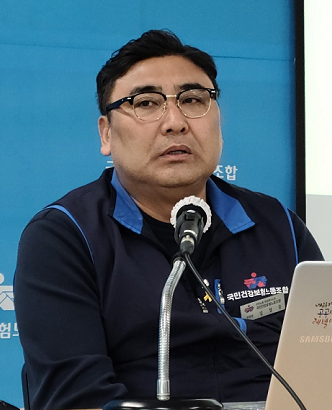
- Kim Cheoljung, the chairman of the National Health Insurance Trade Union. The National Health Insurance Trade Union has criticized the government’s ‘The Second Comprehensive Plan of National Health Insurance’ regarding measures to strengthen patients’ access to new drugs. The union argued that the government formulated the policy referencing the corporate civil complaint. And added, it would be more effective to include the National Health Insurance Service (NHIS) as part of the Drug Reimbursement Evaluation Committee (DREC). During a press conference at the NHIS headquarters on the 26th, Kim Cheoljung, the chairman of the National Health Insurance Trade Union, stated this. Kim maintained a critical standpoint when asked about the union’s stance on the details of the second comprehensive plan of National Health Insurance, which includes strengthening patients’ access to new drugs, reducing listing duration, and expediting the market entry of innovative medical instruments. “The union regards ‘expediting the market entry of innovative medical instruments’ and ‘expanding the scope of the waiver system for new medical technology’ as merely corporate civil complaints and not the interests of the health insurance,” Kim explained. According to the union, the government is pushing measures such as shortening the time it takes to list new drugs for health insurance from 330 days to 150 days via parallel processing of ‘approval-evaluation-negotiation,’ which is the process for drug reimbursement. Additional measures include a comprehensive review and evaluation system to expedite the market entry of innovative medical instruments and an expansion of the waiver system for new medical technology. “Terms like new drug accessibility, innovation, and new technology may sound nice, but the government must base its reimbursement decision on clinical effectiveness and cost-effectiveness, and not on implementing what corporates wish for their quick benefit,” Kim said. The alternative would be to include the NHIS in the DREC of the Health Insurance Review and Assessment Service (HIRA). “Recently, new high-priced drugs were primarily considered for health insurance reimbursement. However, allowing reimbursement of those drugs that have not been evaluated for safety and cost-effectiveness may lead to a waste of finances, along with putting citizens as subjects of clinical experiment,” Kim said. “The government has suggested processing reimbursement evaluation and drug pricing negotiations in parallel. But, our opinion is that including the NHIS in the HIRA's DREC can shorten the duration and reflect on the NHIS’ stance regarding the cost-effectiveness of finances.” The union has strongly criticized the Yoon Suk Yeol government’s retrogressive policy. The government did not release the National Health Insurance's annual insurance coverage cost to the public in 2022. The government is limiting itself as an enforcement agency. Rather than focusing on patient co-payment policy, such as strengthening cost coverage per income level, to aid citizens who cannot receive medical treatments because of the patient co-payment, The government is emphasizing the need for businesses to assist with catastrophic medical expenses, which can be perceived as a charity-like approach by the government. “As an insurer, the government must enforce a policy to strengthen cost coverage or a separate business focusing on public function,” Kim said. “Policies aimed at expanding health insurance big data sharing and legalizing non-face-to-face treatment can be characterized as privatization. In response to the policy of expanding health insurance big data sharing, the union will collaborate with civil society for an action. The union, along with the civil society, will boycott the NHIS’ meeting scheduled for the April 2,” Kim stressed. The union said it will pursue ‘non-reimbursed treatments and reimbursed treatments should not be administered during a single visit’ to prevent national insurance loss. "Every year, the burden of health insurance costs, personal insurance costs, and patient co-payments directly impact the citizens," Kim added. "To address common practices in the medical field, such as recommending non-reimbursed treatments to patients seeking reimbursed treatment or providing unnecessary reimbursed treatments and billing them, as well as treating non-reimbursed instead of reimbursed practices, The union believes that 'mixed medical practices should be prohibited' now to eliminate these issues," Kim explained. Regarding the recent conflicts between the medical community and the government over expanding medical school quotas, Kim expressed deep regret and emphasized the importance of having concrete plans for utilizing medical personnel stationed in regional areas. "I feel really bad about the recent conflict regarding the 'expansion of the medical school enrollment quota,' Kim added. "The biggest problem with this situation is that the government's policy of 'expanding the medical school enrollment quota' and the' doctors' strike' claim focus solely on 'money,' including medical insurance fees. It is concerning that the government is not considering the well-being of citizens," Kim said. “Of course, expanding the medical school enrollment quota is essential. However, concrete plans should be made for the 'station and utilization of medical personnel' who will be responsible for the lives of citizens across the nation,” Kim emphasized. The National Health Insurance Trade Union is affiliated with the Korean Public Service and Transport Workers’ Union (KPTU) under the Korean Confederation of Trade Unions (KCTU). The union has a total of 13,842 members, with a membership rate of approximately 93%. It consists of 13 headquarters, 267 branches, and 345 representatives. The union expresses its opinion regarding the national health insurance policy as an insurer. The union emphasizes the importance of expanding health insurance coverage and reducing citizens’ medical expenses.
- Policy
- "Seek social consensus, shift away from 2,000 quota"
- by Lee, Jeong-Hwan Mar 29, 2024 05:53am
- Lee Jae-myung, the leader of the Democratic Party of Korea (chairman of the standing joint election committee). "How can we persuade and negotiate with the medical community after President Yoon Suk Yeol forced university assignments by pushing through with an excessive fixation on increasing the quota to 2,000? It's time to shift away from this fixation and instead establish a committee proposed by the Democratic Party to facilitate social discussion and reach agreements." On the 27th, Lee Jae-myung, the leader of the Democratic Party of Korea (chairman of the standing joint election committee), proposed operating a consultative body to seek social consensus by questioning President Yoon Suk Yeol and the ruling party about increasing the medical school quota by 2,000 students. Lee pointed out that the fixation of the president and the ruling party with increasing the medical school quota to 2,000 has led to a medical crisis, resulting in hospital doctors overworking and actual harm to patients. During a field press conference at Changwon-gu in Cheongju, Lee said, "There was a similar rumor a month or two ago." He added, "During the Moon Jae-in administration, the Democratic Party government planned to increase the number of doctors by 400 annually for ten years. It was not completely satisfactory, but it was believed to be able to resolve a significant portion of the problem. But, it was postponed due to COVID-19." "However, the Yoon Suk Yeol government's decision to increase the medical school admission quota by five times, to a total of 2000, appears to be an attempt to provoke and forcefully suppress the opposition from the medical community. There was speculation that someone might emerge suddenly and try to create an illusion of resolution, similar to the June 29 Declaration," Lee stated. "During the Democratic Party's highest committee meeting, I raised concerns multiple times and pointed out that we shouldn't approach this strategically," Lee said. Adding, "However, it feels like the situation is becoming similar to gossip. Such critical policy matters should be handled by ministers, vice ministers, prime ministers, and the president. However, the chairman of the ruling party's central committee suddenly meets with former President Park Geun-hye to discuss these matters. This approach raises questions about whether this is part of normal governance," Lee questioned. Regarding the extended conflict between the medical community and the government, Lee stated, "President Yoon's fixation on 2,000 medical school quota and university assignments has made it difficult to persuade the medical community and reach agreements." He highlighted the "fixation on the 2,000 increase" as the cause and said, "Even ruling party candidates agreed." "We must focus on improving public health, which is essential. We need to shift our focus from the fixed number of 2,000 additional admission quotas and instead work on a comprehensive expansion plan that includes establishing public medical schools and regional doctor programs. These programs are essential for maintaining medical services in public and regional areas," Lee said. "As proposed by the Democratic Party, we request the establishment and operation of a consultative body to resolve the issue swiftly," Lee suggested.
- Company
- AZ’s Sidapvia can be prescribed in general hospitals in KOR
- by Eo, Yun-Ho Mar 29, 2024 05:53am
- The diabetes combination drug Sidapvia can now be prescribed in general hospitals in Korea. According to industry sources, AstraZeneca Korea's Sidapvia (dapagliflozin-sitagliptin), which is a combination of its SGLT-2 inhibitor ‘Forxiga’ and DPP-4 inhibitor ‘Januvia’, has passed the drug committees(DCs) of around 30 medical institutions in Korea, including tertiary hospitals such as Samsung Medical Center, Seoul National University Hospital, and Sinchon Severance Hospital. As the company signed a copromotion agreement with HK Inno.N this year, what kind of synergy will be created through the partnership remains to be seen. According to the Korean Diabetes Association's guidelines, SGLT-2 inhibitors and DPP-4 inhibitors work through different mechanisms of action and have a greater glycated hemoglobin reduction effect when combined than when administered alone. Also, previous studies in patients with type 2 diabetes have shown that the combination of dapagliflozin and sitagliptin has a favorable efficacy and safety profile compared with monotherapy. In a study published this year in Springer Nature, the dapagliflozin-sitagliptin-metformin triple combination drug showed a 30% greater glycated hemoglobin reduction effect compared to the dapagliflozin-metformin combination and an approximately 35% greater effect than the sitagliptin-metformin combination. At week 16, the rate of patients reaching the target glucose range from baseline was 38.5% for the triple combination therapy group that used dapagliflozin, higher than the dapagliflozin-metformin combination group and the sitagliptin-metformin combination group. The mean weight loss from baseline at week 16 was significantly greater in the triple combination group with dapagliflozin than in the sitagliptin-metformin combination. Kyung-Wan Min, professor of endocrinology at Nowon Eulji Medical Center, said, "Although many new combination drugs are being introduced to the market for type 2 diabetes, there remains an unmet medical need for patients with type 2 diabetes. As Sidapvia has shown verified clinical outcomes such as significant glycemic reduction and additional weight loss, we expect patients will be able to manage their diabetes and complications better with its more effective glycemic control effect. Meanwhile, HK Inn.N signed a copromotion agreement with AstraZeneca for Sidapvia in October last year. In January, the co-promotion agreement was extended to include Xigduo (dapagliflozin-metformin). At the same time, HK Inno.N also agreed to take over the domestic supply and distribution of the single-agent drug Forxiga. AstraZeneca Korea decided to withdraw Forxiga from the domestic market late last year. HK Inno.N will be responsible for the domestic supply of Forxiga until the second half of this year. Both companies have expressed their commitment to stabilizing the supply of Forxiga so that patients taking Forxiga for type 2 diabetes, chronic heart failure, and chronic kidney disease will not experience any inconvenience.
- Company
- Reimb of renal anemia drug in progress upon FDA approval
- by Nho, Byung Chul Mar 29, 2024 05:53am
- The discussions on the insurance reimbursement of tablet-type renal anemia drugs are expected to gain momentum. As Korea’s health authorities were eyeing whether to start pricing negotiations for Mitsubishi Tanabe Pharma’s Vadanem based on the FDA’s approval decision in the U.S. and pricing decision in Europe, the FDA approval is expected to accelerate the drug’s negotiation process in Korea. According to industry sources, Vadanem was approved by the FDA on the 27th and is expected to receive pricing in Europe as early as April. Vadanem already received approval from the Ministry of Food and Drug Safety last year. The same year, the company applied for US approval of the drug for the indication ‘as a treatment for adult patients with chronic kidney disease who are receiving dialysis (peritoneal dialysis, hemodialysis), which the FDA has recently granted approval for. Currently, oral renal anemia drugs that are about to be commercialized in Korea include Vadanem (vadadustat) and JW Pharmaceutical's Enaroy (enarodustat). If the companies find a reasonably weighed average price compared with their alternatives at the drug pricing negotiation stage with the National Health Insurance Service, they may become the first reimbursed oral renal anemia drug option available in Korea. However, it is expected that insurance benefits for non-dialysis patients other than hemolytic anemia, which is the efficacy of the drug, will be limited. What gains attention is whether AstraZeneca's Evrenzo (roxadustat), which was the first drug to be approved in Korea in 2021, will be withdrawn from the market. The failure of Evrenzo’s landing in Korea, which was the first oral renal anemia drug that marked the start of the approvals, is due to the company's decision to reject the domestic pharmacoeconomic evaluation results and the weighted average price of its alternatives based on its headquarters' high pricing policy for orphan drugs. In other words, the company has no plan to launch the drug at a low price in the barren market environment. The reason why innovative new drugs related to renal diseases require expedited listing is to expand patient treatment options and save health insurance finances. According to the National Health Insurance Service data, the number of patients with chronic kidney disease in Korea increased by 36.9% from 206,061 in 2017 to 282,169 in 2021 and surged 82.8% among those in their 80s. The number of hemodialysis patients is also growing exponentially, and healthcare expenditures spent on the 100,000 patients currently approaching KRW 3 trillion. Until now, the existing market for renal anemia drugs has been mainly dominated by erythropoiesis-stimulating agents (ESAs) and has formed a KRW 100 billion market in Korea. The existing injectables mainly consist of 3 substances: epoetin alfa (recombinant human erythropoietin), darbepoetin alfa, and methoxy polyethylene glycol-epoetin beta. The development of oral tablet formulations by companies in Korea and abroad is raising expectations on the introduction of new treatment options in the renal anemia treatment market that is currently dominated by injectables. Enaroy and Vadanem are hypoxia-inducible factor-proly hydroxylase (HIF-PH) inhibitors that work by activating the erythropoietin (EPO), a hormone that promotes red blood cell production, and reducing hepcidin, a hormone that regulates iron metabolism, to improve hemoglobin levels. Both drugs are available in tablet (pill) form, which offers the advantage of improving dosing compared to traditional injections, as well as increasing the cost-effectiveness in patient care.
