
- LOGIN
- MemberShip
- 2026-06-20 14:31:21
- Company
- Bispecific Ab 'Epkinly' for DLBCL available at gen hospitals
- by Eo, Yun-Ho Sep 08, 2025 06:17am
- Product photo of Epkinly'Epkinly,' a new innovative drug that is a T-cell-engaging bispecific antibody, is now available for prescription at general hospitals. According to industry sources, AbbVie Korea's Epkinly (epcoritamab), the treatment of relapsed or refractory diffuse large B-cell lymphoma (DLBCL), passed the drug committees (DC) of tertiary general hospitals, including Samsung Medical Center, Seoul National University Hospital, Asan Medical Center, and Seoul St. Mary's Hospital, as well as medical institutes, including Seoul National University Bundang Hospital, Yeouido St. Mary's Hospital, Wonju Severance Christian Hospital, Jeonbuk National University Hospital, Chungnam National University Hospital, and Chonnam National University Hwasun Hospital. As Epkinly is under review for insurance reimbursement and has passed the Health Insurance Review & Assessment Service (HIRA)'s Cancer Disease Review Committee, it is expected to be available for prescription once it is included in the listing. Epkinly, approved in Korea last June, was also designated as an orphan drug by the Ministry of Food and Drug Safety. Epkinly is a type of immunoglobulin 1-based bispecific antibody that simultaneously binds to CD3 on T-cells and CD20 on B-cells, with a mechanism that induces T-cell-mediated killing of lymphoma B-cells. The drug recently received approval from the U.S. FDA through an accelerated approval program, and the Phase 1/2 EPCORE NHL-1 study served as the basis for approval. The study enrolled 148 patients with CD20-positive DLBCL. Of these patients, 86% had unspecified DLBCL, 27% had DLBCL transformed from indolent lymphoma, and 14% had high-grade B-cell lymphoma. As a result, Epkinly showed an objective response rate of 61%, a complete response rate of 38%, and a median duration of response of 15.6 months in relapsed or refractory DLBCL patients who had received an average of three prior treatments. Professor Deok Hwan Yang of Chonnam National University Hwasun Hospital's Department of Hematology said, "Epkinly, a bispecific antibody treatment, showed a complete response rate similar to that of CAR-T therapies. Furthermore, it can be administered to patients immediately at a medical institution without a separate manufacturing period. As it targets a different antigen from CAR-T therapies, which target CD19, it also has the advantage of being usable in patients who have failed CAR-T therapy."
- Company
- Competitiveness of K-anticancer drugs reaffirmed
- by Son, Hyung Min Sep 08, 2025 06:17am
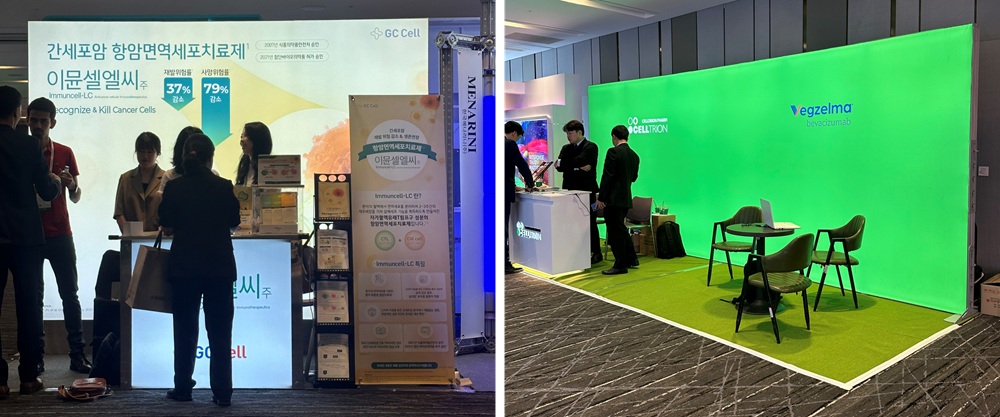
- Korean pharmaceutical companies gathered in one place to show off their anti-cancer pipelines, including both in-house developed and imported new drugs. At the Korean Society of Medical Oncology 2025 International Conference (KSMO 2025), which was held over three days from September 3 at Walkerhill Hotel in Seoul, major domestic pharmaceutical companies showcased their oncology pipelines, including both self-developed and in-licensed drugs. Companies such as Yuhan, Boryung, GC Cell, Jeil Pharmaceutical, and Celltrion highlighted their therapies, including Lazertinib, Zepzelca, Immuncell-LC, Lonsurf, and Vegzelma, covering a wide range of solid and hematologic cancers. Domestic companies focus on promoting self-developed drugs and biosimilars Yuhan spotlighted its non-small cell lung cancer (NSCLC) therapy, Lazertinib. Lazertinib was approved as Korea’s 31st novel homegrown drug approved in in January 2021. The technology of the drug, which was originally developed by Genosco (a subsidiary of Oscotec) was transferred to Yuhan in 2015. Yuhan later signed a USD 1.4 billion out-licensing deal with Janssen in November 2018. Janssen confirmed Lazertinib’s efficacy compared with Tagrisso monotherapy, the current standard of care. Through the MARIPOSA Phase III trial, In August 2023, the U.S. FDA approved Lazertinib as a combination therapy as a first-line treatment for EGFR-positive NSCLC. The combo regimen is expected to extend overall survival (OS) by more than a year versus existing therapies. With over half of the patient group still alive, the trial is expected to reveal further significant improvements as new data emerges. (from the left) GC Cell and Celltrion GC Cell promoted Immuncell-LC, an autologous cell therapy originally developed by InnoCell (the predecessor of GC Cell). The therapy uses mononuclear cells extracted from a cancer patient’s blood, cultured for over two weeks with anti-CD3 and IL-2 stimulation. The activated immune cells target and eliminate cancer cells in the body. Immuncell-LC functions by inducing activated T-lymphocytes and autologous cytokine-induced killer cells (CIK) to seek out and eliminate cancer cells within the body. In a nine-year extended follow-up study of a Phase III trial in hepatocellular carcinoma, Immuncell-LC showed recurrence-free survival (RFS) of 43.5 months, compared with 27.4 months for the control group, with cancer-specific survival (CSS) not yet reached in either group. Hanmi Pharmaceutical showcased Rolontis, a neutropenia drug that was approved in Korea in 2021 as the 33rd novel homegrown drug. Marketed as Rolvedon in the U.S., it generates over KRW 20 billion in quarterly revenue. Hanmi has been working to strengthen Rolontis’s competitiveness through a same-day administration trial. Unlike existing drugs such as Neulasta, which require administration 24 hours post-chemotherapy, Rolontis allows for same-day dosing, reducing hospital stays and improving convenience. Celltrion highlighted Vegzelma, a biosimilar to Roche’s Avastin (bevacizumab). Now launched across Korea, the U.S., and Europe, Vegzelma has become the top-selling bevacizumab biosimilar in Europe. (clockwise from the upper left) Jeil Pharmaceutica, Yuhan Corp, Boryung, and Hanmi PharmaceuticalIntense Competition in In-Licensed Oncology Drugs Boryung emphasized its portfolio of in-licensed drugs, including Gemzar and Alimta. Boryung acquired Korean rights to the cytotoxic anticancer drug for NSCLC and pancreatic cancer, Gemzar (originally by Eli Lilly), in October 2020, later adding the NSCLC drug Alimta’s rights in 2022 and transitioning from imports to in-house production. Boryung also pinned hopes on the SCLC drug Zepzelca (developed by Spanish company PharmaMar), for which it holds exclusive sales rights in Korea. A symposium on the Phase III IMforte study on its use in combination with the immunotherapy drug Tecentriq was also being held, focusing efforts on establishing Zepzelca as the standard of care. Zepzelca is a novel drug developed by the Spanish pharmaceutical company PharmaMar, and is already being marketed in North America by Jazz Pharmaceuticals. Boryung holds exlclusive right to its sales and distribution in Korea. Zepzelca inhibits DNA transcription in cancer cells and reduces tumor-associated macrophage (TAM) activity, thereby blocking cancer cell proliferation, immune evasion, and angiogenesis. Zepzelca is being tested in the IMforte Phase III trial as a first-line option for small-cell lung cancer in combination with the immunotherapy Tecentriq (atezolizumab). Early results show survival benefits compared with Tecentriq alone. Jeil Pharmaceutical presented Lonsurf, which the company licensed from Japan’s Taiho. Approved in the U.S. in 2015 and now in 75 countries, Lonsurf is indicated for metastatic colorectal cancer and, since 2021, for metastatic gastric cancer.
- Company
- Kerendia+Jardiance combo demonstrates early benefit
- by Hwang, byoung woo Sep 08, 2025 06:16am
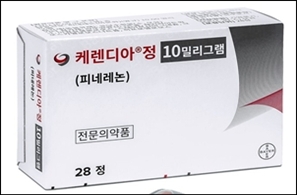
- Kerendia (finerenone), a treatment for chronic kidney disease, has strengthened its clinical presence by demonstrating efficacy in combination with the SGLT-2 inhibitor Jardiance (empagliflozin). Pic of Kerendia Kerendia is the first non-steroidal mineralocorticoid receptor antagonist (MRA), with a novel mechanism of action that directly suppresses inflammation and fibrosis in the kidney. In June, results from the CONFIDENCE study drew attention by confirming the benefit of early combination therapy with SGLT-2 inhibitors. The trial included 818 patients with type 2 diabetes and CKD (eGFR 30–90 mL/min/1.73m², urine albumin-to-creatinine ratio [UACR] ≥100–
- Policy
- Six strengths of obesity drug Mounjaro Quick Pen approved
- by Lee, Hye-Kyung Sep 08, 2025 06:16am
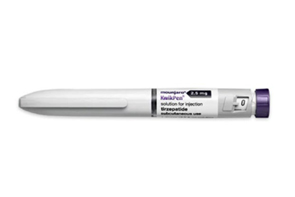
- Following its launch in Korea, Eli Lilly has expanded the product lineup of its obesity treatment Mounjaro (tirzepatide) by receiving approval for the Mounjaro QuickPen formulation. On September 5, the Ministry of Food and Drug Safety approved 6 QuickPen doses: 2.5 mg/0.6 ml, 5 mg/0.6 ml, 7.5 mg/0.6 ml, 10 mg/0.6 ml, 12.5 mg/0.6 ml, and 15 mg/0.6 ml. Mounjaro is a once-weekly injectable single molecule that selectively binds to and activates both the GIP and GLP-1 receptors. Treatment is initiated at 2.5 mg (step 1) and increased in increments after at least four weeks. Unlike Saxenda and Wegovy, which are only available as single-pen formulations, Mounjaro is offered in multiple formulations — beginning with pre-filled syringes, now QuickPens, and vials in the pipeline. In the case of the pre-filled formulation, one pen contains one dose, requiring four pens per month. In the case of the Quickpen that was approved this time, one pen now contains four doses, covering an entire month, similar to Saxenda and Wegovy. The vial formulation, which is pending approval, is administered via syringe and needle. While this is less convenient, it is expected to be more affordable. Meanwhile, Mounjaro has faced nationwide shortages within just three weeks of launch, particularly for the starter 2.5 mg dose. Lilly Korea is also pursuing reimbursement for its diabetes indication. In Korea, Mounjaro is approved for glood glucose control in adults with type 2 diabetes (monotherapy or combination therapy); chronic weight management in adults with obesity or overweight with at least one weight-related comorbidity; and adjunctive therapy to diet and exercise for obesity with moderate-to-severe obstructive sleep apnea in adults.
- Opinion
- [Reporter's View] Approval-to-reimbursement takes only 6 mth
- by Lee, Hye-Kyung Sep 08, 2025 06:15am
- The Ministry of Food and Drug Safety (MFDS) has been operating the 'Global Innovative products on Fast Track (GIFT)' since 2022. GIFT is a 'Program Supporting the Expedited Review of Global Innovative Products' launched by the MFDS, aiming to quickly launch medicines for life-threatening diseases, such as cancer, and rare diseases, as well as those demonstrating innovativeness. It is intended to deliver these medicines to patients quickly. According to the MFDS, 55 items have been designated as GIFT over the past three years. Significant achievements have been made; for example, 39 items among these were approved. Notably, GIFT-designated products, which are treatments for severe and rare diseases, are a good fit for the 'concurrent approval-evaluation-negotiation pilot program' led by the Ministry of Health and Welfare since 2023 and are generating synergistic effects. The 'concurrent approval-evaluation-negotiation pilot program' is a system that supports expedited National Health Insurance listing by conducting MFDS product approval, Health Insurance Review & Assessment Service (HIRA) reimbursement evaluation, and National Health Insurance Service (NHIS) drug price negotiation in parallel. Previously, the process from approval to reimbursement took over 300 days: 120 days for MFDS approval, 150 days for HIRA evaluation, and 60 days for NHIS negotiation. This pilot program has shown that such procedure was cut by about half. Candidates for the pilot program must meet specific criteria, such as treatments for cancer or rare diseases with a life expectancy of less than one year, a small patient population, the absence of alternative treatments, and demonstrated superior efficacy with over two years of survival. As such, GIFT-designated products are the optimal candidates. All five products selected for the pilot program so far have been GIFT products: Recordati Korea's Qarziba (dinutuximab beta), Ipsen Korea's Bylvay (Odevixibat), Curocell's LimKato (anbasel), UCB's Fintepla (fenfluramine), and MSD's Winrevair (sotatercept). Currently, Qarziba, Bylvay, and Winrevair have received expedited approval. Qarziba, in particular, was reimbursed from December 1, 2024, completing the process from approval to drug pricing in just six months. In terms of results, both the GIFT program and the 'concurrent approval-evaluation-negotiation pilot program' are welcome developments for the industry and for improving patient access. However, even though the systems have been in operation for two to three years, their scope remains limited, and there are concerns for broader implementation. While the GIFT program has established a preferential drug pricing regulation for new drugs developed by innovative pharmaceutical companies, only five products (2.6%) that received expedited review under GIFT have been approved. The selection criteria for the 'concurrent approval-evaluation-negotiation pilot program' are also so stringent that it is difficult to select more products, even from the GIFT list. Although the government is aware of the need for expanded operation based on the systems' records, there is a perception that many issues still need to be resolved regarding staffing and inter-ministerial communication. As the necessity of these systems is proven by their results, there may be a need to focus on expanding the expedited review and 'concurrent approval-evaluation-negotiation pilot program.'

- Policy
- Savings of KRW 32.6B expected from 2025 'Type-Da' PVA nego
- by Lee, Tak-Sun Sep 05, 2025 06:20am
- The National Health Insurance expenditure is expected to see a savings effect of approximately KRW 32.6 billion due to this year's negotiation for the 'Type-Da' Price-Volume Agreement. This year's negotiated items total 110, comprising 48 active ingredients. The ceiling price of these items has been adjusted as of September 1. Items subjected to one-time reimbursement instead of drug price reduction are also included in this list. According to the National Health Insurance Service (NHIS), on September 4, National Health Insurance expenditure is anticipated to be reduced due to the adjusted ceiling price (including one-time reimbursement cases) resulting from the successful negotiation of the 'Type-Da' Price-Volume Agreement. Items included in 'Type-Da' list are those that do not meet criteria for 'Type-Ga' or 'Type-Na.' When a drug has been listed for four years or more, its ceiling price is adjusted through negotiations with the National Health Insurance Service if the claim amount for the same product group increases by more than 60% compared to the previous claim amount, or by more than 10% and exceeds KRW 5 billion. This year, a total of 110 items comprising 48 ingredients were subject to negotiations. This includes several blockbuster products such as Hanmi Pharmaceutical's Rosuzet Tab, Yuhan's Rosuvamibe Tab, Celltrion's Remsima Inj, Organon's Atozet Tab, and Janssen's Concerta OROS Tab. Analysis suggests that the National Health Insurance finances are expected to see savings of approximately KRW 32.6 billion from this year's PVA negotiation. This figure decreased from last year's savings of KRW 52.1 billion, as last year's Type D negotiations included 207 items comprising 63 product types, which was more than this year. Meanwhile, eight drugs, including Daewon Pharmaceutical's Codaewon S Syrup, were signed up for one-time reimbursement instead of a price cut due to temporary usage increases resulting from unavoidable circumstances, such as the COVID-19 pandemic. The one-time refund contract was introduced to promote the stable supply of medicines. Additionally, 12 items from innovative pharmaceutical companies were selected as negotiation targets three or more times within a five-year period, resulting in a 30% reduction in the price cut rate. The NHIS has been implementing this reduction plan since last year to enhance the sustainability of the pharmaceutical ecosystem.
- Company
- Zynyz receives orphan drug designation in Korea
- by Eo, Yun-Ho Sep 05, 2025 06:20am
- The immuno-oncology drug Zynyz that Handok has decided to market in Korea has been designated as an orphan drug in Korea. The Ministry of Food and Drug Safety (MFDS) recently announced the designation through a public notice. Specifically, the drug is indicated for ▲Merkel cell carcinoma and ▲ squamous cell carcinoma of the anal canal (SCAC). Among these, the Merkel cell carcinoma indication had already been granted orphan drug status earlier in June. Zynyz (retifanlimab), which was developed by the US company Incyte, was also designated in July as a subject for the “Global Innovative Products on Fast Track (GIFT)” program. Since receiving approval from the U.S. FDA in May, the PD-1 inhibitor Zynyz has been gaining attention as the first first-line treatment for adult patients with unresectable locally recurrent or metastatic anal cancer, in combination with platinum-based chemotherapy (carboplatin, paclitaxel). The efficacy of Zynyz in anal cancer was demonstrated in the Phase III POD1UM-303 study. This study evaluated 308 patients with unresectable locally recurrent or metastatic squamous cell carcinoma of the anal canal (SCAC) by comparing outcomes between the Zynyz + carboplatin + paclitaxel combination arm and the standard-of-care arm. Results showed that the median progression-free survival (PFS) was 9.3 months in the Zynyz arm, which is a 37% reduction in the risk of disease progression or death compared with the 7.4 months in the standard-of-care arm. In the interim analysis, the median overall survival (OS) was 29.2 months in the Zynyz arm and 23 months in the standard-of-care arm. The objective response rate (ORR) for the Zynyz arm was 56%, with 22% achieving complete response and 33% partial response—higher than the 44% observed in the standard-of-care arm. The median duration of response (DoR) was 14 months in the Zynyz arm, compared with 7.2 months in the standard-of-care arm. SCAC accounts for about 85% of all anal cancers and is classified as a rare cancer. The majority of cases are caused by human papillomavirus (HPV) infection, and HIV-positive individuals face a 25–35 times higher risk. Early symptoms often resemble hemorrhoids, leading to delayed diagnosis, with many patients visiting hospitals at advanced stages.
- Company
- MenQuadfi’s indication includes infants as young as 6 weeks
- by Hwang, byoung woo Sep 05, 2025 06:19am
- On the 4th, Sanofi Kore announced that its fully liquid quadrivalent meningococcal vaccine, MenQuadfi, received expanded indication approval from the Ministry of Food and Drug Safety (MFDS) on August 26. The new approval allows MenQuadfi’s vaccination for infants from 6 weeks to under 2 years of age. With the indication extension, MenQuadfi has become the first quadrivalent meningococcal conjugate vaccine in Korea that can be administered to infants as young as 6 weeks. This approval allows a broader age range to have preventive options against invasive meningococcal disease. MenQuadfi contains 10μg of antigen each for the four meningococcal serogroups (A, C, W, and Y) and is formulated as a fully liquid formulation that requires no reconstitution or mixing, enhancing ease of use. It utilizes tetanus toxoid (TT) as a protein carrier to induce a strong T cell–mediated immune response. Following the indication extension, MenQuadfi now offers flexible vaccination schedules to those 6 weeks to 55 years of age. Infants aged 6 weeks to under 6 months may receive a 4-dose series, with the initial three doses given at minimum 8-week intervals, and a fourth booster at least 6 months after the third dose, administered at ≥12 months of age. For infants aged 6 to less than 24 months with no prior meningococcal vaccination, a 2-dose schedule is recommended, with a minimum 3-month interval between doses and the second dose administered after 12 months of age. For individuals aged 2 to 55 years, a single dose is sufficient for protection. MenQuadfi’s indication extension was based on results from the MET42 and MET61 studies. The Phase III MET42 trial enrolled about 2,627 infants and toddlers aged 2 to 18 months to evaluate the immunogenicity and safety of MenQuadfi versus an existing quadrivalent meningococcal vaccine. After just three doses starting at 2 months of age, MenQuadfi demonstrated strong immune responses across all 4 meningococcal serogroups: A (64.4%), C (96.4%), W (92.8%), and Y (88.7%). These results were higher compared to the comparator vaccine (A: 50.6%, C: 82.8%, W: 85.6%, Y: 81.8%). The MET61 study assessed infants aged 6 to 23 months with a 2-dose schedule, comparing the immunogenicity and safety of MenQuadfi against control vaccines, including Sanofi’s own Menactra. The results confirmed that MenQuadfi induced non-inferior immune responses across all serogroups (A, C, W, Y) compared with control vaccines, with a safety profile comparable with existing vaccines. Hee-kyung Park, Director of Sanofi’s Vaccines Business Unit, said, “With the indication extension of MenQuadfi in Korea, we are pleased to be able to protect infants as early as 6 weeks of age from invasive meningococcal disease. Sanofi will continue to work closely with health authorities to strengthen preventive strategies and secure protection against meningococcal infections across various age groups.”
- Company
- HK Inno.N and Pfizer partner to distribute COVID-19 vaccine
- by Lee, Seok-Jun Sep 05, 2025 06:18am
- HK inno.N (CEO Dal-Won Kwak) announced on the 4th that it has signed a co-promotion agreement with Pfizer Korea (CEO Dong-Wook Oh) for the 2025–2026 season distribution of the new COVID-19 variant vaccine, Comirnaty LP.8.1 Prefilled Syringe (SARS-CoV-2 mRNA Vaccine), as part of the National Immunization Program (NIP). Last year, HK inno.N was responsible for the private distribution of Comirnaty JN1 Injection (single-dose, bretobameran, SARS-CoV-2 mRNA vaccine). More recently, the company has also been in charge of distribution for the government-funded NIP program, which targets high-risk groups such as seniors aged 65 and older and immunocompromised individuals, a market valued at approximately KRW 200 billion. Through this co-promotion agreement, HK inno.N and Pfizer Korea have expanded their partnership to include promotional activities for those included in the National Immunization Program. Comirnaty® LP.8.1 Prefilled Syringe received approval from the MFDS on January 29 for the prevention of COVID-19 caused by SARS-CoV-2 in individuals aged 12 years and older. The vaccine is administered as a single 0.3 mL intramuscular injection, regardless of previous COVID-19 vaccination history. For individuals who have received prior COVID-19 vaccination, the new shot should be given at least three months after the last dose. HK inno.N CEO Dal-Won Kwak said, “Based on our sales and distribution capabilities, we will contribute to the stable supply of Comirnaty® LP.8.1 Prefilled Syringe and to the improvement of public health in Korea.
- Company
- Fruzaqla may be prescribed at general hospitals in KOR
- by Eo, Yun-Ho Sep 04, 2025 06:12am
- ] The new colon cancer drug Fruzaqla is may now be prescribed at general hospitals in Korea. According to industry sources, Fruzaqla (fruquintinib), a colorectal cancer therapy from Takeda Korea that selectively inhibits vascular endothelial growth factor receptors (VEGFR)-1, 2, and 3, has passed the drug committees (DC) of 41 major medical institutions nationwide, including Samsung Medical Center, Seoul National University Hospital, and Severance Hospital. Prior to its approval in Korea this June, Fruzaqla had been designated as an orphan drug in February and as a “Global Innovative products on Fast Track” (GIFT) in November of last year. Specifically, Fruzaqla is indicated for the treatment of adult patients with metastatic colorectal cancer (mCRC) who have previously received fluoropyrimidine-, oxaliplatin-, and irinotecan-based chemotherapy; an anti-VEGF therapy; an anti-EGFR therapy (for RAS wild-type); and trifluridine/tipiracil and/or regorafenib, but have progressed on or are intolerant to these therapies. Fruzaqla demonstrated efficacy in the Phase III FRESCO-2 trial. Results showed that the median overall survival (mOS) for the Fruzaqla arm was 7.4 months compared with 4.8 months in the placebo arm, reducing the risk of death by 34%. In addition, the median progression-free survival (mPFS) was 3.7 months (95% CI: 3.5–3.8) with Fruzaqla, more than doubling the placebo group’s 1.8 months, and reducing the risk of disease progression or death by 68%. Moreover, Fruzaqla is an oral therapy that can be taken once daily without complicated dietary restrictions, the convenience of which is expected to improve not only treatment outcomes but also patients’ quality of life. Professor Sang-Cheul Oh, Department of Oncology, Korea University Guro Hospital (Chair of the Colorectal Cancer Subcommittee, Korean Cancer Study Group) said, “Fruzaqla’s mechanism of action that selectively inhibits VEGFR-1, 2, and 3 provides strong efficacy with lower toxicity, making it a very meaningful option for later-line patients in the 4th line or beyond who have already received long-term treatment.”
